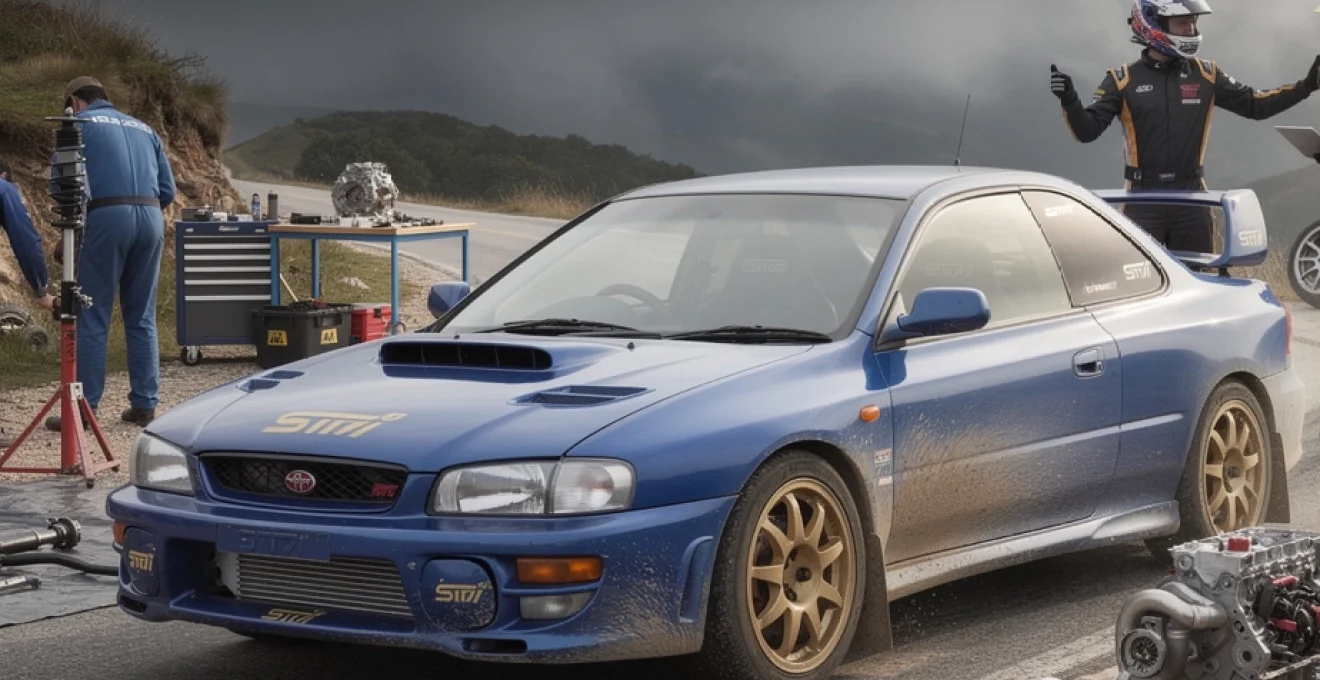
The 1998 Subaru Impreza WRX STI GC8 sits at a crossroads of rally history and turbocharged road-car culture. Built in the same era as the iconic 22B and the Prodrive S5 WRC98, this compact sedan and coupe package combined everyday usability with stage-ready performance. For many enthusiasts growing up during the Impreza vs Evo battles, the Version 5 STI became the attainable poster car that brought World Rally Championship technology within reach. Today, interest in these cars is rising sharply, with auction prices and specialist restorations reflecting just how significant this generation has become.
If you are considering buying, restoring or tuning a 1998 Impreza WRX STI, understanding the details really matters. Chassis codes, EJ20 engine variants, DCCD all-wheel drive and rally-bred suspension all play a part in how the car feels on the road and on gravel. Look beneath the iconic Sonic Blue paint and gold wheels and you discover a genuinely sophisticated performance platform, but also a car with clear age-related weaknesses that you must address if you want long-term reliability.
1998 subaru impreza WRX STI GC8 version 5 overview: chassis code, trim levels and production differences
The 1998 Subaru Impreza WRX STI is generally referred to as the GC8 Version 5, built from late 1997 into 1998. The GC8 code covers all first-generation Impreza turbo models, but Version 5 brings key upgrades over earlier cars: revised styling, improved suspension components and a new EJ20K engine calibration. For many buyers, Version 5 offers the sweet spot between raw, early GC8 feel and the slightly more refined Version 6 that followed in 1999.
Two flagship variants dominate 1998: the STI Type R two-door coupe and the STI Type RA lightweight sedan. The Type R focuses on rigidity and rally car looks, with a shorter wheelbase feel, frameless doors and a stronger focus on handling balance. The Type RA (often labelled RA for “Rally Applied”) strips out comfort features, uses shorter gearing and adds DCCD as standard, aiming directly at tarmac and gravel stage use. Production numbers for each are relatively low compared with mainstream WRX models, which helps explain why clean, unmodified examples now command strong money in specialist auctions and private sales.
Beyond the halo 22B, the Version 5 WRX STI also served as the basis for multiple market-specific specials, including limited UK imports with taller gearing and different mapping, and JDM-only editions aligned with domestic rally regulations. When you shop for a GC8 STI today, decoding the VIN, build date and original market specification is crucial. It affects everything from gearing and emissions compliance to insurance, future resale value and eligibility for certain historic motorsport categories.
Rally-bred EJ20 engine architecture and turbocharging in the 1998 impreza WRX STI
The heart of the 1998 Subaru Impreza WRX STI is the EJ20 flat-four turbo engine, specifically the EJ20K variant used in Version 5 cars. Officially capped at 276 bhp (280 PS) under Japan’s gentleman’s agreement, real-world dyno figures often creep closer to 290–300 bhp in stock JDM form. Torque sits around 260–270 lb ft, delivered with the classic boxer throb and a broad mid-range surge that still feels urgent by modern hot-hatch standards. The EJ architecture, with its horizontally opposed cylinders, keeps weight low and helps the squat, nose-down stance that makes a GC8 so distinctive under braking and turn-in.
From a tuning perspective, the 1998 EJ20 responds exceptionally well to breathing and fuelling upgrades, but also carries some known weak points when pushed hard. Detonation on poor fuel, ringland failure and head gasket issues can appear if you simply “turn up the boost” without preparation. Treat the EJ20 as a motorsport-derived engine that needs proper supporting mods rather than a cheap power platform, and it rewards you with impressive durability at 320–350 bhp and beyond.
EJ20K vs earlier EJ20G blocks: closed-deck design, internals and known weak points
Earlier GC8 WRX STI models used the EJ20G, often in a semi-closed or fully closed deck configuration, prized for its strength under very high boost. By 1998, the EJ20K in the Version 5 STI moved towards an open-deck style casting with improved cooling and lighter internals. Pistons are hypereutectic rather than forged, and rods are strong but not indestructible if abused. For typical fast-road and track-day use up to around 320 bhp, the factory bottom end holds up well when mapped correctly.
The main EJ20K weak points relate to detonation and oiling. Run the engine on poor 95 RON fuel without proper management and you risk cracked ringlands or melted pistons. Neglected oil changes or sustained high RPM without sufficient oil cooling can accelerate big-end bearing wear. At this age, even low-mileage power units suffer from hardened seals and tired timing components, so budgeting for a thorough refresh is wise if you want a reliable daily-driven 1998 STI.
Turbocharger specification: IHI VF22 / VF24, boost pressure, and spool characteristics
Depending on market and exact trim, the 1998 STI uses IHI turbochargers such as the VF22 or VF24. The VF22 is known for its strong top-end flow and slightly later spool, while the VF24 offers a more responsive, mid-range biased delivery. Factory boost pressure typically sits around 0.9–1.0 bar, with short overboost peaks. On the road, you feel a brief pause below 3,000 rpm, followed by a hard, linear charge to the 7,500 rpm redline, accompanied by the distinctive wastegate chatter that defined the GC8 era.
For enthusiasts targeting a fast-road setup, the stock IHI turbos remain a capable choice. Modest increases in boost, combined with a modern remap and upgraded fuel system, can safely deliver an extra 30–40 bhp without sacrificing spool. Push beyond that and you move into larger turbo territory, at which point the rest of the drivetrain, cooling and engine internals need careful attention to avoid expensive failures.
Intercooler, induction and fuelling upgrades on version 5 STI type R and type RA
The 1998 Impreza WRX STI uses a top-mounted intercooler with a bonnet scoop, designed to keep pipework short and throttle response sharp. For its time, the core was effective, but you are dealing with 25+ years of heat cycles and possible internal corrosion. Upgrading to a modern, high-flow top-mount intercooler reduces intake temperatures significantly, particularly during repeated pulls or track use, and helps preserve safe ignition timing on higher-boost setups.
Induction-wise, the factory airbox flows adequately for mild tuning, especially with a high-quality panel filter. Short-ram or cone filters can add intake noise but often draw in more heat, so careful heat shielding and ducting become essential. On the fuel side, an uprated in-tank pump and fresh injectors are highly recommended once you exceed stock power; ageing OEM injectors can clog or drift in flow, risking lean cylinders under sustained boost. A well-matched fuelling package gives you the headroom to run safer mixtures without sacrificing response.
Factory ECU mapping, ignition timing and pinging issues on UKDM vs JDM imports
The standard ECU mapping on 1998 JDM STI models is aggressive, designed around 100 RON Japanese fuel. Import one into a 98 RON or 95 RON market and run it without retuning, and light detonation, or “pinking”, is almost guaranteed under load. UK-delivered STIs of the period often use slightly softer ignition timing and different boost targets, but still benefit from modern remaps that account for today’s fuels and driver expectations.
Age is another factor. Capacitors in early ECUs can degrade, sensors drift and loom connections corrode, leading to inconsistent fuelling and timing. A contemporary remap by a Subaru specialist, using wideband lambda logging, tends to transform drivability and engine safety. You gain smoother part-throttle response, reduced turbo lag and a stronger, cleaner mid-range with lower exhaust gas temperatures, which is crucial if you plan to use the car for regular spirited driving.
Common reliability upgrades: forged pistons, ARP head studs, oil pump and cooling system
If you aim for reliable power beyond 320–330 bhp on a 1998 EJ20, a blueprint build with forged pistons becomes extremely sensible. Modern forged pistons, combined with fresh rods and balanced rotating assemblies, allow consistent operation at higher boost and RPM. ARP head studs help maintain clamping force under extreme cylinder pressures, reducing the risk of head gasket failure, particularly on engines that see track-day temperatures and repeated heat soak.
Upgrades to the oiling and cooling system provide extra insurance. A higher-flow oil pump, baffled sump and quality 5W-40 or 10W-50 synthetic oil protect the bottom end under lateral G and sustained high load. A new radiator, silicone coolant hoses and an uprated thermostat stabilise temperatures. Treat the 1998 WRX STI like a classic motorsport car rather than a cheap old turbo saloon, and the payback is a power unit that feels strong, responsive and dependable even decades after leaving the factory.
Drivetrain, DCCD all-wheel drive and limited-slip differentials in the 1998 WRX STI
Beyond the engine, the 1998 Subaru Impreza WRX STI drivetrain is central to its character. The combination of symmetrical all-wheel drive, short gearing and mechanical limited-slip differentials gives the GC8 its famed ability to claw traction on loose gravel and wet tarmac. Many modern performance cars rely on electronic aids and brake-based torque vectoring, whereas the Version 5 STI feels more analogue and predictable, allowing you to sense the load moving through the chassis as grip builds and breaks.
From a buyer’s point of view, the DCCD system, plated rear differential and robust 5-speed TY754 gearbox are major selling points, but only if they have been serviced correctly. Old differential oil, abused synchros and tired clutches can dull the experience and hide the precision that made the GC8 so respected in period rallying. If you plan to build a track-focused or gravel-spec STi, understanding the hardware and its limits is essential before adding power or sticky tyres.
DCCD (driver controlled centre differential) hardware, manual control and torque split logic
The DCCD system in the 1998 STI Type R and Type RA combines a mechanical centre differential with an electronically controlled electromagnetic lock. In its default automatic mode, the ECU adjusts the torque split based on throttle position, braking and wheel speed data, biasing power front or rear to maintain stability. In manual mode, you can dial up more lock to send extra torque rearwards, creating a more oversteer-friendly balance ideal for gravel or loose-surface driving.
This manual adjustability gives you a tool to tune the car’s behaviour without physically changing hardware. On a twisty back road, a mid-setting often provides the best balance between traction and adjustability. On track, some drivers prefer more rear bias to aid rotation under power. As with any 1990s electronics, wiring and switches can age, so testing that the DCCD works correctly, and that the indicator lights correspond to actual behaviour, should be part of any serious pre-purchase inspection.
Front and rear LSD configurations: plated R180 rear diff, viscous vs mechanical fronts
At the rear, the 1998 WRX STI uses an R180 differential rather than the smaller R160 found in lesser Imprezas. The R180 houses a plated limited-slip unit that offers strong locking under load, crucial for putting turbo torque down out of slow corners. When healthy, the rear diff gives the GC8 that characteristic “squat and fire” feeling exiting bends, especially in low-grip conditions. Old or contaminated oil and lack of servicing, however, can lead to chatter, judder or premature wear of the plates.
The front differential varies by model, with some cars running a viscous LSD and others a more motorsport-oriented mechanical unit. A mechanical front diff offers stronger locking and better turn-in on gravel, but can increase steering effort and torque steer on tarmac. For fast-road users, a good viscous or helical front LSD often offers the best compromise between traction and refinement, particularly if the car doubles as a daily driver.
TY754 5-speed gearbox ratios, synchro design and group N reinforcement options
The GC8 STI’s TY754 5-speed gearbox uses closer ratios and, in many cases, shorter final drives than contemporary WRX models. In the 1998 Type RA, the gearing is notably short, keeping the engine on boost and giving that visceral, rally-car feel at legal speeds. The downside is higher revs on the motorway and greater mechanical noise, which some owners love and others find tiring. Synchros on second and third gear are common wear points, especially on cars that have seen aggressive shifting or drag-style launches.
For hard use, Group N–style reinforcement becomes relevant. Options include shot-peened gears, stronger synchromesh rings and hardened shift forks, all designed to handle repetitive high-load changes. A well-built TY754, filled with quality oil and treated with mechanical sympathy, copes with 350 bhp surprisingly well. Abuse it, and even a standard-output car can suffer chipped teeth and crunching shifts, so understanding driving history is vital when assessing any potential purchase.
Clutch, flywheel and prop shaft specifications for type R coupe vs type RA sedan
Clutch and flywheel specs vary slightly across 1998 STI trims, but both the Type R and Type RA tend to run a relatively high-clamp clutch compared to non-STI versions. A lighter flywheel is often fitted by enthusiasts to sharpen throttle response, but excessively light options can make town driving jerky and increase transmission noise. For a balanced road and track setup, a mild lightweight flywheel combined with an uprated organic clutch gives excellent drivability without overwhelming the stock gearbox.
The prop shaft and driveshafts on STI models are beefier than those on base Imprezas, reflecting their rally intent. Over 25 years, however, universal joints and CV boots age, and vibrations under load or on overrun may indicate tired components. Replacing worn props and shafts not only restores refinement but also reduces shock loads on the gearbox and diffs, which is particularly important on a tuned 1998 WRX STI used in mixed road and competition environments.
Suspension, steering and chassis setup of the GC8 1998 STI for tarmac and gravel
One of the defining qualities of any GC8 WRX STI is the way it flows with poor surfaces. The chassis feels alert yet surprisingly compliant, soaking up bumps and crests in a way many modern stiffly-sprung hot hatches cannot match. The 1998 STI retains classic MacPherson struts at each corner, but combines them with inverted dampers, unique STI springs and strengthened arms and links. The result is a car that feels eager to change direction yet retains a supple edge that inspires confidence on broken B-roads and rally-style stages.
If you drive a well-sorted Version 5 back-to-back with a later, heavier performance car, the difference in mass and inertia is obvious. At around 1,260–1,280 kg depending on trim, the 1998 STI undercuts many current turbo hatches by 200–300 kg. That lightness, combined with mechanical grip and relatively soft-sidewall tyres, contributes to a playful, adjustable balance that rewards driver input. For owners looking to tune chassis behaviour, respecting this original philosophy tends to yield more satisfying results than simply slamming the car on ultra-stiff coilovers.
Macpherson strut geometry, inverted dampers and STI-specific spring rates
The GC8’s MacPherson strut layout keeps weight down and packaging simple, but places high demands on damper quality and geometry. The 1998 STI uses inverted Bilstein-style dampers, which increase rigidity and improve heat dissipation under repeated hard use. Spring rates are stiffer than standard WRX models, but not excessively so, allowing body roll that actually communicates grip levels rather than chasing flat-cornering for its own sake. On both tarmac and gravel, this compliance helps the tyres maintain contact patch integrity over rough patches.
When it comes time to refresh suspension, sticking close to STI-spec geometry is often wise. Quality inverted dampers and OEM-plus springs maintain the original character while improving control. Excessively low ride heights can hurt bump travel and cause the front to skip over mid-corner bumps, especially on real-world roads. A slightly higher, rally-inspired stance, combined with modern dampers, often translates to faster and more enjoyable progress in changeable conditions.
Subframe bracing, lateral links and anti-roll bar spec on version 5 type RA
The 1998 STI Type RA receives additional chassis bracing and different lateral links compared with lesser GC8s. Stronger rear lateral links and upgraded bushes reduce compliance under load, sharpening rear-axle response without making the car overly nervous. Anti-roll bar diameters are optimised for a neutral to mildly understeering balance at the limit, with the option to tune front-rear behaviour by adjusting bar stiffness for tarmac or gravel use.
Upgrading to contemporary adjustable lateral links and subframe braces can fine-tune alignment and improve feel, but moderation remains key. Solid-mounted bushes and ultra-stiff bars may look good on a spec sheet but can upset the STI’s friendliness on low-grip surfaces. For mixed-use cars, combining fresh rubber or high-quality polyurethane bushes with modest bar upgrades tends to give the best mix of precision and comfort.
Steering rack ratio, bump steer characteristics and alignment settings for rally use
The GC8 STI steering rack runs a quicker ratio than non-turbo Imprezas, typically around 13:1, helping deliver the immediate front-end response drivers associate with rally-bred Subarus. Steering weight is relatively light by modern standards, yet there is good feedback through the rim, especially on gravel where the rack communicates surface changes without feeling snappy. Bump steer is well controlled in factory trim, but can worsen if the car is heavily lowered without correcting roll centre and tie-rod angles.
For enthusiastic road and occasional stage use, sensible alignment goes a long way. Modest front negative camber, a hint of rear toe-in and equal ride heights side to side keep the car stable yet eager to rotate on throttle. Aggressive track-style settings can offer sharper turn-in but may make the car edgy on wet roads and accelerate tyre wear. Think of alignment as a fine-tuning tool rather than a magic cure; a healthy baseline chassis always comes first.
Wheel and tyre packages: 16-inch Speedline/Enkei alloys and gravel vs tarmac compounds
In 1998, the STI typically left the factory on 16-inch wheels, often from Speedline or Enkei, wrapped in performance-biased tyres that balanced road use and light competition. Compared with today’s fashion for 18- or 19-inch wheels, the relatively small diameter and taller sidewall play a major part in the GC8’s forgiving, progressive breakaway characteristics. On rough tarmac or gravel, this extra compliance helps the car bite into the surface rather than skipping across it.
If you plan regular track days, a dedicated tarmac package with 17-inch wheels and semi-slick tyres can unlock more lateral grip and shorter braking distances. For gravel or mixed-surface rallying, narrower wheels and purpose-made rally gravel tyres are transformative, providing the sort of traction that made the Impreza legendary in period WRC coverage. Rotating between a road set and a motorsport set of wheels also helps manage wear and keeps the car flexible for different driving environments.
WRC pedigree: 1998 impreza WRX STI in the world rally championship
The 1998 Subaru Impreza WRX STI GC8 exists largely because of Subaru’s relentless commitment to the World Rally Championship during the 1990s. By 1998, the blue-and-gold Impreza had already secured three consecutive manufacturers’ titles, cementing its status alongside Group B legends as one of the most recognised rally cars on the planet. The road-going STI variants, including the Version 5 and the halo 22B, acted as rolling billboards for that success while also meeting homologation requirements and feeding technology back into customer hands.
For enthusiasts today, this rally heritage is not just a marketing story. It shapes the way the car drives: the long-travel suspension, DCCD all-wheel drive, mechanical diffs and compact EJ20 powertrain all originate from competition priorities rather than pure road-car comfort. When you drive a well-maintained 1998 WRX STI on a twisty, undulating road, the link to its World Rally Car cousins is impossible to ignore; the experience is closer to a scaled-down rally weapon than to a typical 1990s saloon.
Subaru world rally team, prodrive-built impreza S5 WRC98 and GC8 homologation links
In 1998, the Subaru World Rally Team, run by Prodrive in the UK, campaigned the Impreza S5 WRC98. Unlike earlier Group A cars, this World Rally Car used more liberal regulations, allowing wider bodies, different suspension pick-up points and more advanced aerodynamics. Even so, the production GC8 STI still provided the essential backbone of Subaru’s rally programme, from engine architecture to drivetrain layout and general weight distribution. The 22B, launched the same year, took visual cues directly from the S5’s wide arches and towering rear wing.
The homologation link works both ways: rally success boosted showroom appeal, and sales of road cars justified continued competition investment. Interestingly, values of top-tier road-going 22Bs have soared in recent years, with some examples, especially those with special provenance, fetching well over £250,000 at auction. This surge reflects a wider appetite for genuine WRC-era icons, with the 1998 STI sitting in a sweet spot of usability and authenticity that appeals to drivers and collectors alike.
Colin McRae, carlos sainz and piero liatti: driving the impreza to rally stage wins
Names like Colin McRae, Carlos Sainz and Piero Liatti are inseparable from the 1990s Impreza story. Their exploits on events such as Rally GB, Monte Carlo and the Safari gave the GC8 an aura that no amount of advertising could replicate. McRae’s spectacular, committed driving style, in particular, turned the Impreza into a cult hero among younger fans who watched grainy highlight reels and dreamed of blue Subarus with gold wheels and 555 logos.
When you step into a 1998 WRX STI, that connection is more than nostalgia. The seating position, thin A-pillars and view over the scooped bonnet create a cockpit that feels purpose-built for attacking a loose-surface stage. For many owners, part of the appeal lies in recreating a fraction of that rally drama on empty roads or track days, even if the tyres are more likely to be modern performance rubber than studded snow tyres or deep-cut gravel compounds.
Iconic rallies and liveries: monte carlo, rally GB and the 555/SWRT blue and gold scheme
The 555/SWRT blue and gold livery has become one of motorsport’s most recognisable colour schemes, on a par with Martini stripes or Gulf blue and orange. Events like the Monte Carlo Rally and Rally GB provided perfect backdrops: snowbanks, forest tracks and muddy lanes all framed the Impreza’s vivid Sonic Blue Mica paint and bold graphics. Even a completely standard 1998 STI in factory blue with gold wheels instantly taps into that visual heritage, which is why many owners keep this look intact rather than moving to aftermarket colours.
Over time, legislation changes and tobacco advertising bans altered the exact branding on WRC cars, but the core palette remained. That continuity strengthens the mythos surrounding GC8 Imprezas in general and Version 5 STIs in particular. If you add period-correct decals and a set of rally-style mudflaps to a clean 1998 STI, the transformation in presence is dramatic, even if the mechanicals remain entirely road-focused.
Group A to world rally car transition and the role of the 1998 production STI
The late 1990s marked a key regulatory shift from Group A to full World Rally Car rules. Group A demanded closer ties between road and rally variants, with strict homologation numbers and limited modification scopes. World Rally Car regulations opened the door to more bespoke chassis and suspension layouts while still rooted loosely in road-going shells. The 1998 Impreza WRX STI GC8 Version 5 sits right at this junction, embodying the last of the highly relatable, production-shaped rally machines.
From an engineering perspective, the production Version 5 STI benefitted from lessons learned in both eras. Stronger shells, refined suspension geometry and more sophisticated drivetrains emerged out of Prodrive’s development work, then filtered down into STI road cars. For owners today, this makes the 1998 STI a compelling blend: raw and analogue enough to feel special, yet benefitting from the maturity of several WRC seasons of continuous improvement.
1998 subaru impreza WRX STI buyer’s guide: inspection, known issues and rust hot spots
Interest in 1998 Subaru Impreza WRX STI models has risen steadily over the past five to ten years, with some classic insurance brokers reporting double-digit percentage increases in agreed values for clean GC8s. Rising prices make accurate inspections critically important; overpaying for a rusty, tired car can turn what looks like a bargain into a long, expensive restoration project. Think of buying a Version 5 STI less like picking up an old hatchback and more like acquiring a piece of motorsport heritage that demands careful evaluation.
Rust remains the primary threat to any GC8 shell. Pay close attention to rear arches, inner sills, front chassis legs and suspension mounting points. In climates that use road salt, corrosion can also attack the floorpan around jacking points and subframe mounts. Structural rust repairs are still possible thanks to aftermarket panels and specialist body shops, but costs add up quickly. Mechanically, a worn EJ20, crunchy TY754 gearbox or noisy diffs can all be rebuilt, but body integrity is much harder to restore perfectly.
Service history provides another key clue. Regular oil changes, documented timing belt replacements and evidence of high-quality parts indicate caring ownership. A car with tasteful, reversible upgrades and clear records often represents a safer bet than a seemingly stock example with little paperwork. Ultimately, allocating budget for a pre-purchase inspection by a Subaru specialist is highly advisable; the cost of expert advice is small compared to the potential cost of unforeseen engine or chassis work on a 25-year-old performance icon.
Performance tuning paths for the 1998 GC8 WRX STI: stage upgrades and track setup
The 1998 Subaru Impreza WRX STI GC8 remains a superb tuning platform, capable of delivering everything from subtle fast-road enhancements to full rally or track builds. A sensible approach, however, respects the age of the car and the design intent of the original engineers. It is tempting to chase headline power figures, but a balanced package that upgrades brakes, suspension, cooling and fuelling alongside engine output usually provides a faster and more enjoyable car in the real world.
For many owners, a “Stage 1” or “Stage 2” style upgrade path offers the best compromise between performance and longevity. Typically, this involves intake and exhaust improvements, a modern ECU remap and basic supporting hardware. Beyond that, more serious builds might add forged internals, upgraded turbochargers and comprehensive chassis strengthening. The analogy is similar to building a house: foundations first, extra storeys later. Address the basics before stacking boost and sticky tyres on top of an ageing platform.
- Stage 1 fast-road tune: high-flow panel filter, cat-back exhaust, remap tailored to modern 98 RON fuel.
- Stage 2 track-day setup: up-pipe and downpipe, uprated intercooler, fuel pump and injectors, enhanced cooling.
- Rally-inspired build: gravel suspension, sump guard, DCCD tuning, dedicated gravel wheels and tyres.
Braking and suspension upgrades deserve equal focus. Fresh OEM or uprated discs and pads, stainless braided lines and modern performance brake fluid transform stopping performance, especially on repeated heavy use. Quality coilovers or improved inverted dampers, combined with careful alignment, can sharpen responses without ruining ride comfort. Ultimately, the most satisfying 1998 WRX STI setups retain the car’s original rally-bred character: supple, communicative and confidence-inspiring, rather than ultra-stiff or purely numbers-driven on a dyno sheet.