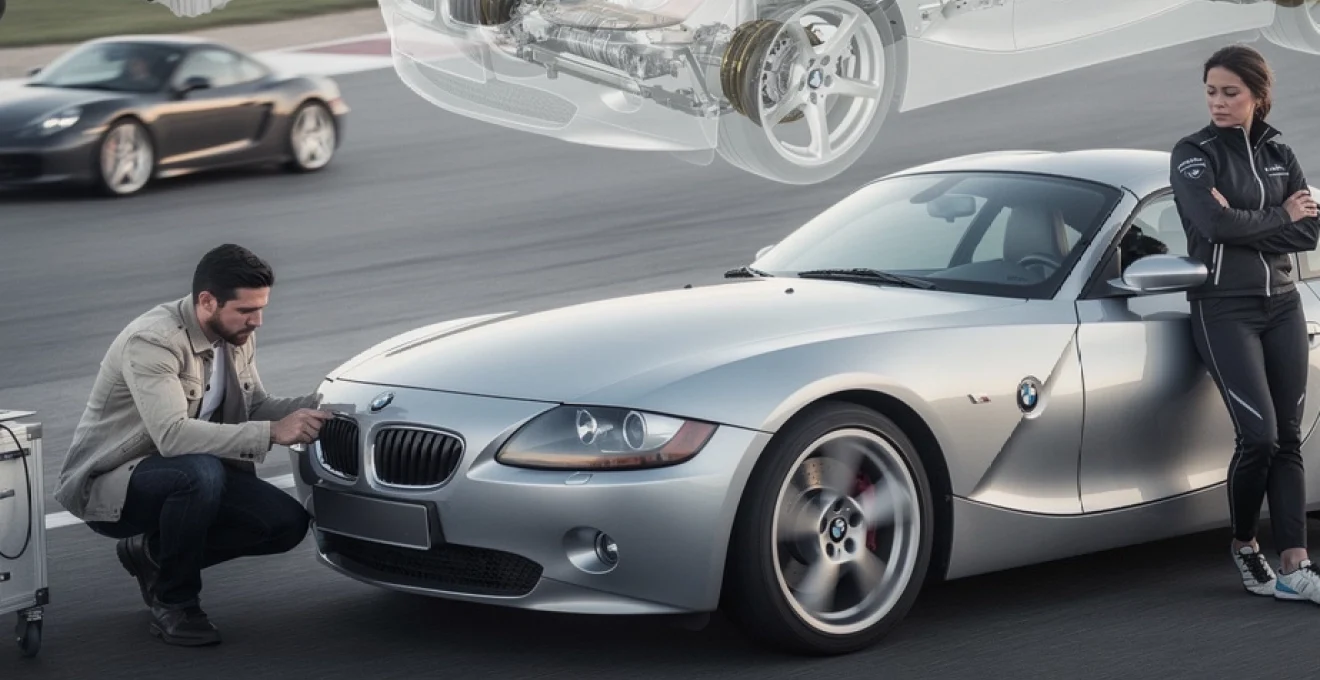
The 2004 BMW Z4 Coupe sits at a fascinating crossroads in BMW history. It combines the bold, controversial design language of the Bangle era with a set of engines and chassis hardware now widely regarded as modern-classic high points. For anyone who values a naturally aspirated straight‑six, rear‑wheel drive and a compact footprint, this car still makes a compelling case against newer, heavier and more complex machinery. Values have remained accessible, yet the underlying engineering was conceived to trade punches with Porsche and Mercedes rather than budget roadsters, which puts you in a sweet spot of performance and long‑term appeal.
Look past the headline numbers and the 2004 Z4 Coupe reveals a carefully honed package. The long‑bonnet proportions are backed up by a stiff shell, multi‑link rear suspension and a steering system that, while electrically assisted, was calibrated to suit keen drivers. Add in the choice between the creamy M54B30 straight‑six and the feral S54B32 in the Z4 M Coupe, and you have a car that can be anything from a refined GT to a genuine track tool, depending on specification and set‑up. Understanding the design and performance fundamentals helps you choose the right example and, crucially, upgrade it intelligently.
Exterior design language of the 2004 BMW Z4 coupe: bangle-era surfacing, flame surfacing and long-bonnet proportions
The Z4 Coupe’s exterior design is an archetypal product of early‑2000s BMW thinking. The long bonnet and cab‑backward stance pay tribute to classic roadsters and coupés, yet the surfaces are anything but retro. So‑called flame surfacing creates sharp, intersecting lines along the flanks, with concave and convex areas playing off each other to catch the light. At launch, some found these shapes shocking; two decades on, they help the Z4 Coupe look more contemporary than many smoother‑styled rivals from the same era. The distinctive double‑bubble roof not only gives extra helmet clearance on track days, it also adds visual tension when viewed from the rear three‑quarter angle.
Proportionally, the 2004 BMW Z4 3.0 Coupe sits low and wide, with a relatively short rear overhang and a long dash‑to‑axle dimension. This classic sports‑car stance visually reinforces the fact that the engine sits well behind the front axle line, helping weight distribution. Pronounced rear haunches make the car look rear‑drive even when standing still, an impression that is backed up when you lean on the throttle out of a corner. Many observers now consider the E86 Coupe to be the most cohesive expression of BMW’s early‑2000s design language, especially compared with some larger saloons of the same period.
Chassis architecture and suspension setup: E85/E86 platform, multi-link rear axle and aluminium front subframe
Macpherson strut front suspension geometry, camber settings and steering knuckle design
The 2004 Z4 Coupe is built on the E85/E86 platform, itself derived from the E46 3 Series but significantly stiffened and shortened. Up front, a conventional MacPherson strut layout is used, with an aluminium front subframe and forged control arms. This keeps unsprung mass down and improves steering response. Factory camber settings are relatively mild for road use, but the geometry allows for extra negative camber to be dialled in with aftermarket top mounts or camber bolts if you plan regular track days. The steering knuckle design gives a quick build‑up of camber under load, which contributes to the car’s strong front‑end bite when turn‑in is correct and the suspension is fresh.
On a 20‑year‑old Z4, worn lollipop bushes and tired dampers can seriously blunt this precision. That is why many owners who refresh the front end with quality OEM or uprated components describe the transformation as akin to fitting a new steering rack. If you are experiencing tramlining or a nervous feel at motorway speeds, starting with front control arm bushes and a proper four‑wheel alignment is often the most cost‑effective fix.
Integral IV multi-link rear suspension, kinematics and toe-control characteristics
At the rear, the Z4 uses BMW’s Integral IV multi‑link arrangement, a far cry from the semi‑trailing arms found on the older Z3. This Z‑axle style set‑up offers far better control of camber and toe through the full range of wheel travel. Under load, the geometry adds a small amount of stabilising toe‑in, which is one reason the Z4 feels planted when pushing through fast bends on a smooth road. The rear kinematics were tuned to give a neutral baseline with a gentle bias towards safe understeer at the limit, but with stability control relaxed the chassis is playful enough for those who enjoy power oversteer.
Ageing bushes in the rear trailing arms and outer links can compromise this carefully tuned toe control, leading to a vague or “rear‑steer” sensation. Replacing worn bushes with quality rubber or carefully chosen polyurethane items restores the original intent. For fast‑road use, many specialists recommend genuine BMW rear bushes with solid casings rather than heavily slotted budget parts, which can creep under load and undo the precision that the multi‑link design offers.
Runflat tyre specification, wheel sizes and impact on unsprung mass and ride comfort
From the factory, the Z4 Coupe shipped on runflat tyres, with wheel sizes typically 17 or 18 inches depending on trim and options. The combination of runflats and relatively firm damping contributed to a ride that some owners found harsh on broken British roads. Runflat construction adds weight to each corner, increasing unsprung mass and making it harder for the suspension to keep the tyre in consistent contact with rough surfaces. The result can be a busy ride and a tendency to tramline along ruts or white lines, especially on worn front bushes.
It is no coincidence that a large proportion of long‑term owners switch to conventional performance tyres. Dropping the runflats and, where possible, choosing slightly lighter wheels can bring a noticeable improvement in ride compliance and steering feel. The trade‑off is the need to carry a repair kit or space‑saver instead of relying on the damaged runflat to limp home. For a car used as a weekend toy rather than a daily, many enthusiasts consider this a small price to pay for a more sophisticated feel and better feedback through the chassis.
Structural rigidity, torsional stiffness and use of high-strength steels in the Z4 coupe body shell
Compared with the Z3 that it replaced, the Z4 platform was a revolution in body engineering. BMW quoted almost three times the torsional rigidity of its predecessor for the roadster alone, and the fixed‑roof Coupe adds another substantial step. Use of high‑strength steels in key load paths, reinforced sills and bulkheads, plus a rigid rear structure around the hatch opening all contribute to a shell that resists twist and flex. For you as a driver, this means the suspension can be tuned more precisely because it is not fighting a moving platform.
The benefits show both on the road and the track. There is minimal scuttle shake and very little of the creaking sometimes associated with older convertibles. Even today, owners who upgrade to quality dampers and bushes often comment that the bodyshell feels more than stiff enough to exploit more focused set‑ups. As these cars age, it remains important to check for accident repairs and corrosion on the underside, but outright structural weakness is not a typical Z4 Coupe issue when compared to some contemporary rivals.
Powertrain options: M54B30 straight‑six and S54B32 in the BMW Z4 M coupe
M54B30 technical overview: displacement, VANOS timing, compression ratio and torque curve
The mainstream 2004 BMW Z4 Coupe is powered by the M54B30 straight‑six, a 2979cc all‑alloy engine with double VANOS variable camshaft timing. With a compression ratio around 10.2:1 and output of approximately 231 hp (171 kW) at 5900 rpm, it sits in the sweet spot between efficiency and performance. Peak torque of roughly 300 Nm arrives at 3500 rpm, but importantly, over 90% of that torque is available across a wide band, which gives the car strong in‑gear acceleration without constant downshifting. Real‑world owners regularly report 0–62 mph times in the high five‑ to low six‑second range when the car is healthy and driven enthusiastically.
The character of the M54 is one of creamy delivery rather than a huge top‑end kick. You are encouraged to use the mid‑range torque and enjoy the sonorous straight‑six soundtrack rather than chasing the limiter on every shift. With a well‑serviced engine, fuel economy in mixed use typically sits in the low‑ to mid‑30s mpg (UK), which is respectable for a 3.0‑litre naturally aspirated petrol. Oil consumption of up to 1000 miles per litre is considered within specification, although heavy use should always prompt checks for leaks at common points such as the oil filter housing and cam cover gasket.
S54B32 high-revving M engine: individual throttle bodies, forged internals and redline characteristics
Step up to the Z4 M Coupe and the tone changes dramatically. Here the engine is the legendary S54B32 from the E46 M3, a 3246cc straight‑six with individual throttle bodies, forged pistons and rods, and a high 11.5:1 compression ratio. Power is rated at 343 hp (252 kW) at 7900 rpm, with a redline in the same region and a soundtrack that hardens into a metallic howl as revs rise. Peak torque of around 365 Nm arrives higher up the range than in the M54, but the engine rewards being extended, turning the last 2000 rpm into a genuinely exciting experience every time.
For drivers used to turbocharged torque waves, the S54’s character can feel surprisingly linear at first. The magic lies in its willingness to rev and the crisp response from the individual throttles. Maintenance standards are crucial: regular high‑quality oil changes, valve clearance checks and attention to VANOS components and rod bearings are non‑negotiable if longevity is the aim. In return, you gain an engine that many regard as one of BMW M’s high‑water marks—naturally aspirated, high revving and deeply engaging.
ZF and getrag manual gearboxes vs GM automatic transmissions: ratios, shift feel and durability
Transmission choice shapes the character of any Z4 Coupe. Most M54 cars use either a five‑speed Getrag manual (on smaller sixes) or a six‑speed ZF manual on the 3.0‑litre, offering close ratios and a positive shift. Enthusiasts often lean towards the manuals for their direct feel and long‑term durability; high‑mileage cars with original clutches and gearsets are not uncommon when driven sympathetically. BMW also offered GM‑sourced automatic gearboxes, including a five‑speed Steptronic and a six‑speed SMG sequential manual option.
The conventional auto turns the Z4 into more of a relaxed cruiser, with smooth shifts and decent reliability if the fluid is changed despite BMW’s “lifetime fill” claims. The early SMG, by contrast, has a mixed reputation. Shift speeds and smoothness fall short of modern dual‑clutch expectations, and age can introduce hydraulic and electronic gremlins. For a purist driving experience and best resale prospects, a six‑speed manual Z4 Coupe remains the smart choice, especially when combined with a limited‑slip differential retrofit for spirited use.
Exhaust system layout, backpressure tuning and sound character of the Z4 coupe and Z4 M coupe
The Z4’s exhaust system is a key contributor to its appeal. On the M54‑powered Coupe, twin exhaust manifolds feed a central section with catalytic converters before exiting through a rear silencer tuned to balance refinement and character. Many owners praise the stock system’s ability to stay subdued at a cruise yet deliver a rich straight‑six note when revved. Backpressure is calibrated to suit the engine’s torque curve, so poorly designed aftermarket “straight pipes” can erode low‑down response even if they sound louder.
The Z4 M Coupe’s exhaust is more aggressive from the factory, with less silencing and a raspier tone that hints at the engine’s Motorsport origins. Individual throttle bodies sharpen the pulses feeding into the manifolds, and the result is an intake‑and‑exhaust duet that makes high‑rev driving addictive. Thoughtful upgrades, such as high‑quality cat‑back systems and subtle intake modifications, can enhance this without spoiling long‑distance usability. A common approach for non‑M cars is the so‑called “sound generator” modification, which routes more induction noise into the cabin while leaving the main exhaust hardware untouched.
Performance figures: 0–62 mph, in-gear acceleration and top speed compared with porsche cayman S (987)
On paper, the 2004 BMW Z4 3.0 Coupe is usefully rapid. Expect 0–62 mph in around 5.7–6.0 seconds, depending on gearbox and conditions, and an electronically limited top speed of 155 mph. In‑gear performance is where the broad torque curve pays off; overtakes from 40–70 mph in third or fourth gear feel brisk without needing multiple downshifts. Fuel economy figures of 30–35 mpg (UK) on motorway runs are achievable if you resist the temptation to explore the upper rev range too often.
Compared with a contemporary Porsche Cayman S (987), which offers around 295 hp and a similar 0–62 mph time, the Z4 3.0si and especially the Z4 M Coupe are very much in the same performance ballpark. The Z4 M will reach 62 mph in about 5.0 seconds and is also limited to 155 mph, though derestricted examples demonstrate that the S54 has more to give. On track, the Cayman’s mid‑engine layout and out‑of‑the‑box balance provide an advantage, but a well‑sorted Z4 Coupe with fresh suspension and good tyres narrows that gap significantly while delivering its own front‑engine, rear‑drive thrills.
Steering feel, handling dynamics and electronic stability systems on the 2004 BMW Z4 coupe
Electric power steering (EPS) calibration, rack ratio and on-centre feel
The Z4 Coupe was one of BMW’s first performance‑oriented models to adopt electric power steering rather than a traditional hydraulic set‑up. The rack uses an electric motor integrated into the column, with calibration intended to provide light effort at parking speeds and firmer weighting as speed rises. The rack ratio is relatively quick, giving the car a nimble feel in tight bends and making small steering inputs effective on twisty roads. When everything is in good order, on‑centre feel is acceptable if not quite as granular as the best hydraulic systems of the era.
However, early cars in particular developed a reputation for slightly “sticky” or wandering steering, especially when components warmed up after being parked in strong sun. Recalibrated software and, in some cases, replacement columns address most of these issues. If you notice inconsistent assistance or a tendency for the wheel to feel notchy just off centre, specialist diagnosis is recommended. A healthy system, combined with quality non‑runflat tyres and fresh bushes, can feel precise and confidence‑inspiring rather than wayward.
DSC (dynamic stability control), DTC modes and traction control thresholds
BMW’s DSC system plays a significant role in how the Z4 behaves at and beyond the limit. Sensors monitor wheel speeds, yaw rate, steering angle and throttle position, then selectively brake individual wheels or reduce engine torque to keep the car within defined stability thresholds. On standard settings, DSC intervenes fairly early, which suits wet roads or unfamiliar conditions. Enthusiastic drivers can partially relax the system with a DTC mode where fitted, allowing more wheel slip before intervention, or in some models disable it entirely with a long press of the DSC button.
The ability to switch everything off is one area where the Z4 differs from some period rivals such as the Mercedes‑Benz SLK, whose stability control is less permissive. On track, this means you can explore the car’s natural balance, relying on your own inputs rather than electronics, provided you respect the available grip. For road use, learning how DSC behaves—and how quickly it trims power or adds braking—helps you drive smoothly without constantly tripping the system, especially in damp or cold conditions.
Weight distribution, polar moment of inertia and cornering balance on road and track
A key strength of the Z4 Coupe is its near‑50:50 weight distribution and relatively short wheelbase. The engine sits well back in the bay, contributing to a low polar moment of inertia; in simple terms, the mass is concentrated closer to the centre of the car. This makes direction changes quick and encourages agile responses when you turn the wheel. On a good road, the car feels eager to tuck into bends, and with even moderate throttle use you can trim your line using the rear axle without resorting to big slides.
On track, that same agility means the Z4 can feel more lively at the limit than a longer‑wheelbase GT, particularly in the wet. Correct tyre pressures and a sensible alignment—slightly more front camber, modest rear toe‑in—go a long way to making the car predictable rather than spiky. Drivers coming from front‑wheel‑drive hot hatches often remark on how much more adjustable the chassis feels mid‑corner; lift the throttle slightly and the nose tucks in, squeeze it back on and the rear begins to rotate. Treated with respect, this makes the car hugely rewarding.
Factory M sport suspension vs standard setup: spring rates, anti-roll bars and damping
The Z4 Coupe was offered with a standard suspension package and an optional M Sport set‑up, with the Z4 M using its own bespoke calibration. In broad terms, the M Sport hardware features shorter, stiffer springs, firmer damping and slightly thicker anti‑roll bars. This lowers the car visually and reduces roll angles, sharpening initial responses. On smooth surfaces, the result is flatter cornering and improved body control, which suits fast road use and occasional track work.
The trade‑off is a firmer ride that can feel busy on poorly maintained tarmac, especially when combined with runflats. Many owners choose to upgrade both standard and M Sport cars with quality aftermarket dampers—Bilstein B4 or B6, for example—and sometimes Eibach springs to achieve a more nuanced balance. The aim is often a “fast road” compromise: more control than stock without the crashiness of ultra‑stiff coilovers. Whatever route you choose, a full four‑wheel alignment afterwards is essential to realise the benefits and avoid wandering or uneven tyre wear.
Interior design, ergonomics and driver-focused cockpit layout of the Z4 coupe
The Z4 Coupe’s interior follows a minimalist, driver‑centric philosophy. The broad centre console is angled gently towards the driver, placing key controls within easy reach, while simple, legible dials convey just the essential information without clutter. Seating position is a particular highlight. You sit low, close to the rear axle, with plenty of adjustment in both seat and steering wheel to create a classic sports‑car posture with arms slightly bent and legs almost straight. Taller drivers benefit from the Coupe roofline, which offers more helmet‑friendly headroom than many rivals.
Materials quality is generally high for a car of this era, with robust plastics and well‑finished switchgear that holds up well over time. Sports seats with pronounced bolsters were standard or optional depending on market, and leather upholstery was common on higher‑spec cars. Some early examples developed squeaks and rattles from the dash or trim panels, especially on poor surfaces, but careful refitting and the use of felt tape can cure most of these. In terms of practicality, the rear hatch opens onto a surprisingly usable boot for a two‑seater, making the Z4 Coupe more realistic as a weekend away companion than many roadsters.
From an ergonomics standpoint, the controls are largely intuitive. Cruise control and multifunction steering wheel options make long journeys relaxed, while the simple climate control is easy to adjust without taking your eyes off the road. Later cars gained updated navigation and audio options, but even early models can be upgraded with discreet modern head units or Bluetooth modules hidden behind the original fascia. For those who value tactile connection, details such as a freshly retrimmed steering wheel or gear knob can make the cabin feel far more special without huge expense, transforming daily interaction however often you drive the car.
Aerodynamics, drag coefficient and high-speed stability: roofline, rear hatch and underbody flow
Although styling plays a big role in the Z4 Coupe’s appeal, aerodynamic performance was not an afterthought. The fixed roof and tapered rear hatch help manage airflow more cleanly than on the roadster, reducing turbulence and lift at speed. The drag coefficient sits in the region of 0.32–0.33, competitive for a compact sports coupé of the early 2000s. That figure, combined with a relatively small frontal area, contributes to strong high‑speed cruising ability and respectable fuel economy for a 3.0‑ or 3.2‑litre petrol engine.
Underbody flow is guided by plastic trays and deflectors that smooth the air passing beneath the car and help channel cooling air where it is needed. At Autobahn‑style speeds, you feel the benefits as a planted nose and calm directional stability, provided suspension and tyres are in good condition. Owners who track their cars sometimes experiment with front splitters and small rear spoilers to further reduce lift, but for fast road work the factory package is impressively stable. Side‑on, the gently rising beltline and integrated rear spoiler lip are not just aesthetic flourishes; they also nudge the airflow into a shape that supports both stability and low wind noise inside the cabin.
Reliability, known weak points and upgrade paths for the 2004 BMW Z4 coupe and Z4 M coupe
From a reliability perspective, the Z4 Coupe rewards preventative maintenance and informed upgrades. The M54 engine is fundamentally robust but prone to familiar BMW straight‑six foibles: oil leaks from the oil filter housing and cam cover, ageing CCV crankcase ventilation systems that can clog, and DISA valve wear that affects part‑throttle response. Addressing these issues with quality parts transforms day‑to‑day dependability. Cooling systems also deserve attention; radiators, expansion tanks and hoses age, so many owners refresh the lot proactively around the 100k‑mile mark to avoid roadside dramas.
On the Z4 M Coupe, the S54’s reputation for rod bearing wear and VANOS fragility is well‑documented. Cars that have had rod bearings replaced with updated shells, VANOS units inspected or rebuilt, and clear documentation of valve clearance services are typically safer bets. Regular oil analysis can provide additional peace of mind for high‑rev use. Both engines respond well to high‑quality synthetic oil and sensible warm‑up routines, particularly important on a high‑revving S54 that spends more time near its redline.
Chassis‑wise, the biggest weak points are age‑related rather than design flaws. Front control arm bushes, rear trailing arm bushes and rear spring ends commonly need replacement and are often overdue on cars with over 100,000 miles. Upgrading to Meyle HD arms, high‑quality rubber or carefully chosen polyurethane bushes and new springs and dampers such as Bilstein B4/B6 can effectively “reset” the car’s dynamics. Many owners report that such a suspension refresh, combined with ditching runflats, is the single most transformative set of modifications, restoring confidence at speed and making the car feel modern again.
The electric power steering column can fail, leading to heavy steering and warning lights. While BMW’s solution is a costly new column, specialists now offer rebuilds or good used replacements at a fraction of main‑dealer pricing. Another known issue is the power hood motor on roadsters sitting in a foam‑lined well that can fill with water when drain holes block; while the Coupe avoids this, similar age‑related electrical niggles—such as window regulators and central locking actuators—can crop up. These are typically solvable with pattern parts or used components without breaking the bank.
For those looking at long‑term ownership, a sensible upgrade path might include: a thorough inspection and documented service with fresh fluids throughout; replacement of critical rubber components in the suspension; a move to non‑runflat performance tyres; and, on manual cars, removal of the clutch delay valve to sharpen engagement. From there, you can tailor the car towards fast‑road, grand‑touring or track‑biased use with changes to springs, dampers and brake pads. Treated as a modern classic rather than a disposable daily, the 2004 BMW Z4 Coupe and its M sibling offer a blend of design and performance that remains hard to match at their current price point.