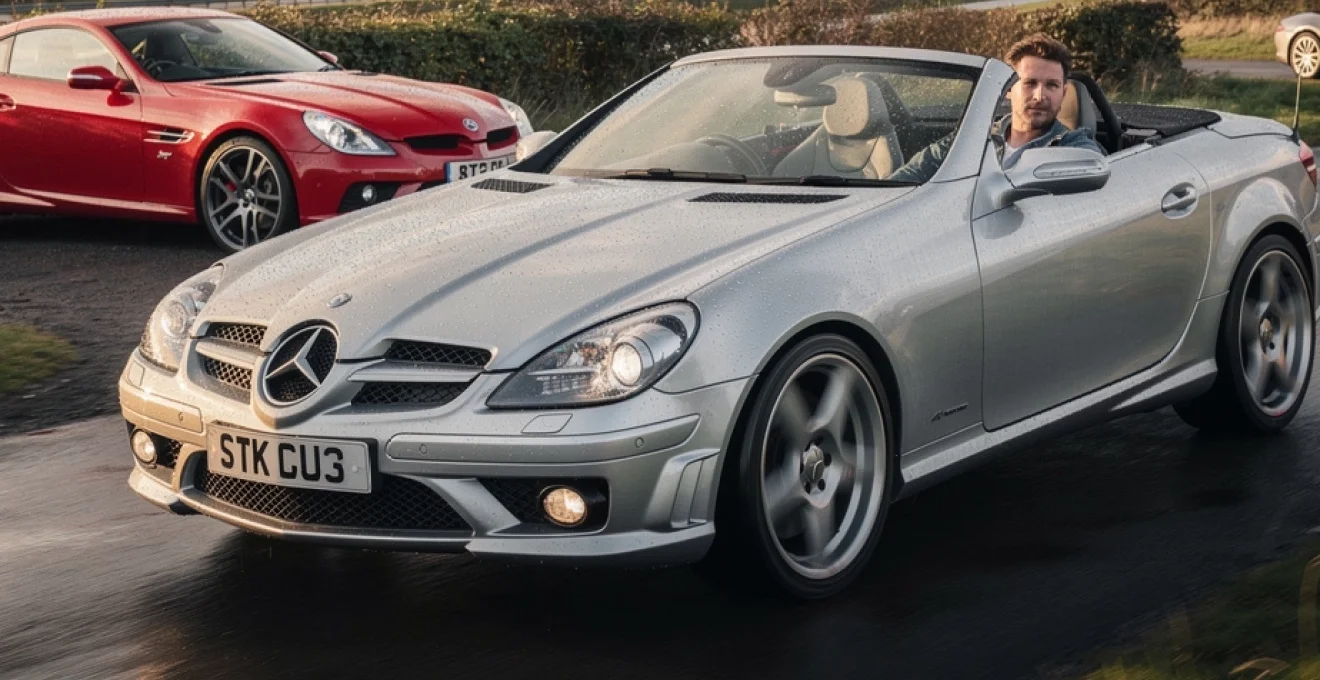
The 2006 Mercedes‑Benz SLK‑Class occupies a sweet spot in the UK used sports car market: compact yet refined, quick yet surprisingly civilised, and wrapped in one of the most recognisable folding‑hardtop designs of the last two decades. For drivers who want open‑top fun without sacrificing coupe‑like security and year‑round usability, the R171‑generation SLK from this era remains a compelling choice. With petrol prices, ULEZ zones and rising classic values reshaping buying decisions, understanding exactly what the 2006 SLK offers in terms of performance, comfort and long‑term ownership can save you serious money and frustration.
Spend time in a sorted example and the appeal becomes clear. The metal vario‑roof transforms the car from snug coupe to roadster in seconds, the engines range from efficient to thunderous, and the cabin feels more solid than many modern convertibles. Yet like any 20‑year‑old premium roadster, the 2006 SLK‑Class hides a few mechanical and electronic traps for the unwary. A detailed look at engines, gearboxes, suspension and typical UK issues helps you decide whether this compact Mercedes is the right companion for B‑road blasts and summer touring.
Overview of the 2006 Mercedes‑Benz SLK‑Class (R171) in the UK market
Model range breakdown: SLK200 kompressor, SLK280, SLK350 and SLK55 AMG
For model year 2006, the UK R171 SLK‑Class line‑up comprised four main petrol variants. At the entry point sat the SLK200 Kompressor, using a 1.8‑litre supercharged four‑cylinder with around 163 bhp. It delivered genuine sports‑car looks with relatively modest running costs and serves as the volume seller on the used market. Above that came the SLK280, newly introduced in late 2005 with a 3.0‑litre V6 producing 231 bhp, aimed at drivers wanting smoother power without the full punch of the range‑topping 3.5.
The SLK350 occupied the performance sweet spot, pairing a 3.5‑litre V6 with 272 bhp and strong mid‑range torque. It feels much closer in character to a junior GT car than a basic roadster. At the top of the tree, the SLK55 AMG used a hand‑assembled 5.4‑litre V8 with 360 bhp, aggressive AMG bodywork and uprated suspension and brakes. This flagship model gave the SLK performance credentials that rivalled contemporary M‑cars and 911s, while remaining more compact and easier to live with day to day.
Key 2006 model year updates versus 2004–2005 R171 launch cars
Although the major facelift came later in 2008, the 2006 SLK already benefited from incremental improvements over the 2004–2005 launch cars. The most notable change was the addition of the SLK280, filling the gap between the four‑cylinder 200 Kompressor and the muscular 350. This brought a smoother, free‑revving V6 to buyers who might previously have stretched to the larger engine purely for refinement.
By 2006, Mercedes had also been quietly refining software calibrations for the 7G‑Tronic automatic gearbox and ESP stability control, improving shift smoothness and traction on wet UK roads. Early‑run niggles with roof operation and interior trim rattles were being addressed under warranty, so mid‑cycle cars tend to feel more robust. Equipment bundling evolved too, with AMG‑style exterior packs, Airscarf neck‑level heating and upgraded audio systems appearing more often on dealer‑specified stock.
Positioning against rivals: BMW Z4 E85, audi TT 8N and porsche boxster 987
In 2006 the SLK‑Class sat in a crowded premium roadster segment. The BMW Z4 E85 emphasised sharper handling, rear‑wheel‑drive purity and naturally aspirated straight‑sixes, but relied on a fabric roof and felt mentally more “weekend toy” than all‑weather companion. The first‑generation Audi TT Roadster (8N) offered quattro traction and a stylish cabin, yet early cars were criticised for inert steering and a somewhat muted driving experience, much like the original SLK it competed against.
The Porsche Boxster 987, meanwhile, was dynamically in another league, with mid‑engined balance and tactile steering that the front‑engined SLK could not quite match. However, the Mercedes countered with its folding metal roof, higher perceived build quality and a more relaxed GT‑style character in daily driving. For UK buyers who wanted a comfortable commute, secure parking and a refined motorway cruiser that could still entertain on a Sunday morning, the 2006 SLK represented a distinctive and highly usable blend.
Typical UK price points, specification packs and equipment levels in 2006
New list prices in 2006 placed the SLK firmly in premium territory. A SLK200 Kompressor manual started at around £29,000, while stepping up to a SLK280 meant a list price in the £32,000–£33,000 region. The SLK350 pushed close to £37,000–£39,000 depending on gearbox and options, and the SLK55 AMG breached the £50,000 barrier, particularly with desirable extras such as leather, heated seats and COMAND navigation.
Standard kit included the electro‑hydraulic vario‑roof, alloy wheels (typically 16‑inch), air conditioning, partial leather, ESP and multiple airbags. Popular option packs in the UK bundled sports suspension, 17‑ or 18‑inch wheels, two‑tone leather, xenon headlights and the AMG exterior styling kit. Many dealer demonstrators were heavily optioned, so on the used market you often encounter 2006 cars with £5,000–£10,000 of extras. That can be good news for you as a buyer, provided those features still function correctly and do not add complexity without benefit (for example, oversized wheels on potholed local roads).
Engine line‑up and performance characteristics of the 2006 SLK‑Class
M271 1.8 kompressor performance, supercharger behaviour and fuel economy
The M271 1.8‑litre supercharged engine in the SLK200 Kompressor uses an Eaton‑type Kompressor to deliver 163 bhp and around 240–250 Nm of torque. In real‑world UK driving this gives brisk rather than explosive acceleration: 0–62 mph in roughly 7.6–7.9 seconds and a top speed around 140 mph. The engine feels strongest in the mid‑range, where the supercharger provides instant response without the lag associated with turbos of the era.
Fuel economy is the main appeal. Official combined figures hovered around 32–36 mpg, and owners often report 30+ mpg in mixed use, with high‑30s possible on steady motorway runs. In stop‑start city driving or when driven hard, expect high‑20s. The engine can sound slightly gruff at high revs, but for daily commuting and occasional long trips it strikes a sensible balance between performance and running costs, particularly if annual mileage is high.
M272 3.0 and 3.5 V6 engines: torque curve, refinement and known balance shaft issues
The M272 V6 family powers the SLK280 (3.0‑litre, 231 bhp) and SLK350 (3.5‑litre, 272 bhp). These all‑alloy engines are a world apart from the four‑cylinder unit in terms of smoothness and character. Broad, flat torque curves mean strong pull from 2,000 rpm up to the 6,500–7,000 rpm red line, with a cultured exhaust note that becomes nicely throaty under load. Official 0–62 mph times are around 6.3 seconds for the 280 and 5.4–5.6 seconds for the 350, depending on gearbox.
However, the M272 is also linked to a widely discussed balance shaft sprocket issue on certain build ranges, which can lead to premature wear of the timing gear and eye‑watering repair bills (often £3,000–£4,000). A pre‑purchase inspection on any 2006 SLK280 or SLK350 should include a check of engine number ranges, service records and any evidence of prior remedial work. When healthy, these V6 units deliver a refined, flexible drive and realistic economy in the high‑20s mpg, but ignoring early warning signs can quickly erode any savings made on purchase price.
SLK55 AMG M113 5.4 V8: naturally aspirated power delivery and AMG tuning details
The SLK55 AMG uses the legendary M113 5.4‑litre V8, hand‑built to AMG’s “one man, one engine” philosophy. Output stands at 360 bhp and 510 Nm of torque, offering deep reserves of power from just above idle. The engine pulls strongly in any gear, making overtakes effortless and giving the SLK a muscular, almost muscle‑car‑like feel that few compact roadsters can replicate. Official 0–62 mph is quoted at around 4.9 seconds, with real‑world launches feeling just as ferocious.
AMG‑specific tuning covers not just the engine mapping and exhaust but also auxiliary cooling, oil circulation and the calibration of the AMG SPEEDSHIFT 7G‑Tronic gearbox. The soundtrack – a hard‑edged V8 bark under load and a burbling idle – adds a significant portion of the ownership experience. Fuel consumption, of course, suffers: official combined figures hover in the mid‑20s mpg at best, and many UK owners see closer to 20 mpg or even the high‑teens in mixed use.
0–62 mph times, in‑gear acceleration and real‑world fuel consumption by engine
| Engine | 0–62 mph (approx.) | Official combined mpg | Typical real‑world mpg (UK) |
|---|---|---|---|
| SLK200 Kompressor (M271) | 7.6–7.9 s | 32–36 mpg | 28–34 mpg |
| SLK280 (M272 3.0 V6) | ≈ 6.3 s | 29–30 mpg | 24–29 mpg |
| SLK350 (M272 3.5 V6) | 5.4–5.6 s | 27–29 mpg | 23–28 mpg |
| SLK55 AMG (M113 5.4 V8) | 4.9 s | 23–24 mpg | 18–22 mpg |
In‑gear acceleration is where the V6 and V8 models shine, especially when paired with the 7G‑Tronic auto. A SLK350 or SLK55 AMG will surge from 50–70 mph in a fraction of the time taken by the four‑cylinder, which matters for real‑world overtaking. If most driving is urban or on congested motorways, the 200 Kompressor’s economy advantage is compelling; on open A‑roads, the six‑ and eight‑cylinder engines feel more effortless and relaxed at any legal speed.
Comparison of petrol engine characteristics with contemporary Z4 and boxster units
Compared with contemporary BMW Z4 and Porsche Boxster powertrains, the SLK range takes a slightly different approach. BMW’s naturally aspirated straight‑sixes in the Z4 are sweeter at high revs and often more economical for their performance level, but low‑rev torque feels similar to Mercedes’ V6s. Porsche’s flat‑six engines in the Boxster 987 offer the most linear, high‑revving character and typically better track durability, which keen drivers value for occasional circuit days.
The SLK200 Kompressor’s forced‑induction four‑cylinder contrasts with the BMW and Porsche entry‑level engines, which relied on displacement and revs rather than supercharging. For UK buyers, the Mercedes 1.8 supercharged unit can feel punchier in everyday traffic, particularly when short‑shifting. At the top end, the SLK55’s naturally aspirated V8 stands in a class of its own, trading the Boxster S’s delicacy for brute force and a soundtrack that is closer to a GT car than a lightweight sports roadster.
Transmission, drivetrain and dynamic behaviour on UK roads
6‑speed manual versus 7G‑Tronic automatic gearboxes: ratios, reliability and shift quality
The R171 SLK offered two primary transmissions: a 6‑speed manual gearbox and the 5‑ or 7‑speed 7G‑Tronic automatic (depending on engine). Interestingly, the manual is one of Mercedes‑Benz’s better efforts of the era, with a relatively short, precise shift and a positive clutch bite. This makes manual SLKs an excellent choice if you enjoy a more engaged driving experience and plan to use the car on twisty B‑roads.
The 7G‑Tronic suits the SLK’s GT character, particularly on the V6 and V8 models. It offers closely stacked ratios for brisk acceleration and relaxed motorway cruising. Early software could occasionally feel hesitant to kick down, but later updates improved response and allowed manual control via steering‑wheel rockers on some models. As a rule, the auto gearboxes are durable if serviced properly; fluid and filter changes on schedule are essential to prevent expensive valve‑body and torque‑converter issues in higher‑mileage cars.
Rear‑wheel‑drive layout, traction control (ESP) calibration and limited‑slip differential options
All R171 SLKs use a classic front‑engine, rear‑wheel‑drive layout. This gives natural advantages for balance and steering feel compared with many front‑drive rivals. Mercedes’ ESP traction and stability control system is tuned conservatively on the four‑cylinder and V6 models, intervening early on slippery tarmac but allowing mild throttle adjustability in Sport mode. On damp B‑roads in the UK, that conservative calibration can be reassuring if you are stepping up from front‑wheel‑drive hatchbacks.
The SLK55 AMG features a more permissive ESP mode and a chassis set up to handle its significant torque. A mechanical limited‑slip differential was not standard on UK cars and is rarer than on some rivals; if fast road or occasional track use is planned, an aftermarket LSD can transform traction out of tight corners. For purely road use, the standard electronic aids and wide rear tyres provide ample forward grip, provided tyres are high quality and correctly matched on both axles.
Steering feel, front–rear weight distribution and chassis balance on b‑roads
The R171’s steering is rack‑and‑pinion with hydraulic assistance, offering better feedback than later electric‑assist systems but still a little numb around the straight‑ahead compared with the Porsche Boxster. Mid‑corner weighting improves, and 2008‑on cars with the optional Direct‑Steer rack feel even more responsive. In 2006 guise, the SLK is tidy and predictable rather than razor sharp, which many UK drivers actually prefer for longer journeys in mixed conditions.
Front–rear weight distribution is slightly nose‑biased, especially on the V8 AMG, but the short wheelbase and wide rear track help the car rotate neatly into corners. On typical B‑roads with patchy surfaces, the standard suspension gives a compliant ride, allowing the chassis to breathe over bumps and maintain tyre contact. Driven at seven‑ or eight‑tenths, the SLK feels planted and secure; pushed harder, body control remains good but ultimate grip and adjustability lag behind the best contemporary sports cars.
Braking system performance: disc dimensions, fade resistance and pad wear patterns
All 2006 SLK models feature disc brakes all round, with ventilated front discs and, on more powerful versions, ventilated rears. The SLK350 and SLK55 AMG receive larger diameter discs and upgraded calipers to cope with higher speeds and greater mass. In fast‑road use, braking performance is strong and progressive, with good initial bite on quality pads. On repeated high‑speed stops – for example on an Alpine descent – the AMG’s larger hardware offers noticeably better fade resistance.
Pad and disc wear patterns depend heavily on wheel size and tyre grip. Owners running 18‑inch wheels with sticky rubber often report relatively short pad life on spirited drives, particularly at the front. For a typical UK driver mixing urban commutes and weekend runs, expect front pads to last 20,000–30,000 miles and discs somewhat longer. Using OE‑quality components and fresh brake fluid every two years keeps pedal feel consistent and ABS/ESP systems performing at their best.
Handling, suspension and ride quality of the R171 SLK chassis
Standard suspension versus AMG sports package: spring rates, dampers and anti‑roll bars
The standard SLK suspension uses relatively compliant spring and damper rates, prioritising comfort over ultimate cornering stiffness. On most UK roads this setup works very well, absorbing potholes and expansion joints without sending harsh impacts into the cabin. Body roll is present but controlled, and the car settles quickly after large bumps, which makes long‑distance cruising less tiring than in some harder‑edged rivals.
Cars equipped with the AMG Sports Package or full SLK55 AMG specification gain firmer springs, revalved dampers and thicker anti‑roll bars. These changes cut roll and sharpen turn‑in but at the expense of ride comfort, especially when combined with 18‑inch wheels. Reviews and owners consistently note that the stiffest setups can feel “bone‑jarring” on broken tarmac and speed cushions, so if daily driving involves poor‑quality UK roads, the standard suspension often delivers a better overall experience.
Wheel and tyre configurations: 16‑inch, 17‑inch and 18‑inch setups and impact on comfort
Factory wheel options ranged from 16‑inch alloys with higher‑profile tyres to 18‑inch AMG designs shod with low‑profile rubber. The smaller 16‑inch wheels (typically 225/50 R16) provide the best ride comfort and noise suppression, with enough grip for the 200 Kompressor and even the 280 V6 on the road. The 17‑inch option offers a good compromise for the 280 and 350, improving steering precision without excessive harshness.
On 18‑inch wheels (often 225/40 R18 front, 245/35 R18 rear), the SLK takes on a more aggressive look and sharper response, but impacts over potholes and sleeping policemen become much more pronounced. Over time, that extra load can also accelerate wear on dampers, springs and suspension bushes. For UK buyers focused on comfort and longevity rather than pure aesthetics, avoiding the largest wheels – or switching down a size – can transform day‑to‑day enjoyment.
High‑speed stability on motorways and crosswind sensitivity with the vario‑roof
With the vario‑roof raised, the SLK feels impressively stable at motorway speeds. The fixed‑roof‑like structure and steeply raked windscreen help achieve a competitive drag coefficient, contributing to low wind noise and secure straight‑line tracking. At 70–80 mph, the car feels calm and planted, particularly in V6 and V8 guises where engine revs sit low in the rev range thanks to tall top gears.
Roof down, there is more buffeting, but Mercedes engineered the cabin to keep turbulence manageable for driver and passenger. Crosswind sensitivity is present due to the relatively short wheelbase and tall cabin area with the roof lowered, but ESP and the inherent chassis stability mean the car is seldom deflected dramatically. A properly fitted wind deflector and the optional Airscarf system can extend open‑top usability well into colder months.
Track‑day behaviour of the SLK55 AMG compared with porsche boxster 987 S
On track, the SLK55 AMG is best thought of as a compact GT rather than an all‑out track weapon. The enormous torque, strong brakes and grippy tyres give serious pace down straights and out of slower bends, and the V8 soundtrack adds to the drama. However, the car’s 1,500‑plus kg kerb weight and front‑engined layout mean it cannot match the mid‑engined Boxster 987 S for balance, steering purity or resistance to brake fade over long sessions.
During occasional UK track days, an SLK55 AMG can comfortably keep pace with many contemporary sports cars when driven neatly, but repeated lapping will quickly reveal its bias towards road use. If track performance sits near the top of your priority list, a Boxster S may suit better; if the goal is to enjoy the occasional session without sacrificing everyday comfort and refinement, the AMG‑tuned SLK offers a more rounded package.
Vario‑roof, exterior design and aerodynamic performance
Electro‑hydraulic folding hardtop mechanism: cycle times, seals and common faults
The SLK’s signature feature is its electro‑hydraulic metal vario‑roof. Operated by a single cabin switch, the roof folds into the boot in roughly 22–30 seconds, transforming the car from coupe to roadster. The mechanism uses hydraulic rams, joints and microsensors to choreograph the folding panels and swivelling rear window – a design that was highly advanced at the time and remains impressive today.
Reliability is generally good, but age and UK weather can introduce issues. Common problems include failing boot and roof seals leading to water ingress, blocked drain channels causing leaks around the heater motor area, and sensor faults that halt the roof mid‑cycle. Hydraulic pump failures are rarer but expensive; listening for unusual pump noise and checking for damp carpets or boot linings during a viewing helps identify developing faults early.
Aerodynamics with roof up versus roof down: drag coefficient and wind noise levels
With the metal roof up, the SLK behaves aerodynamically much like a small coupe. The smooth roofline and tightly sealed glass help achieve low drag and modest wind noise, which is why the car feels so relaxed at typical UK motorway speeds. At 70 mph, engine and tyre noise tend to dominate over wind roar, especially on V6 and V8 cars with slightly more exhaust presence.
Lower the roof and the drag coefficient inevitably increases, raising fuel consumption slightly and introducing more turbulence around the cabin. A well‑designed wind deflector mitigates buffeting, and the bulkhead design prevents the cabin from becoming uncomfortably noisy. For many owners, the modest penalty in fuel use – often just a few mpg – is well worth the open‑air experience, especially with the added benefit of heated seats and neck‑level heating.
Exterior styling analysis: f1‑inspired nose, AMG body kit and facelift indicators
The R171 generation moved away from the rounded, almost “cute” look of the original SLK towards a more aggressive, SLR‑inspired aesthetic. The arrow‑shaped nose, flared front wings and short rear deck give the 2006 SLK a muscular stance even on standard wheels. Many observers still consider it one of the best‑proportioned hard‑top roadsters of its period, particularly when viewed in profile with the roof raised.
Cars fitted with the AMG body kit and 18‑inch wheels gain deeper bumpers, side skirts and twin exhaust outlets, significantly toughening the car’s appearance. The later 2008 facelift introduced subtle tweaks – such as revised bumpers and darker headlamp internals – but a well‑kept 2006 car still looks modern and distinctive. For buyers who value visual drama as much as outright pace, an AMG‑styled SLK350 or SLK55 AMG delivers substantial kerb appeal.
Interior ergonomics, COMAND infotainment and everyday usability
Cockpit layout, seat ergonomics and driving position for taller UK drivers
The 2006 SLK interior prioritises robust construction and a focused two‑seater layout. Materials feel solid, with neatly damped switchgear and minimal flex in the dashboard structure. Seats offer a good blend of support and long‑journey comfort, with enough lateral bolstering for enthusiastic driving without becoming overly tight. Taller UK drivers up to around 6 ft 3 in generally find sufficient leg and headroom, particularly with the seat set low.
The driving position is more GT‑like than in a pure sports car: slightly reclined, with the steering wheel adjusting for height and reach. Visibility with the roof up is decent for a coupe, and roof‑down manoeuvring is simple thanks to the short tail. If a snug yet comfortable cockpit for weekend getaways and commutes appeals, the R171 SLK delivers a satisfying blend of intimacy and practicality.
COMAND APS navigation, audio options and bluetooth phone integration
Infotainment on 2006 models centres around the optional COMAND APS system, combining navigation, radio and CD functions into a single screen. By modern standards the graphics and routing feel dated, but the integrated look suits the cabin and retains OEM functionality. Many UK cars also came with the simpler Audio 20 unit, which can be more straightforward to upgrade with modern Bluetooth or CarPlay modules if desired.
Factory Bluetooth phone integration arrived progressively, and compatibility with modern smartphones can be patchy on early systems. If seamless connectivity matters, budget for an aftermarket adapter or discreet head‑unit upgrade. Sound quality from the standard audio is respectable; cars with the optional upgraded speakers and amplifier offer noticeably better clarity, which you will appreciate on longer drives when wind and road noise increase.
Boot capacity with vario‑roof up and down, cabin storage and practicality for touring
Boot space in the R171 is surprisingly usable for a compact roadster. With the roof raised, capacity is around 300 litres – enough for a couple of soft bags and smaller items. When the roof is lowered, a rigid partition protects the space needed for the folded panels, reducing capacity to about 208 litres. That still accommodates weekend luggage if you pack carefully and avoid hard suitcases.
Cabin storage includes door pockets, a small centre console, cupholders (on some models) and a shelf behind the seats. Touring practicality is solid: the folding metal roof protects valuables when parked in cities, and the car’s refinement means several hundred miles in a day is entirely realistic. For UK drivers wanting one car to cover commuting, shopping and leisure drives, the 2006 SLK offers a more versatile package than many soft‑top rivals of the period.
Safety systems, euro NCAP performance and security equipment
Passive safety: airbags, roll‑over protection and crash structure of the R171
Passive safety was a key development area for the R171 SLK. The body shell uses increased proportions of high‑tensile steel compared with its predecessor, enhancing torsional rigidity and crash protection. Front occupants benefit from adaptive front airbags that deploy in two stages depending on impact severity, as well as head/thorax side airbags integrated into the seatbacks for lateral impacts.
Fixed roll‑over bars behind the seats, combined with a reinforced windscreen frame, provide structural protection in the event of a roll‑over, even with the roof lowered. Euro NCAP testing of contemporary Mercedes models – and the SLK’s 4‑star adult protection rating – underline the car’s safety credentials in its class. For a compact two‑seater designed in the early 2000s, the SLK remains competitive on structural integrity and restraint systems.
Electronic safety aids: ESP, ABS, brake assist and tyre pressure monitoring
Electronic safety systems on the 2006 SLK include ESP stability control, ABS with electronic brake‑force distribution and Brake Assist, which detects emergency braking and applies maximum braking force to reduce stopping distances. These systems work seamlessly in the background, stepping in when grip is marginal – particularly useful on wet UK roads or in winter conditions when cold tyres and damp surfaces coincide.
Some models also feature tyre pressure monitoring, either indirect (via ABS sensors) or direct (with in‑wheel sensors), depending on market and specification. Keeping tyres correctly inflated not only improves safety and handling but also reduces fuel consumption and uneven wear. A functioning set of electronic aids and warning systems therefore contributes directly to both confidence and running costs.
Alarm, immobiliser and security features relevant to UK insurance groups
All R171 SLKs are fitted with a Thatcham‑approved alarm and immobiliser system as standard, reflecting Mercedes‑Benz’s focus on security for premium models. Central locking with deadlocks, boot‑lid monitoring and interior motion sensors help deter theft and tampering. The metal folding roof further improves security compared with fabric‑roof rivals, as casual thieves cannot simply slash the hood to access the cabin.
Insurance groupings in the UK reflect both performance and repair costs. The SLK200 typically sits in groups 37–42, the SLK280 around group 42, the SLK350 in groups 43–45 and the SLK55 AMG up to group 47. When comparing quotes, you may find that opting for a 280 or 350 with a full security system and tracker can sometimes yield similar premiums to a bare‑bones 200 Kompressor, depending on postcode and usage profile.
Reliability, common issues and long‑term ownership of the 2006 SLK‑Class
M271 timing chain, M272 balance shaft and M113 ancillary issues to watch for
Engine reliability on the 2006 SLK is mixed and highly dependent on maintenance. The M271 four‑cylinder can suffer from timing chain and tensioner wear if oil changes are neglected, leading to rattles on cold start and eventual failure. When caught early, rectification is manageable; when ignored, costs escalate. Listening carefully at start‑up and checking for engine management warning lights is essential during a viewing.
The M272 V6, as mentioned, is associated with premature wear of the balance shaft sprocket on certain engine number ranges. Symptoms include rough running, warning lights and fault codes relating to camshaft timing. Verifying whether a prospective SLK280 or SLK350 has had this addressed – or sits outside affected ranges – is one of the most important checks for long‑term peace of mind. The M113 V8 in the SLK55 is generally robust, with most issues centred around age‑related ancillary components such as alternators, radiators and oil seals rather than the core engine itself.
Vario‑roof hydraulic pumps, sensors and water ingress problems around seals
While the SLK’s vario‑roof is well engineered, it is not immune to age‑related problems. Hydraulic pump failures, though rare, are costly; more common are sensor misalignments, worn latches and micro‑switches that confuse the control module, causing the roof to stop mid‑operation. A full demonstration of the roof opening and closing smoothly, without unusual noises, is non‑negotiable when assessing a used 2006 SLK.
Water ingress is another concern. Blocked scuttle drains can flood the bulkhead area, damaging the heater fan or electronic modules – repairs that can exceed £800. Boot‑lid and roof seals may shrink or harden over time, leading to damp carpets or condensation in the boot. Inspecting for water marks, musty smells and corrosion around wiring connectors provides useful clues about how well a car has been protected from the elements.
Rust protection, paint quality and known electrical gremlins on R171 models
Compared with some earlier Mercedes models, the R171 SLK benefits from improved galvanisation and rust protection, but it is not completely immune. Reports of rear subframe corrosion on older examples highlight the need for thorough underside inspections, especially in cars that have seen frequent winter use or limited washing. Wheelarches, door edges and the boot‑lid lower lip are other areas to check for bubbling paint.
Paint quality is generally good, although certain colours – particularly some reds – have shown premature lacquer peel where poor resprays have been carried out. Electrical gremlins tend to revolve around window regulators, seat heating elements, air‑conditioning compressors and occasional control module failures. Individually these faults may not be catastrophic, but multiple issues can quickly add up, so a fully functioning electrical system is a strong indicator of careful ownership.
Service intervals, typical maintenance costs and Mercedes‑Benz dealer versus specialist
The 2006 SLK operates on variable service intervals, with the on‑board ASSYST system calculating when maintenance is due based on time and mileage. In practice, annual oil changes or every 10,000 miles are advisable, particularly on performance‑oriented V6 and V8 engines. Main‑dealer labour rates sit at the upper end of the scale, and genuine parts are not cheap; a routine service can easily exceed £300–£400 at a franchised outlet.
Independent Mercedes specialists across the UK offer a more cost‑effective route to long‑term ownership, often with deeper experience of typical R171 issues. Many owners find that using a respected specialist reduces routine costs by 20–40% while maintaining high standards and proper diagnostic capability. For you as a buyer, a service history showing consistent maintenance, whether at dealer or independent, is far more reassuring than sporadic stamps from generic garages.
Used 2006 Mercedes‑Benz SLK buyer’s guide for UK enthusiasts
Pre‑purchase inspection checklist: engine, transmission, roof and suspension
Approaching a potential purchase with a structured checklist dramatically improves the chances of finding a good 2006 SLK. Start with the engine: cold‑start the car, listen for rattles, check for smoke and ensure idle is smooth once warm. Scan for warning lights and, ideally, use diagnostic equipment to read stored fault codes. Inspect coolant, oil and service records to confirm regular care.
Move to the transmission, checking for smooth shifts, no flaring between gears and correct kickdown response on autos, or clean clutch engagement on manuals. Operate the vario‑roof several times, watching for jerks, hesitations or warning messages. Finally, drive over uneven surfaces to detect suspension knocks, steering vibration or harshness that might indicate worn dampers, broken springs or tired bushings. A short but thorough test drive on mixed roads reveals far more than a quick spin around the block.
Desirable options and trim levels: AMG sport, airscarf, heated seats and xenon lights
Options can significantly influence daily enjoyment and future resale value. Many UK enthusiasts prioritise the AMG Sport or AMG body kit for its more purposeful styling, combined with 17‑inch wheels for an ideal mix of looks and comfort. The Airscarf neck‑level heating system, which blows warm air from the headrests, transforms roof‑down usability in cooler months and is highly recommended if you plan year‑round driving.
Heated seats, xenon (or bi‑xenon) headlights and parking sensors add useful convenience, especially if the car will see regular use after dark or in congested towns. While COMAND navigation adds OEM appeal, many buyers now prefer to use smartphone‑based mapping, so its presence is less critical than strong mechanical condition. Choosing a car with the right blend of options for your driving style often matters more than chasing the highest possible spec sheet.
Mileage considerations, service history evaluation and MOT record analysis
Mileage on its own tells only part of the story. A 2006 SLK with 100,000 motorway miles and meticulous servicing can be a far better prospect than a 50,000‑mile example with patchy history and long storage periods. For the SLK200 Kompressor, high mileage is less concerning if oil changes and timing chain checks are documented; for V6 models, evidence of balance shaft‑related inspections or repairs becomes more important as mileage climbs.
An MOT history check helps identify recurring advisories – such as persistent corrosion notes, brake imbalances or tyre wear patterns – that may indicate underlying issues. Look for consistent annual use, with odometer increments that make sense and no mysterious gaps. For many buyers, the ideal 2006 SLK is one that has been driven regularly, serviced on time and stored sensibly rather than a garage queen with a tempting but misleadingly low odometer reading.
Depreciation trends and value comparison with BMW Z4 and audi TT roadsters
Depreciation has already done much of the heavy lifting on 2006 SLKs, and values for good cars have stabilised in recent years as interest in modern classics grows. Early SLK200 Kompressor models can start from around £5,000 in the UK, with tidy SLK350s often representing the sweet spot of performance versus price. Well‑kept SLK55 AMGs command a clear premium, reflecting their rarity, V8 appeal and status as a potential future classic.
Compared with equivalent‑age BMW Z4 and Audi TT roadsters, the SLK’s folding metal roof and Mercedes badge continue to attract buyers who prioritise perceived build quality and year‑round usability. Running costs may be higher than some rivals, but residual values are underpinned by strong enthusiast demand for clean, well‑specified examples. For drivers seeking a compact, refined and characterful sports roadster that remains genuinely usable in the UK climate, a carefully chosen 2006 Mercedes‑Benz SLK‑Class still makes a very persuasive case.