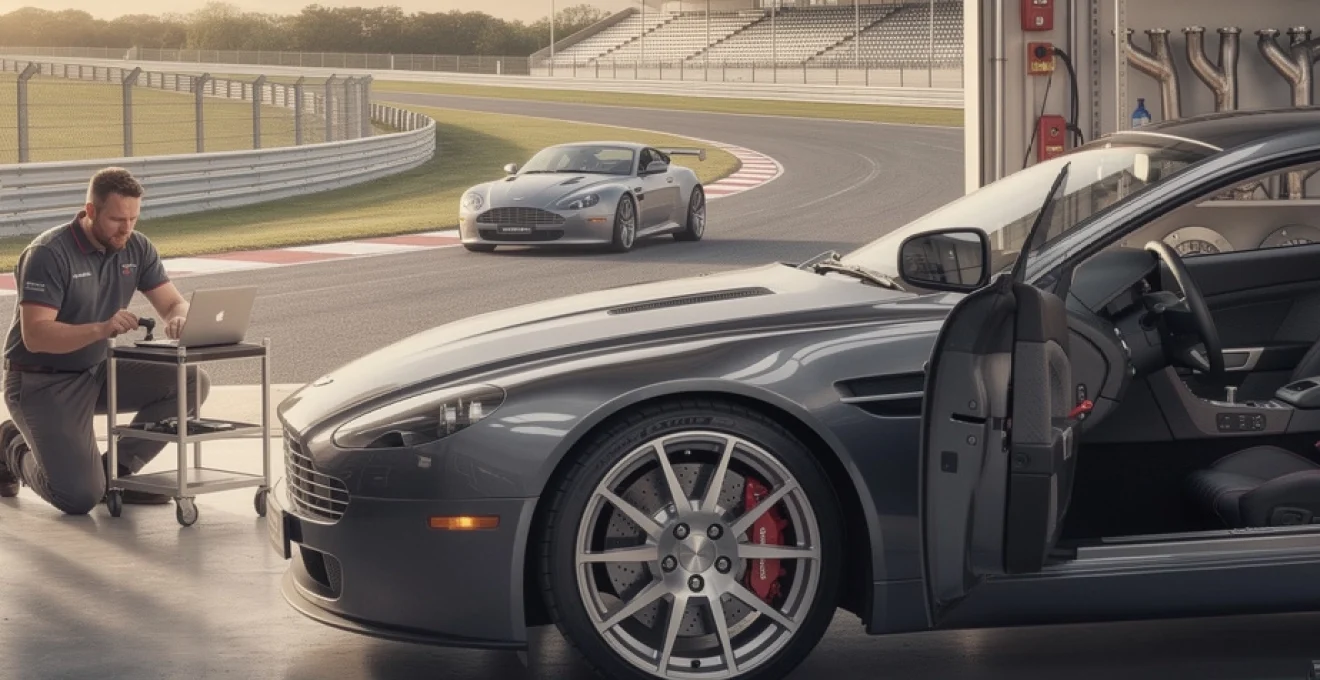
The 2007 Aston Martin Vantage sits at a fascinating crossroads between old-school analogue driving thrills and modern grand touring usability. It combines compact proportions, a hand-built naturally aspirated V8 and a manual gearbox option with enough refinement to cross a continent in a single hit. If you grew up lusting after small, muscular British sports cars, this generation Vantage probably matches the mental picture exactly. You get a car that still feels special at 30 mph, yet has the bandwidth for serious track work and long-term collectible potential if you choose the right example and look after it properly.
For anyone considering ownership today, the 2007 Vantage is now firmly in modern classic territory. Depreciation has largely flattened, independent specialists have de-mystified running costs, and there is a wealth of knowledge on common issues and upgrades. That means you can approach a purchase with clear expectations about reliability, servicing and future values, while focusing on what matters most: how this compact GT actually drives and lives with you day to day.
2007 aston martin vantage overview: model year positioning, facelift distinctions and market context
Model-year 2007 sits in the early phase of the first-generation V8 Vantage, launched in 2005 and built through to the later 4.7-litre facelift cars. The 2007 Aston Martin Vantage uses the original 4.3-litre V8, paired either with a six-speed manual or the Prodrive-developed `Sportshift` automated manual. Externally, it looks almost identical to 2005–2008 examples, which is exactly why collectors value mileage, condition and specification more than tiny visual changes. Compared with many modern sports cars, this era Vantage feels refreshingly pure: compact, low, and free of intrusive driver aids beyond ABS and stability control.
At launch, the Vantage undercut rivals like the Porsche 911 Carrera S and Ferrari F430, while offering the cachet of a hand-built British GT. The 4.3’s 380 bhp output meant 0–60 mph in about 4.9 seconds and a top speed close to 175 mph, placing it squarely in serious performance territory. Market data over the last decade shows depreciation on early cars slowed dramatically after around 10–12 years, and values have remained comparatively stable since. As a result, if you buy well and maintain the car properly, overall cost of ownership can be more predictable than for a similarly priced new performance car that is still dropping like a stone.
It also helps that the design has aged exceptionally well. The 2007 Vantage retains the clean, uncluttered styling that many enthusiasts now prefer to the more aggressive lines of later turbocharged models. With approximately 8,100 coupes produced across the early generation, and a much smaller subset built with the traditional six-speed manual, you are looking at a car that feels relatively exclusive on UK roads, especially compared with high-volume German sports coupes.
VH platform engineering and chassis dynamics of the 2007 aston martin vantage
Bonded aluminium VH architecture: weight distribution, torsional rigidity and crash structures
The 2007 Vantage sits on Aston Martin’s `VH` (Vertical/Horizontal) architecture, a bonded aluminium structure that underpinned several models of the era. Instead of a traditional steel monocoque, the chassis uses extruded aluminium sections and bonded panels to deliver excellent torsional rigidity without excessive weight. In practice, that means response feels immediate and consistent; the car reacts as a single piece rather than flexing over bumps. Weight distribution is close to the ideal 50:50 front to rear, thanks to the front-mid mounted engine and rear-mounted transaxle.
This VH platform was engineered with advanced crash structures and carefully tuned deformation zones, allowing the Vantage to meet stringent safety regulations while keeping mass under control. Kerb weight for a 2007 manual coupe sits around 1,570 kg, broadly comparable to its rivals of the time yet with a more compact footprint. For you as an owner, the result is a car that feels solid and confidence-inspiring even at motorway speeds, yet still agile enough for B-road use. Many drivers remark that the chassis feels closer to a finely made piece of architecture than a simple frame, which is exactly what the VH concept aimed to achieve.
Double wishbone suspension tuning: bilstein dampers, anti-roll bars and nürburgring calibration
Suspension is by double wishbones at each corner, a layout favoured for its precise control of wheel camber and toe. The original setup on the 2007 Vantage uses passive Bilstein dampers and coil springs, tuned to strike a balance between long-distance comfort and body control. Development miles around the Nürburgring and on UK roads gave the car a distinctly European feel: it rolls a little compared with ultra-stiff modern track specials, but loads up progressively and communicates grip levels clearly.
Anti-roll bars front and rear help keep the car flat through faster corners, but the suspension still allows enough compliance for poor UK surfaces. Think of it like a well-fitted tailored suit rather than a race suit: it moves with you, instead of against you. Later factory options such as the `Sport Pack` introduced stiffer springs and revised Bilstein valving, sharpening response at the cost of some ride comfort. Many owners upgrading to modern dampers retain the original geometry philosophy, as the base chassis tuning is fundamentally very sound for both road and occasional track use.
Steering, brakes and tyres: ZF rack, brembo braking system and OEM tyre specifications (pirelli P zero, bridgestone potenza)
One of the standout features of the 2007 Aston Martin Vantage is its hydraulically assisted steering. The ZF rack provides weight and feedback that many electric systems struggle to match. You feel the texture of the tarmac and the build-up of cornering forces through the wheel, which makes the car feel alive at normal speeds. Steering ratio is quick without being nervous, so small inputs are enough for tight bends, but motorway stability remains secure and relaxing.
Braking is handled by Brembo four-piston callipers with sizeable ventilated discs. When maintained correctly with quality pads and fresh fluid, stopping performance is entirely in keeping with a 175 mph GT. OEM tyre fitment at the time included Pirelli P Zero and Bridgestone Potenza options in 19-inch sizes. Modern replacements with similar characteristics – a stiff sidewall and high-speed rating – help retain the original balance. Many owners report that moving to high-quality Bridgestone Potenza or equivalent performance tyres transforms both wet grip and steering feel, especially on UK roads that see year-round use.
Manual vs sportshift transmission integration with the rear-mounted transaxle and limited-slip differential
Both manual and `Sportshift` gearboxes in the 2007 Vantage are mounted at the rear as part of the transaxle, helping achieve that even weight distribution. The six-speed manual is a conventional H-pattern unit with a mechanical feel that suits the car’s analogue character. It is paired with a mechanical limited-slip differential, giving strong traction out of slower corners. Most enthusiasts and collectors actively seek manual cars, which explains why they often command a premium on the used market.
`Sportshift` is an automated single-clutch manual operated by paddles, with the clutch and shift actions controlled hydraulically. It is not a torque-converter automatic. Driven correctly – engaging manual mode, using the paddles and lifting slightly on upshifts – it can feel engaging and reasonably quick. If you treat it like a conventional auto and rely heavily on full automatic mode, shifts will feel abrupt or sluggish. The system also expects you to allow a few seconds of idle after start-up for calibration. Understanding this character from the outset is essential if you are considering a Sportshift car as a value-focused entry into Vantage ownership.
4.3-litre V8 powertrain, performance figures and common engine revisions on early vantage models
AJ37 4.3 V8 technical specification: displacement, compression ratio and lubrication system
The 4.3-litre V8 in the 2007 Vantage, often referred to internally as `AJ37`, is derived from a Jaguar architecture but extensively reworked by Aston Martin. Displacement is 4,280 cc, with a compression ratio around 11.3:1, helping the engine deliver its 380 bhp at 7,300 rpm and 302 lb ft of torque at 5,000 rpm. It thrives on revs; peak power sits high in the range, although there is more mid-range than figures suggest thanks to the variable inlet system and careful tuning.
A key feature is the dry-sump lubrication system. Instead of oil sitting in a single sump under the crank, it is scavenged and stored in a separate tank, reducing the risk of oil starvation during sustained high-g cornering. This layout also lets the engine sit lower in the chassis, improving the centre of gravity. For fast road use and track days, dry-sump lubrication is a major reliability advantage when maintained properly with correct oil grades and intervals.
Performance data: 0–60 mph, top speed and in-gear acceleration compared with the later 4.7 V8 vantage
Officially, the 4.3 V8 Vantage coupe delivers around 4.9 seconds for 0–60 mph and a top speed of 175 mph. Independent testing tended to place real-world 0–62 mph times in the 5.0–5.2 second range depending on surface and driver. That puts the 2007 car roughly on par with period 911 Carrera S models and more than quick enough for modern traffic. In-gear acceleration from 50–70 mph in fourth is brisk and flexible, aided by relatively short gearing and the fat part of the torque curve sitting in the 3,000–5,500 rpm band.
The later 4.7-litre engine, introduced for the 2008–2009 facelift, pushed power to around 420 bhp and torque to 346 lb ft. On paper, 0–60 mph dropped to about 4.7 seconds. In practice, owners usually comment that the 4.7 feels stronger in the mid-range and less dependent on revs, while the 4.3 encourages you to explore the top end. If you mostly drive on twisty B-roads and enjoy working the gearbox, the 4.3 is still a very quick car; the difference to the 4.7 is noticeable but not night-and-day, especially below motorway speeds.
| Specification | 4.3 V8 Vantage (2007) | 4.7 V8 Vantage (later) |
|---|---|---|
| Power | 380 bhp @ 7,300 rpm | ~420 bhp @ 7,300 rpm |
| Torque | 302 lb ft @ 5,000 rpm | ~346 lb ft @ 5,000 rpm |
| 0–60 mph | ~4.9 seconds | ~4.7 seconds |
| Top speed | 175 mph | ~180 mph |
Known 4.3 engine issues: oil consumption, coil pack failures and catalytic converter degradation
Properly maintained, the 4.3-litre V8 is generally robust, but there are known patterns worth factoring into any pre-purchase inspection. Some engines exhibit higher oil consumption, especially if driven hard from cold or not serviced on time. Regularly checking oil levels is essential; treat it like a high-performance motorcycle engine rather than a generic commuter car. Coil pack failures can appear on higher-mileage examples, typically manifesting as misfires under load or at idle.
Catalytic converter degradation is another topic often discussed among owners. Over time and with repeated heat cycling, the substrate inside the cats can break down. In rare cases, debris can be ingested back into the engine, causing scoring. This is one reason many enthusiasts opt for upgraded exhaust manifolds and high-flow cats from respected specialists. A thorough inspection including diagnostics, emissions readings and a road test at full operating temperature gives you a clear picture of the health of the engine and exhaust system.
Popular performance upgrades: bamford rose exhaust manifolds, ECU remaps and airbox modifications
The 4.3 Vantage responds well to sympathetic modifications that retain the car’s GT character while unlocking extra power and sharper response. One of the most popular upgrades involves equal-length performance exhaust manifolds and sports catalysts from well-known specialists such as Bamford Rose. These reduce back pressure, improve breathing and typically release a noticeable increase in mid-range torque and overall power, often quoted at 20–30 bhp gains when combined with an ECU remap.
Custom ECU mapping refines throttle response, removes some factory flat spots and optimises fuelling for modern high-octane fuels. Airbox and intake modifications can also help, though gains here are usually smaller. Done together, a well-tuned 4.3 can approach or match the performance of a stock 4.7 while keeping the lighter early chassis feel. For you as an owner, these changes also add emotional value: the engine note becomes richer, throttle pick-up sharper, and the car feels more eager along a favourite stretch of road.
Interior craftsmanship, infotainment and ergonomics in the 2007 aston martin vantage cabin
Hand-stitched leather, aluminium switchgear and optional carbon fibre interior pack
Open the frameless door of a 2007 Vantage and the first impression is dominated by leather and metal rather than plastic. Almost every major surface is wrapped in hand-stitched hide, with contrasting stitching and carefully matched grain. The centre console and many minor controls use solid-feeling aluminium switchgear, giving an impression closer to a high-end watch than a mass-produced sports car. Optional packs added carbon fibre trim to the centre stack, gear surround and door pulls, bringing a more overtly sporty look.
This focus on craftsmanship is one of the reasons early Vantages still feel special today. Sit inside a well-kept example and it is easy to believe the car cost its original six-figure list price. If you value tactile quality and a sense of occasion every time you drive, the 2007 cabin delivers in ways that many newer, screen-heavy interiors do not. Caring for the leather with quality products and keeping the car garaged when possible helps slow age-related wear, particularly on the dash top and seat bolsters.
Seat configurations: standard sports seats vs lightweight carbon buckets and seating position ergonomics
Most UK-market 2007 cars came with standard electrically adjustable sports seats, often with heating and memory functions. These seats provide a good compromise between support on long journeys and lateral grip in corners. Taller drivers up to around 6 ft 3 in can usually find a comfortable seating position thanks to generous fore-aft travel and a low mounting point. The absence of rear seats, unlike the DB9’s occasional 2+2 layout, means the front cabin actually feels roomier for driver and passenger.
Lightweight carbon buckets were available later and on special editions, though are rare on early 2007 cars. If you intend to use the Vantage for regular track days or spirited driving, retrofitting buckets is possible and can lower the driving position further while saving several kilograms. As always, you should spend proper time in any Vantage before purchase to confirm ergonomics; the relationship between pedal box, steering wheel and gear lever is central to long-term enjoyment, particularly on a car as involving and driver-focused as this.
Infotainment and navigation: volvo-derived audio, early sat-nav systems and bluetooth retrofits
The infotainment in a 2007 Aston Martin Vantage reflects its era. Many components are Volvo-derived, including elements of the audio system and early satellite navigation. Sound quality from the optional premium audio system is respectable, with additional speakers and a subwoofer helping fill the small cabin. The original pop-up navigation, however, feels dated by modern standards. It functions, but graphics, routing logic and input methods are far behind current smartphone-based solutions.
Fortunately, the aftermarket has caught up with the car. Discreet Bluetooth hands-free kits and streaming modules can be integrated without spoiling the cabin aesthetics, giving you modern convenience while retaining the classic centre stack design. Some owners go further and fit Apple CarPlay-based systems hidden behind the factory controls, though such modifications should be carefully documented for resale. Treat the original nav as a period detail rather than a must-have tool, and plan to rely on your phone or a high-quality retrofit for serious navigation duties.
Cabin wear points: dashboard shrinkage, sticky buttons and headlining detachment
Like many hand-trimmed cars of this age, the Vantage cabin has a few typical wear points to check. Prolonged exposure to heat and UV can cause the leather on the dash top to shrink, leading to lifted edges around vents and the instrument binnacle. Repair is possible but can be labour-intensive if retrimming is required. Some of the soft-touch coatings on buttons and knobs may become sticky over time, especially if incorrect cleaning products have been used.
Another known issue is headlining detachment, particularly on cars stored in very warm or humid environments. If you are viewing a potential purchase, look for sagging fabric or signs of re-gluing. None of these issues are insurmountable, but they affect the perceived quality and can be used as negotiation points. Proactive care – garaging, using sunshades and avoiding harsh cleaners – significantly slows these age-related problems, keeping the cabin feeling tight and luxurious.
Ownership experience in the UK: running costs, servicing schedules and real-world reliability
Annual and major service intervals: approved aston martin dealer vs AMOC specialist (e.g. nicholas mee, chiltern aston)
Service intervals for the 2007 V8 Vantage are typically every 10,000 miles or 12 months, whichever comes first. A standard annual service covers oil, filters, general checks and software updates, while more extensive “major” services cycle in items like spark plugs and brake fluid. Using an approved Aston Martin dealer gives you access to factory diagnostic equipment and official stamps, which can help preserve resale value, especially on low-mileage collector-grade cars.
However, many UK owners use respected independent specialists – often AMOC (Aston Martin Owners Club) recommended – such as Nicholas Mee or Chiltern Aston. These garages are staffed by technicians who cut their teeth at main dealers and know the cars intimately. Labour rates are usually lower, and advice tends to be very pragmatic. A sensible strategy for long-term ownership is to mix high-quality independent servicing with occasional main dealer visits for specific campaigns or when preparing the car for potential sale.
Typical running costs: insurance groups, road tax, fuel economy and consumables (brakes, clutch, tyres)
The 2007 Vantage sits in a high insurance group, so premiums can be substantial for younger drivers or urban postcodes. In the UK, road tax for this emissions band is also at the upper end, currently in the £600+ per year region. Fuel economy reflects the nature of a 4.3-litre naturally aspirated V8. Expect around 17 mpg on enthusiastic cross-country drives and up to 24–25 mpg on steady motorway cruising, giving a tank range of roughly 280–400 miles from the ~80-litre fuel tank.
Consumables need realistic budgeting. Front and rear brake pads and discs are not cheap, though they last well under normal road use. Tyres in the correct staggered 19-inch sizes cost a significant sum for a full set, but high-quality rubber pays back in grip and safety. Manual clutches can last anywhere from 30,000 to 60,000 miles depending on driving style; Sportshift cars may see more frequent replacements if used heavily in traffic or driven aggressively without mechanical sympathy. Factoring in an annual servicing budget and a contingency fund for wear items keeps ownership stress to a minimum.
Reliability patterns: sportshift actuator wear, clutch lifespan and electrical gremlins
Overall reliability for the 2007 Aston Martin Vantage is better than some expect, especially if the car is used regularly rather than left to sit. Engines and gearboxes are fundamentally strong when serviced on time. That said, there are patterns to recognise. Sportshift systems rely on hydraulic pumps and actuators that can wear, leading to slow or inconsistent shifts, error messages or refusal to select gear. Replacement or overhaul is not cheap, so a thorough test drive including hot restarts and low-speed manoeuvres is crucial.
Electrical gremlins usually manifest as intermittent issues with window regulators, door modules or minor sensors such as oxygen sensors. These tend to be annoying rather than catastrophic, but diagnosis can take time. Many owners find that using the car at least weekly and keeping the battery healthy with a trickle charger dramatically reduces random faults. Think of the Vantage as a thoroughbred: it does best when exercised, warmed through regularly and maintained preventively rather than reactively.
Extended warranties, AM works inspections and pre-purchase inspection (PPI) checklist
For additional peace of mind, some owners opt for extended warranties offered by Aston Martin or reputable warranty providers. These can cover major powertrain components and high-cost systems like the Sportshift actuator, though terms and exclusions need reading carefully. An AM Works inspection at the heritage workshop in Newport Pagnell is a respected option for those seeking an expert opinion on condition, originality and any upcoming maintenance.
Before buying, commissioning a full pre-purchase inspection (PPI) from an independent specialist is highly recommended. A robust PPI checklist should include: cold and hot start behaviour, compression or leak-down testing if indicated, inspection of suspension bushes, brake disc thickness, tyre date codes, clutch wear readings (where available), body corrosion hotspots and a full diagnostic scan. Spending a few hundred pounds on a detailed report can save thousands, and helps you prioritise any immediate work once the car is in your care.
Used market analysis: 2007 aston martin vantage values, depreciation curves and spec desirability
Price bands in the UK used market: mileage brackets and condition grading (A1, good, project)
On the UK used market, 2007 V8 Vantage coupes typically span a broad price range, reflecting mileage, condition and provenance. At the top end, A1-condition, very low-mileage manual cars with impeccable histories and desirable colours can command significantly higher prices, often sought by collectors. These cars may have under 20,000 miles, full main dealer or top-tier specialist service records, and minimal cosmetic wear.
In the mid-range sit “good” condition examples with 40,000–70,000 miles, tidy bodywork and regular servicing, often at independents. These represent the sweet spot for many buyers wanting to drive the car regularly without fretting over every extra mile. At the bottom of the market are higher-mileage or cosmetically tired cars, sometimes described as projects. While tempting on price, such cars need careful budgeting for deferred maintenance, paintwork and interior refurbishment. In many cases, paying more upfront for a better example makes long-term financial sense.
Specification desirability: manual vs sportshift, sport pack, N400 and rare colour combinations
Specification has a tangible impact on desirability and residual values. Manual gearbox cars are generally the most sought after, particularly by enthusiasts who value a three-pedal, six-speed driving experience. `Sportshift` cars often sell for less, creating an opportunity if you are comfortable with the system’s character and potential maintenance. Factory `Sport Pack` suspension, where fitted, is favoured by those keen on sharper handling, though some daily drivers may prefer the standard setup for UK roads.
Special editions such as the N400, introduced slightly later, add further appeal with unique colours, trim and often extra equipment. Rare exterior colours – for example, certain greys, deep blues or special-order finishes – combined with tasteful interiors can make a 2007 Vantage stand out in a crowded online listing. Ultimately, the right combination of manual gearbox, carefully chosen options and a classic colour scheme helps a car remain attractive to the broadest range of future buyers.
Impact of service history: fully stamped AM main dealer book vs independent specialist records
Service history is one of the most powerful indicators of how a Vantage has been treated. A fully stamped Aston Martin main dealer book, supported by itemised invoices, gives confidence that no corners were cut, especially during the early years of ownership when software updates and campaigns were more frequent. For low-mileage, collectible cars, this kind of history can justify a meaningful price premium and faster resale.
Independent specialist records are not second-rate, however, provided the workshop is credible and documented. Detailed invoices from recognised names, showing use of correct parts and oils, often impress informed buyers more than a stamp alone. Gaps in history or vague paperwork should trigger questions. If you are planning to keep the car long-term, choosing a respected independent and maintaining an organised folder of invoices, MOT history and inspection reports supports residual values and reassures the next custodian.
Resale considerations: private sale vs specialist dealer consignments and part-exchange at aston martin
When the time comes to move on, how you sell your 2007 Vantage can be as important as what you ask for it. Private sales generally yield the highest return but require more effort: creating a thorough advert, handling viewings and test drives, and ensuring secure payment. Buyers will expect evidence of your ownership style, so presenting a clean car, full documentation and a clear narrative about maintenance goes a long way.
Specialist dealers offer two main routes: outright purchase or sale-or-return consignments. Consignment usually means a higher final price for you compared with trade sale, with the dealer handling marketing, finance and part-exchange from incoming customers. Part-exchange at an Aston Martin dealer or high-end retailer is the most convenient option, though you trade some financial upside for that ease. Choosing the right moment in the seasonal market – for example, advertising a coupe ahead of the spring and summer driving season – helps maximise visibility and desirability.
Modifications, track-day setup and long-term preservation strategies for a 2007 vantage
Many 2007 Aston Martin Vantage owners personalise their cars, but the key is to treat modifications like a well-planned restoration rather than a quick tuning project. High-quality, reversible upgrades preserve both the driving experience and future resale value. For track-day preparation, common changes include fast-road geometry with slightly more negative camber, upgraded pads and high-temperature brake fluid, and a switch to fresh, high-performance tyres. Combined with the inherently stiff VH chassis, these tweaks create a car that feels composed over multiple hot laps without losing its GT character on the drive home.
Long-term preservation focuses on corrosion prevention and careful storage. Although the aluminium structure does not rust like steel, subframes, fasteners and some steel brackets can corrode, especially on UK cars used year-round. Treatment with products such as ACF-50 on exposed metalwork and regular cleaning of wheel arches and underbody areas slows deterioration significantly. Paint protection film on vulnerable areas – front bumper, bonnet edge, rear haunches – helps prevent stone chips from spoiling the clean lines. Inside, conditioning the leather, keeping seals supple and maintaining a stable garage environment all contribute to a cabin that still feels tight and luxurious a decade from now.
If you intend to keep the car for decades rather than years, thinking like a curator rather than just a driver pays dividends. Building a relationship with a trusted specialist, keeping detailed photographic records of work, and driving the car often enough to keep everything moving all support both reliability and long-term value. Combine that with sympathetic mechanical enhancements – such as improved exhaust manifolds, carefully chosen suspension upgrades and subtle infotainment modernisation – and the 2007 Vantage becomes not only a rewarding weekend companion, but also a credible long-term modern classic to hand on in excellent condition.