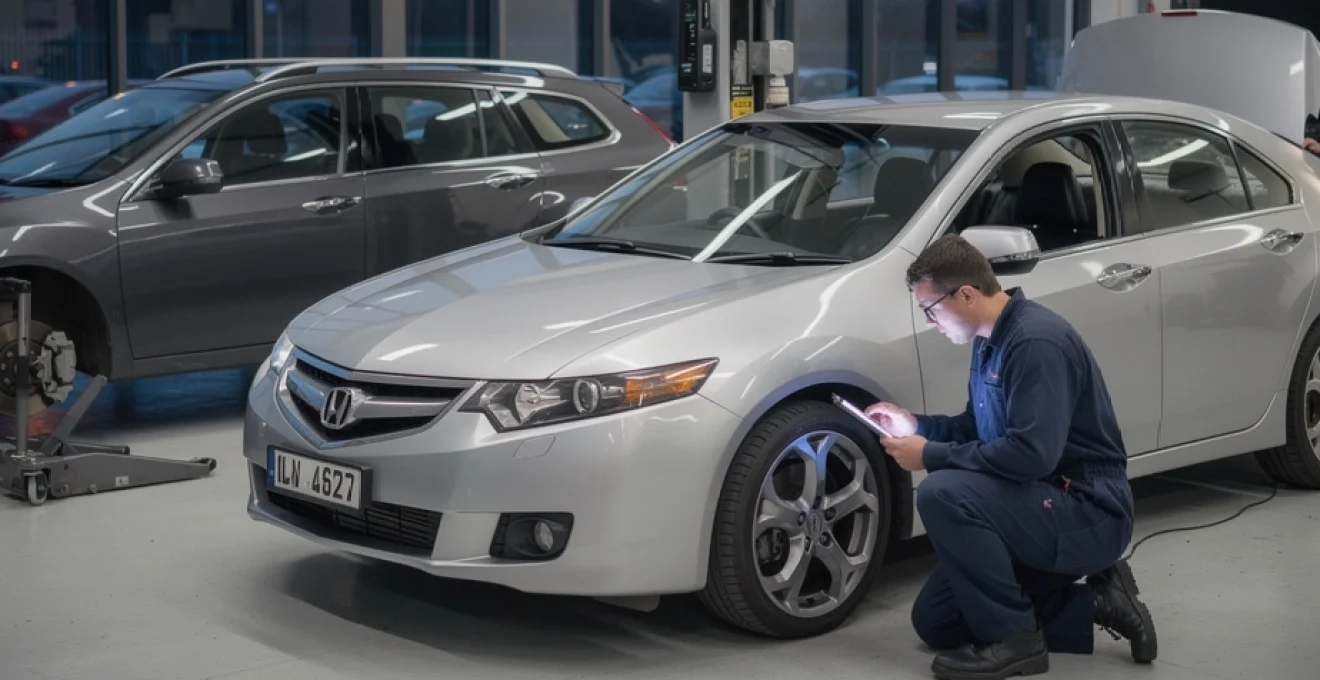
The 2009 Honda Accord sits at an interesting crossroads in the used-car market. Values are still accessible, yet the car already has a strong reputation for longevity, comfort and understated style. If you are weighing up a 2009 Accord against newer mid‑size saloons and estates, you are essentially choosing between modern tech and proven engineering. Rising fuel prices and higher new‑car finance costs in 2024 have pushed many drivers to look more closely at dependable older models, and the eighth‑generation Accord (2008–2012) is one of the most popular choices for drivers who want a frugal, well‑built and *quietly* enjoyable car to live with every day.
Beyond the strong badge appeal, the 2009 Accord offers a broad model range, from sensible 2.0 i‑VTEC saloons to muscular 2.4 i‑VTEC and torquey 2.2 i‑DTEC Tourers. The design feels solid and slightly sporty, with a cabin that still holds up well for ergonomics and comfort. For anyone considering a 100k‑plus‑mile example, understanding the detailed specifications, reliability record and typical faults is the key to buying confidently and enjoying low‑stress ownership.
2009 honda accord model range overview: UK trims, body styles and powertrains
Saloon vs tourer (estate) body styles: dimensions, kerb weight and practicality
In the UK, the 2009 Honda Accord was offered as a four‑door saloon and a five‑door Tourer (estate). Both share the same platform and wheelbase, but Honda shortened the Tourer’s rear overhang versus the previous generation, which slightly reduced boot volume. The saloon’s boot is usefully square, while the Tourer adds the versatility of a low load lip, folding rear seats and under‑floor storage.
Kerb weight varies depending on engine and trim, but most 2009 Accords fall between roughly 1,450 kg and 1,600 kg. The Tourer is typically 40–70 kg heavier than the saloon, thanks to its extended body and extra glass. That added mass is noticeable only marginally in fuel consumption and acceleration; in everyday driving, you are more likely to value the improved load‑carrying ability than notice the weight penalty.
For family use and long‑distance travel, the Tourer is hard to ignore. Rear legroom is generous, shoulder room in the front seats exceeds 58 inches in the eighth‑gen design, and both body styles provide comfortable front bucket seats that work well on motorway journeys. If you regularly carry bikes, dogs or bulky work equipment, the estate is the more versatile choice; if you mostly drive solo or with a couple of passengers, the saloon’s slightly lower running costs may appeal more.
ES, EX, type S and EX GT trim levels: equipment, upholstery and safety tech differences
The UK 2009 Honda Accord trim hierarchy is fairly straightforward. At the core of the range sit the ES and EX trims, with the more sporting Type S and range‑topping EX GT positioned above. ES models already include dual‑zone climate control, alloy wheels and a good quality audio system. EX cars add luxuries such as leather upholstery, heated seats, upgraded stereo options and more sophisticated interior trim finishes.
The Type S trim focuses on a slightly firmer, more responsive drive. It typically pairs with the higher‑output diesel and petrol engines, bringing sportier body styling, larger wheels and, in some cases, a lower‑profile tyre package. EX GT sits at the top of the pecking order, combining the luxury kit of the EX with additional safety technology and cosmetic enhancements. If you value a well‑equipped used car with heated leather, Bluetooth, and advanced audio, hunting for an EX or EX GT makes a lot of sense.
Across the range, safety equipment is strong for a 2009 model. Front, side and curtain airbags, active head restraints, and Honda’s Vehicle Stability Assist (VSA) with traction control all come as standard. That means even a modest ES 2.0 i‑VTEC offers a high baseline of active and passive safety, which is reassuring if you are buying for family transport or high‑mileage commuting.
Facelift and production timeline: key changes in late-2009 honda accord updates
The eighth‑generation Accord launched in the UK in 2008, and the 2009 cars sit in the early phase of this production run. A light facelift and running changes arrived later, including minor styling tweaks, updated infotainment options and incremental improvements to emissions and refinement. These changes were evolutionary rather than revolutionary: the core chassis, engines and interior architecture remained the same.
From a used‑buyer’s point of view, later 2009‑on cars can benefit from subtle software revisions to the diesel engine management and small updates to interior trim quality and sound insulation. Expect fewer rattles, slightly better long‑term wear on switches and plastics, and marginally improved fuel and emissions performance where Euro standards were tightened. However, an early‑2009 model that has been well maintained is still a very compelling choice.
Buyers comparing early and late 2009 Accords should focus more on service history, MOT records and overall condition than on the minor cosmetic differences introduced in the mid‑cycle update.
Comparing UK, US and EU 2009 accord specifications and naming conventions (CU vs CP chassis)
One point that confuses many shoppers researching the 2009 Honda Accord online is the difference between UK/EU and US models. The European Accord is built on the so‑called CU/CP platform, and is mechanically closer to the US Acura TSX than to the larger American Accord. As a result, US reviews and forums often reference engines, trims and interior layouts that do not match UK cars exactly.
The UK 2.0 i‑VTEC and 2.4 i‑VTEC petrols plus the 2.2 i‑DTEC diesel are distinct from some of the US powertrains, and equipment levels differ too. For example, some North American models received V6 engines and coupe body styles that were never offered in Europe, where buyers instead had the choice of saloon and estate. When researching reliability and common faults, prioritise information specific to the CU/CP‑chassis Accord to ensure that the advice actually applies to your prospective UK car.
Engine specifications: 2.0 i-VTEC, 2.4 i-VTEC and 2.2 i-DTEC performance data
2.0 i-VTEC R20A: power output, torque curve, timing chain and fuel economy figures
The entry‑level 2.0 i‑VTEC engine in the 2009 Accord is part of Honda’s R20A family. In UK tune it typically produces around 153–155 bhp and 190 Nm of torque, enough for relaxed daily driving rather than outright performance. The power delivery is smooth, with a linear torque curve that suits town and motorway use. VTEC operation in this engine is tuned more for efficiency and emissions than for a high‑revving, sporty feel.
From a maintenance perspective, the 2.0 i‑VTEC uses a timing chain rather than a belt, which is a major advantage on a high‑mileage used purchase. As long as oil changes are kept up, the chain system is highly durable and rarely needs major attention. Real‑world fuel economy usually falls in the 32–38 mpg range on mixed driving, with combined WLTP‑equivalent figures in period around the mid‑30s mpg. CO₂ emissions sit roughly in the 170–180 g/km band, placing the car in a reasonable UK road tax bracket for a medium‑sized petrol saloon.
2.4 i-VTEC K24: VTEC engagement, rev characteristics and motorway performance
For drivers who want more power, the 2.4 i‑VTEC (K24) is the sweet spot in the 2009 Accord lineup. With around 198–200 bhp and 230 Nm of torque, this engine transforms the character of the car without a huge penalty in fuel use. VTEC engagement is more noticeable than in the 2.0, giving a stronger surge towards the top end of the rev range, yet the engine is perfectly happy to cruise quietly at motorway speeds.
The K24 is widely respected for its durability and responsiveness. In everyday use, it provides a reassuring reserve of overtaking power, especially when paired with the 6‑speed manual gearbox. Acceleration from 50–70 mph feels strong, which is ideal for UK A‑roads and motorway slip roads. You can expect real‑world consumption in the high‑20s to low‑30s mpg depending on driving style, with CO₂ figures edging closer to 200 g/km. For many enthusiasts, the 2.4 i‑VTEC is the engine that best balances refinement, performance and long‑term reliability in this generation of Accord.
2.2 i-DTEC N22B diesel: common-rail injection, turbocharger specs and euro 5 emissions
The star of the UK diesel range is the 2.2 i‑DTEC N22B. This all‑aluminium unit was heavily re‑engineered from the older i‑CTDi, gaining high‑pressure common‑rail injection, a more advanced variable‑geometry turbocharger and a complex emissions after‑treatment system to meet Euro 5 standards. Output in 2009 models is typically around 148 bhp with a stout 350 Nm of torque, delivered from relatively low revs.
On the road, the 2.2 i‑DTEC feels strong and flexible, ideal for carrying loads in the Tourer or covering long distances on the motorway. Official combined economy figures around 49–53 mpg were competitive at launch, and many careful drivers still see 45+ mpg in mixed driving. CO₂ emissions for the diesel sit down in the 140–150 g/km bracket, meaning lower UK road tax bands versus the petrols. For high‑mileage use, particularly if you cover 15,000+ miles a year, the diesel can make compelling economic sense—provided its emissions hardware is in good health.
Real-world mpg, CO₂ g/km and road tax bands for petrol vs diesel 2009 honda accord
Choosing between petrol and diesel in a 2009 Accord hinges on annual mileage and usage pattern. Petrol 2.0 i‑VTEC models generally average low‑ to mid‑30s mpg, while the 2.4 i‑VTEC is closer to 30 mpg. CO₂ figures hover in the 170–200 g/km range, so you can expect mid‑tier UK Vehicle Excise Duty (VED) costs. The 2.2 i‑DTEC, by contrast, can often deliver mid‑40s mpg in the real world, dropping CO₂ into the 140–150 g/km area and lowering annual tax.
On a five‑year horizon, the difference in fuel spend between a petrol and diesel Accord can run into four‑figure sums if you rack up motorway miles. One US‑market analysis suggested that older Accords might cost only around $250 more in fuel over five years than some much newer models, underlining how efficient these engines remain. However, potential diesel repair costs—particularly around the DPF and EGR—need factoring into the equation, especially on a car with 100k+ miles.
Known issues with diesel DPF, EGR valve and swirl flaps on high-mileage N22B engines
While the 2.2 i‑DTEC has an excellent core reliability record, its emissions equipment can cause headaches on older, high‑mileage cars. The diesel particulate filter (DPF) is designed to regenerate regularly by burning off soot, but lots of short trips or faulty sensors can prevent this, leading to a clogged filter. Symptoms include loss of power, increased fuel consumption and dashboard warning lights.
The EGR (exhaust gas recirculation) valve can also suffer from carbon build‑up, causing rough running, hesitation and fault codes. In some markets, swirl flaps in the intake manifold have been known to stick or wear, although this is much rarer than on some rival brands. Preventive maintenance is key: regular high‑speed runs to allow proper DPF regeneration, high‑quality low‑ash oil, and timely software updates from Honda all help extend the life of the diesel’s emissions system. If you are looking at a 2.2 i‑DTEC, a pre‑purchase diagnostic scan and evidence of correct servicing are virtually essential.
Transmission and drivetrain: manual, automatic and chassis codes
6-speed manual gearbox reliability, synchro wear and clutch life expectancy
The majority of UK 2009 Accords were sold with a 6‑speed manual gearbox. This transmission has a strong reputation for durability, with clean, precise shift action when properly maintained. Typical high‑mileage issues include slight synchro wear, especially on second and third gears, which can manifest as notchiness or baulking when shifting quickly. However, catastrophic failures are rare.
Clutch life depends heavily on driving style, but 80,000–120,000 miles is common before replacement on mixed use. Cars used primarily in city traffic tend to wear clutches more quickly, while motorway‑biased usage is kinder. When test‑driving a manual 2009 Accord, pay attention to any clutch slip under full throttle in higher gears and note any crunching when engaging second from cold.
5-speed automatic transmission behaviour, torque converter lock-up and fluid change intervals
The optional 5‑speed automatic is a conventional torque‑converter unit rather than a dual‑clutch design. That means smooth, progressive take‑up and fewer horror stories than some modern multi‑clutch systems. Gear changes are generally unobtrusive, and torque‑converter lock‑up in higher gears helps keep engine revs low at motorway speeds, aiding refinement and fuel economy.
Honda historically described its automatic transmission fluid as “lifetime”, but real‑world experience shows that periodic fluid changes significantly improve longevity. For a 2009 Accord auto, many specialists recommend changing the fluid every 40,000–60,000 miles. Shuddering on light throttle, delayed engagement when selecting Drive or harsh shifts are signs that a fluid service—or in rare cases, more extensive work—may be required.
Front-wheel-drive layout, differential design and traction control calibration
All 2009 Honda Accord models in the UK use a front‑wheel‑drive layout with a conventional open differential and electronic traction control via Honda’s Vehicle Stability Assist. There is no mechanical limited‑slip differential, but the stability and traction systems are well calibrated to handle the power and torque levels involved, even in the 2.4 i‑VTEC and 2.2 i‑DTEC variants.
Under hard acceleration from low speeds on wet roads, you may feel a brief tug at the steering wheel (torque steer), especially in higher‑output manual models. However, the chassis is tuned to provide neutral, predictable behaviour, and the electronics intervene gently rather than abruptly. For the vast majority of drivers, the Accord’s front‑drive setup is more than capable, with fewer maintenance demands than an all‑wheel‑drive system and lower fuel consumption.
Recommended transmission fluids (honda ATF, MTF) and service intervals for longevity
Using the correct fluids in the 2009 Accord’s transmission is vital for long‑term reliability. Honda’s own manual transmission fluid (often labelled as MTF‑3) is formulated to provide the right balance of protection and shift quality. Generic gear oils can cause stiff shifting, especially in cold weather. For the manual gearbox, a fluid change every 60,000 miles is a sensible target, particularly on high‑mileage or older cars.
Automatic models should use Honda‑approved ATF (commonly ATF‑DW1), and mixing different fluid types is strongly discouraged. Regular fluid changes help prevent valve body wear and torque‑converter issues. Evidence of proper transmission servicing in the history file is a positive sign that the previous owner cared about the mechanical health of the car, and should influence your buying decision accordingly.
Chassis, suspension and braking hardware on the 2009 honda accord
Double-wishbone front suspension, multi-link rear and ride quality tuning
One of the engineering highlights of the eighth‑generation 2009 Accord is its suspension layout. Up front, Honda uses a sophisticated double‑wishbone design, while the rear features a multi‑link arrangement. This combination aims to deliver precise wheel control and a compliant ride—similar in philosophy to what is found in some premium German saloons.
On the road, the 2009 Accord feels composed and secure, with good body control and reassuring stability at motorway speed. Ride comfort is generally excellent, especially on the smaller wheel options, although the Type S and EX GT trims with sportier suspension and larger wheels can feel firmer over sharp bumps. For many drivers, the Accord strikes a useful balance between comfort and agility, making it an appealing choice for long‑distance touring and daily commuting alike.
OEM brake disc and pad specifications, ABS, EBD and VSA stability systems
Braking hardware on the 2009 Accord is more than up to the car’s performance. All models receive ventilated front discs and solid rear discs, sized appropriately to each engine and trim level. OEM‑spec pads are tuned for a progressive pedal feel and low noise, which suits the car’s understated, executive character.
Safety systems include ABS, EBD (electronic brake‑force distribution) and Honda’s VSA stability control, which monitors steering angle, wheel speed and yaw rate to help keep the car stable in emergency manoeuvres. When maintained properly, these systems are very reliable, and faults are relatively rare. As with any used car, a dashboard ABS or VSA warning light that stays illuminated should trigger further investigation before purchase.
Wheel and tyre sizes (16″, 17″, 18″) and their impact on handling and comfort
Wheel and tyre size has a noticeable impact on how the 2009 Accord feels. Many ES models run on 16‑inch alloys with higher‑profile tyres, providing the most comfortable ride and the lowest replacement costs. EX and Type S variants often feature 17‑inch wheels, which sharpen steering response slightly without a dramatic loss in comfort. Some EX GT and sport‑oriented models wear 18‑inch wheels with lower‑profile rubber.
Larger wheels look more aggressive and can offer marginally better grip in dry conditions, but they also transmit more road imperfections into the cabin. Tyre costs on 18‑inch sizes are higher, and there is a greater risk of damage to rims on pothole‑strewn roads. For UK conditions and mixed driving, many owners find that 17‑inch wheels offer the best balance between aesthetics, handling and everyday comfort.
Reliability record: common 2009 honda accord faults and long-term durability
Honda reliability reputation vs rivals: toyota avensis, mazda 6 and volkswagen passat
Honda has long been associated with strong reliability, and data from sources such as RepairPal and J.D. Power reinforces this for the 2008–2012 Accord generation. Across those years, reliability scores sit between 80/100 and 86/100, putting the Accord at or near the top of the mid‑size saloon class. Some later eighth‑gen models even score comparably to much newer cars, highlighting the underlying robustness of the design.
Against key rivals like the Toyota Avensis, Mazda 6 and Volkswagen Passat, the 2009 Accord compares very favourably. The Toyota may edge it slightly on some long‑term ownership surveys, but the Honda often equals or surpasses the Mazda and Volkswagen in terms of major mechanical reliability. In professional opinion, the biggest distinction is consistency: well‑maintained Accords tend to just keep going, with fewer random, high‑cost failures than some competitors.
Independent reliability rankings consistently place the eighth‑generation Honda Accord among the most dependable mid‑size cars of its era, even compared to some 2020s models.
Electrical gremlins: bluetooth module failure, window regulators and dashboard warning lights
No car is entirely free of electrical quirks, and the 2009 Accord is no exception. Common issues include intermittent failures of the Bluetooth or hands‑free control module, which can lead to pairing problems or dropped calls. Replacement modules and labour are not extortionate, but diagnosing the fault correctly is important to avoid parts‑swapping guesswork.
Some owners also report problems with electric window regulators, particularly on high‑use driver’s doors. Symptoms include slow movement, sticking or a complete failure to operate. Additionally, occasional dashboard warning lights—such as airbag or VSA warnings—can appear due to sensor or wiring glitches rather than serious system failures. When inspecting a car, check all windows, locks, lights and in‑car electronics thoroughly and budget for minor electrical fixes on older examples.
Suspension wear points: front lower control arm bushes, drop links and shock absorbers
The Accord’s sophisticated suspension inevitably has a few wear points. Front lower control arm bushes and anti‑roll‑bar drop links are common replacements on cars with higher mileages or those that have tackled a lot of rough roads. Worn bushes can cause vague steering, uneven tyre wear and clunks over bumps.
Shock absorbers also degrade with age, leading to floaty handling and longer braking distances. Replacing tired dampers and associated bushes can restore the Accord’s original composure and is a worthwhile investment if you plan to keep the car for several more years. When viewing a used car, uneven tyre wear, rattles from the front end or a bouncy ride are clear signs that suspension work may be due.
Bodywork and corrosion resistance: subframe rust, door edges and tailgate on tourer models
Overall, the 2009 Honda Accord has good corrosion resistance, especially compared with some earlier generations and certain contemporaries. The main areas to watch are the underbody and subframes, where surface rust can develop over time, particularly on UK cars exposed to winter road salt. While light surface corrosion is common and usually not a major concern, heavily rusted subframes can eventually require replacement.
Door edges and wheel arches generally hold up well, but stone chips that are left untreated can lead to bubbling paint. On Tourer models, the tailgate and its lower lip deserve particular attention, as trapped moisture and dirt can accelerate rust. Regular cleaning, paint touch‑ups and, ideally, an underbody rust‑proofing treatment can extend the life of the bodywork significantly.
High-mileage case studies: 150k+ mile 2.2 i-DTEC and 2.0 i-VTEC engines in UK taxi use
Real‑world examples of high‑mileage 2009 Accords help illustrate their durability. Many UK taxi and private‑hire operators have run 2.2 i‑DTEC Tourers and 2.0 i‑VTEC saloons well past 150,000 miles, sometimes exceeding 200,000 miles, with only routine servicing and expected wear‑and‑tear parts. Engines that receive regular oil changes, correct fluids and sensible warm‑up and cool‑down practices tend to remain smooth and efficient long after some rivals have developed major problems.
Professional drivers value downtime as much as fuel costs, so the fact that so many choose the Accord is telling. High‑mileage examples often still feel tight and rattle‑free inside, a testament to Honda’s build quality. For a private buyer considering a 100k‑plus‑mile car, these taxi case studies offer reassuring evidence that a well‑looked‑after 2009 Accord still has a lot of life left.
Maintenance, ownership costs and used-buying checklist for a 2009 honda accord
Service schedule: timing chain inspection, valve clearance checks and fluid changes
Sticking to a proper service schedule is the single best way to keep a 2009 Accord reliable. Petrol engines with timing chains require periodic inspection rather than scheduled replacement, but noisy chains or rattling at start‑up should be investigated quickly. Valve clearances on some engines are also adjustable; skipped checks can lead to poor running and reduced efficiency over time.
Oil and filter changes every 10,000–12,000 miles (or annually) are advisable, with shorter intervals if much of your driving is short‑trip or urban. Coolant, brake fluid, and gearbox oil should be replaced at manufacturer‑recommended intervals, or sooner on high‑mileage cars. In practice, a diligent owner who invests in preventive maintenance often spends less in the long term than someone who only fixes issues once they become major.
Typical UK MOT failure points for 2009 honda accord and how to pre-empt them
Reviewing common MOT failure points gives useful insight into where the 2009 Accord tends to age. Suspension components such as drop links, bushes and worn shock absorbers appear frequently, as do issues with brakes—particularly worn discs and pads or handbrake inefficiency on older rear calipers. Exhaust leaks and minor emissions issues can also crop up, especially on high‑mileage diesels.
Lighting faults, worn tyres and windscreen damage are additional everyday items that often cause MOT headaches. You can pre‑empt many of these by having a trusted garage perform a pre‑MOT check, or by inspecting tyres, lights and wiper blades yourself. For diesels, ensuring that the engine is properly warmed and periodically driven at sustained speed helps keep the DPF and EGR systems functioning within emissions limits.
Parts availability, OEM vs aftermarket components and indicative repair costs
Because the eighth‑generation Accord sold in healthy numbers globally, parts availability for the 2009 model remains good. Genuine Honda components are often the safest choice for critical items such as engine sensors, suspension arms and brake parts, as they are designed to work precisely with the car’s systems. Aftermarket components can be cost‑effective for service items, but quality varies widely.
- Routine servicing (oil, filters, inspections) typically costs less than many premium‑badge rivals.
- Common repairs, such as ignition switch replacement or door lock actuators, often fall in the £150–£300 range at independent specialists.
- Suspension refreshes (bushes, drop links, shocks) can be more expensive, but restore the car’s original ride and handling balance.
Using a reputable independent Honda specialist can significantly reduce labour costs compared with main dealers, while still ensuring that correct procedures and fluids are used. Over a five‑year span, ownership costs for a 2009 Accord are typically below average for the segment, especially when compared with more complex turbocharged or hybrid rivals.
Pre-purchase inspection guide: diagnostic scan, cold start behaviour and test drive checks
A careful pre‑purchase inspection is crucial to avoid buying someone else’s neglected project. Start with a full diagnostic scan using an OBD‑II reader; this can reveal stored fault codes for the engine, ABS, airbags or emissions systems even if the dashboard is currently clear. Pay close attention to codes relating to the DPF, EGR or fuel system on diesel cars, as these can indicate costly upcoming repairs.
- Arrive when the engine is cold and observe start‑up: excessive rattling, smoke or hesitation suggest underlying issues.
- On the test drive, check clutch take‑up, gearshift smoothness, steering feel and brake performance in varied conditions.
- Listen for suspension knocks over speed bumps and rough surfaces, and note any vibration under braking that might indicate warped discs.
- After the drive, inspect for fluid leaks, check coolant and oil condition, and review the service history for regular stamps and major work.
If you are not confident assessing a car yourself, paying for a professional inspection is money well spent. A specialist used‑car inspection can highlight hidden accident damage, poorly repaired corrosion and impending mechanical failures, allowing you to negotiate on price or walk away. With the right checks, a 2009 Honda Accord—whether 2.0 i‑VTEC, 2.4 i‑VTEC or 2.2 i‑DTEC—can provide many more years of reliable, comfortable and economical motoring for you and your passengers.