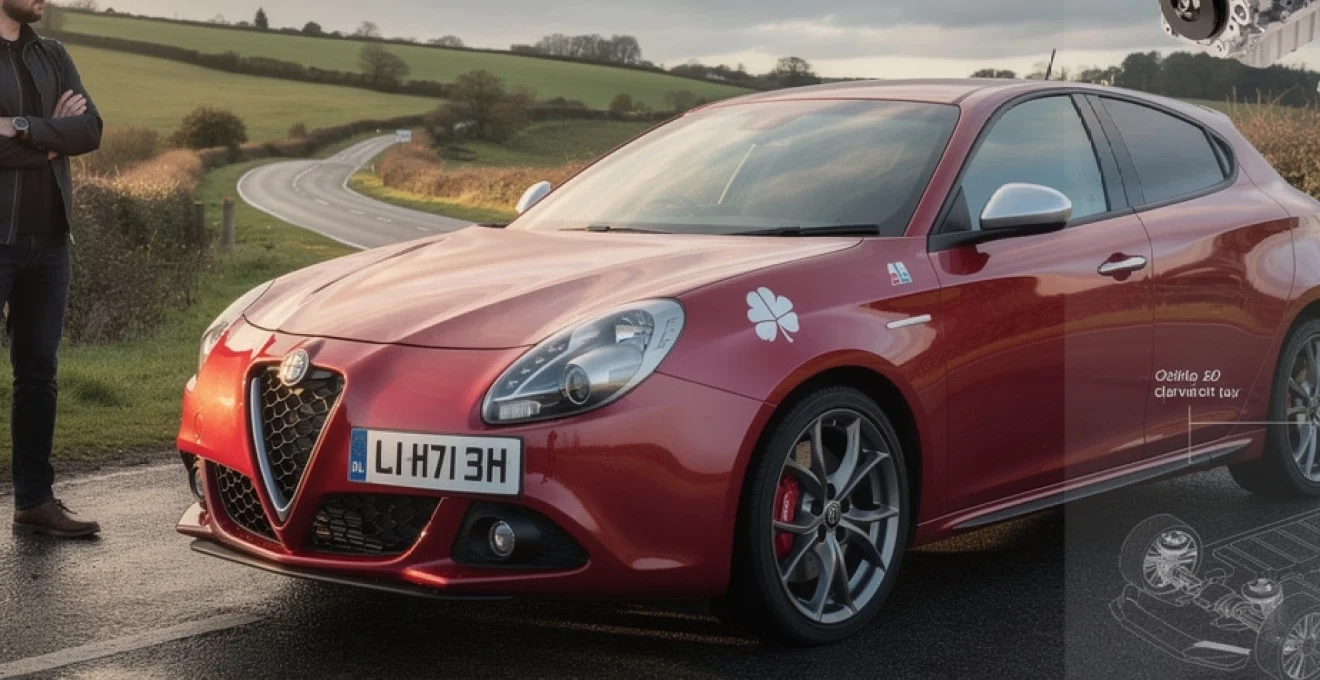
The Alfa Romeo Giulietta Cloverleaf – or Quadrifoglio Verde in Italian – sits in a rare space between everyday family hatchback and emotional driver’s car. It blends classic Alfa styling cues with a punchy turbocharged engine, a sophisticated chassis and just enough practicality to make sense as a daily driver. For anyone tired of defaulting to a Golf GTI or Focus ST, the Giulietta Cloverleaf offers a different flavour of hot hatch: one with heritage, theatre and a slightly mischievous character. Yet it is not without compromise, especially if you expect razor‑sharp track‑day dynamics. Understanding where this Cloverleaf excels, and where it merely matches the class average, helps you decide whether it fits your life, your commute and your favourite B‑roads.
Alfa romeo giulietta cloverleaf overview: model history, QV lineage and UK market positioning
Evolution of the giulietta nameplate: from 1960s tipo 750/101 to modern type 940 cloverleaf
The Giulietta badge has been part of Alfa Romeo folklore since the mid‑1950s. The original Tipo 750/101 Giulietta coupés and spiders became icons of post‑war Italian design, pairing light weight with revvy all‑alloy engines. The modern Giulietta (Type 940), launched in 2010, revived the name for a five‑door family hatch destined to replace the ageing 147. Where the classic cars were rear‑wheel drive, the new Giulietta adopted a front‑wheel‑drive compact platform shared within the Fiat group, designed from the outset to handle power levels up to hot‑hatch territory.
The Cloverleaf version arrived as the range flagship. Early cars were badged Quadrifoglio Verde in continental Europe, with UK marketing often using the English Cloverleaf label. Power came from a 1.75‑litre turbocharged four‑cylinder engine, echoing the capacity of Alfa’s legendary 1750 units from the 1960s and 1970s. Although far more modern in execution, the intent was similar: compact size, strong mid‑range torque and a willingness to rev, wrapped in a body that looks more glamorous than rivals from Germany or mainstream brands.
Quadrifoglio verde (QV) and cloverleaf branding: heritage, racing pedigree and badge significance
The green four‑leaf clover has appeared on Alfa Romeos for over a century. It originated as a racing talisman on 1920s Grand Prix cars and quickly became the in‑house shorthand for the fastest, most focused models. In the Giulietta Cloverleaf, the QV emblem is not just a sticker pack. It signifies a higher‑output engine, bespoke suspension tuning, bigger brakes and an equipment list aligned with the top of the UK range.
For enthusiasts, those enamel Cloverleaf badges on the front wings carry emotional weight. They link the Giulietta to track‑bred machinery and to more recent QV icons like the 147 GTA and 156 GTA. While the modern car is more measured than those wild, nose‑heavy V6s, it still aims to deliver that extra dose of character that you do not always find in more clinical rivals.
The Quadrifoglio Verde badge has always indicated an Alfa that goes beyond mere transport and into the realm of passion, performance and design.
Giulietta cloverleaf in the UK range: trim hierarchy, standard equipment and pricing versus Veloce/Lusso models
Within the UK line‑up, the Giulietta Cloverleaf sits firmly at the top of the petrol range above trims such as Progression, Distinctive, Lusso and Veloce. Where lower‑spec cars use smaller petrol or diesel units, the Cloverleaf combines its 1.75 TBi engine with a comprehensive specification. Standard kit typically includes dual‑zone climate control, sports suspension, 18‑inch alloy wheels in a dark finish, red brake callipers, leather sports seats with contrast stitching, Bluetooth connectivity and Alfa’s DNA drive‑mode selector.
When new, list prices hovered around £24,500–£26,000 in the UK, placing the Giulietta Cloverleaf directly against the Volkswagen Golf GTI and Ford Focus ST, and slightly below premium compact hatches from BMW and Audi. Buyers effectively paid a £2,000–£3,000 uplift over a well‑equipped 1.4 MultiAir Giulietta for the extra performance and QV styling cues. On the used market today, that premium has narrowed, so a Cloverleaf often represents strong value if you find a well‑maintained example.
Key rivals benchmarked: volkswagen golf GTI, ford focus ST, renault mégane RS and BMW 125i M sport
The Giulietta Cloverleaf was benchmarked primarily against the Mk6 and early Mk7 Volkswagen Golf GTI, the 2.5‑litre and later 2.0‑litre Ford Focus ST, and the Renault Mégane RS. In straight‑line performance, its 0–62 mph time of about 6.8 seconds and 150 mph top speed place it bang in the middle of this group. Compared with a Golf GTI, the Alfa delivers slightly more visual drama and a richer cabin design, but less ultimately involving steering and body control.
Against the Focus ST, especially the five‑cylinder 2.5‑litre model, the Giulietta trades a more cultured ride and better fuel economy for a soundtrack that enthusiasts often find too muted from inside the cabin. The Mégane RS remains the sharper track weapon, but the Giulietta offers a more forgiving daily experience and more distinctive styling. If you are cross‑shopping a BMW 125i M Sport, the Alfa counters rear‑wheel‑drive balance with a lower purchase price and more generous standard equipment.
Engine, transmission and performance of the giulietta cloverleaf 1.75 TBi
1.75 TBi turbocharged petrol unit: direct injection, MultiAir technology and boost characteristics
The heart of the Giulietta Cloverleaf is its 1.75 TBi turbocharged petrol engine. Displacing 1,742 cc, this all‑aluminium four‑cylinder uses direct fuel injection, a single twin‑scroll turbocharger and variable valve timing with advanced control over inlet and exhaust phases. Some markets refer to MultiAir technology; in practice, it allows extremely fine management of valve lift and timing, improving both torque delivery and emissions.
One of the most impressive traits is the engine’s minimal turbo lag. Thanks to the combination of smallish turbo, high‑pressure injection and clever valve overlap that allows exhaust gas pulses to help scavenge cylinders at low revs, boost arrives early and builds smoothly. On the road, that means you rarely sit waiting for the turbo to wake up. Instead, the Giulietta pulls cleanly from relatively low engine speeds, especially in Dynamic mode where throttle mapping and boost are sharpened.
Power and torque figures: 232 bhp (235 PS) output, torque curve and real‑world drivability
Official outputs stand at 232 bhp (235 PS) at 5,500 rpm and up to 340 Nm (251 lb ft) of torque from as low as 1,900 rpm when the DNA switch is set to Dynamic. In Normal mode, torque is slightly reduced to around 300 Nm to improve traction and efficiency. Peak figures do not tell the whole story, though. The shape of the torque curve is broad and flat, giving the Giulietta a muscular mid‑range that makes overtakes quick and effortless.
In real‑world UK driving, that translates to brisk progress without constantly chasing the redline. You can short‑shift at around 4,000 rpm and still access strong acceleration, particularly on A‑roads and motorways. Some reviewers note that the initial hit of acceleration fades slightly closer to the 6,250 rpm rev limiter, so the engine feels more like a torquey GT unit than a screaming track motor. For daily use and long‑distance commuting, that character is often preferable.
On paper the Giulietta Cloverleaf is only a few tenths slower than some rivals, yet in‑gear it feels every bit as rapid thanks to generous mid‑range torque.
Alfa TCT dual‑clutch gearbox vs 6‑speed manual: shift logic, ratios and launch behaviour
Early UK Giulietta Cloverleaf models were sold exclusively with a 6‑speed manual gearbox. Later cars offered Alfa’s TCT (Twin Clutch Transmission) dual‑clutch automatic, broadening appeal for urban drivers. The manual box has reasonably short ratios and helps keep the 1.75 TBi on the boil, but testers often criticised its slightly rubbery feel and less‑than‑precise gate. When assessing a used example, a tight, clean shift action suggests the linkage has been well cared for.
The TCT gearbox uses two clutches to pre‑select gears for rapid changes. In Dynamic mode, shifts are quick and decisive, and the software holds on to lower gears longer under spirited driving. In Normal, it leans towards early upshifts for economy. Launch behaviour is generally smooth, although hard starts can highlight mild traction limitations of the front‑wheel‑drive layout. Manual control via paddles gives enthusiastic drivers more involvement, though the calibration still puts protection and smoothness ahead of aggressive shift shocks.
Acceleration, top speed and in‑gear performance: 0–62 mph, 50–70 mph and motorway overtaking
Alfa Romeo quotes a 0–62 mph time of 6.8 seconds for the Giulietta Cloverleaf and a top speed of around 150 mph (242 km/h). Independent tests typically confirm these numbers within a few tenths. More telling for everyday driving is the 50–70 mph in‑gear acceleration, where the strong torque output allows the car to surge forward in fourth or fifth gear without hesitation.
On a typical UK motorway, the Cloverleaf sits at 70 mph at comfortable revs, leaving ample headroom for quick overtakes. Drop a gear and the response is immediate, with little sense of turbo delay. This real‑world overtaking ability is one reason owners often compare the Giulietta favourably with larger‑engined rivals, even if headline sprint times look slightly less dramatic.
Fuel economy, CO₂ emissions and euro 5/6 compliance in mixed UK driving cycles
Official combined fuel consumption for the Giulietta Cloverleaf sits around 37.2 mpg (7.6 l/100 km), with CO₂ emissions at roughly 177 g/km under older NEDC testing. In mixed UK conditions – town driving, some motorway cruising and spirited B‑road use – many owners report averages nearer 27–30 mpg. That is still a notable improvement over older five‑cylinder Focus ST models, which can dip into the low 20s when driven hard.
The engine meets Euro 5, and later lightly updated versions approach Euro 6 standards thanks to revised mapping and emissions hardware. Stop‑start is fitted as standard to reduce idle emissions in urban traffic. If you routinely cover high mileages, budgeting realistically for high‑20s mpg rather than the brochure figures gives a more honest view of day‑to‑day running costs.
Chassis, suspension and handling characteristics of the giulietta cloverleaf
Compact platform architecture: front‑wheel‑drive layout, weight distribution and torsional rigidity
The Giulietta uses a compact platform featuring front‑wheel drive, with the engine mounted transversely. Kerb weight for the Cloverleaf is about 1,320 kg, giving a power‑to‑weight ratio in the region of 177 bhp per tonne. Weight distribution is slightly nose‑biased, as expected for the class, but extensive use of high‑strength steel delivers high torsional rigidity. That stiff structure allows the suspension to do its job without the body flexing underneath.
High rigidity benefits ride and handling in several ways: fewer creaks over rough surfaces, more accurate steering response and more predictable behaviour at the limit. If you are used to older Alfas, the Giulietta feels like a generational leap in this respect, closer to contemporary German rivals in body control and refinement.
Suspension set‑up: MacPherson front, multilink rear and cloverleaf‑specific spring and damper tuning
Suspension follows a tried‑and‑tested formula: MacPherson struts at the front and a sophisticated multi‑link arrangement at the rear. The Cloverleaf variant sits lower than standard Giulietta models by around 10 mm and uses firmer springs, re‑valved dampers and thicker anti‑roll bars. The goal is to deliver sharper turn‑in and reduce body roll without making the ride unliveable on British roads.
On the road, the set‑up strikes a balance that leans more towards grand‑tourer than hardcore hot hatch. The ride is firm but generally compliant, particularly on motorways and smoother A‑roads. Broken urban surfaces and sharp potholes remind you of the 18‑inch wheels and low‑profile tyres, but the damping is more controlled than on Alfa’s smaller MiTo. If you are stepping out of a Focus ST, the Giulietta will likely feel slightly softer and more refined, but less aggressively tied down in fast direction changes.
Steering calibration and alfa DNA modes: dynamic, normal and all weather mapping
Steering assistance in the Giulietta Cloverleaf is electric, with a rack‑mounted motor intended to reduce friction and inertia compared with column‑mounted systems. The steering is quick and accurate, but feedback is not as rich as in the very best hot hatches. Alfa’s DNA switch alters steering weight, throttle response and stability control thresholds across three modes: Dynamic, Normal and All Weather.
Dynamic mode reduces steering assistance, giving the wheel more natural heft, sharpens the initial throttle response and unlocks the full torque map. Normal softens everything, prioritising comfort and efficiency; around town it can feel a little anaesthetised, as if the car is operating through treacle compared with Dynamic. All Weather dials back throttle sensitivity further and makes traction and stability systems intervene earlier, useful in heavy rain or light snow.
Electronic differential Q2 (electronic LSD): torque vectoring, traction out of bends and understeer control
Instead of a mechanical limited‑slip differential, the Giulietta Cloverleaf uses an electronic system branded Q2. It works via the stability control, braking a spinning inside wheel and sending more torque to the outside wheel with better grip. The system is most active in Dynamic mode, where it aims to curb understeer and improve traction on corner exits.
In practice, you feel a subtle tugging at the steering wheel when powering out of tight bends, indicating the system’s efforts. It is less transparent and ultimately less effective than a quality mechanical LSD in a Mégane RS, but it does allow the front end to bite harder than a purely open diff. Enthusiast drivers may still find the car’s natural balance a touch inert; lifting the throttle mid‑corner does not easily coax the rear into play as in some rivals.
High‑speed stability and b‑road handling: body control, grip levels and comparison with golf GTI mk7
On UK motorways, the Giulietta Cloverleaf feels composed and stable. The lowered suspension and firm damping limit float over long undulations, and crosswinds do not unsettle the car significantly. Tyre and wind noise are present at 70 mph but remain acceptable for a performance hatch. Long‑distance comfort is one of the model’s strengths, making it a realistic choice for regular trips between cities.
On B‑roads, grip levels are strong, especially on premium tyres, and body roll is well contained. Yet some testers found the car slightly aloof at the limit compared with a Mk7 Golf GTI. Where the VW communicates its intentions clearly and invites you to lean on the chassis, the Giulietta maintains a safer, more neutral stance, with stability control stepping in relatively early. For fast road driving rather than track work, many drivers will appreciate this security, but those expecting a razor‑sharp hot hatch may crave more adjustability and feedback.
Braking system, wheels and tyres on the giulietta cloverleaf
Brembo braking hardware: front 4‑piston callipers, ventilated discs and fade resistance
The Cloverleaf specification includes upgraded brakes featuring Brembo four‑piston front callipers gripping large ventilated discs. Rear brakes are also ventilated, providing consistent stopping power under repeated heavy use. In everyday traffic, pedal feel is progressive, although some early test cars were criticised for a slightly spongy initial response in Normal mode.
Dynamic mode activates a pre‑fill function that primes the brake system when you lift off the throttle abruptly, anticipating hard braking. This tightens pedal feel and shortens reaction time, particularly when approaching fast corners. On a spirited drive through hilly terrain, fade resistance is good for a front‑drive hatch of this weight, provided pads and fluid are in good condition.
Factory alloy wheel options: 18‑inch turbine and 5‑hole designs, offset and unsprung mass
Most Giulietta Cloverleafs leave the factory on distinctive 18‑inch alloy wheels, often in a turbine‑style or five‑hole design with a dark titanium finish. Beyond the aesthetics, these wheels play a role in handling, as larger diameter rims increase unsprung mass and reduce sidewall compliance. Alfa did a respectable job calibrating the suspension to cope, but rough urban roads can still transmit sharp impacts to the cabin.
If you are particularly sensitive to ride comfort, sourcing a set of OEM 17‑inch alloys with the correct offset can bring a noticeable improvement, albeit at the expense of some visual drama. For many buyers, the way the 18s fill the arches and complement the Cloverleaf body kit is worth the trade‑off.
OEM tyre specifications: 225/40 R18 fitment, pirelli P zero vs michelin pilot sport alternatives
Standard tyre size on the Cloverleaf is 225/40 R18. Factory fitments often included Pirelli P Zero or similar UHP (ultra‑high‑performance) rubber. Tyre choice has a profound impact on steering feel, grip and ride. Many owners report positive results switching to Michelin Pilot Sport 4, which combine strong wet‑weather grip with a slightly more forgiving sidewall.
When evaluating a used car, inspecting tyre brand and tread depth provides clues about prior maintenance priorities. Mixed budget tyres on each corner suggest cost‑cutting and may compromise the carefully tuned balance of the chassis. Premium, matching tyres are a good sign that the previous owner cared about the way the car drives.
ABS, EBD and stability control integration with dynamic driving modes
The braking system integrates ABS (anti‑lock braking system), EBD (electronic brake‑force distribution) and Alfa’s VDC stability control. In Normal and All Weather modes, these systems intervene early to maintain stability on slippery surfaces. Dynamic relaxes thresholds slightly, allowing brief chirps of wheelspin on exit and mild slip angles before stepping in.
During hard braking on undulating or cambered roads, the hazard lights may flash as the system detects emergency‑style deceleration. This can feel over‑protective to enthusiastic drivers, but it reflects a tuning philosophy that prioritises safety over ultimate adjustability. For everyday UK roads and variable weather, the integration is well judged, even if it sacrifices some of the playful side that Alfa purists might expect.
Exterior design, aerodynamics and cloverleaf styling cues
Signature alfa romeo styling: scudetto grille, trilobe front fascia and LED lighting signatures
Design is one of the Giulietta Cloverleaf’s strongest draws. At the front, the signature Scudetto shield grille and trilobe fascia immediately identify it as an Alfa Romeo. Sculpted headlamps with LED daytime running signatures flow into a bonnet that looks almost coupé‑like in profile. The rear door handles hide in the window frame, giving the illusion of a three‑door hatch, which many buyers find more elegant than conventional five‑door rivals.
Side surfacing is taut and muscular, with a rising beltline and pronounced haunches over the rear wheels. At the rear, distinctive LED light clusters frame the tailgate, while a subtle roof spoiler tidies the airflow. For buyers who respond strongly to design, the Giulietta often wins the emotional vote over more conservative competitors.
Cloverleaf‑specific bodywork: side skirts, sports bumpers and rear diffuser detailing
Cloverleaf models receive a subtle but effective body kit. Deeper front and rear bumpers, discreet side skirts and a diffuser‑style treatment around the exhaust all hint at the extra performance without resorting to outlandish wings or vents. The large Cloverleaf badges on the front wings divide opinion; some love the bold heritage reference, others find themselves explaining the shamrock motif at every fuel stop.
These enhancements, combined with the lowered ride height and dark 18‑inch wheels, give the Giulietta QV real presence. Parked next to a standard Giulietta, the stance difference is obvious, and next to a Golf GTI the Alfa almost looks like a concept car that somehow made it onto the road.
Aerodynamic considerations: drag coefficient, front splitter and rear spoiler function
Aerodynamically, the Giulietta achieves a drag coefficient in the region of 0.29–0.30, competitive for a sporty hatch of its era. The front bumper and under‑tray work together to manage airflow beneath the car, while the integrated splitter reduces lift at speed. At the rear, the roof spoiler and subtle diffuser help stabilise the tail and reduce turbulence around the rear window.
These elements do not turn the Giulietta Cloverleaf into a track aero monster, but they contribute to its high‑speed stability and respectable fuel economy. On a long motorway journey, you notice the way the car feels planted without requiring constant steering corrections, a sign that the aero balance is fundamentally sound.
Paint colours and appearance packs: rosso alfa, bianco madreperla and dark chrome finishes
The Cloverleaf palette includes traditional Rosso Alfa solid red and the more expensive 8C‑inspired Competizione Red, a deep, lustrous metallic that became something of a halo colour. Options such as Bianco Madreperla pearlescent white and dark metallic greys give buyers less extrovert choices while still highlighting the car’s curves. Dark chrome or titanium appearance packs add smoked finishes to window surrounds and grille inserts.
On the used market, a Giulietta Cloverleaf in a desirable colour with factory 18‑inch turbine wheels and Cloverleaf badges intact typically commands a premium. If you value residuals, focusing on these sought‑after combinations makes sense, as more unusual hues can be harder to sell on later.
Interior, infotainment and driving ergonomics in the giulietta cloverleaf
Sports seating and driving position: bolstering, adjustability and pedal alignment
Inside, the Giulietta Cloverleaf continues the theme of Italian flair. Deeply bolstered sports seats trimmed in leather or leather/Alcantara hold you securely in place without being overly tight, even on longer trips. Height adjustment and a wide range of steering wheel reach and rake allow most drivers to find a comfortable posture, though taller individuals may wish for a slightly lower seat base.
A recurring criticism concerns pedal alignment. The clutch, brake and accelerator are set slightly offset towards the centre of the car, and in Cloverleaf guise the wider metal pedal covers bring them closer together. This can make heel‑and‑toe downshifts easier for enthusiasts, but some drivers find long journeys induce mild hip or knee discomfort. The lack of a proper left‑foot rest next to the clutch is another ergonomic oversight worth noting during a test drive.
Material quality and trim elements: leather/alcantara, carbon‑look inserts and alfa branding
Material quality in the Giulietta represented a big step up for Alfa Romeo. Soft‑touch plastics on upper surfaces, stitched leather on the steering wheel and gear lever, and tasteful carbon‑look or brushed metal inserts create a cohesive, upmarket environment. Iconic Alfa details such as separate Benzina and Acqua gauges nod to classic dashboards while remaining fully functional.
Red contrast stitching, embossed headrests and subtle QV logos reinforce the sporty brief without crossing into gimmicky territory. Compared with a contemporary Golf GTI, the Alfa’s cabin may not feel quite as bank‑vault solid, but it compensates with more visual interest and a design language that feels uniquely Italian.
Infotainment systems: uconnect head unit, bluetooth, navigation and audio performance
Earlier Giulietta Cloverleaf models use a more basic head unit with integrated Bluetooth and USB, while later facelift cars adopt the Uconnect touchscreen system with navigation options. Bluetooth hands‑free calling and audio streaming are standard, and optional Bose speakers provide a marked uplift in sound quality for music enthusiasts.
Infotainment responsiveness and graphics feel dated by 2020s standards, but functionality remains adequate if you primarily use smartphone streaming. Many owners retrofit phone mounts and rely on Android Auto or Apple CarPlay via aftermarket solutions. If you value factory navigation and premium audio, focusing on late‑model cars with full options is worthwhile.
Cabin practicality: rear legroom, boot space and ISOFIX suitability for family use
Despite its coupé‑like roofline, the Giulietta offers respectable interior space. Front occupants enjoy ample head and shoulder room, while rear passengers benefit from a decent bench and acceptable legroom for adults on shorter trips. Dark headlining and a sloping window line can make the back feel a little enclosed, so the optional panoramic sunroof is a desirable feature if you regularly carry passengers.
Boot capacity sits around 350 litres, comparable to a Golf GTI and sufficient for weekly shopping or a weekend away. Split‑folding rear seats increase versatility, though the loading lip is a touch high. ISOFIX mounting points on the outer rear seats allow secure installation of child seats, helping the Giulietta Cloverleaf serve as a family car during the week and an enjoyable driver’s car at the weekend.
Reliability, common issues and ownership costs for the giulietta cloverleaf
Known mechanical weak points: turbocharger wear, timing belt intervals and cooling system checks
Like any performance‑oriented turbo petrol, the Giulietta Cloverleaf benefits from diligent maintenance. The 1.75 TBi engine is fundamentally robust, but long oil‑change intervals and cheap lubricants accelerate wear on the turbocharger and timing components. Sensible owners use high‑quality fully synthetic oil meeting Alfa’s specifications and stick to 10,000‑mile or annual changes rather than stretching intervals.
The timing belt and water pump should typically be replaced every 4–5 years or around 60,000 miles, whichever comes first. A full cambelt kit with tensioners and pulleys is strongly recommended. Neglect here risks catastrophic engine damage. Cooling system integrity is also critical; regular checks for leaks around the radiator, hoses and thermostat housing help avoid overheating, which can warp the aluminium cylinder head.
Electrical and electronic glitches: infotainment faults, sensor failures and warning lights
Electrical niggles are not uncommon. Owners report occasional failures of parking sensors, ABS wheel sensors and intermittent warning lights for systems such as VDC or start‑stop. Many of these issues trace back to failing sensors or ageing battery voltage, rather than deeper control‑unit faults. A professional diagnostic scan before purchase can reveal stored error codes and pending problems.
Infotainment systems sometimes suffer from frozen screens or Bluetooth pairing glitches, particularly on early cars. Software updates from Alfa dealers or independent specialists often resolve these concerns. As with many modern cars, preventing water ingress into door looms and ensuring good earth connections goes a long way toward keeping electrical systems reliable.
Servicing schedules, parts pricing and independent specialist support in the UK
Servicing schedules vary slightly by model year, but an annual service with oil and filter change is a sensible minimum. A typical UK independent Alfa specialist will charge less than a main dealer while offering deeper familiarity with marque‑specific issues. Parts pricing for wear items such as brakes, filters and suspension components is broadly in line with other performance hatchbacks, though genuine QV‑specific items like Brembo callipers and bodywork can be more expensive.
For budget planning, many owners set aside a contingency fund for unexpected repairs – particularly turbo or clutch‑related work on higher‑mileage cars. Keeping ahead of preventative maintenance, including fluids, belts and alignments, reduces the risk of larger bills and maintains the crisp driving feel that defines the Giulietta Cloverleaf experience.
Insurance group ratings, road tax bands and typical depreciation curves
The Giulietta Cloverleaf generally sits in a higher insurance group than lesser Giulietta models, reflecting its power output and performance potential. Exact grouping depends on year and specification, but premiums will typically align with a Golf GTI or Focus ST for drivers with a clean record. Road tax in the UK falls into band E for many examples, with an annual cost of around £630 for earlier cars under the previous VED regime.
Depreciation has been steeper than for mainstream rivals, largely due to Alfa’s smaller market share and lingering perceptions about reliability. For used‑car buyers, this is an advantage: you can often acquire a well‑specified Cloverleaf for significantly less than an equivalent‑age GTI. Strong examples with full service history and desirable options may now have reached the bottom of their depreciation curve, making them attractive as characterful daily drivers that hold value reasonably well.
Used alfa romeo giulietta cloverleaf buyer’s checklist and model‑year differences
Pre‑facelift vs facelift models: cosmetic updates, TCT availability and equipment changes
When shopping for a used Giulietta Cloverleaf, understanding model‑year differences helps refine your search. Pre‑facelift cars (around 2010–2013) feature the original front bumper design, older infotainment hardware and manual‑only transmission in some markets. Facelifted cars gain revised headlamp and grille detailing, interior trim tweaks and, crucially for some buyers, wider availability of the TCT dual‑clutch gearbox.
Equipment levels also improved over time, with later cars more likely to include Uconnect, upgraded audio and driver‑assist features. Visual differences are subtle but noticeable side by side. If you value the latest cabin tech and potentially improved emissions compliance, focusing on 2014‑onwards examples is sensible, though earlier cars can represent stronger value if well maintained.
Service history verification: alfa main dealer stamps, cambelt changes and oil specification
A thorough service history is vital. Look for stamped service books or digital records from Alfa main dealers or recognised specialists, paying particular attention to evidence of timing belt and water pump replacement. Invoices showing correct oil specification – typically a high‑quality 5W‑40 or similar meeting manufacturer standards – indicate knowledgeable maintenance.
Red flags include long gaps between services, missing records in the first three years, or evidence of cheap, generic parts. A stack of detailed invoices demonstrating regular oil changes, brake fluid replacement every two years and periodic coolant renewals inspires far more confidence than a vague “full service history” claim without documentation.
Test‑drive inspection points: clutch feel, gearbox operation, suspension knocks and brake judder
On a test drive, start by assessing the engine from cold. It should fire promptly without excessive rattles or smoke. As you move off, pay attention to clutch take‑up; a high biting point or judder may indicate wear. The manual gearbox should shift cleanly across all six ratios, with no grinding or baulking. In TCT cars, ensure shifts are smooth in both auto and manual modes, and that the transmission engages Drive and Reverse promptly from standstill.
Find a quiet, uneven road to listen for suspension knocks or creaks over bumps, which may point to tired bushes or dampers. During a series of firm stops from moderate speed, the brakes should feel strong and consistent without vibration through the pedal, which could signal warped discs. Finally, engage Dynamic mode and confirm that throttle response, steering weight and torque output noticeably change; if they do not, the DNA system may require attention.
Aftermarket tuning and modifications: ECU remaps, intake and exhaust upgrades and warranty impact
The 1.75 TBi engine responds well to sympathetic tuning. Many specialists offer ECU remaps that safely lift power towards 280–300 bhp and torque to around 340–360 lb ft when combined with supporting hardware such as a freer‑flowing exhaust and improved intake. At these levels, the Giulietta Cloverleaf edges into Focus RS‑rival territory in straight‑line pace while retaining everyday usability.
However, higher outputs place additional stress on the clutch, gearbox, driveshafts and cooling system. For a car still under any form of extended warranty, modifications can void coverage, so careful consideration is necessary. If you buy a previously modified example, seek evidence of professional installation, dyno runs and regular oil analysis or inspection. Approached intelligently, mild tuning can unlock more of the platform’s potential; done cheaply, it risks undermining the reliability that makes the Giulietta Cloverleaf a compelling long‑term hot hatch ownership prospect.