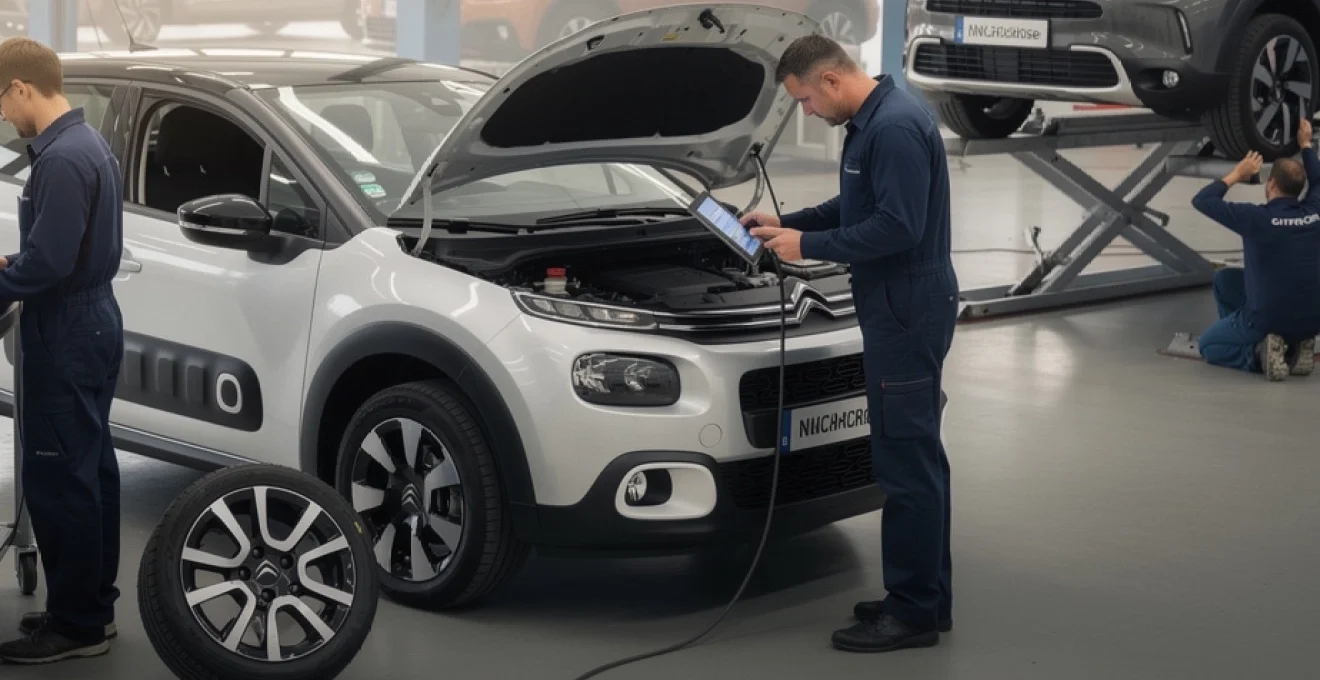
Citroën has a reputation for quirky design, soft ride comfort and clever packaging, but reliability is often the big question when you are choosing between a C3, C4, C5 Aircross or a rival from Toyota or Volkswagen. Long‑term dependability matters whether you are a high‑mileage driver, a family looking for a safe daily car, or a business operator running Berlingo vans. Claims data, owner surveys and recall histories now give a far clearer picture of how modern Citroën models stand up once the showroom shine has worn off. Understanding where these cars are strong, where they are vulnerable and how maintenance affects reliability helps you decide if a Citroën fits your appetite for risk, running costs and long‑term peace of mind.
Citroën reliability overview: long‑term dependability across C3, C4, C5 and C1 model ranges
Citroën reliability has improved notably over the last decade. In the 2023 Driver Power owner satisfaction survey, Citroën as a brand climbed to 11th out of 32 manufacturers, a big step up from 28th in 2021. Just 14–15% of owners reported an issue in the first year, a figure that is comparable with some “dependable” Japanese brands and actually lower than one major rival often cited for bulletproof reliability. For everyday drivers, that translates to a good chance of largely trouble‑free ownership in the first three to five years, especially if servicing is kept up to date.
Individual models paint an even clearer picture. The Citroën C4 topped the 2023 Driver Power car rankings overall and finished fourth specifically for reliability, while the C5 Aircross scored 90.7% and placed mid‑pack (23rd of 33) in a popular family SUV class survey. The C3 supermini consistently performs well in reliability polls and is widely regarded as a dependable, low‑stress everyday car. The older C1 city car, built in partnership with Toyota and Peugeot, is generally considered robust, simple and cheap to keep on the road, especially with its basic three‑cylinder petrol engines and manual gearboxes.
At the same time, real‑world owner feedback highlights some weak areas. Electrical gremlins, such as random warning lights or infotainment glitches, crop up more frequently than major mechanical failures. Long‑term tests and owner reports on the C5 Aircross, for example, mention broken interior trim and occasional sensor issues more often than engine or gearbox failures. This pattern is typical of modern, tech‑heavy cars across brands, but Citroën drivers are particularly sensitive because comfort and in‑car technology are key reasons for choosing the brand.
Citroën cars today are generally mechanically sound, but electrical robustness and dealer consistency can be the deciding factors in whether ownership feels effortless or frustrating.
For anyone asking “are Citroën cars reliable in the long term?”, the balanced answer is that the platforms and engines are quite durable when serviced correctly, but expectations should be set realistically around electronics and interior wear, especially once the odometer passes 80,000–100,000 miles. Choosing the right engine and gearbox combination is a major part of that reliability equation.
Mechanical reliability: engines, gearboxes and drivetrains in modern citroën cars
Puretech 1.2 turbo petrol reliability in citroën C3, C4 cactus and C4: timing belt, turbocharger and carbon build‑up issues
The PureTech 1.2 turbo petrol engine powers a vast number of Citroën C3, C4 Cactus and C4 models, so its reliability record carries a lot of weight. This three‑cylinder motor is praised for performance and fuel economy, but early versions developed a reputation for timing belt wear. The engine uses a “wet belt” running in oil, which, if left on extended change intervals, can degrade and shed material, potentially blocking oil pick‑up strainers and starving the turbocharger of lubrication.
To reduce risk, many independent specialists recommend oil changes at 10,000 miles rather than the longer official intervals, and timing belt replacement closer to 60,000–70,000 miles on early engines rather than stretching to the nominal limit. If you are buying a used Citroën C3 or C4 with a PureTech 1.2, proof of regular oil changes with the correct specification is one of the most important reliability checks you can make. A properly maintained PureTech, especially post‑2018 updates, can comfortably exceed 120,000 miles without major internal issues.
Carbon build‑up on intake valves is another consideration on small turbocharged petrol engines. Regular use of high‑quality fuel, periodic long runs at steady motorway speeds and sticking to manufacturer service schedules help minimise deposits. Problems such as rough idle or misfires can often be addressed with professional intake cleaning before turning into serious mechanical faults.
Bluehdi diesel durability in berlingo, C4 picasso and C5 aircross: DPF, EGR and AdBlue system performance
Citroën’s BlueHDi diesel engines are widely used in Berlingo vans, C4 Picasso, Grand C4 SpaceTourer and C5 Aircross SUVs. For high‑mileage drivers, these engines can be genuinely long‑lived. Taxi and fleet operators routinely report 200,000+ miles from BlueHDi units when used primarily on longer journeys. Key to this longevity is proper care of the emissions hardware: diesel particulate filter (DPF), exhaust gas recirculation (EGR) valves and the AdBlue selective catalytic reduction system.
Short, stop‑start usage in town is the enemy of DPF reliability in any modern diesel, including Citroën. Without regular hot running to complete regeneration cycles, soot builds up and the car may trigger limp‑home modes or warning lights. When used for mixed or motorway driving, however, DPF problems are far less common. AdBlue injection systems have improved over time, but injector faults and tank sensor issues can still arise, usually giving ample dashboard warning before the engine refuses to start.
Recall data also highlights emissions‑related updates. Certain C5 Aircross diesels, for instance, needed software updates for the urea injector and, in some cases, replacement DPFs due to filtration performance concerns. When buying used, confirming that recall work has been performed by a main dealer protects both reliability and compliance with emissions regulations.
Automatic gearbox reliability: EAT6, EAT8 and older ETG/EGS robotised transmissions in citroën models
Citroën offers a mix of automatic transmissions, each with different reliability profiles. Newer torque‑converter automatics, such as EAT6 and EAT8, used in C3, C4 and C5 Aircross models, are generally regarded as robust when serviced sensibly. These gearboxes benefit from smoother shifting, better durability and fewer software quirks than earlier robotised manuals. Fluid changes, though sometimes described as “sealed for life”, are advisable around 60,000–80,000 miles for long‑term peace of mind.
Older ETG or EGS robotised transmissions, found on previous C3, C4 Picasso and some C5 models, are more problematic. Mechanically simple, they rely heavily on actuators and software to operate the clutch and change gear. Jerky shifting, clutch wear and costly actuator failures are not uncommon. If you value long‑term reliability and smooth driving in a used Citroën, a conventional manual or a later EAT6/EAT8 automatic is usually a safer bet than an early robotised unit.
Suspension system longevity: hydractive, progressive hydraulic cushions and standard MacPherson setups
Citroën’s suspension heritage is legendary, from the original hydropneumatic systems to modern Progressive Hydraulic Cushions. Traditional Hydractive suspension, found on older C5 models, delivers a magic‑carpet ride but involves more complexity: high‑pressure spheres, pumps and height correctors. Failures are less common than myths suggest, but repairs can be expensive and require specialist knowledge. Regular fluid checks and timely replacement of worn spheres significantly extend system life.
On more recent C3, C4 and C5 Aircross models, the comfort focus comes from standard MacPherson struts paired with Progressive Hydraulic Cushions. These add hydraulic bump stops to soften impacts without the full complexity of Hydractive. Long‑term reliability is broadly similar to competitors: expect wear to bushes, drop links and dampers over 60,000–100,000 miles, but no unusual systemic failures. Road salt and potholes are bigger threats than the design itself.
High‑mileage case studies: 150,000+ mile citroën C5 tourer, C3 and dispatch/ jumpy diesel vans
Real‑world high‑mileage examples often reveal more about durability than short‑term surveys. Well‑maintained Citroën C5 Tourer diesels frequently reach 150,000–200,000 miles with original engines and gearboxes, especially when used for long‑distance motorway work. Common replacements at that stage tend to be wear‑and‑tear items: suspension arms, wheel bearings, alternators and starter motors rather than catastrophic failures.
Many Citroën C3 and C1 petrols used as driving‑school or commuter cars clock six‑figure mileages with very modest mechanical drama. Clutches and exhaust components are the typical big‑ticket items rather than engine internals. Dispatch/Jumpy vans with BlueHDi engines, operated by fleets and trades, often act as rolling proof of robust core engineering, as long as servicing is scrupulous and payloads are sensible.
Viewed over 150,000 miles, Citroën reliability is strongly tied to how the car is used: long, steady journeys reward owners with fewer DPF, turbo and gearbox problems than constant short urban hops.
Electrical and electronic reliability: ECUs, multiplexing and infotainment in citroën vehicles
Common electrical faults in citroën C4 picasso and grand C4 SpaceTourer: instrument cluster, parking sensors and electric tailgate
The Citroën C4 Picasso and Grand C4 SpaceTourer are popular family MPVs, known for comfort and clever interior layouts. Their complex electrical architecture, however, means certain recurring issues appear in owner reports. Instrument cluster glitches, such as flickering screens or random warning messages, often trace back to poor earth connections or ageing control modules rather than failed ECUs. Parking sensors are another weak spot, with moisture ingress leading to intermittent beeping or constant “service” warnings.
Electric tailgates, when fitted, can suffer from worn struts or micro‑switch failures, causing the boot to stop mid‑travel or refuse to open. These faults are frustrating but usually solvable with sensor replacement or careful wiring repairs rather than full system overhaul. Checking all doors, tailgate and sliding mechanisms during a test drive is essential if you are buying a used C4 Picasso or SpaceTourer and want to avoid early electrical bills.
BSI (built‑in systems interface) and CAN‑bus issues: diagnosis and repair in C2, C3 and C5
Citroën cars use a multiplexed electrical architecture with a central BSI (Built‑in Systems Interface) controlling many functions. On C2, early C3 and some C5 models, BSI problems can manifest as bizarre, intermittent electrical gremlins: wipers activating on their own, central locking acting erratically or dashboard lights behaving strangely. In many cases, incorrect jump‑starting or voltage spikes damage the BSI.
Proper diagnosis is crucial. A specialist with Citroën‑specific equipment can “reset” or reprogram the BSI where software corruption is to blame, or replace and code a new unit when hardware has failed. Because the BSI sits at the heart of the CAN‑bus network, random component swapping rarely fixes issues and can make them worse. For you as a buyer, a fully documented electrical repair carried out by a marque specialist is often more reassuring than a car with unexplained intermittent faults left unresolved.
Infotainment and touchscreen reliability: citroën connect nav, android auto, apple CarPlay and firmware updates
Modern Citroën models increasingly rely on central touchscreens for heating, navigation and media. Citroën Connect Nav and later systems integrate Android Auto and Apple CarPlay, but owners of C3, C4 and C5 Aircross models sometimes report frozen screens, slow responses or random reboots. Much of this behaviour improves with firmware updates, which dealers apply during scheduled servicing.
If you value hassle‑free infotainment, checking the software version and ensuring outstanding updates have been applied is as important as test‑driving the car. A factory reset can clear minor bugs, while persistent problems sometimes stem from failing head units under warranty. Using quality USB cables, avoiding unsupported app modifications and allowing the system to complete updates without interruption all help prolong reliability of these electronics in daily use.
Advanced driver assistance systems (ADAS): sensor, radar and camera reliability in C5 aircross and ë-c4
Citroën’s recent models such as the C5 Aircross and ë‑C4 pack a long list of ADAS features: adaptive cruise control, lane‑keeping assist, automatic emergency braking and driver attention monitoring. These depend on a network of radars, ultrasonic sensors and cameras. When they work, they significantly improve long‑distance comfort and active safety. Problems tend to arise after minor bumps, windscreen replacements or heavy dirt and snow accumulation.
Calibration is key. Misaligned front radars or cameras can trigger persistent fault messages or disable driver aids. After windscreen replacement, for example, professional recalibration is essential for both reliability and safety. While sensor hardware failures do occur, many ADAS issues on Citroën cars are resolved by cleaning lens areas, repairing wiring in bumper corners or recalibrating the system using brand‑specific diagnostic tools rather than replacing every component.
Bodywork, chassis and corrosion resistance in citroën hatchbacks, SUVs and MPVs
Rust and structural durability are central to long‑term reliability because a mechanically sound car is of limited use if the body is crumbling. Modern Citroën models such as the C3, C4, C5 Aircross and Berlingo generally perform respectably on corrosion resistance. Galvanised panels, improved underseal and better paint processes mean severe structural rust is rare within the first 10–12 years, especially on vehicles that are washed regularly and repaired promptly after stone chips.
Areas to inspect carefully on used examples are the rear subframes, suspension mounting points and sills, particularly on cars used in regions with heavy winter salting. Earlier models like the original C4 and first‑generation C3 can show cosmetic bubbling on wheel arches and tailgate edges. MPVs such as the Grand C4 SpaceTourer may also have more stone‑chipping at the front due to large frontal area and motorway use, so touch‑ups and rust prevention treatments are good investments if you plan to keep the car long term.
Panel fit and paint quality are competent rather than premium‑grade. Soft plastics inside are prone to scuffing, but exterior trims and door seals usually hold up well. Ensuring that accident damage has been repaired with proper rust treatment and OEM‑grade paint significantly influences the bodywork’s effective lifespan and thus the overall reliability of the vehicle as a daily tool.
Citroën vs rivals: reliability comparison with peugeot, renault, volkswagen and toyota
JD power, what car? and auto express reliability index rankings for citroën models
Independent reliability surveys are a useful way to compare Citroën against rivals such as Peugeot, Renault, Volkswagen and Toyota. In recent owner satisfaction studies, Citroën has moved into the mid‑table or better, outperforming some rivals that historically enjoyed stronger reputations. The brand’s fifth‑place position in one 2024 customer satisfaction survey and its 11th‑place finish in the 2023 Driver Power manufacturers ranking show a clear upward trend from earlier years.
Model‑specific reports also matter. The C4’s top ranking in the 2023 Driver Power car list, with particularly strong scores for ride and running costs, contrasts with the more average showing of the C5 Aircross among family SUVs. Toyota models still tend to dominate absolute reliability charts, but the gap is smaller than marketing would suggest, especially in the first five years of ownership. Volkswagen, meanwhile, often scores well for perceived quality but can sit only mid‑pack for reliability due to DSG gearbox and electronics issues.
Warranty claim rates and recall history: citroën C3, C4 cactus and DS‑line derivatives
Warranty data and recalls give insight into how often things go wrong and how quickly manufacturers respond. Recent Citroën C3 and C4 models have not suffered from catastrophic defect patterns, but specific issues have triggered recalls. For example, some C5 Aircross models were recalled for potentially damaged tow‑bar bolts, DPF filtration performance and software calibration that could cause stalling. These actions affected hundreds to a few thousand vehicles rather than entire production runs.
DS‑line derivatives that share platforms with Citroën models, such as DS 3 Crossback and DS 7, show broadly similar mechanical reliability, again with most warranty claims focused on electronics, software updates and sensor calibration rather than engines or gearboxes. From a used‑buyer perspective, a full dealer history with recall work clearly documented is almost as important as routine servicing, because it confirms that known weaknesses have been addressed.
Running cost comparison: typical repair bills versus ford focus, VW golf and renault clio equivalents
Long‑term reliability is not just about how often a car fails but also what it costs to fix. In many UK garage networks, Citroën parts pricing is competitive, and labour times are similar to Peugeot and Renault because of shared platforms. Typical repair bills for items such as clutch replacement, timing belt changes or suspension refreshes on a C3 or C4 are usually lower than on a Volkswagen Golf and similar to a Ford Focus.
| Model | Typical clutch & flywheel cost (independent) | Typical timing belt service cost |
|---|---|---|
| Citroën C3 1.2 PureTech | £650–£900 | £400–£550 |
| VW Golf 1.5 TSI | £900–£1,200 | £500–£700 |
| Ford Focus 1.0 EcoBoost | £750–£1,050 | £450–£650 |
| Renault Clio 1.3 TCe | £650–£950 | £400–£550 |
Where costs can escalate is in complex electrical diagnostics if the BSI or CAN‑bus develops intermittent faults, because labour hours add up quickly. However, for routine wear‑and‑tear, Citroën ownership is broadly in line with other mainstream brands, and using trusted independent specialists helps keep bills predictable and manageable.
Fleet and taxi operator feedback on citroën C‑Elysée, C4 and berlingo long‑term robustness
Fleet and taxi operators are usually ruthless judges of long‑term reliability because downtime directly hits revenue. Feedback from operators running Citroën C‑Elysée saloons, C4 hatchbacks and Berlingo vans is generally positive on core mechanical robustness. BlueHDi diesels, in particular, are popular for their combination of fuel economy and endurance when driven long distances at steady speeds.
Common comments from high‑mileage operators include praise for comfortable seats and forgiving suspension, which matter more when spending eight to ten hours a day behind the wheel. On the downside, heavy use can expose weaknesses in interior plastics, sliding door mechanisms and minor electrical items. For you as a private buyer, ex‑fleet vehicles can represent good value if mileage is mainly motorway and service records are complete, but a pre‑purchase inspection focusing on suspension, brakes and electronics is essential.
Maintenance, servicing and known weak points that influence citroën reliability
Manufacturer service schedules, oil change intervals and timing belt replacement on PureTech and BlueHDi engines
Citroën’s official service schedules aim to balance cost with reliability, but owners focused on long‑term dependability often choose more conservative intervals. For PureTech petrol engines, particularly the 1.2 turbo, shorter oil change intervals (every 10,000 miles or annually) with the correct low‑ash synthetic oil significantly reduce timing belt degradation and turbo wear. Timing belts on early engines are best replaced earlier than the maximum mileage, especially if service history is patchy.
On BlueHDi diesels, oil and filter changes at or before the recommended intervals help protect the turbocharger and high‑pressure fuel system. AdBlue top‑ups should follow the car’s dashboard prompts, and any warning messages about emissions systems or DPF regeneration deserve prompt attention to avoid more costly repairs. Keeping a detailed record of all servicing, even at independent garages, increases both reliability and resale value because it shows prospective buyers that the car has not been run on the bare minimum.
Preventative maintenance for hydraulic suspensions and progressive hydraulic cushion systems
Hydraulic‑based Citroën suspensions reward preventative maintenance. On Hydractive systems in older C5 models, periodic replacement of suspension spheres before they are completely exhausted maintains both ride quality and reliability. Hydraulic fluid levels and condition should be checked during services, and any leaks addressed immediately before they cause pump strain or corrosion. Treat the fluid like the lifeblood of the system: old, contaminated fluid eventually damages delicate components.
For cars with Progressive Hydraulic Cushions, care is simpler but still beneficial. Regular alignment checks, prompt replacement of worn bushes and inspection of bump stops at higher mileages prevent secondary damage to struts and tyres. If you frequently drive on rough roads, a visual check of suspension components at each service and at least one detailed inspection around 60,000 miles is a cost‑effective way to catch issues early.
Using OEM parts vs aftermarket components for citroën reliability: filters, sensors and suspension arms
The choice between OEM and aftermarket parts can have a noticeable impact on long‑term Citroën reliability. For critical components such as timing belt kits, water pumps, fuel filters and engine sensors, OEM or high‑quality OEM‑equivalent brands usually justify their higher price. Poor‑quality filters, for example, can allow contaminants that accelerate wear in high‑precision PureTech and BlueHDi fuel systems.
- Use OEM or OEM‑equivalent kits for timing belts and water pumps on PureTech and BlueHDi engines.
- Choose quality suspension arms and drop links to maintain correct geometry and reduce tyre wear.
- Prefer branded lambda, MAP and MAF sensors to avoid false fault codes and drivability issues.
- Select reputable brake components to balance stopping power, disc life and noise on C3 and C4 models.
For less critical parts such as interior trim clips, mudflaps or non‑structural plastics, aftermarket components are usually fine and can save money. The key is to treat the engine, braking and electronic sensing systems as areas where cutting corners increases the risk of repeated faults and diagnostic headaches.
Diagnostic tools and software commonly used on citroën vehicles: lexia, DiagBox and PSA‑specific OBD scanners
Modern Citroën cars are heavily software‑driven, so good diagnostics are central to reliable ownership. Dealer‑level tools such as Lexia and DiagBox provide deep access to control units, live data and coding functions for features like BSI replacement, key programming and ADAS calibration. Independent specialists often invest in these or in high‑quality PSA‑specific OBD scanners that can read manufacturer‑specific fault codes beyond the basic OBD‑II set.
For an enthusiast owner or someone running several Stellantis‑group vehicles, investing in a compatible diagnostic interface and software can pay off quickly. Simple tasks such as resetting service indicators, monitoring DPF regeneration status or checking for stored intermittent codes before a long trip give valuable early warnings. Reliable repair outcomes depend on accurate diagnosis, and Citroën’s multiplexed systems are much more cooperative when interrogated with the right tools instead of generic, limited scanners.
Owner reviews and real‑world data: assessing citroën reliability before buying used
Owner reviews and long‑term tests provide context that raw statistics cannot. Citroën C5 Aircross drivers in recent surveys describe a mixed reliability picture: many report years of trouble‑free comfort, while a minority mention persistent electrical niggles such as phantom warning lights, sensor faults or infotainment resets. Citroën C3 owners generally praise low running costs and dependable daily performance, with common criticisms focused on minor trim wear rather than major breakdowns.
Electric and hybrid models, such as the ë‑C4 and plug‑in C5 Aircross, are still early in their life cycles, but early reports show battery and motor systems holding up well, with most issues again relating to software and charging communication rather than the high‑voltage hardware itself. As over‑the‑air updates and dealer flash campaigns mature, the expectation is that these glitches will decrease, much as they have in rival brands’ electric line‑ups.
When you are evaluating a used Citroën, combining owner‑review patterns with a specific vehicle’s history is the most effective approach. Look for comprehensive service records, confirmed recall work, recent timing belt changes on PureTech engines and evidence of attentive care to DPF and AdBlue systems on diesels. A professional pre‑purchase inspection that includes electronic diagnostics, test drives over varied roads and a careful check of suspension and bodywork greatly increases the chances of finding a Citroën that delivers comfort, character and reliability for many years.