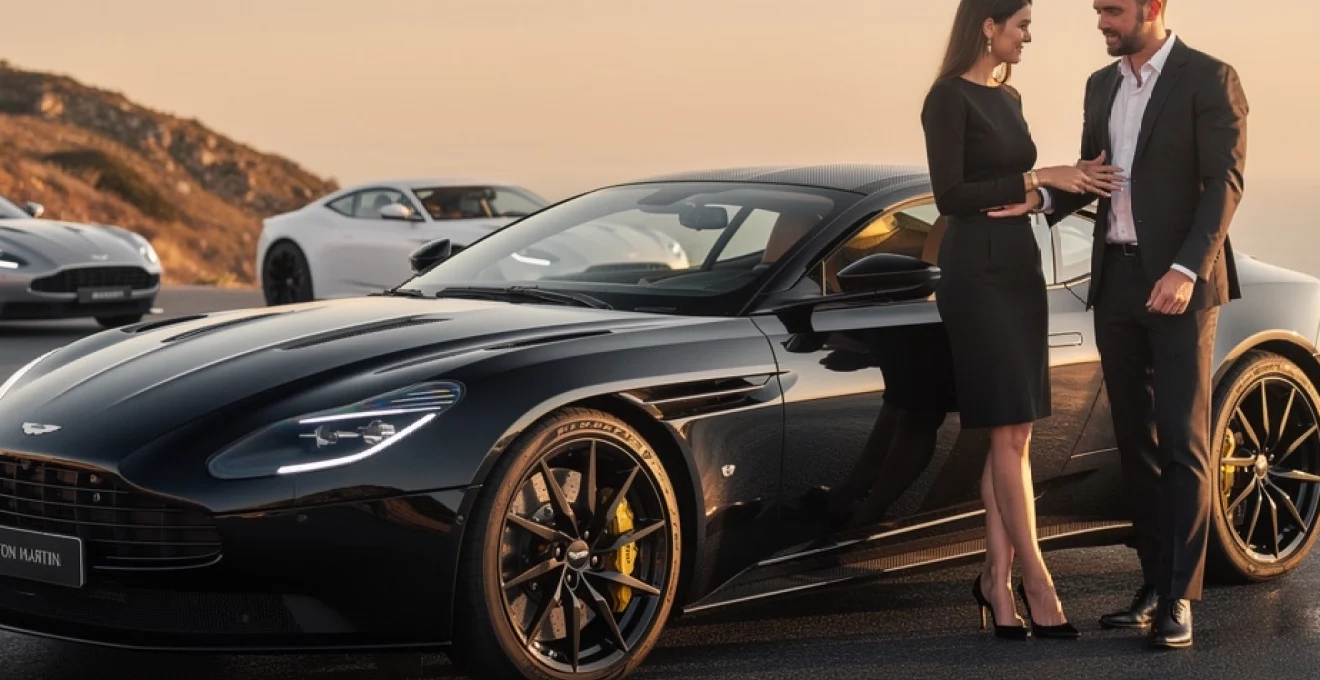
The Aston Martin DB11 in black occupies a rare space where modern grand touring meets cinematic presence. Even among exotic GTs, a black DB11 has a particular magnetism: it can look like a discreet luxury coupe at dusk and a menacing supercar under city lights. For you as an enthusiast, collector or first-time Aston buyer, colour is not just a styling choice; it is a statement about identity, heritage and how the car will age on the road and in the market. Understanding what a black specification does to the DB11’s lines, performance character and ownership experience helps you make a choice that feels as tailored as a bespoke suit, yet as timeless as the DB lineage itself.
Aston martin DB11 in black: grand tourer identity and design DNA
DB11 design language in black: ian callum and marek reichman’s GT proportions
The DB11’s design language sits firmly in the grand tourer tradition, with a long bonnet, set‑back cabin and muscular haunches that signal power and distance‑crushing comfort. In black, those GT proportions become more sculptural than decorative. Light skims across the surface rather than shouting each crease, so you notice the overall stance first: low, wide and athletic. This restraint suits the DB11’s role as a fast, luxurious cross‑continent machine rather than a track refugee. For you as a driver, the black paint effectively underlines that duality: it looks suitably formal outside a hotel, yet predatory enough to feel special on a Sunday morning B‑road.
Black exterior and the aston martin grille, clamshell bonnet and fastback silhouette
The DB11’s trademark elements — the iconic grille, vast clamshell bonnet and flowing fastback roofline — all change character in black. The grille becomes a floating piece of jewellery, especially if you pair black paint with bright or smoked chrome. The clamshell bonnet, one of the largest single aluminium pressings in the industry, appears almost seamless at night, emphasising the car’s nose‑to‑tail flow. At the rear, the fastback silhouette and integrated decklid give the DB11 in black a classic GT profile without looking retro. Many owners comment that black paint visually lowers the roofline and tightens the car’s proportions, making the DB11 appear even wider and more planted.
Visual comparison: DB11 in onyx black vs magnetic silver and morning frost white
Compare a DB11 in Onyx Black to one in Magnetic Silver or Morning Frost White and the contrast is immediate. Silver and white amplify surface detail; every line and vent reads clearly from a distance. Onyx Black, by contrast, simplifies the form and makes the car appear more monolithic, almost like a sculpted piece of basalt. If you value a quieter kind of luxury, black helps the DB11 avoid the visual “noise” of highly metallic or very bright colours. It also pairs elegantly with darker wheel designs and tinted glass, creating a cohesive stealth GT aesthetic that many buyers now actively seek out in premium used listings across the UK and EU.
Black paint and brand heritage: from DB5 and vantage to the modern DB11
Black has long played a role in Aston Martin’s brand mythology, even if silver and green often dominate the marketing imagery. Think of period DB5s in dark hues or the many black Vantage models that appeared as understated daily supercars in the 2000s. The DB11 in black feels like a modern extension of that understated heritage. It carries echoes of classic British luxury — think black tie and polished grand pianos — while accommodating modern cues like LED light signatures and dramatic aero details. For you as a buyer conscious of long‑term appeal, that blend of heritage and modernity is a strong reason why black DB11 specifications tend to remain desirable on the secondary market.
Black exterior finishes on the aston martin DB11: paints, textures and detailing
Standard black paint options: onyx black, jet black and contemporary metallic blacks
Aston Martin has offered several black finishes on the DB11, including solid and metallic options such as Onyx Black and Jet Black, as well as more contemporary metallic blacks with subtle flake. Onyx Black is typically the go‑to choice: a deep, rich black with enough metallic content to sparkle under sunlight without turning grey. Jet Black, by contrast, is closer to a pure piano black, rewarding you with mirror‑like reflections but showing swirl marks more easily. Metallic blacks with fine flake can be a smart compromise, giving better day‑time definition and slightly easier maintenance while still delivering that dark, dramatic silhouette.
Satin and matte black finishes: factory options vs specialist wraps from topaz detailing
Satin and matte black DB11 builds are rarer and usually come either via limited factory options or through high‑end wrap specialists such as Topaz Detailing. A satin finish adds a subtle sheen that feels modern and architectural, but it changes how the bodywork interacts with light: reflections become softer, lines appear more muscular and the car gains a more overtly “custom” presence. Full matte wraps are even more radical, removing almost all gloss and making the DB11 look like a concept car on the road. If you choose a wrap, you gain the advantage of reversible customisation plus extra stone‑chip resistance on the original paint beneath.
Black pack and smoked exterior jewellery: badges, side strakes and exhaust finishers
Factory black styling packs allow you to push the dark GT theme further by replacing brightwork with gloss black or smoked elements. These packs typically include black or dark chrome badges, black side strakes and black exhaust finishers. On a black DB11, the effect is a “shadow on shadow” look that turns the car into a single visual object rather than a composition of different metals. If you prefer some contrast, pairing black paint with smoked rather than fully black trim gives just enough definition for key details without breaking the visual flow. This approach suits owners who want a subtle but unmistakably performance‑oriented specification.
Carbon fibre exterior packs in combination with black paintwork
Carbon fibre exterior packs bring yet another layer to the black DB11 aesthetic. Splitters, side sills, rear diffusers and mirror caps in exposed carbon add a motorsport‑inspired detail that you notice up close more than from far away. Under bright light, the carbon weave sits just a shade lighter than the paint, creating a precise yet understated contrast. Technically, the weight saving on a road‑going GT is modest, but if you enjoy the idea of authentic performance materials, this is a satisfying option. Many owners find that carbon fibre pairs particularly well with Onyx Black, as both are inherently dark but rich in visual texture.
Contrasting roof and mirror caps: gloss black, body‑colour and forged carbon choices
Contrasting roof and mirror caps are key tuning points in any DB11 specification. On a black car, a gloss black roof can create the illusion of a continuous glass canopy, especially when combined with tinted windows. Body‑colour roofs give a more traditional GT look, tying bonnet, roof and boot into a single volume. For drivers who want something distinctive, forged carbon or satin carbon mirror caps add a technical highlight that looks particularly sharp against deep black paint. These small decisions shape how the Aston reads visually: boulevard cruiser, stealth GT or overt performance coupe.
Aerodynamics and performance characteristics of the DB11 in black
Bonded aluminium architecture and aerodynamic profile on the DB11 V8 and V12
The DB11 uses a bonded aluminium architecture, a structural approach that combines adhesive bonding with mechanical fixing to create a lightweight yet rigid chassis. This bonded aluminium structure supports the car’s sleek aerodynamic profile, allowing both the V8 and V12 versions to deliver high‑speed stability without resorting to exaggerated wings. Black paint does not change the drag coefficient directly, but it does alter how the car visually “sits” on the road, emphasising its low nose and tapering tail. At motorway speeds, this translates into excellent composure and reassuringly calm steering, exactly what you want from a long‑distance GT in any colour.
Aeroblade system integration with the black fastback rear and decklid spoiler
One of the DB11’s signature technologies is the AeroBlade system, which channels air from intakes behind the rear side windows through internal ducts to exit at the rear decklid. This creates a virtual spoiler that reduces rear lift without adding a large physical wing. On a black DB11, the intakes and exit slots visually recede, allowing the fastback silhouette to remain clean and uninterrupted. The effect can feel almost magical: you sense the car pressing into the road at speed, yet from the pavement, the bodywork looks unfussy and elegant. For you as a driver, this is a rare case where aerodynamics and aesthetics genuinely support each other.
Heat management on dark paint: cooling systems, bonnet vents and brake ducts
Dark paint absorbs more heat, so heat management on a black DB11 deserves attention. In real‑world conditions, ambient temperature, speed and sun exposure matter more than colour alone, but black panels can feel significantly hotter to the touch on summer days. The DB11 mitigates this with well‑designed bonnet vents, functional grille openings and brake ducts that keep key components in the optimal operating window. As long as service items like coolant, oil and brake fluid are maintained correctly, there is no evidence that black paint compromises reliability. Parking in shade where possible and using a high‑quality ceramic coating can further reduce surface temperature stress over time.
Interaction of gloss black ceramic coating with drag coefficient and high‑speed stability
Many black DB11 owners choose to apply a ceramic coating for extra gloss and protection. Technically, a well‑applied coating can create a smoother microscopic surface than naked clearcoat, which, in theory, could marginally influence the drag coefficient. In practice, any aerodynamic gain is too small to measure outside a controlled wind tunnel. The real benefit you will notice is easier cleaning, deeper reflections and better resistance to environmental fallout. At high speed, that ultra‑slick finish also helps water bead and evacuate more quickly, aiding visibility and keeping the car looking cleaner during long GT journeys in mixed weather.
Black aston martin DB11 powertrains: V8, V12 and AMR performance variants
Mercedes‑amg 4.0‑litre twin‑turbo V8 in a black DB11: output, torque curve and mapping
The Mercedes‑AMG‑sourced 4.0‑litre twin‑turbo V8 gives the DB11 a contemporary performance heart. In DB11 V8 tune, it produces around 503 bhp and 513 lb ft of torque, delivered through a broad, flat torque curve that suits GT driving. From 2,000 rpm upwards, there is strong thrust, so you can surf the mid‑range rather than constantly chasing the redline. In a black DB11, this powertrain feels particularly well‑matched: the car looks understated, yet you have near‑supercar pace on demand. Fuel economy in mixed use can sit in the low‑20s mpg, which, for a 200‑mph‑capable GT, is genuinely impressive in real‑world terms.
Aston martin 5.2‑litre twin‑turbo V12 and DB11 AMR black specifications
The 5.2‑litre twin‑turbo V12 is the more traditional Aston Martin choice, delivering around 600 bhp in early DB11 V12s and up to 630 bhp in DB11 AMR form. Torque peaks at roughly 516 lb ft, but the subjective experience is of an endless wave of power. In AMR specification, a black DB11 gains sharpened throttle mapping, revised suspension tuning and subtle styling updates including darkened details that align perfectly with a black exterior. For you as an enthusiast, the V12 in black AMR guise offers one of the most compelling combinations of luxury, performance and stealth in the modern GT market.
ZF 8‑speed automatic gearbox, launch control and adaptive drive modes GT, sport and sport+
Both V8 and V12 DB11 models use the ZF 8‑speed automatic gearbox, mounted transaxle‑style at the rear for better weight distribution. This ZF 8HP unit is widely regarded as one of the best torque‑converter automatics on the market, delivering quick, decisive shifts whether in automatic or manual paddle mode. Drive modes — GT, Sport and Sport+ — adjust throttle response, shift strategy and adaptive damping. In GT, the car feels relaxed and supple; in Sport and Sport+, responses sharpen and the character shifts towards a serious performance coupe. Launch control coordinates engine and gearbox to deliver repeatable fast starts, although most owners use it sparingly in everyday GT use.
Black‑spec DB11 performance data: 0–62 mph, top speed and real‑world GT cruising
Colour does not change raw performance numbers, so a black DB11 V8 still reaches 0–62 mph in around 4.0 seconds, while the V12 and AMR variants dip slightly lower depending on specification and tyres. Top speed ranges from approximately 187 mph for the V8 to over 200 mph for the V12 AMR. What you will notice most in daily driving is how effortlessly the DB11 covers ground at legal motorway speeds: 70 mph feels barely above idle, with cabin noise well‑suppressed and the engine turning modest revs. The car’s long gearing, refined suspension and strong mid‑range torque create a genuine 500‑mile‑a‑day GT capability.
Exhaust sound character on a black GT: valve control, cold starts and aftermarket systems
Sound is a key part of the black DB11’s personality. Factory‑fitted active exhaust valves keep the car refined in GT mode, with a subdued, cultured burble at low revs. Select Sport or Sport+ and the valves open more readily, giving a deeper, more insistent soundtrack that suits the car’s visual drama in black. Cold starts can be noticeably loud, especially in urban environments, so you may want to consider where you typically park. For owners seeking more presence, high‑end aftermarket exhaust systems offer freer‑flowing designs and more characterful overrun crackles, but it is worth ensuring any upgrade remains compatible with emissions and noise regulations in your region.
Black styling packages, wheels and brake systems on the DB11
Gloss black vs satin black alloy wheels: 20‑inch y‑spoke, directional and forged designs
Wheel choice is crucial to a black DB11’s final look. Gloss black 20‑inch Y‑spoke or directional wheels merge visually with the tyres, making the car appear lower and more purposeful. Satin black or smoked finishes, by contrast, show more of the wheel’s sculpting and can look better in bright sunlight, where full gloss can sometimes disappear into a dark mass. Forged designs not only save weight but also offer more intricate spoke shapes, which stand out nicely against black paint when finished in dark metallic or even subtle two‑tone schemes. Professionally, the visual balance of wheel colour, brake caliper shade and body paint often makes or breaks a specification.
Black wheel setups with pirelli P zero and pirelli sottozero tyre configurations
Most DB11 models leave the factory on Pirelli P Zero tyres, optimised for high‑performance road use. On a black car with black wheels, the visual effect is a continuous band of dark rubber and metal that looks extremely cohesive. For colder climates, Pirelli Sottozero winter tyres are a wise choice, dramatically improving traction and braking performance below 7°C. From a practical perspective, investing in a second set of wheels for winter tyres can protect your primary black alloys from salt and harsh conditions. Tyre pressures, typically around 35 psi front and rear depending on load, play a significant role in both handling precision and ride comfort.
Brake caliper colour on a black DB11: black, yellow, red and aston martin racing green
Brake caliper colour is an easy but impactful way to personalise a black DB11. Black calipers create a stealth look, especially behind dark wheels, while yellow or red calipers introduce a motorsport flavour and help visually “pop” the brake hardware. Aston Martin Racing Green calipers are a more subtle yet very brand‑authentic choice, referencing the marque’s competition history. From a resale perspective, neutral colours such as black or dark grey appeal to the broadest audience, but distinctive calipers can make your car stand out in used listings when photographed correctly. As always, your personal taste and how extrovert you want the car to appear should guide the decision.
Black exterior with carbon‑ceramic vs steel brakes in spirited road and track use
The DB11 is available with high‑performance steel brakes, and on certain variants or via later upgrades, carbon‑ceramic systems. Steel brakes offer excellent pedal feel and lower replacement cost, making them ideal for normal GT use and occasional spirited driving. Carbon‑ceramic brakes deliver reduced unsprung mass and outstanding fade resistance on repeated heavy stops, particularly useful if you plan track days or mountain‑pass driving with frequent high‑speed braking. They also produce lighter coloured dust, which is less visually intrusive on black multi‑spoke wheels. However, carbon‑ceramic discs are more expensive to replace, so the choice hinges on how hard you expect to drive the car and over what distances.
DB11 black interior specifications, Q by aston martin options and trim combinations
Obsidian black and pure black leather upholstery with brogue and quilting
Inside a black DB11, the most natural pairing is often Obsidian Black or Pure Black leather. These hides can be ordered with brogue detailing and intricate quilting patterns that echo the car’s exterior sophistication. A fully black interior can feel cocoon‑like, especially on night drives, drawing attention to the stitching, perforation and subtle grain differences in the leather. High‑quality hides also age gracefully if cared for correctly, developing a slight sheen on high‑touch areas that enhances rather than spoils the sense of luxury. For drivers who value a focused, driver‑centric cockpit, this monochrome approach is highly rewarding.
Monochrome luxury: black headlining, dark chrome jewellery and gloss black centre stack
A monochrome cabin on a black DB11 usually includes black headlining, dark chrome interior jewellery and a gloss black centre stack. These elements create a unified, almost architectural feel, with metallic highlights that catch the light without becoming distracting. The gloss black centre console looks extremely modern but can show fingerprints and dust more readily, so regular gentle cleaning is advisable. When paired with a black exterior, such an interior reinforces the sense that the entire car is one coherent design object, inside and out, rather than a mix of disconnected styling statements.
Contrasting stitch and piping: chancellor red, ivory and copper tan on a black cabin
Contrasting stitching and piping inject colour into a dark interior without undermining the black‑on‑black theme. Popular choices include Chancellor Red for a classic sporting mood, Ivory for a high‑luxury look and Copper Tan for a warmer, more contemporary feel. A fine line of contrast around seat bolsters and door cards can highlight the DB11’s sculpted seats and flowing door panels. In professional experience, such touches age better than large contrasting leather panels, which can date more quickly. If you enjoy subtle visual interest, a black cabin with carefully chosen contrast stitch strikes an excellent balance between drama and longevity.
Q by aston martin bespoke interiors: black alcantara, carbon twill and satin chopped carbon
For ultimate personalisation, the Q by Aston Martin programme allows bespoke interior treatments that elevate a black DB11 cabin into something truly unique. Black Alcantara on headlining and steering wheel can add a motorsport‑inspired tactility, while carbon twill and satin chopped carbon inlays bring a technical aesthetic to the dashboard and door trims. These bespoke touches carry a cost, but they also help future‑proof the car’s appeal to collectors who value rarity and individuality. If you plan to keep the car long‑term, tailoring the interior via Q by Aston Martin can make every journey feel like stepping into a personally commissioned piece of design.
Ambient lighting and digital instrument cluster legibility in a dark cabin environment
In a predominantly black cabin, ambient lighting and instrument design play an important role in day‑to‑day usability. Carefully positioned LED strips outline key architectural lines and controls, ensuring the interior remains inviting rather than oppressive at night. The digital instrument cluster has been engineered with high contrast and clear typography, so legibility remains excellent even against dark surroundings. Selecting appropriate brightness levels reduces eye strain on long journeys. From a user‑experience standpoint, this combination of black materials and controlled lighting turns the DB11 cabin into a calm, focused workspace for the driver, especially during extended night‑time GT runs.
Ownership, detailing and maintenance strategies for a black aston martin DB11
Paint protection film (PPF) vs ceramic coating for high‑gloss black panels
Maintaining flawless black paint on a DB11 requires a considered strategy. Paint protection film (PPF) offers physical defence against stone chips and minor abrasions, particularly on the front bumper, bonnet and side sills. Ceramic coatings, by contrast, deliver chemical resistance, hydrophobic behaviour and enhanced gloss but minimal impact protection. Many specialists recommend a combination: PPF on high‑impact zones, followed by ceramic coating on both film and exposed paint. This hybrid approach helps your black DB11 retain a deep, liquid shine while significantly reducing visible wear on long‑distance journeys and over years of regular use.
Swirl mark prevention: two‑bucket wash method, microfibre selection and drying routines
Black paint shows swirl marks more readily than lighter colours, so careful washing is essential. A two‑bucket method — one bucket for shampoo solution, one for rinsing the wash mitt — minimises dirt reintroduction. High‑quality microfibre mitts and drying towels reduce the risk of fine scratches, especially when combined with a pre‑wash snow foam to loosen surface grime. An
- Pre‑rinse with low‑pressure water
- Apply snow foam and allow to dwell
- Use two‑bucket wash with clean mitt
- Rinse thoroughly and dry with soft towels
routine keeps the finish looking fresh. Avoid circular motions when washing; straight lines are easier to correct if fine marks appear.
UV exposure, holograms and long‑term gloss retention on dark metallic finishes
UV exposure and improper machine polishing are the primary enemies of long‑term gloss on a black DB11. Dark metallic finishes can develop holograms — those rainbow‑like trails visible under direct light — if polished with the wrong pads or compounds. Using a reputable detailer with experience on soft, high‑end clearcoats is vital. Periodic light correction, perhaps every two to three years depending on use, keeps the surface free from oxidation and wash marring. Garaging the car and using a breathable cover when parked for extended periods further protect against UV degradation, bird droppings and tree sap.
Wheel, tyre and brake dust management on black multi‑spoke wheels
Black multi‑spoke wheels look spectacular on a black DB11 but tend to hide built‑up brake dust until it becomes significant. Regular cleaning with pH‑balanced wheel cleaner and soft brushes prevents corrosive deposits from etching the finish. Applying a wheel‑specific ceramic coating makes subsequent cleaning far easier, as dust and road grime release more readily. Rotating the car slightly during cleaning ensures you access all spokes evenly, especially on complex forged designs. Keeping tyre sidewalls dressed with a satin rather than high‑gloss product gives a refined look that matches the DB11’s luxury GT character.
Market appeal, resale value and collector demand for black aston martin DB11 models
Onyx black and other dark specs in UK and EU used‑car listings
In UK and EU used‑car listings, Onyx Black and other dark DB11 specifications consistently appear in healthy numbers, reflecting both initial popularity and ongoing demand. Industry data over the last few years suggests that neutral and dark colours, including black, grey and deep blue, account for more than 70% of luxury GT resale transactions. For you as a potential buyer or seller, this means a black DB11 often sits in a sweet spot of broad market appeal and timelessness. Well‑specced black cars with tasteful interiors and documented maintenance tend to attract strong enquiry levels, particularly when photographed professionally.
Limited and special editions in black: DB11 AMR signature edition and bespoke Q builds
Limited and special edition DB11s, such as the AMR Signature Edition, often lean towards darker, more dramatic palettes in their launch specifications. Bespoke Q by Aston Martin builds take this further with unique black or near‑black paints, special liveries and exclusive trim combinations. These cars can command a premium in the collector market, especially when production numbers are low and provenance is clear. However, the true value lies in the driving and ownership experience; knowing that your black DB11 is one of very few with that exact configuration adds a quietly satisfying dimension every time you open the garage.
Impact of black colour, mileage and service history on DB11 residual values
Residual values for DB11 models hinge on three core factors: mileage, service history and specification, with colour playing a supporting but important role. Black is generally a safe choice, neither narrowing the buyer pool nor dating quickly like some fashion colours. Low mileage and a fully stamped service book from authorised or highly respected independent specialists carry more weight than paint alone, often adding several percentage points to resale value. Professionally, a well‑maintained black DB11 with sensible options, under 30,000 miles and a clean history can command a noticeable premium over less carefully kept examples in less desirable colours.
Positioning a black DB11 alongside ferrari roma nero and bentley continental GT blackline
When cross‑shopping a black DB11 against rivals such as a Ferrari Roma in Nero or a Bentley Continental GT Blackline, the Aston positions itself as the most classically British of the trio. The Roma leans towards a sharper, more overtly sporting feel, while the Bentley emphasises opulent comfort and sheer mass. The DB11 in black threads the needle between them: lithe enough to feel athletic, luxurious enough to feel indulgent and visually understated enough to fit into almost any environment. If you want a long‑legged grand tourer that feels special without shouting, a black Aston Martin DB11 remains one of the most compelling choices in today’s GT landscape.