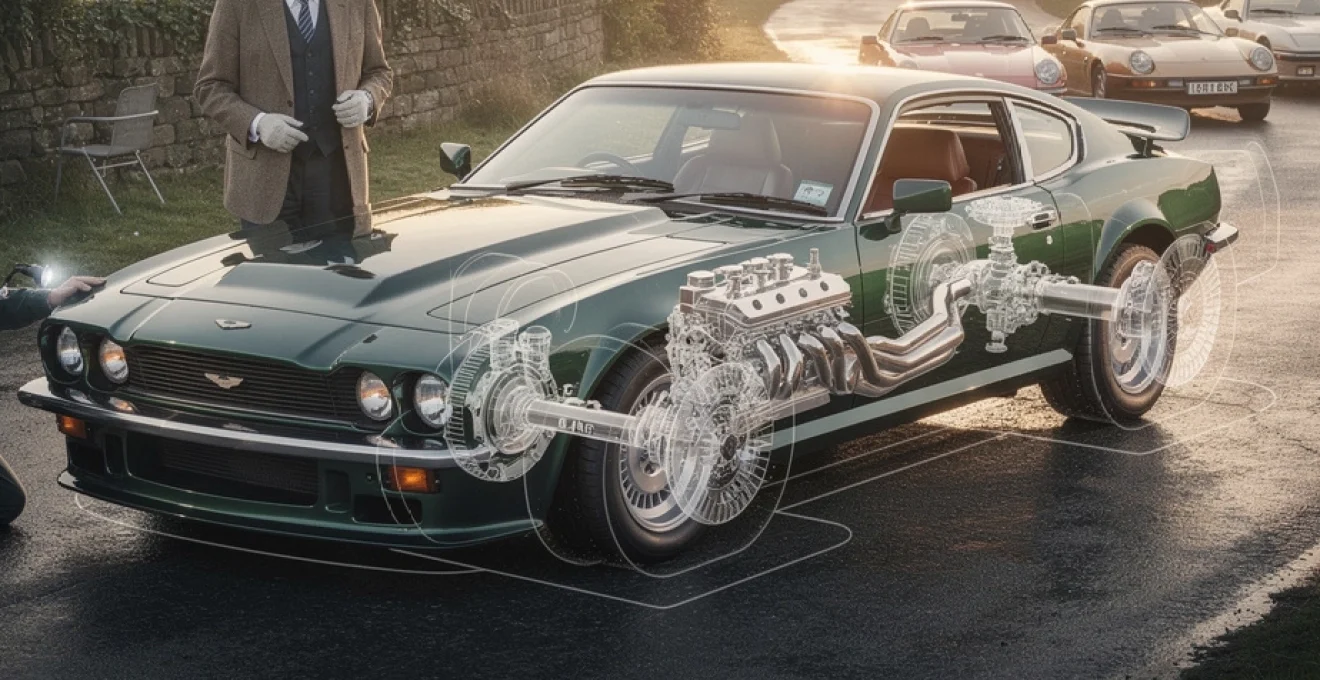
The 1980 Aston Martin V8 Vantage sits at a fascinating crossroads in grand touring history. Born in an era of tightening emissions rules and oil crises, it still delivered the sort of effortless, long-legged performance that defined the classic British GT. For anyone who loves analogue performance, hand-built craftsmanship and the idea of a car that feels like a tailored Savile Row suit, the 1980 Vantage is a compelling benchmark. It offers the muscle of a supercar, the civility of a luxury saloon and the rarity of a low-volume coachbuilt exotic, all wrapped in one of the most recognisable silhouettes of the period. Understanding what makes this model special helps you judge not only its classic car value, but also how it shaped the modern Aston Martin V8 era.
Aston martin vantage 1980: historical context and evolution within the V8 lineage (1972–1989)
From V8 “oscar india” to 1980 vantage: chassis codes, series updates and market positioning
The 1980 Aston Martin V8 Vantage is part of the so‑called “Oscar India” generation, introduced in late 1978. The nickname comes from the phonetic spelling of “O.I.” – shorthand for “October Introduction” – and denotes a suite of updates to the long‑running V8 first launched in 1972. Underneath, the basic steel platform chassis and Tadek Marek V8 remained, but the bodywork gained a neater, integrated rear spoiler and a smoother bonnet compared with earlier Vantage models. The 1980 car therefore blends early‑Seventies engineering with slightly more Eighties styling and refinement.
Market positioning at the time was very clear: the V8 Vantage was the flagship performance model, sitting above the standard Aston Martin V8 “saloon”. Aston Martin even avoided the word “coupé” in brochures, preferring the more discreet term “saloon” to underline grand touring intent. The Vantage, however, was marketed as the British supercar, capable of humbling Italian exotics to 100 mph while still offering four seats, Connolly leather and Wilton carpets. If you wanted a car that could cross Europe at high speed in serious comfort, the 1980 Vantage was aimed squarely at you.
Comparison with contemporary GT rivals: ferrari 400i, porsche 928 and jaguar XJ-S
Set against period rivals, the 1980 Aston Martin V8 Vantage looks even more interesting. The Ferrari 400i offered a front‑engined V12 and equally plush accommodation, but was saddled with an automatic gearbox in most markets and a slightly aloof character. Porsche’s 928 brought transaxle balance and advanced aerodynamics, yet some buyers found its interior less special than a traditional British GT. Jaguar’s XJ‑S undercut all of them on price and comfort, but lacked the exclusivity and outright performance that the Vantage delivered.
Performance figures underline this hierarchy. A typical 1980 Vantage could sprint from 0–60 mph in around 5.3 seconds and reach a claimed 170 mph, numbers that placed it well ahead of the Ferrari 400i automatic and Jaguar XJ‑S, and neck‑and‑neck with the quickest Porsche 928s. What the Aston added was brutal in‑gear acceleration thanks to its high‑compression V8 and short gearing, making overtakes on British A‑roads feel almost effortless. For drivers who valued character and drama as much as raw speed, the V8 Vantage occupied a sweet spot.
Production numbers, hand-built construction at newport pagnell and collector desirability today
Between 1972 and 1990, Aston Martin built fewer V8s in total than some mass‑market manufacturers assembled in a couple of days. That low volume is part of the 1980 Vantage’s appeal. Each car was hand‑built at Newport Pagnell, with traditional coachbuilding techniques still evident in the mix of aluminium body panels over a steel structure. Period records suggest that only a small fraction of total V8 output was Vantage‑specification, and within that, 1980 model‑year cars form a relatively narrow slice.
Collector interest has risen sharply in the last decade. Values that once lagged far behind DB4, DB5 and DB6 have started to close the gap, as enthusiasts recognise the V8 Vantage’s significance as the first British super‑GT with genuinely modern performance. Low‑mileage, matching‑numbers cars with Assured Provenance files from the factory now comfortably command six‑figure sums in pounds or euros. For you as a buyer, that means strong future value prospects, but also a market where originality and documentation matter enormously.
UK, US and middle east market variations in 1980 vantage specification and homologation
While the V8 Vantage was conceived as a global GT, specification varied significantly by region. UK‑market 1980 cars typically received the full‑fat high‑compression engine, blanked‑off grille, deep front spoiler and dog‑leg ZF manual gearbox. These cars are often regarded as the definitive configuration, giving you the most intense driving experience.
US‑market and some Middle East cars had to navigate stricter emissions and bumper regulations. In earlier years, US‑spec V8s used fuel injection, but like Jaguar, Aston reverted to carburettors when emissions compliance became easier to achieve that way. Later, many export Vantages ran de‑tuned engines, catalytic converters or different cam profiles, and some lacked the distinctive grille blanking plate to address cooling in hotter climates. If you are shopping globally, attention to build sheets and import paperwork is crucial, as specification differences have a noticeable impact on both performance and collectability.
Engine and performance analysis of the 5.3-litre tadek marek V8 in the 1980 vantage
High-compression “stage 1” vantage tune: cam profiles, valve timing and compression ratio
The heart of the 1980 Aston Martin V8 Vantage is Tadek Marek’s 5,340 cc, all‑aluminium, quad‑cam V8. In standard V8 form it was already a smooth, torquey unit. The Vantage specification effectively turned it into a race‑bred engine in a dinner jacket. High‑lift camshafts, revised valve timing and an increased compression ratio (around 9.5:1 to 10.2:1 depending on exact tune) transformed the character. Idle remains civilised, but the engine pulls much harder from mid‑range rpm and builds to a ferocious top‑end surge.
This so‑called “Stage 1” Vantage tune represents an early chapter in Aston’s continuous development of the V8. Later 580X and X‑Pack engines pushed output even further with more aggressive cams and compression, but the 1980 state of tune strikes a balance between durability and performance. For you as an owner, that means the engine tolerates regular use if maintained correctly, yet still delivers the sort of performance that feels vivid even in the modern era.
Carburetion setup: weber 48 IDF downdraught carburettors, jetting and intake manifold design
One of the more exotic aspects of the Vantage’s engine bay is the quartet of Weber 48 IDF downdraught carburettors sitting in the vee of the engine. Aston Martin, like Jaguar, abandoned fuel injection in favour of this high‑flow carburetion when US regulations proved hard to meet with the original system. The result is a purposeful bonnet bulge and a distinctive induction roar under hard acceleration.
Jetting and manifold design are crucial to how this setup behaves. A well‑tuned car will pull cleanly from low revs, with crisp throttle response and minimal hesitation. Poorly set‑up carburettors, by contrast, lead to rough idle, flat spots and heavy fuel consumption beyond the already thirsty baseline. Many specialists recommend periodic balancing and synchronisation of the four Webers, especially if the car has spent time in storage. Think of it like tuning a quartet of musical instruments – if one is out, the whole orchestra sounds wrong.
Power and torque figures: SAE vs DIN ratings, real-world dyno data and performance benchmarks
Quoted power outputs for classic Aston Martin V8 Vantages can be confusing, because different sources use SAE and DIN ratings and later upgrades such as the X‑Pack. Period figures for the late‑Seventies and 1980 Vantage typically cite around 375–385 bhp at 6,000 rpm, with some export engines quoted slightly lower. Torque figures are rarer in official literature, but estimates of 350–380 lb ft are common.
Independent dyno tests of well‑maintained cars often show 320–340 bhp at the wheels, which corresponds to roughly 380–400 bhp at the crank when accounting for drivetrain losses. For context, a Porsche 911 Turbo 3.0 of the same era made 300 bhp, while a Lamborghini Countach LP400 produced around 370 bhp. On modern rolling roads, these numbers confirm that the 1980 V8 Vantage genuinely belonged in the supercar performance league, not just in marketing copy.
Acceleration, in-gear flexibility and top speed compared with earlier V8 and later vantage X-Pack
Against the earlier injection‑equipped DBS V8 and carburetted non‑Vantage V8s, the 1980 Vantage feels dramatically livelier. Contemporary road tests recorded 0–60 mph in the low‑to‑mid‑five‑second range, versus six‑plus seconds for standard cars. More telling than the headline figures is the in‑gear punch: third and fourth gear thrust from 40 to 100 mph is where the car feels like a personal hyperdrive, with scenery blurring and the V8 bellow hardening towards the redline.
The later X‑Pack Vantages, with their 580X engines and up to 432–437 bhp, extend the performance envelope further, shaving a few tenths from the sprint times and adding several mph to top speed, often quoted around 175–186 mph depending on gearing. However, many enthusiasts consider the 1980 tune a sweet spot for real‑world use. It is fast enough to feel special on today’s roads, yet less highly stressed than the X‑Pack, a useful consideration if you plan to cover serious mileage rather than treat the car as a static investment.
Transmission, drivetrain and differential characteristics of the 1980 aston martin vantage
ZF S5-25 five-speed manual gearbox ratios, shift quality and known wear points
The 1980 Vantage uses the ZF S5‑25 five‑speed manual gearbox with a dog‑leg first gear pattern. First sits down and to the left, leaving second to fifth in a conventional H pattern for quicker shifts on the move. Ratios are chosen to keep the engine in its meat of torque during hard driving, with a relatively short first and second and a long‑legged fifth acting almost like an overdrive on motorways.
Shift quality depends heavily on correct linkage adjustment and bush condition. A healthy box offers a positive, mechanical action that encourages deliberate shifts rather than rapid flicks. Known wear points include layshaft bearings and synchros, especially if drivers have used the gearbox as a crutch instead of the engine’s torque. A metallic whine that disappears when the clutch is depressed can indicate internal wear, and any crunching on fast 2–3 shifts should prompt a specialist inspection. Addressing these issues early saves you from a far more expensive rebuild later.
Salisbury limited-slip differential, final drive options and traction behaviour
Power is sent to the rear wheels via a Salisbury limited‑slip differential, with final drive ratios varying slightly depending on market and intended use. Many 1980 cars run a ratio around 3.54:1, balancing brisk acceleration with relaxed cruising. The LSD helps put the V8’s torque down effectively, especially in damp British conditions where an open differential would spin away traction too easily.
On the road, this setup gives the Vantage a classic GT feel. Drive out of a tight bend and you feel the rear tyres dig in and push the car forward rather than simply lighting up. Over the limit, the car tends towards progressive oversteer if provoked, but the combination of weight and long wheelbase makes slides more of a deliberate, high‑commitment affair than something that happens accidentally. For enthusiastic but respectful drivers, the traction balance feels reassuring instead of intimidating.
Clutch design, pedal weight and driveline refinement in urban and motorway use
The clutch in a 1980 V8 Vantage is a heavy‑duty single‑plate design sized to cope with the engine’s torque. Pedal weight is definitely higher than in modern sports cars, but a properly adjusted system offers a broad, predictable biting point. In urban stop‑start traffic you will notice the effort, yet most owners adapt quickly; it becomes part of the car’s character rather than a flaw.
Driveline refinement at motorway speeds is impressive for a car of this vintage. Once in fourth or fifth, the V8 settles into a deep, subdued thrum, with vibration levels low and only modest transmission whine if everything is in good order. Any significant judder on take‑up, clunks on on‑off throttle or driveline shunt can indicate worn mounts, joints or diff bushes. Sorting these improves long‑distance comfort dramatically and is a wise early job for anyone planning regular touring.
Chassis, suspension and braking: dynamic behaviour of the 1980 vantage on british b-roads
Steel platform chassis, structural rigidity and impact on steering feedback
The underpinning of the 1980 Aston Martin V8 Vantage is a steel platform chassis with a separate body structure, a layout that harks back to the 1960s DBS. While not as stiff as later bonded‑aluminium architectures, it provides a solid foundation with good torsional rigidity for its era. Structural soundness is crucial to the car’s feel: rust in the sills, outriggers or mounting points quickly manifests as looseness and vague steering.
A healthy example, by contrast, shrinks around you on a B‑road. Steering feedback is filtered but clear, letting you sense front‑end grip through the wheel rim. The car’s mass – close to 1,990 kg in some trims – is always present, yet the chassis communicates weight transfer honestly. Think of it less as a nibble‑light sports car and more as a finely tuned express train; once set on a line, it flows with surprising grace.
Front and rear suspension geometry: double wishbones, live rear axle and coil-spring tuning
Front suspension uses unequal‑length double wishbones with coil springs and telescopic dampers, a sophisticated layout for the period. At the rear, Aston Martin retained a De Dion‑type arrangement derived from the earlier DBS, sometimes simplified in discussion as a form of “live axle” but offering better camber control. Coil springs and well‑chosen damper rates give the 1980 Vantage a very characteristic ride quality: firm and controlled at speed, yet more compliant than many Italian rivals.
On real‑world roads, especially undulating British B‑roads, this setup gives the car a distinct advantage. It can maintain high cross‑country pace without battering occupants or being deflected by mid‑corner bumps. Correct bush condition and damper health are essential, though. Tired suspension leaves the car wallowy and imprecise, eroding confidence. Many modern owners opt for subtly uprated dampers that preserve originality while sharpening body control, a worthwhile upgrade if you actually intend to use the performance.
Steering systems: power-assisted rack-and-pinion feel, turning circle and high-speed stability
The V8 Vantage uses power‑assisted rack‑and‑pinion steering with more weight than the finger‑light systems typical of the 1970s. At parking speeds, assistance is sufficient to manage the wide tyres and hefty kerb weight without heroic effort. As speed climbs, assistance tapers off, leaving a pleasantly meaty heft around the straight‑ahead and good stability.
High‑speed confidence is one of the car’s under‑appreciated virtues. The long wheelbase and aero tweaks of the Oscar India bodywork contribute to calm behaviour in fast motorway lanes, even by today’s standards. The turning circle is not especially tight, reflecting the car’s GT remit rather than city‑car agility, but for its size it threads B‑road bends with more precision than the dimensions suggest. If you are used to ultra‑quick modern steering racks, the slower ratio can feel relaxed, yet it suits the car’s unhurried, authoritative character.
Braking hardware: girling ventilated discs, fade resistance and modern pad compound upgrades
Braking is handled by Girling ventilated discs all round, with substantial calipers designed to cope with repeated high‑speed stops. In period, braking performance was considered excellent for such a heavy GT, with decent pedal feel and good resistance to fade in normal road use. Only extended track‑style abuse would expose limitations, and that was never the car’s intended environment.
Modern pad compounds and braided brake lines can significantly improve pedal consistency and bite without compromising originality. For example, fitting a high‑friction road pad and ensuring the brake fluid is fresh and correctly bled will give you a firmer, more confidence‑inspiring response underfoot. Any pulsing, pulling to one side or excessive pedal travel indicates the need for attention – seized calipers, warped discs or perished hoses are all common on cars that have spent long periods inactive. Given the performance on tap, ensuring the braking system is at its best is essential, not optional.
Exterior design and aerodynamics: evaluating the “oscar india” vantage bodywork
The Oscar India evolution of the V8 Vantage is a study in subtle aggression. William Towns’ original DBS‑derived shape already owed something to late‑Sixties American muscle, with clear visual echoes of the Chevrolet Camaro in its long bonnet, shallow glasshouse and broad haunches. By 1980, the design had been gently sharpened rather than radically altered. The integrated rear spoiler, smoother bonnet and tidied side window graphics give the car a more cohesive, mature stance.
A distinctive feature of the Vantage is the blanked‑off radiator grille and pronounced front air dam. While this treatment improved high‑speed aerodynamics and gave the nose a menacing, almost shark‑like look, it did the cooling system no favours. Vantage models were known to run noticeably hotter than standard V8s, especially in warm climates. Many cars later lost the blanking plate to ease airflow to the radiator, a modification that can be sensible for usability but may slightly dent concours originality.
Aerodynamically, the Vantage was never a slipper like the Porsche 928, yet its relatively bluff shape is stabilised by careful detail work. The rear spoiler reduces lift, the front dam cuts underbody airflow and the overall result is a car that feels planted and secure at three‑figure speeds. For you as an enthusiast, the appeal lies as much in the visual drama as in any coefficient‑of‑drag statistic. The car looks like it means business – because it does.
Cabin, ergonomics and GT usability of the 1980 aston martin vantage
Open the heavy door of a 1980 V8 Vantage and the first impression is one of sensory richness. Connolly leather covers seats, door panels and much of the dashboard, while deep Wilton carpets line the floor. Real wood veneer, typically walnut, spans the fascia, dotted with an array of analogue dials and rocker switches. It feels more like stepping into a traditional gentlemen’s club than a modern sports car, and that is precisely the charm.
Ergonomics by contemporary standards are idiosyncratic but workable. The driving position is slightly offset, and some minor controls sit where intuition suggests something else might live. Yet the major touchpoints – steering wheel, gear lever, pedals – are well placed once you settle in. Visibility is better than in many mid‑engined contemporaries, helped by slim pillars and a relatively upright glasshouse. Rear seats exist and can accommodate adults on short journeys or children more comfortably, making the Vantage a genuine four‑seater GT in a way few supercars of the era could claim.
Usability as a long‑distance car remains strong. The boot is deep and usefully shaped, air‑conditioning was standard, and cabin insulation keeps mechanical noise to a rich background soundtrack rather than an intrusive roar. Period equipment such as the original radio‑cassette player still has nostalgic appeal; some owners enjoy listening to era‑appropriate tapes rather than retrofitting modern infotainment. For you, the key is deciding how much originality matters versus convenience – subtle upgrades like hidden Bluetooth modules can provide the best of both worlds without visually disturbing the classic interior.
Reliability, maintenance and restoration considerations for a classic 1980 vantage
Owning a 1980 Aston Martin V8 Vantage is as much about stewardship as it is about driving enjoyment. The underlying engineering is robust – Tadek Marek’s V8 bottom end can last 150,000 miles or more if serviced correctly – but neglect quickly becomes expensive. Critical checks when buying include oil pressure (anything below roughly 13 psi at hot idle or 60 psi at higher revs is a red flag), cooling system health, and evidence of regular oil changes with quality lubricants. Because the engine uses wet liners, deteriorated seals can allow coolant into the oil, leading to contamination that demands a full rebuild.
Rust is a primary structural concern. Sills, especially the complex inner and outer sections around the jacking points, must be inspected carefully. Cover plates can hide serious corrosion, so asking a seller to remove them is a sensible move. Outriggers, the bases of A and B‑pillars, the rear chassis legs and boot floor all deserve close scrutiny. Aluminium body panels also conceal steel frames, notably within the doors, which can rot from the inside. Addressing structural rust properly is laborious but essential to preserve the car’s integrity and driving quality.
From a practical perspective, a well‑maintained V8 Vantage can be looked after by a very competent enthusiast mechanic, but specialist support is invaluable. Parts are available yet rarely cheap, and complex systems like the quad‑Weber carburettors, ZF gearbox and De Dion rear end benefit from expert knowledge. Budgeting annually for preventative maintenance, rather than reacting only when something breaks, dramatically improves reliability. Simple habits such as regular exercise of the car, keeping the battery healthy, and ensuring modern coolant and brake fluid are used will reward you with a classic GT that starts readily, runs strongly and feels ready for frequent use rather than occasional static display.