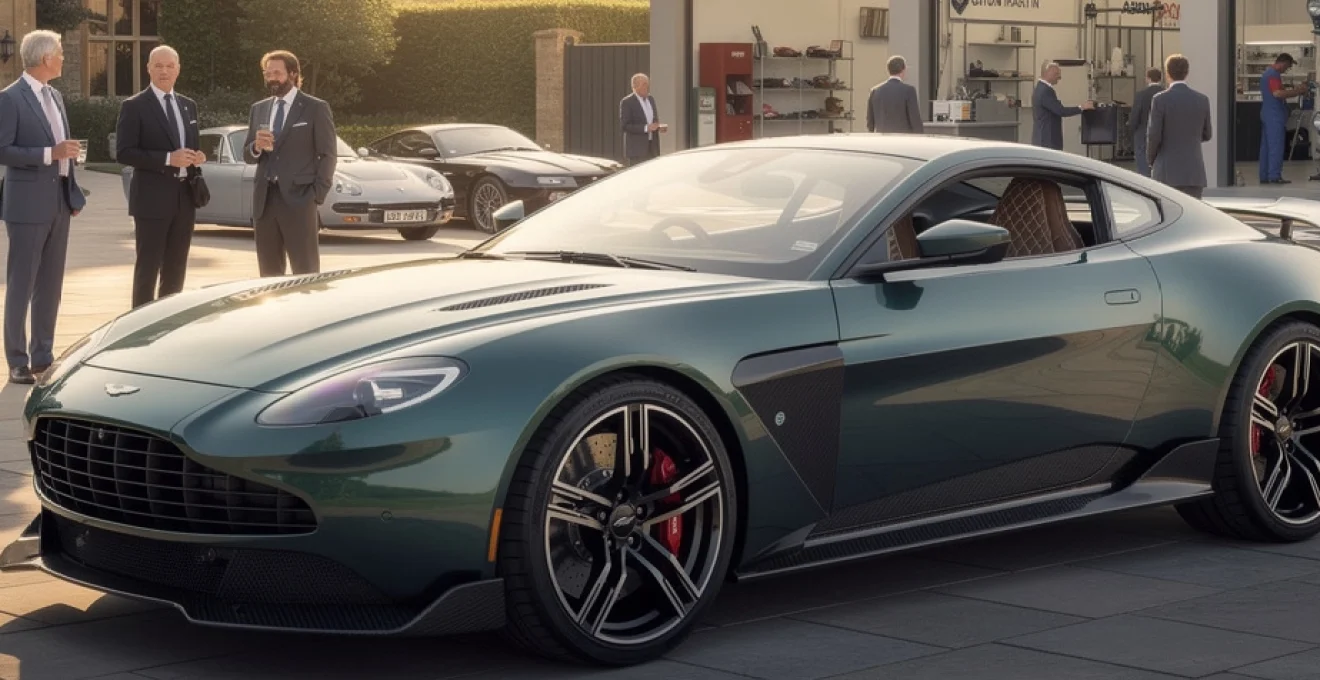
The Aston Martin Vantage Zagato occupies a fascinating niche where British engineering meets Italian coachbuilding. For collectors, it represents one of the purest expressions of the grand touring ideal: long‑legged performance, hand‑built construction and a design language that looks sculpted rather than stamped. Production numbers have always been tiny, values volatile and stories colourful – from racing conversions to celebrity ownership. If you are considering a rare Aston Martin as a long‑term keep, or simply want to understand why the Vantage Zagato name carries such weight, it rewards closer study. Think of it as an automotive limited print run: same core subject as the standard Vantage, but reinterpreted by another artist with a very sharp pen.
Aston martin vantage zagato: genesis of a coachbuilt Anglo‑Italian grand tourer
From newport pagnell to milan: aston martin and zagato collaboration history since the DB4 GT zagato
The story of the Aston Martin Vantage Zagato begins in the early 1960s with the legendary DB4 GT Zagato. That car established a template that still resonates today: an Aston Martin chassis clothed in a lighter, more sensual Zagato body. The relationship was revived at the 1984 Geneva Salon, when neighbouring stands allowed Aston’s leadership to reconnect with the Milanese carrozzeria. The result was the 1986 V8 Vantage Zagato, quickly followed by the Volante version, both built in tiny numbers at Newport Pagnell using Italian‑styled aluminium coachwork. This Anglo‑Italian partnership later produced cars such as the DB7 Zagato, V12 Vantage Zagato and Vanquish Zagato, ensuring the collaboration spanned more than half a century of grand touring history.
By the time the V12 Vantage Zagato arrived in 2011, the relationship had matured from a simple design commission into a deeper creative dialogue. The car celebrated 50 years of collaboration and paid homage to the DB4 GT Zagato with its compact proportions and aggressive stance. Subsequent projects have continued this lineage, culminating in modern continuation programmes that revisit classic shapes with contemporary engineering. For an enthusiast, owning any Vantage Zagato places you in the middle of this ongoing conversation between British craftsmanship and Italian flair.
Design brief and market context for the vantage zagato in the 1980s and early 2010s
In the mid‑1980s, Aston Martin needed a halo model to sit above the already potent V8 Vantage. The brief to Zagato was clear: create a lighter, shorter, faster GT that could chase the 300 km/h grand touring benchmark. At the same time, the brand wanted a car that would appeal to collectors who had seen Ferrari’s 288 GTO sell out instantly and soar on the secondary market. The resulting V8 Vantage Zagato was about 17 cm shorter in wheelbase, stripped of rear seats and clothed in very angular bodywork that looked almost concept‑car‑like for its day.
Fast‑forward to the early 2010s, and the V12 Vantage Zagato emerged in a very different landscape shaped by hyper‑limited specials and track‑oriented road cars. Ferrari, Porsche and Lamborghini were already leaning hard into short‑run projects for their most loyal clients. Aston Martin’s answer was to revisit the Vantage platform with a coachbuilt carbon body, 600 bhp naturally aspirated V12 and a production cap of just 150 examples, including the later Heritage Twins – 19 pairs of coupé and Speedster. The car spoke directly to buyers looking for a collectible modern classic Aston Martin rather than a mass‑produced supercar.
Production partners, hand‑built processes and role of works service / Q by aston martin
Early Vantage Zagato models were built at Newport Pagnell, blending Aston Martin’s traditional hand‑forming skills with Zagato’s design. Aluminium panels were shaped on bucks, with doors, bonnet and boot carefully aligned by hand – a process closer to bespoke coachbuilding than modern mass production. Later on, the V12 Vantage Zagato shifted towards a more composite‑heavy approach, but the ethos of artisanal construction remained. Cars such as the V12 Vantage Zagato Heritage Twins were completed at R‑Reforged’s facility in Warwick in a 16‑week assembly process that underlined their exclusivity.
Aston Martin Works Service – and later the Q by Aston Martin personalisation programme – played a central role in specifying and maintaining these cars. Clients could request unique colour combinations, trim details and performance upgrades, turning each chassis into a near one‑off. For collectors, documented involvement from Works or Q significantly enhances the desirability of a Vantage Zagato, because it proves that the car has been curated at factory level rather than modified in the aftermarket.
Positioning the vantage zagato against standard vantage, V8 vantage and DBS models
Within the Aston Martin line‑up, the Vantage Zagato consistently occupied the role of limited‑series flagship rather than a regular model variant. Compared with a standard V8 Vantage or V12 Vantage, the Zagato version typically offered more power, lower weight and a more aggressively tuned chassis. Against a contemporary DBS, the car often felt more intimate and focused, with a shorter wheelbase and two‑seat layout prioritising driver engagement over outright comfort. Buyers effectively traded some everyday usability for an increase in drama, rarity and design impact.
On the used market today, that positioning remains clear. Standard Vantage and DBS models cater to those wanting a usable GT with relatively predictable running costs. The Vantage Zagato, by contrast, targets collectors and enthusiasts ready to accept higher acquisition and maintenance costs in exchange for rarity and potential long‑term appreciation. For anyone building a focused Aston Martin collection, a Vantage Zagato often sits alongside icons such as the V8 Vantage X‑Pack or DB4 GT continuation cars as a cornerstone piece rather than a supporting act.
Limited production and rarity: chassis numbers, build slots and collector scarcity
Exact production run, VIN ranges and body styles (coupé vs volante) for vantage zagato
The 1980s V8 Vantage Zagato coupé was originally planned for a production run of 50 customer cars, and that target was effectively achieved, excluding a handful of prototypes. The Volante followed with a projected run of 25, but final numbers settled at around 37 examples, making it even rarer than the coupé. Only a small subset of these Volantes left the factory with the full 432 bhp Vantage X engine, identified by an ‘X’ suffix in the engine number. One such car, chassis 30041, is historically significant as the first of only five factory‑built Vantage Volantes with this full‑fat specification.
Later, the V12 Vantage Zagato production was even more tightly controlled. The standard coupé run was limited to 150 units worldwide, followed by the separate Heritage Twins programme capped at 19 pairs of coupé and Speedster. When you factor in prototypes and development cars – such as the green ‘Zig’ and red ‘Zag’ racing entries – the total number of V12 Vantage Zagato chassis remains comfortably below 200. For collectors used to Ferraris built in the thousands, those figures illustrate just how scarce these Anglo‑Italian GTs truly are.
Regional allocations: UK, EU, middle east, US federalised cars and Rest‑of‑World units
Exact regional allocations for Vantage Zagato models were never widely publicised, but patterns are clear from registration data and dealer histories. The UK and wider European markets absorbed the bulk of early V8 Vantage Zagato production, supported by established dealers such as Stratton Motor Company and specialist brokers. A smaller number of cars were delivered new to the Middle East, where appetite for limited‑series Vantage models has been strong for decades. The US received only a very limited number of federalised examples due to emissions and bumper regulations, further intensifying demand among American collectors today.
For the V12 Vantage Zagato, allocations were more globally balanced, with right‑hand drive and left‑hand drive examples scattered across Europe, the Middle East, Asia and North America. Some Heritage Twins are known to have been delivered to Switzerland, where one of the first pairs was displayed in St Gallen before embarking on a promotional tour. For you as a buyer, understanding original market allocation can be important, particularly if import duties and homologation costs affect the overall acquisition budget.
Special commissions and one‑off vantage zagato examples built to bespoke specifications
Beyond the standard production run, a small number of Vantage Zagato cars were built or reconfigured to extremely bespoke specifications. Chassis 20011, a prototype V8 Vantage Zagato coupé commissioned by enthusiast Wensley Hayden‑Baillie, is a prime example. It combined a 432 bhp motor, integral roll bar and tailored interior, and is now listed by the Aston Martin Heritage Trust as a significant car. Another standout is the one‑off V8 Vantage Zagato previously owned by Rowan Atkinson, re‑engineered by Aston Martin Works with a Nimrod‑spec engine producing 482 bhp, AP Racing brakes and competition‑grade suspension.
Later V12 Vantage Zagatos also spawned unique commissions, particularly within the Heritage Twins programme, where owners could specify any paint sample and an almost infinite interior colour and pattern combination. For you, such special orders can be a double‑edged sword: a tastefully specified one‑off can command a premium, whereas an eccentric colour split or radical trim choice may narrow the future buyer pool. Provenance from recognised specialists and factory involvement tends to tilt the balance in favour of long‑term desirability.
Survival rates, documented write‑offs and concours‑condition cars in major collections
Given the low initial build numbers, survival rates for Vantage Zagato models are relatively high, but not absolute. A small number of cars have been written off in accidents or dismantled for parts, particularly those used extensively on track. The Atkinson V8 Zagato, for example, saw significant competition use with multiple outings at circuits such as Brands Hatch, Thruxton and Donington, but ultimately survived to be converted back to fast road specification. Well‑documented cars with complete history files typically show long periods of careful storage and minimal mileage, in some cases under 400 miles from new.
Concours‑quality examples routinely appear at top‑tier events such as the Concorso d’Eleganza Villa d’Este and the City of London Concours. Invitation to these curated events signals that a specific chassis stands at the very top of the condition spectrum. If you are targeting investment‑grade quality, look for awards, concours invitations and detailed restoration records from highly regarded specialists. These details demonstrate not only survival but also fastidious stewardship across multiple decades.
Exterior design and aerodynamics: zagato styling language on the vantage platform
Iconic double‑bubble roof, kamm‑tail rear and signature zagato surfacing
The most immediate visual signature of any Vantage Zagato is the roofline. The classic double‑bubble roof, introduced on competition cars to accommodate helmeted drivers, appears as a subtle but unmistakable pair of longitudinal domes. This feature not only lowers the apparent roof height but also reinforces the car’s purposeful intent. At the rear, many Zagato‑bodied Astons adopt a truncated Kamm‑tail, designed to reduce drag while maintaining high‑speed stability. The combination of muscular haunches, tight overhangs and tensioned surfaces gives the Vantage Zagato a stance that is more concept car than series production coupé.
Where the standard Vantage or DBS tends towards flowing elegance, the Zagato interpretation is more overtly sculptural. Surfaces are more faceted, glasshouse proportions more compact, and details such as the grille and headlamp treatment are frequently reimagined. The result is a car that looks distinct from any mainstream Aston Martin, even though it rests on a familiar platform. For owners, that visual separation is a key part of the appeal: it tells a trained eye that this is something rarer than a normal Vantage before a word has been spoken.
Aluminium and composite body panels, weight‑saving measures and torsional rigidity
Earlier V8 Vantage Zagato models relied heavily on hand‑formed aluminium body panels, contributing to a weight saving of more than 100 kg compared with the standard V8 Vantage in some specifications. Perspex side windows, deletion of rear seats and simplified interior trim further reduced mass in race‑focused conversions. Later V12 Vantage Zagato iterations, particularly the Heritage Twins, moved to an all‑carbon‑fibre body. Carbon fibre panels reduce weight while offering exceptional stiffness, improving torsional rigidity and sharpening steering response.
These weight‑saving measures translate directly to real‑world feel. A lighter nose responds more eagerly to steering inputs, and reduced mass over the rear axle allows the suspension to keep the tyres in better contact with the road. For anyone used to the standard car, a Vantage Zagato typically feels more alert, less filtered and more connected, especially on challenging B‑roads or technical circuits. The trade‑off can be slightly higher levels of road noise and a firmer ride, but the net gain for enthusiastic driving is substantial.
Cfd‑optimised aero components: front splitter, rear diffuser and under‑tray management
While the earliest Vantage Zagato models pre‑dated sophisticated CFD (computational fluid dynamics) tools, later cars such as the V12 Vantage Zagato benefited from aero development that balanced downforce and drag. Aggressive front splitters manage airflow under the nose, reducing front axle lift at high speeds. Sculpted side sills help channel air towards rear cooling intakes, while integrated diffusers and active rear spoilers stabilise the car during fast sweepers and under heavy braking from motorway speeds.
An often‑overlooked area is the under‑tray, which in modern Zagato‑bodied Astons is carefully managed to smooth airflow beneath the car. This not only aids high‑speed stability but can also help reduce fuel consumption over long distances – a subtle but meaningful benefit for a GT car. The overall effect is comparable to a well‑tailored suit: aero elements are clearly functional, yet they are integrated in a way that preserves the elegance of the silhouette rather than screaming track car at every angle.
Wheel design, tyre fitment (pirelli P‑Zero, bridgestone) and track‑focused stance
Wheel and tyre specification plays a disproportionate role in how the Vantage Zagato looks and behaves. Early cars used relatively modest diameters by modern standards, but with carefully chosen offsets to produce a squat, planted stance. On the V12 Vantage Zagato Heritage Twins, centre‑locking 19‑inch alloys with increased offset help widen the track by around 20 mm, filling the arches and giving the car a muscular, almost race‑car‑for‑the‑road presence. Typical tyre choices have included performance compounds from Michelin, Pirelli P‑Zero and Bridgestone, depending on era and owner preference.
For you as an owner, tyre selection is one of the most cost‑effective ways to fine‑tune the car’s character. A more track‑oriented tyre can transform cornering grip at the expense of ride comfort and noise, while a slightly more touring‑biased tyre preserves GT usability. Wheel alignment settings, particularly front camber and toe, should be checked carefully, as even small deviations from factory or specialist‑recommended specs can significantly alter steering feel.
Powertrain and performance: vantage zagato engine, output and driveline engineering
Naturally aspirated V8 architecture, displacement, compression ratio and internal upgrades
The heart of any classic Vantage Zagato is its naturally aspirated V8 or V12 engine. The 5.3‑litre four‑cam V8 used in the 1980s cars, often in V580X or X Pack specification, produced up to 432 bhp at around 6,200 rpm. High compression, aggressive cam profiles and quartet Weber carburettors delivered a muscular torque curve and a distinctly mechanical induction note. Race‑focused builds, such as the Atkinson car with Nimrod X/R specification, pushed power to approximately 482 bhp at 7,000 rpm, illustrating the latent potential of the architecture.
Later V12 Vantage Zagatos adopted a 6.0‑litre naturally aspirated V12, extensively reworked with revised inlet manifolds, titanium exhaust systems and updated internals. Output increased by around 80 bhp over the original V12 Vantage Zagato concept, reaching a reported 600 bhp. This level of performance places the car firmly in supercar territory, yet the linear delivery of a high‑capacity naturally aspirated engine keeps it approachable for experienced drivers.
ECU mapping, intake and exhaust tuning, bhp and torque figures vs standard vantage
Compared with standard Vantage models, Zagato variants often gain their edge through careful calibration rather than wholesale mechanical changes. ECU mapping is tailored to sharpen throttle response and extend usable rev range, while intake and exhaust systems are tuned to reduce back‑pressure and enhance acoustics. On the V12 Vantage Zagato, the titanium exhaust not only saves weight but also unlocks a more urgent top‑end, giving the car a distinct character compared with the already potent V12 Vantage.
Typical power gains versus a standard V12 Vantage are in the region of 60‑80 bhp, with torque increases more modest but still meaningful. In real‑world driving, this translates into stronger in‑gear acceleration and a more insistent surge beyond 5,000 rpm. For you as a driver, the subjective difference feels less like an incremental upgrade and more like moving from a fast GT to something approaching a race‑bred GT3 car in intensity.
Transmission options, final‑drive ratios and limited‑slip differential calibration
Transmission choices on Vantage Zagato models have varied, but driver‑focused manuals remain highly prized. Many V8 Vantage Zagatos received a five‑speed manual with reinforced synchros; some cars, including the Atkinson example, had their gearboxes rebuilt with steel synchros and alternative pedal gear for racing robustness. Later V12 Vantage Zagatos offered both manual and automated manual options, though purists generally favour the three‑pedal layout for maximum involvement and long‑term collectability.
Final‑drive ratios and limited‑slip differential (LSD) calibration influence how the car deploys its muscular torque. Shorter gearing delivers more savage acceleration at the cost of a slightly lower theoretical top speed, while a well‑tuned LSD helps the car put power down cleanly out of tight corners. On wet roads or cold tyres, the combination of a high‑output engine and sensitive LSD demands respect, but in the right hands it offers a level of adjustability that makes the car deeply rewarding to drive quickly.
0–60 mph, 0–100 mph, top‑speed data and real‑world performance benchmarks
Factory figures for the V8 Vantage Zagato quoted 0–60 mph in under five seconds and a top speed approaching 186 mph, making it the fastest Aston Martin of its day. Contemporary road tests confirmed that, when driven aggressively, the car could match or beat many Italian exotics of the 1980s. The V12 Vantage Zagato raised the bar further: 0–60 mph times in the low four‑second range and top speeds edging over 190 mph have been reported, depending on gearing and aero configuration.
However, raw numbers tell only part of the story. What sets the Vantage Zagato apart is the way it builds speed. As one period tester put it, the car seems almost unconstrained by the usual physical limits, surging forward with an effortless, unflustered character. On a derestricted autobahn or a long European motorway stretch, it behaves more like a private jet than a sports car, eating distance in huge strides while keeping the driver remarkably relaxed behind the wheel.
Chassis, suspension and braking: dynamic tuning of the aston martin vantage zagato
VH platform characteristics and changes implemented for the zagato variant
Later Vantage Zagato models sit on Aston Martin’s VH platform, an aluminium architecture designed for modularity and stiffness. The platform provides a solid baseline for high‑performance tuning, with bonded and riveted extrusions creating a rigid yet relatively light structure. To create the Zagato variant, engineers typically lowered ride height, widened track and revised suspension pick‑up points to enhance agility. On the Heritage Twins, for example, the suspension was dropped by around 10 mm and track widened by approximately 20 mm to produce a more aggressive footprint.
Earlier steel‑chassis V8 Vantage Zagatos relied on modifications to spring and damper rates rather than fundamental structural changes. Race‑orientated cars gained adjustable Koni dampers, uprated Eibach springs and reinforced mounting points. These component changes, although simple on paper, markedly altered body control and steering precision, especially under sustained circuit use where heat and load cycles punish lesser set‑ups.
Suspension geometry, adaptive damping and anti‑roll bar specifications
Suspension geometry is critical to how a Vantage Zagato feels in your hands. Increased negative camber at the front helps the tyres maintain a broad contact patch during hard cornering, while careful control of caster angle supports self‑centring steering feel. Adaptive damping systems on later cars offer multiple modes, enabling a relatively supple ride in GT settings and much tighter body control in sport or track modes. Anti‑roll bars are matched to these damper characteristics, with thicker bars reducing roll but potentially increasing sensitivity to surface imperfections.
Owners who track their cars often work with specialists to fine‑tune geometry within safe parameters. A slightly more aggressive camber and toe setting can yield a noticeable improvement in turn‑in and mid‑corner grip, but at the cost of faster tyre wear. For road‑biased usage, staying close to factory specifications usually delivers the best compromise between ride comfort and handling precision.
Steering rack setup, wheel alignment specs and handling balance on road and circuit
The steering of a Vantage Zagato is often described as more direct and alive than that of the standard Vantage. Quicker steering racks, combined with stiffer bushings and lighter bodywork, reduce the sense of inertia when changing direction. Proper wheel alignment is essential here: incorrect toe settings can make the car feel nervous at high speed or dull in tighter bends. A carefully set‑up Vantage Zagato achieves a neutral to slightly rear‑biased balance, encouraging the driver to lean on the rear axle’s traction rather than fight understeer.
On circuit, the chassis rewards smooth, progressive inputs. Trail‑braking into corners can help rotate the car, while early but measured application of throttle exploits the LSD to drive out cleanly. On the road, particularly on broken tarmac, the stiffness of some race‑oriented set‑ups can reveal itself in a busier ride. For this reason, buyers intending to cover serious mileage should consider a more road‑oriented damper and bushing package rather than a pure track tune.
Brake hardware: brembo calipers, disc dimensions, pad compounds and fade resistance
Stopping power on the Vantage Zagato matches its straight‑line performance. Many cars are equipped with multi‑piston Brembo or AP Racing calipers, large ventilated discs and performance pad compounds. The Atkinson V8 Zagato, for instance, ran eight‑piston front calipers and six‑piston rears with adjustable brake bias from within the cabin – a configuration far more typical of a full‑blown race car than a road‑legal GT. Later V12 Vantage Zagatos use similarly oversized hardware, often combined with high‑boiling‑point fluid to resist fade during repeated high‑speed stops.
For road use, it is crucial to match pad compound to driving style. Aggressive track pads offer exceptional fade resistance but can squeal at low speeds and perform poorly when cold. More road‑oriented pads may be preferable if your typical usage involves urban driving and occasional spirited runs rather than repeated track sessions. Regular inspection of discs and pads is particularly important on heavier V12 cars, where sustained high‑speed braking places substantial thermal loads on the system.
Cabin architecture and materials: bespoke vantage zagato interior specification
Hand‑stitched bridge of weir leather, quilted patterns and colour‑split options
The interior of a Vantage Zagato is where bespoke craftsmanship becomes impossible to ignore. High‑grade Bridge of Weir leather, often specified with intricate quilting or unique perforation patterns, covers seats, door cards and dashboard surfaces. Buyers can choose contrasting stitching, colour‑split designs and piping that transforms the mood of the cabin from understated luxury to extrovert Italianate flair. On later cars, Aston Martin described the available palette as “almost infinite,” reflecting the extent of Q by Aston Martin’s customisation capability.
For you, the key is ensuring that the chosen combination will age gracefully. Neutral base colours with subtle contrasts tend to retain broad appeal on the secondary market, whereas extremely bold colour splits can be polarising. That said, a well‑judged bright accent, echoing exterior paintwork such as Gladiator Red or Swift Azure, can turn the cabin into a genuinely special place without feeling overwrought.
Carbon fibre, aluminium and wood trim packages unique to the zagato edition
Trim materials in the Vantage Zagato bridge traditional luxury and contemporary performance. Carbon fibre appears on centre consoles, door pulls and sill plates, signalling the car’s lightweight engineering ethos. Brushed aluminium offers a cooler, more technical aesthetic, while carefully selected wood veneers can be specified by those wanting a link back to classic Newport Pagnell GTs. Some limited‑run cars feature unique badging, numbered plaques and Zagato logos subtly integrated into trim pieces, making each cabin feel like a commemorative space as much as a driving environment.
An effective analogy is a tailored watch dial: the basic architecture is shared with standard models, but small changes in material, finish and engraving transform the emotional impact. For collectors, originality of these trim elements is critical. Replacement parts should either be factory‑correct or documented upgrades, as non‑original trim can undermine both aesthetic coherence and resale value.
Instrumentation cluster, analogue dials and infotainment limitations of the era
Instrumentation in the Vantage Zagato reflects the technology of its era, with a bias towards analogue dials and tactile switchgear. Large, clearly marked speedometer and tachometer units sit front and centre, supported by smaller gauges for oil pressure, temperature and fuel. While some later cars include digital displays and basic navigation systems, the focus remains on conveying mechanical information rather than multimedia complexity. Infotainment capabilities lag behind modern standards, particularly on early‑2010s cars whose navigation graphics and connectivity options now feel dated.
For many enthusiasts, this is part of the appeal. A simpler interface reduces distraction and reinforces the sense that the car is a machine to be driven, not a rolling smartphone. If contemporary connectivity is vital, discreet upgrades such as hidden Bluetooth modules or carefully integrated CarPlay solutions can be considered, provided they do not compromise originality or cabin aesthetics.
Driving ergonomics, seating position and GT usability for long‑distance touring
Ergonomically, the Vantage Zagato is designed around the driver. A low, semi‑reclined seating position, relatively small steering wheel and close‑set pedals create an enveloping, cockpit‑like feel. Visibility is slightly more compromised than in standard Vantage or DBS models due to the more compact glasshouse and distinctive rear pillars, but careful mirror adjustment mitigates most blind spots. On long journeys, supportive seat bolstering and high‑quality foam densities help prevent fatigue, even when covering several hundred miles in a day.
Practicality is inevitably less than that of a 2+2 GT, but boot space is generally adequate for weekend luggage, and refined noise insulation on production‑focused cars keeps cabin noise within acceptable bounds. For extended grand touring, options such as climate control, upgraded sound systems and, in some cases, added air conditioning (retro‑fitted on older cars) make a tangible difference. As with any specialised GT, honest assessment of how you intend to use the car should drive specification and set‑up choices.
Market values, auction results and investment outlook for the vantage zagato
Historical price trend analysis from launch list price to current market values
Vantage Zagato values have experienced pronounced peaks and troughs, often reflecting broader classic car market cycles. When the V8 Vantage Zagato launched in the late 1980s, all customer cars were pre‑sold, and speculative trading soon pushed prices to extraordinary levels. During the 1990 market high, some examples reportedly changed hands for in excess of £500,000 – more than five times the original list price. As the market corrected, values dropped significantly, leaving some owners sitting on assets that took years to recover.
Recent data paints a more stable picture. The Hagerty Price Guide currently estimates a concours‑condition V8 Vantage Zagato at around £362,000, while an excellent 15,000 km example sold at auction in late 2024 for approximately €421,250 (around £359,000). That pricing suggests a maturing market where the car is recognised as a genuine blue‑chip collectible rather than a speculative plaything. For modern V12 Vantage Zagatos, asking prices often exceed their original list price by a comfortable margin, particularly for low‑mileage, factory‑spec cars.
Key sales at RM sotheby’s, bonhams and gooding & company
Major auction houses provide useful reference points for current values and demand. A notable sale occurred in 2007 when Rowan Atkinson’s race‑converted V8 Vantage Zagato crossed the block at Bonhams for around £122,500. While that figure represented a loss relative to the combined purchase and rebuild cost of roughly £220,000 plus the initial car, it laid the groundwork for the vehicle’s later recognition as perhaps the most historically significant V8 Vantage Zagato extant. More recent sales at RM Sotheby’s, including low‑mileage coupés around the €400,000 mark, underline the rising desirability of top‑condition examples.
Gooding & Company and other high‑end auctioneers have also curated Vantage Zagato offerings within themed Aston Martin or ‘best of British’ sales, often grouping them with DB4 GT derivatives and V8 Vantage X‑Pack cars. Hammer prices in these contexts tend to reflect not just the car’s intrinsic qualities but also the halo effect of being presented alongside other blue‑chip classics. For you as a buyer, following these sales provides valuable context on where the market is heading rather than relying solely on dealer asking prices.
Factors influencing valuation: mileage, provenance, originality and service history
Four factors consistently shape Vantage Zagato values: mileage, provenance, originality and maintenance. Ultra‑low‑mileage cars, such as the 397‑mile Gladiator Red coupé stored at a single dealership for decades, attract significant premiums as ‘time‑warp’ examples. Provenance adds another layer, whether in the form of celebrity ownership, factory prototype status or long‑term residence in a prominent collection. Originality is equally crucial: cars retaining factory paint, trim and mechanical specification are generally more sought after than heavily modified examples, unless those modifications were carried out or sanctioned by Aston Martin Works.
Service history, finally, is non‑negotiable. Regular maintenance by recognised specialists, accompanied by detailed invoices and stamped service books, reassures buyers that the car has been cared for properly. For anyone considering a purchase, commissioning a pre‑purchase inspection from a marque expert is essential. This not only helps avoid expensive surprises but can also provide leverage in price negotiations if remedial work is required.
Comparison with other rare aston martins: V8 vantage X‑Pack, DB7 zagato, vanquish zagato
Within the broader Aston Martin ecosystem, the Vantage Zagato competes for attention and budget with several other limited‑series models. The V8 Vantage X‑Pack offers similar 1980s performance with a more traditional body, appealing to purists who prefer Aston’s in‑house styling. The DB7 Zagato, with its compact proportions and limited run of 99 coupés, provides a more accessible entry point into the Anglo‑Italian theme, albeit with a different mechanical base. The Vanquish Zagato series, produced in coupé, Volante, Speedster and Shooting Brake forms, represents the latest evolution, with higher production numbers but still substantial exclusivity.
For you as a collector, choosing between these models often comes down to personal taste and collection strategy rather than simple price comparison. The Vantage Zagato, particularly in its 1980s and early V12 forms, occupies a sweet spot where rarity, performance and historical significance intersect. Positioned carefully alongside other icons – perhaps a DB4 GT continuation or a modern Valkyrie – it can anchor a collection that tells a coherent story about Aston Martin’s evolution from analogue bruisers to advanced, aero‑driven hyper GTs.