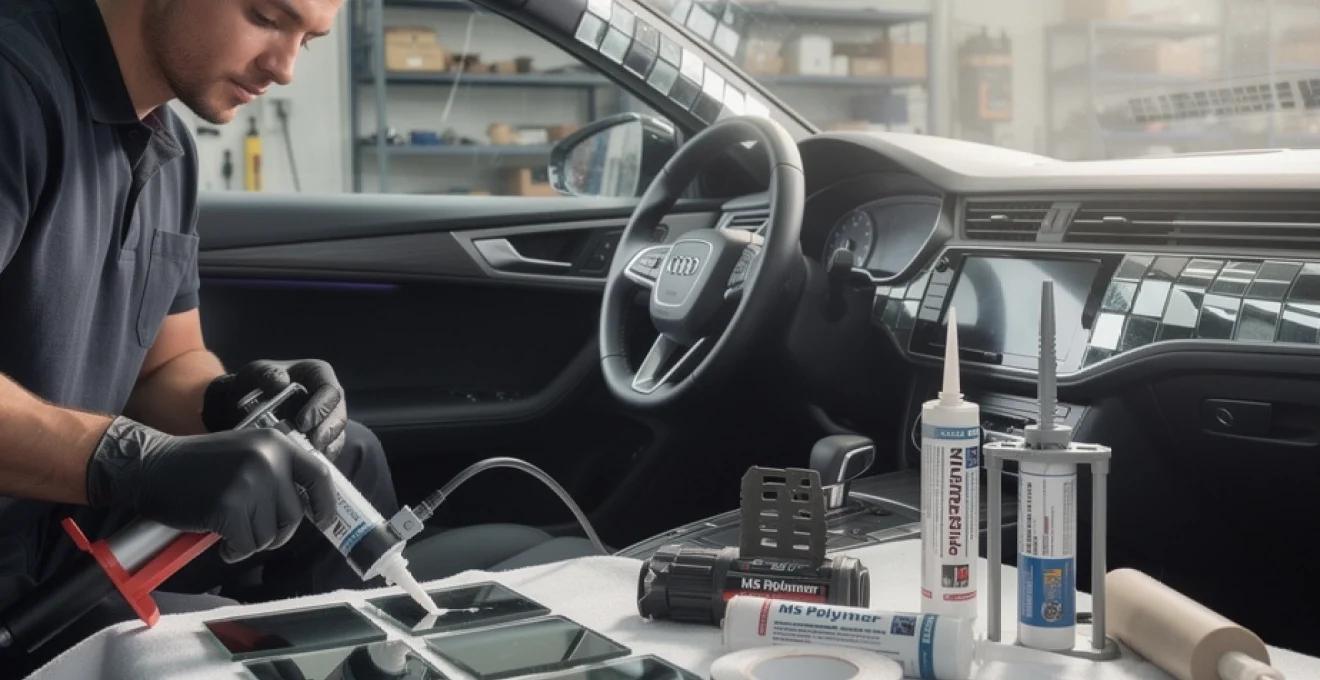
Mirror tiles inside a car can transform a basic interior into something distinctive, but the wrong adhesive can turn that style upgrade into a safety issue. High cabin temperatures, constant vibration and delicate mirror backing coatings mean that not every “strong glue” is suitable for automotive mirror tiles. Choosing the best adhesive for mirror tiles in cars protects passengers, preserves the glass and avoids costly rework. Whether you are fitting decorative mirror mosaics to pillars, custom tiles to a headliner, or functional mirrors on trim panels, understanding adhesive performance is just as important as choosing the mirror design.
Key performance criteria for choosing the best adhesive for mirror tiles in cars
Shear strength, tensile strength and peel resistance requirements for automotive mirror tile bonding
Automotive mirror tiles are subjected to continuous micro‑movement, so the adhesive must cope with more than simple static load. The best adhesive for mirror tiles in cars combines high shear strength to resist sliding, sufficient tensile strength to handle pull‑off forces, and good peel resistance for edges that might be picked or flexed. As a rule of thumb, a minimum lap shear strength of 1–2 MPa on glass or painted steel is advisable for interior mirror tiles, while premium structural products exceed 10 MPa. Thin glass tiles are particularly vulnerable to peel stresses, so a slightly elastic bond line reduces the chance of cracking.
Load distribution is just as important as raw strength. A continuous bead or foam tape spreads forces across the entire tile, whereas point bonding concentrates stress at a few spots. That concentration can lead to early adhesive failure, especially on curved trim or textured plastics. For areas where occupants might lean or pull, such as door cards or centre consoles, a more structural system like an epoxy or high‑performance hybrid is usually preferable to a light‑duty craft glue.
Thermal expansion, vibration damping and impact resistance in vehicle interiors
Inside a parked car, interior surfaces can exceed 70 °C in direct summer sun, then drop close to freezing overnight. Glass, metal, plastic and composite substrates all expand and contract at different rates, creating continuous shear in the adhesive layer. A suitable car mirror tile adhesive must tolerate this differential thermal expansion without becoming brittle. MS polymer hybrids and PU sealants perform well here because they remain flexible, typically allowing 20–25 % movement without loss of adhesion.
On the road, adhesive joints also act as miniature dampers. Every pothole, bass hit from a sound system or door slam introduces vibration; without some elasticity, those shocks pass straight into the mirror tile. An adhesive with built‑in vibration damping reduces the risk of debonding and annoying rattles. Think of the bond line as a rubber mount between a delicate glass tile and a moving body shell. Impact resistance is equally important in zones that are often knocked by luggage, elbows or child seats, where a slightly softer yet strong adhesive is far safer than a rigid, glass‑hard glue.
Outgassing, fogging and compatibility with mirror backing paints and silver coatings
Interior air quality and visibility cannot be ignored. Some aggressive adhesives release solvents or plasticisers that condense on nearby glass surfaces, creating haze or “fogging”. Modern OEMs routinely test interior materials for volatile organic compound (VOC) emissions, and the same thinking helps when choosing the best adhesive for mirror tiles in cars for aftermarket work. Low‑VOC, non‑solvent systems reduce the risk of interior fogging and lingering odours.
The reflective layer on mirror tiles, typically a silver coating protected by paint, is surprisingly sensitive to chemicals. Acetic‑cure silicones, certain cyanoacrylates and solvent‑borne construction adhesives can attack this backing, leading to black spots and de‑silvering over time. A mirror‑safe adhesive should be explicitly described as non‑staining and compatible with mirror backing paints. A simple test on an off‑cut, leaving adhesive in contact for several days, can reveal early signs of attack such as softening, blistering or colour change on the coating.
Moisture, UV and chemical resistance in daily car use (condensation, cleaning agents, perfumes)
Vehicle cabins experience regular humidity cycles. Overnight condensation on glass, damp coats, spilled drinks and climate control all influence moisture levels around mirror tiles. An automotive‑grade adhesive must therefore be moisture‑resistant and, where tiles are close to side glass or sunroofs, show adequate UV stability. Premium polyurethane and MS polymer systems are formulated for this environment and maintain flexibility after years of exposure.
Cleaning chemicals also play a role. Household glass cleaners, interior dressings, perfumes and even alcohol‑based sanitising sprays can run behind mirror tiles and come into contact with the adhesive edge. A good car mirror tile glue will have broad chemical resistance to mild detergents, diluted alcohols and plastic care products. For tiles near vents or on dashboards, products rated for up to at least 90 °C continuous service temperature help to avoid softening or creep when the cabin heats up.
Comparison of main adhesive chemistries used for car mirror tiles (PU, MS polymer, epoxy, acrylic, silicone)
Polyurethane (PU) mirror adhesives: 3M, sika, loctite and their behaviour on glass and painted substrates
Polyurethane adhesives are widely used in the automotive industry for bonding windscreens, trims and structural components. One‑component moisture‑curing PUs from brands like 3M, Sika or Loctite provide strong, elastic bonds on glass and painted metal, making them logical candidates for mirror tile installation in cars. On properly prepared glass, typical tensile strengths of 2–3 MPa and elongation over 400 % give a very durable joint.
However, PU chemistry can be sensitive to UV and may require protection behind opaque tiles or coatings. On painted substrates, compatibility with clearcoats and primer layers must be confirmed to prevent softening or discolouration. For small mirror tiles, a small bead of PU can be more than sufficient, but skin time is often short, so you need a clear installation plan before cutting the nozzle. For interior work, low‑odour, low‑isocyanate formulations are preferable for user comfort.
MS polymer hybrid sealants for flexible mirror tile fixing on dashboards, pillars and headliners
MS polymer, or silane‑modified polymer, hybrids bridge the gap between sealant and adhesive and are increasingly regarded as some of the best adhesives for mirror tiles in cars. These products cure by reacting with ambient moisture, remain permanently elastic and show excellent adhesion on a wide range of automotive substrates without separate primers. Typical movement capability of ±25 % makes them ideal for dashboards, A‑pillars and headliners where plastics and metal reinforcements move differently.
Unlike some PUs, MS hybrids are usually solvent‑free and exhibit low shrinkage, reducing the risk of stress on thin mirror glass. Many are also explicitly labelled as mirror‑safe and neutral cure, helping to protect delicate backing paints. In custom interiors, MS polymer sealants provide the right combination of grab, flexibility and long‑term ageing resistance, especially where decorative mirror tiles must withstand both heat from the windscreen and the torsion of the body shell.
Structural epoxies for permanent mirror tile assemblies on metal and composite car body panels
Where permanent, high‑load mirror tile assemblies are bonded directly to metal or composite car panels, such as decorative mirror mosaics on show cars or motorhome conversions, structural epoxies come into their own. Two‑component epoxies achieve very high lap shear strengths, often in the 15–25 MPa range, and provide superb temperature resistance, with many systems operating up to 120 °C or more.
The drawback is low flexibility: cured epoxies are relatively rigid. On thin glass tiles this can transfer impact energy directly into the glass, increasing breakage risk during a slam or crash. Epoxies also require precise mixing ratios and surface preparation, and the exothermic cure can be an issue on very small tiles. For interior mirror tiles, epoxy is best reserved for metal‑backed mirrors or composite‑to‑metal structures where loads are high and differential expansion is modest.
Acrylic foam tapes (3M VHB, tesa) versus liquid adhesives for quick mirror tile installation
Acrylic foam tapes such as 3M VHB and Tesa ACX are widely used by OEMs for exterior trims and badges, and they can be very effective for interior mirror tiles. These double‑sided tapes provide immediate handling strength, eliminating the need for props or spacers in many cases. A 1 mm thick foam core not only compensates for minor surface irregularities but also adds vibration damping and stress distribution across the tile.
Comparative tests on rear‑view mirror pads have shown that quality acrylic foam tapes can outperform some liquid mirror adhesives under thermal cycling, holding 2 kg loads after exposure to temperatures between ‑18 °C and 50 °C. For small, lightweight tiles on smooth glass or painted panels, a properly applied acrylic tape is often the most efficient solution. However, heavy or large tiles, or those mounted on textured plastic, still benefit from high‑performance liquid systems or a combination of tape (for instant hold) and adhesive (for long‑term strength).
Neutral cure silicone sealants for mirror tiles and risks with acetic-cure products attacking mirror backing
Silicone sealants are attractive because they remain flexible over an extremely wide temperature range, typically from ‑40 °C to +150 °C. For mirror tiles in cars, only neutral cure silicone should be considered. Neutral cure systems (often labelled “oxime” or “alkoxy”) are compatible with most mirror backing paints and do not release corrosive acetic acid during cure.
Acetic‑cure silicones, by contrast, smell strongly of vinegar and can slowly attack silver coatings, leading to black edges and de‑silvering. In many glass and mirror standards, use of acetic‑cure silicone on mirrors is explicitly discouraged. If silicone is selected as the best adhesive for mirror tiles in cars in a specific context, look for products tested for mirror bonding and interior automotive use, with low modulus to absorb vibration and movement without detaching under shock.
Substrate preparation for reliable adhesion to automotive glass, plastics and painted panels
Cleaning protocols with isopropyl alcohol (IPA) and degreasers for windscreens and interior glass
Even the best adhesive for mirror tiles in cars will fail quickly on a contaminated surface. Windscreens and interior glass often carry a film of silicone from dashboard dressings, nicotine residue, or release agents from manufacturing. A two‑step cleaning process is recommended: first, a mild degreaser or glass cleaner to remove heavy contamination, followed by a wipe with 70–90 % isopropyl alcohol (IPA) on a lint‑free cloth.
Cleaning should extend at least 50 mm beyond the edge of where the adhesive will sit, ensuring no overspray from cleaners compromises the bond. After cleaning with IPA, allow the surface to dry fully before applying tape or adhesive. Touching the cleaned area with bare fingers can transfer skin oils, so nitrile gloves are strongly advised when handling both mirror tiles and substrates.
Adhesion promotion with primers on ABS, PC, PP and soft‑touch plastic trims
Many interior plastics such as ABS, PC/ABS blends, polypropylene (PP) and soft‑touch coatings present low surface energy or contain plasticisers that can migrate into the adhesive over time. Dedicated adhesion promoters and primers from automotive adhesive manufacturers dramatically increase bond reliability on these materials. These are usually wiped or brushed onto the surface, left to flash off, and then over‑bonded within a defined time window.
For example, a PC/ABS A‑pillar trim may require a specific primer recommended by the chosen adhesive brand to meet OEM‑level durability. Skipping this step often leads to clean adhesive failure on the plastic after a few months of heat and vibration. When working on custom interiors, checking the plastic identification marks (e.g. ABS, PP‑EPDM) on the rear of trim panels helps to choose the right primer and bonding strategy.
Surface abrasion, corona and flame treatment for low‑energy plastics and composite panels
Some plastics and composites, particularly PP, PE and certain TPOs, remain difficult to bond even with primers. Light surface abrasion with a fine abrasive pad (e.g. P320–P400) can improve the micro‑mechanical key for the adhesive, provided the visible surface will be hidden by the mirror tile. Care should be taken not to break through paint layers or damage decorative textures.
In more demanding industrial settings, corona discharge, plasma or flame treatment is used to increase surface energy. These processes momentarily oxidise the plastic surface, raising its ability to bond chemically. Although such equipment is less common in repair workshops, awareness of these methods helps explain why some OEM bonded joints on very low‑energy plastics perform far better than aftermarket attempts without surface activation.
Managing condensation, humidity and temperature during mirror tile bonding
Temperature and humidity at the time of application strongly influence adhesive cure. Most one‑component PUs and MS polymers cure by reacting with moisture, so a moderate relative humidity (40–70 %) is ideal. Extremely dry conditions slow cure, while very high humidity may lead to surface skinning too fast, trapping uncured material behind. Substrate temperature should typically be between 10 °C and 30 °C unless the product datasheet states otherwise.
Condensation is a common problem in winter: if a cold car is brought into a warm workshop, moisture can form on glass or metal. Bonding onto this invisible film of water leads to weak, patchy adhesion. Allow the vehicle and parts to acclimatise, then clean immediately before bonding. For large mirror tile installations, controlling workshop climate avoids cure inconsistencies from one side of the car to the other.
Load cases and safety considerations for mirror tiles in different car locations
Roof lining, sunroof surrounds and panoramic glass: overhead installation and drop‑risk mitigation
Overhead mirror tiles present the highest safety risk because any failure can result in falling shards. For headliners, sunroof surrounds or panoramic glass areas, using an adhesive with high green strength and excellent long‑term creep resistance is non‑negotiable. MS polymer hybrids or specialised automotive PUs are typically superior to conventional DIY mastics here. For bonding onto glass roofs, mirror‑safe products that tolerate continuous sun exposure and frequent temperature cycles are essential.
Drop‑risk mitigation often involves redundancy: combining a high‑performance adhesive with mechanical backing, safety film on the rear of the tiles, or design features that support the tile even if the bond weakens. Professional installers sometimes apply a clear safety film over whole mirror assemblies, ensuring that if a tile does detach, fragments remain attached to the film rather than falling onto occupants.
Door cards, b‑pillars and c‑pillars: side‑impact, slamming and vibration stress on mirror tiles
Door cards and pillar trims experience repetitive slamming forces, closing impact and substantial vibration from the chassis. The best adhesive for mirror tiles in cars in these zones must combine strong initial grab with long‑term fatigue resistance. A softer, high‑tack MS polymer or PU adhesive generally outperforms rigid epoxies because it can absorb shocks rather than transmitting them directly into the glass.
Side‑impact crash scenarios are another consideration. While small decorative tiles are unlikely to be a primary safety concern, avoiding sharp edges and specifying safety‑backed mirror glass reduces risk. Where children are frequent passengers, installing mirror tiles slightly recessed within trims or frames adds a practical layer of protection against knocks and scratches that might otherwise chip edges and initiate cracks.
Dashboard and centre console mirror tiles: heat build‑up under windscreen and UV exposure
Dashboards can hit extreme temperatures under a windscreen, especially in darker colours. Tests by automotive associations regularly record surface temperatures above 80 °C in summer sun, even in Northern Europe. Any adhesive used for mirror tiles in this area must therefore maintain integrity at elevated temperatures without softening, sliding or releasing plasticisers that create dashboard haze.
UV light through the windscreen accelerates ageing of both plastics and adhesives. Products specifically formulated for automotive interiors often contain UV stabilisers and have been tested for discolouration and hardening under artificial sunlight. For mirror tiles on or near the dash, neutral cure silicone or advanced MS polymer systems with high temperature ratings offer a strong combination of stability and flexibility.
Boot lids, tailgates and parcel shelves: dynamic loads, torsion and rattling prevention
Boot lids and tailgates are large moving panels subject to torsion and dynamic loads as the car travels over uneven roads. Mirror tiles mounted in these locations are constantly flexed, especially on large hatchbacks and SUVs where the tailgate is relatively light yet wide. Adhesives must accommodate this twisting without debonding from either the metal skin or the plastic trim panel.
Parcel shelves add another dimension: they are often removed and reinstalled, or loaded with luggage that can knock against mirror tiles. Here, a slightly thicker adhesive bed or foam tape can act as a shock absorber and also reduce rattling. Professional practice is to avoid placing mirror tiles where they are likely to be directly struck by loose items, or to use plastic “mirror effect” foils in such high‑risk areas instead of real glass.
Compliance with roadworthiness regulations, sharp edge risks and emergency egress visibility
While decorative interior modifications are often left to owner discretion, many roadworthiness regulations address sharp edges, visual obstructions and interior fittings that could endanger occupants. Mirror tiles with unprotected edges can present a cutting hazard in a crash, especially if fitted near head strike zones such as pillars or the roofline. Chamfered edges, plastic frames or safety films can mitigate this risk effectively.
Visibility for emergency egress is another subtle consideration. Large mirror panels on side glass, for example, may impair the ability of rescue services to see inside or break glass quickly. For that reason, the best adhesive for mirror tiles in cars is sometimes no adhesive at all in zones where glass needs to remain unobstructed. Before extensive mirror tiling, checking national guidelines or technical bulletins from vehicle inspection bodies reduces the chance of MOT or roadworthiness issues later.
Installation methodology for mirror tiles in cars: step‑by‑step professional workflow
Planning mirror tile layout, joint gaps and allowance for thermal expansion
Good preparation starts on the drawing board rather than with a tube of adhesive in hand. Sketching the mirror tile layout, including joint gaps, expansion allowances and alignment with existing trim lines, prevents awkward cut pieces and stress points. A small joint gap, typically 1–2 mm, between tiles allows for differential expansion and easier cleaning; it also helps mask minor dimensional variations in hand‑cut tiles.
Thermal expansion of large mirror arrays can be significant over the width of a dashboard or headliner. Using soft spacers or profiles between tiles avoids hard contact that might lead to edge chipping as materials move. Masking tape can define boundaries and protect adjacent trim from adhesive smears, particularly helpful when working close to fabrics or soft‑touch coatings that are difficult to clean.
Adhesive bead design (spot bonding, continuous beads, comb‑trowel patterns) for mirror tiles
Adhesive bead design dictates not only strength but also final appearance. Spot bonding with small adhesive dots is quick but risks print‑through on thinner mirror tiles and concentrates stress. A continuous perimeter bead combined with a central “X” or several lines offers better support and helps avoid hollow spots that can resonate and rattle.
For larger tiles or panels, a comb‑trowel pattern similar to tiling on walls ensures even coverage and keeps the bond line thickness consistent. Maintaining a bond line of 1–3 mm allows flexible adhesives to perform as designed, absorbing movement effectively. Overfilling with adhesive may appear safer, but excess material can squeeze out and become visible around tile edges, requiring time‑consuming clean‑up.
Open time, skin time and full cure time management in workshop and DIY contexts
Each adhesive has a finite open time (or working time) and skin time during which tiles must be positioned and adjusted. In a warm workshop, these times can easily halve compared with datasheet values measured at 23 °C. Planning how many tiles can be installed per batch of adhesive is essential to avoid bonding onto partially skinned material, which significantly reduces adhesion.
Full cure time is equally relevant. Many one‑component systems reach handling strength within a few hours but need 24–72 hours to develop full mechanical properties, depending on bead thickness and environmental conditions. During this period, avoiding excessive movement, slamming of doors near freshly bonded tiles and high loads on bonded panels improves final strength and reduces the risk of early failures.
Use of temporary supports, wedges and spacers to prevent creep before adhesive curing
Mirror tiles mounted on vertical or overhead surfaces can creep or slide before the adhesive has cured sufficiently. Temporary supports are a simple but highly effective countermeasure. Options include low‑tack painter’s tape criss‑crossed over tiles, foam wedges at the bottom edges, or custom jigs that hold tiles flush against the substrate.
On headliners, light timber props or telescopic poles with padded ends can gently press the mirror array into place. Pressure should be firm but not excessive to avoid squeezing out too much adhesive. Removing supports too early is a common issue; observing the adhesive manufacturer’s minimum handling time before demoulding or de‑propping avoids tiles settling slightly out of alignment overnight.
Post‑installation inspection: adhesion testing, rattle checks and visual defect control
Once the adhesive has reached handling strength, basic quality checks help confirm a reliable installation. A gentle manual pull on a sample tile in a non‑critical area gives a feel for bond strength; any movement or crackling sounds suggest incomplete cure or poor surface preparation. Tapping tiles lightly with a plastic tool can reveal hollow spots that may rattle later, indicating insufficient adhesive coverage.
Visual inspection under different lighting angles highlights adhesive squeeze‑out, misaligned joints or surface contamination on the mirror face. Corrections are far easier at this stage than after the car has been returned to service. For high‑end builds, recording product batch numbers, cure times and substrate preparation methods in a job sheet provides valuable traceability if questions arise months or years later.
Product recommendations: best automotive‑grade adhesives for mirror tiles in cars
Sikatack, sikaflex and SikaBond products suitable for interior mirror tile applications
Sika offers a wide portfolio of automotive adhesives that adapt well to mirror tile applications. SikaTack products, originally developed for windscreen bonding, provide very high strength and excellent adhesion to glass and painted metal. For interior mirror tiles on structural glass or metal panels, a low‑conductivity SikaTack variant with controlled modulus can deliver reliable performance under harsh thermal cycling.
For bonding tiles to plastics, Sikaflex MS polymer and PU hybrids designed for interior trim are often more suitable due to their broader substrate compatibility and increased flexibility. Certain SikaBond construction adhesives, when specified as mirror‑safe and low‑odour, can also be used for custom interiors and show cars. Checking each product’s datasheet for mirror compatibility and interior VOC ratings ensures that the chosen adhesive balances performance with comfort and aesthetics.
3M automotive mirror and trim adhesives, including 3M 08609 and 3M VHB ranges
3M is well‑known in the automotive world for both liquid adhesives and tapes. Products like 3M 08609 rear‑view mirror adhesive are formulated specifically for glass‑to‑metal bonding and demonstrate robust performance under extreme temperature swings. For small functional mirror tiles on glass or metal brackets, this kind of dedicated mirror bonder is a strong candidate.
For decorative mirror tiles, the 3M VHB range of acrylic foam tapes stands out. Independent tests comparing car glass adhesives under cycling from ‑18 °C to 50 °C have shown that quality VHB pads can reliably hold rear‑view mirrors under 2 kg loads where several liquid competitors failed. For mirror tiles in cars, 3M recommends selecting a VHB tape thickness and formulation matched to the substrate combination (glass to painted metal, plastic to composite etc.), and applying with firm pressure to activate the adhesive fully.
Loctite, teroson and würth adhesives designed for glass, mirror and interior trim bonding
Loctite and its automotive brand Teroson, along with Würth, supply numerous OEMs and bodyshops with specialised bonding systems. Loctite rear‑view mirror adhesive kits, which combine an activator and a structural acrylic adhesive, are engineered to compensate for differential thermal expansion between glass and metal mounts. Similar technology can be effective where small mirror tiles must be bonded to metal brackets or vent window frames.
Teroson and Würth produce high‑performance MS polymer and PU sealants marketed for windscreen and trim bonding, which translate well to interior mirror tile work. Professional installers often favour these brands because of their predictable curing and strong technical support. When using such products for mirror tiles, a neutral cure, non‑corrosive formulation with proven mirror backing compatibility should be specified explicitly to avoid any long‑term de‑silvering issues.
When consumer products like no more nails, gorilla construction adhesive or generic silicones are inadequate
General‑purpose construction adhesives and household silicones are tempting due to price and availability, but they frequently fall short as the best adhesive for mirror tiles in cars. Many “no nails” type products are solvent‑borne and not designed for continuous high‑temperature exposure, leading to softening or odour release inside hot cabins. Some strong consumer construction glues also shrink significantly during cure, pulling on mirror tiles and stressing the backing.
Generic silicones present another pitfall. Unless explicitly labelled as neutral cure and mirror‑safe, there is a real risk of chemical attack on mirror coatings over time, plus inadequate adhesion on automotive plastics. For demanding environments like vehicles, professional observation strongly favours purpose‑made automotive adhesives and tapes that have been tested for vibration, temperature cycling and compatibility with glass, paint and plastics, rather than relying on multi‑purpose DIY products that were never intended for such conditions.