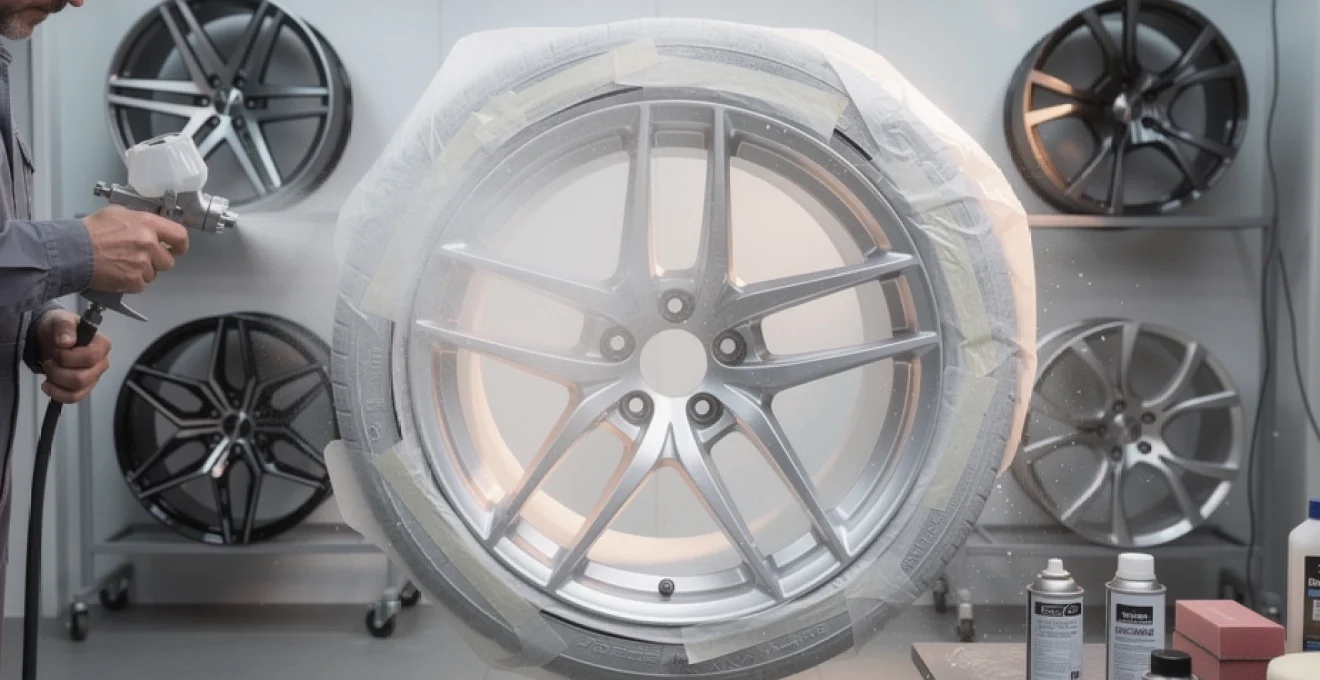
Perfectly finished alloy wheels change the way a car looks and feels, but that showroom gloss is constantly under attack from brake dust, road salt, stone chips and UV light. Choosing the best lacquer for alloy wheels is the difference between a finish that fails in one winter and a surface that still looks sharp after years of daily driving. The clear coat on your rims is not just about shine; it is a critical protective system that locks in colour, prevents oxidation and resists chemical damage. If you care about resale value, long-term durability or simply hate cleaning baked-on brake dust, understanding how wheel lacquer works and how to choose and apply it is one of the smartest upgrades you can make.
How wheel lacquer protects alloy wheels from oxidation, road salt and brake dust
Modern alloy wheel lacquers act like a transparent armour layer over the paint, bare aluminium or diamond-cut face. Typically based on 2K polyurethane or acrylic urethane chemistry, a cured clear coat forms a dense, cross-linked film that seals the metal from oxygen, moisture and aggressive contaminants. Independent corrosion tests show that untreated aluminium can start to show visible oxidation within weeks of winter use, while a properly applied 2K lacquer extends that timeframe to several years of service before any corrosion appears. For you, that translates into fewer refurbishments, lower long-term costs and wheels that continue to match the car’s bodywork finish.
Chemical resistance of 2K polyurethane and acrylic urethane lacquers to road salt and de-icing agents
Road salt and de-icing chemicals are among the most destructive factors for alloy wheels, especially in regions where winter gritting is heavy. High-quality 2K lacquers are formulated to resist chloride-rich solutions that would otherwise penetrate micro-cracks and pinholes. Laboratory immersion tests often show less than 5% gloss loss after 240–480 hours in salt spray for premium automotive clear coats, compared with over 30% for cheaper 1K aerosols. If you drive through salted roads for several months each year, that difference becomes very obvious. The denser cross-linking in catalysed 2K urethane systems also gives better resistance to alkaline wheel cleaners and traffic film removers, so you are less likely to see edge-lift or whitening around spoke details after repeated washes.
Barrier properties against ferrous brake dust contamination and iron fallout
Brake dust is essentially hot, microscopic iron particles that weld themselves to the nearest cool surface – usually your lacquered alloy wheels. Once embedded, they rust, expand and slowly break down the clear coat from the inside. A robust lacquer layer creates a non-porous barrier, so iron fallout sits on top of the surface rather than biting directly into the metal or basecoat. When you use an iron fallout remover during regular maintenance, those particles can be dissolved and rinsed away before they cause pitting. Studies from detailing product manufacturers indicate that wheels coated with a fresh clear coat and sealant can reduce visible iron staining by up to 60–70% over six months compared with unprotected finishes, which is why a strong lacquer system is essential before adding any ceramic or wax protection.
UV protection and gloss retention for diamond-cut and polished alloys
UV light from the sun gradually degrades unprotected aluminium and clear coats, leading to dullness, yellowing and a chalky appearance. Diamond-cut and ceramic-polished wheels rely on the clarity and refractive index of the lacquer to maintain that crisp, mirror-like look. Good quality acrylic urethane lacquers include UV absorbers and stabilisers that significantly slow down this ageing process. Real-world fleet data suggests that unprotected polished alloys can lose up to 40% of their original gloss within two summers, while UV-stabilised clear coats typically limit gloss loss to under 10–15% in the same period. If you park outside or own a show car with bright-machined faces, investing in a UV-stable lacquer is one of the most effective ways to preserve the finish you paid for.
Impact and chip resistance on high-speed motorway and track-driven wheels
High-speed driving on motorways or circuits exposes wheels to constant micro-impacts from grit and stones. Every chip in the lacquer becomes a potential corrosion hotspot once water and salt creep underneath. 2K polyurethane clear coats are designed for high flexibility and impact resistance, allowing them to absorb minor hits without fracturing. Performance tests regularly show that 2K clears have up to twice the stone-chip resistance of generic 1K aerosols. For track-day cars or fast-road builds on B-road routes, that extra toughness can delay the onset of lacquer edge-lift and bubbling around spoke leading edges – areas typically destroyed first on hard-driven wheels.
Corrosion prevention on bare aluminium, machined faces and exposed rim edges
Bare aluminium and freshly machined faces are particularly vulnerable to white corrosion and milky staining when moisture penetrates behind the lacquer. This is especially noticeable on diamond-cut wheels around the outer rim and centre cap recess. A properly chosen and applied clear coat acts as a fully sealed membrane, locking out oxygen and electrolytes. When combined with a correctly prepared and primed substrate, failure rates on diamond-cut wheels can be reduced dramatically; some refurbishment specialists report a drop from re-corrosion in under 12 months to lifespans closer to 24–36 months. The exposed rim edges that frequently rub curbs or collect stone rash benefit enormously from a harder, thicker clear layer, which slows down the classic “spider web” corrosion that many OEM wheels develop.
Wheel lacquer is not just cosmetic; it is a primary corrosion control layer that determines how long an alloy wheel will structurally and visually survive real-world driving.
Comparing lacquer types for alloy wheels: 1K vs 2K, solvent-based vs waterborne
When selecting the best lacquer for alloy wheels, the choice between 1K and 2K, and between solvent-borne and waterborne systems, has a direct impact on durability, gloss and repairability. Each technology has strengths and compromises, so matching it to how you use your car is essential. From simple 1K aerosols intended for DIY touch-ups to high-solids 2K clears designed for professional spray booths, understanding what is in the can helps you avoid premature failure and wasted effort. Industry data from refinish manufacturers shows that properly applied 2K systems can outperform typical 1K aerosols by a factor of three to four in terms of chemical and chip resistance, which is why professional alloy wheel repair shops almost always favour catalysed systems.
1K aerosol clear coats (e.g. halfords clear lacquer) for DIY touch-ups and smart repairs
Single-component, or 1K aerosol, lacquers are popular with DIY enthusiasts because they are convenient, require no mixing and cure simply by solvent evaporation. Products like general-purpose clear aerosols are suitable for very small repairs, such as touching in a single spoke or blending a minor scuff, especially when the car is a daily driver and ultimate longevity is less critical. However, film build, chemical resistance and hardness are limited compared with 2K alternatives. Testing often shows that 1K aerosol lacquers soften around 80–90 °C and can be etched by strong wheel cleaners after a few months. If you rely on a quick rattle-can clear coat for a full wheel refurbishment, it is likely that brake dust and salt will overwhelm the protection in a relatively short time.
2K catalysed clear coats (e.g. SprayMax 2K clear glamour, upol 2K clearcoat) for professional refinish
Catalysed 2K clear coats combine a resin and hardener that react chemically to form a much tougher, cross-linked film. Aerosol formats with internal hardener capsules, along with professional gun-applied systems such as Final Systems Ultimate 2K HS DTM Clearcoat, bring professional-grade durability within reach for enthusiasts who take preparation seriously. These clears typically withstand temperatures above 120–140 °C, offer excellent vertical hold for complex wheel shapes and reach full hardness in a few hours with bake or infrared curing. Many bodyshops and alloy specialists consider 2K HS clears the benchmark for refurbishment, especially when combined with appropriate primers on bare metal, because failure rates and comebacks are significantly lower than with cheaper options.
Solvent-borne OEM-style wheel lacquers vs low-VOC waterborne systems
Traditional OEM and refinish wheel lacquers are mostly solvent-borne, offering fast drying, good flow and predictable results even in less-than-perfect conditions. However, tightening VOC regulations across Europe have driven the growth of waterborne systems that reduce solvent emissions while maintaining performance. Modern waterborne clears used over water-based basecoats can provide comparable gloss and durability to solvent-borne alternatives, but they demand tighter control of temperature, airflow and humidity. For a home user without a spray booth, a solvent-borne lacquer is usually more forgiving. For bodyshops investing in compliant systems and energy-efficient curing, waterborne technology is becoming increasingly attractive, especially when aligned with OEM environmental targets and insurance body approvals.
High-build vs high-solid clear coats for refurbished and heavily sanded alloys
Refurbished wheels, particularly those that have been shot-blasted or heavily sanded, may benefit from a high-build clear coat capable of levelling minor sanding marks and surface texture. High-build clears lay down a thicker film per coat, helping to hide imperfections and deliver that factory-smooth appearance. In contrast, high-solids (HS) clear coats focus on high resin content with reduced solvent, giving strong gloss and depth with fewer passes while still complying with VOC limits. For heavily worked wheels, a combination approach works well: refining the surface with primer and filler, then using an HS clear like Ultimate 2K HS DTM to achieve a dense, durable final layer without excessive thickness that could be prone to cracking on sharp edges.
Heat-resistant and track-ready lacquers for performance wheels (BBS, OZ racing, enkei)
Performance brands such as BBS, OZ Racing and Enkei often fit to vehicles that generate extreme brake temperatures. In these environments, the wrong clear coat can discolour, soften or even blister after repeated heat cycles. Heat-resistant, track-ready lacquers are formulated to cope with sustained temperatures in the 200–300 °C range at the inner barrel and around caliper areas. While no standard wheel clear is truly invincible to race-level heat, choosing a high-temperature-capable 2K polyurethane and pairing it with sensible brake-cooling and cleaning routines greatly extends life. Many detailers also layer ceramic wheel coatings on top of these lacquers to add an extra sacrificial layer that shoulders some of the thermal and chemical load during hard use.
For performance and track wheels, the lacquer system must withstand not only road salt and cleaners, but also relentless thermal cycling that destroys lesser clear coats from the inside out.
Choosing the best lacquer for different alloy wheel finishes and use cases
The “best” lacquer for alloy wheels depends heavily on the substrate, the original finish, and how the car is used day-to-day. A diamond-cut OEM wheel on a leased daily driver calls for a different approach than a polished multi-piece on a summer-only show car or a set of lightweight track rims. Matching gloss level, compatibility with existing basecoats and the ease of future repairs are all factors that matter if you want a low-maintenance finish rather than a constant battle against peeling and corrosion.
Clear lacquer for bare alloy, diamond-cut and machined face wheels
Bare aluminium and diamond-cut wheels demand a clear coat specifically engineered for direct adhesion to metal and machined surfaces. Specialist DTM (Direct To Metal) lacquers, often marketed as diamond-cut wheel clear, feature adhesion promoters and flexible resins that key into the cut surface without excessive build that would blur the sharp lines. For these finishes, a thin yet tough clear layer is preferable to a thick, soft film that can trap moisture and lift. Because diamond-cut wheels cannot be re-cut indefinitely without weakening the structure, selecting a lacquer that delays the first signs of milky staining – and then maintaining it with gentle cleaners – is one of the most cost-effective moves you can make.
Colour-matched lacquer systems for painted wheels (gloss black, gunmetal, anthracite)
Most factory wheels are painted in shades like gloss black, silver, gunmetal or anthracite and then finished with a transparent clear coat. In refinishing, this is usually replicated using a dedicated wheel basecoat followed by a compatible 2K clear. For popular colours such as gloss black, a deep, clear lacquer with high DOI (Distinctness Of Image) enhances reflections and hides minor defects, giving that piano-black effect. For metallic anthracite or hyper-silver finishes, clarity is even more critical, as any cloudiness in the clear will flatten the metallic flip and sparkle. Colour-matched systems from reputable refinish brands ensure that the tint, metallic content and clear chemistry are designed to work together, reducing the risk of reactions or mottling.
Matt, satin and gloss clear coats for OEM finishes from BMW, audi, VW and Mercedes-Benz
Many modern BMW, Audi, VW and Mercedes-Benz alloy wheels use subtle satin or matt clear coats rather than full gloss. Replicating these OEM finishes requires a clear lacquer available in graded gloss levels rather than attempting to “knock back” a standard gloss clear with over-thinning. Professional systems often offer specific matt, satin and semi-gloss variants that enable accurate matching. If you are repairing a single wheel on a car with a factory satin finish, choosing the wrong gloss level is immediately obvious in certain lighting. A carefully selected satin clear, applied with consistent film build and correct flash times, will blend far more invisibly into surrounding wheels and maintain the manufacturer’s design intent.
Specialist lacquers for polished lips, split-rims and multi-piece forged wheels
Split-rims, polished lips and multi-piece forged wheels introduce additional challenges: dissimilar metals, exposed bolts and complex interfaces where moisture can creep in. Some owners opt to leave polished aluminium bare and rely on metal sealants or frequent hand polishing, but this approach is labour-intensive. Specialist lacquers compatible with polished, bare metal surfaces can dramatically cut maintenance while retaining a bright finish. However, ceramic sealants are usually unsuitable for truly bare, unlacquered lips, so choosing between a coated or uncoated system early on is important. For wheels where hardware and centres have different finishes (for example, anodised centres with a polished outer), flexible, chip-resistant clears that tolerate small amounts of movement and differential expansion minimise the chance of stress cracking and flaking over time.
Daily driver vs show car vs track car: selecting durability, gloss and ease of repair
Intended use should always guide your lacquer choice. A daily-driven car exposed to winter salt benefits from a robust 2K gloss or satin clear, topped with a ceramic wheel coating to ease cleaning. A show car that only sees dry roads might prioritise ultimate gloss and clarity, even if the lacquer is slightly less resistant to harsh cleaners, because maintenance can be gentler and more frequent. For track cars, heat stability and ease of localised repair matter more than flawless mirror gloss. Choosing a system that can be spot-blended after stone-chip repairs without needing to strip and re-coat the entire wheel will save both time and money across a racing season.
Surface preparation and priming before applying alloy wheel lacquer
Even the best lacquer for alloy wheels fails quickly if surface preparation is rushed. Most premature peeling, flaking and corrosion issues begin long before the first coat of clear is sprayed. Contamination, poor sanding discipline and incorrect or missing primers on bare aluminium all undermine adhesion. Professional refurbishers consistently report that 70–80% of a successful wheel refinish is in the preparation stage, not the final clear coat. If you invest time and care before opening the lacquer, the end result will be noticeably more durable and visually consistent.
Decontamination: iron fallout removal, tar removal and degreasing with panel wipe
Wheels accumulate a cocktail of iron particles, tar, old sealants and greasy residues. Before sanding or priming, these contaminants must be removed so they are not driven deeper into the surface. A typical process involves using an iron fallout remover to dissolve embedded brake dust, followed by a tar remover on stubborn spots, then a thorough wash with a pH-neutral shampoo. Finally, a dedicated panel wipe or degreaser ensures that oils, silicone and polish residues are stripped away. Skipping this stage risks fisheyes, poor adhesion and unexpected reactions during curing. For wheels that have previously been treated with silicone-heavy tyre shines, two or three rounds of cleaning and panel wipe may be required before the surface behaves reliably under fresh coatings.
Sanding protocols: grit progression, feather edging and keying existing clear coat
Correct sanding creates a smooth, keyed surface that gives primers and lacquer a mechanical grip. Coarse grits like 80 or 120 are suitable for initial shaping and removing heavy kerb damage, but must be followed by a progression through 240, 320 and sometimes 600 grit to refine scratches. Feather edging the existing clear coat around repair areas prevents visible witness lines after painting. On sound OEM lacquer that is not being fully stripped, scuffing with red Scotch-Brite or 600–800 grit paper provides an effective key. Sanding dust should be thoroughly blown off or vacuumed and then removed with a tack cloth before any coating is applied, so that particles do not become nibs or craters in the final finish.
Using etch primer and epoxy primer on bare aluminium substrates
Bare aluminium requires a specific priming strategy to prevent corrosion and ensure strong adhesion. Acid-containing etch primers bond chemically to the metal, creating a thin conversion layer that subsequent primers and basecoats can lock onto. For more robust systems, an epoxy primer may be applied over the etch or directly to the metal, depending on product guidance, adding both corrosion resistance and filling capability. Using a generic grey primer alone on bare alloy is a common DIY mistake that often leads to delamination within a year. A proper aluminium-specific priming stack, although slightly more time-consuming, dramatically improves the lifespan of the lacquer system and reduces the risk of bubbling around bolt holes and rim edges.
Filler and putty techniques for kerb rash and gouge repair before lacquering
Kerb rash and gouges need to be smoothed and levelled before basecoat and lacquer if you want a seamless result. Metal-filled body fillers or specialised alloy repair putties are ideal for rebuilding damaged edges and spokes. The damaged area should be taken back to bare metal, cleaned with panel wipe, then filled in thin layers rather than one thick application to minimise pinholes and shrinkage. After curing, careful shaping with 120 and 240 grit paper restores the original wheel contour, followed by finer grits to match the surrounding surface. Any remaining pinholes can be skimmed with fine stopper before final sanding. Attempting to “fill” damage with heavy coats of primer or clear instead of proper filler work almost always leads to visible distortions and weak spots.
Masking valve stems, tyres and hub faces to prevent lacquer build-up
Accurate masking not only keeps tyres and valve stems clean but also prevents lacquer build-up on hub faces and mounting areas that could affect wheel seating. High-quality automotive masking tape should be used to follow rim edges, with plastic sheeting or paper covering the tyre sidewall. Hub bores can be plugged or masked, and bolt holes protected with foam bungs or tape, depending on the design. Overspray on the rear drum or disc face can lead to flaking and contamination around mounting points, so a few extra minutes spent masking pays dividends in reliability and ease of fitting. Clear definition between painted and unpainted areas also contributes to that crisp, factory-like appearance once the wheels are back on the vehicle.
Application techniques for durable, factory-like lacquer on alloy wheels
Applying lacquer to alloy wheels is more demanding than clearing a flat body panel: complex shapes, tight spokes and multiple angles make it easy to miss areas or create runs. Mastering application technique – whether with a spray gun or an advanced 2K aerosol – is key to achieving even coverage, consistent gloss and long-term durability. Variables such as nozzle size, air pressure, flash-off time and ambient conditions all interact, so understanding how each affects film build and flow helps you adapt to your workspace, whether that is a professional booth or a well-prepared garage.
Spray gun vs aerosol: nozzle size, fan pattern and air pressure settings
A dedicated spray gun offers the best control for full refurbishments. For high-solids 2K clears, a 1.2–1.3 mm fluid tip with 2.0–2.5 bar pressure is typical, balancing atomisation and flow. A narrow fan pattern helps reach the inner barrel and behind spokes; many refinishers paint the wheel on a turntable to maintain a consistent angle. High-quality 2K aerosols with built-in hardener capsules can be an effective alternative when a compressor and gun are not available, but require careful distance and speed control to avoid dry spray or heavy, run-prone areas. Whatever the tool, the goal is an even, overlapping pattern that deposits a uniform film across all visible and hidden surfaces.
Flash-off times, wet coat overlap and film build thickness for 2K clear
2K lacquers are usually applied in two coats: a light “control” coat followed by one or two full wet coats. Allowing 3–5 minutes flash-off between coats at 20 °C lets solvents escape and reduces the risk of solvent boil or trapped gas bubbles. A 50% overlap on each pass helps maintain consistent thickness and gloss. For wheels, a total dry film thickness of 40–50 µm is common; too thin and protection is compromised, too thick and the risk of cracking on sharp edges increases. Manufacturer data sheets for products such as Ultimate 2K HS DTM Clearcoat give precise targets for viscosity, film build and flash times, and following these guidelines closely leads to the most reliable results.
Temperature, humidity and dust control in home garages vs professional spray booths
Professional spray booths maintain stable temperature, filtered airflow and controlled humidity, all of which help lacquer flow, cure and stay dust-free. In a home garage, conditions are more variable, so some compensation is needed. Ideal ambient temperature is usually between 18–25 °C; below this the lacquer may not flow or cure correctly, above it solvents may flash too quickly, leaving dry spray and texture. Humidity that is too high can cause blooming or cloudiness in the clear. Simple measures like gently warming the wheel and product, using temporary plastic sheeting to create a spray enclosure, and allowing dust to settle before spraying can substantially improve results in non-professional spaces.
Curing times, forced drying, infrared lamps and handling windows
After application, 2K lacquers progress through stages: dust-free, tack-free and then hard-dry. At 20 °C, many systems reach dust-free in around 10 minutes, tack-free at about an hour and handling strength after 3–4 hours, though full chemical resistance may take 24–48 hours. Forced drying with a 60 °C bake can cut total cure time to 20–30 minutes, while infrared lamps halve drying times again, especially useful in cooler climates. Handling too early risks fingerprinting, imprinting from tyre fitting machines or deformations where wheels rest on racks. Giving the clear coat the full recommended cure before mounting tyres or exposing it to strong cleaners is one of the simplest ways to avoid early damage.
Polishing, denibbing and final finishing to remove orange peel and overspray
Even skilled painters occasionally end up with minor dust nibs, light orange peel or overspray. Once the lacquer is fully cured, these defects can usually be corrected with careful flatting and polishing. Denibbing with very fine abrasives (for example, 1500–3000 grit discs or sheets) levels local high spots without cutting through the film. This is followed by one or more polishing stages using diminishing abrasives to restore full gloss. Edges and spoke tips require particular caution because film build is thinner there. Taking time to refine the finish transforms a good job into a factory-like one, especially on high-gloss black or diamond-cut wheels where reflections reveal every imperfection.
The difference between an average and a truly professional wheel refinish is often found in the last 10%, when careful curing, polishing and inspection bring the lacquer to its full potential.
Long-term maintenance and repair strategies for lacquered alloy wheels
Once alloy wheels are properly lacquered, long-term performance depends heavily on how they are maintained. Aggressive cleaners, poor wash techniques and neglect in winter can undo much of the protective benefit that a high-quality clear coat provides. By adopting safe cleaning routines, layering additional protection such as ceramic coatings, and addressing damage early, you extend the life of both the lacquer and the underlying metal. Over the typical three- to five-year ownership cycle, this approach can prevent the need for full refurbishments, saving substantial cost and keeping the car looking fresh.
Safe wheel cleaning routines using ph-neutral wheel shampoos and sealants
Regular cleaning prevents contaminants from baking into the lacquer and attacking it. A pH-neutral wheel shampoo or balanced wheel cleaner, used with soft brushes and a dedicated wheel wash bucket, dislodges brake dust and road film without etching the clear coat. Avoid repeated use of harsh acidic or highly alkaline cleaners; testing has shown that frequent exposure to extremes of pH can dull or micro-crack lacquer in as little as six months. Drying wheels with a soft microfibre towel or an air blower reduces water spotting, which is particularly important on dark gloss finishes. Adding a dedicated wheel sealant after washing introduces a sacrificial barrier that further slows down contamination buildup.
Using ceramic coatings and wheel waxes on lacquered rims for added protection
Ceramic wheel coatings based on SiO2 or similar technologies bond to the lacquered surface and provide a hydrophobic, chemical-resistant layer that makes cleaning easier. Products like dedicated wheel ceramics often quote durability figures of 12–24 months when applied over a sound clear coat, with testing from detailing brands indicating up to 50% reduction in visible brake dust adhesion. For those who prefer a simpler routine, high-temperature wheel waxes are also effective, although they require more frequent reapplication. Applying these on top of cured lacquer means that any chemical attack or micro-abrasion is taken by the sacrificial layer first, preserving the clarity and integrity of the underlying clear coat.
Spot repairs for stone chips, lacquer peel and micro-cracking
Even with careful maintenance, stone chips and small areas of lacquer damage are almost inevitable over time. Addressing them early can stop localised issues turning into widespread peeling. Small chips can be lightly abraded, cleaned and touched in with compatible clear lacquer using a fine brush or micro-spray, then carefully polished after curing. Localised peeling or micro-cracking near the rim edge may require blending back to a sound edge, re-priming if metal is exposed, and re-clearing just that section. While such repairs may not be invisible under close inspection, they substantially slow corrosion propagation and buy time before a full strip and refinish becomes necessary.
When to fully refurbish: shot blasting, powder coating and complete re-lacquering
There comes a point where spot repairs are no longer effective: widespread under-lacquer corrosion, severe kerb damage or multiple previous repairs often call for full refurbishment. Professional processes typically involve tyre removal, chemical stripping or shot blasting to remove old coatings, inspection for cracks and bends, then rebuilding with primers, basecoats and fresh lacquer. Some wheels are refinished using powder-coated base and clear systems, which are exceptionally durable but can be harder to repair locally. For high-value or structurally important wheels, this full reset restores both appearance and protection, and is especially worthwhile before fitting new tyres or selling the vehicle.
Seasonal wheel protection: winter wheel sets and pre-winter sealing routines
Winter is the harshest season for lacquered alloy wheels due to constant exposure to salt, grit and temperature swings. A popular strategy is to run a dedicated winter wheel set – often smaller-diameter wheels with robust finishes – and keep prized alloys for milder months. If that is not an option, a pre-winter routine becomes vital: deep cleaning, iron decontamination, careful inspection for chips, followed by a fresh layer of wax or ceramic coating over the lacquer. Checking and topping up tyre pressure also reduces flex and impact damage at the rim edge. By treating wheel protection as a seasonal task, similar to switching to winter tyres, you significantly increase the lifespan of both the lacquer and the alloy beneath it.