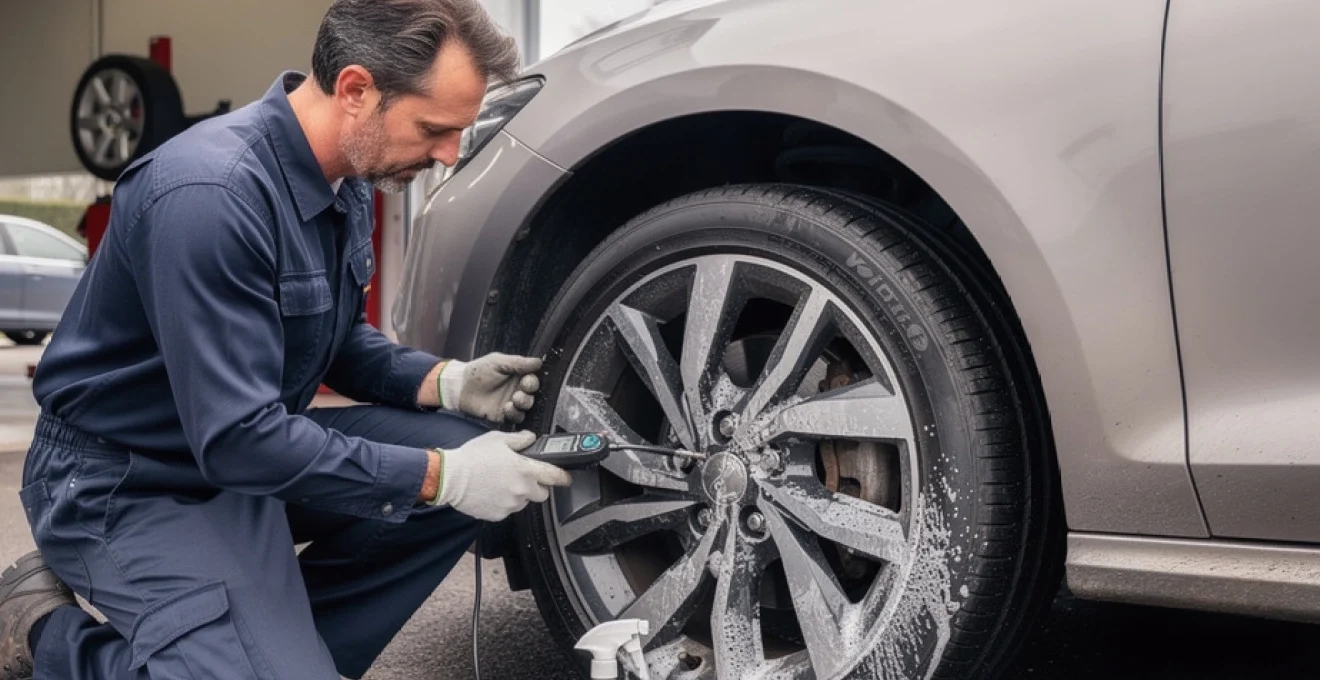
Slow punctures are one of the most common and most overlooked tyre faults on UK roads. Instead of a dramatic blowout, a car tyre slow puncture quietly leaks air over days or weeks, slowly undermining braking performance, stability and fuel economy on every journey. If you drive regularly on potholed streets, motorway commutes or gravelled car parks, the chances are high that you will experience a slow leak at some point.
Understanding how to recognise early symptoms, diagnose the cause and choose the right repair or replacement protects more than just your tyres. It protects your steering control in an emergency stop, your stopping distance in heavy rain and, ultimately, your safety and that of your passengers. With a few basic checks at home and timely help from a professional tyre centre, a slow puncture can usually be dealt with before it turns into a dangerous failure.
What is a slow puncture in a car tyre and how it differs from a rapid deflation
A slow puncture is a small loss of air from a tyre caused by a tiny pathway between the pressurised air inside and the outside atmosphere. Typical leak rates are in the range of 1–5 psi per day, although some micro-leaks drop only 1–2 psi per week. By contrast, a rapid deflation or blowout can reduce pressure from the recommended 32–36 psi to nearly zero in seconds. The slow tyre puncture is therefore more insidious: you keep driving, but on rubber that is progressively under-inflated.
Slow puncture vs blowout: differences in air loss rate, drivability and risk
With a slow puncture, the air loss rate is gradual. You may notice needing to top up one tyre at every fuel stop, or a tyre pressure monitoring system warning light every few days. Drivability often feels only slightly “off” at first: heavier steering, mild pulling to one side, or a faint vibration at motorway speeds. This masks the growing risk of a sudden failure if the tyre overheats or hits a pothole at low pressure.
A blowout is the opposite scenario. Pressure drops almost instantly, the sidewall collapses and the vehicle can veer sharply. While blowouts are visually and physically dramatic, many are preceded by a period of running under-inflated due to an unnoticed slow puncture. Statistically, under-inflated tyres are involved in thousands of UK breakdowns each year and contribute to an estimated 160 deaths or serious injuries annually, showing why early slow puncture detection is so important.
Common causes: nails, screws, glass shards and sharp kerbs in UK road conditions
On UK roads, slow punctures are most frequently caused by sharp debris lodging in the tread. Small nails, screws, glass shards and bits of metal can pierce the tread blocks but leave a plug of material in place, acting like a valve that only opens when the tyre flexes. Each rotation, or each heavy brake or steering input, lets a tiny amount of air out. Because roadworks and building sites often leave such debris behind, drivers in urban areas are particularly exposed.
Impacts can also start a slow leak. Hitting a sharp kerb, driving through deep potholes or clipping raised ironwork can bend the wheel rim or pinch the tyre, creating micro-gaps between the bead and rim. Corrosion on older alloy wheels often worsens this bead-seat leakage. In these cases, you may not see anything stuck in the tread at all, but pressure will still creep down over a few days.
Tyre construction basics: tread, sidewall, bead and inner liner interaction in slow leaks
To understand a slow puncture, it helps to know how a modern radial tyre is built. The tread is the outer, patterned rubber that grips the road and takes the brunt of cuts and penetrations. Below it are belts and plies that give the tyre strength. The sidewall carries the load and flexes with every rotation; cuts or bulges here are especially serious. The bead is a ring of steel wire encased in rubber that locks onto the wheel’s rim, sealing the air. Inside the carcass, an inner liner of low-permeability rubber acts like the “inner tube” in a tubeless tyre.
Slow leaks typically develop where this structure is compromised but not catastrophically ruptured. A small puncture through the tread may go just far enough to breach the inner liner, while a bead leak can form if corrosion or impact damage roughens the rim. Because the inner liner is designed to be airtight, puncture size is critical: below around 6 mm in diameter in the central three-quarters of the tread, many leaks can be permanently repaired. Beyond that, the weakened structure often obliges a full replacement.
How tubeless radial tyres (e.g. michelin primacy, pirelli cinturato) behave with micro-leaks
Most modern cars in the UK run on tubeless radial tyres such as Michelin Primacy or Pirelli Cinturato. In these tyres, the air is held directly by the inner liner and bead seal, not by a separate tube. When a micro-leak develops, the tyre tends to hold its shape surprisingly well until pressure drops significantly. This is why, to the eye, a tyre at 22 psi can still look reasonably round, even though it is 10 psi below the recommended pressure.
With tubeless designs, small objects often stay embedded and can partially seal the hole, creating a very slow puncture rather than a rapid one. However, under-inflation causes more flexing and heat build-up in the sidewall. Over time, that extra flexing can damage the carcass, turning a repairable puncture into a non-repairable safety risk. For that reason, experts advise treating any unexplained pressure loss as a fault to be investigated, not something to be managed with constant top-ups.
Early symptoms of a slow puncture while driving and during daily checks
Spotting a slow puncture early relies on combining what you feel from behind the wheel with what you see during quick daily or weekly tyre checks. Modern cars have made drivers more insulated, yet the basic warning signs have not changed. If you know what a responsive, stable car feels like on familiar routes, you are well-placed to notice subtle changes that point to gradual air loss.
Steering pull, vibration and vague handling on a-roads and motorways
One of the first driving symptoms of a slow puncture is a gentle steering pull. On a flat, straight A-road, try briefly relaxing your grip on the wheel. If the car drifts to one side without road camber explaining it, at least one tyre is likely under-inflated. Steering pull can also be caused by poor wheel alignment, but when combined with regular pressure loss it is a classic slow puncture sign.
At higher speeds, especially on the motorway, under-inflated tyres can make the steering wheel vibrate or feel “wobbly”. This happens because a soft tyre deforms more, effectively throwing the wheel out of balance. Handling may feel vague, with the car taking an extra moment to respond when you turn in or change lanes. That extra second can make a critical difference during an emergency swerve or avoidance manoeuvre.
Visual indicators: tyre sag, flat spots and uneven contact patch on the ground
Visual checks are simple but powerful. From a few metres away, compare the sidewall bulge of each tyre. A slow puncture often shows as one tyre sitting slightly lower, with a more pronounced sidewall “belly”. Looking from directly above, you may also see a wider contact patch where the tread meets the ground, making the tyre look flatter across the bottom.
On a level driveway, you can sometimes see a subtle flat spot where the under-inflated tyre has been resting. If you reverse slowly, that flat area may look squashed compared to the others. While these differences are small, combining them with a steering pull or regular pressure loss builds a strong case for investigating a slow leak rather than assuming it is normal air loss.
Fuel economy and TPMS warning lights as indirect indicators of gradual air loss
Under-inflated tyres increase rolling resistance, forcing the engine to work harder. Studies from UK and EU road safety bodies suggest that running just 6 psi under the recommended pressure can reduce fuel economy by around 3–4%. If you notice fuel consumption worsening over a few weeks without a change in driving style, a slow puncture on one tyre can be part of the explanation.
Many cars now have a TPMS (Tyre Pressure Monitoring System) that compares wheel speeds or reads dedicated pressure sensors. If the TPMS warning light appears intermittently on the same corner, then clears after you top up the tyre, that pattern strongly suggests a slow puncture. Treat such alerts seriously: repeated TPMS warnings are not just an annoyance but an early safety warning.
Differences in symptoms between front-axle and rear-axle slow punctures
Slow punctures on the front axle are usually easier for you to feel. Because the front wheels handle both steering and a large share of braking, any change in grip or stiffness translates directly into the steering wheel. A front slow puncture often produces pulling, heavier steering and more obvious vibration at speed.
Rear-axle slow punctures can be harder to detect. The car may feel slightly “floaty” or less settled in fast bends, and rear-end grip in wet conditions may be noticeably poorer. Some drivers notice a slight sideways “wiggle” when changing lanes or accelerating hard. If your TPMS identifies a rear tyre or a pressure check reveals one rear tyre consistently low, do not assume it is less urgent just because you feel less through the wheel.
How to diagnose a car tyre slow puncture at home using basic tools
Early home diagnosis of a slow puncture can save time and money by showing whether the problem is a simple valve leak, a repairable tread puncture or something more serious like sidewall or bead damage. You do not need specialist garage equipment to run useful checks; a basic digital gauge, some soapy water and a careful inspection routine can reveal most common faults before visiting a tyre centre.
Using a digital tyre pressure gauge to track PSI/bar loss over 24–72 hours
A reliable digital tyre pressure gauge is the starting point for any slow puncture diagnosis. Begin by inflating all tyres to the manufacturer’s recommended cold pressures, usually listed on a door pillar sticker or in the handbook. Record the reading for each wheel in psi or bar. Then, over the next 24–72 hours, recheck at roughly the same time of day and similar ambient temperature to reduce variation.
If one tyre consistently loses more than around 2 psi in 24 hours, or 4–5 psi over three days while the others remain stable, a slow puncture is highly likely. Tracking this loss over several cycles gives a clearer picture than relying on a single snapshot at the petrol station, where hot tyres can mask true pressure. Treat this as quantitative evidence that the tyre needs further inspection rather than routine topping up.
Soapy water spray test to locate puncture points in tread, sidewall and valve area
Once pressure loss is confirmed, a soapy water test can help pinpoint the leak. Mix washing-up liquid with water in a spray bottle, or apply with a sponge. With the wheel stationary, spray the valve area, tread and visible part of the sidewall. Bubbles indicate escaping air. Rotate the wheel a quarter-turn at a time to check the full circumference of the tread and shoulder.
Focus first on the central tread area, where repairable punctures are most common. If bubbles appear at the valve base or on the sidewall, note the position carefully. Sidewall leaks are almost always non-repairable under current British standards, while valve leaks are usually cheap to fix. The soapy water method is effectively a mini version of the immersion tank used by professional tyre technicians.
Checking valve cores, valve stems and TPMS valves for micro-leaks
The valve assembly is a frequent culprit in gradual air loss. Begin by removing the valve cap and applying soapy water directly to the valve core opening. If bubbles form even without touching the valve, the core may be loose or damaged. A valve core tool can gently tighten it, but if bubbling continues, replacement is advisable.
Next, apply soapy solution around the valve stem where it passes through the rim. Cracks in the rubber or corrosion on metal TPMS valves can create micro-leaks that only reveal themselves under pressure. Because TPMS valves contain delicate electronics, any sign of leakage here is best assessed by a tyre professional, especially if the car is still under warranty.
Inspecting alloy wheel rims for corrosion, cracks and bead-seat air leaks
Alloy wheel corrosion is a common cause of bead-seat leaks, especially on cars that see frequent winter road salt. With the tyre clean and dry, inspect the rim edge for flaking paint, white aluminium oxide deposits or visible pitting. These imperfections prevent the bead from sealing perfectly against the rim, allowing slow air escape.
If soapy water applied along the rim–tyre interface generates a line of tiny bubbles, a bead leak is likely. Minor corrosion can sometimes be cleaned and resealed by a tyre centre; more advanced damage or cracks in the alloy usually necessitate wheel repair or replacement. Running low pressure on a corroded rim only accelerates bead damage, so early attention here is crucial.
Assessing tread depth, ageing and sidewall damage with a tread depth gauge
Ageing and wear do not directly cause a puncture, but they do make tyres more vulnerable to damage and less tolerant of under-inflation. Using a simple tread depth gauge, check that tread is comfortably above the legal minimum of 1.6 mm across the central three-quarters of the width. Many safety experts recommend replacement at 3 mm, as wet braking distances increase significantly below this level.
While checking tread, inspect sidewalls closely for cuts, bulges, cracking or exposed cords. A slow puncture combined with sidewall ageing is particularly risky, as heat and flexing can cause a hidden weak spot to rupture. If a gauge reading shows shallow tread and age-related cracking, replacing the tyre instead of repairing a slow puncture is often the safest long-term choice.
Professional diagnosis of slow punctures at tyre centres in the UK
Even thorough home checks have limits. If you suspect a slow puncture but cannot locate it, or if you have identified damage in a borderline area, a reputable UK tyre centre has the tools and experience to provide a definitive diagnosis. Professional technicians follow established procedures and the British Standard BS AU 159 to decide whether a tyre is safely repairable or must be replaced for roadworthiness.
How kwik fit, ATS euromaster and national tyres perform pressure and leak-down tests
At chains such as Kwik Fit, ATS Euromaster and National Tyres, an initial inspection usually starts with confirming pressures and checking for obvious tread penetrations or sidewall damage. Technicians may carry out a controlled leak-down test, inflating the suspect tyre above normal operating pressure and monitoring loss over a short period while the wheel is off the car.
They also evaluate previous repairs, tread depth and overall tyre condition. If you arrive having already used a temporary repair kit, staff will note the product type, as some sealants complicate cleaning and inspection. The combination of leak-down data and visual assessment informs whether they proceed to more detailed tests like full immersion.
Use of immersion tanks and bead seal inspection for complex slow leaks
For slow leaks that are hard to trace, immersion tanks remain one of the most reliable diagnostic tools. The fully inflated wheel and tyre assembly is submerged in water, and technicians look for trails of bubbles along the tread, sidewall, bead and valve area. This method is particularly effective for tiny pinholes or multiple micro-leaks that soapy spray might miss.
Bead seal inspection is critical when corrosion or impact damage is suspected. The tyre is removed, and the bead and rim seats are cleaned and examined. Any roughness, cracks or deformation around the bead area can explain stubborn slow punctures that keep returning after basic repairs. In some cases, a bead sealer compound can be applied during refitting; in others, the wheel itself must be refurbished or replaced.
When technicians recommend tyre replacement instead of repair under BS AU 159
Under BS AU 159, only punctures up to 6 mm in diameter in the central three-quarters of the tread are generally considered repairable. Damage in the shoulder or sidewall, larger holes, or any sign of internal carcass damage rules out safe repair. Technicians will also decline to repair tyres with seriously worn tread, significant ageing, or multiple overlapping previous repairs.
From a safety perspective, driving long distances on a slow puncture can also be a reason to recommend replacement. If an under-inflated tyre has been used at motorway speeds for extended periods, heat damage may not be visible externally but can weaken the internal structure. In such borderline cases, an experienced fitter will usually advise replacement rather than taking a chance on a marginal repair.
Safe temporary fixes for slow punctures: sealant, plugs and space-saver spares
Sometimes a slow puncture becomes apparent far from home or a garage. In those situations, safe temporary solutions allow you to reach a tyre specialist without calling for recovery. However, every emergency fix has limitations. Understanding what each method can and cannot do helps you choose the least risky option if you develop a slow leak on a long journey or late at night.
Using OEM tyre sealant kits from BMW, audi and Mercedes-Benz for emergency mobility
Many modern cars from brands such as BMW, Audi and Mercedes-Benz are supplied without a full-size spare wheel, relying instead on an OEM tyre sealant kit and compact compressor. These kits are designed for temporary repair of small punctures in the tread area. The sealant is injected into the valve, then the compressor inflates the tyre, distributing the sealant to plug the leak from the inside.
Manufacturers typically specify a limited distance (often up to 50–80 miles) and maximum speed, usually around 50 mph, after using such a kit. Sealant is not suitable for sidewall damage, large holes or bead leaks, and it may make later inspection messier. Still, for a genuine roadside emergency, an OEM kit can be the safest way to restore enough pressure to reach a professional repair centre.
Aerosol sealants vs compressor-based repair kits: pros, cons and TPMS impact
Aerosol sealants combine sealant and propellant, allowing you to inject foam into the tyre without a separate compressor. They are compact and simple, but the level of control is limited, and final pressure may be below optimal. Compressor-based kits use a bottle of liquid sealant plus a small electric pump that plugs into the 12 V socket. These offer better control of final pressure and more even distribution.
Both types can affect TPMS sensors, especially direct systems with sensors on the valve. Some modern sealants are labelled as TPMS-safe, while others can clog sensors and require costly replacement. Before relying on any product, it is wise to check the vehicle handbook for approved sealants and be aware that using non-approved products could affect warranty on TPMS components.
When a temporary string plug repair is acceptable and when it is unsafe
DIY string plug kits, often sold for tubeless tyres, allow you to insert a rubberised cord into the puncture from the outside. While they can be effective in stopping air loss, they are generally considered a temporary measure and are not a substitute for a proper internal patch–plug repair carried out off the rim. Industry standards and insurers may not recognise external plugs as a compliant permanent repair.
Using a string plug on a sidewall puncture, a large hole or in the shoulder area is unsafe. These regions flex heavily, and an external plug cannot reliably maintain an airtight, structurally sound seal. If you ever use a string plug to get moving, treat it as a get-you-home fix only and book a professional inspection at the earliest safe opportunity.
Driving limitations with space-saver spare wheels on UK motorways
Space-saver spare wheels are narrower than full-size tyres and are designed purely for short-term use. Sidewalls are often marked with a maximum speed, commonly 50 mph (80 km/h), and recommendations usually limit use to around 50–70 miles. Handling will feel different, particularly under braking or cornering, and traction in wet conditions may be reduced.
If you fit a space-saver due to a slow puncture becoming a flat tyre, keep motorway speeds down even if traffic is flowing faster. Use the left-hand lane where possible and allow extra stopping distance. Space-saver tyres are not meant for continuous high-speed driving, and prolonged motorway use at normal speeds increases the risk of overheating or failure. The safest approach is to head directly to a tyre centre rather than completing long journeys on a temporary wheel.
Permanent repair methods for car tyre slow punctures and when to replace
Permanent repairs for slow punctures are based on restoring both airtightness and structural integrity. The gold standard is the combination patch–plug repair performed from inside the tyre after full removal from the wheel. The plug element fills the puncture channel, while the patch seals the inner liner, preventing air migration between plies. When carried out on a suitable puncture within the central tread area and to BS AU 159 standards, such repairs can last for the remaining life of the tyre without reducing its speed rating.
In practice, the decision between repair and replacement weighs puncture size and location, tyre age, tread depth and any history of running at low pressure. High-performance tyres, run-flat designs and older, cracked or heavily worn tyres are more likely to be recommended for replacement even if the puncture itself looks minor. This is because the stresses they endure, or the reduced rubber health, leave less safety margin for any repaired area. In situations where a slow puncture has gone unnoticed and the tyre has been driven under-inflated for an extended period, internal inspection may reveal heat damage or delamination that rules out safe repair. In those cases, fitting a new tyre and, if necessary, addressing any underlying wheel, valve or alignment issues is the most reliable way to restore safe, predictable handling and braking performance.