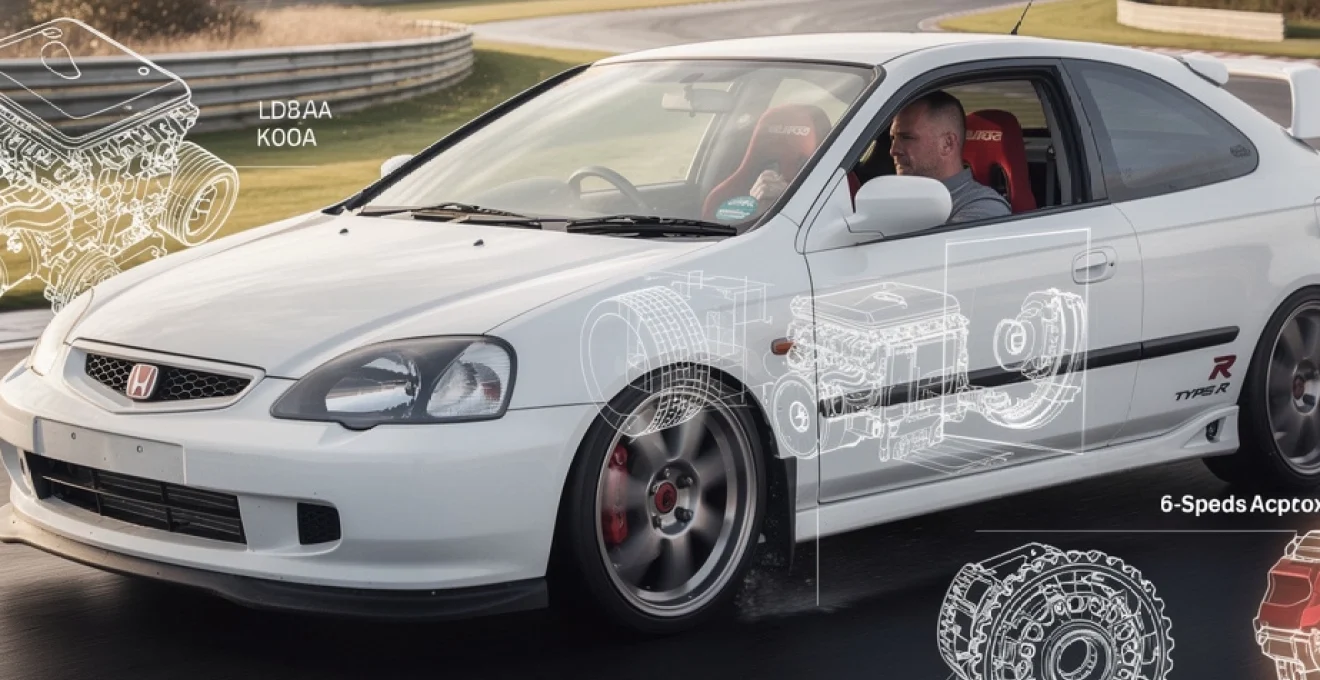
The Honda Civic Type R EP3 occupies a sweet spot where old‑school analogue feel meets usable modern performance. High-revving, naturally aspirated power, relatively light weight and a simple chassis combine to create a hot hatch that still feels special on a damp weekday commute or a flat‑out track session. If you are considering buying, modifying or tracking an EP3, understanding the underlying engineering – from the K20A engine to the suspension geometry – helps you make smarter choices and get more from every mile.
The car is now firmly on the path to modern‑classic status, and values are rising as clean examples become harder to find. That makes informed decisions about specification, upgrades and setup more important than ever. Whether you are chasing lap times or just want that VTEC hit on a favourite B‑road, the Civic Type R EP3 still offers one of the purest hot hatch driving experiences of the last 25 years.
Civic type R EP3 overview: chassis code, production years and UK market positioning
The EP3 Civic Type R was produced from 2001 to 2005, built at Honda’s Swindon plant for both UK and Japanese markets. The chassis code EP3 denotes the three‑door hatchback platform, and the Type R variant sat at the top of the seventh‑generation Civic range. In period, it targeted cars like the Mk4 Golf GTI, Focus ST170 and Clio 172/182, but in terms of raw focus and high‑revving character it felt closer to a budget touring car than a warmed‑over family hatch.
At launch, the EP3 offered around 197 bhp from its 2.0‑litre K20A2 engine, a six‑speed manual gearbox, 17‑inch alloys, firmer suspension and a stripped‑back cabin with figure‑hugging seats. Kerb weight was roughly 1,200 kg, giving a power‑to‑weight ratio of about 164 bhp per tonne – strong even by today’s hot hatch standards. In the UK, the car quickly became the default choice for drivers wanting a naturally aspirated track‑day tool that could still do the daily grind.
Later in the production run, the Premier Edition added Momo steering wheel, Recaro bucket seats, red carpets and small detail tweaks, reflecting Honda’s response to enthusiast feedback. At the same time, JDM‑spec EP3s received more aggressive engine tuning and a limited‑slip differential, setting up a long‑running debate between UKDM and JDM fans about the “ultimate” Civic Type R EP3 specification.
K20A engine specifications: power output, VTEC engagement and internal components
At the heart of the EP3 sits Honda’s legendary 2.0‑litre K20A i‑VTEC four‑cylinder. In UKDM form, it produces 197 bhp at 7,400 rpm and 145 lb ft (196 Nm) of torque at 5,900 rpm. The aluminium block, DOHC head and variable valve timing system make the engine both reliable and thrilling when used as intended – right up to and beyond 8,000 rpm. Official 0–62 mph is 6.6 seconds for the facelift car, with a top speed of 146 mph.
Inside the K20A2 used in the UK Civic Type R, you find forged steel crankshaft, lightweight pistons and high‑flow, four‑valve cylinder heads. JDM K20A engines go further with higher compression, more aggressive camshafts and lighter rotating assemblies, helping them reach 212 bhp in factory trim. Despite revving past 8,000 rpm, the engine has gained a reputation for durability when serviced correctly and fed with good quality 5W‑40 or 5W‑30 oil, checked frequently due to the engine’s appetite at sustained high revs.
Stock K20A dyno figures, rev limit and torque curve in the EP3 type R
On a healthy UKDM EP3, real‑world dyno figures tend to show around 185–190 bhp at the wheels, which usually equates to close to the claimed 197 bhp at the flywheel once drivetrain losses are accounted for. The factory rev limit is just over 8,000 rpm (around 8,200 on the tachometer), with peak power arriving near 7,400 rpm. Torque is modest by turbo standards but delivered in a smooth, linear fashion once VTEC engages.
The torque curve below the VTEC point feels usable but not rapid; many drivers describe it as similar to a mildly warm 2.0 hatchback up to roughly 5,500–6,000 rpm. After that, the second cam profile takes over and the engine pulls harder right to the limiter. Compared with modern turbo units that produce 250–300 lb ft at 2,000 rpm, the K20A demands revs but rewards commitment with responsiveness and a sharp, motorcycle‑like soundtrack.
VTEC cam profiles, i-VTEC control strategy and real-world crossover behaviour
Honda’s i‑VTEC on the K‑series combines variable cam phasing on the intake side with the classic VTEC cam‑profile switching. In simple terms, there are two intake and exhaust cam profiles: a mild one for low‑rpm efficiency and a wild one for high‑rpm power. At around 6,000 rpm in the EP3, oil pressure activates locking pins in the rocker arms, switching to the high‑lift, long‑duration lobes and allowing more air and fuel to enter the cylinders.
In real‑world driving, the VTEC changeover is less of an on/off “turbo hit” than forum myths suggest, especially on a standard intake and exhaust. You feel a distinct step in urgency and hear a harder-edged induction note, but power delivery remains relatively linear. Think of it as a dimmer switch being turned up sharply rather than a light switch being flicked. Remaps and freer‑flowing intakes can make the crossover more pronounced, sometimes dropping the engagement point closer to 5,200–5,500 rpm for better mid‑range response on road or track.
Intake, exhaust and ECU mapping differences between JDM and UKDM civic type R EP3
The JDM EP3 uses a higher‑spec K20A similar to the DC5 Integra Type R, rated at 212 bhp. Differences include higher compression pistons, more aggressive camshafts, a lighter chrome‑moly flywheel and a freer‑flowing intake and exhaust manifold combination. The factory ECU mapping is also more aggressive, with a different ignition and fuel strategy and a higher VTEC engagement point, all tuned around Japanese 100 RON fuel.
UKDM EP3s, by contrast, use the K20A2 with 197 bhp, lower compression and milder cams. The intake and exhaust manifolds are more restrictive, and the ECU tune is designed for 95–98 RON pump fuel. This leads to a slightly softer top‑end and marginally less throttle response. However, with appropriate bolt‑ons and tuning, a UK car can approach or even match JDM power figures while staying on UK fuels. Many owners use the factory differences as a blueprint for UKDM upgrades: better manifold, intake and an ECU remap.
Common engine upgrades: RBC manifold, GruppeM intake, hondata K-Pro remap
The EP3 responds extremely well to a few tried‑and‑tested modifications. For a fast‑road or track‑day build, three engine upgrades stand out in particular:
- RBC inlet manifold swap for improved high‑rpm airflow and better top‑end power
- High‑quality cold‑air or airbox intake such as a GruppeM or Mugen‑style system
- Hondata
K‑ProECU to optimise fuelling, ignition and VTEC engagement
A typical “bolt‑on and remap” EP3 with a good 4‑2‑1 exhaust manifold, sports cat, cat‑back system, RBC manifold and a well‑set K‑Pro map can see 220–230 bhp on a reputable dyno, while maintaining OEM‑like drivability. For track use, mapping can also raise the rev limit slightly (often to 8,400–8,600 rpm) and refine part‑throttle fuelling, improving consistency over longer stints and reducing heat build‑up.
Transmission, gearing and LSD: 6-speed manual performance in the EP3
The EP3 Civic Type R’s six‑speed manual transmission is a major part of the car’s appeal. The dash‑mounted shifter places the lever close to the steering wheel, allowing very short, rifle‑bolt movements between gears. The gearbox uses relatively short ratios and a 4.764 final drive in UKDM form, helping keep the K20A in its power band. This contributes to official fuel consumption figures of around 31–32 mpg combined, provided you are not constantly sitting in VTEC.
Many drivers consider the EP3 shift quality one of the benchmarks in front‑wheel‑drive performance cars, even two decades on. However, age and mileage can introduce second‑gear crunches or baulking, often due to worn synchros or contaminated gearbox oil. Regular fluid changes with quality MTF and checking the shifter cables and bushings help preserve that precise, mechanical feel that defines the car’s driving experience.
Gear ratios, final drive and 0–60 mph performance metrics
From the factory, the EP3 uses a close‑ratio gearbox with a fairly short final drive, designed to maximise acceleration rather than relaxed cruising. Top gear keeps the revs just outside the VTEC zone at typical motorway speeds, which aids fuel economy and reduces noise on longer journeys. Official 0–60 mph times are in the mid‑6‑second range, and independent tests often record 0–100 mph in around 16–17 seconds for a healthy car.
On track or on fast B‑roads, those shorter gears mean you can keep the engine in its sweet spot between 6,000 and 8,000 rpm with minimal effort. The trade‑off is higher rpm at a 70 mph cruise compared with more modern turbo hatches, but for many enthusiasts the immediacy and flexibility of the gearing outweigh a slight increase in cabin noise.
Helical limited-slip differential (LSD) operation on JDM EP3 and retrofit options
One of the key differences between UKDM and JDM EP3s is the presence of a factory helical limited‑slip differential in the Japanese cars. This mechanical LSD uses angled gears to transfer torque from the spinning inside wheel to the wheel with more grip, improving traction when accelerating out of tight corners. On a twisty circuit or a damp B‑road, the effect is transformative, allowing earlier throttle application and more confidence.
For UK owners, retrofitting an LSD is a highly recommended upgrade for serious track work or spirited road driving. Popular options include genuine Honda units, aftermarket helical diffs and plated motorsport units for extreme use. Installation usually happens during a clutch or gearbox refresh due to labour costs. The result is a car that feels more “pulled” around bends rather than pushed wide, reducing understeer and shaving significant time off lap durations.
Clutch, flywheel and shifter mechanism: compliance bushings, cables and feel
The EP3 uses a cable‑operated shifter with compliance bushings between the lever and the gearbox, helping NVH but slightly softening feel. Over time, these bushings and the shifter cables can wear, introducing slack or vagueness. Replacing them with fresh OEM parts or uprated polyurethane bushes tightens up the shift and restores the crisp, mechanical engagement that the car is known for.
Clutch feel from the factory is relatively light with a short travel, which can surprise drivers used to heavier VAG or performance clutches. Upgraded clutches and lighter flywheels are common on tuned cars, sharpening engine response and making rev‑matching easier. However, for road use, a moderately uprated organic clutch paired with a slightly lighter flywheel strikes the best balance between drivability and performance.
Track-focused gearbox setups: shorter final drives and close-ratio gearsets
For those chasing lap times at venues like the Nürburgring or UK circuits, gearbox modifications can unlock substantial performance. Shorter final‑drive gears (such as 5.1 or 5.3) bring the ratios closer together and keep the K20A in an even narrower high‑rpm window, at the cost of more revs on the motorway. Close‑ratio third to fifth gearsets are also popular for track‑day EP3s, reducing the drop in revs between gears.
When combined with an LSD and a well‑set suspension, this kind of track‑focused gearbox can make the EP3 feel like a touring car refugee, albeit at the expense of comfort and efficiency. Consider how often you track the car and how far you drive to events before committing to an aggressive final drive, as it changes the character of the car significantly in everyday use.
Suspension geometry and handling characteristics on road and track
Chassis balance and agility are central to the Civic Type R EP3 driving experience. The car uses a relatively simple but well‑tuned suspension layout: MacPherson struts at the front and a torsion beam at the rear. Combined with a short wheelbase and wheels pushed close to each corner, the result is quick turn‑in, playful lift‑off behaviour and a distinctly “go‑kart‑like” feel on tighter roads. Kerb weight hovering just above 1,200 kg further enhances this sense of agility.
From the factory, damping is firm but not punishing, especially on standard 17‑inch wheels and OEM tyre sizes. Many owners find the ride compliant enough for daily driving yet controlled enough to cope with fast B‑road undulations. Modified cars on coilovers can feel considerably harsher, so test‑driving different setups is essential if you value both back‑road pace and day‑to‑day comfort.
Macpherson strut front, torsion beam rear: implications for cornering and lift-off oversteer
The MacPherson strut/torsion beam combination is not as sophisticated as the double‑wishbone setups in some earlier Hondas, but Honda’s tuning expertise makes the most of it. The front end bites eagerly, and with decent tyres the car carries impressive corner speed. At the rear, the torsion beam can feel bouncy over poor surfaces but contributes to predictable handling and packaging efficiency.
On the limit, the EP3 is known for mild lift‑off oversteer: back off the throttle mid‑corner and the rear will rotate progressively, allowing you to tighten your line. Handled properly, it adds to the engagement and adjustability; mishandled, especially in the wet, it can bite. High‑quality dampers and sensible alignment settings go a long way toward making this behaviour both progressive and enjoyable rather than snappy.
OEM springs, dampers and anti-roll bars versus coilovers (KW V2, BC racing, tein)
Stock springs and dampers strike a decent compromise for mixed use, but age and mileage mean many EP3s are now running tired suspension. A refresh with OEM or OEM‑equivalent components can transform ride control. For performance‑minded owners, quality coilovers from brands like KW (V1/V2), BC Racing or Tein offer height and damping adjustability, making it easier to dial in a setup for fast road and track day driving.
When choosing coilovers, it helps to think carefully about priorities. Although very stiff spring rates look impressive in spec sheets, they can make the car skittish on real‑world roads. A well‑valved kit with moderate rates typically delivers faster, more confidence‑inspiring progress than an ultra‑stiff setup that bounces across bumps. Thicker anti‑roll bars are another common upgrade, reducing roll but potentially increasing lift‑off rotation if not balanced front to rear.
Wheel alignment settings: camber, caster and toe for b-road driving and track days
Alignment is one of the most cost‑effective ways to enhance EP3 handling. Factory settings are conservative and prioritise tyre life and stability, but a “fast road” geometry can unlock sharper turn‑in and more grip without ruining daily usability. Typical approaches include adding front negative camber (via camber bolts or top mounts), a touch of rear negative camber and slight toe adjustments.
| Use case | Front camber | Rear camber | Toe settings |
|---|---|---|---|
| Daily + B-road | -1.0° to -1.5° | -0.5° to -1.0° | Front zero, slight rear toe-in |
| Track-focused | -2.0° to -2.5° | -1.0° to -1.5° | Front slight toe-out, rear zero or slight toe-in |
For UK B‑roads, a milder “fast road” setup often provides the best blend of turn‑in bite, mid‑corner stability and tyre wear. More aggressive track specs deliver intense front‑end grip but can make the car tramline and feel nervous over cambers, so alignment should always reflect how and where you actually drive.
EP3 handling compared to DC5 integra type R and FN2 civic type R
Comparisons with the DC5 Integra Type R and the later FN2 Civic Type R highlight the EP3’s particular blend of traits. The DC5 shares much of the underlying K‑series and suspension hardware but uses a different body and rear setup, generally offering slightly sharper feedback and more composure at very high speeds. The FN2, by contrast, gained weight and a more complex, refined feel, trading some rawness for improved long‑distance comfort.
If you value a focused, track‑ready feel with minimal frills, the EP3 remains closer in spirit to the DC5. The FN2, with its more modern interior and additional refinement, suits drivers who want a broader everyday role for their Type R while still enjoying high‑revving performance. In many ways, the EP3 sits in the middle: more usable and practical than a stripped‑out DC2/DC5, but more visceral than most contemporary hot hatches.
Braking system performance: OEM limitations and track-day upgrades
The standard EP3 braking system uses relatively modest single‑piston front calipers and 300 mm discs, paired with solid rear discs. For normal road use the setup is adequate, and many owners describe pedal feel as firm with a short travel, especially compared with over‑assisted modern systems. However, repeated heavy stops on track quickly reveal the limitations: brake fade, longer stopping distances and occasionally uneven pedal response as components heat up.
Tyre choice plays a major role here. Even the best big‑brake kit cannot compensate for low‑grip, budget rubber, while a well‑maintained OEM braking system paired with quality performance pads and tyres can surprise you with its effectiveness. For serious circuit work or repeated high‑speed runs, though, upgraded hardware becomes more than a nice‑to‑have; it becomes an important safety and consistency measure.
Standard EP3 disc and caliper specs, brake fade and pedal feel
Factory‑fitted front discs measure roughly 300 mm in diameter, clamped by single‑piston sliding calipers. Rear discs are smaller and less stressed, handling balance and stability rather than doing the heavy stopping. Pedal feel from new is typically firm, with a short pedal travel and noticeable resistance. Some drivers coming from VAG cars with large Brembo setups initially feel underwhelmed by the outright bite.
On a spirited drive, especially on a twisty mountain road or during a track‑day stint, standard pads and fluid can overheat. Symptoms include longer pedal travel, a softer pedal, and a distinct fall‑off in stopping power. High‑quality replacement discs, fresh pads and performance brake fluid significantly reduce this brake fade and bring a much more confidence‑inspiring response.
Popular big brake kits: brembo, K-Sport and wilwood conversions
For those committed to regular track use or high‑speed work, big brake kits are a popular Civic Type R EP3 upgrade. Options from Brembo, K‑Sport, Wilwood and others offer larger multi‑piston calipers and bigger, often two‑piece discs. This increases heat capacity, improves modulation and shortens stopping distances when used with appropriate tyres.
When deciding on a big‑brake kit, consider wheel clearance, pad availability and intended use. A four‑piston setup with 320–330 mm discs is usually ample for a 220–240 bhp EP3 on track. Oversized kits can add unnecessary unsprung weight and limit wheel choices. As with any braking change, balancing front and rear performance, plus revisiting alignment, ensures predictable, stable behaviour under heavy braking at places like the Nürburgring or fast UK circuits.
Pad compounds, braided lines and high-boiling-point brake fluids for circuit use
Before jumping straight to a big‑brake kit, many EP3 owners see excellent gains from three simpler changes:
- High‑friction pad compounds designed for fast road and light track duty
- Braided stainless‑steel brake lines to reduce hose expansion and improve feel
- High‑boiling‑point DOT 4 or DOT 5.1 brake fluid for consistent performance
These upgrades reduce fade, sharpen pedal feel and provide more predictable braking even after several hard laps. Combined with proper cooling (removing dust shields or adding simple ducting where appropriate) and regular maintenance, they can transform the car’s stopping performance without the expense of a full caliper and disc conversion.
Interior ergonomics, recaro seating and driving position analysis
Inside the EP3, the focus is very much on driving rather than luxury. The widely praised dash‑mounted gear lever puts the shifter a short reach from the steering wheel, reducing the time your hand spends off the rim. The instrument cluster is simple and legible, with a large central tachometer encouraging you to use all of the rev range. Controls are intuitive if slightly dated by modern standards, and the overall layout feels purpose‑built rather than decorative.
Premier Edition models benefit from factory Recaro buckets, red carpets and a Momo steering wheel, giving the cabin a more motorsport‑inspired feel. The seats offer strong lateral support and keep you pinned in place when exploring the chassis limits on a B‑road or circuit. Some taller drivers find the seating position slightly high, especially compared with modern low‑slung sports cars or coilover‑equipped builds, but adjustable rails and aftermarket seat options are available for those chasing a more “integrated” driving position.
Practicality remains strong thanks to the three‑door layout and relatively upright roofline. Rear seats are usable, and the boot can swallow the usual mix of weekend luggage, tools and spare wheels. That dual‑purpose ability – commuter during the week, track toy at the weekend – is part of what makes the EP3 Civic Type R such an appealing long‑term ownership prospect, even if the plastics and trim feel more durable than plush. For anyone used to modern touchscreen‑heavy cabins, the EP3’s simple environment can feel refreshing and distraction‑free.
Real-world driving experience: UK b-roads, nürburgring and track-day impressions
On a typical UK B‑road, the Civic Type R EP3 comes alive between 5,500 and 8,000 rpm. The engine note hardens, the car surges toward the redline and the short‑throw gearbox encourages you to keep working through the ratios. You may find that, compared with a torquey turbo hatch, the car feels slower at part throttle, but once you commit to using the full rev range the EP3 covers ground at an impressive pace. The balance between body control and compliance lets you flow with the road rather than fight it.
At venues like the Nürburgring or UK circuits, the EP3’s lightness and natural balance become even more obvious. Driven cleanly, it can embarrass more powerful turbo hot hatches whose extra torque simply overwhelms their front tyres on corner exit. Instead of relying on brute force, you learn to maximise corner speed, carry momentum and trust the chassis. That process makes you a better driver, because the car rewards precision and commitment rather than lazy short‑shifting.
Used properly, the EP3 teaches you to chase revs, refine lines and respect momentum instead of leaning on turbo torque and electronics.
Of course, there are challenges. In heavy traffic, the sensitive throttle and short clutch take some acclimatisation, and the car can feel jerky until you adapt. Long motorway journeys at a constant 70 mph keep the engine out of VTEC but still spinning higher than most modern turbo hatches, adding a touch more noise and a slight dent in fuel economy. In wet conditions, especially on worn tyres, the EP3’s playful rear end and strong lift‑off response demand extra respect and smooth inputs.
For many enthusiasts, those compromises are part of the charm. Once you learn how to place the nose accurately, trust the front grip and work within the engine’s high‑revving character, the Civic Type R EP3 delivers a raw, mechanical driving experience that is increasingly rare. The combination of an eager K20A engine, crisp six‑speed gearbox and adjustable chassis continues to make it a compelling choice for anyone seeking a naturally aspirated hot hatch that can still thrill on today’s roads and circuits.