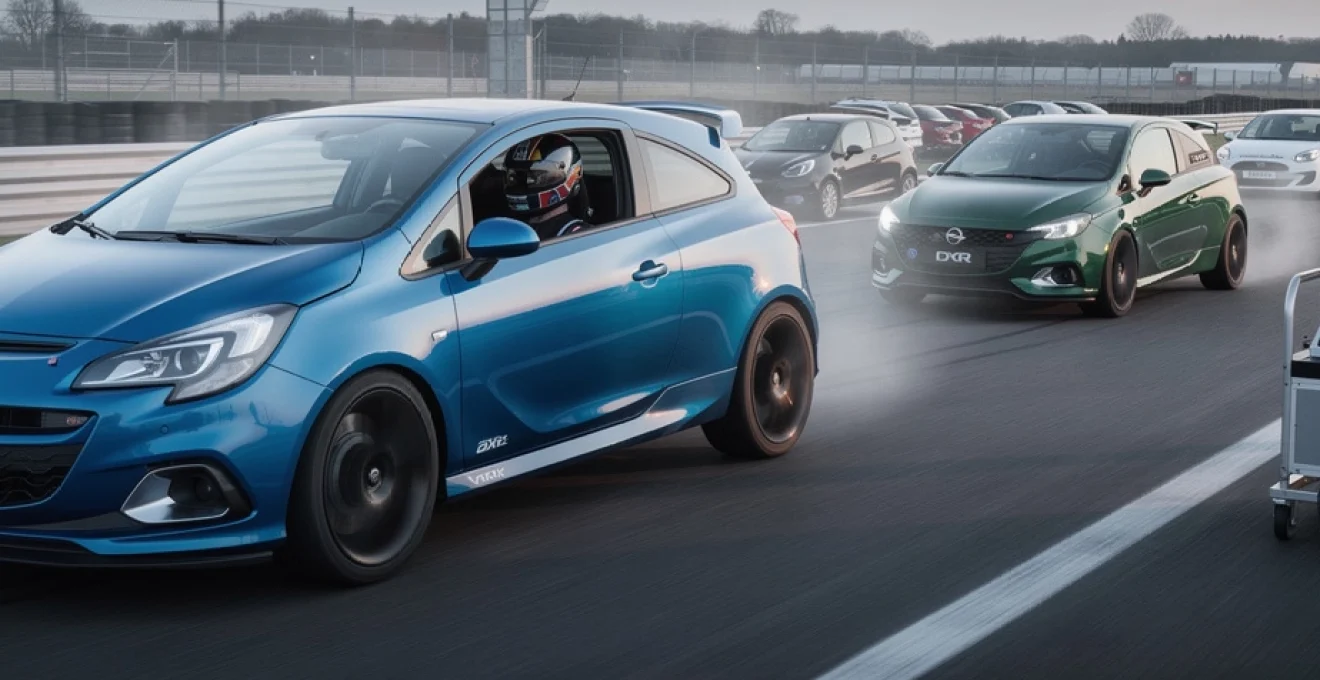
The Corsa VXR occupies a special place in the hot hatch world: compact, aggressively styled and capable of 0–60 mph in the mid‑six‑second bracket, straight from the factory. For a relatively affordable supermini‑based hatch, that level of acceleration has helped it build a loyal following among track‑day regulars, tuners and B‑road addicts. If you care about how quickly a car sprints, how consistently it repeats those runs and what you can do to make it quicker without breaking it, the Corsa VXR makes for a fascinating case study. Understanding its 0–60 mph performance also reveals a lot about turbocharged engines, traction, gearing and how much difference driver technique really makes.
Corsa VXR 0–60 mph factory figures, powertrain specifications and performance variants
Official 0–60 mph and 0–100 km/h times for corsa VXR, corsa VXR nürburgring and corsa VXR clubsport
Across its modern life, the Corsa VXR has stayed remarkably consistent in headline numbers. Both the Corsa D VXR (2007–2014) and Corsa E VXR (2015–2018) deliver a quoted 0–60 mph time of around 6.5–6.8 seconds and a top speed of 143 mph. The early Corsa D launched at 189 bhp, with the later Nürburgring and Clubsport editions raised to around 202–205 bhp and a circa 6.8‑second 0–62 mph claim. The second‑generation Corsa E VXR standardised 202 bhp and officially covers 0–60 mph in 6.5 s and 0–62 mph (0–100 km/h) in 6.8 s according to manufacturer data and multiple road tests.
On paper that places the Corsa VXR squarely among its key rivals. A Ford Fiesta ST of the same era is officially a few tenths slower to 62 mph, and even Peugeot’s 205 bhp 208 GTi 30th Anniversary edition only just matches the Corsa’s official sprint times. The important point for you as an enthusiast is that the VXR’s numbers are not marketing fantasy; magazine tests routinely replicate or slightly improve on those claims when conditions are right.
| Model | Power | 0–60 mph | 0–62 mph | Top speed |
|---|---|---|---|---|
| Corsa D VXR (standard) | 189 bhp | ~6.8 s | ~7.2 s | 140 mph |
| Corsa D VXR Nürburgring/Clubsport | 202–205 bhp | ~6.6 s | 6.8 s | 143 mph |
| Corsa E VXR / VXR Performance Pack | 202–205 bhp | 6.5 s | 6.8 s | 143 mph |
Engine architecture, turbocharging and torque output of the Z16LER 1.6 turbo unit
Under the bonnet sits the `Z16LER`/`B16LER` 1.6‑litre turbo four‑cylinder, a robust iron‑block, alloy‑head unit engineered to take significant boost. From the factory it produces between 189 and 205 bhp, depending on edition, with 180 lb ft of torque rising to around 207 lb ft (280 Nm) during an overboost window. Overboost typically operates between about 1,900 and 3,000 rpm for a few seconds under full throttle, right where you need torque for a hard 0–60 mph launch.
The character of this engine is central to how the Corsa VXR accelerates. Rather than chasing an 7,000 rpm redline, it delivers a broad plateau of torque from low‑to‑mid revs and pulls hard to around 5,800–6,000 rpm before running out of enthusiasm. Reviewers often describe the powerband as “meaty mid‑range, limited high‑rev fireworks”. For you, that means quickest 0–60 mph runs come from riding the boosty middle of the rev range, not banging it into the limiter.
Gear ratios, final drive and traction characteristics in relation to 0–60 mph launches
The Corsa VXR uses a six‑speed manual gearbox with reasonably close ratios and a relatively short final drive to keep the engine in its sweet spot. Like many small hot hatches, it does not quite reach 60 mph in first gear, so a single upshift into second is required for a genuine 0–60 mph run. That shift costs a couple of tenths, which is why driver technique and shift speed matter so much for you if chasing a personal‑best time.
First gear traction is always the limiting factor rather than raw power. Even in standard form, the VXR will spin its front tyres easily on cold or damp tarmac. Later Nürburgring, Clubsport and Performance Pack cars add a mechanical limited‑slip differential (LSD) and stickier rubber to help them claw more of that torque into the road. The LSD does not change the official 0–60 figure, but in the real world it gives a more repeatable, less traction‑limited launch if you know how to work with it.
Kerb weight, power‑to‑weight ratio and specific output (bhp per litre) across model years
With kerb weights generally in the 1,200–1,250 kg range, the Corsa VXR is not the lightest small hot hatch but is far from overweight. In stock form it offers a power‑to‑weight ratio of roughly 160–170 bhp per tonne and a specific output of around 118–128 bhp per litre, depending on exact state of tune. That places it competitively against rivals like the Fiesta ST (around 180 bhp/tonne) and Renaultsport Clio 200, especially when you factor in the generous low‑rev boost.
From a tuning perspective, those numbers are only the starting point. The Z16LER/B16LER engines are known to cope with 250–300+ bhp on forged internals, and power‑to‑weight ratios north of 220 bhp per tonne are common in enthusiast builds. For you, that means there is significant headroom to cut real‑world 0–60 mph times with carefully selected upgrades and sensible mapping, as long as chassis, brakes and cooling are brought along for the ride.
Real‑world corsa VXR 0–60 mph performance: instrumented tests and owner data
Measured 0–60 mph results from evo, autocar, top gear and parkers road tests
Independent road tests provide a useful reality check on manufacturer claims. Multiple UK outlets have recorded 0–60 mph times that broadly match the Corsa VXR’s official figures. Instrumented tests of the Corsa E VXR Performance Pack, for example, typically show 0–60 in the mid‑6s and standing 0–100 mph in the low‑to‑mid 17‑second range. One long‑term assessment noted that the car feels at least as quick as the Fiesta ST in the mid‑range, especially when exploiting the overboost window.
Differences between magazine times tend to come down to testing methodology. Some use 0–62 mph (100 km/h), some use 0–60 mph, and some quote 0–100 km/h but round for simplicity. Gearshift aggression, whether a one‑foot rollout is allowed, and surface grip all make noticeable differences. As you compare numbers, focus on consistent conditions rather than isolated hero runs.
Impact of tyre compound and wheel size (17″ vs 18″) on standing start acceleration
Tyres are often a bigger factor in Corsa VXR 0–60 performance than raw power. Standard cars typically left the factory on 17‑inch wheels with relatively modest tyre widths, while Performance Pack and Nürburgring/Clubsport cars gained 18‑inch wheels and aggressive tyres like Michelin Pilot Super Sport. The result is excellent lateral grip and much stronger traction, particularly when combined with the mechanical LSD.
However, larger 18‑inch wheels can be heavier and slightly blunter over bumps, which sometimes harms launch consistency on rougher roads. If you use the car for daily driving and occasional timed sprints, a high‑quality 17‑inch tyre with a softer sidewall can actually make it easier to get off the line cleanly. Tyre compound, temperature and pressure are all levers you can pull to shave a tenth or two from your 0–60 mph times without touching the engine.
Road surface, ambient temperature and fuel quality influences on sprint times
Real‑world 0–60 mph runs are heavily dependent on environment. Cold, damp British tarmac will expose front‑wheel‑drive traction limitations long before power limits are reached. A relatively smooth, warm surface offers a dramatically different level of grip. Likewise, ambient temperature affects turbo intake air density and therefore power; too hot and intake temperatures climb, triggering knock protection and reducing boost, too cold and tyres struggle to reach operating temperature.
Fuel quality is another overlooked variable. The Corsa VXR is usually mapped for 95 RON fuel but responds better to 97–99 RON premium, both in terms of knock resistance and repeatability under load. For repeated 0–60 mph runs or track days, higher‑octane fuel and clean, cool air help the Remus‑equipped engine hold its timing and boost for lap after lap rather than fading after a few hard sprints.
User‑reported 0–60 mph times from timing apps, VBox and dragy logs
Enthusiast communities generate a huge amount of data from devices such as VBox, Dragy and smartphone timing apps. Stock Corsa VXR owners commonly report 0–60 mph times between 6.4 and 7.0 seconds, depending on launches and conditions. Lightly modified, remapped cars with intake and exhaust upgrades often dip into the high‑5s with a strong driver and good surface.
Owner timing logs suggest that a healthy Corsa VXR with a sensible state of tune will regularly match or slightly exceed its factory 0–60 mph claim when launched correctly.
As you evaluate such data, remember that timing apps vary in accuracy, GPS signal can drift, and downhill runs or tailwinds can create flattering numbers. The most useful comparisons involve the same driver, same device and same stretch of road before and after modifications, giving a clear picture of true performance gains rather than speculative pub talk.
Launch technique and drivetrain dynamics affecting corsa VXR 0–60 performance
Optimal clutch engagement, throttle modulation and rev range for hard launches
A Corsa VXR is only as fast as you can launch it. A brutal drop‑the‑clutch start may feel dramatic but will simply trigger wheelspin, clutch slip or wheel hop. The most effective approach is controlled aggression. Many experienced owners find that pre‑loading the drivetrain at around 3,000–3,500 rpm, then feeding the clutch in progressively while adding throttle, gives the best blend of traction and boost.
Think of it like stretching an elastic band: you want the drivetrain “loaded” but not shocked. Too few revs and the car bogs, dropping out of the torque plateau; too many and the front tyres light up. Practising clutch control and throttle modulation at different rpm points lets you discover a consistent launch point for your particular car, tyres and road.
Turbo spool, boost threshold and torque delivery characteristics off the line
The 1.6‑litre turbo’s behaviour at low speed is key to understanding Corsa VXR 0–60 acceleration. There is a mild `boost threshold` below around 1,800–2,000 rpm where the turbo has not fully spooled, but once airflow builds, torque arrives in a thick, sustained wave up to roughly 5,800 rpm. For you, that means staying above this threshold wherever possible during a run.
On launch, momentary clutch slip helps keep engine speed in the zone where the turbo spools quickly, minimising lag. The overboost feature, active for several seconds under full load, further fattens the torque curve in the early part of the sprint. Short‑shifting too early into second can drop revs back below the meat of the powerband; aiming for a crisp change at around 6,000 rpm usually yields the best compromise between time spent in each gear and torque availability.
Traction control, ABS calibration and wheelspin management in first and second gear
The Corsa VXR’s electronic helpers can be both friend and foe in the pursuit of fast 0–60 runs. Later cars use a two‑stage stability system, with a `Competition` mode that disables traction control while allowing some stability intervention. Full `off` mode removes most safety nets. In damp conditions, allowing a small amount of intervention can stop an otherwise perfect launch from dissolving into wasteful wheelspin.
ABS calibration also plays a role when using left‑foot braking to pre‑load or stabilise the car, especially on track. If you intend to run repeated standing starts, it is worth experimenting on a closed course with different modes to understand how the car intervenes. The goal is simple: allow enough slip to exploit the tyres’ grip window without triggering hard cut‑ins that kill momentum.
Torque steer, limited‑slip differential behaviour and steering corrections under full load
With 200+ bhp and a short wheelbase, torque steer is an inevitable part of fast Corsa VXR launches, especially on cars fitted with a mechanical LSD. Under heavy throttle in first and second gear, the steering wheel will tug and wriggle as the diff hunts for grip. The Drexler unit used in Nürburgring, Clubsport and Performance Pack models is particularly assertive, dragging the car into the apex when loaded but also demanding decisive steering inputs from you.
Rather than fighting the wheel, the fastest way off the line is to hold it firmly, allow small movements and guide the car, making calm, progressive corrections rather than snatching at the rim.
On a straight 0–60 run, a lightly loaded front tyre will sometimes spin more, prompting the diff to transfer torque across and nudging the car sideways. Maintaining a strong but relaxed grip and avoiding sudden lifts keeps the car tracking cleanly. With practice, you can harness the diff’s behaviour to find traction where an open‑differential car would simply spin.
Effect of driver weight, passenger load and fuel level on repeatable 0–60 mph runs
Mass matters. An extra adult passenger, half a tank more fuel or a boot full of tools can easily add 80–120 kg, blunting both 0–60 mph and in‑gear acceleration. As a rough guide, every additional 50 kg can add a tenth or two to the sprint. If you are serious about consistent performance testing, run light on fuel, empty the cabin and boot and keep driver weight consistent across sessions.
However, a tiny amount of extra rear weight can sometimes improve traction by slightly increasing rear axle load and stabilising launches, especially on rough roads. Treat the car like a trackday kart: you are aiming for a lean but balanced setup, not a stripped‑out shell that becomes nervous and skittish the moment conditions deteriorate.
Corsa VXR tuning, remaps and hardware upgrades that improve 0–60 mph times
Stage 1 ECU remaps from courtenay sport, regal autosport and thorney motorsport
A `Stage 1` ECU remap is usually the most cost‑effective way to cut Corsa VXR 0–60 mph times. Well‑known UK specialists such as Courtenay Sport, Regal Autosport and Thorney Motorsport typically quote power increases to around 215–230 bhp and torque in the 240–260 lb ft region on the stock turbo and hardware. The largest gains come in mid‑range shove, making the car feel substantially quicker in real‑world use.
On a good surface with appropriate tyres, such a remap can push genuine 0–60 mph times into the low‑6s, with some owners logging high‑5s. However, tuning makes traction and heat management more critical, so it is wise to choose mappers who can provide before‑and‑after dyno graphs and who understand the known limitations of the Z16LER’s pistons and ringlands.
Intercooler, intake, turbo‑back exhaust and high‑flow downpipe modifications
Once the software is optimised, intake and exhaust flow become the next bottlenecks. A freer‑flowing intake, larger front‑mount intercooler and `turbo‑back` exhaust with a high‑flow downpipe all help to reduce backpressure and intake temperatures. Gains of 30–70 bhp over stock are common at `Stage 2` or `Stage 3` levels when combined with appropriate mapping and, at higher outputs, forged pistons and rods.
The factory‑fit Remus exhaust on later Corsa VXRs already contributes to a more vocal and responsive car, but its legal‑noise constraints leave some performance on the table. Moving to a 3‑inch system with a sports catalyst or decat (track use) lets the turbo spool more freely, improving both in‑gear response and the first few seconds of a 0–60 run. Just be prepared for more cabin boom and the need to stay within local emissions regulations.
Upgraded clutches, lightweight flywheels and short‑shift kits for faster getaways
As torque rises beyond 260 lb ft, the stock clutch becomes a wear item under enthusiastic use. An uprated organic or paddle clutch with a slightly higher clamping force is a wise investment if you plan on frequent hard launches. A lightweight flywheel can also sharpen throttle response and let the engine spin up more quickly, shaving a small but meaningful amount off launch times and gear changes.
Short‑shift kits reduce throw length and firm up the shift action, making that crucial 1–2 shift both quicker and more positive. The aim is not to slam the lever so hard that synchros suffer, but to allow you to move between gears with minimal wasted motion. Consider these drivetrain upgrades the mechanical equivalent of tidying up your launch technique; each one takes friction out of the process.
Limited‑slip differential retrofits (quaife ATB, drexler) and their impact on traction
If your Corsa VXR does not already have an LSD, retrofitting one is one of the most transformative modifications you can make for both 0–60 mph performance and corner exit speed. Options typically include torque‑biasing units like the Quaife ATB and clutch‑type units like the Drexler used in factory Nürburgring and Performance Pack cars. The Quaife offers smooth, progressive torque transfer that is friendly on the road, while the Drexler provides a more aggressive lock‑up that excels on circuit.
By directing torque to the tyre with grip rather than simply spinning the unloaded wheel, a good LSD converts more of the engine’s output into forward motion, especially in the first two gears.
For you, that translates into less wheelspin, shorter 0–60 mph times in marginal conditions and far more confidence putting power down out of tight corners. Budget for fresh gearbox oil and, ideally, professional installation and setup to ensure long‑term reliability.
Rolling road dyno verification, boost logs and AFR monitoring after performance upgrades
After any significant performance upgrade, validation is crucial. A quality `rolling road` (chassis dyno) session lets you confirm real bhp and torque figures, but just as importantly, it reveals how the car delivers that power. A smooth, consistent torque curve with safe `air–fuel ratios` (AFR) and stable boost levels is far more valuable than an impressive peak number accompanied by knock or erratic fuelling.
Data logging boost pressure, intake temperatures and ignition timing under full load gives insight into how the engine behaves during repeated 0–60 mph runs or long track sessions. If logs show timing pull or rising intake temps, additional cooling or a milder map may be necessary to preserve the engine. Treat each dyno printout and log as a health report; they tell you whether the car will still feel strong months later, not just on the day it leaves the tuner.
Corsa VXR 0–60 mph compared with rivals: fiesta ST, clio RS, polo GTI and mini cooper S
In the crowded hot hatch segment, the Corsa VXR’s numbers stand up well against contemporaries. Officially, its 6.5–6.8 second 0–60 mph time is marginally quicker than a standard Ford Fiesta ST and on par with or better than a Renaultsport Clio RS 200 EDC, Peugeot 208 GTi and Volkswagen Polo GTI. Real‑world tests frequently show the Fiesta edging ahead in cross‑country pace thanks to its exceptional chassis finesse and more exploitable power delivery, but the Corsa counters with raw straight‑line urge and a more aggressive personality.
When compared with premium small hot hatches like the Audi S1 or Mini John Cooper Works, the Corsa VXR’s straight‑line performance is understandably a step behind due to lower outputs and, in some cases, front‑wheel‑drive traction limitations versus all‑wheel drive. However, the Corsa’s lower purchase price and strong tuning potential mean that, with modest modifications, it can match or exceed many of these cars in 0–60 mph sprints. If your priority is maximum acceleration per pound spent, a well‑sorted Corsa VXR build remains a compelling proposition.
| Car | Power | Drive | Official 0–62 mph |
|---|---|---|---|
| Vauxhall Corsa VXR (E) | 202 bhp | FWD | 6.8 s |
| Ford Fiesta ST | 180–197 bhp | FWD | 6.9–6.7 s |
| Renaultsport Clio RS 200 | 197–217 bhp | FWD | 6.7–6.6 s |
| VW Polo GTI (6R/6C) | 180–192 bhp | FWD | 6.9–6.7 s |
| Mini Cooper S (F56) | 189 bhp | FWD | 6.7 s |
Subjectively, reviewers often rank the Fiesta ST as the more “complete” package, rewarding you even at moderate speeds, whereas the Corsa VXR tends to deliver its best when driven hard, particularly in Performance Pack guise. That more explosive, slightly less polished character is exactly what attracts many enthusiasts who value drama and involvement over ultimate refinement. If you enjoy a car that feels like it has come straight from club motorsport, the Corsa VXR will likely appeal more than its smoother rivals.
Corsa VXR reliability, heat management and maintenance considerations under repeated 0–60 runs
Repeated hard 0–60 mph sprints put considerable stress on any hot hatch, and the Corsa VXR is no exception. The combination of a highly stressed turbocharged 1.6‑litre engine, relatively small frontal area and enthusiastic use means that heat management and preventative maintenance are critical if you want your car to stay quick and reliable. Stock cooling is adequate for normal road use, but power hikes and track abuse can expose weaknesses, particularly in intercooler efficiency and oil temperature control.
Upgraded intercoolers, alloy radiators and supplementary oil coolers help maintain safe temperatures, especially during summer track days or frequent drag‑style launches. Oil quality and change intervals matter just as much; using a high‑quality synthetic in the correct grade and shortening service intervals under hard use can significantly extend turbo and bearing life. Many experienced owners treat oil and filter changes as cheap insurance, especially once boost and power are raised beyond factory levels.
Clutch and gearbox wear are another consideration. Hard launches, particularly on high‑grip tyres and with an LSD fitted, will accelerate wear on the friction surfaces and driveline components. Listening for unusual noises, monitoring clutch engagement feel and addressing any signs of slip early can prevent more expensive failures. Likewise, braking systems benefit from regular fluid changes to DOT 4 or DOT 5.1 and, for tuned cars, uprated pads and lines, ensuring repeated 0–60–0 runs do not lead to fade.
Finally, consistent 0–60 mph performance relies heavily on the state of what might seem like mundane components: coils, plugs, boost hoses and mounts. Misfires at high load, small boost leaks or excessive engine movement under torque can all rob you of both acceleration and confidence. Treat the Corsa VXR as a high‑performance machine that happens to be based on a supermini, and you will be more inclined to invest in regular inspections, high‑quality replacement parts and sensible upgrades that keep every hard launch feeling as crisp as the first.