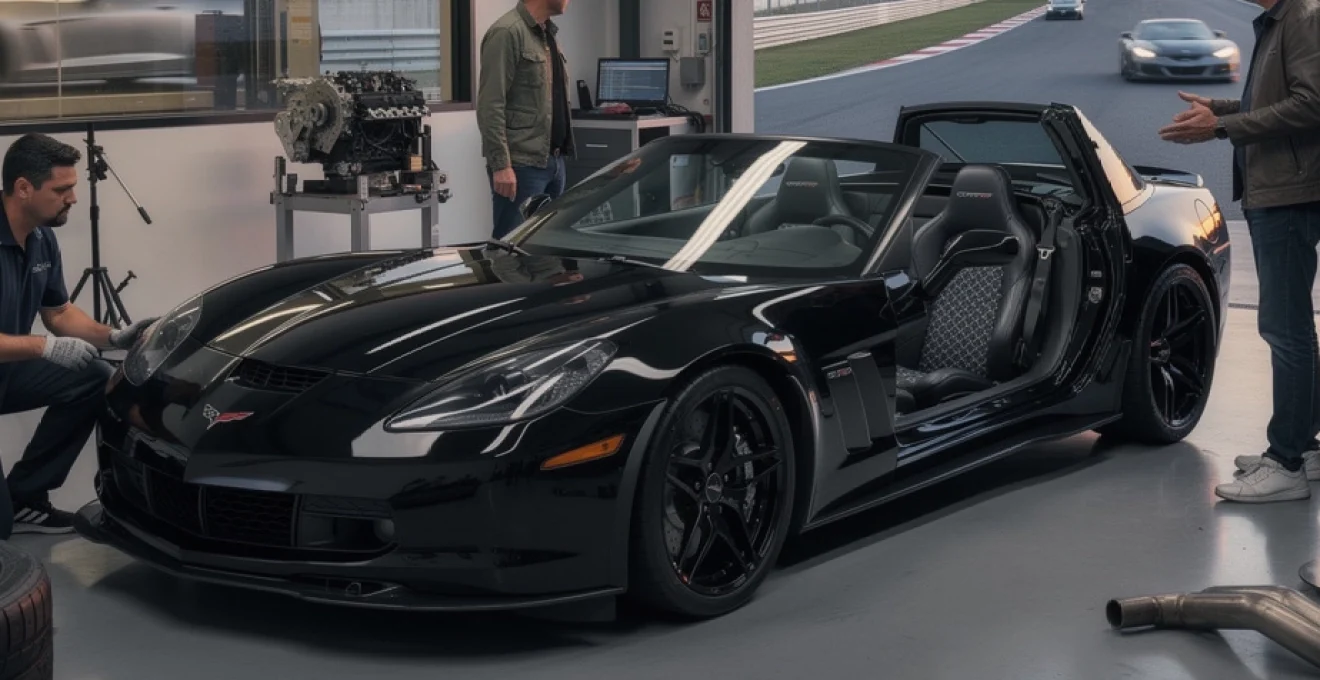
The Corvette C6 Z06 Black Edition sits in a sweet spot that modern supercars rarely touch: raw, analogue brutality wrapped in a package that is just about usable on UK roads. Built around the legendary LS7 7.0‑litre V8 and an aluminium fixed‑roof chassis, it combines race‑bred hardware with a stealthy blacked‑out aesthetic that gives it serious presence, even parked next to far newer machinery. For anyone considering a left‑field alternative to a 911 Turbo or Nissan GT‑R, the Z06 Black Edition offers towering performance, genuine rarity in Europe and a driving experience that feels closer to a GT3 car than a cushioned grand tourer. Understanding how it differs from a standard C6, where the real‑world running costs sit, and what to watch for when buying is essential if you want to enjoy the drama without unpleasant surprises.
Corvette C6 Z06 black edition overview: model years, package codes and market positioning
The C6 Z06 Black Edition is essentially a European‑market appearance and equipment package built on the already hardcore Z06 platform. Based on mid‑cycle C6 Z06 cars, it retains the 7.0‑litre LS7 with 505–512 bhp, dry‑sump lubrication and the aluminium chassis, but adds a fully blacked‑out treatment: dark paint, dark wheels, minimal brightwork and, on some GeigerCars‑prepared examples in Germany, further power upgrades to around 592 bhp. Positioned above the standard C6 and Grand Sport, but below the supercharged ZR1, it targeted buyers wanting supercar performance and a more sinister, bespoke look without entering six‑figure territory. When new in the UK and EU, pricing undercut a 997‑era 911 Turbo by tens of thousands, yet performance figures landed firmly in supercar territory: sub‑4‑second 0–60 mph and near‑200 mph top speed, depending on gearing and aero.
Distinguishing corvette C6 Z06 black edition from base C6 and grand sport variants
If you are viewing a car and trying to confirm whether it is a genuine Z06 Black Edition rather than a dressed‑up base C6, there are several key distinctions. The Z06 uses a fixed‑roof body with wider rear arches and specific front wings, plus a front splitter and side vents that are more aggressive than the standard C6. Under the bonnet, the presence of the 7.0‑litre LS7 with dry‑sump tank in the engine bay is an instant giveaway; base C6 and Grand Sport models use 6.0 or 6.2‑litre wet‑sump engines. Inside, Z06‑specific instrument clusters, higher redline and, on Black Edition cars, black leather with contrasting stitching and dark trim pieces set it apart. The Black Edition theme continues outside with black 5‑spoke wheels, red calipers and, on some cars, smaller‑diameter Ferrari‑style rear lamps and a bespoke rear fascia.
European black edition package vs US special editions (427, carbon edition, ZR1 comparison)
The Black Edition often gets confused with US‑market special editions such as the 427 Convertible, Carbon Edition and the ZR1 halo model. The European Black Edition is primarily an aesthetic and equipment package layered onto the Z06; power output remains broadly stock unless enhanced by tuners like GeigerCars. By contrast, the 427 Convertible Collector Edition combined the LS7 with an open body and was aimed at celebrating Corvette heritage in the US. The Z06 Carbon Edition added more extensive carbon‑fibre aero, ZR1‑spec brakes and track‑oriented Michelin Cup tyres, effectively creating a lighter, sharper Z06. The ZR1 then sat on top with a supercharged LS9, around 640 bhp and significantly higher list price. From a market perspective, the C6 Z06 Black Edition offers much of the visual drama of the Carbon/ZR1 cars, with running costs closer to the simpler, naturally aspirated Z06.
Production numbers, VIN decoding and rarity in UK and EU markets
Chevrolet did not always publish distinct global production figures for the Black Edition package, particularly when dealers and tuners in Germany and other EU countries created their own black‑themed derivatives. However, overall UK and EU Z06 numbers remained small. UK‑official imports were in the low hundreds for all C6 variants combined, and only a fraction of those were Z06s; genuine Black Edition cars represent a further subset of that pool. For identification, decoding the VIN to confirm a 7.0‑litre LS7 Z06 chassis (rather than a base C6) is crucial, followed by documentation of the Black Edition package or invoice history from the supplying dealer or tuner. This rarity, especially in right‑tax and left‑hand‑drive‑tolerant markets like the UK, is a key driver of today’s collector interest and explains why clean, low‑mileage examples command a premium.
Factory options matrix: Z06 2LZ/3LZ trims, carbon packages and wheel specifications
Most C6 Z06 Black Edition cars are built on the higher‑spec 2LZ or 3LZ trim levels. These bring dual‑zone climate control, heated leather seats, Bose audio and navigation, plus memory functions and upgraded interior materials. Certain European cars also adopted carbon‑fibre roofs, front splitters and side skirts borrowed from the Z06 Carbon Edition, improving both aesthetics and high‑speed stability. Wheels are typically 18‑inch front and 19‑inch rear forged alloys, finished in gloss or satin black, wrapped in Michelin Pilot Sport or Pilot Sport 2 tyres from the factory. Buyers who value track performance often seek cars with optional carbon‑ceramic brakes and more aggressive aero, though these features are rarer on European‑delivered Z06s than in the US. For anyone assessing a potential purchase, a build sheet showing 2LZ/3LZ and any carbon packages is a strong plus for long‑term value.
LS7 7.0‑litre V8 powertrain: performance, reliability patterns and tuning headroom
The heart of every C6 Z06 Black Edition is the hand‑built LS7 7.0‑litre V8, a naturally aspirated small‑block with race‑car DNA. Factory figures list 505 bhp and 470 lb ft, delivered through a close‑ratio Tremec six‑speed and limited‑slip differential to the rear wheels. In period tests, the Z06 reached 60 mph in around 3.5–3.7 seconds and topped out near 198 mph, out‑accelerating far more expensive Ferraris and Lamborghinis of the same era. Despite the large displacement, the engine revs to over 7,000 rpm and has a surprisingly free‑spinning character, often compared to a high‑revving Honda S2000 scaled up to 7.0 litres. For owners in the UK, the combination of huge torque and long gearing means effortless overtakes in any gear, as well as the ability to cruise at modest rpm and achieve around 26–30 mpg on a steady motorway run.
Stock LS7 output, torque curve and real‑world dyno figures for the Z06 black edition
On a chassis dyno, a healthy LS7 Z06 Black Edition typically shows 430–450 bhp at the wheels, depending on dyno type and correction factors. That usually equates to 500+ bhp at the crank, comfortably meeting or slightly exceeding Chevrolet’s official 505 bhp figure. The torque curve is impressively flat: more than 400 lb ft is on tap from around 2,500 rpm through to 6,500 rpm, which is why the car feels so explosive even in higher gears. Some European cars with freer‑flowing exhausts, sports cats or intake tweaks register nearer 470–480 bhp at the wheels, underscoring how little effort the LS7 needs to breathe more freely. For someone stepping out of a modern turbocharged car, the immediate, linear response of this naturally aspirated engine is one of the Z06’s defining attractions.
Known LS7 issues: valve-guide wear, dropped valves, oil consumption and preventive rebuilds
No engine is perfect, and the LS7 has a couple of well‑documented weak points that any buyer should factor into running and purchase decisions. The most discussed is premature valve‑guide wear, which in extreme cases can lead to valve failure and catastrophic engine damage. The issue is not universal but has been widely reported enough that many specialists recommend a pre‑emptive head inspection and rebuild on higher‑mileage engines or those used extensively on track. Another pattern is higher‑than‑expected oil consumption if the car is driven hard, not unusual for a motorsport‑inspired, loose‑tolerance engine but something that requires vigilance. Plenty of LS7s have run 100,000 miles plus without drama, but the safest approach for a Black Edition purchase is a documented head job with upgraded guides and seats, ideally performed by a known LS specialist.
Dry‑sump lubrication system, track oiling behaviour and recommended oil specifications
The Z06’s dry‑sump lubrication system is one of its most track‑focused features. Instead of a traditional sump hanging under the engine, oil is stored in a separate tank and scavenge pumps pull it from the crankcase, maintaining stable pressure during high‑g cornering. On circuit, especially at venues with long sustained corners such as the Nürburgring or Silverstone’s fast sections, this system gives the LS7 a significant durability advantage over wet‑sump engines. However, the dry‑sump tank must be checked correctly—with the engine warm and running—to avoid over‑ or under‑filling. Most specialists recommend high‑quality fully synthetic oil in the 5W‑30 to 10W‑60 range, depending on climate and usage, changed more frequently if you are doing regular track days. Taking the time to understand the correct checking procedure and service interval is one of the best ways to protect a Black Edition’s engine.
Bolt‑on performance upgrades: intake, long‑tube headers, cat‑back exhaust and ECU remapping
The LS7 responds exceptionally well to modest, carefully chosen bolt‑ons, which makes the Z06 Black Edition appealing to enthusiasts who enjoy light tuning without opening the engine. A typical package of cold‑air intake, long‑tube headers, high‑flow cats and a quality cat‑back exhaust, combined with custom ECU remapping, commonly yields 540–580 bhp at the crank and a noticeable bump in mid‑range torque. Beyond the numbers, these changes completely transform the soundtrack; the stock dual‑mode exhaust is relatively quiet, whereas a freer system releases a genuine race‑car howl at high rpm. For UK road use, care with noise levels and MOT‑compliant catalytic converters is essential, and insurance providers expect full disclosure of any engine modifications. When executed by a reputable tuner, these upgrades preserve drivability and reliability while giving the Black Edition performance to match far newer supercars.
Forced induction builds: harrop, ProCharger and magnuson supercharger kits on the Z06 platform
For owners chasing extreme power, the Z06 platform supports proven forced‑induction setups from brands such as Harrop, ProCharger and Magnuson. Supercharger kits in conservative configurations typically deliver 650–750 bhp, with more aggressive builds nudging four‑figure outputs when combined with forged internals and fuel system upgrades. On a Black Edition, this creates a car that will comfortably out‑accelerate a modern 911 Turbo S or McLaren Artura in a straight line. The trade‑off comes in higher heat‑management demands, increased stress on the drivetrain and more expensive consumables. Professional opinion generally recommends addressing LS7 head issues first, then adding forced induction with a sensible boost level for road and occasional track use. For someone considering a supercharged car, detailed build documentation and dyno sheets are crucial, along with evidence of regular fluid changes and conservative tuning.
Chassis, suspension and braking: track‑focused engineering of the C6 Z06 black edition
The C6 Z06 Black Edition is built on an aluminium spaceframe with fixed‑roof architecture, giving a kerb weight of roughly 1,430–1,440 kg—lighter than many contemporary rivals. The chassis uses transverse composite leaf springs at each end, a Corvette hallmark, but with track‑oriented damping and bushings that make the Z06 feel much more focused than a standard C6. On British B‑roads, the ride is undeniably firm and low‑speed compliance can feel jarring, especially compared with a 997 911, yet body control at speed is superb. The steering rack is quick and tightens in feel as pace builds, giving confidence on fast, flowing roads. Combined with huge brakes and wide tyres, the Black Edition delivers lateral grip figures around 1.0–1.1g in independent tests, on par with serious track machinery.
Aluminium frame, fixed‑roof structure and weight distribution versus standard C6
Compared with the steel‑framed standard C6, the aluminium Z06 chassis is not only lighter but also significantly stiffer. The fixed‑roof design (no targa panel) improves torsional rigidity, which translates to sharper turn‑in, more accurate suspension control and more consistent behaviour when hitting bumps mid‑corner. Weight distribution is close to 51:49 front to rear, aided by the rear‑mounted transaxle. The result is a car that feels agile and responsive, but still stable at very high speed—a combination that makes the Black Edition comfortable on long autobahn runs as well as British circuits. From an ownership perspective, the aluminium frame is largely immune to the structural corrosion issues that can plague older steel‑framed performance cars, though checking for accident damage and poor repairs remains critical during any pre‑purchase inspection.
Magnetic ride control (where fitted), transverse leaf springs and coilover conversion options
Most Z06s, including many Black Edition cars, rely on passive dampers rather than GM’s Magnetic Ride Control, keeping things mechanically simple and easier to maintain. The much‑debated transverse leaf springs might seem old‑fashioned, but in practice they act as compact, lightweight springs and allow a low centre of gravity; the Z06’s handling proves that the concept works. For owners who want more adjustability, coilover conversions from well‑known aftermarket brands are available, offering independent ride‑height and damping adjustment. This can be particularly helpful if you use the car on both circuit and road and need to dial out some of the factory rake or fine‑tune corner weights. A properly set‑up Black Edition on quality coilovers feels incredibly composed, though it is worth seeking a specialist familiar with Corvettes to avoid compromising ride or geometry.
OEM brembo braking system, rotor sizing and track pad compound recommendations
The factory Z06 braking system uses massive ventilated discs—around 355–380 mm diameter, depending on year and spec—with multi‑piston calipers that deliver outstanding stopping power. In independent tests, related Z06 variants have stopped from 60 mph in under 100 ft and from 100 mph in around 270 ft, performance that still stands up against current supercars. For heavy track‑day use, the limiting factor is usually pad compound and fluid rather than rotor size. Many UK track specialists recommend switching to high‑temperature pads and DOT 4 or DOT 5.1 fluid for sustained lapping, which significantly reduces fade and pedal long‑travel issues. Replacement pads are not cheap—front and rear sets can easily reach £1,000 at dealer prices—but lifespans are respectable for a car with this level of performance if you avoid constant hot‑lap abuse.
Wheel and tyre setups: OEM black edition alloys, michelin pilot sport and cup 2 fitments
Standard Z06 Black Edition fitment is a staggered 18‑/19‑inch wheel setup with wide, low‑profile tyres. Factory rubber was often Michelin Pilot Sport or Pilot Sport 2, with later cars and upgraded examples running Pilot Super Sport or Pilot Sport 4 S. For serious track work, Michelin Pilot Sport Cup 2 or Cup 2 R tyres offer a step change in dry grip, though the trade‑off is reduced wet‑weather performance and faster wear. Owners in the UK commonly maintain two sets of wheels: a more road‑biased tyre for mixed conditions and a stickier set for summer or track days. Maintaining correct pressures is vital; slightly lower pressures on circuit help manage heat build‑up and improve consistency, while over‑inflation on the road can exacerbate the already firm ride.
Exterior design and aero details specific to the Z06 black edition
Visually, the Corvette C6 Z06 Black Edition earns its name with a fully de‑chromed, darkened aesthetic that transforms the C6’s already aggressive lines into something far more sinister. The wide rear arches, deep front splitter and functional vents of the Z06 bodywork remain, but almost every exterior element is finished in black or dark metallic. Many European examples, particularly those tuned by GeigerCars, receive unique rear fascias with smaller, Ferrari‑style tail lamps and revised diffusers, further differentiating them from stock Z06s. The combination of black paint, black wheels and red brake calipers creates the classic “murdered‑out” supercar look that still feels contemporary alongside far newer machinery. For buyers who want visual drama without resorting to wings and vents that look excessive on the road, the Black Edition styling hits a rare sweet spot.
Black edition paint codes, gloss/metallic finishes and stripe or decal packages
Most Z06 Black Edition cars use deep gloss or metallic black paints, commonly codes equivalent to Black or Black Metallic in GM nomenclature. Some dealer‑specified or tuner‑built versions add subtle stripes, ghost graphics or “Black Edition” decals, but the general theme is understatement rather than loud, contrasting liveries. Buyers inspecting a potential purchase should look closely at paint depth and consistency, as black finishes tend to highlight swirl marks, stone‑chips and poorly blended repairs. A professional paint correction and ceramic coating can significantly improve presentation and long‑term durability on these cars. Because the Black Edition’s identity is tied so closely to its paint and trim, maintaining a high‑quality finish is more important to future value than on lighter‑coloured, more forgiving C6 variants.
Carbon-fibre panels (bonnet, front wings) and aero elements versus standard Z06 bodywork
The Z06 already benefits from lightweight carbon‑fibre front wings and a specific bonnet with extractors, and many Black Edition cars expand on this with carbon‑fibre front splitters, side skirts and, occasionally, roofs. These parts are not merely cosmetic; at track speeds, the splitter and rear spoiler work together to generate meaningful downforce and stability, particularly in high‑speed sweepers. Carbon parts can be left in exposed weave or painted body colour, depending on owner preference. On the used market, damaged or missing carbon aero can be expensive to replace, so careful inspection for cracks, repairs and alignment is advisable. The presence of intact, high‑quality carbon components tends to enhance both the driving experience and residual values, especially among enthusiasts who track their cars.
Lighting units, smoked lenses, and black edition specific trim and badging
Unlike earlier Corvettes, the C6 abandoned pop‑up headlights in favour of fixed projector units, which on the Black Edition are often given darker internal housings or tinted surrounds to complement the blacked‑out look. Rear lamps may be standard C6 units with darker lenses or, on certain Geiger‑style builds, smaller circular lights evoking classic Italian exotics. Side markers, badges and grille inserts are frequently de‑chromed or replaced with black items, while subtle “Black Edition” scripts or plaques identify the car to those in the know. When assessing originality, it is worth distinguishing factory or dealer‑installed trim from later aftermarket tinting, which may not meet local lighting regulations if overdone. From a styling perspective, the cohesive dark trim package is a big part of what makes the Black Edition so visually compelling.
Cabin, ergonomics and black edition interior appointments
Inside, the C6 Z06 Black Edition combines traditional American muscle‑car simplicity with subtle upgrades that lift perceived quality over earlier Corvettes. The basic C6 layout remains: a driver‑focused cockpit with clear analogue dials, a chunky steering wheel and large, easy‑to‑use controls. Black Edition treatment focuses on dark leather, contrast stitching and, on higher‑spec 3LZ cars, extended leather on the dashboard and door tops. Material quality is not on the same level as contemporary Porsche or Audi models, but in return you get an interface that is refreshingly straightforward to operate. For long‑distance use, the combination of supportive seats, dual‑zone climate control and decent sound insulation makes the Black Edition a more liveable proposition than its wild exterior suggests.
Black leather, contrast stitching and unique black edition upholstery patterns
Most Z06 Black Edition cabins feature full black leather upholstery with contrasting silver, grey or red stitching on the seats, steering wheel and gearlever. Certain cars also receive embroidered headrests or “Black Edition” logos, along with dark‑finished trim pieces instead of bright aluminium. The overall effect is a more cohesive, premium ambience than earlier C5‑era cars, which were often criticised for their plastics. When viewing a used example, pay attention to wear on the bolsters, steering wheel sheen and any lifting leather on the dash top—common age‑related issues. A well‑maintained interior, ideally with evidence of regular conditioning and careful use, adds to the sense of quality and supports the impression that a car has been cherished rather than abused.
Recaro‑style bucket seats, driving position and support on road and track
The Z06 seats provide a relatively low driving position with good adjustment, placing you close to the car’s centre of gravity and creating a strong connection to what the chassis is doing. Lateral support is adequate for fast road use, but for those who regularly exploit the Black Edition’s 1.0g‑plus cornering potential on circuit, side bolstering can feel modest. Some owners retrofit true Recaro‑style fixed‑back buckets or more aggressively bolstered chairs, dramatically improving support at the cost of some long‑distance comfort and easy access. On UK roads, where entry and exit in tight parking spaces matter, the standard seats represent a useful compromise. As with any performance car, ensuring the seat rails and adjustment mechanisms operate smoothly and without play is an important part of pre‑purchase assessment.
Infotainment, bose audio, navigation and retrofitting apple CarPlay/Android auto
Infotainment in the C6 era predates today’s giant touchscreens, but higher‑spec Z06 Black Edition cars include a colour navigation unit, Bluetooth telephone integration and a Bose audio system that is more than adequate at motorway speeds. The interface feels dated by modern standards, yet the simplicity can be refreshing; most functions are a button press away rather than buried in sub‑menus. Owners who want modern connectivity often opt for discreet double‑DIN head unit upgrades with Apple CarPlay and Android Auto support, either integrated into the factory fascia or installed in place of the original screen. Done properly, this provides contemporary functionality without spoiling the cabin’s overall look. For buyers, evidence of a quality installation with proper wiring and integration is preferable to cheap, poorly fitted aftermarket units.
On‑road and track performance review: nürburgring, drag strip and b‑road behaviour
The real magic of the Corvette C6 Z06 Black Edition emerges once the car is moving. On a typical British B‑road, the combination of huge torque, direct steering and firm suspension delivers a sense of immediacy that modern, heavier turbocharged supercars sometimes lack. There is no low‑rpm lag; the LS7 pulls strongly from little more than idle, then builds to a ferocious top‑end rush. On circuit, the Z06’s blend of power, grip and braking makes lap times comparable to far more exotic machinery, with experienced drivers exploiting its balance to carry serious speed through fast corners. At the drag strip, the car’s traction and gearing allow 11‑second quarter‑mile passes in capable hands, confirming its status as a true performance heavyweight.
0–60 mph, quarter‑mile and in‑gear acceleration compared with 911 turbo and nissan GT‑R
Period tests of the C6 Z06 and closely related special editions recorded 0–60 mph times around 3.5–3.7 seconds and quarter‑mile runs in roughly 11.6–11.7 seconds at over 120 mph. While modern all‑wheel‑drive 911 Turbo and Nissan GT‑R models can deliver even quicker launches thanks to sophisticated electronics and four‑wheel traction, the Z06’s in‑gear acceleration remains startling. Rolling from 30–70 mph or 50–100 mph in a single gear, the Black Edition can hang with, or even outperform, many newer rivals. For real‑world overtakes on UK A‑roads and motorways, this translates into minimal waiting time and a reassuring surplus of performance. The crucial difference is that the Z06 delivers this shove with the immediacy and soundtrack of a high‑revving, naturally aspirated V8 rather than a muted turbo surge.
Nürburgring and track‑day lap performance versus C6 ZR1 and C7 stingray
On track, the Z06 Black Edition slots neatly between a standard C6 and the ballistic C6 ZR1. Factory‑fresh Z06s posted Nürburgring laps in the low‑7:40s in period, with later Carbon‑equipped cars dipping further into the 7:20s, close to the ZR1’s 7:26 benchmark. Against a newer C7 Stingray, the C6 Z06’s power advantage and lighter weight give it the upper hand on fast tracks, though the C7’s chassis refinement and electronic aids narrow the gap for less experienced drivers. At UK circuits such as Brands Hatch, Donington and Silverstone, a well‑driven Black Edition on quality tyres can embarrass far more expensive machinery. As with any rear‑drive, high‑power car, respect for its limits, especially in cold or damp conditions, is vital; the car will reward smooth inputs and punish clumsy ones.
Steering feel, grip levels and traction control calibration on wet and dry UK roads
The Z06’s hydraulic steering provides clear feedback, especially once loaded up in medium and fast corners. In the dry on warm tyres, front‑end grip is strong and the car resists understeer well, rotating cleanly on throttle. In the wet, however, the combination of wide rear tyres and big torque demands restraint. Traction control calibration is relatively conservative by modern standards but still permissive enough that over‑enthusiastic throttle applications can provoke oversteer on poor surfaces. For road use in the UK climate, leaving the stability systems engaged is sensible, particularly until you are fully familiar with the car. Many owners appreciate the way the Black Edition communicates its limits; it is more akin to a classic rear‑drive sports car than an over‑insulated GT.
The Corvette C6 Z06 Black Edition is the kind of car that teaches respect: powerful enough to punish mistakes, yet communicative enough to help a committed driver grow.
Brake fade resistance, heat management and consumable wear in repeated hot laps
With stock pads and fluid, the Z06’s brakes cope well with occasional fast laps but can start to soften under repeated heavy stops, especially on longer circuits. Upgraded fluid and track‑focused pad compounds transform durability, allowing sessions of 20 minutes or more without significant fade. Heat‑management extends beyond the brakes; monitoring oil and coolant temperatures is important, particularly on warm days. Tyres also work hard; aggressive track driving can chew through a set of Cup 2s in a couple of track days. For owners planning regular circuit use, budgeting for additional sets of pads, fluid flushes and more frequent tyre replacement is prudent. Treated with mechanical sympathy—cool‑down laps, sensible warm‑up and regular checks—a Black Edition can handle frequent track work without protest.
Running costs, maintenance intervals and ownership experience of a C6 Z06 black edition
Owning a Corvette C6 Z06 Black Edition in the UK or Europe is not inexpensive, but relative to its performance level, the car represents good value. Routine servicing uses broadly available GM and Chevrolet parts, and many items such as filters, belts and fluids are priced more like mainstream American models than exotic supercars. However, consumables such as tyres and brakes reflect the car’s speed and mass; expecting hot‑hatch running costs from a 500‑plus‑bhp V8 is unrealistic. Insurance, tax and fuel also add up, particularly for younger drivers or those without NCB on performance cars. On the positive side, the LS7’s robustness when properly maintained, combined with the corrosion‑resistant aluminium chassis, means that long‑term ownership can be surprisingly trouble‑free if approached with realistic expectations and a sensible maintenance budget.
Service schedule, GM part numbers and specialist corvette garages in the UK
Routine servicing intervals for the C6 Z06 are typically annual or every 10,000–12,000 miles, whichever comes first, with more frequent fluid changes advised if you track the car. Oil, filter and general inspection services are relatively affordable, especially if you use independent Corvette specialists familiar with GM part numbers and cross‑compatibility. In the UK, a small but knowledgeable network of American‑car garages can source genuine or OEM‑equivalent parts quickly, often at lower prices than franchised dealers. Regular items include engine oil and filter, gearbox and diff oils, brake fluid and coolant, plus periodic replacement of plugs, belts and ancillary components. For a Black Edition, maintaining thorough service records not only protects reliability but also supports residual value in an increasingly informed market.
Fuel economy, road tax, tyres, brakes and typical annual running budgets
Fuel consumption varies widely with usage. Owners report around 26–30 mpg on steady motorway runs, but spirited B‑road driving or track days can drag that figure into the mid‑teens or lower. Road tax in the UK falls into higher bands due to engine size and emissions, and insurance will reflect the car’s performance and left‑hand‑drive status. Tyres for the standard Z06 sizes from premium brands typically run £1,000–£1,400 for a full set, while performance pads and discs can add another substantial sum when replacement is due. For a typical enthusiast driving 5,000–7,000 miles a year, a realistic annual running‑cost estimate—including fuel, servicing, tax, tyres amortised over their life and insurance—can easily land in the £3,000–£5,000 range, excluding any major repairs or modifications.
Approached with open eyes and a sensible maintenance fund, the Z06 Black Edition delivers supercar‑level thrills for a fraction of the total cost of many European rivals.
Insurance considerations, agreed‑value policies and modifications disclosure
Because of its power output, left‑hand‑drive layout and relative rarity, the C6 Z06 Black Edition often falls outside the comfort zone of mass‑market insurers. Performance‑car specialists are usually better placed to offer competitive premiums, especially if you can demonstrate secure garaging, limited annual mileage and prior experience with powerful rear‑drive cars. Agreed‑value policies are worth considering, given the appreciating nature of clean Z06 examples and the additional rarity of the Black Edition. Any modifications—including exhausts, intakes, suspension changes or supercharger kits—must be fully disclosed; undeclared upgrades can invalidate cover and cause significant issues in the event of a claim. Keeping detailed documentation and invoices for all work helps underwriters assess risk accurately and protects the investment you have made in the car.
Buying guide: inspecting, valuing and importing a corvette C6 Z06 black edition
Finding a genuine Corvette C6 Z06 Black Edition in the UK or wider European market requires patience, a sharp eye and a willingness to travel. Numbers are low, and many cars have been modified to varying standards, so identifying the right example is as much about condition and history as it is about exact specification. A systematic pre‑purchase inspection focusing on the LS7 engine, chassis alignment, brake and suspension wear, and the quality of any cosmetic or performance upgrades will pay dividends. Prices have firmed in recent years as enthusiasts recognise the Z06 as a modern classic, especially in desirable special‑edition guises, so paying a little more for an exceptional car usually works out cheaper than rescuing a tired example.
Pre‑purchase inspection checklist: compression tests, borescope and chassis corrosion
A thorough inspection on a Z06 Black Edition should start with the engine. A compression or leakdown test can highlight ring or valve issues; a borescope inspection of the cylinders and valve seats adds further peace of mind, particularly regarding the LS7’s known guide wear concerns. Listening for top‑end noise when hot and cold is also useful. Underneath, checking for impact damage, cracked carbon splitters, bent suspension arms and evidence of track kerbing contact is essential. Although the aluminium chassis resists traditional rust, steel subframes, fasteners and brackets can show corrosion if the car has lived a hard life in salty winter conditions. Inside, verify all electronics, gauges and infotainment functions, and scrutinise interior wear for signs of higher mileage than indicated or poor previous care.
Manual gearbox, clutch and differential wear indicators on higher‑mileage cars
The Tremec six‑speed manual gearbox is generally robust, but hard track use and repeated drag‑style launches can accelerate wear. During a test drive, shifts should feel positive and consistent with no baulking, grinding or popping out of gear under load. A heavy, noisy or slipping clutch suggests impending replacement, which is a relatively involved job on a transaxle car. The limited‑slip differential should operate quietly; excessive whine, clunks or judder under tight turns can point to worn bearings or clutches. Fresh fluid and correct break‑in can extend drivetrain life significantly, so service records noting gearbox and diff oil changes are a valuable part of a prospective car’s history file.
Market prices, auction trends and appreciating Z06 and black edition examples
Values for C6 Z06s have stabilised and, in many cases, begun to edge upwards as the market wakes up to the combination of analogue character, huge performance and relative rarity. Early high‑mileage cars with patchy histories sit at the bottom of the price range, while later, low‑mileage examples with strong documentation command significantly more. The Black Edition’s distinctive styling and scarcity in Europe tends to add a premium, particularly for cars in original condition with limited owners. Recent auction results show increasing interest from collectors seeking naturally aspirated V8s as the market moves towards downsized and hybrid powertrains. For a buyer today, the key is balancing budget against condition and future desirability; stretching to the best available Black Edition often makes the most sense in the long term.
Importing from the US or europe: DVLA registration, IVA, duty and left‑hand drive issues
Given the limited pool of UK‑supplied cars, importing a Z06 Black Edition from mainland Europe or even directly from the US is a viable option. From a European source, duty and VAT may be simplified depending on current trade arrangements, but the car still needs to pass UK MOT requirements and be registered with the DVLA. US‑sourced cars incur shipping costs, import duty (typically around 10%) and VAT at 20% on the combined vehicle and shipping value, plus potential Individual Vehicle Approval (IVA) testing and minor lighting or speedometer modifications to meet UK standards. Left‑hand drive is generally manageable on UK roads, though overtaking sightlines change and resale appeal is narrower than for right‑hand‑drive cars. For someone serious about owning a Black Edition, factoring in these import logistics and costs from the outset makes it easier to judge whether a foreign purchase still represents good value.