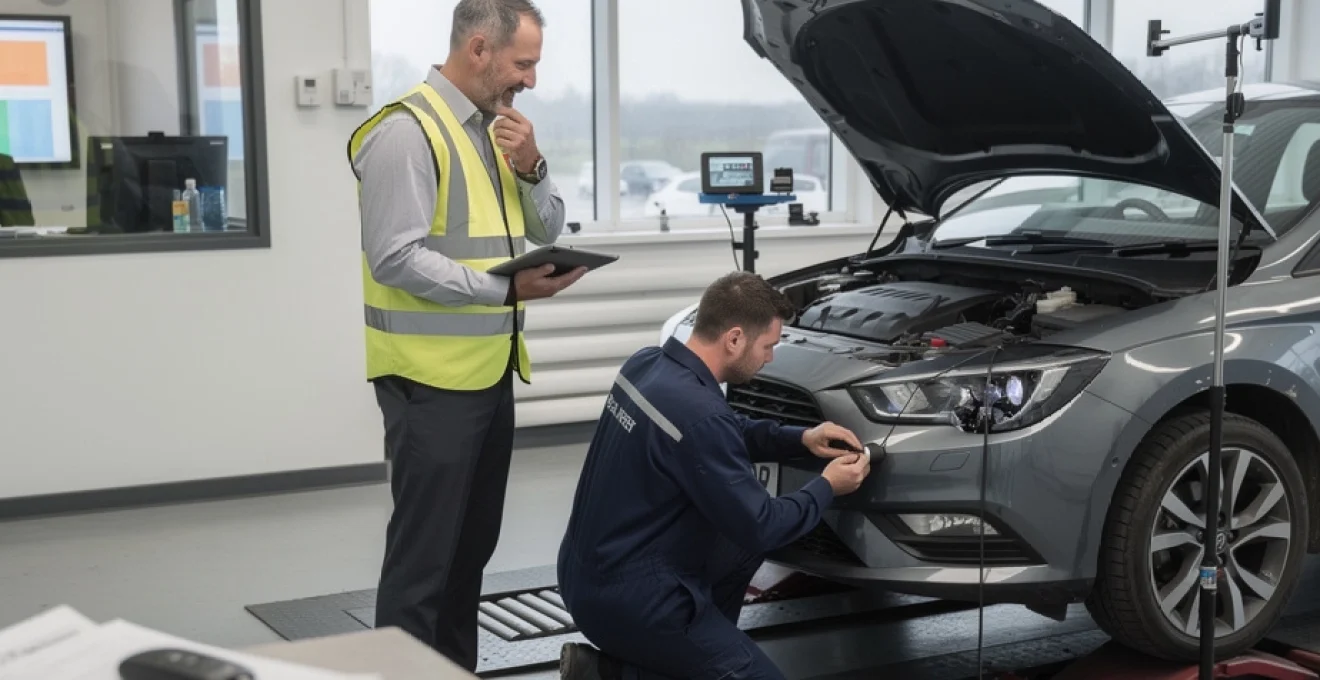
If your car has just been declared a Cat N write‑off, the mix of insurance jargon, MOT rules and legal obligations can feel overwhelming. You might be wondering if you can drive it home, whether an existing MOT is still valid, or if you must rush to book a fresh test before using it again. Understanding how Cat N interacts with the MOT system is crucial if you want to stay on the right side of the law, protect your insurance cover and avoid unexpected costs later when you come to sell the vehicle.
Cat N cars occupy an awkward middle ground: the damage is officially “non‑structural”, yet it can still affect safety‑critical items such as steering, brakes, airbags or lights. The law draws a clear line between having a valid MOT certificate and being genuinely roadworthy, and a Cat N write‑off sits right on that line. Knowing how MOT rules apply lets you make informed decisions about buying back your car, insuring it and returning it to the road with confidence.
Understanding cat N insurance write‑off category under UK salvage law
How cat N (non‑structural damage) differs from cat S, cat B and cat A write‑offs
Under the UK’s salvage categorisation, a Category N write‑off means the vehicle has suffered non‑structural damage. In simple terms, the car’s underlying safety shell or chassis rails are not considered bent, twisted or cracked. By contrast, Cat S (formerly Cat C) means structural damage that is still repairable, while Cat B and Cat A cover vehicles so badly damaged they must never return to the road.
Insurers generally choose Cat N when repair costs, including parts, labour, hire car and administration, are uneconomical compared to the vehicle’s pre‑accident value. That’s why a fairly modest hit on an older hatchback can still trigger a total loss decision. A Cat N car can legally be repaired, MOT’d and used again, but it will always carry that salvage marker in its history, affecting future value and insurability.
DVLA, ABI code of practice and insurer roles in assigning a cat N marker
Cat N labels flow from the Association of British Insurers (ABI) Code of Practice, which guides how insurers classify damaged vehicles. The insurer’s engineer or outsourced assessor inspects the car, either in person or from photos and estimates, then chooses the appropriate category. That information is then recorded on industry databases used by HPI, Experian and other vehicle history providers.
The DVLA itself does not decide whether a car is Cat N, but the write‑off status is linked to the vehicle’s registration number on central systems. When a car is written off, legal ownership normally passes to the insurer unless you agree a buy‑back. If you keep or repurchase the car, DVLA still retains the same registration; there is no need for re‑registration, Q‑plates or an IVA test purely due to Cat N status.
Typical cat N damage types: cosmetic panels, electronics, airbags and minor chassis components
Although Cat N is described as non‑structural, the real‑world damage can be more than a scuffed bumper. Common Cat N cases include:
- Cosmetic bodywork: bolt‑on panels, bumpers, wings, headlights and rear lights
- Electronics: damaged parking sensors, wiring looms, control units or infotainment systems
- Safety systems: deployed airbags, seatbelt pretensioners and associated wiring
- Minor chassis or running gear parts: suspension arms, steering racks or subframes that can be replaced
Because modern parts and labour are expensive, insurers often price for brand‑new components and main‑dealer rates. That is how a scrape that a smart repairer might fix for £800 ends up with a £4000+ insurer estimate. For you as the owner, this gap between “insurer economics” and “real‑world repair cost” is where potential bargains — and risks — arise.
How cat N status appears on a V5C logbook and HPI / experian vehicle history checks
A subtle but important point: the V5C logbook itself does not usually list the Cat N marker in big letters. The DVLA notes that the vehicle has been damaged and written off, but the clearest way you will see “Cat N” is through a third‑party vehicle check. Any reputable history report — from HPI, Experian, AA or RAC — will flag a Category N or “Cat D (pre‑2017)” marker.
When you come to sell a Cat N car, most buyers will run some form of history search. Failing to disclose known Cat N status can be treated as misrepresentation, and it will almost certainly surface anyway. For due‑diligence when buying, a paid history check combined with the free GOV.UK MOT history service provides a powerful picture of the car’s past usage and condition over time.
MOT test regulations for cat N vehicles in england, scotland and wales
Does a cat N car automatically fail its current MOT certificate under DVSA rules?
Under DVSA rules, a Cat N write‑off does not automatically cancel an existing MOT certificate. If the car had, say, eight months remaining on its MOT when the accident occurred, that certificate technically remains valid until it expires. There is no automatic MOT revocation purely because an insurer has declared the car a total loss.
However, a valid MOT is not a free pass to drive a damaged car. If the accident has left the vehicle dangerous — for example, sharp edges, leaking fluids or misaligned steering — you could still be prosecuted for using an unroadworthy vehicle, even if the MOT is in date. Think of the MOT as a snapshot of minimum standards at the time of test, not a guarantee that the car remains safe after a collision.
When a new MOT is legally required after a cat N total loss decision
Legally, a Cat N car needs a new MOT only when the existing certificate has expired or is about to expire, in line with normal rules. There is no special DVSA category demanding an immediate re‑test just because the vehicle is now Cat N. That said, many insurers and finance companies insist on a fresh MOT as a condition of cover or lending once repairs are complete.
From a risk perspective, that requirement is sensible. Post‑accident repairs may affect a wide range of MOT items, from suspension and lights to emissions. A new test gives you documentary proof that the car met minimum safety and environmental standards after it was fixed. For buyers, a post‑repair MOT dated after the incident is a strong reassurance that the car has been seen by an independent tester.
Driving a cat N car without a valid MOT: road traffic act offences and penalties
If a Cat N car is more than three years old, driving it on the road without a valid MOT (other than to a pre‑booked test) breaches the Road Traffic Act and can trigger a fixed penalty of up to £1000. If the vehicle is dangerously defective — for example, serious brake or steering faults — the fine can rise to £2500 and incur penalty points or even a ban.
There is also an insurance angle. Many policies state that cover is conditional on the car being roadworthy and, where required, having a valid MOT. If you drive a Cat N vehicle with no MOT and have a crash, an insurer may argue that you breached policy terms and either reduce or refuse a payout. The DVLA and police use number‑plate recognition systems to check tax and MOT status in real time, so trying to “chance it” carries real risk.
How MOT status of a cat N car is shown on gov.uk MOT history and checker tools
The free GOV.UK MOT history and MOT status checker tools don’t display Cat N status; they simply show pass/fail results, mileages and advisories. From a MOT perspective, a Cat N is treated like any other car of the same age and type. You enter the registration, and the site reveals test dates, outcomes and reasons for failure.
Where this becomes powerful is when you overlay MOT history with what you know about the accident. For example, if a car became Cat N in March and then passed an MOT in April with notes about “front nearside suspension arm replaced”, you have indirect confirmation of the type of repairs completed. Patterns of repeated advisories for the same corner of the car can hint at underlying accident‑related distortion or poor‑quality fixes.
Roadworthiness versus MOT compliance for cat N cars
Dvsa’s definition of “roadworthy” and how it applies to repaired cat N vehicles
The DVSA defines a “roadworthy” vehicle as one that is safe to drive, properly maintained and free from serious defects that could endanger road users. That definition is broader than simply “has a valid MOT”. A Cat N car that has been poorly repaired, or not repaired at all, might technically wear a valid certificate but still be unroadworthy in the eyes of the law.
A useful analogy is a medical check‑up: passing an annual health exam doesn’t protect you if you later break a leg but still decide to go running. In the same way, a car with a bent suspension arm or mis‑aligned steering rack after a crash is no longer in the condition it was when last tested. As the driver, you are legally responsible for ensuring the vehicle is safe every time you use it, not just once a year at MOT time.
Common post‑accident faults that cause MOT failures on cat N cars (brakes, steering, lighting)
Post‑accident Cat N vehicles often fail MOTs on issues directly linked to the damage and subsequent repairs. Typical failures or serious advisories include:
- Brake performance imbalance or leaks after caliper, hose or pipe damage
- Steering play, misalignment or rack damage affecting tracking and stability
- Lighting defects: mis‑aimed headlights, faulty DRLs, broken indicator clusters
- Tyre damage or incorrect sizes fitted after wheel or suspension work
Airbag warning lights and ABS faults can also trigger failures. If you are buying a Cat N car that has recently passed, check whether any such items appear as advisories. A pattern of repeated brake or steering issues on successive tests should make you pause and ask whether the underlying accident damage was fully and correctly addressed.
Section‑specific MOT checks affecting cat N cars: structural corrosion, suspension and emissions
Even though Cat N means “non‑structural” damage, MOT testers still assess key structural areas for corrosion, cracking or poor repairs. Among the most relevant sections for ex‑write‑offs are:
| MOT Test Area | Why it matters for Cat N cars |
|---|---|
| Suspension | Accident impacts often bend arms, dampers or subframes; poor repairs can cause instability. |
| Steering | Rack, track‑rod and column damage can lead to dangerous wandering or excessive play. |
| Body & Structure | Non‑structural on paper, but bolt‑on panels and mounts still affect crash performance and sharp edges. |
| Emissions | Exhaust damage or lambda sensor faults after a rear‑end or underside impact can trigger failures. |
For modern cars, the emissions test is particularly unforgiving. A Cat N car with a replaced or welded exhaust after an impact might show elevated CO or HC levels or a failing catalytic converter. That is one reason why emissions‑related MOT failures have risen in recent years, especially on older, lower‑value vehicles where cheap pattern parts are used.
Using an MOT pre‑check or independent inspection to validate cat N repair quality
If you have just bought back your own Cat N car or are considering purchasing one from a dealer, an independent inspection is a smart move. Services from national organisations or a trusted local specialist can assess repair quality beyond what a standard MOT covers. Think of it as a structural and mechanical survey, equivalent to a building survey on a house with a history of subsidence.
A pre‑MOT check or engineer’s report typically looks at panel alignment, paint quality, hidden rust, chassis alignment, suspension geometry and diagnostic fault codes. For the cost of around £100–£250, you gain an expert view that can reveal shortcuts such as missing airbags, incorrectly calibrated ADAS systems or reused, bent components. That information helps you decide whether to walk away, renegotiate the price or proceed with confidence.
Insurer and finance company conditions on MOT after a cat N write‑off
How insurers like admiral, aviva and direct line handle MOT on reinstated cat N cars
Most mainstream insurers — including Admiral, Aviva and Direct Line — will cover Cat N cars, but often with extra conditions. When you buy the vehicle back or take out a new policy, the underwriter may insist on proof of a valid MOT and, in some cases, evidence that the repairs have been completed to a safe standard. Some companies apply higher premiums or larger excesses to ex‑write‑off vehicles.
Practically, that can mean a requirement to email over the post‑repair MOT certificate or submit photographs and a garage invoice. Multi‑car policies can be particularly awkward, as the insurer may temporarily remove the Cat N vehicle from cover until documentation is supplied. This is not strictly a DVSA requirement; it is a commercial risk decision by the insurer, intended to prevent unsafe or partially repaired cars being insured as if they were undamaged.
Why some underwriters require a fresh MOT or engineer’s inspection certificate
From an underwriting perspective, Cat N cars are statistically more likely to suffer from hidden issues and future faults. Some industry studies have suggested that ex‑write‑offs experience higher rates of subsequent claims, especially within the first two years after repair. That is why certain insurers request an engineer’s inspection or a fresh MOT, even if the old certificate has a few months left.
An engineer’s report typically checks key safety items and confirms that any structural or significant non‑structural repairs are free from obvious defects. Underwriters then store this report on file as evidence that the car was in acceptable condition when cover began. For you, this certificate can double as useful paperwork when selling the car, helping reassure cautious buyers about repair quality.
Impact of cat N and MOT status on comprehensive, third‑party and telematics policies
Policy type also influences how MOT and Cat N status interact. On comprehensive policies, insurers are more sensitive to vehicle value and repair costs, so a Cat N history may reduce the payout you would receive in any future total loss. Third‑party policies might be less concerned about the car’s own value, but they still require it to be roadworthy and, where applicable, MOT’d.
Telematics or “black box” policies add another layer. Some providers use device data to flag harsh braking or suspicious patterns that may indicate mechanical problems. If a Cat N vehicle without a current MOT is involved in an incident, underwriters will scrutinise both the MOT status and telematics logs carefully. Failing to disclose Cat N history, or driving without an MOT, can provide grounds to void the policy entirely.
HP and PCP finance agreements: lender requirements for MOT on cat N vehicles
For cars bought on HP or PCP, the finance company retains an interest in the vehicle as an asset. If that asset becomes Cat N, lenders normally expect it to be repaired and maintained to a standard that protects its residual value. Many agreements include clauses requiring you to keep the car taxed, insured and MOT’d throughout the term.
If your financed car is written off as Cat N and you decide to buy it back, you must inform the lender. Some will refuse to continue the agreement on an ex‑write‑off; others will allow it subject to an engineer’s report and a new MOT. At the end of a PCP term, the guaranteed future value or optional final payment may be renegotiated downwards to account for Cat N status, so it is sensible to factor that into your long‑term cost calculations.
Buying a cat N car: MOT checks and due‑diligence for used‑car buyers
Verifying MOT history with the DVSA online service before purchasing a cat N car
Before putting down a deposit on any Cat N car, checking the full MOT history through the official DVSA online service is essential. This free tool shows every test, the recorded mileage, reasons for failure and advisories. Cross‑reference these entries with the date of the accident or the year in which the vehicle was coded as Cat N.
Patterns to look for include sudden drops in mileage, long gaps between tests or clusters of failures on related components. A car that failed on “front suspension components excessively worn” a few months after an accident, for example, may have been poorly repaired initially. If the first post‑accident MOT is a straight pass with no advisories, that is generally a positive sign — but it still pays to have a separate inspection if the damage was substantial.
Red flags in MOT advisories specific to cat N accident damage and poor repairs
MOT advisories are where many of the red flags lurk on Cat N vehicles. Points that deserve closer attention include:
- “Under‑tray fitted obscuring some components” immediately after accident repair, suggesting hidden areas not fully inspected
- Repeated notes on “corrosion” or “damage” around one corner of the car — often the impact side
- Persistent brake imbalance or steering play, even when the car is still passing
Advisories about “slight oil leak” or “minor exhaust blow” are common and not necessarily worrying. By contrast, notes about “suspension mounting area corroded but not seriously weakened” on an ex‑write‑off are serious, because they relate directly to the vehicle’s crash performance and ability to withstand another impact. The more such notes concentrate around one area, the more cautious you should be.
Commissioning an AA/RAC inspection or independent engineer’s report on a cat N vehicle
For a Cat N car that ticks every box on paper but still makes you uneasy, commissioning an independent inspection is a strong safeguard. National organisations and many local specialists offer tiered services, from basic checks to full engineer’s reports designed specifically for ex‑write‑off vehicles. These reports typically include paint‑depth measurements, evidence of filler, alignment of shut lines and a road test.
One practical tip is to share the original accident photos or insurer’s estimate with the inspector if you have them. That context helps the engineer focus on the main impact area and any components that should have been replaced. If the report highlights substandard welding, missing crash sensors or non‑functioning airbags, you are equipped to either renegotiate the price significantly or walk away entirely.
Negotiating price based on remaining MOT, repair invoices and cat N salvage category
Even when a Cat N car appears well repaired and has a long MOT, the salvage marker will depress its value compared with an equivalent clean‑title vehicle. Depending on age and desirability, discounts of 20–40% are typical. When negotiating, it helps to break down your reasoning rather than simply saying “it’s Cat N, so I want money off”.
Start by referencing the market value of a non‑Cat N example of similar age and mileage, then subtract an amount to cover the stigma, higher insurance and any outstanding issues from the MOT advisories or inspection report. Recent repair invoices and post‑accident MOT certificates dated after the repairs add value; the lack of such paperwork reduces it. As a buyer, you are essentially being paid to accept the extra uncertainty that comes with a write‑off history.
Practical timelines: from write‑off decision to legal use on UK roads
Sequence from accident, insurer assessment and cat N coding to MOT retest
The typical journey from accident to legally driving a Cat N car again follows a rough sequence:
- Accident occurs and the vehicle is recovered or assessed by your insurer’s engineer.
- Insurer declares the vehicle a total loss and assigns a
Cat Nmarker based on damage. - You accept a payout, optionally buying the salvage back at an agreed value.
- Repairs are carried out by a bodyshop, independent garage or, if qualified, by you.
- Once repaired, you arrange an MOT test if the previous certificate has expired or is close to expiring.
Timing the MOT is important. If the car has only one or two months left, consider combining completion of repairs with an immediate test. That way, you start your new period of ownership with a clear, post‑accident certificate, making insurance and future resale smoother.
Driving to and from an MOT test in a cat N car with no valid certificate
If your Cat N car currently has no MOT, you are still allowed to drive it on the road solely for a pre‑booked MOT test, and back from the test centre if it passes. This long‑standing exemption applies across England, Scotland and Wales, but there are two critical caveats: the vehicle must be insured, and it must be in a basically roadworthy condition.
If the car has major visible defects — for example, dragging bodywork, obvious fluid leaks or dangerously mis‑aligned steering — police can still consider it unroadworthy even on the way to a test. A sensible approach is to fix blatant safety issues first, then book the MOT. If in doubt, using a recovery truck or trailer to reach the test centre removes the risk of a roadside prohibition or prosecution.
Reinstating tax, insurance and MOT on a previously written‑off cat N vehicle
Once repairs are complete and the car has passed its MOT (if required), the next steps are to ensure vehicle tax and insurance are in place. If the car was declared off‑road with a SORN declaration during the claim, you must tax it again before general road use. For insurance, most providers will ask whether the car is a previous write‑off; answering honestly is essential, as databases will reveal Cat N status anyway.
From that point, the car falls back into the standard cycle: annual MOT from year three onwards, regular servicing and routine maintenance. Cat N status does not alter the legal interval between tests or the basic requirements of the MOT scheme. Your ongoing responsibility is the same as with any other car: keep it safe, serviced and compliant with MOT standards at all times, not just on test day.
Record‑keeping: storing MOT certificates, repair invoices and engineer reports for future resale
Paperwork is particularly valuable for Cat N vehicles. A well‑organised file of MOT certificates, repair invoices, parts receipts and any engineer’s or independent inspection reports can transform how future buyers view the car. Instead of a mysterious “previously damaged” label, you present a documented story of what happened, how it was fixed and how it has performed since.
For maximum transparency, keep digital scans as well as originals and note dates and mileages alongside each repair entry. This record not only helps when you come to sell but also assists you in monitoring wear patterns and scheduling preventative maintenance. Over several years of safe, MOT‑passing use, the combination of consistent history and solid paperwork can go a long way towards offsetting the Cat N stigma in the eyes of careful buyers.