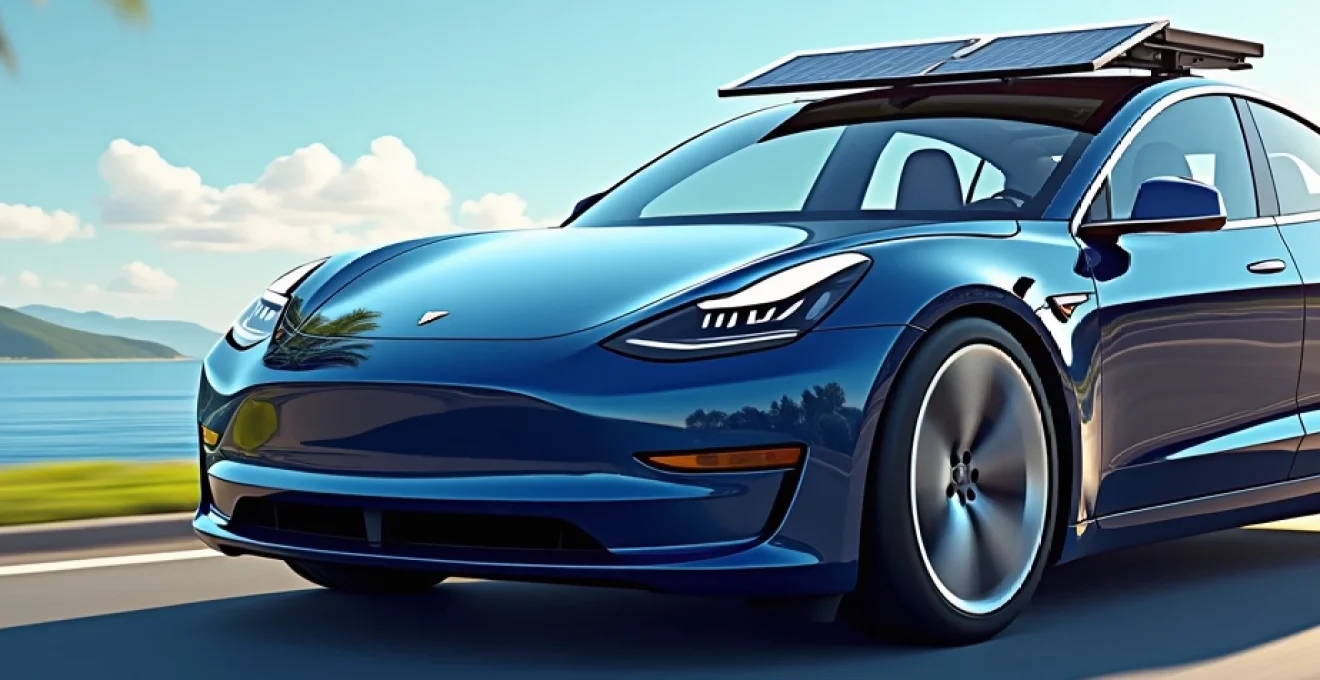
The convergence of solar technology and electric mobility represents one of the most significant innovations in sustainable transportation. As global concerns about carbon emissions intensify and urban air quality continues to deteriorate, the automotive industry is increasingly exploring ways to harness renewable energy sources directly within vehicles. Solar panels integrated into electric vehicles offer a compelling solution that addresses range anxiety, reduces grid dependency, and provides drivers with greater energy independence. While traditional electric vehicles rely entirely on grid-based charging infrastructure, solar-equipped EVs can supplement their energy needs through photovoltaic systems embedded within the vehicle’s body panels, roof surfaces, and even transparent components.
Photovoltaic integration technologies for electric vehicle manufacturing
The integration of photovoltaic systems into electric vehicles requires sophisticated engineering approaches that balance energy generation capabilities with automotive design requirements. Modern vehicle manufacturers are exploring various solar cell technologies, each offering distinct advantages depending on the specific application area within the vehicle structure. The challenge lies in maintaining the aesthetic appeal and aerodynamic efficiency of vehicles while maximising the surface area available for solar energy capture.
Monocrystalline silicon cell integration in tesla model S body panels
Monocrystalline silicon cells represent the gold standard for automotive solar integration due to their high efficiency ratings and proven durability. These cells achieve conversion efficiencies of up to 22% under standard test conditions, making them particularly suitable for premium electric vehicles where maximum energy generation is prioritised. The uniform crystal structure of monocrystalline cells ensures consistent performance across varying temperature conditions, a critical requirement for automotive applications.
The integration process involves carefully designing body panels that can accommodate the rigid structure of silicon cells while maintaining crash safety standards. Manufacturers must consider thermal expansion coefficients, vibration resistance, and the electrical isolation required to protect occupants. Advanced encapsulation techniques using ethylene-vinyl acetate (EVA) and thermoplastic polyurethane (TPU) provide the necessary protection against environmental factors while maintaining optical clarity.
Flexible Thin-Film solar arrays for curved EV surfaces
Flexible thin-film solar technologies offer unprecedented design freedom for electric vehicle manufacturers seeking to integrate photovoltaic systems into curved surfaces and complex geometries. Amorphous silicon, copper indium gallium selenide (CIGS), and cadmium telluride thin-film cells can be manufactured on flexible substrates, allowing integration into vehicle areas previously unsuitable for traditional rigid panels.
These flexible arrays demonstrate remarkable resilience to mechanical stress and can conform to the flowing lines of modern vehicle design without compromising aesthetic appeal. While their efficiency typically ranges from 10-15%, significantly lower than crystalline alternatives, the increased surface area available for installation can compensate for this limitation. The manufacturing process involves depositing semiconductor layers onto flexible polymer or metal foil substrates using techniques such as sputtering and chemical vapour deposition .
Transparent perovskite solar cells for automotive glass applications
Perovskite solar cells represent a revolutionary approach to automotive solar integration, particularly for glass surfaces including windscreens, side windows, and panoramic roof systems. These cells can be manufactured as semi-transparent films that allow natural light penetration while generating electricity from absorbed photons. Current research demonstrates power conversion efficiencies approaching 20% for transparent perovskite cells, with transparency levels exceeding 80%.
The unique crystal structure of perovskite materials enables tunable optical properties, allowing manufacturers to adjust the balance between transparency and energy generation according to specific vehicle requirements. However, stability concerns regarding moisture sensitivity and thermal degradation require sophisticated encapsulation solutions and protective coatings to ensure long-term reliability in automotive environments.
BIPV (Building-Integrated photovoltaic) adaptation for vehicle chassis
Building-integrated photovoltaic principles can be adapted for vehicle applications, creating opportunities to integrate solar generation capabilities directly into structural components. This approach involves incorporating photovoltaic materials into the vehicle chassis, door panels, and even underbody components where appropriate. The structural integration of solar cells requires careful consideration of load-bearing requirements, crash safety standards, and electrical safety protocols.
Advanced composite materials combining carbon fibre reinforcement with embedded photovoltaic elements offer promising solutions for high-performance electric vehicles. These hybrid structures can simultaneously provide structural integrity and energy generation capabilities, optimising both weight distribution and power output. The manufacturing complexity increases significantly, but the potential for seamless integration makes this approach attractive for future vehicle platforms.
Maximum power point tracking systems in Solar-Powered electric vehicles
The optimisation of solar energy capture in mobile applications presents unique challenges that require sophisticated power management systems. Unlike stationary solar installations, vehicle-mounted photovoltaic systems experience rapidly changing environmental conditions including varying solar irradiance, temperature fluctuations, and partial shading scenarios. Maximum Power Point Tracking (MPPT) systems ensure that solar panels operate at their optimal efficiency regardless of these changing conditions, maximising the energy contribution to the vehicle’s overall power requirements.
DC-DC converter optimisation for automotive solar charging
DC-DC converters form the critical interface between vehicle-integrated solar panels and the high-voltage battery systems found in modern electric vehicles. These converters must handle voltage conversion ratios that can vary significantly depending on the solar array configuration and battery state of charge. Automotive-grade converters typically operate with efficiencies exceeding 95% while maintaining electromagnetic compatibility requirements essential for vehicle operation.
The design challenge involves creating converters that can handle the wide input voltage range characteristic of photovoltaic systems while providing stable output suitable for battery charging. Advanced topologies including interleaved buck converters and isolated flyback converters offer improved efficiency and reduced electromagnetic interference. Thermal management becomes particularly critical in automotive applications where ambient temperatures can vary dramatically and space constraints limit cooling options.
Real-time MPPT algorithms for variable irradiance conditions
Vehicle-mounted solar systems experience irradiance conditions that change far more rapidly than stationary installations, requiring MPPT algorithms capable of tracking optimal operating points under dynamic conditions. Traditional perturb-and-observe algorithms often prove inadequate for automotive applications due to their slow response times and tendency to oscillate around the true maximum power point during rapidly changing conditions.
Advanced algorithms including Incremental Conductance and Particle Swarm Optimisation provide superior performance in mobile applications. These algorithms can distinguish between irradiance changes and load variations, preventing incorrect tracking decisions that could reduce overall system efficiency. Machine learning approaches are emerging that can predict optimal operating points based on historical data and current environmental conditions, further improving system performance.
Battery management system integration with solar input controllers
The integration of solar charging capabilities into existing electric vehicle battery management systems requires careful coordination to prevent conflicts between different charging sources. Solar input controllers must communicate with the primary battery management system to ensure proper charging protocols are followed and that battery safety limits are never exceeded, regardless of solar generation levels.
Modern implementations use Controller Area Network (CAN) bus protocols to enable real-time communication between solar controllers and vehicle systems. This integration allows for intelligent charge scheduling that prioritises solar energy when available while seamlessly transitioning to grid-based charging when solar generation is insufficient. The system must also handle scenarios where solar generation exceeds immediate battery charging capacity, potentially diverting excess energy to auxiliary vehicle systems or implementing controlled energy dissipation.
Temperature coefficient compensation in mobile PV applications
Temperature variations in vehicle-mounted solar systems are far more extreme than those experienced by stationary installations, requiring sophisticated compensation strategies to maintain optimal performance. Vehicle surfaces can reach temperatures exceeding 80°C in direct sunlight while potentially dropping below -30°C in winter conditions, significantly affecting solar cell performance and requiring robust thermal management solutions.
Compensation algorithms must account for the negative temperature coefficient characteristic of most photovoltaic technologies, where efficiency decreases as temperature increases. Advanced systems incorporate multiple temperature sensors across the solar array to provide localised compensation, accounting for temperature gradients that can develop across large vehicle surfaces. Some implementations include active cooling systems for critical solar components, though these must be balanced against their parasitic power consumption.
Real-world solar EV implementations and performance metrics
Several pioneering manufacturers have brought solar-enhanced electric vehicles to market, providing valuable real-world performance data that informs future development efforts. The Lightyear 2, currently available for reservation at £40,000, demonstrates the practical viability of solar integration with its claimed range extension capabilities and advanced aerodynamic design. This vehicle incorporates high-efficiency solar panels across multiple body surfaces, potentially providing up to 70 kilometres of additional daily range under optimal conditions.
The Aptera solar vehicle takes a more radical approach, claiming to achieve energy self-sufficiency in many driving scenarios through its extensive solar coverage and ultra-efficient design. With a drag coefficient of just 0.13 and solar panels covering virtually the entire upper surface, the Aptera demonstrates how aggressive aerodynamic optimisation can enhance the effectiveness of vehicle-integrated photovoltaics. Real-world testing indicates that the vehicle can achieve up to 40 miles of daily solar-powered driving in sunny climates, representing a significant portion of average daily commuting requirements.
Commercial vehicle applications have shown particularly promising results, with solar-equipped delivery trucks and buses demonstrating substantial fuel savings and reduced operating costs. Companies operating solar-enhanced commercial fleets report energy cost reductions of 25-40% depending on route characteristics and local climate conditions. The larger surface areas available on commercial vehicles provide more opportunities for solar integration while the predictable operating patterns enable better optimisation of solar charging systems.
The most successful solar EV implementations demonstrate that even modest solar contributions can significantly impact overall vehicle efficiency and operating costs, particularly when combined with optimised aerodynamic designs and efficient power management systems.
Performance metrics from existing solar EVs reveal interesting patterns regarding the relationship between solar contribution and overall vehicle efficiency. Vehicles with higher baseline efficiency demonstrate proportionally greater benefits from solar integration, as the reduced power requirements allow solar systems to provide a larger percentage of total energy needs. This creates a virtuous cycle where aerodynamic and efficiency improvements amplify the benefits of solar integration.
Economic viability analysis of Solar-Integrated electric vehicles
The economic case for solar-integrated electric vehicles depends on multiple factors including purchase price premiums, energy cost savings, and regional variations in solar irradiance and electricity pricing. Current market analysis suggests that solar integration adds approximately £3,000-£8,000 to vehicle manufacturing costs, depending on the extent of integration and the specific technologies employed. However, this premium must be evaluated against the long-term operational savings and increased vehicle autonomy that solar systems provide.
Energy cost savings vary dramatically based on geographic location and driving patterns. Vehicles operated in high-irradiance regions such as Spain or southern California can achieve annual energy cost savings of £800-£1,200, while those in northern European climates may see more modest savings of £300-£500. The payback period for solar integration typically ranges from 5-10 years, depending on local electricity costs and solar generation potential.
The economic analysis becomes more compelling when considering the avoided costs of charging infrastructure development. Solar-enhanced vehicles reduce peak demand on public charging networks, potentially deferring infrastructure investments and reducing grid stress during high-demand periods. Fleet operators report particular benefits from reduced charging infrastructure requirements, as vehicles can supplement their energy needs throughout the day without requiring additional charging sessions.
| Vehicle Type | Solar System Cost | Annual Energy Savings | Payback Period |
|---|---|---|---|
| Compact Car | £3,000-£5,000 | £300-£600 | 6-10 years |
| Premium Sedan | £5,000-£8,000 | £500-£900 | 6-12 years |
| Commercial Van | £4,000-£7,000 | £600-£1,200 | 4-8 years |
| Bus/Coach | £8,000-£15,000 | £1,200-£2,500 | 4-8 years |
The residual value impact of solar integration remains uncertain, as the used vehicle market for solar-equipped EVs is still developing. Early indicators suggest that solar integration may provide positive residual value benefits, particularly as consumers become more aware of the operational advantages. However, concerns about solar panel degradation and repair costs may offset some of these benefits in older vehicles.
Government incentives and tax policies significantly influence the economic viability of solar EVs. Several European countries offer additional incentives for solar-equipped vehicles, recognising their reduced impact on grid infrastructure. These incentives can reduce effective payback periods by 1-2 years, making solar integration economically attractive for a broader range of consumers. The potential for future carbon pricing mechanisms may further improve the economic case for solar integration.
Technical challenges in automotive solar panel efficiency
The integration of photovoltaic systems into vehicles presents numerous technical challenges that don’t exist in stationary solar installations. Vehicle-mounted solar panels must withstand extreme mechanical stresses, temperature variations, and environmental conditions while maintaining electrical safety and electromagnetic compatibility. The mobile nature of vehicles also introduces unique efficiency challenges related to varying orientation angles, partial shading scenarios, and the need for lightweight, impact-resistant designs.
Aerodynamic impact assessment of Roof-Mounted PV systems
The aerodynamic implications of solar panel integration represent one of the most critical design considerations for solar-equipped electric vehicles. Any increase in drag coefficient directly impacts vehicle efficiency, potentially negating the benefits of solar energy generation. Computational fluid dynamics analysis reveals that poorly integrated solar panels can increase drag by 3-8%, while carefully designed installations can achieve minimal aerodynamic penalty through flush mounting and optimised edge treatments.
The challenge becomes particularly acute when considering the need for panel tilting mechanisms that could optimise solar incidence angles throughout the day. Active solar tracking systems, while potentially beneficial for energy generation, introduce significant aerodynamic and mechanical complexity that often outweighs their benefits in mobile applications. Most successful implementations rely on fixed panel orientations optimised for average driving conditions and local solar patterns.
Advanced computational modelling techniques enable designers to optimise panel placement and orientation to minimise aerodynamic impact while maximising energy capture. Large Eddy Simulation (LES) methods provide detailed insights into airflow patterns around integrated solar systems, allowing for fine-tuning of panel angles and edge treatments. Some manufacturers are exploring active aerodynamic elements that can adapt panel orientation during highway driving to reduce drag while optimising solar capture during low-speed urban driving.
Weight distribution optimisation with integrated solar arrays
The addition of solar panels and associated power electronics affects vehicle weight distribution, potentially impacting handling characteristics, suspension tuning, and overall vehicle dynamics. A typical automotive solar installation adds 15-30 kilograms to vehicle weight, with the distribution depending on panel placement and mounting system design. This weight addition must be carefully managed to maintain optimal vehicle balance and performance characteristics.
The location of solar panels on roof surfaces tends to raise the vehicle’s centre of gravity, potentially affecting stability during cornering and emergency manoeuvres. Advanced mounting systems use lightweight materials such as carbon fibre composites and aluminium alloys to minimise weight penalties while providing adequate structural support. Some implementations integrate solar cells directly into lightweight composite body panels, eliminating the need for separate mounting structures.
Battery placement strategies must also consider the weight distribution effects of solar integration. Some manufacturers relocate battery modules to lower vehicle positions to compensate for roof-mounted solar systems, maintaining optimal weight distribution. This approach requires careful consideration of crash safety requirements and thermal management systems, as battery placement affects both vehicle dynamics and safety performance.
Durability testing for Automotive-Grade photovoltaic modules
Automotive environments subject solar panels to mechanical stresses and environmental conditions far more severe than those encountered in building-mounted installations. Standard photovoltaic testing protocols must be enhanced to address automotive-specific challenges including vibration, thermal cycling, impact resistance, and exposure to road debris. Automotive-grade solar modules typically undergo testing protocols that include 200,000 vibration cycles and impact testing with 25mm diameter ice balls at velocities up to 23 m/s.
The encapsulation materials used in automotive solar modules must demonstrate superior adhesion and flexibility compared to building applications. Thermoplastic polyurethane (TPU) encapsulants offer improved impact resistance and flexibility, while advanced glass technologies including chemically strengthened and laminated constructions provide enhanced durability. Some manufacturers are exploring polycarbonate alternatives that offer weight savings and improved impact resistance, though optical clarity and UV stability remain challenging.
Electrical connection systems
require robust design to withstand constant vibration and thermal cycling while maintaining low electrical resistance. Micro-inverters and DC optimizers integrated at the panel level help mitigate the impact of partial shading and electrical mismatches that commonly occur in automotive applications.Long-term reliability testing indicates that automotive solar modules experience degradation rates of 0.4-0.7% annually, slightly higher than building-mounted installations due to the increased mechanical stress and temperature variations. However, manufacturers are developing enhanced warranty programs specific to automotive applications, typically offering 10-15 year performance guarantees that align with vehicle lifecycle expectations.
Electromagnetic interference mitigation in solar EV systems
The integration of photovoltaic systems into electric vehicles introduces potential electromagnetic interference (EMI) challenges that can affect vehicle electronics, infotainment systems, and even safety-critical components. Solar panels and their associated power electronics generate electromagnetic emissions across a wide frequency spectrum, requiring careful design consideration to maintain automotive EMC compliance. The switching frequencies used in DC-DC converters and MPPT controllers can interfere with AM/FM radio reception, GPS navigation systems, and wireless communication protocols.
Mitigation strategies include the implementation of comprehensive shielding solutions using conductive enclosures and ferrite filtering components. Advanced power electronics designs incorporate soft-switching techniques and optimised PCB layouts that minimise electromagnetic emissions at the source. Some manufacturers employ spread spectrum modulation techniques that distribute switching frequency energy across broader bandwidths, reducing peak EMI levels while maintaining power conversion efficiency.
The automotive industry’s stringent EMC requirements demand extensive testing throughout the development process. Solar-equipped vehicles must pass comprehensive electromagnetic compatibility assessments including radiated and conducted emissions testing, immunity verification, and specific automotive protocols such as CISPR 25. These requirements often necessitate multiple design iterations and can significantly impact development timelines for solar-integrated vehicles.
Future developments in solar EV technology and market adoption
The future of solar-integrated electric vehicles appears increasingly promising, with breakthrough technologies and expanding market acceptance driving rapid advancement in the sector. Emerging photovoltaic technologies promise significant improvements in efficiency and integration possibilities, while economies of scale are beginning to reduce manufacturing costs. The global solar-powered automobile market is projected to reach £34.58 billion by 2031, with a compound annual growth rate of 35.50%, indicating substantial investor confidence and commercial potential.
Next-generation perovskite-silicon tandem cells are demonstrating laboratory efficiencies exceeding 30%, potentially doubling the energy generation capabilities of current automotive solar installations. These advanced cells combine the high efficiency of silicon with the tuneable properties of perovskite materials, offering improved performance across varying light conditions and temperatures. Commercial availability is expected within the next 3-5 years, coinciding with the planned launch of several high-profile solar vehicle programs.
Artificial intelligence and machine learning technologies are revolutionising solar system optimisation, with predictive algorithms that can anticipate optimal charging strategies based on weather forecasts, driving patterns, and energy consumption models. These intelligent systems learn from individual driver behaviour and local environmental conditions, maximising solar contribution while minimising grid dependency. Advanced implementations can even coordinate with smart grid systems to optimise energy trading and vehicle-to-grid applications.
The convergence of autonomous vehicle technology with solar integration presents particularly exciting possibilities. Self-driving vehicles could automatically position themselves for optimal solar charging during parking periods, while route planning algorithms could factor solar generation potential into journey optimisation. Vehicle-to-everything (V2X) communication protocols enable coordination between multiple solar vehicles, sharing energy resources and optimising charging schedules across entire fleets.
As manufacturing costs decrease and efficiency improvements accelerate, solar integration is transitioning from a premium feature to a standard consideration in electric vehicle design, promising a future where vehicles contribute positively to energy networks rather than simply consuming from them.
Market adoption patterns suggest that commercial vehicle applications will drive initial volume production, with passenger vehicles following as costs decrease and consumer awareness increases. Fleet operators demonstrate particular enthusiasm for solar integration due to the quantifiable operational cost benefits and reduced charging infrastructure requirements. Early adopters in sunny climates are reporting energy cost reductions of 30-50%, creating compelling business cases that are attracting broader commercial interest.
Regulatory support continues to strengthen globally, with several governments implementing specific incentives for solar-equipped vehicles and establishing technical standards for automotive photovoltaic integration. The European Union’s revised Renewable Energy Directive includes provisions for mobile solar applications, while California’s Advanced Clean Cars Program provides additional credits for vehicles with integrated renewable energy systems. These regulatory frameworks provide the policy certainty needed for substantial manufacturing investments and infrastructure development.
The integration of solar technology with emerging battery chemistries promises further improvements in system efficiency and cost-effectiveness. Solid-state batteries offer improved energy density and faster charging capabilities that complement solar generation patterns, while advanced thermal management systems can utilise waste heat from power electronics to improve overall system efficiency. Research into photovoltaic-battery hybrid systems suggests potential for integrated devices that simultaneously capture and store solar energy within single components, dramatically simplifying vehicle architectures.