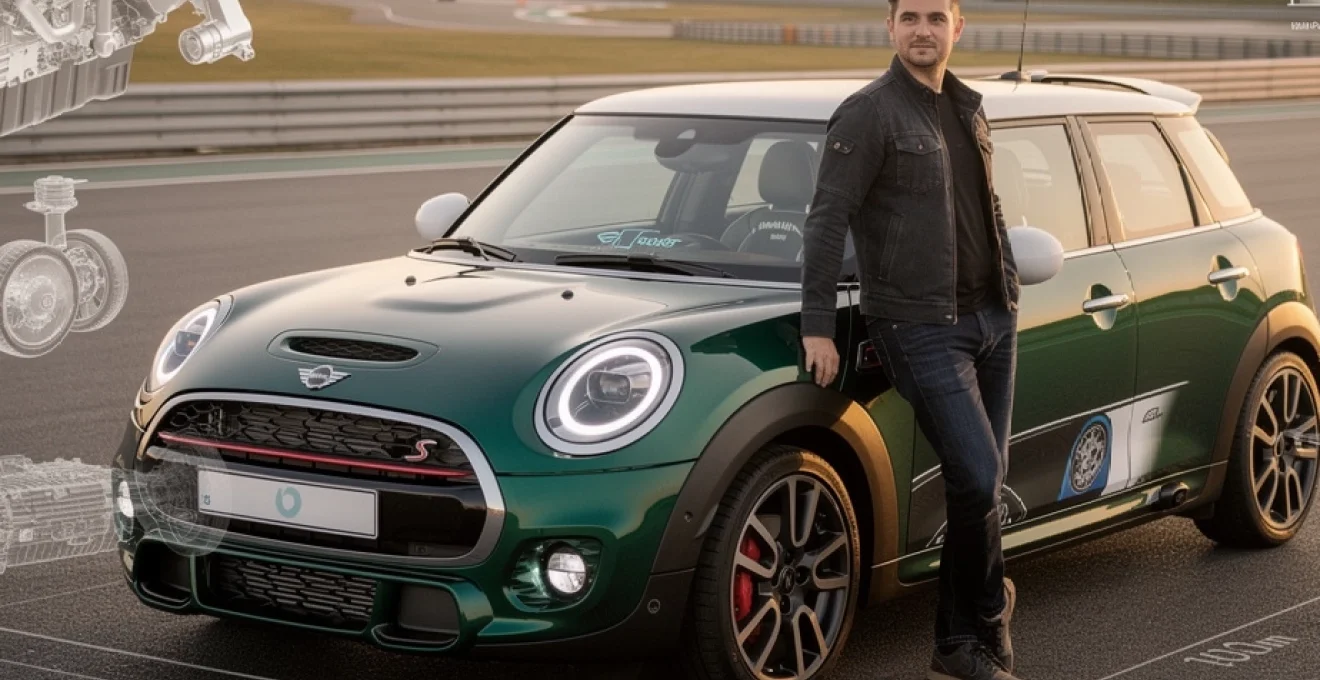
The F56 Mini Cooper S sits at a sweet spot in the hot hatch world: compact enough to feel playful, refined enough to tackle long journeys, and powered by a flexible 2.0‑litre turbo unit that rewards enthusiastic use. For enthusiasts, it has an added layer of significance, marking the final generation of petrol Minis to offer a manual gearbox and the last of the “classic-shaped” hatchbacks before the latest, more minimalist generation arrived. If you are trying to understand how the F56 Cooper S actually works underneath its retro bodywork – from the B48 powertrain to the chassis electronics and cockpit – a closer look at its architecture reveals why it still attracts drivers long after launch.
F56 mini cooper S powertrain architecture: 2.0-litre TwinPower turbo B48 engine and drivetrain layout
B48 engine technical specification: turbocharger type, compression ratio, and fuel injection system
At the heart of the F56 Mini Cooper S lies BMW’s modular B48 engine, a 2.0‑litre inline‑four that it shares with various BMW models. Displacement is 1998 cm³, achieved via an 82.0 mm bore and 94.6 mm stroke, with a relatively high compression ratio of 11.0:1 for a turbocharged petrol engine. This compression, paired with efficient mixture control, helps the Cooper S deliver strong low‑end torque and good real‑world fuel consumption. The engine uses direct fuel injection with high‑pressure injectors spraying directly into the combustion chamber, allowing precise control of fuel delivery under high boost.
The single, twin‑scroll turbocharger is integrated close to the cylinder head, minimising exhaust gas travel distance and reducing lag. A compact intercooler mounted in the front airflow path keeps charge temperatures down, supporting repeatable performance on spirited drives. BMW’s Valvetronic variable valve lift and Double-VANOS cam phasing contribute to a broad torque plateau and help the engine feel flexible rather than peaky. For you as a driver, this means less hunting through gears and more effortless overtaking, especially between 2000 and 4500 rpm.
Factory power and torque figures across pre-LCI and LCI F56 mini cooper S model years
Across its 2014–2024 production life, the F56 Cooper S retained broadly similar headline figures, but there are subtle differences between early and later models. Early pre‑LCI cars typically produced around 189 bhp (192 PS / 141 kW) at 4700–6000 rpm and 300 Nm of torque from as low as 1250 rpm up to around 4750 rpm. That generous torque band is one reason the car feels stronger than the raw power number suggests. Post‑2018 LCI cars maintained roughly the same peak outputs in European markets, though calibration changes for WLTP emissions meant slightly altered torque delivery and throttle feel.
From a user perspective, the real difference between model years is less about 5–10 hp either way and more about driveability and emissions strategy. Later cars adopt more aggressive particulate filtering and updated fuelling strategies, smoothing some of the slightly raw edge of early F56 models but preserving the characteristic “waspish” response. If you are considering tuning, pre‑WLTP cars can sometimes show marginally higher gains from a simple software remap, but the underlying B48 architecture is robust in both early and facelifted examples.
Gearbox options: getrag 6-speed manual vs aisin 6-speed and 7-speed dual-clutch automatic transmissions
The F56 Cooper S is best known among enthusiasts for its Getrag 6‑speed manual, effectively the last manual Mini gearbox. The shift action is short and precise, with a lighter, more positive feel than earlier R53 and R56 generations. Software‑assisted rev‑matching on downshifts in later cars gives that “heel‑and‑toe” effect without requiring advanced technique, which is particularly useful if you enjoy brisk B‑road driving. One recurring used‑market check is clutch condition: the 300 Nm torque output can stress the clutch if oil changes or driving style have been neglected.
Alongside the manual, early cars used a 6‑speed Aisin torque‑converter automatic, later replaced by a 7‑speed DCT dual‑clutch unit in many markets. The 6‑speed auto focuses on smoothness and urban usability, while the 7‑speed DCT brings snappier shifts in Sport mode and better fuel economy at a cruise. For performance driving, the dual‑clutch suits those who want consistent, rapid shifts on track or in fast road use, but the manual remains the more engaging option if you value direct mechanical connection and long‑term enthusiast appeal.
Front-wheel-drive configuration, electronic differential lock control (EDLC) and traction management
The Cooper S sends power exclusively to the front wheels via an open differential. Instead of a mechanical limited‑slip differential, the car relies on electronic traction aids. The key system is EDLC (Electronic Differential Lock Control), which uses the brakes to mimic the effect of a locking diff. When one front wheel starts to spin under power, EDLC lightly brakes that wheel, transferring effective torque to the wheel with more grip. In tight corners, especially in the wet, this translates into noticeably better traction out of hairpins than a simple open diff would provide.
On the road, you will feel EDLC intervening as a slight tug at the steering wheel and a reduction in free wheelspin. It works in tandem with the Dynamic Stability Control and traction systems, which alter their thresholds based on drive mode selection. For most fast road scenarios, EDLC is adequate, but if you plan dedicated track work or high‑power tuning, a mechanical Quaife ATB differential is a popular upgrade, providing more consistent torque distribution without the heat build‑up associated with frequent brake intervention.
WLTP and NEDC emissions data, euro 6 compliance, and official fuel consumption figures
From launch, the F56 Mini Cooper S complied with Euro 6 emissions standards, later updated to stricter Euro 6d‑Temp requirements. Under the older NEDC cycle, typical combined consumption figures are quoted at around 5.7 L/100 km (approximately 50 mpg UK / 41 mpg US), with 7.6 L/100 km (37 mpg UK) in city driving and 4.6 L/100 km (61 mpg UK) on the open road. Official CO₂ emissions for early manual cars sit around 133 g/km, rising slightly with larger wheels or automatic transmissions.
Under the more realistic WLTP test, these numbers increase, but in mixed real‑world use many owners see high‑30s mpg UK, even when enjoying the car’s performance. At a steady motorway cruise in top gear, 40+ mpg is achievable thanks to relatively long final gearing and efficient turbocharging. The 44‑litre fuel tank yields a theoretical range of around 770 km (close to 480 miles), though spirited driving will reduce that significantly. For you as a potential owner, the takeaway is simple: the F56 Cooper S is not a “big drinker” by hot hatch standards, especially considering its performance potential.
Chassis dynamics and handling characteristics of the F56 mini cooper S
UKL front-wheel-drive platform, wheelbase, track width and weight distribution analysis
The F56 Cooper S uses BMW’s UKL front‑wheel‑drive platform, shared with various 1‑ and 2‑Series models and the Mini 5‑door. Compared with the previous R56, the F56 grows substantially: overall length is approximately 3850 mm, width 1727 mm and height 1414 mm, with a wheelbase of 2495 mm. Front and rear tracks are both around 1485 mm. Kerb weight for a manual Cooper S is about 1235 kg, giving a weight‑to‑power ratio of roughly 6.4 kg per horsepower, competitive for a modern hot supermini.
Weight distribution is front‑biased, as expected for a transverse FWD layout, but the relatively short overhangs and low centre of gravity help maintain agility. Compared with the smaller Fiesta ST and lighter Hyundai i20 N, the Cooper S is more mature in its responses but still feels eager to change direction. The “go‑kart” marketing line is not entirely hyperbole, though in pure chassis sharpness the very best rivals sometimes edge it. For day‑to‑day driving, however, the blend of stability and quick reactions suits fast A‑ and B‑road use extremely well.
Sport suspension tuning, optional variable damper control (VDC) and anti-roll bar calibration
Standard Cooper S suspension uses stiffened springs and dampers compared with the regular Cooper, with firmer anti‑roll bars to keep body roll in check. The goal is a planted, responsive feel rather than ultimate ride comfort. On 16‑inch wheels, compliance is acceptable, but moving to 18‑inch rims with low‑profile tyres can make the ride noticeably firmer over poor surfaces. If you live in an area with broken tarmac, wheel choice will shape your daily experience as much as damper tuning.
Optional Variable Damper Control (VDC) adds electronically adjustable dampers tied into the MINI Driving Modes. In Green and Mid modes, the dampers adopt a softer baseline, offering more compliance over expansion joints and potholes. Switch to Sport, and they firm up significantly, sharpening turn‑in and body control. Think of it like swapping from comfortable trainers to track shoes at the flick of a switch. For mixed use, VDC is one of the most effective options, particularly if you plan occasional spirited drives or track days but still use the car for commuting.
Steering system: electric power-assisted steering (EPAS) mapping, rack ratio and feedback
The F56 Mini Cooper S uses an electric power‑assisted steering system with a fast rack ratio of around 14.2:1. This quick gearing results in small steering inputs translating into meaningful direction changes, which contributes to that eagerly “darty” sensation on twisty roads. While older hydraulic setups had more natural feel, the F56’s EPAS is among the better tuned electric systems in this segment, especially in Sport mode where assistance is reduced and weight increases.
Feedback through the rim is filtered compared with the R53 era, but information about grip levels and front‑end load is still present. On rough surfaces, you will occasionally feel some kickback as the wide tyres follow cambers, but the system largely tames torque steer even under hard acceleration. Importantly, steering assistance and mapping change with drive modes, so if you prefer lighter steering for urban manoeuvres, Mid and Green deliver that without sacrificing accuracy.
Braking package: disc dimensions, calliper configuration and performance brake upgrades (JCW kit)
The standard Cooper S braking package uses ventilated front discs with solid rear discs (exact diameters vary slightly by wheel size and market). The callipers are single‑piston sliding units designed to balance cost, performance and simplicity. For fast road use, the factory brakes are powerful enough, with good pedal modulation and resistance to fade during occasional hard stops. Test data from independent magazines often records 60–0 mph stopping distances comfortably under 35 metres, placing the Cooper S among the better stoppers in its class.
For more intensive track use or repeated mountain descents, heat build‑up can be an issue, which is why many owners move to the John Cooper Works brake kit or equivalent uprated discs, pads and fluid. The JCW kit usually includes larger front discs and multi‑piston callipers, vastly improving resistance to fade and pedal consistency. Upgrading pads and high‑temperature brake fluid alone can make a noticeable difference if you push the car hard, and these are relatively cost‑effective improvements for any performance‑oriented F56 owner.
Performance metrics: acceleration, top speed and real-world drivability
0–62 mph, 0–100 km/h and in-gear acceleration benchmarks for manual vs automatic F56 cooper S
On paper, the F56 Mini Cooper S delivers a 0–62 mph (0–100 km/h) time of around 6.8 seconds for the manual version, with automatic and dual‑clutch variants recording similar or marginally quicker times depending on launch calibration. That places the Cooper S neatly in the same bracket as the Ford Fiesta ST, Peugeot 208 GTi and Renaultsport Clio 200 of its era. What makes it interesting is not the headline sprint but the way it delivers mid‑range punch for overtakes.
In‑gear acceleration (for example, 30–70 mph in fourth) feels particularly strong thanks to the 300 Nm torque plateau and the responsive twin‑scroll turbo. Many drivers find that a gentle squeeze of the throttle in third or fourth is enough to dispatch slower traffic without dropping several gears, which is one reason the F56 makes such a strong everyday performance car. Automatic and DCT models exploit this torque well, kicking down decisively in Sport mode and holding gears longer for brisk driving.
Top speed, gearing, and engine rpm at motorway cruising speeds
The official top speed for the F56 Cooper S is approximately 235 km/h (146 mph) in manual guise, slightly dependent on wheel and tyre specification. Gearing is relatively tall in sixth gear, primarily for economy and refinement. At 70 mph (113 km/h), the engine typically turns at a relaxed 2200–2400 rpm in top, which helps keep noise and fuel consumption in check on long motorway journeys.
This balance between punchy lower gears and long‑legged cruising is one of the more underrated aspects of the B48 powertrain. You can enjoy energetic acceleration by working the lower ratios, yet settle into low‑rpm efficiency on the motorway. For you as an owner, this dual nature means a single F56 Cooper S can serve daily commuting, cross‑country trips and weekend blasts without feeling compromised in any one role.
Launch characteristics, traction limitations and performance on wet vs dry surfaces
Launching a front‑wheel‑drive car with 300 Nm of torque is always a balancing act. On dry tarmac, the Cooper S will hook up reasonably well if you modulate the throttle rather than simply side‑stepping the clutch. A small amount of wheelspin is normal, but EDLC and traction control quickly rein it in. On damp or wet roads, initial traction is more limited: you may feel the electronics aggressively trimming power to maintain stability, especially on worn or cold tyres.
From a driver’s perspective, the fastest way off the line or out of tight junctions is usually with a progressive throttle application, allowing the tyres to grip before leaning on full boost. On the move, the chassis feels sure‑footed even in poor weather, and modern ESC calibration is far less intrusive than early 2000s systems. If you plan regular performance driving in the wet, high‑quality tyres and regular alignment checks are some of the most valuable upgrades you can make.
Driving modes, DSC and performance electronics in the F56 mini cooper S
MINI driving modes: green, mid and sport throttle, steering and shift logic mapping
The optional MINI Driving Modes package transforms the Cooper S’s character via three primary settings: Green, Mid and Sport. In Green, throttle response softens, gearshift points in automatic models bias higher gears, and auxiliary systems like climate control may reduce load to save fuel. This is the mode you might use in heavy traffic or long motorway stretches when efficiency matters more than urgency.
Mid is the default calibration, offering a balanced throttle map and steering weight that suits everyday mixed driving. Switch to Sport, and you will immediately notice sharper throttle response, heavier steering and more aggressive transmission behaviour in autos or DCTs. Some models also open exhaust valves slightly more in Sport, enriching the soundscape. The modes effectively give you three personalities in one car, allowing you to adapt the F56 to your mood and the road ahead without any mechanical changes.
Used effectively, driving modes allow the F56 Mini Cooper S to feel like both an efficient commuter and a lively hot hatch, depending entirely on how you choose to set it up.
Dynamic stability control (DSC), dynamic traction control (DTC) and electronic brakeforce distribution
Dynamic Stability Control (DSC) forms the safety net around the Cooper S’s chassis. In normal operation, DSC monitors wheel speeds, steering angle, yaw and lateral acceleration, subtly trimming power or braking individual wheels to keep the car on the intended path. During everyday driving, interventions are usually invisible, but in emergency avoidance manoeuvres or on slippery surfaces DSC can make the difference between a minor scare and a serious incident.
Dynamic Traction Control (DTC) is essentially a looser setting of the same system, often engaged via a brief press of the DSC button. In this mode, the car allows more wheelspin and slip angle before stepping in, which can be handy in snow, deep water or when you want a more playful feel on track. Electronic Brakeforce Distribution (EBD) continuously balances braking between front and rear axles based on load, grip and deceleration, maximising stopping power without premature ABS activation. For fast road use, this suite of electronics creates a secure, predictable platform while still allowing a degree of driver involvement.
Electronic differential lock control (EDLC) behaviour in tight corners and high-load situations
As mentioned earlier, EDLC is the F56 Cooper S’s electronic answer to a limited‑slip differential. Under power, especially in second and third gear bends, you will feel the system clamp down on an inside wheel that starts to spin, effectively sending more drive to the outside wheel. This improves traction and reduces understeer, allowing you to get on the throttle earlier in corner exits. In tight hairpins or on uphill junctions, the benefit is particularly noticeable.
Under sustained high‑load track driving, EDLC’s reliance on the brakes can generate extra heat, which is one reason track‑focused owners often add cooling or upgrade friction materials. For fast road work, however, EDLC provides most of the traction benefit of a mild mechanical diff without adding complexity or maintenance. Think of it as a smart, invisible aide that quietly helps the front axle dig in when you lean on the power mid‑corner.
EDLC is not a replacement for a full mechanical limited‑slip differential, but for the majority of drivers it offers an ideal compromise between cost, effectiveness and everyday refinement.
Exterior design and aerodynamic details specific to the F56 mini cooper S
Functional bonnet scoop, front bumper intake design and intercooler airflow management
Visually, the F56 Cooper S differentiates itself with a more aggressive front end than standard Minis. The most obvious identifier is the bonnet scoop, which on older supercharged models directly fed the intercooler. On the F56, the scoop is largely a styling cue rather than a functional duct, but it still helps visually signal the car’s performance intent. The real airflow work is done lower down, where the front bumper incorporates larger openings to feed the radiator, intercooler and brake cooling channels.
Air is directed through the central grille to the intercooler and radiator pack, with carefully shaped guides ensuring adequate cooling at speed. On sustained fast driving, particularly on hot days, this airflow management helps stabilise intake temperatures and coolant levels, protecting engine performance and longevity. Some aftermarket tuners take advantage of this generous frontal area to fit larger intercoolers without drastically altering the bumper structure, which hints at how over‑engineered the stock cooling path is for the factory 192 PS output.
Rear diffuser, roof spoiler and underbody airflow on high-speed stability
At the rear, the Cooper S features a subtle diffuser‑style bumper design and a more pronounced roof spoiler than lower‑powered models. While these elements are not full motorsport‑grade aerodynamic devices, they do contribute to improved stability at motorway and autobahn speeds. The roof spoiler manages airflow separation off the trailing edge of the roof, helping reduce lift and turbulence over the rear window, while the bumper design tidies the exit of underbody air.
Underneath, the car uses partial undertrays and smoothing panels to reduce drag and protect key components. The claimed drag coefficient of around Cx 0.31 is respectable for a relatively upright hatchback shape. On the move, you will notice that the F56 feels stable and predictable even at speeds approaching its 146 mph top end, with minimal wandering or nervousness in crosswinds. For long‑distance driving, that calm, planted high‑speed behaviour adds to the sense of refinement that earlier Minis sometimes lacked.
Wheel and tyre packages: 16-, 17- and 18-inch alloys, tyre profiles and grip characteristics
Factory wheels for the F56 Cooper S start at 16‑inch alloys with 195/55 R16 tyres and extend through various 17‑ and 18‑inch options. The base 16‑inch package offers the best ride comfort and all‑weather versatility, with a slightly softer sidewall that helps absorb poor surfaces. Moving to 17‑inch wheels introduces wider tyres and a lower profile, improving turn‑in response and ultimate grip while only modestly reducing comfort on most roads.
Full‑fat 18‑inch wheels maximise visual impact and lateral grip but can make the ride noticeably firmer, particularly over broken city streets and sharp ridges. If you regularly drive on twisty, well‑surfaced roads, the extra precision may be worth the compromise. For many drivers, 17‑inch wheels strike the ideal balance between dynamic sharpness and day‑to‑day comfort. Whichever size you choose, high‑quality performance tyres transform the car’s behaviour more than any cosmetic change, so prioritising good rubber is a key practical tip for any F56 owner.
Interior ergonomics, infotainment and driver-focused cockpit of the F56 cooper S
John cooper works steering wheel, sports seats and driving position analysis
Inside, the F56 Cooper S delivers a more mature cabin than previous generations while retaining the playful Mini design language. The driving position is notably improved, with a wider range of adjustment for seat height and steering reach. Compared with older R53 and R56 cars, the seat bases are longer by around 23 mm, offering better thigh support on long journeys. You sit low enough to feel connected to the car, yet with good forward visibility thanks to the upright windscreen and slim pillars.
The optional John Cooper Works steering wheel adds a thicker rim and tactile perforated leather, enhancing grip and comfort during spirited driving. Sports seats with deeper bolsters are standard on many Cooper S trims, providing the lateral support you need when exploiting the chassis. For you as a driver, the overall impression is of a cockpit designed to support enthusiastic use without sacrificing daily comfort – a balance that rivals sometimes miss by going either too soft or too aggressively focused.
MINI connected, 8.8-inch central display, idrive-style controller and navigation options
The large central display – a hallmark of modern Minis – evolved in the F56 from a simple speedometer to a full infotainment interface. Higher‑spec models feature an 8.8‑inch colour screen framed by LED perimeter lighting that responds to driving modes, volume changes and navigation prompts. The system borrows heavily from BMW’s iDrive philosophy, controlled via a rotary controller and shortcut buttons on the centre console rather than touch input in earlier years. This layout allows you to operate navigation, media and vehicle settings without reaching forward or taking eyes off the road for long.
MINI Connected services add smartphone integration, online traffic data and app connectivity, enhancing the daily usability of the car. Navigation options range from basic route guidance to full 3D mapping with real‑time information, depending on trim and model year. While the interface is not the very latest generation BMW system, it remains intuitive and quick enough for everyday use, and the visual theatre of the animated central ring reinforces that sense of character unique to the Mini brand.
The F56’s infotainment system manages to feel both familiar to BMW users and distinctively “Mini”, blending solid ergonomics with playful visual touches.
Head-up display (HUD), digital instrument cluster and performance-related readouts
Certain F56 Cooper S models feature an optional flip‑up Head‑Up Display (HUD), projecting speed, navigation arrows and key alerts onto a transparent panel ahead of the driver. This arrangement allows you to monitor speed and directions without glancing down, which is especially helpful on unfamiliar roads or during enthusiastic driving. Later LCI cars also introduce a more digital‑leaning instrument cluster, combining an analogue‑style layout with crisp screens for trip data, driving mode information and audio status.
Performance‑related readouts such as fuel consumption, range, outside temperature and in some cases sport displays add extra layers of information if you enjoy monitoring the car’s behaviour. While not as intensely track‑focused as some rivals that offer built‑in lap timers and G‑meters, the F56 still provides enough data to help you drive smoothly and efficiently. For a compact hot hatch, the blend of analogue character and digital clarity gives the cockpit a timeless quality that continues to appeal to enthusiasts and everyday drivers alike.