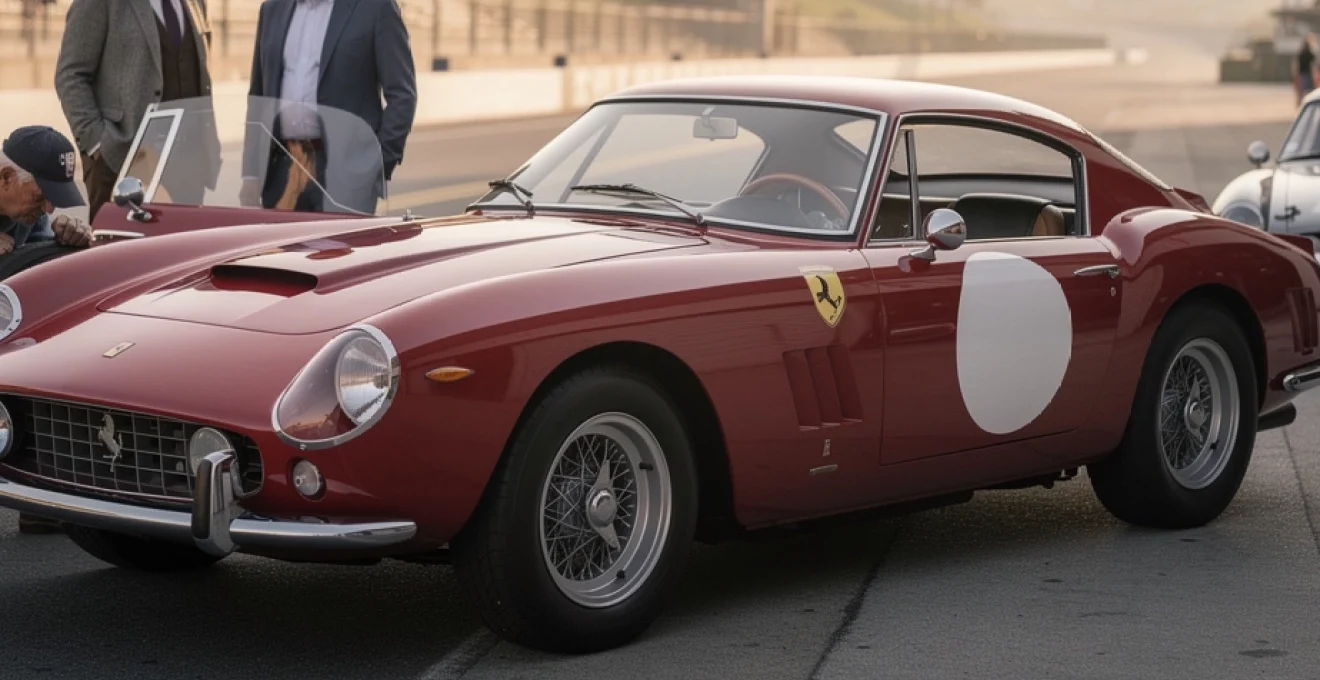
The Ferrari 250 GT SWB Berlinetta occupies a rare place in automotive history: a grand tourer that could be driven to a circuit, raced for hours at the limit, and then driven home. For many enthusiasts and historians, it represents the point where road car usability and pure competition ability were in near-perfect balance. With its Colombo V12, compact wheelbase and Pininfarina lines built by Scaglietti, the 250 GT SWB became both a design icon and a serial race winner. If you are trying to understand what defines the archetypal classic Ferrari GT, studying the short‑wheelbase Berlinetta is one of the most rewarding places to start.
Design evolution of the ferrari 250 GT SWB: from pininfarina berlinetta to scaglietti coachwork
When the 250 GT SWB appeared at the 1959 Paris Salon, it was immediately clear that Ferrari had refined the earlier 250 GT “Tour de France” into something tighter, cleaner and more modern. Pininfarina oversaw the design, but the bodies were hand‑formed by Scaglietti in Modena, blending elegant gran turismo proportions with practical race-focused detailing. If you look closely at period photographs from the Paris Motor Show and subsequent European salons, subtle year‑to‑year changes reveal how Ferrari iterated the design to sharpen aerodynamics, cooling and driver comfort without losing the essential berlinetta silhouette. For anyone researching classic Ferrari body evolution, the 250 GT SWB provides a textbook case of iterative, data‑driven improvement based on competition feedback.
Short wheelbase architecture: 2,400 mm chassis geometry and handling implications
The “SWB” in 250 GT SWB stands for passo corto, or short wheelbase. Ferrari shortened the existing 250 GT chassis from 2,600 mm to 2,400 mm (around 20 cm, or eight inches), creating the type 539 and later 539/61 frames. This change dramatically altered the car’s balance and agility. With less distance between the axles, the car rotated more willingly into tight bends, a crucial advantage on twisty circuits such as Goodwood, Brands Hatch or the Tour de France’s mountain stages. You notice this on contemporary historic race footage: the SWB changes direction like a well‑set‑up kart compared with longer, heavier GT rivals.
From an engineering point of view, the chassis retained Ferrari’s familiar twin large oval main tubes with substantial cross‑bracing to maintain torsional rigidity. Competition variants featured smaller, thinner‑gauge tubing to trim mass. For you as a driver, this translates into a car that feels alive at turn‑in, yet remains predictable over long stints. The short wheelbase raises the theoretical risk of nervousness at high speed, but careful suspension geometry and a low centre of gravity largely countered this, allowing SWBs to top 160 mph on the Mulsanne without drama.
Berlinetta vs competizione bodywork: steel, aluminium and “alloy” construction variants
One of the most important distinctions you encounter when researching or buying a 250 GT SWB is the difference between Berlinetta (often called Lusso) and Competizione specification. Standard road‑biased Berlinettas typically used a steel body with aluminium opening panels such as the bonnet, boot lid and doors. These cars were trimmed more luxuriously inside and suited to grand touring. By contrast, Competizione models wore full aluminium (“alloy”) coachwork from Scaglietti, often with thinner gauge panels and simplified interiors. Period sources indicate that around 45% of the 167 SWBs built were aluminium‑bodied, but only about 75 were true factory Competizione cars.
The practical implications of aluminium versus steel are significant. An alloy car can weigh as little as 960 kg dry in 1961 spec, roughly 200–300 lb lighter than a steel‑bodied Lusso. That difference is equivalent to taking two adults plus luggage out of the car. On a circuit, less mass improves acceleration, braking and tyre life. However, if you are focused on road use and long‑distance touring, the extra refinement and solidity of a steel Berlinetta can actually make the driving experience more relaxing, especially on poor surfaces.
Pininfarina exterior styling cues: kamm tail, egg‑crate grille and faired‑in headlamps
While the 250 GT SWB is rightly praised for lap times and results sheets, its design language is equally important. Pininfarina and Scaglietti created a body that looks deceptively simple but is full of carefully judged details. The front is dominated by an oval, almost “egg‑crate” grille, flanked by faired‑in headlamps that sit neatly under clear covers on many Competizione cars. Early examples featured plain flanks and simple rectangular brake‑cooling ducts; by mid‑1960 vertical vent slots appeared ahead of the rear wheels and on the front wings, framed by delicate bright trim.
At the rear, the subtle Kamm‑influenced tail helps reduce turbulence and lift at high speed. It is not a severe cut‑off like later racing prototypes, but the gently clipped tail, small lip and carefully shaped rear wings all contribute to high‑speed stability. Fuel filler locations are another visual cue: early cars carried an external cap in the top‑left corner of the boot lid, later moving to the left rear wing or inside the boot. If you are studying or inspecting an SWB, these small features help date the car and confirm whether bodywork matches its claimed production period.
Interior ergonomics and instrumentation: veglia gauges, nardi wheel and period bucket seats
Open the lightweight door of a 250 GT SWB and the environment is remarkably purposeful for a road‑registered car. The driving position places you low, close to the scuttle, with the slim pillars and generous glass area giving excellent visibility for both road and track. A classic wood‑rimmed Nardi wheel sits ahead of a clear cluster of Veglia instruments: tachometer front‑and‑centre, flanked by speedometer and auxiliary gauges for oil pressure, water temperature and fuel level. Controls are largely metal and feel mechanical, reinforcing the connection between car and driver.
Competizione interiors tend to be Spartan, with lightweight bucket seats, minimal trim and exposed metalwork. Lusso Berlinettas add thicker leather, carpets and more extensive sound deadening. Yet even the more luxurious cars retain a direct, analogue character that modern GTs often struggle to match. If you value tactile feedback and a cockpit that encourages you to focus on driving, an SWB offers exactly that combination. The cabin may not be “ergonomic” in modern marketing language, but for a skilled driver it works beautifully.
Engineering and performance: colombo V12, chassis specification and on‑track dynamics
Beneath the sculpted bonnet of the Ferrari 250 GT SWB lies the heart of the car’s character: the Colombo‑designed 60‑degree V12. Coupled with a stiff tubular chassis, race‑tuned suspension and disc brakes on all four corners, the powertrain created a package that dominated GT racing in the early 1960s. Period road tests and later historic racing results consistently show the SWB as one of the most complete performance cars of its era, with performance that still feels vivid on modern roads.
Tipo 168B colombo V12: displacement, carburetion (weber 36 DCS/40 DCL6) and compression ratios
The 250 GT SWB used developments of the Colombo V12 with the factory type references 168B, 168 and 168 Comp/61. All shared the same basic architecture: 2,953 cc capacity from a 73 mm bore and 58.8 mm stroke, single overhead cam per bank and two valves per cylinder. On road‑oriented cars, triple twin‑choke Weber 36 DCS or 40 DCL6 carburettors were typical, with compression ratios around 9.2:1 and quoted outputs of 220–240 bhp. Competition engines raised the stakes with Weber 46 DCF/3 carburettors, larger valves, hotter cams and carefully tuned exhaust manifolds, pushing claimed power towards 280 bhp.
On track, that difference in tune mattered. At circuits such as Spa or Le Mans, an extra 30–40 bhp gave higher top speed on the straights and stronger acceleration out of slow corners. Yet what impresses most if you drive or watch these engines today is their flexibility: even in full Competizione trim, the V12 will pull smoothly from low revs, then harden in tone as it reaches for 7,000 rpm. For historic events and road rallies, this broad powerband makes the SWB far easier to enjoy than some later, peakier racing engines.
Transmission and final drive: four‑speed gearbox, limited‑slip differential and rear axle ratios
All 250 GT SWBs used a four‑speed all‑synchromesh gearbox with reverse, bolted directly to the engine and driving a live rear axle via an open or limited‑slip differential. Road cars generally utilised cast‑iron gearbox cases, while competition cars gained ribbed aluminium housings to shed weight and heat. Multiple final‑drive ratios were available to tailor performance: shorter gears for tight circuits or hillclimbs, taller gears for high‑speed events such as the Tour de France or 24 Hours of Le Mans.
If you are setting up an SWB today for historic racing or fast road use, choosing the right rear axle ratio is one of the most effective ways to transform the car’s character. A shorter ratio will make the V12 feel explosive out of slower bends but raise revs at cruising speeds, while a longer ratio exploits the engine’s torque and makes 150 mph-plus cruising more relaxed. Period race records show teams like Rob Walker Racing and Ecurie Francorchamps regularly adjusting gearing between events for precisely this reason.
Suspension layout: double wishbones, rear live axle, leaf springs and anti‑roll bar tuning
Underneath, the 250 GT SWB used a relatively conventional layout by modern standards, but meticulous tuning unlocked outstanding results. At the front, independent suspension comprised unequal‑length double wishbones with coil springs and telescopic dampers, a proven Ferrari layout. At the rear, a rigid live axle was located by semi‑elliptic leaf springs and twin radius arms, again with telescopic dampers. Anti‑roll bars front and rear helped control body roll and fine‑tune balance between understeer and oversteer.
On paper, a live rear axle might suggest crude behaviour, yet contemporary test reports and modern historic racers emphasise how composed the SWB feels when set up correctly. The chassis communicates grip levels transparently, and the car can be steered on the throttle with progressive, controllable oversteer. For you as a driver, this means confidence: the car talks through the seat and steering wheel long before reaching the limit. In an era full of heavy, softly sprung GTs, the SWB felt almost like a giant racing kart, especially in Competizione trim.
Brake system evolution: dunlop disc brakes, calliper design and fade resistance at le mans
The 250 GT SWB was Ferrari’s first GT road car to feature four‑wheel disc brakes as standard, a major advance over the drum systems used on earlier 250 variants. Dunlop discs and callipers, similar in concept to those on contemporary Jaguars and Aston Martins, dramatically improved stopping power and fade resistance. On long, fast circuits like Le Mans, where a car might brake from 160 mph hundreds of times in 24 hours, this technology was crucial.
Race reports from 1960 and 1961 highlight how SWBs maintained consistent braking performance late into endurance events, whereas some rivals suffered from boiling fluid or drum fade. If you drive an SWB today on track days, good modern pads and correct cooling allow you to enjoy strong, repeatable braking without heroics. It is a reminder that genuine innovation in one component – in this case, discs replacing drums – can transform the performance envelope of an entire car.
Measured performance data: period road tests by autocar and road & track
Contemporary road tests underline the performance credentials of the 250 GT SWB. Period figures vary slightly by specification, but typical data from European and American magazines show 0–60 mph in around 6.5–7.0 seconds for Lusso‑tuned cars, with top speeds of 150–155 mph. More aggressively tuned Competizione cars, especially the 1961 “SEFAC hot‑rod” variants with 46 mm Webers, could approach 5.5 seconds to 60 mph and around 165–167 mph flat out, remarkable numbers for the early 1960s.
What impresses in these tests is not just outright speed but the ability to sustain high averages. In period, cross‑country runs at 90–100 mph cruise speeds were feasible wherever legal and safe, thanks to the V12’s smoothness and the car’s solidity at speed. For you, reading these numbers today, it is helpful to compare them with modern benchmarks: many current hot hatchbacks match the 0–60 mph times, but few combine that capability with the SWB’s tactile feel, manual gearbox and naturally aspirated soundtrack.
Competition pedigree: ferrari 250 GT SWB in GT racing, le mans and the tour de france
The Ferrari 250 GT SWB earned its reputation as one of the greatest GT cars of all time on the world’s most demanding circuits and road races. Between 1960 and 1962, SWBs dominated the GT category, securing outright and class wins at events that still define endurance racing today. For anyone analysing motorsport history or considering a car for serious historic competition, the SWB’s pedigree is a major part of its enduring appeal.
Key race victories: 1960–1961 24 hours of le mans GT class and RAC tourist trophy at goodwood
The results sheet reads like a greatest‑hits compilation. At the 24 Hours of Le Mans, 250 GT SWBs captured GT class wins in both 1960 and 1961, combining speed with the reliability needed to survive repeated high‑rpm blasts down the Mulsanne Straight. The cars were equally devastating in the Tour de France Automobile, taking overall victory three times in succession from 1960 to 1962, including 1‑2‑3 finishes in 1960 and 1961. The RAC Tourist Trophy at Goodwood in 1960 and 1961 also fell to the SWB, underlining its ability on tighter, more technical circuits.
Behind each of these results lies a story of strategy, preparation and driver skill. For example, at Goodwood the SWB’s short wheelbase, disc brakes and strong traction provided a decisive edge against newly launched Jaguar E‑Types and Aston Martin DB4 GT Zagatos. On the long, mixed‑surface stages of the Tour de France, the car’s robustness and benign handling let drivers push hard on poor roads without fear of mechanical failure.
Scuderia ferrari and privateer teams: rob walker racing, ecurie francorchamps and NART entries
One of the fascinating aspects of the 250 GT SWB’s competition life is how effectively privateer teams exploited the car. Alongside Scuderia Ferrari’s factory entries, squads such as Rob Walker Racing, Ecurie Francorchamps and Luigi Chinetti’s NART fielded SWBs in deep‑field international events. Chassis 2735GT, for example, was delivered in Rob Walker’s famous dark blue with a white stripe yet entered at Le Mans 1961 under the NART banner, illustrating the close relationships within the Ferrari ecosystem.
Private teams often tailored cars to specific series, fine‑tuning suspension, gearing and minor body details. This culture of semi‑factory support, combined with the SWB’s inherent competitiveness, meant that well‑run privateer cars could – and did – beat full works entries. If you are considering an SWB for historic racing today, that legacy of adaptability remains important: the platform is proven, and there is extensive knowledge on optimal setups for events like the Goodwood Revival, Le Mans Classic or Tour Auto.
Legendary drivers: stirling moss, graham hill, willy mairesse and their SWB race cars
Another reason the 250 GT SWB looms so large in enthusiast imagination is the calibre of drivers who raced it. Stirling Moss drove more races in Ferraris with chassis 2735GT than in any other Maranello machine, taking victories at Silverstone, Brands Hatch, Goodwood and Nassau. Graham Hill, Willy Mairesse, Jo Schlesser, Pierre Dumay and many others also competed in SWBs, adding further lustre to already desirable cars.
“Without a doubt it is the greatest Ferrari road car – perhaps the greatest road car of any make. You really could drive it to a race, compete – and win – then drive it home.”
That oft‑quoted verdict from a leading driver of the period captures the essence of the SWB. When someone of that calibre calls a car the best road Ferrari of all, it shapes both historical evaluation and modern market values. If you are trying to understand why collectors prioritise certain chassis numbers, the connection to famous drivers and specific wins is a major factor.
Corsa versus lusso specifications: weight reduction, engine output and roll‑cage integration
Period documentation and modern scholarship often refer to SWBs in Corsa (competition) or Lusso (luxury) form. In practice, the distinction is more of a spectrum than a binary divide. Corsa cars usually feature full aluminium bodies, lightweight interior trim, higher‑output engines, larger fuel tanks, sliding side windows and roll‑over protection integrated into the structure. Lusso cars favour steel bodies, softer engine tune, full leather and carpets, and more comfort‑orientated suspension rates.
However, Ferrari’s customer‑driven approach meant extensive overlap. It is not unusual to find a Lusso‑trimmed car with an aluminium body or, conversely, a competition car delivered with surprisingly plush interior appointments by request of a wealthy client. For you as a buyer or historian, careful scrutiny of build sheets and Ferrari Classiche certification is essential to understand how an individual car left the factory – and how closely it still matches that configuration.
Production history and variants: chassis numbers, series changes and notable examples
Although the Ferrari 250 GT SWB has an outsized reputation, total production remained modest. Built between 1960 and 1962, the run encompassed roughly 167 cars, including both Competizione and Lusso variants, left‑ and right‑hand drive, and a small number of special coachbuilt derivatives. For collectors and historians, the nuances of chassis numbering, year‑to‑year body changes and notable individual histories form a rich field of study and have a substantial impact on value and desirability.
Short‑run production volumes: 1960–1962 build numbers and market allocation (europe, UK, USA)
Exact production figures vary slightly between sources, but a widely accepted number for 250 GT SWB Berlinettas is 167 examples across all configurations. Of these, around 75 were Competizione‑specification cars, and some 46 of those were 1960 alloy‑bodied variants. Production was concentrated in 1960 and 1961, with a smaller number of late cars in 1962 as Ferrari transitioned focus towards the 250 GTO and 250 Lusso.
Market allocation reflected Ferrari’s growing global ambitions. A substantial proportion of cars remained in continental Europe, particularly Italy and France, where events like the Tour de France and local hillclimbs showcased their capabilities. A meaningful number went to the UK via Maranello Concessionaires, including rare right‑hand drive Competizione cars such as chassis 2735GT and 3067GT. Others crossed the Atlantic to the USA, where SCCA racing and affluent private collectors provided a receptive audience. If you are tracing a specific chassis, period registration documents can reveal these early market patterns.
Early “SEFAC hot‑rod” cars: high‑output engines and lightweight alloy bodies
Among SWB aficionados, early 1960–1961 Competizione cars often attract the most attention, particularly the so‑called “SEFAC hot‑rods”. These were lightweight, high‑output cars with the full 280 bhp 168 Comp/61 engines, ultra‑thin aluminium bodies and minimal trim. Many were built explicitly for front‑line international competition. Weight savings of 100–150 kg over a typical Lusso made them ferociously quick, especially on circuits where power‑to‑weight ratio trumped outright top speed.
In the context of period GT racing, these ultra‑light SWBs represented the sharpest edge of Ferrari’s customer competition programme, offering near‑works performance to well‑funded privateers.
If you are evaluating an SWB as a potential blue‑chip investment, genuine SEFAC‑spec cars with strong period race history sit near the top of the hierarchy. Confirming originality, however, requires meticulous checking of engine numbers, body construction, and that all major components match factory records.
Iconic chassis: 2119GT, 2689GT, 2735GT and provenance‑defining histories
Certain chassis numbers have become shorthand for the 250 GT SWB story. Chassis 2119GT, run by Rob Walker Racing, delivered major victories at Goodwood, Nassau, Brands Hatch and Silverstone in the hands of top drivers. Chassis 2735GT, another Rob Walker car, was famously described by one of its lead drivers as “the best GT car in the world” and remains one of the most recognisable SWBs thanks to its dark blue paint, white stripe and race number 7.
Other examples, such as 2127GT or 1953GT, built reputations through strong performances in the Tour de France, African endurance events, or long‑term preservation in prominent collections. These cars often have fully traceable histories, documented in detail by marque historians, with Ferrari Classiche certification confirming matching‑numbers status. For you as a prospective owner, such provenance not only adds value but also opens doors to the most prestigious historic events and concours fields.
Special coachbuilt derivatives: 250 GT SWB “sperimentale” and 250 GT SWB california spider
Alongside the main Berlinetta line, Ferrari and its coachbuilding partners created several fascinating one‑off or low‑volume derivatives. The 250 GT SWB “Sperimentale” served as a bridge between the SWB and the later 250 GTO, combining experimental aerodynamics with proven mechanicals. Pininfarina also produced a handful of special coupés in the style of the 400 Superamerica, while Zagato and Bertone built unique bodies on SWB chassis, including the distinctive “shark‑nose” design on chassis 3269GT.
The 250 GT SWB California Spider, although mechanically related, followed a different philosophy: open‑top glamour rather than closed‑roof GT racer. Yet the shared short‑wheelbase chassis and Colombo V12 mean that you still sense the same underlying DNA. For collectors focused on pure driving, the Berlinetta remains the reference; for those drawn to rarities and design variety, the special coachbuilt cars provide an irresistible alternative lens on the same mechanical platform.
Market value, collectability and restoration of ferrari 250 GT SWB examples
Over the past two decades, the Ferrari 250 GT SWB has moved firmly into the upper tier of the classic car market. Competition‑specification cars with major race history routinely command eight‑figure sums in US dollars or euros, while even well‑documented Lusso cars now sit in the multi‑million bracket. For you as a current or aspiring owner, understanding how originality, provenance and restoration quality influence value is critical, as is knowing how to maintain such a complex machine to the standard expected at leading events.
Concours and auction records: pebble beach, villa d’este and RM sotheby’s headline sales
Major concours events and headline auctions have played a key role in cementing the SWB’s blue‑chip status. Class wins and special awards at Pebble Beach, the Concorso d’Eleganza Villa d’Este and similar gatherings signal both historical significance and outstanding restoration quality. Auction houses regularly feature SWBs as star lots; while specific sale prices fluctuate with economic cycles, top cars have set records for steel‑bodied GT Ferraris more than once in the last fifteen years.
Sales of competition‑history cars at RM Sotheby’s, Gooding & Co. and other leading houses demonstrate a clear hierarchy. At the apex sit alloy‑bodied 1960–1961 Competizione cars with big‑event results and famous drivers. Below them in value, but still extremely sought‑after, are road‑specification Berlinettas with low ownership counts and original colours, especially those with long‑term single‑country histories. For any SWB, appearance at a major concours with strong judging results typically lifts both its market visibility and long‑term desirability.
Matching‑numbers verification: ferrari classiche certification and originality criteria
Given the immense values now attached to the 250 GT SWB, verification has become a central issue. Ferrari’s own Classiche department offers a rigorous certification process, cross‑checking chassis numbers, engine blocks, cylinder heads, gearboxes, rear axles and body details against factory build sheets and archives. A coveted “Red Book” from Classiche confirms that a car retains its original, or period‑correct, major components and has been restored in line with original specifications.
From a practical standpoint, you should treat Classiche certification as a baseline requirement when considering acquisition at the top end of the market. It does not replace independent expert inspection, but it significantly reduces the risk of undisclosed engine swaps, re‑stamped components or incorrect body configurations. Cars that lost their original engines in period sometimes receive newly cast, factory‑correct blocks during restoration, a process Classiche may approve when fully documented. In such cases, transparency about the car’s mechanical history is vital for maintaining trust.
Restoration best practice: bodywork fabrication, V12 rebuilds and correct interior trim
Restoring a Ferrari 250 GT SWB to top international standards demands equal parts craftsmanship, historical research and mechanical expertise. On the body side, experienced specialists often use traditional hammer‑forming techniques over wooden bucks, matching panel thicknesses and weld locations to original Scaglietti methods. Where original alloy bodies survive, sympathetic metalwork repair is usually preferred over wholesale replacement, preserving as much period material as possible.
V12 engine rebuilds require meticulous measurement and balancing. Modern pistons, connecting rods and valve materials can improve reliability without detracting from originality, provided they follow factory drawings. Properly built, a Colombo V12 should deliver both the factory‑quoted power and strong oil pressure at sustained high revs, essential if you intend to use the car in serious historic competition. Inside, sourcing correct grain leather, period‑style corduroy seat inserts and appropriate switchgear ensures that the cabin looks and feels authentic. A common pitfall is over‑restoration: ultra‑shiny finishes and overly thick leather may win casual admiration but can cost points under expert scrutiny.
Authentic parts sourcing: weber carburettors, borrani wire wheels and period‑correct tyres
Parts authenticity has a direct impact on both value and driving experience. Original‑specification Weber carburettors – whether 40 DCL6 or 46 DCF/3 – remain rebuildable and, when properly set up, deliver crisp response and the characteristic V12 induction howl. Correct Borrani wire wheels, stamped with the right codes, are another key element; reproductions exist, but original rims fully restored appeal most to serious judges and collectors. Period‑correct tyre sizes and profiles also matter, not only for aesthetics but for preserving the car’s designed steering feel and balance.
For you, working with recognised marque specialists is the safest route. These workshops often maintain private stocks of hard‑to‑find components and have direct relationships with suppliers who still manufacture small‑batch parts to original specifications. Attempting to cut costs with generic parts can easily undermine both safety and value. Given the overall budget of SWB ownership, prioritising correct mechanical and cosmetic details is a sound long‑term decision.
Legacy and influence: 250 GT SWB impact on later ferrari GT cars and modern continuations
The Ferrari 250 GT SWB’s influence extends far beyond the early 1960s. Its template – compact wheelbase, front‑engined V12, usable cabin and dual road/track personality – has informed multiple generations of Maranello GTs. Designers and engineers still cite the SWB when discussing ideal proportions, driver engagement and the balance between comfort and performance. For modern owners and enthusiasts, understanding this lineage helps frame why the car continues to inspire both factory models and bespoke restomods.
Design DNA in the ferrari 250 GTO, 275 GTB and 550 maranello
Visually and mechanically, the transition from 250 GT SWB to 250 GTO is particularly clear. The GTO effectively evolved the SWB’s chassis and drivetrain, adding more advanced aerodynamics and further weight savings. Many view the SWB as the GTO’s purer, less aggressive sibling – slightly softer around the edges, but with the same essential proportions. Later, the 275 GTB carried forward the long‑bonnet, short‑cabin silhouette and introduced independent rear suspension, refining the GT concept for higher speeds and longer distances.
Look at a 550 Maranello or 575M and the echoes remain: front‑engined V12, two seats, a strong visual axis along the bonnet and roof, and a clear focus on the driver rather than gadgetry.
If you are drawn to modern Ferraris but appreciate classic values, this continuity is compelling. The SWB sits close to the origin point of a design and engineering language that still feels relevant. When enthusiasts refer to a “timeless” GT shape, they often have the short‑wheelbase Berlinetta, consciously or not, in mind.
Modern reinterpretations: ferrari 599 GTB “HGTE” ethos and bespoke restomods
Modern Ferraris such as the 599 GTB, particularly with the Handling Gran Turismo Evoluzione (HGTE) package, consciously revived the dual‑purpose GT idea refined by the SWB: long‑distance comfort combined with sharper, track‑capable dynamics. While technology has transformed the hardware – F1‑style gearboxes, adaptive dampers, electronic stability systems – the philosophical link remains. The SWB showed that a road‑legal car did not have to compromise excessively to compete at the highest level.
Beyond the factory, a new wave of bespoke restomods and continuation projects draws directly on SWB aesthetics and ethos. Several specialist firms now build modernised interpretations on original Ferrari 250 chassis or highly accurate replicas, blending classic styling with upgraded brakes, cooling and, occasionally, discreet electronic aids. For you as an enthusiast, these projects offer an alternative route into the SWB experience: not a substitute for an original car, but a way to enjoy similar sensations with less risk and, in some cases, more usability in contemporary traffic.
Presence in popular culture: cinema, historic racing series and high‑profile collections
While the 250 GTO often takes the spotlight in mainstream media, the 250 GT SWB has quietly built a strong presence in popular culture. Appearances in period and modern films, along with regular coverage of events such as Goodwood Revival, Le Mans Classic and the Tour Auto, continually introduce the car to new audiences. Historic racing grids frequently feature multiple SWBs dicing at high speed, reassuring spectators that these valuable machines remain active, not static museum pieces.
High‑profile collectors, from fashion designers to technology entrepreneurs, have also elevated the car’s visibility. When a leading figure chooses an SWB over more obvious hypercars, it sends a message about values: taste, history and driving purity rather than mere horsepower or headline lap times. If you attend major concours or premium track days, encountering a 250 GT SWB in the paddock or on the move is almost guaranteed to make an impression, reinforcing why this classic GT continues to shape perceptions of what a truly great sports car should be.