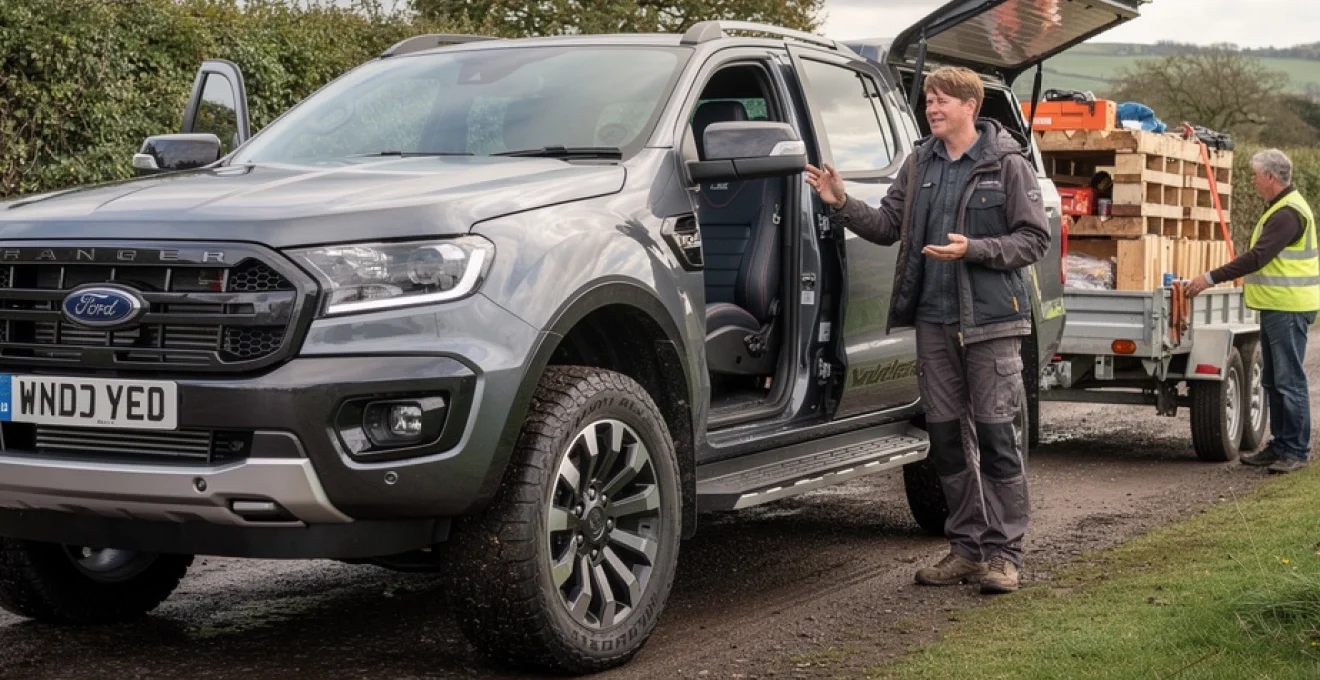
The latest Ford Ranger Wildtrak represents a real shift in what a pick-up can be in the UK. Once seen purely as a farm or building-site tool, it now doubles as an everyday lifestyle vehicle, capable of towing heavy trailers during the week and hauling mountain bikes or camping kit at the weekend. Strong diesel engines, plug-in hybrid tech on the horizon, and a cabin closer to an SUV than a van all help explain why the Ranger continues to dominate the European pick-up market. If you want one vehicle that can confidently straddle workhorse duties and family car comfort, the Ford Ranger Wildtrak deserves very close attention.
Ford ranger wildtrak powertrain options: 2.0‑litre EcoBlue Bi‑Turbo vs 3.0‑litre V6 performance
Torque output, towing capability and payload ratings for UK‑spec ford ranger wildtrak models
The UK‑spec Ford Ranger Wildtrak engine line‑up is built around the 2.0‑litre EcoBlue diesel, offered in a powerful `Bi‑Turbo` configuration, plus a more muscular 3.0‑litre V6 diesel higher up the range. The 2.0‑litre unit in Wildtrak X form develops around 203–205 hp
Maximum braked towing capacity on most Ranger Wildtrak models reaches up to 3,500 kg when correctly specified, putting it on par with the strongest rivals in the segment. Gross payload on a double cab Wildtrak typically sits a little above 1,000 kg; for example, the Wildtrak X test model cited offers a payload of 1,036 kg and a load length of 1,564 mm. That balance of more than a tonne in the bed plus 3.5‑tonne towing is one of the reasons so many tradespeople and self‑employed owners choose a Wildtrak instead of a traditional SUV.
The Ford Ranger Wildtrak manages the difficult trick of combining serious one‑tonne payload ability with the refinement and spec level of a family SUV.
10‑speed automatic transmission mapping, gear ratios and shift logic in normal and tow/haul modes
Both the 2.0‑litre EcoBlue Bi‑Turbo and the 3.0‑litre V6 in the Ford Ranger Wildtrak are paired with Ford’s advanced `10‑speed automatic` gearbox. This transmission uses a wide spread of ratios and closely stacked gears to keep the engine in its torque sweet spot, improving both performance and fuel efficiency. In normal driving, the software tends to short‑shift, quickly moving up through the gears so that the engine is turning quietly and efficiently at cruise. Kickdown remains responsive, dropping two or three gears at once when you demand rapid acceleration.
In `tow/haul` mode, the 10‑speed auto adopts different shift logic. It holds lower gears longer, uses engine braking more aggressively on descents, and reduces unnecessary upshifts that might unsettle a heavy trailer. If you tow regularly, you will notice how this mapping reduces gear hunting on inclines and makes speed control more predictable. The combination of a torquey diesel and smart 10‑speed control means the Ranger Wildtrak feels composed whether you are threading through town traffic or tackling a steep country B‑road with a loaded trailer.
Real‑world fuel consumption, WLTP CO₂ emissions and AdBlue usage for wildtrak engines
Official WLTP combined fuel economy for the Wildtrak X 2.0‑litre EcoBlue sits at around 27.2 mpg, with CO₂ emissions quoted at roughly 273 g/km. Real‑world figures will depend heavily on how you drive and how much you carry; many UK owners report mid‑20s mpg with mixed use, climbing closer to 30 mpg on longer motorway runs without heavy loads. The 3.0‑litre V6 generally uses more fuel, though its extra torque can sometimes offset the difference if you tow very frequently.
The EcoBlue diesels use `AdBlue` to reduce NOx emissions and meet the latest Euro emissions standards. For most owners, AdBlue top‑ups are required roughly every 5,000–7,000 miles, depending on usage, so it makes sense to factor that into running costs. From a tax and environmental perspective, the upcoming plug‑in hybrid Ranger promises significantly lower CO₂, but for now diesel remains the most practical choice if you spend long hours on the motorway or need maximum range with a trailer attached.
0–62 mph acceleration, in‑gear responsiveness and motorway cruising characteristics
Performance figures for the 2.0‑litre EcoBlue Wildtrak are more than adequate for a one‑tonne pick‑up with serious off‑road gear. Expect a 0–62 mph time in the 9–10 second bracket depending on specification, with the 3.0‑litre V6 trimming a second or so from that. More important in everyday use is in‑gear acceleration. Thanks to the strong torque delivery, the Ranger pulls confidently from low revs, making it easy to overtake slow‑moving traffic without planning miles ahead.
On the motorway, the 10‑speed box settles the engine at low revs in top gear, giving a relaxed and quiet cruise for such a capable truck. Wind and tyre noise are well contained, and the Wildtrak’s softer suspension tune compared with hardcore off‑road variants helps it feel stable and planted even at typical UK motorway speeds. If you cover high mileages for business, the ability to cruise comfortably while still retaining robust off‑road and towing ability is a major advantage.
Comparison with ranger XLT and raptor powertrains for workhorse vs lifestyle usage
Within the broader Ranger range, the Wildtrak sits between the more utilitarian XLT and the high‑performance Raptor. The Ranger XLT focuses squarely on work use, with simpler trim and, in many cases, lower‑output versions of the 2.0‑litre diesel. That makes it an excellent straightforward `workhorse pick‑up`, but you miss out on some of the premium features that make the Wildtrak so easy to live with every day. If you mainly care about payload and price, the XLT may still fit better.
The Ranger Raptor, by contrast, is a performance off‑roader with a powerful petrol V6 and heavily upgraded suspension. It is thrilling to drive but sacrifices payload and towing capacity; it is more desert racer than jobsite hauler. The Wildtrak, especially with the 2.0‑litre Bi‑Turbo engine, strikes a more balanced middle ground. You get strong power, excellent towing, and a plush cabin without giving up the core utility that defines the Ranger platform.
Chassis, suspension and off‑road hardware on the ford ranger wildtrak
Ladder‑frame chassis design, wheelbase, track width and structural rigidity upgrades
The Ford Ranger Wildtrak is built on a robust `ladder‑frame chassis`, a construction method still preferred for serious pick‑ups due to its durability and load‑carrying strength. Compared with the previous generation, the current Ranger gains a wider track and revised frame mounting points, which improve both stability and ride comfort. A wider stance helps the vehicle feel less top‑heavy in bends and offers more predictable handling when fully laden or towing a heavy trailer at speed.
Structural rigidity has been increased, which brings several benefits: sharper steering response, better crash performance, and reduced squeaks and rattles over time. For you, that means a pick‑up that feels less like a commercial vehicle and more like a well‑sorted SUV on a twisty UK B‑road. The wheelbase is also optimised to balance cabin space against off‑road ramp‑over clearance, important if you frequently tackle rutted tracks or construction sites with uneven ground.
Suspension configuration: independent front suspension and rear leaf springs load handling
Up front, the Ranger Wildtrak uses independent suspension with coil springs, tuned for a blend of comfort and control. At the rear, you still find traditional leaf springs, essential for achieving over a tonne of payload capacity and maintaining composure with a loaded bed. This layout is more sophisticated than it sounds: damping rates and spring characteristics have been carefully honed so that unladen ride does not feel excessively bouncy by pick‑up standards.
The Wildtrak X variant receives upgraded `Bilstein` dampers, a 26 mm ride‑height increase, and a 30 mm wider track compared with the standard Wildtrak. These changes sharpen off‑road agility and wheel control, though the ride becomes slightly firmer and more lively on broken tarmac. If you spend most of your time on road, the standard Wildtrak suspension is arguably the sweeter everyday compromise; if you crave extra clearance for frequent green‑laning, the X’s hardware upgrades will be more appealing.
Selectable all‑wheel drive, rear locking differential and low‑range gearing operation
Every Ford Ranger Wildtrak comes with an advanced `selectable all‑wheel drive` system, controlled via a rotary switch in the cabin. You can run in 2H rear‑wheel drive to minimise fuel consumption, select 4H for extra traction on wet roads or light trails, or engage 4L low‑range gearing for demanding off‑road work. The transfer case multiplies torque at the wheels, making it easier to climb steep slopes, tow out of muddy fields, or inch over obstacles at walking pace.
A rear locking differential is available to ensure both rear wheels receive equal torque when traction is poor. This can be invaluable on slippery grass, mud, or loose gravel, where a standard open diff would simply spin one wheel uselessly. The electronic control systems are tuned to work with the mechanical hardware, providing a set of selectable off‑road driving modes that adjust throttle response, gearbox mapping, and traction control thresholds to suit the terrain.
Off‑road geometry: ground clearance, wading depth, approach, breakover and departure angles
Off‑road geometry is crucial for anyone planning serious trail or site use. The Ranger Wildtrak offers ground clearance in the region of 230 mm, with the Wildtrak X adding an extra 26 mm for even better obstacle clearance. Approach and departure angles are generous enough to deal with deep ruts, steep ramps and unmade access roads without constantly scraping bumpers or side steps. Breakover angle benefits from the carefully judged wheelbase length, balancing stability with crest‑clearing ability.
Wading depth on the Ranger is competitive for the class, allowing for confident progress through flooded lanes or shallow rivers when conditions demand it. That said, you still need to exercise common sense: knowing the depth and current before you enter water is vital, particularly if carrying passengers or valuable tools in the back. For many rural UK owners, the ability to tackle muddy gateways and flooded fords without drama is one of the Ranger’s biggest selling points.
All‑terrain tyre options, wheel sizes and underbody protection for UK green‑lane use
Wildtrak models typically ride on stylish alloy wheels, with sizes around 17–18 inches depending on trim and options. Tyre choice has a big impact on both ride comfort and off‑road capability. From the factory, rubber tends to lean towards a road‑biased all‑season pattern, balancing fuel economy and refinement with light off‑road grip. If you intend to use your Ranger Wildtrak heavily on green lanes or construction sites, a shift to a more aggressive all‑terrain tyre can transform traction on grass, mud and gravel.
The Wildtrak X adds extra underbody protection including a substantial steel bash plate, helping shield vital components from rocks, ruts and debris. Combined with the raised ride height and wider stance, it feels better prepared for regular rough‑track use. Even if you stick with a standard Wildtrak, the basic underbody layout is designed with work in mind, routing key components out of obvious harm’s way and making scheduled servicing straightforward for Ford dealers across the UK.
Interior technology and SYNC 4 infotainment in the ford ranger wildtrak
SYNC 4A portrait touchscreen, digital instrument cluster and over‑the‑air software updates
Step inside the Ford Ranger Wildtrak and the transformation from farm truck to modern lifestyle vehicle is immediately obvious. The centre of attention is the `SYNC 4A` infotainment system, running on a large 10.1‑inch or best‑in‑class 12‑inch portrait touchscreen depending on specification. Graphics are crisp, menus are intuitive, and the system responds quickly to inputs. The layout feels closer to a premium SUV than a commercial vehicle, making everyday tasks such as navigation or phone integration simple and quick.
A digital instrument cluster replaces traditional dials on higher‑spec versions, providing configurable views for trip data, off‑road information and driver‑assistance status. Over‑the‑air software updates mean features can be improved or bug‑fixed without a dealer visit, keeping your Wildtrak’s tech up to date for longer. For business users, that matters because downtime is reduced and the interface remains familiar over the life of the vehicle rather than feeling dated after a few years.
The cabin of the Ford Ranger Wildtrak now feels less like a van with seats and more like a well‑equipped SUV, complete with large touchscreen and digital instruments.
Integrated navigation, apple CarPlay, android auto and FordPass connect app functionality
Integrated navigation on SYNC 4 is clear and reliable, but the system also supports both Apple CarPlay and Android Auto for those who prefer their smartphone apps. Connecting your phone is a plug‑and‑play process, and once paired you can access music, calls, messages and third‑party navigation without taking your eyes off the road for longer than necessary. This dual‑system approach is a big advantage if you share the vehicle with other drivers or swap between personal and work phones.
`FordPass Connect` takes connectivity a step further, acting as a telematics link between the vehicle and your smartphone. You can check fuel levels, lock or unlock the doors remotely, and in some markets view service alerts or vehicle health reports. For fleet operators running several Rangers, connected data can be a powerful tool to improve uptime and schedule maintenance efficiently, reducing the risk of unexpected downtime during busy periods.
Premium cabin materials, wildtrak‑specific upholstery and ambient interior lighting
One reason 80% of previous‑generation Rangers in the UK were ordered in Wildtrak trim is the cabin ambience. Soft‑touch surfaces, leather‑trimmed seats with contrast stitching and Wildtrak‑specific upholstery patterns combine to create a genuinely premium feel. The Wildtrak X test vehicle, for instance, pairs bold Cyber Orange exterior paint with matching orange stitching inside, giving a distinctive, high‑end appearance without feeling overly flashy.
Ambient interior lighting adds subtle illumination around key areas, making night‑time driving more pleasant and making the cabin feel more like a passenger car. In day‑to‑day use, those touches matter. If you spend several hours a day behind the wheel, high‑quality materials and thoughtful design can make a big difference to fatigue and overall satisfaction. The steering wheel is reach‑ and rake‑adjustable, and the driver’s seat in Wildtrak X offers 10‑way electric adjustment, helping you find a comfortable position whatever your size.
Practical storage solutions: under‑seat compartments, door bins and centre console layout
Despite the SUV‑like ambience, the Ford Ranger Wildtrak has not forgotten its commercial roots. Storage solutions are plentiful and well thought‑out. Large door bins can take big water bottles or work documents, while the centre console offers cupholders, a covered storage area and space for phones. A wireless charging pad is available as part of certain option packs, reducing cable clutter when you are on the move between sites or client meetings.
Under‑seat compartments and rear seatback pockets provide extra hiding places for tools, PPE or personal valuables when you need to park up in town. That combination of premium finishes and `hard‑wearing practicality` is one of the Wildtrak’s key strengths. You can climb in wearing work boots during the day, then head out for a family dinner in the evening without feeling like you are driving a stripped‑back van.
Driver assistance systems and safety equipment in the ford ranger wildtrak
ADAS suite: adaptive cruise control, lane‑keeping system and traffic sign recognition
The Ford Ranger Wildtrak is packed with advanced driver‑assistance systems (`ADAS`), bringing it closer to modern SUVs in terms of safety and comfort on long journeys. Adaptive cruise control can maintain a set distance from the vehicle ahead, automatically adjusting speed to match traffic flow. On busy motorways or A‑roads, that reduces fatigue and helps you keep a consistent, efficient pace.
A lane‑keeping system monitors road markings and can gently steer the vehicle back towards the centre of the lane if it detects drift. Traffic sign recognition reads speed limit and other signs, displaying the information in the instrument cluster to keep you informed even on unfamiliar routes. Used sensibly, these features work as an extra layer of awareness rather than a replacement for driver attention, particularly valuable on long days where tiredness might otherwise set in.
Pre‑collision assist, autonomous emergency braking and pedestrian detection technology
`Pre‑collision assist` with autonomous emergency braking is designed to help avoid or mitigate low‑speed impacts. Using camera and radar sensors, the system can warn you if a collision with a vehicle, pedestrian or cyclist seems likely, and can apply the brakes automatically if there is no sufficient driver response. In busy urban environments with frequent stop‑start traffic, such technology can be especially beneficial.
Pedestrian and cyclist detection capabilities are continually improving across the industry, and the Ranger’s implementation is competitive with other modern pick‑ups. There will always be scenarios that fall outside the system’s limits, so it remains essential to treat it as a backup. However, from an insurance and safety perspective, having autonomous emergency braking can significantly reduce the severity and frequency of low‑speed accidents.
360‑degree camera system, front and rear parking sensors and trailer reverse guidance
A large pick‑up can be intimidating to manoeuvre in town, but the Wildtrak’s camera and sensor package makes life noticeably easier. Front and rear parking sensors provide audible warnings as you approach obstacles, while an excellent rear‑view camera offers a clear, wide‑angle feed for reversing. Higher‑spec variants can add a `360‑degree camera` system, stitching together multiple views to give an overhead perspective of the vehicle’s surroundings.
If you tow regularly, trailer reverse guidance systems are especially useful. By showing guidelines and suggesting steering inputs, they help you reverse a trailer more accurately with fewer corrections. For less experienced drivers or those who tow only occasionally, that can significantly reduce stress and the risk of minor knocks when manoeuvring in tight yards or on crowded event fields.
Euro NCAP safety rating, airbag coverage and ISOFIX child‑seat mounting points
Safety is not just about avoiding crashes; it is also about protecting occupants when an accident does occur. The Ford Ranger platform is engineered to meet stringent global crash‑test regimes, and previous generations have performed strongly in Euro NCAP evaluations. Multiple airbags, including front, side and curtain coverage, help protect occupants in the event of a collision from various angles.
ISOFIX child‑seat mounting points in the rear help you securely fit modern child seats without improvisation, important if you use the Ranger Wildtrak as a family vehicle as well as a work tool. Combined with a spacious second row and good headroom, the Wildtrak double cab can serve as a credible alternative to a family SUV, with the added advantage of a large open load bed at the rear for bikes, pushchairs or hobby equipment.
Cargo bed, towing equipment and practical work features of the ford ranger wildtrak
Load box dimensions, payload capacity and tie‑down points for euro‑pallet and tool storage
The Ford Ranger Wildtrak double cab offers a practical and versatile load box designed around common trade and leisure needs. With a load length of around 1,564 mm and a width between wheelarches of roughly 1,224 mm (widening to about 1,560 mm at the sides), the bed can accommodate a standard euro‑pallet laid flat. Load bay height is approximately 511 mm, making it relatively easy to lift heavier items in and out without excessive strain.
A gross payload of just over 1,000 kg on many Wildtrak models means you can legally carry serious loads of tools, materials or equipment. Multiple strong tie‑down points allow you to strap cargo securely, essential when transporting tall items or heavy machinery. Combining that properly secured load with the Ranger’s 3,500 kg towing capacity offers a total potential `gross train weight` that rivals many light commercial vehicles while giving you far more comfort inside the cabin.
Factory‑fit tow bar, trailer sway control and braked towing capacity up to 3,500 kg
For many buyers, towing is the primary reason for choosing a Ford Ranger Wildtrak over a conventional estate car or SUV. Factory‑fit tow bars and dedicated wiring looms integrate seamlessly with the vehicle’s safety systems. `Trailer sway control` uses the stability control sensors to detect and dampen trailer oscillation, applying brakes selectively to help bring the combination back under control before swaying becomes dangerous.
Braked towing capacity of up to 3,500 kg gives you scope to haul large plant trailers, heavy caravans or horseboxes. Regularly operating close to that limit calls for careful maintenance and sensible driving technique, but the Ranger’s strong chassis, torquey engines and sophisticated gearbox mapping are up to the task. If your business or lifestyle revolves around moving big loads, the Wildtrak’s towing credentials are among the strongest in the mid‑size pick‑up segment.
Power roller shutter, load bed liner, 12V/230V sockets and integrated bed lighting
The Wildtrak’s load bed can be specified with a range of factory accessories to improve usability and security. A `power roller shutter` provides weatherproof, lockable coverage for the bed at the touch of a button, ideal if you often carry valuable tools or sports gear. A durable load bed liner protects the metal from scratches and corrosion, extending the lifetime of the vehicle under heavy use.
Integrated 12V and 230V sockets in the load area on some models allow you to run power tools, charge batteries or even support camping equipment without a separate generator. Combined with built‑in bed lighting, that makes early‑morning or late‑evening loading and unloading much easier. The heavy‑duty steps moulded into the rear corners of the bumper are another clever touch, providing a secure foothold when accessing the bed instead of forcing you to climb over the tailgate each time.
Roof rails, sports bar and accessory compatibility with ford’s official ranger packs
Beyond the load bed itself, the Ford Ranger Wildtrak supports a wide accessory ecosystem. Roof rails and an integrated sports bar not only enhance the pick‑up’s visual stance, they also allow fitment of cross bars, roof boxes and specialist carriers for bikes, kayaks or surfboards. This makes it straightforward to tailor the vehicle to your own mix of work and leisure; one day it can be carrying ladders and kit, the next it is loaded with camping gear for a weekend away.
Ford’s official Ranger accessory packs include items such as the `Flexible Rack System`, which adds a sliding rear load hoop that works with the roof rack to carry long items above the roofline rather than jammed between the cab and tailgate. With a dynamic load limit of around 80 kg, it keeps the bed free for other cargo. Additional packs can bundle power inverters, extra accessory inputs for LED lights and other electrical kit, letting you turn the Wildtrak into a mobile workshop if needed.
Ford ranger wildtrak trim levels, options and pricing in the UK market
Standard equipment on wildtrak vs wildtrak X and optional packs (tech pack, Off‑Road pack)
The standard Ford Ranger Wildtrak specification already includes a generous list of equipment: large portrait touchscreen with SYNC 4, alloy wheels, premium seats, key driver‑assistance features and distinctive exterior styling. For many private and business users, this base Wildtrak trim hits the sweet spot of price versus spec. The Wildtrak X, introduced in 2023, builds on that with its off‑road‑focused chassis upgrades, Bilstein dampers, steel bash plate and additional tech features.
Optional packs such as a `Tech Pack` or `Off‑Road Pack` can add further luxuries and capabilities, including more advanced camera systems, extra underbody protection, power inverters, wireless phone charging and additional accessory switches. Choosing between standard Wildtrak and Wildtrak X largely comes down to how often you plan to venture off tarmac. If your use is mostly road‑based with occasional site visits, the regular Wildtrak may prove more comfortable day‑to‑day while still delivering strong ability when it matters.
Paint colours, wheel designs and appearance upgrades specific to wildtrak models
Visual identity plays a big part in the Wildtrak’s appeal. Bold colour choices such as `Cyber Orange` metallic help the truck stand out, particularly when paired with Wildtrak‑specific exterior trim elements and contrast accents. Large, flared wheel arches framing 17‑ or 18‑inch alloy wheels give the vehicle a purposeful stance, further enhanced on the X model by its wider track and taller ride height.
Inside, Wildtrak‑exclusive upholstery with contrast stitching, branded seatbacks and unique trim inserts distinguish it from lower trims like XLT. Appearance upgrades can also include side steps, sports bars and distinctive front bumper designs. For many lifestyle buyers, the Wildtrak offers just the right amount of presence: assertive and rugged, yet still smart enough to park outside a client’s office or arrive at a restaurant without feeling out of place.
On‑the‑road pricing, PCP finance examples and company car tax (BIK) implications
Pricing for the Ford Ranger range in the UK spans from around £29,000 (ex VAT) for entry‑level commercial versions up to the mid‑£40,000s (ex VAT) for fully loaded Wildtrak X models. The Wildtrak X 2.0‑litre EcoBlue Auto, for example, lists at roughly £43,680 before VAT. On‑the‑road prices including VAT, registration and first‑year VED will, of course, be higher, particularly for private buyers. Competitive PCP and lease deals through Ford dealers can soften the initial outlay, spreading costs over several years with predictable monthly payments.
For company users, the Ranger Wildtrak often attracts more favourable `Benefit‑in‑Kind (BIK)` treatment than an equivalent SUV, as HMRC usually classifies double‑cab pick‑ups as commercial vehicles provided they meet certain payload thresholds. Recent policy discussions around VAT and BIK rules highlight the importance of checking current guidance, but historically, pick‑ups have enjoyed a tax advantage compared with similarly priced passenger cars. That combination of strong residual values and potentially lower BIK makes the Wildtrak a financially attractive option for many business owners and directors.
Warranty cover, service intervals and ford dealer network support across the UK
From a long‑term ownership point of view, warranty and servicing arrangements can be just as important as initial specification. The Ford Ranger Wildtrak typically comes with a three‑year / 60,000‑mile manufacturer warranty, covering major mechanical and electrical components. Service intervals are set at two years or 12,500 miles (whichever comes first), helping to keep downtime manageable for high‑mileage users while ensuring the vehicle receives regular professional checks.
One significant advantage of choosing a Ford Ranger over more niche rivals is the extensive Ford commercial vehicle dealer network across the UK. That widespread coverage makes it easier to book services, source parts quickly and access specialist diagnostic equipment. Features such as connected vehicle data and uptime services like `FORDLiive` are designed to speed up diagnosis and reduce off‑road time. For you, that means more predictable running, fewer disruptions to business schedules and a stronger support structure throughout the life of the vehicle.