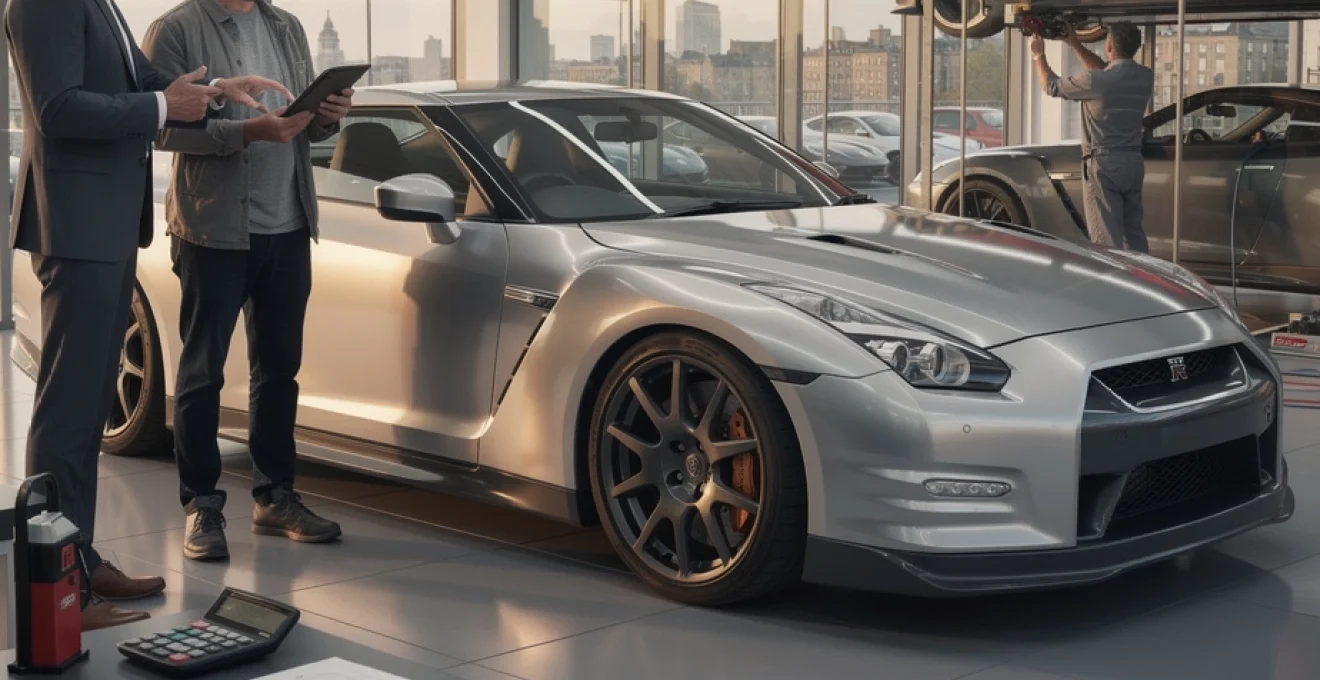
The Nissan GT‑R sits in a rare space between supercar and everyday performance coupe. It can out‑accelerate exotica from Porsche, McLaren or Ferrari, yet it wears a Nissan badge and, at first glance, looks like something you could use for the school run. That combination of brutal speed and relative usability is exactly what makes GT‑R pricing such a fascinating subject. If you are considering one, you are not just buying a quick car; you are buying into a complex blend of hand‑built engine technology, advanced all‑wheel drive hardware and a cult following that keeps demand strong even as the R35 platform ages.
Understanding what a GT‑R really costs means looking well beyond the showroom window sticker. List price, depreciation, tuning potential, consumables and even international price differences all shape what you will actually spend. Whether you want a stock R35 as a weekend weapon or a four‑figure‑horsepower drag car, the numbers behind “Godzilla” deserve a closer look before you commit.
Nissan GT‑R price range in the UK market: R35, special editions and current list prices
Base nissan GT‑R R35 premium edition: UK on‑the‑road price, dealer fees and VAT
For most buyers, the starting point is the standard R35 in `Premium` or `Pure` trim. Late‑run UK cars list from around £89,000–£95,000 OTR, including VAT and basic first registration fees. Earlier in the model life, the GT‑R infamously undercut rivals by a huge margin, but annual updates, currency shifts and extra equipment have pushed the sticker steadily upwards. A typical on‑the‑road price factors in 20% VAT, first year road tax and the registration fee, with dealers occasionally adding document or “admin” charges of £100–£300.
Discounts on new GT‑Rs are modest compared with volume models. When stock is tight, some dealers hold list, particularly on the last allocations of a model year. Pre‑registered or delivery‑mileage cars occasionally surface at 3–7% below list, but if you want a specific colour or interior trim, you may end up paying very close to RRP. Compared with a Porsche 911 Turbo S costing roughly twice as much new, the base GT‑R still offers phenomenal performance‑per‑pound, even if the gap is not as outrageous as it was in 2009.
Nissan GT‑R track edition and NISMO: pricing differentials for chassis, aero and power upgrades
Step up from the standard car to the `Track Edition` and `NISMO` and pricing climbs quickly. UK‑spec Track Edition cars, often quoted at around £106,000–£114,000 depending on whether carbon‑ceramic brakes are fitted, add stiffer suspension tuning, extra bracing and more focused aero. The power output typically remains around 570 bhp, but the chassis is honed for repeated circuit use.
The `NISMO` version, the flagship of the R35 line, is priced more like an exotic. Recent UK list prices have nudged into the £150,000–£185,000 bracket, especially with carbon‑ceramic brakes and full lightweight packs. For that, you gain a 600 bhp hand‑finished engine, aggressive aero, extensive carbon fibre panels and track‑ready suspension. The jump in cost reflects not only higher‑grade hardware but also far lower production volumes and significant manual labour in assembly.
Limited and heritage models (SpecV, black edition, 50th anniversary): how rarity influences cost
Alongside the core trims, Nissan has offered a run of special and heritage‑inspired models: `SpecV`, `Black Edition`, `45th Anniversary`, `50th Anniversary` and various market‑specific editions. These cars often share mechanicals with the standard GT‑R but differ in paint, interior finishes and equipment bundles. When new, list prices tended to sit 5–15% above an equivalent Premium model.
On the used market, rarity can have a disproportionate impact. A clean, low‑mileage 50th Anniversary edition in Bayside Blue or Millennium Jade can command 10–25% more than a similar‑age standard car. The SpecV, offered in tiny numbers, is in another league: collectors value the combination of weight saving, unique trim and limited global supply. If you are looking at one of these heritage cars, asking price is often driven more by scarcity and provenance than by equipment levels.
Price comparison between UK‑spec GT‑R and JDM imports (pure edition, egoist, final edition)
Japanese Domestic Market GT‑Rs such as the `Pure Edition`, `Egoist` and `Final Edition` introduce another layer of pricing complexity. Historically, some UK buyers imported JDM cars to save money or access trims not officially sold here. Early on, a base JDM `Pure` could arrive in Britain for less than the equivalent UK‑spec car, even after shipping and duty, though the savings have narrowed as the Yen and Pound have fluctuated.
High‑end JDM variants like the ultra‑luxurious `Egoist` or late‑run `Final Edition` models are now treated more like collectibles. Their pricing often sits well above any equivalent UK car due to rarity and the desirability of being among the last hand‑built VR38DETT engines. Import duties, IVA testing and conversion work (for example, fitting rear fog lights or UK‑spec infotainment) can add £3,000–£7,000 to the landed price, so an early bargain can evaporate once the car is on British soil.
Key cost drivers for a GT‑R: powertrain, electronics and performance hardware
VR38DETT engine specifications and their impact on manufacturing and retail price
At the heart of every R35 sits the `VR38DETT` engine, a 3.8‑litre twin‑turbocharged V6 producing between 480 bhp (early cars) and 600+ bhp (NISMO and tuned variants). Each unit is hand‑built by a single technician in a clean‑room environment, with tight tolerances and extensive bench testing. That artisanal approach is closer to a racing engine programme than mass‑market production and is a major reason the GT‑R cannot be priced like a typical Nissan coupe.
The use of bespoke internals, sodium‑filled valves, plasma‑sprayed bores and integrated exhaust manifolds pushes up both material and assembly costs. For comparison, a replacement VR38DETT from a specialist can easily exceed £20,000–£25,000 before installation. That figure underpins the retail price: Nissan must account for this high unit cost plus the R&D needed to make a 600 bhp engine live a road‑car life with a full warranty.
ATTESA E‑TS all‑wheel drive system and GR6 dual‑clutch gearbox as high‑value components
The GT‑R’s famed traction and “defies physics” cornering come from its advanced `ATTESA E‑TS` all‑wheel drive and `GR6` dual‑clutch transaxle. Unlike a simple on‑demand AWD system, ATTESA constantly moves torque between front and rear to maximise grip, making the car feel planted even in poor conditions. The GR6 gearbox, mounted at the rear with the differential, uses two clutches to pre‑select gears, allowing shifts in around 0.2 seconds under launch control.
This layout is mechanically complex. It combines multiple electronically controlled clutches, robust gearsets and a sophisticated control unit. As a result, the drivetrain adds several thousand pounds to the bill of materials versus a conventional rear‑wheel‑drive layout and manual gearbox. In the UK, a full GR6 rebuild with upgraded internals can cost £7,000–£12,000, which gives an idea of how valuable this component is within the overall vehicle price.
Carbon‑ceramic brakes, forged wheels and aero kits as high‑ticket factory options
Performance hardware pushes certain GT‑R models into a different pricing bracket. `Carbon‑ceramic` brake packages, often standard on NISMO and optional on some Track Editions, dramatically cut unsprung weight and resist fade during repeated hard stops. However, they are expensive both to produce and to replace; a full set of discs and pads can run into five figures at dealer rates.
`Forged` alloy wheels are another cost driver. They are lighter and stronger than cast wheels, but production involves more complex metallurgy. Add in bespoke aerodynamics – front splitters, rear diffusers, swan‑neck GT wings – and the incremental cost of each “track‑focused” variant becomes clear. These parts are not just visual upgrades; they are engineered for high‑speed stability, which demands extensive wind‑tunnel and track development time.
Interior tech, bose audio and NISMO recaro seats as secondary but significant price factors
Inside, the GT‑R mixes high‑performance hardware with a relatively conventional cabin. Even so, certain features add meaningful cost. The `Bose` 11‑speaker audio, dual‑zone climate control, and 8‑inch infotainment system with integrated telemetry all involve licensing, hardware and software development expenses. While not as lavish as some German rivals, the GT‑R still offers a well‑equipped cockpit straight from the factory.
Seats are a less obvious but important factor. `NISMO Recaro` buckets use lightweight frames, high‑grade leather or Alcantara and integrated side airbags. Compared with basic sports seats, they add hundreds of pounds to cost but improve support on track and subtly enhance resale appeal. Tech like active sound management and configurable performance displays may not make headlines, yet they contribute to the car’s unique feel – and to the final price you pay.
New vs used GT‑R pricing: depreciation curves, mileage bands and model year facelifts
Depreciation profile from 0–10 years for the R35 GT‑R in the UK
Depreciation is where the GT‑R often wins back financial ground for savvy buyers. A typical R35 loses a large chunk of its value in the first 3–5 years, then levels off. From new to year three, a standard car can drop 30–40%, depending on spec and market conditions. From year three to year seven, the curve usually flattens, with annual losses closer to 5–7% if mileage is sensible and service history is strong.
By year ten, well‑maintained GT‑Rs with average mileage often retain around 45–55% of their original price, particularly desirable facelifts. That is strong performance for a high‑powered, high‑emissions car in a market increasingly focused on efficiency. Special editions and NISMO models tend to fare even better, sometimes appreciating once production ceases and collectors start competing for the best examples.
How mileage brackets (under 20k, 20k–60k, 60k+) reshape GT‑R resale values
Mileage has a pronounced impact on GT‑R pricing because buyers know the car’s performance encourages hard use. Sub‑20,000‑mile examples of any given year command a clear premium, often 10–20% more than a similar‑age car in the 40,000‑mile range. For collectors chasing a long‑term investment, that low mileage bracket is especially attractive.
Once a GT‑R crosses 60,000 miles, prices typically soften but do not collapse if maintenance is exemplary. The car’s mechanical package is robust, and specialists report engines reliably handling far more power than stock when looked after. However, buyers will factor in likely upcoming expenses – brakes, tyres, and possibly a bellhousing or gearbox service – when negotiating. A high‑mileage example with a thick folder of invoices from recognised GT‑R workshops can still represent excellent value if you budget correctly.
Impact of key facelifts (2011, 2014, 2017) and power updates on used prices
The R35 has received several important updates that significantly influence used values. Early cars (2009–2010) at around 480 bhp sit at the bottom of the price range. The 2011 update brought more power and refinements to the transmission and suspension, making those cars noticeably more desirable. The 2014 changes, which further evolved the engine output and ride quality, created another pricing step.
The 2017 facelift is perhaps the most influential for resale. It introduced a redesigned interior with improved materials, a revised front and rear, and a power bump to around 570 bhp. Consequently, 2017‑onwards cars often command a substantial premium over earlier examples – sometimes £10,000–£20,000 more than a roughly equivalent pre‑facelift model. When shopping used, it is worth deciding whether that extra polish and power is worth the price difference for your intended usage.
Approved nissan used GT‑R vs independent dealer prices: warranty and inspection premiums
Buying an approved used GT‑R from a Nissan High Performance Centre usually costs more than choosing an independent dealer or private seller. The premium – often 5–10% – covers manufacturer‑backed warranty options, a detailed multi‑point inspection and software updates. For a complex, powerful car, that added peace of mind can make financial sense, particularly if you are not planning heavy modifications.
Independent dealers specialising in performance cars can offer more aggressive pricing and a wider variety of tuned or imported GT‑Rs. However, warranty cover may be limited or supplied by third parties with more exclusions. A private sale can be cheapest but shifts nearly all risk onto you. Regardless of source, a pre‑purchase inspection by a recognised GT‑R specialist is strongly recommended; the cost of a detailed report is tiny compared with an unexpected gearbox or engine rebuild.
GT‑R tuning and modification costs: stage 1 to 1,000+ bhp builds
Stage 1 remap and exhaust upgrade pricing from UK tuners like litchfield and SVM
One of the GT‑R’s biggest attractions is how easily it accepts more power. A typical `Stage 1` package from a respected UK tuner such as Litchfield, SVM or similar involves an ECU remap, freer‑flowing exhaust and sometimes panel filters. Costs usually start from £1,500–£3,000, depending on parts choice. Power can jump from around 550–570 bhp to 620–650 bhp with improved mid‑range torque and sharper throttle response.
At this level, the standard fuel system and turbos are generally adequate if in good condition, and the car remains very usable day‑to‑day. For many owners, this “mild” tune offers the best balance between cost, reliability and performance. Insurance premiums may rise, so informing your insurer about any mapping or exhaust changes is essential to avoid cover issues.
Stage 2–3 builds: intercoolers, injectors and turbo upgrades to 700–800 bhp
`Stage 2` and `Stage 3` GT‑R builds move deeper into the hardware. Typical packages add larger intercoolers, uprated injectors and pumps, free‑flow downpipes and mid‑pipes, and sometimes hybrid or larger turbos. Budgets in this territory usually range from £6,000 to £15,000, depending on whether new or used components are used and how far you push the specification.
Power outputs of 700–800 bhp are common, with 0–60 mph times dropping closer to 2.5 seconds on the right tyres and surface. At this point, drivetrain longevity becomes a major consideration. Many tuners will recommend at least a basic GR6 upgrade and more frequent fluid changes. Track usage magnifies wear, so if you intend to combine high power with regular circuit work, factoring that into the budget is crucial.
Fully forged engine builds and big‑turbo kits for 1,000+ bhp drag and roll‑racing GT‑Rs
For those chasing four‑figure horsepower, the GT‑R’s VR38DETT proves remarkably capable when fully built. A typical `1,000+ bhp` project involves forged internals (rods, pistons, often a closed‑deck block), ported heads, upgraded valve gear and substantial turbochargers with supporting manifolds. Kits and labour together can easily exceed £25,000–£40,000, and it is not unusual for hardcore builds to cross the £60,000 mark on parts alone.
These drag‑strip and roll‑racing monsters can run single‑digit quarter miles or extreme trap speeds, but they come with trade‑offs. Cold‑start behaviour, fuel consumption and service intervals all shift towards motorsport territory. If this level of performance is tempting, a long conversation with a specialist about goals, budget and reliability expectations is sensible before a single spanner turns.
Supporting mods: dodson gearbox builds, upgraded clutches and strengthened driveline components
Power is only half the equation. Supporting modifications keep a tuned GT‑R reliable and driveable. `Dodson` or similar GR6 gearbox builds with upgraded clutch packs, baskets and shafts are a common upgrade above 650–700 bhp. Prices range from £4,000–£10,000 depending on specification and whether the box is removed and refitted by the same workshop.
Strengthened driveshafts, uprated differentials, improved engine and gearbox mounts and enhanced cooling (for example, larger transmission coolers) all add to the bill but protect against expensive failures. Think of these parts as an insurance policy for the extra power. Without them, even the GT‑R’s robust drivetrain can suffer when repeatedly launched or driven hard on sticky tyres.
Dyno time, ECU calibration and data‑logging as recurring tuning expenses
Beyond hardware, tuning a GT‑R involves ongoing `ECU calibration`. Dyno sessions for initial mapping and fine‑tuning can cost £500–£1,500 depending on complexity and the tuner’s reputation. Many owners then return periodically for health checks, particularly after hardware changes or before and after track seasons.
Modern GT‑R mapping often uses advanced data‑logging to monitor knock, boost, fuel pressure and gearbox temps. That level of detail reduces risk but adds labour time. If you plan a heavily modified car, budgeting an annual “tuning and diagnostics” line alongside regular servicing is a wise move. It is similar to taking a high‑end watch for periodic regulation to keep it running perfectly; the hardware is only as good as the setup.
Running costs of owning a GT‑R in the UK: fuel, insurance, tax and servicing
Real‑world fuel consumption, super unleaded requirements and annual fuel budget
Official combined fuel figures for the GT‑R hover around 18–23 mpg depending on model year, with city figures closer to 16 mpg and motorway cruising occasionally touching the mid‑20s. Real‑world owners often report 18–20 mpg mixed driving for a standard car, and significantly less once power and enthusiasm increase. As a twin‑turbo high‑compression engine, the VR38DETT requires `super unleaded` (97–99 RON) to run safely, especially on tuned calibrations.
For a driver covering 8,000 miles a year at 20 mpg, and assuming an average super unleaded price of £1.60 per litre, the annual fuel bill sits around £2,900–£3,100. At 12–15 mpg in a high‑power build, that figure climbs sharply. Fuel is therefore one of the largest ongoing costs and should be part of any realistic GT‑R ownership budget.
Insurance group rating, typical premiums and the effect of age, postcode and claims history
GT‑Rs sit at the very top end of insurance groupings in the UK due to performance, repair costs and theft appeal. For a driver in their 30s or 40s with a clean record, living in a low‑risk postcode and with secure overnight parking, premiums often start around £1,200–£2,000 per year. Younger drivers, inner‑city postcodes or points on a licence can easily push that beyond £3,000.
Modifications increase premiums further, particularly power hikes, bodykits and non‑standard wheels. Some specialists are comfortable insuring tuned GT‑Rs and may offer better rates than mainstream providers, so shopping around is important. Track day cover is typically an optional extra and rarely cheap, but it is essential if you intend to explore the car’s limits in a controlled environment.
Road tax (VED) bands, congestion charges and low‑emission zone considerations
With CO2 emissions around 300–320 g/km on many variants, the GT‑R falls into the highest UK `VED` (road tax) bands. Owners can expect an annual bill in the region of £600–£700 depending on registration date and any subsequent changes to tax policy. First‑year rates on new cars are particularly steep, reflecting the government’s push away from high‑emission vehicles.
In major cities, congestion charges and low‑emission zones add another layer of cost. Pre‑Euro 6 GT‑Rs may face daily charges in certain clean‑air zones, and the car will certainly not qualify for any ultra‑low emission discounts. If you live or work inside such areas, factoring in potential daily fees is essential when comparing a GT‑R with more modern hybrid or electric alternatives.
Scheduled servicing at nissan high performance centres vs specialist GT‑R workshops
Servicing intervals for R35s are typically every 6,000–12,000 miles or 6–12 months, alternating between interim and major services. At a Nissan High Performance Centre, an interim service might cost £200–£300, with major services often in the £450–£800 range. Fluid changes for the GR6 gearbox and differentials are more expensive but vital for longevity, especially on tuned or tracked cars.
Independent GT‑R specialists frequently offer competitive pricing and highly experienced technicians, sometimes with ex‑dealer staff. The trade‑off is that dealer stamps may carry more weight for future resale, particularly on unmodified, collector‑grade examples. For a daily‑driven or tuned GT‑R, documented servicing by a recognised specialist can be just as, if not more, attractive to informed buyers.
Common wear items and failure points (brakes, tyres, bellhousing, gearbox) and their replacement costs
Certain components are known wear points and should be budgeted for. `Brakes` and `tyres` top the list. A set of front discs and pads using quality components can easily exceed £1,000, while premium tyres such as Bridgestone Potenza run around £350 per front and £430 per rear. Hard track use accelerates wear dramatically, sometimes consuming a set of pads in a weekend.
The notorious `bellhousing rattle` – a noise from the transmission area caused by wear in a bearing and casting – affects many cars. While often more of an annoyance than a critical failure, a proper fix using upgraded parts from specialists such as Lichfield typically costs around £800–£1,000. Early GR6 gearboxes occasionally suffer solenoid or clutch issues, with full rebuilds costing several thousand pounds. Thorough test drives and inspection reports can help you avoid inheriting an imminent big bill.
Finance, leasing and total cost of ownership for a nissan GT‑R in the UK
HP, PCP and lease options for a new GT‑R: deposits, APR and balloon payments
Most new GT‑R buyers in the UK use some form of finance, typically `HP` (Hire Purchase) or `PCP` (Personal Contract Purchase). On a £100,000 car, a 10–20% deposit (£10,000–£20,000) is common. With APR rates in the 6–10% range depending on credit score and promotions, monthly payments often sit between £900 and £1,600 for PCP over 3–4 years, rising for HP due to the lack of a balloon.
PCP keeps monthly payments lower by deferring a large `balloon` payment to the end of the term, based on a forecast residual value. You can then either hand back the car, part‑exchange or pay the balloon to keep it. Leasing on a GT‑R is less common and often reserved for business users due to high list price and strong private demand. If considering finance, understanding the total amount payable – not just the headline monthly – is vital.
Total cost of ownership modelling over 3–5 years including depreciation and running costs
To understand what a GT‑R really costs, combining all the major outgoings into a `total cost of ownership` picture is useful. Imagine buying a nearly new £90,000 car and keeping it for five years. If it is worth £50,000 at the end, depreciation alone has cost £40,000, or £8,000 per year. Add insurance (£1,800 per year), fuel (around £3,000), servicing and maintenance (budget £1,500–£2,000 annually) and VED (~£650), and the yearly running total can easily land between £15,000 and £17,000.
Tuned cars can cost substantially more, particularly on fuel and consumables, while low‑mileage garage queens may lose more in depreciation per year but far less in maintenance. This kind of modelling helps you decide whether a newer, financed GT‑R or an older, cash‑bought example better fits your budget and appetite for risk.
Impact of credit score and residual value forecasts on monthly GT‑R payments
Credit score plays a major role in GT‑R affordability. Strong credit typically secures lower APR, saving thousands over the term. On a large balance, moving from 9.9% APR to 5.9% can reduce monthly payments by over £100 on a four‑year agreement and cut total interest dramatically. Lenders also look at income stability, existing commitments and the car’s own residual value outlook.
Residual value forecasts are especially important on PCP. Finance houses set the balloon based on what they expect the GT‑R to be worth at contract end. If forecasts are conservative, monthly payments rise because more of the capital is repaid during the term. If the market outperforms those forecasts, you may have equity to put into the next car. If it underperforms, you have the option to walk away and let the lender take the risk.
Buying cash vs financing a GT‑R: opportunity cost and resale strategy
Paying cash for a GT‑R eliminates interest charges and can strengthen your negotiating position, especially with independent dealers. However, there is an `opportunity cost`: money tied up in the car is not available for investments or other uses. In a low‑interest environment, this may be less of a concern, but it remains a strategic decision rather than a purely emotional one.
Financing, on the other hand, gives flexibility to upgrade every 3–4 years without large lump sums, at the cost of interest. If you expect GT‑R values to harden or even rise for certain editions once production finally ends, owning the car outright may allow you to benefit more fully from any appreciation. Your approach to risk, cash flow and long‑term ownership will determine which route makes the most sense.
International price comparisons: UK GT‑R vs US, EU and japanese domestic market
US MSRP vs UK list price: currency conversion, tax structures and equipment levels
On paper, US `MSRP` for the GT‑R often looks lower than UK pricing when converted directly using headline exchange rates. However, the comparison is more nuanced. US prices typically exclude state taxes, which can add anywhere from 0–10% at the point of sale. UK OTR prices already include 20% VAT, first year VED and registration.
Equipment levels also vary slightly by market, and Nissan’s pricing reflects regional demand, competition and logistics. Even so, historically, US buyers have often enjoyed slightly better value, particularly during periods when the Pound has been strong against the Dollar. For a UK buyer importing a US car, the cost of shipping, import duty, VAT and conversion work normally removes any superficial saving.
GT‑R prices in germany, france and the gulf states: dealer margins and import duties
Across mainland Europe, GT‑R pricing varies due to different VAT rates and local dealer strategies. Germany and France, for instance, have list prices broadly comparable to the UK when adjusted for tax, but regional promotions, stock levels and currency fluctuation can create short‑term gaps. Warranty coverage and specification differences also complicate cross‑border shopping.
In certain Gulf states, GT‑Rs have sometimes been cheaper to buy new thanks to lower or zero import duties and different tax structures. However, searing climate, sand and a prevalence of modified examples can make importing used cars from these markets higher risk. Careful inspection and knowledge of how the car has been used are essential if you are tempted by an apparently cheap, high‑spec Middle Eastern import.
JDM auction pricing for R35 and R34 GT‑R: USS tokyo, BH auction and export fees to the UK
For enthusiasts, Japanese auctions such as `USS Tokyo` and `BH Auction` are a treasure trove of GT‑Rs, both R35 and earlier R34 models. JDM pricing is heavily influenced by mileage, condition and auction grade, with low‑kilometre R34s now routinely selling for six‑figure equivalents. R35s range widely, from relatively affordable early Pure Editions to very expensive late‑run NISMO and Final Edition cars.
Buying at auction is only part of the story. UK landing costs must include the hammer price, agent fees, inland transport, shipping, marine insurance, import duty, VAT and any required modifications for UK registration. In practice, adding 25–35% to the auction price gives a rough indication of what you will actually pay by the time the car is on your driveway. For some rare JDM‑only trims that you simply cannot source locally, that uplift still makes sense; for mainstream R35s, the UK market often remains the simpler and more transparent route.