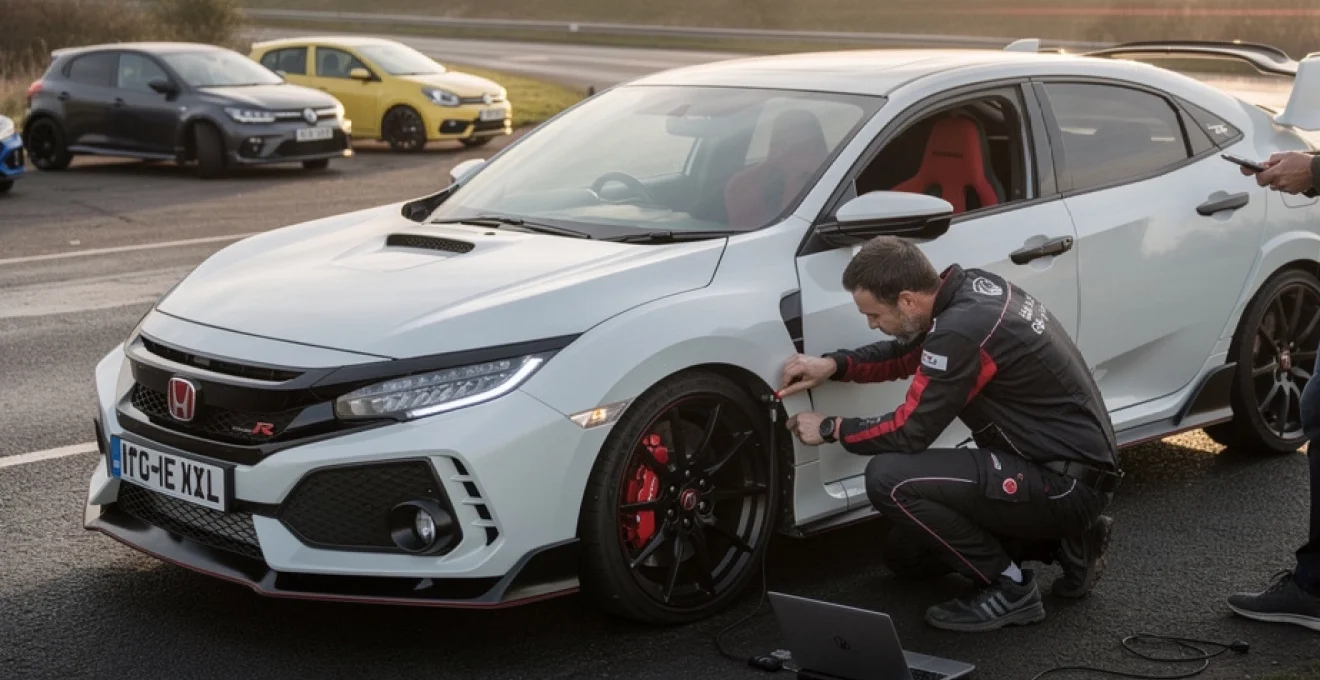
The 2017 Honda Civic Type R FK8 arrived in the UK at a time when hot hatchbacks were becoming as fast as yesterday’s supercars, yet still had to cope with school runs, congested commutes and long motorway hauls. This Civic Type R tried to square that circle: deliver genuine track pace and engagement without punishing you every time you hit a pothole or a speed bump. For many enthusiasts, it did more than that, becoming a benchmark for front‑wheel‑drive performance and a modern icon in its own right.
If you are looking at a used 2017 Civic Type R now, you are entering a corner of the market where performance, practicality and reliability intersect unusually well. The FK8 Type R is brutally quick, sharply engineered and yet surprisingly civilised to live with, provided you can live with the wild styling and the running costs that come with a 316bhp turbo hatchback.
Overview of the 2017 honda civic type R FK8 hatchback in the UK hot hatchback segment
Positioning the FK8 civic type R against ford focus RS, volkswagen golf R and renault mégane RS
The 2017 Civic Type R FK8 landed straight into battle with the Ford Focus RS, Volkswagen Golf R and Renault Mégane RS – arguably the most competitive era the UK hot hatchback segment has ever seen. On paper, the Honda looked slightly outgunned: 316bhp and front‑wheel drive in a world of 345bhp, four‑wheel‑drive rivals. Yet on circuit and on British B‑roads it routinely matched, and often humbled, those cars.
Where the Golf R and M140i offered discreet, premium performance, the Civic Type R went in the opposite direction. It embraced the touring car for the road philosophy, with highly visible aero, huge 20‑inch wheels and a 169mph top speed that made the styling more than just theatre. If you wanted an extrovert hot hatch that could double as a track‑day weapon, the 2017 Civic Type R immediately jumped to the top of the shortlist.
Key differences between the FK8 civic type R and the previous FK2 generation
Although the FK8 shares its 2.0‑litre turbocharged base engine with the FK2 Civic Type R, almost everything else changed. The 2017 car sits on an all‑new platform: the body‑in‑white is around 16kg lighter yet boasts roughly 38% higher torsional rigidity. The rear torsion beam was replaced by a fully independent multi‑link rear suspension, transforming stability and compliance on rough roads.
Power climbed modestly from 306bhp to 316bhp, but the FK8’s broader appeal comes from its additional civility. The old FK2 was raw, noisy and very stiff; the new model introduced a Comfort mode, much better noise suppression and a seating position that is lower and more natural. The cabin also became more cohesive, even if the infotainment still lagged behind the best German systems.
Trim levels, standard equipment and UK-market specifications for the 2017 civic type R GT
In the UK, the 2017 Civic Type R was sold in two broad flavours: the standard Type R and the more popular Type R GT. Both shared the same powertrain and core chassis, so performance is identical. The GT model added a useful bundle of equipment that most buyers wanted anyway.
| Specification | Type R | Type R GT |
|---|---|---|
| Power / Torque | 316bhp / 295lb ft | 316bhp / 295lb ft |
| Dual‑zone climate control | No | Yes |
| Parking sensors (F/R) & blind‑spot | No | Yes |
| Navigation & upgraded audio | No | Yes |
| Price when new (2017) | £30,995 | £32,995 |
GT models also gained cross‑traffic monitor, wireless charging and extra safety tech. On the used market, GT cars dominate UK listings, with only a small premium over base models, so most buyers will be better served targeting the GT specification for everyday use.
Official honda performance claims, WLTP figures and real‑world owner data
Honda quoted 0–62mph in 5.7 seconds and a 169mph top speed for the FK8. Those numbers put it right in the mix with all‑wheel‑drive rivals, despite the power going exclusively to the front axle. Independent tests frequently recorded sub‑6.0‑second runs and strong in‑gear acceleration, particularly in third and fourth, where the 400Nm torque plateau from 2,500–4,500rpm makes overtakes effortless.
Official combined fuel economy on the earlier NEDC test was around 36.7mpg, with WLTP later settling closer to 33.2mpg. Interestingly, owner reports and independent True MPG testing often saw around 30–35mpg in mixed driving and close to 40mpg when cruising gently. That makes the 2017 Civic Type R relatively efficient for a 316bhp hot hatch, though hard track use will, of course, move those figures sharply in the opposite direction.
2.0 VTEC turbo K20C1 powertrain, drivetrain layout and performance calibration
Turbocharged K20C1 engine architecture, VTEC implementation and cooling package
At the heart of the FK8 Civic Type R lies Honda’s K20C1 2.0‑litre VTEC Turbo, a direct‑injection, dual‑overhead‑cam four‑cylinder. This unit combines classic Honda variable valve timing with a modern single‑scroll turbocharger to produce 316bhp at 6,500rpm and 295lb ft between 2,500 and 4,500rpm. Forged conrods, a lightweight crankshaft and robust internals mean the engine is engineered to withstand sustained track use.
VTEC is deployed primarily on the exhaust side in this application, optimising valve lift for both low‑rpm response and high‑rpm breathing. The cooling package is equally serious: a large intercooler, improved radiator design and carefully managed airflow through the front bumper and bonnet scoop keep intake and coolant temperatures under control, even in repeated hot laps. It is a good example of how a turbocharged hot hatch engine can be tuned for reliability rather than just peak numbers.
Torque curve, boost pressure strategy and ECU mapping in +R, sport and comfort modes
The K20C1’s torque delivery is deliberately broad rather than spiky. Boost builds from just above idle and hits that 295lb ft plateau by about 2,500rpm, holding it to roughly 4,500rpm before power takes over. This makes the car feel flexible in real‑world driving; you do not need to constantly chase the redline to make brisk progress, though the engine willingly spins to its 7,000rpm limit.
The ECU mapping varies subtly between Comfort, Sport and +R modes. Comfort softens throttle response and allows the car to feel calmer in town. Sport is the default and gives a crisp, linear pedal that suits fast road driving. +R further sharpens response and keeps the engine on the boil, ideal for circuit use. Think of it as having three personalities: commuter, B‑road companion and track toy, toggled through the drive mode switch next to the gear lever.
Six‑speed manual gearbox, rev‑match system and limited‑slip differential characteristics
Honda persisted with a six‑speed manual gearbox at a time when rivals were moving to dual‑clutch automatics. For keen drivers, that decision is central to the FK8’s appeal. The shift is short, mechanical and precise – the archetypal “rifle‑bolt” Honda feel. A single‑mass flywheel improves engine response and allows revs to rise and fall quickly, adding to the sense of immediacy.
The gearbox is supported by two key pieces of technology. First, a helical limited‑slip differential at the front axle works with the dual‑axis strut design to find traction out of tight bends with minimal torque steer. Second, a rev‑matching function automatically blips the throttle on downshifts. This system can be switched off if you enjoy traditional heel‑and‑toe, but it is impressively smooth and gives you confidence when braking deep into a corner.
0–62mph, in‑gear acceleration and nürburgring lap time comparison with rival hot hatches
On paper, the 5.7‑second 0–62mph time is only one part of the story. The Civic Type R’s real strength is its in‑gear acceleration and its ability to deploy performance consistently. Third‑gear pulls from 30‑70mph are ferociously strong, and fourth from 50‑90mph keeps up with, or beats, many all‑wheel‑drive rivals thanks to its relatively low kerb weight of around 1,380kg.
The 2017 Civic Type R set a 7min 43.8sec lap at the Nürburgring Nordschleife, at the time making it the fastest front‑wheel‑drive production car around the ‘Green Hell’.
That time undercut the previous FK2 Type R by roughly seven seconds and placed the FK8 alongside some serious machinery, including older 911s and super‑saloon benchmarks. While you may never chase a lap record, this level of development means the car feels rock‑steady and confidence‑inspiring when you explore its limits on track days.
Chassis engineering, adaptive suspension and steering dynamics of the FK8 type R
Macpherson front / multi‑link rear suspension geometry and dual‑axis front strut design
The move to a multi‑link rear suspension is central to the FK8’s behaviour on UK roads. Compared with the FK2’s torsion beam, the new set‑up allows each rear wheel to react more independently to bumps and camber changes. The result is both improved stability at high speed and noticeably better compliance on broken tarmac.
At the front, Honda introduced a dual‑axis strut design. In simple terms, this separates the steering and suspension axes, reducing the tendency for the wheels to tug at the wheel under hard acceleration. When you lean on the car out of a tight junction or hairpin, torque steer is almost eerily absent for a 316bhp front‑driver. Grip from the wide 245‑section tyres is enormous, yet the car still feels eager to change direction.
Adaptive dampers, ride stiffness and body control on british b‑roads and motorways
The adaptive suspension uses three‑stage electronically controlled dampers. Comfort slackens everything off and makes the car surprisingly tolerant of poor surfaces and urban speed humps. Sport strikes an excellent balance for B‑roads: firm, controlled and with minimal body roll, but not so stiff that the car skips across mid‑corner bumps.
+R brings the most aggressive damping map, significantly reducing pitch and roll on circuit, but on typical British roads it can feel too busy. For fast A‑road or motorway use, Sport mode is likely to be your default. Body control remains tight at an indicated 70mph, expansion joints are dispatched cleanly, and the car never feels nervous or fidgety, which is impressive given those ultra‑low‑profile 20‑inch tyres.
Steering calibration, front‑end grip and torque steer mitigation under hard acceleration
Steering in the 2017 Civic Type R is electrically assisted, with a variable ratio. Around the straight‑ahead it is relatively calm, aiding stability on the motorway. Wind on more lock and the ratio quickens, so you can tackle tight bends with small, precise inputs rather than huge armfuls of steering. It feels natural after a short acclimatisation period.
Front‑end grip is exceptional. On dry tarmac the car seems to claw its way into an apex and hold a neutral line even when you apply throttle earlier than you expect. Torque steer is present only as a faint suggestion at the wheel, a testament to the dual‑axis design and the calibration of the Agile Handling Assist system, which uses subtle brake interventions to help rotation. If you have experienced older, powerful FWD hot hatches, the FK8’s composure under power will come as a surprise.
Braking system performance: brembo front calipers, discs and fade resistance on track
The FK8’s braking hardware includes four‑piston Brembo front calipers clamping 350mm ventilated discs, with 305mm discs at the rear. Pedal feel is firm and progressive; there is little dead travel at the top, which makes it easier to judge weight transfer when you trail brake into a corner. For fast road driving, stopping power is more than adequate.
On track, repeated heavy stops from high speed will test any system, but the Civic Type R remains impressively consistent. In long sessions, some testers have noted a slight increase in pedal travel, yet outright performance stays strong. For regular track days a switch to high‑temperature brake fluid and track‑focused pads is sensible, but the standard set‑up will cope with occasional circuit work without drama.
Aerodynamics, exterior design and functional bodywork of the 2017 civic type R
Rear wing, vortex generators and under‑body aerodynamics for high‑speed stability
The FK8’s styling divides opinion, but underneath the wild surfaces lies a serious aero agenda. Honda claims the Civic Type R is one of the few hot hatchbacks to generate genuine negative lift at speed. A large rear wing works in concert with under‑body panels, a rear diffuser and small “vortex generators” at the trailing edge of the roof to manage airflow.
This is not just marketing. At an indicated 140mph on an unrestricted autobahn, the car feels unwaveringly stable and composed. Crosswinds and lane changes that would unsettle a less sorted hatchback are dealt with in a single, calm motion. For you as a driver, that translates into more confidence – particularly useful if you plan to exploit the car’s performance on track days or high‑speed events.
Triple‑exit exhaust design, active exhaust flow and cabin drone management
One of the FK8’s most recognisable visual features is its triple‑exit exhaust. The two outer pipes handle the main flow, while the smaller central pipe performs a dual role. At high engine speeds, it helps reduce back pressure and sharpen the sound. At steady motorway speeds, it can act as a resonator, countering unpleasant frequencies that would otherwise cause drone in the cabin.
The result is a soundtrack that is purposeful under load but relatively restrained at a cruise. Some enthusiasts might wish for more mechanical character or pops and bangs, but the trade‑off is long‑distance comfort. On a 200‑mile run, tyre roar will be more noticeable than exhaust boom, especially on rougher UK asphalt, but the system strikes a sensible compromise between drama and refinement.
Wheel and tyre package: 20‑inch alloys, continental SportContact 6 and unsprung mass
The 2017 Civic Type R runs 20‑inch alloy wheels wrapped in 245/30R20 tyres – from the factory, usually Continental SportContact 6 developed specifically for the car. The sheer amount of grip on offer is enormous, particularly in warm, dry conditions, and contributes significantly to the FK8’s lap time capability.
The downside is unsprung mass and vulnerability to UK road surfaces. Low‑profile tyres and large wheels are more susceptible to pothole damage and kerbing. Some owners have bent rims on sharp ridges or deep potholes, with replacement wheels costing several hundred pounds each. If you buy an FK8 for regular British B‑road use, a popular modification is downsizing to 18‑ or 19‑inch wheels with slightly higher‑profile tyres to improve compliance and reduce the risk of damage.
Heat management: front bumper vents, bonnet scoop and brake cooling ducts
Heat management is critical in a high‑output turbo hatchback that may spend extended time at full load. The Civic Type R’s front bumper features large, functional intakes to feed the radiator, intercooler and brake cooling ducts. Airflow is carefully channelled to avoid hot spots and maintain consistent performance.
The bonnet scoop on the FK8 is not a cosmetic flourish; it relieves pressure in the engine bay and helps direct air along the aluminium bonnet and around the front wings to stabilise the car at speed.
On circuit, coolant temperatures remain stable and, combined with the robust braking system, this makes the car exceptionally repeatable. For fast road driving, you benefit from an engine that feels as strong at the end of a spirited blast as it does at the beginning, without the sense of heat‑soak softening performance.
Interior ergonomics, digital interfaces and everyday usability of the civic type R hatchback
Bucket seats, driving position and steering wheel ergonomics for road and track
Open the door and the 2017 Civic Type R greets you with deep‑bolstered bucket seats trimmed in bright red suede‑effect fabric. They are among the best in the class: supportive enough for high lateral loads on track yet comfortable over long distances. The driving position is significantly lower than previous Civics, helping you feel integrated with the car rather than perched on top.
The steering wheel is a compact, leather‑wrapped item with well‑placed thumb grips and intuitive controls for audio, cruise and trip functions. Combined with generous adjustment for reach and rake, it makes it easy for drivers of different sizes to find a natural, sporty stance. If you enjoy feeling “locked in” to a car on B‑roads, the FK8 delivers exactly that sensation.
Honda connect infotainment, android Auto/Apple CarPlay and driver information displays
The FK8’s Honda Connect infotainment system is one of the car’s weaker areas. The 7‑inch touchscreen provides access to audio, phone, vehicle settings and navigation (on GT models), and it supports Android Auto and Apple CarPlay. The interface, however, can feel dated and occasionally laggy compared with more modern rivals.
More successful is the digital instrument cluster. A central digital speedometer is surrounded by a crisp rev counter, with configurable side panels showing boost pressure, G‑meter, lap times, shift lights or trip data. In +R mode, the display becomes more focused, with red highlights and motorsport‑style shift illumination. It is a clear, legible set‑up that gives you the information you need without unnecessary distraction.
Rear seats, ISOFIX practicality, boot capacity and split‑folding versatility
While the Civic Type R is very much a performance car, it does not forget hatchback duties. The rear bench offers generous legroom and decent headroom for adults, aided by the Civic’s long wheelbase. ISOFIX anchor points make it suitable for child seats, though the dark trim and red belts give a more overtly sporting feel than a regular family hatch.
The boot is one of the largest in the class, at around 420 litres with the rear seats in place and expanding to roughly 1,580 litres with the 60/40 split‑folding rear backrests lowered. That space easily swallows luggage for a weekend away, track‑day wheels or bulky sports kit. If you need a single car to cover commuting, family duties and fast driving, the practicality of the Civic Type R is a genuine asset.
Cabin refinement, NVH levels and long‑distance comfort versus standard civic models
Compared with a standard Civic, the Type R inevitably introduces more noise and firmness. Tyre roar from the 245/30 tyres is noticeable on coarse‑chip surfaces, and there is more engine and exhaust presence under load. Yet cabin refinement is still better than you might expect, particularly when contrasted with the older FK2 Type R.
On the motorway in Comfort or Sport mode, wind noise is well suppressed and the engine settles to a relaxed hum. The adaptive dampers prevent the body from pogoing over expansion joints, and the seats maintain support over several hours. For a 169mph hot hatch on 20‑inch wheels, long‑distance comfort is impressively acceptable, making European road trips or long UK journeys very achievable.
Running costs, reliability trends and ownership experience of the 2017 civic type R
Fuel economy, insurance group, road tax (VED) and servicing intervals in the UK
Running a 2017 Civic Type R in the UK comes with predictable hot‑hatch costs but few nasty surprises. Expect real‑world fuel economy between 29–35mpg depending on use; enthusiastic B‑road drives will see that drop into the low‑20s, while gentle motorway cruising can edge close to 40mpg. The fuel tank holds around 47 litres, giving a practical touring range.
Servicing is required every 12,500 miles or 12 months. Typical main‑dealer prices for the first three services run in the £250–£350 range each, depending on region and any extras like valve‑clearance checks. VED for post‑April‑2017 registrations sits at the standard flat rate for petrol cars (currently around £180 per year), unless the car’s original list price tipped over £40,000 with options, in which case the five‑year luxury supplement applies.
Common reliability reports: clutch wear, gearbox issues and paint or corrosion concerns
Overall reliability for the FK8 Civic Type R has been strong, in line with Honda’s reputation. The engine and core drivetrain are robust when serviced on schedule, and many cars have seen regular track use without major issues. However, there are a few areas worth checking if you are considering a used example.
- Clutch wear: enthusiastic driving and repeated standing starts can accelerate clutch wear; feel for slip under full boost in higher gears.
- Gearbox: some owners report notchiness or graunch on fast 2nd–3rd shifts; a thorough test drive when warm is essential.
- Wheels and tyres: inspect inside and outside rim edges for bends or cracks, especially on 20‑inch factory wheels.
Paint quality is generally good, but stone‑chip vulnerability is higher on the wide, low nose and sills. Regular cleaning and application of protective film on vulnerable areas can help preserve the finish over time.
Depreciation curves, used market values and mileage considerations for FK8 buyers
Depreciation on the 2017 Civic Type R has been relatively gentle thanks to strong demand and a loyal enthusiast base. Early FK8s now start from a little over £20,000 in the UK, typically with 50,000–70,000 miles. Later facelift cars and limited‑edition variants command significantly more, often exceeding £30,000 or, in rare cases, closer to £45,000 for ultra‑low‑mileage Limited Editions.
When choosing between age and mileage, condition and maintenance history should be the priority. A 60,000‑mile car with meticulous servicing, fresh tyres and recent brakes can be a better buy than a low‑mileage example that has seen infrequent, hard track use without appropriate maintenance. Given the car’s capability, many owners drive them enthusiastically; thorough inspection and a pre‑purchase health check are sensible investments.
Honda warranty coverage, aftermarket tuning impact and honda UK dealer network support
From new, the FK8 Civic Type R came with a 3‑year / 90,000‑mile warranty in the UK, extendable via Honda’s approved schemes. Many 2017 cars will now be outside original cover, but an extended warranty from Honda or a reputable third party can provide additional peace of mind, particularly for higher‑mileage examples.
Aftermarket tuning potential is considerable, with the K20C1 often pushed beyond 350–380bhp with software and hardware changes. However, such modifications increase stress on the drivetrain and may void any remaining warranty. If you plan to modify, budgeting for upgraded cooling, clutch and brakes is wise. For those who prefer to keep the car standard, the Honda dealer network is generally experienced with the Civic Type R platform, familiar with common issues and able to source genuine parts, which helps maintain both reliability and resale value.