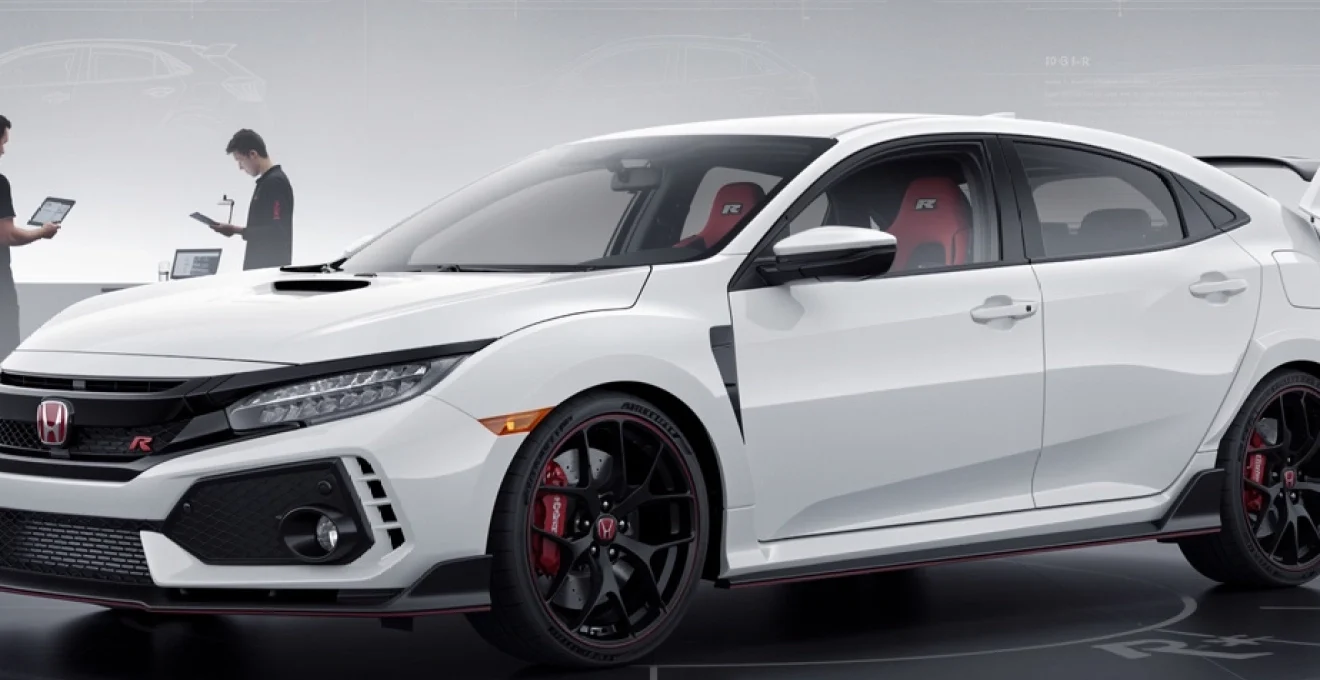
The white Honda Civic Type R has become a fixture at trackdays, Cars & Coffee meets and specialist classifieds, and not by accident. Championship White in particular is woven into Honda’s motorsport story, from 1960s Formula 1 racers to modern hot hatches that lap the Nürburgring faster than many supercars. For you as an enthusiast or potential buyer, a white Civic Type R is not just a colour choice; it is a statement about heritage, purity of design and a very specific kind of performance intent.
Viewed in the metal, the latest FL5 Civic Type R in white looks both more mature and more serious than the shouty FK8 it replaces. The surfacing is cleaner, the aero is more obviously functional, and the contrast between bodywork, black wheels and red detailing is sharper than ever. Understanding why this combination works so well means looking beyond the spec sheet and into the details of its exterior, paint technology, interior ambience and the practical realities of living with a white hot hatch in the UK.
Exterior styling analysis of the honda civic type R in championship white
Front fascia aerodynamics: grille design, functional air intakes and splitter geometry
The front end of the FL5 Civic Type R in Championship White is less fussy than the FK8, but far more focused. A large, simple honeycomb grille feeds the turbocharged 2.0‑litre engine and front-mounted intercooler, with minimal decorative plastic. In white, the black mesh reads as a single technical element rather than an ornament, which makes the car look more like a touring car than a show car.
Below, the front splitter is integrated into the bumper rather than bolted on as an afterthought. Its geometry is relatively flat across the centre, with gently upturned ends to reduce drag at higher yaw angles. On track, this helps stabilise the car under heavy braking, something you will feel as a reassuring firmness at turn-in rather than vague lightness at the wheel. The functional side vents also help bleed high-pressure air from the arches, again more race-car thinking than street-car decoration.
The front of the white Civic Type R communicates intent through restraint: every opening, crease and edge has a clear aerodynamic or cooling purpose.
Because the car is white, the gaps between these black elements are visually de‑emphasised, which stops the nose from looking over-styled. On darker colours the same shapes blend more, but on Championship White the contrast makes the aero map of the car easily readable, even to a casual observer.
Side profile in white: character lines, widened arches and sill extensions
From the side, the FL5 Civic Type R in white has a long, low stance that feels more coupe‑like than many rival hot hatches. The character line that runs from the front wing through the doors to the rear quarter panel is crisp and consistent, which is crucial because white paint is unforgiving; any waviness in the metal or plastic would be obvious under direct light.
The widened arches are more organically integrated than on the FK8. Instead of bolt‑on style plastic, the flare grows out of the main body surfaces. In white, this creates a subtle interplay of light and shadow that makes the car look muscular but not cartoonish. The sill extensions are body‑colour with a black lower edge, visually lowering the car and tying into the front splitter and rear diffuser.
You also notice how the slightly smaller 19‑inch wheels accentuate tyre sidewall, which in profile gives a more serious, track‑ready stance. Combine that with the lowered roofline and you get a very planted look, enhanced by the bright body reflecting more ambient light than darker paints.
Rear diffuser, triple exhaust layout and high-mounted rear wing in white finish
At the rear, the white Civic Type R balances aggression and cleanliness. The triple exhaust is still the visual centrepiece: two outer pipes handle the bulk of gas flow, while the larger centre pipe plays a tuning role in exhaust resonance. Under acceleration, the system produces the recognisable rasp that many owners value over the more muted tones of all‑wheel‑drive rivals.
The rear diffuser is less visually busy than the FK8’s, but the strakes are deeper and more functionally aligned with the flat floor. In white, the black diffuser stands out strongly, signalling genuine aerodynamic work. The high‑mounted wing now uses elegant cast aluminium supports; on a white car they create a stark graphic against the painted bootlid, visually linking the rear glass to the trailing edge of the spoiler.
Crucially, the wing sits in clean airflow high above the roofline. On track this translates into added rear stability in high‑speed corners, helping the FL5 approach some fast bends more like a junior touring car than a family hatchback.
Lighting signature: LED headlamps, DRLs and darkened housings contrasted with white bodywork
The lighting signature plays a bigger role on a white car than many buyers anticipate. Full LED headlamps with integrated daytime running lights give the Civic Type R a sharp, modern look that matches its digital cockpit. The darkened lamp housings read almost black against Championship White, visually stretching the front end and giving the car a wider, more assertive stance at night.
At the rear, slim LED clusters echo the standard Civic but with subtle tweaks in internal graphics. On a white car, the red tail lamps and clear segments pop dramatically, which has a secondary safety benefit: you are more conspicuous in motorway spray or heavy rain. For you as a driver, the clarity and spread of the LED main beams also matter; owners who regularly drive on unlit B‑roads often describe the headlamp performance as close to some premium German sports models.
Aero-optimised underbody panels and drag-reduction features on the FL5 civic type R
The most effective aerodynamic work on the FL5 is largely invisible from the kerb. Honda has fitted extensive underbody panels and optimised the floor around the exhaust and rear suspension to reduce turbulence. In combination with the front splitter and rear diffuser, this improves stability at the car’s claimed 169 mph top speed and helps explain its 1.02 g skidpad performance measured by independent testers.
On a white car, the effect is indirect but important. Cleaner aero means fewer streaks and deposits along the sills and rear bumper, because the airflow is more controlled. Over a long winter, that makes the difference between a car that looks reasonably crisp between washes and one that constantly wears a dirty grey halo around the lower bodywork.
Paint technology and finish quality of the honda civic type R in white
Championship white vs premium white pearl: paint codes, lacquer layers and metallic content
Honda offers more than one white across its range, but the Civic Type R’s Championship White is the most iconic. Historically linked to Honda’s racing colours, it is a solid, warm white with no metallic or pearlescent flake. Some regions also see Premium White Pearl on other models, which adds metallic content and a multi‑layer clearcoat for more depth and a slightly creamier hue.
On the Type R, the solid Championship White finish leans into a motorsport aesthetic. Under strong sunlight, it looks almost enamel‑like, with a high‑gloss topcoat over a uniform base. The lack of metallic content means panel repairs and smart repairs are, in principle, easier to blend, although the purity of the colour also means that any mismatch is immediately noticeable. For buyers considering track use or regular spirited driving, that balance between authentic look and repair simplicity is worth considering.
Impact of white paint on panel gap perception, shut-line accuracy and surfacing quality
White paint is notoriously unforgiving. On darker colours, slight variations in panel alignment are disguised by reflections and shadows; on white, any misalignment is obvious at a glance. The FL5 Civic Type R benefits from the latest Civic shell, built with tighter tolerances than older generations like the FN2 or even the FK2.
On a white car, shut‑lines around doors, bonnet and tailgate are easy to scrutinise. The consistency along the bonnet edges and around the rear hatch suggests strong manufacturing control at Honda’s Yorii plant. This matters to you both emotionally and financially: perceived build quality feeds into resale value, and online reviews often highlight when hot hatches feel thrown together. The FL5 in white avoids that impression, thanks in part to the way the paint highlights accurate surfacing.
Stone-chip resistance, clearcoat hardness and long-term UV stability on type R white finishes
Performance hatchbacks inevitably lead hard lives: fast A‑roads, trackdays, winter grit. On a white Civic Type R, stone chips show up quickly as dark specks on the bumper and bonnet. Independent detailers often rate Honda’s OEM clearcoat at a medium hardness, meaning it resists light swirling reasonably well but will mark more easily than the toughest German finishes if washed carelessly.
From a UV perspective, solid whites tend to age better than reds or some metallics. Modern clearcoats incorporate UV inhibitors, and data from 10–15‑year‑old EP3 and FN2 models suggests that Championship White remains remarkably stable when cared for with periodic polishing and protection. For a car that already appeals to collectors, that long‑term colour stability is a quiet advantage if you plan to own the car for a decade or more.
Factory paint process at honda’s yorii plant: electrophoretic deposition and oven-curing parameters
The Civic Type R shares its shell and baseline paint process with the regular Civic, but with additional quality checks. After body‑in‑white assembly, shells pass through an e-coat (electrophoretic deposition) bath that lays down a corrosion‑resistant primer. This is followed by sealer application, primer surfacer, basecoat and finally clearcoat, each stage oven‑cured at carefully controlled temperatures.
While factory oven temperatures are not published, typical automotive curing runs at 140–160°C for 20–30 minutes per stage. The result is a chemically cross‑linked finish that offers good chip resistance and gloss retention. For a white Type R that might see salt, track rubber and brake dust, a robust foundation like this is essential before any aftermarket protection such as PPF or ceramic coating is added.
Wheel, brake and tyre visual integration with the white civic type R body
Contrast of 19-inch matte black alloys with white bodywork on FL5 vs 20-inch wheels on FK8
One of the most immediate visual changes from FK8 to FL5 is the switch from 20‑inch wheels to 19‑inch alloys shod in wider 265‑section tyres. On a white car, the 19‑inch matte black wheels create a classic motorsport contrast: bright body above, dark hardware below. The smaller diameter rims, paired with fatter sidewalls, give a more purposeful, track‑optimised look rather than a show‑car stance.
The FK8’s 20‑inch wheels often drew criticism for appearing oversized and contributing to a brittle ride on UK roads. Visually, they filled the arches but left very little sidewall, which could look fragile against stone‑chipped white paint. The FL5’s setup looks more cohesive; the ratio between arch, wheel and tyre feels right, especially in profile, and photographs particularly well from low angles.
Brembo caliper visibility, disc size and brake hardware presentation behind dark wheels
Behind those black 19‑inch wheels sit red Brembo calipers clamping 13.8‑inch (350 mm) front discs. On a Championship White car, that flash of red through the dark spokes becomes part of the overall colour story: white, black, red – all classic Honda cues. The calipers themselves are relatively large and sit close to the spokes, which adds visual depth and communicates mechanical substance.
For anyone considering trackdays, the ability to visually inspect disc condition and pad life through the wheels is useful. The dark rims hide brake dust better than lighter finishes, which is particularly welcome on a white car where every speck of fallout on the bodywork shows up quickly. A light clean can restore much of the “showroom fresh” contrast between caliper, wheel and paint even after a hard day on circuit.
Tyre profile and stance: michelin pilot sport 4S sidewall design versus earlier pilot sport cup 2 options
The current Civic Type R ships on Michelin Pilot Sport 4S tyres in 265/30 R19 size. The PS4S sidewall has a clean, slightly rounded profile with subtle branding, which suits the car’s more mature aesthetic. Compared with track‑biased tyres like Pilot Sport Cup 2 previously used on special editions, the PS4S brings better wet‑weather grip and ride compliance, which matters on broken UK B‑roads.
Visually, the thicker sidewall creates a more serious, competition‑ready stance. On a white car, the tyre’s dark band frames the wheelarches cleanly, which makes the car appear slightly squatter and wider than the numbers suggest. For you as a driver, the extra compliance also translates into more confidence on poor surfaces; the car can still flow over bumps instead of hopping, especially when Comfort mode softens the adaptive dampers.
Wheel offset, track width and arch fill aesthetics specific to the white type R
The FL5 has a wider track than the previous generation, and the wheel offset has been carefully chosen so that the tyres sit close to flush with the arches without straying into “stance” territory. On a white car, that precision is highly visible: any recession or poke would be obvious from a three‑quarter view.
From a design perspective, this alignment allows the strong shoulder line and flare to do the talking, rather than relying on exaggerated wheel fitment. For you, it also means that mild lowering or different tyre brands can be accommodated without immediately ruining the visual balance. Many owners who fit track wheels stick to similar offsets for that reason.
Interior design and cockpit aesthetics contrasted against the white exterior
Red suede bucket seats, black trim and type R badging as a visual counterpoint to white paint
Open the door of a white Civic Type R and the contrast is immediate. The exterior is cool and bright; the interior hits with a flood of red. Deep bucket seats trimmed in red Alcantara‑style material, red carpets and red seatbelts create a dramatic visual counterpoint to the white shell. It feels almost like stepping from a clinical pit garage into a race car waiting on the grid.
The black upper dashboard and door tops frame these red elements, while metal Type R plaques and subtle badges reinforce the performance theme. For you as a driver, that colour shift from outside to inside acts as a psychological cue: crossing the sill becomes a small ritual, signalling that it is time to focus. On a Rallye Red or black car the effect is still strong, but the white exterior amplifies it.
Digital instrument cluster, R+ mode graphics and aluminium shift knob design language
The FL5’s fully digital instrument cluster allows different graphic treatments depending on drive mode. In Comfort or Sport, you see a relatively conventional layout; engage +R mode and the display transforms into a horizontal bar‑style rev counter with prominent shift lights, clearly inspired by racing dashboards. On a white car, this techy interior lighting contrasts with the almost retro race‑car connection of the paint and red seats.
The cold aluminium teardrop shift knob continues a long Honda tradition. It sits perfectly to hand, with short throws and a mechanical action that reviewers repeatedly describe as one of the best manual gearboxes sold today. For you, the combination of digital dials and analogue shifter creates a pleasing tension: the car acknowledges modern expectations while retaining an old‑school, driver‑centric feel.
Steering wheel, pedal box and driving position ergonomics as performance design elements
The steering wheel is trimmed in a suede‑like material with red stitching, offering excellent grip even during long stints on circuit. Some owners choose to wear driving gloves to minimise wear, especially if hands tend to run hot, but the tactile connection it provides is hard to fault. Pedals are metal with a textured finish, spaced for effective heel‑and‑toe work, although the rev‑match system can handle that automatically if you prefer.
The driving position is low and centred, with more adjustment than in early Type Rs like the EP3. In a white FL5, the high window line and dark interior make you feel cocooned, almost as if the white body is a shell surrounding a purpose‑built cockpit. For taller drivers, the ability to sit low without knees fouling the wheel is a key advantage over some rivals.
Cabin material choices, soft-touch surfaces and perceived build quality in the FL5 civic type R
One criticism of earlier hot Civics was a slightly flimsy feel in places. The FL5 improves significantly here. Soft‑touch materials cover the main touchpoints, the honeycomb metal trim across the dashboard hides the air vents cleverly, and switchgear has a solid, well‑damped action. For you as an owner, that perceived quality helps justify the roughly £50,000 list price when the car was new in the UK.
Some harder plastics remain on lower door sections and the rear of the centre console, but the overall impression is of a car engineered with care, not just tuned for lap times. The white exterior again plays a subtle role: seeing tight shut‑lines and consistent paint quality before stepping into a solid‑feeling cabin reinforces the impression of thoughtful design throughout.
Comparative design review: white civic type R versus alternative colourways and rivals
Championship white versus crystal black pearl and rallye red in visual aggression and purity
Among the FL5 colour palette, Championship White is both the most historic and the most visually “pure”. Crystal Black Pearl gives the car a stealthier, almost coupe‑like appearance, toning down the aero addenda and hiding panel creases. Rallye Red amplifies the aggression, especially in poor light, where the red mass can look almost solid with fewer visible surfacing nuances.
On a white car, every aero piece, crease and shut‑line is obvious. The look is more technical and perhaps more honest; nothing is hidden. Black, by contrast, slims the car visually and makes the wing, diffuser and splitters feel less dominant. Red sits between the two, shouting about performance but not carrying the same heritage weight in Honda circles as Championship White. For buyers thinking about long‑term desirability, that heritage dimension is hard to ignore.
Design comparison with hyundai i30 N, toyota GR corolla and VW golf R 20 years in white
Compare the white Civic Type R with other white hot hatches and the design differences become clear. A white Hyundai i30 N looks more conventional, almost sleeper‑like, with less dramatic aero. The Toyota GR Corolla (or GR Yaris in Europe) borrows rally‑car cues and boxy arches, giving a squat, purposeful stance, but its cabin quality and refinement are a step behind the Honda.
The VW Golf R 20 Years in white appears more understated; its performance is serious, but the design communicates “fast all‑rounder” rather than “track weapon”. The Civic Type R, especially in white, sits at the more extrovert end of the spectrum. If you want a car that looks as serious as it drives, the wing, vents and triple exhaust leave no doubt about intent, yet the cleaner FL5 design avoids the visual clutter that put some buyers off the FK8.
Evolution of type R design cues: from EK9 and EP3 to FK8 and FL5 in white liveries
White Type Rs have a lineage going back to the EK9 Civic Type R of the late 1990s. That car’s simple three‑door body, red Recaro seats and white wheels set a template later followed by the EP3 “breadvan” Type R, many of which were sold in Championship White special editions. Those cars used relatively subtle aero and relied on stance and wheel design to convey intent.
The FK2 and FK8 generations introduced far more aggressive bodywork, sometimes controversially so. In white, the FK8 in particular could look like a concept car that had escaped a motor show, with multiple fake vents and sharp creases. The FL5 is, in many ways, a return to the EK9/EP3 philosophy: cleaner shapes, fewer gimmicks, more obvious function. In Championship White, that evolutionary arc is particularly clear; each generation can be read almost like chapters in a book of hot‑hatch design.
Resale perception and collector appeal of white civic type R models in the UK market
In the UK used market, colour can move values significantly. Historically, white Type Rs – EK9s, EP3s in Premier trim, FN2 Championship Whites and FK8 Limited Editions – have tended to command a premium over more common greys and silvers. Limited supply and motorsport associations play a role, but so does the way white photographs and presents in dealer showrooms.
The FL5’s discontinuation from Honda UK’s new car price lists, combined with relatively low allocation, has already led to strong residuals. For you as a buyer, choosing Championship White is therefore both an emotional and rational decision: the car looks like the poster in many enthusiasts’ minds and is likely to remain the most sought‑after colourway among collectors, assuming mileage and condition are kept sensible.
Practical design considerations of owning a honda civic type R in white
Visibility of swirl marks, iron fallout and road grime on championship white paint
Living with a white hot hatch in the UK climate brings both advantages and challenges. The big advantage is that light swirl marks and light dust are less obvious than on black or very dark blue. The main challenge is contamination: iron fallout from brakes, tar spots and winter road grime show up quickly as grey or brown dots on the lower doors and tailgate.
If you use the car hard, especially on track, the rear bumper and tailgate can collect a “peppering” of rubber specks and soot. On white paint this patina is very visible. A good decontamination routine using pH‑neutral snow foam, iron remover and periodic clay barring will keep the finish crisp. Without that, the bright Championship White can start to look dull and slightly beige over time, particularly on horizontal surfaces exposed to airborne pollutants.
Ceramic coating, PPF and detailing strategies tailored to white performance hatchbacks
To keep a white Civic Type R looking sharp, many owners invest in paint protection film (PPF) and ceramic coatings soon after delivery. A common strategy is:
- Full‑front PPF (bumper, bonnet, wings, mirrors and A‑pillars) to guard against stone chips on track and motorways.
- Ceramic coating over the remaining paint to ease washing, enhance gloss and reduce staining from bugs and tar.
- Dedicated wheel and caliper coating to simplify removal of baked‑on brake dust.
Because white hides fine swirls relatively well, the main focus should be on impact zones and contamination resistance rather than chasing ultra‑high gloss. Annual or biannual machine polishing with a mild finishing polish will usually be sufficient to maintain clarity, provided a sensible wash technique is used in between.
Night-time conspicuity, safety visibility and insurance implications of a white hot hatch
From a safety standpoint, white is one of the most visible car colours in low light and poor weather. Multiple insurance industry studies have suggested that white vehicles are slightly less likely to be involved in certain types of accidents, particularly during dawn, dusk and heavy rain, because they stand out more clearly against tarmac and foliage.
For a high‑performance hatchback that might often be driven enthusiastically, that extra conspicuity is no bad thing. The bright bodywork, combined with strong LED lighting and a distinctive rear signature, helps other road users gauge distance and speed more accurately. Insurance pricing, however, tends to be driven more by performance, theft risk and claim history than by colour alone, so a white Civic Type R still sits in a high insurance group. For you as an owner, the real gain is psychological confidence that the car is as visible as possible when conditions are at their worst.