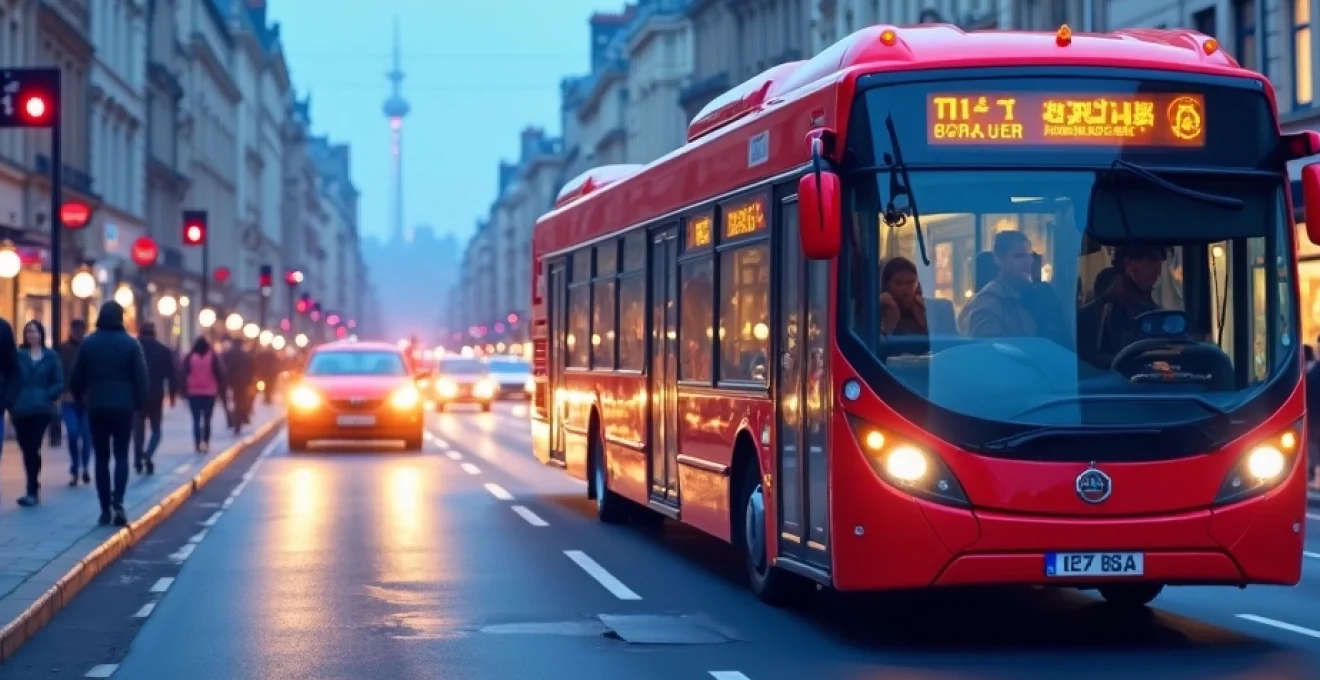
The urban mobility landscape is experiencing a profound transformation as ride-sharing platforms fundamentally alter how cities approach public transportation. Traditional transit systems, once dominated by fixed routes and rigid schedules, now face unprecedented challenges from dynamic, technology-driven alternatives that promise greater efficiency and personalisation. This shift represents more than just technological advancement; it signals a reimagining of urban connectivity where data-driven algorithms and passenger-centric services are becoming the new standard.
Cities worldwide are witnessing this evolution as ride-sharing services integrate with existing infrastructure, creating hybrid transportation ecosystems that blur the lines between private and public mobility. The implications extend far beyond convenience, touching on fundamental questions of urban planning, economic sustainability, and equitable access to transportation services.
Dynamic fleet optimisation algorithms transforming urban mobility networks
Modern ride-sharing platforms rely on sophisticated algorithmic systems that continuously optimise fleet deployment across urban areas. These systems process thousands of data points per second, including traffic patterns, weather conditions, historical demand data, and real-time passenger requests to maximise efficiency and minimise wait times. The transformation represents a shift from static transportation planning to dynamic resource allocation that adapts to changing city conditions throughout the day.
The computational complexity behind these systems rivals that of major financial trading platforms, with machine learning models constantly refining their predictive capabilities. Fleet optimisation algorithms now consider variables ranging from local events and construction work to public transport strikes and weather forecasts. This level of sophistication enables platforms to anticipate demand spikes and pre-position vehicles accordingly, fundamentally changing how urban mobility responds to city rhythms.
Uber’s machine Learning-Driven surge pricing models in london
Uber’s implementation of machine learning-powered surge pricing in London demonstrates how predictive analytics can balance supply and demand in real-time. The system analyses historical trip data, current driver availability, and external factors such as tube strikes or major events to determine optimal pricing strategies. During the 2019 London Bridge incident, the algorithm successfully redirected both drivers and passengers away from affected areas while maintaining service availability across the rest of the city.
The sophistication of these models extends beyond simple supply-demand calculations. Machine learning algorithms consider passenger price sensitivity, competitor pricing, and long-term market positioning to ensure sustainable growth while maintaining accessibility. Research indicates that dynamic pricing models can increase overall system efficiency by up to 23% compared to fixed-rate systems, though they also raise questions about equitable access to transportation services.
Lyft’s heat map technology for Real-Time demand forecasting
Lyft’s heat map technology represents a breakthrough in predictive demand modelling , using visual analytics to display anticipated ride requests across geographic areas. The system processes anonymised location data, event schedules, and historical patterns to create dynamic demand forecasts that update every few minutes. This technology enables drivers to position themselves strategically, reducing both passenger wait times and driver idle time.
The heat map system incorporates external data sources including social media trends, entertainment venues, and public transport schedules to enhance prediction accuracy. During major sporting events or concerts, the algorithm can anticipate demand surges up to two hours in advance, allowing for proactive fleet deployment. This capability has proven particularly valuable in cities with significant event-driven transportation needs, where traditional public transport systems struggle to accommodate sudden demand spikes.
Ola’s Multi-Modal integration with delhi metro rail corporation
Ola’s partnership with the Delhi Metro Rail Corporation exemplifies how ride-sharing platforms can complement existing public transport infrastructure rather than compete with it. The integration allows passengers to book seamless journeys that combine metro travel with first-mile and last-mile ride-sharing services. This multi-modal approach addresses the connectivity gaps that often discourage public transport usage, particularly in sprawling metropolitan areas.
The technical implementation involves real-time data sharing between metro systems and ride-sharing algorithms, enabling dynamic pricing and route optimisation that considers both modes of transport. Passengers can purchase integrated tickets through a single platform, with journey times and costs calculated across the entire multi-modal trip. Early data suggests that such integrations can increase public transport usage by up to 18% while reducing overall travel times for combined journeys.
Grab’s AI-Powered route efficiency systems in singapore’s central business district
Singapore’s Central Business District presents unique challenges for urban mobility, with its high density and complex traffic patterns requiring sophisticated routing solutions. Grab’s AI-powered system addresses these challenges through dynamic route optimisation that considers real-time traffic conditions, road restrictions, and electronic road pricing zones. The algorithm continuously recalculates optimal routes, often identifying alternatives that traditional GPS systems might miss.
The system’s integration with Singapore’s Smart Nation initiative demonstrates how ride-sharing platforms can align with broader urban technology strategies. Data sharing agreements enable Grab’s algorithms to access traffic management system data, weather information, and planned infrastructure works. This comprehensive data integration has resulted in average journey time reductions of 15-20% during peak hours, while also contributing valuable mobility data to city planning authorities.
Micro-transit integration replacing traditional bus route infrastructure
Micro-transit services are emerging as a compelling alternative to traditional fixed-route bus systems, particularly in areas with lower population density or irregular demand patterns. These services combine the efficiency of shared transportation with the flexibility of on-demand booking, creating a middle ground between individual ride-sharing and mass transit. The technology enables dynamic routing that adjusts to real-time passenger requests while maintaining the cost benefits of shared travel.
Traditional bus routes, designed around predictable commuter patterns, often struggle to serve modern urban mobility needs effectively. Micro-transit systems address this challenge by using algorithmic route planning that can accommodate multiple passenger requests simultaneously, optimising both travel time and vehicle utilisation. Cities experimenting with micro-transit replacements report improved service coverage, reduced operational costs, and higher passenger satisfaction rates compared to equivalent fixed-route services.
Via’s On-Demand shuttles supplementing transport for london services
Via’s collaboration with Transport for London represents a significant experiment in demand-responsive transport , particularly in outer London areas where traditional bus services face declining ridership and high operational costs. The service uses advanced routing algorithms to group passengers with similar origins and destinations, creating efficient shared journeys that adapt to real-time demand patterns.
The pilot programmes in zones such as Sutton and Ealing have demonstrated how on-demand shuttles can maintain service levels while reducing operational costs by up to 30%. Passengers book journeys through smartphone apps, with pick-up and drop-off points optimised to minimise walking distances while maximising route efficiency. Early results suggest that such services could replace traditional bus routes on up to 40% of London’s lower-demand routes without compromising service quality.
Citymapper’s smart ride connecting london underground station gaps
Citymapper’s Smart Ride service specifically targets the connectivity gaps in London’s transport network, focusing on journeys that are poorly served by existing public transport options. The service uses algorithmic route planning to identify optimal paths between underground stations, particularly in areas where multiple transport changes would otherwise be required. This targeted approach demonstrates how ride-sharing technology can complement rather than compete with existing infrastructure.
The service’s integration with Citymapper’s comprehensive transport app provides passengers with seamless journey planning across multiple transport modes. Real-time data from Transport for London enables dynamic route adjustments when underground services face delays or disruptions. Analysis of journey patterns has revealed that targeted ride-sharing services can reduce total journey times by an average of 25% for cross-London trips that require multiple transport connections.
Gett’s corporate partnerships with manchester city council
Manchester City Council’s partnership with Gett illustrates how local authorities can leverage ride-sharing technology to enhance public service delivery while maintaining cost control. The collaboration provides on-demand transportation for council employees, social services clients, and specific public transport requirements. This approach demonstrates how ride-sharing platforms can extend beyond commercial services to support public sector objectives.
The partnership includes data sharing agreements that enable Manchester City Council to analyse transportation patterns and identify areas where public transport provision might be enhanced. Gett’s platform provides detailed journey analytics, helping council planners understand mobility needs across different areas and demographics. The initiative has reduced transportation costs for social services by approximately 20% while improving service reliability and accessibility for vulnerable populations.
Bolt’s First-Mile Last-Mile solutions in birmingham’s outer boroughs
Birmingham’s outer boroughs face significant connectivity challenges, with limited public transport options making car ownership essential for many residents. Bolt’s first-mile last-mile services address these challenges by providing connections between residential areas and major transport hubs, enabling greater use of existing rail and bus networks. The service demonstrates how targeted ride-sharing can extend the effective reach of public transport systems.
The algorithmic routing considers both journey efficiency and cost optimisation, often grouping passengers heading to the same transport hubs to reduce individual journey costs. Integration with West Midlands transport data enables real-time coordination with train and bus schedules, minimising waiting times for onward connections. Early adoption data suggests that such services could increase public transport usage in outer suburban areas by up to 35% by addressing the convenience gap that often drives car dependency.
Data-driven passenger flow analytics reshaping transit authority planning
The wealth of data generated by ride-sharing platforms provides unprecedented insights into urban mobility patterns, fundamentally changing how transit authorities approach network planning and service optimisation. Traditional planning methods relied on periodic surveys and limited sampling, whereas ride-sharing platforms generate continuous, comprehensive data streams that reveal detailed patterns of movement across urban areas. This data-driven approach enables more responsive and evidence-based transportation planning than ever before possible.
Transport authorities worldwide are beginning to recognise the value of ride-sharing data in understanding mobility demand patterns that traditional public transport systems might miss. The granular nature of this data—showing exact origins, destinations, times, and journey characteristics—provides insights that can inform everything from bus route planning to infrastructure investment decisions. Cities that have embraced data sharing partnerships report more efficient resource allocation and improved passenger satisfaction across their entire transport networks.
Modern urban mobility planning requires real-time understanding of passenger flows and demand patterns that traditional survey methods simply cannot provide. Ride-sharing data offers this visibility at unprecedented scale and detail.
The analytical capabilities now available to transit planners include predictive modelling that can forecast demand changes based on urban development, event scheduling, and seasonal variations. Machine learning algorithms can identify patterns that human planners might overlook, such as the relationship between weather conditions and modal choice, or the impact of new commercial developments on transportation demand. This analytical sophistication enables more proactive rather than reactive transportation planning.
Privacy considerations and data governance frameworks are becoming critical components of these partnerships, with cities developing protocols that balance the value of mobility insights with passenger privacy protection. Successful implementations typically involve anonymised and aggregated data sharing that provides useful planning insights without compromising individual privacy. The establishment of these frameworks is essential for maintaining public trust while harnessing the planning benefits of ride-sharing data.
Integration challenges also arise when combining ride-sharing data with traditional transport planning datasets, requiring new analytical tools and methodologies. Transit authorities are investing in data science capabilities and collaborative platforms that can process multiple data sources simultaneously. The most successful implementations involve cross-sector partnerships where technology companies, transport authorities, and urban planning departments work together to develop comprehensive mobility intelligence systems.
Mobility-as-a-service platforms consolidating Multi-Modal transportation ecosystems
Mobility-as-a-Service (MaaS) platforms represent the convergence of various transportation options into unified, user-centric services that promise to simplify urban mobility while reducing reliance on private car ownership. These platforms integrate ride-sharing, public transport, bike-sharing, car-sharing, and micro-mobility options into single applications that handle journey planning, booking, and payment across multiple transport modes. The ecosystem approach transforms transportation from a collection of separate services into an integrated mobility solution.
The technical architecture required for effective MaaS implementation involves complex API integrations, real-time data synchronisation, and unified payment processing across multiple service providers. Successful platforms must negotiate with numerous transport operators while maintaining seamless user experiences and consistent service quality standards. This complexity explains why MaaS adoption has been gradual, despite significant potential benefits for both users and transport operators.
Whim’s Subscription-Based travel credits in helsinki and birmingham
Whim’s subscription model represents an innovative approach to mobility financing , offering users monthly packages that include public transport access, ride-sharing credits, and bike-sharing privileges. The Helsinki implementation demonstrated how subscription-based models could encourage modal shift away from private car ownership by making alternative transportation more predictable and affordable. Users report feeling more willing to experiment with different transport modes when costs are bundled into predictable monthly fees.
Birmingham’s pilot programme adapted the model for UK transport infrastructure, incorporating local bus services, train connections, and various micro-mobility options. The subscription approach addresses one of the key barriers to multi-modal transport adoption: the complexity and unpredictability of paying for multiple services. Early data suggests that subscription users make 40% more trips using public transport and shared mobility services compared to pay-per-trip users.
Maas global’s integration with santander cycles and lime E-Scooters
The integration of bike-sharing and e-scooter services into comprehensive MaaS platforms demonstrates how micro-mobility options can become seamless components of longer journeys. MaaS Global’s platform enables users to combine Santander Cycles for short urban trips with public transport for longer distances, all within a single booking and payment system. This integration addresses the first-mile and last-mile challenges that often discourage public transport usage.
Technical challenges include real-time availability tracking across different micro-mobility providers, dynamic pricing integration, and ensuring consistent service quality standards. The platform must handle scenarios where users’ intended micro-mobility options become unavailable during their journey, requiring instant rebooking and route adjustment capabilities. Successful integration has resulted in increased usage of both public transport and micro-mobility services, suggesting that comprehensive platforms create synergistic effects rather than cannibalisation between transport modes.
Uber’s partnership with trainline for seamless Rail-to-Ride transitions
Uber’s integration with Trainline exemplifies how inter-modal connectivity can be enhanced through platform partnerships that extend beyond traditional ride-sharing boundaries. The collaboration enables users to book train journeys with guaranteed ride connections at their destination, addressing one of the key anxiety points for travellers using unfamiliar public transport networks. This partnership demonstrates how ride-sharing platforms can support rather than replace public transport usage.
The technical implementation involves real-time coordination between rail schedules and ride-sharing availability, with dynamic contingency planning for service disruptions. Users receive integrated journey updates that account for both rail delays and ride availability, enabling more reliable long-distance travel planning. The service has proven particularly valuable for business travellers and tourists who require predictable journey times but lack local transport knowledge.
Free2move’s electric vehicle Car-Sharing integration in paris and london
Free2Move’s integration of electric vehicle car-sharing into broader mobility platforms represents the convergence of sustainable transport and shared mobility services. The platform combines traditional car-sharing with public transport, ride-sharing, and micro-mobility options, prioritising electric vehicles across all motorised services. This approach demonstrates how MaaS platforms can actively promote sustainable transport choices through integrated service design.
The electric vehicle focus requires sophisticated charging infrastructure coordination and range planning integrated into journey recommendations. Users receive real-time information about vehicle battery levels, charging station locations, and alternative transport options if electric vehicles are unavailable. The Paris implementation has achieved 85% electric vehicle usage across all motorised trips booked through the platform, significantly exceeding standalone car-sharing services’ sustainability metrics.
Regulatory framework adaptations enabling Ride-Sharing public transport collaborations
The integration of ride-sharing platforms with public transport systems requires significant adaptations to regulatory frameworks that were originally designed for clearly separated private and public transportation sectors. Traditional transport regulation assumed distinct boundaries between commercial taxi services, public bus operations, and private vehicle usage. Modern ride-sharing platforms blur these boundaries, requiring flexible regulatory approaches that can accommodate hybrid service models while maintaining safety standards and fair market competition.
Cities worldwide are developing new regulatory frameworks that enable productive collaboration between ride-sharing platforms and public transport authorities while protecting passenger rights and ensuring service reliability. These frameworks typically address data sharing protocols, service quality standards, pricing transparency, and accessibility requirements. The most successful regulatory adaptations create clear guidelines for partnership arrangements while maintaining sufficient flexibility to accommodate technological innovation and changing mobility patterns.
Effective regulation of integrated mobility services requires balancing innovation with passenger protection, while ensuring that new partnerships enhance rather than undermine overall transport accessibility and affordability.
Licensing and operational requirements present particular challenges when ride-sharing services integrate with public transport functions. Traditional public transport operators must meet strict accessibility standards, service reliability commitments, and fare regulation requirements that may not directly apply to commercial ride-sharing platforms. Regulatory frameworks must establish
equivalent standards for integrated services that protect passenger interests while enabling operational flexibility.
Data protection and privacy regulations require careful consideration when ride-sharing platforms share passenger information with public transport authorities. GDPR compliance in European cities necessitates clear consent mechanisms and data minimisation principles that can complicate the data sharing arrangements that make integrated services effective. Regulatory frameworks must establish protocols that enable beneficial data sharing while maintaining strict privacy protections and giving passengers control over their information usage.
Competition law considerations arise when public transport authorities partner with specific ride-sharing platforms, potentially creating market advantages that could disadvantage other operators. Regulatory frameworks must ensure that partnership arrangements maintain competitive markets while enabling the collaboration necessary for effective service integration. This balance often requires transparent procurement processes and open standards that allow multiple platforms to participate in public transport integration programmes.
Safety and insurance requirements present additional regulatory complexities when ride-sharing vehicles provide services that traditionally fall under public transport regulations. Professional driver standards, vehicle inspection requirements, and insurance coverage levels may need adjustment to account for services that operate between commercial and public transport categories. Cities are developing graduated regulatory approaches that apply appropriate standards based on service characteristics rather than rigid categorical definitions.
Economic impact assessment of Platform-Based transport on municipal revenue streams
The integration of ride-sharing platforms into urban transport ecosystems creates significant economic implications for municipal authorities, affecting everything from public transport revenue to parking income and infrastructure investment requirements. Traditional municipal transport economics assumed clear revenue streams from public transport fares, parking fees, and fuel taxes that supported transport infrastructure maintenance and development. Platform-based transport models disrupt these established revenue patterns, requiring cities to reassess their transportation financing strategies.
Public transport authorities face complex revenue impacts when ride-sharing services complement their operations. While integrated services can increase overall ridership and system efficiency, they may also cannibalise higher-margin services or reduce fare revenue if passengers shift to subsidised ride-sharing options. Cities implementing integrated mobility programmes report mixed financial outcomes, with some experiencing net revenue increases through improved system utilisation while others face challenges in maintaining traditional funding models.
The transformation of urban mobility requires cities to fundamentally rethink their transportation economics, moving from asset-based revenue models to service-based partnerships that prioritise overall system efficiency over individual revenue streams.
Parking revenue represents one of the most significant economic disruptions caused by increased ride-sharing adoption. Cities that historically relied on parking fees to fund transport infrastructure face declining revenue as residents reduce private car ownership and usage. Dynamic parking pricing and repurposing of parking infrastructure for other municipal uses are becoming necessary adaptations, though they require significant planning and investment to implement effectively.
Infrastructure investment patterns are shifting as cities recognise that platform-based transport can provide mobility services more efficiently than traditional infrastructure expansion. Rather than building new bus routes or parking facilities, cities are investing in digital infrastructure, charging networks for electric vehicles, and multi-modal transport hubs that support integrated mobility services. These investments often provide better return on investment than traditional infrastructure, though they require different financing mechanisms and partnership structures.
Tax revenue implications extend beyond direct transport services, as reduced car ownership affects vehicle registration fees, fuel taxes, and related municipal income streams. Cities are exploring new revenue models including mobility taxes on ride-sharing trips, congestion charging systems that apply to all vehicles, and value capture mechanisms that fund transport improvements through development contributions. The most successful implementations create revenue systems that support overall mobility objectives rather than protecting specific legacy income sources.
Employment impacts present both opportunities and challenges for municipal economies. While traditional public transport employment may decline in some areas, platform-based transport creates new employment opportunities in technology, fleet management, and customer service sectors. Cities are developing workforce transition programmes that help traditional transport workers adapt to new mobility service requirements while supporting the growth of platform-based employment opportunities.
Cost-benefit analyses of integrated mobility programmes consistently demonstrate positive economic impacts when properly implemented, though the distribution of benefits varies significantly across different urban contexts. Operational efficiency gains from optimised routing and dynamic service provision typically outweigh the costs of platform integration and regulatory adaptation. However, cities must carefully manage the transition period to avoid service disruptions or inequitable outcomes that could undermine public support for mobility transformation initiatives.