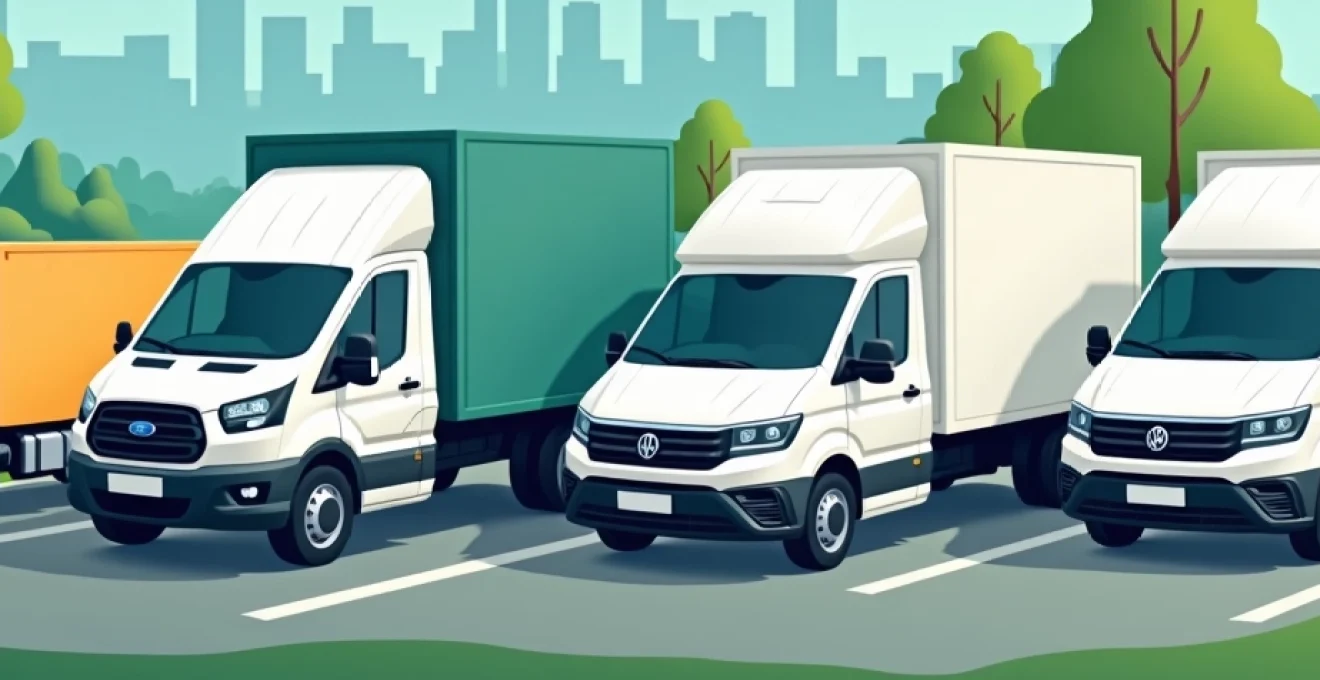
The transportation sector accounts for nearly 24% of global carbon dioxide emissions, making fleet sustainability a critical business imperative rather than merely an environmental consideration. Modern fleet managers face mounting pressure from regulatory frameworks, stakeholder expectations, and economic drivers to implement comprehensive green strategies that reduce operational costs whilst minimising environmental impact. The transition towards sustainable fleet management encompasses far more than simply purchasing electric vehicles; it requires a holistic approach integrating advanced technologies, optimised operational processes, and strategic procurement decisions. Companies implementing robust sustainability programmes report average cost reductions of 15-25% alongside significant improvements in corporate reputation and regulatory compliance. The convergence of technological advancement, regulatory pressure, and economic incentives creates an unprecedented opportunity for organisations to transform their fleet operations into competitive advantages whilst contributing meaningfully to global decarbonisation efforts.
Electric vehicle integration: tesla model S, nissan leaf, and commercial fleet electrification
Electric vehicle adoption represents the cornerstone of modern fleet sustainability strategies, with global EV sales reaching 10.5 million units in 2022, representing a 55% increase from the previous year. Fleet electrification offers compelling benefits including zero direct emissions, reduced maintenance requirements due to fewer moving parts, and potential fuel cost savings of up to 70% compared to conventional vehicles. The commercial viability of electric fleets has improved dramatically with advances in battery technology, expanding charging infrastructure, and increasingly competitive total cost of ownership metrics.
Successful fleet electrification requires careful consideration of operational requirements, duty cycles, and infrastructure capabilities. Vehicle selection must align precisely with specific use cases , considering factors such as daily mileage requirements, payload capacity, and environmental conditions. The Tesla Model S exemplifies premium executive fleet applications with its 405-mile range and advanced autonomous features, whilst the Nissan Leaf provides cost-effective urban delivery solutions with its proven reliability and extensive service network. Commercial electrification extends beyond passenger vehicles to include delivery vans, trucks, and specialty vehicles, with manufacturers like Ford, Mercedes, and Rivian offering comprehensive electric commercial vehicle portfolios.
Battery technology assessment: lithium-ion vs Solid-State power systems
Contemporary electric vehicle batteries utilise primarily lithium-ion technology, offering energy densities of 150-250 Wh/kg and cycle lives exceeding 3,000 charge cycles. Modern battery management systems incorporate sophisticated thermal regulation, cell balancing, and predictive maintenance capabilities that maximise performance and longevity. However, emerging solid-state battery technology promises revolutionary improvements in energy density, charging speed, and safety characteristics, with potential commercial deployment anticipated by 2027-2030.
Battery degradation patterns significantly impact fleet economics, with typical lithium-ion batteries retaining 80% capacity after 8-10 years of commercial use. Fleet managers must incorporate battery replacement costs into total cost of ownership calculations , typically ranging from £8,000-£15,000 for commercial vehicle applications. Advanced battery analytics platforms enable predictive maintenance strategies that optimise charging patterns, temperature management, and usage cycles to maximise battery lifespan and performance.
Charging infrastructure planning: DC fast charging and Depot-Based solutions
Comprehensive charging infrastructure represents a critical success factor for fleet electrification, requiring strategic planning that balances operational requirements with capital investment constraints. Depot-based charging solutions typically utilise AC Level 2 chargers (7-22 kW) for overnight charging of vehicles with predictable duty cycles, whilst DC fast charging (50-350 kW) enables rapid top-up charging for vehicles with extended operational requirements. Infrastructure costs vary significantly based on electrical capacity requirements, with typical depot installations ranging from £2,000-£8,000 per charging point including electrical infrastructure upgrades.
Smart charging systems optimise energy consumption by scheduling charging during off-peak electricity periods and integrating renewable energy sources. Load management capabilities prevent electrical system overloads whilst vehicle-to-grid (V2G) technology enables electric vehicles to provide grid stabilisation services, creating additional revenue opportunities. Advanced charging management platforms provide real-time monitoring, predictive maintenance alerts, and comprehensive energy analytics that optimise charging efficiency and reduce operational costs.
Range optimisation strategies for urban and Long-Haul operations
Range optimisation requires sophisticated understanding of vehicle energy consumption patterns, environmental factors, and operational requirements. Urban delivery operations typically achieve 2-4 miles per kWh efficiency depending on vehicle size, payload, and traffic conditions, whilst highway operations may experience 20-30% efficiency reductions due to aerodynamic drag and sustained high-speed operation. Climate control systems significantly impact range, with heating and cooling systems consuming up to 30% of available energy in extreme weather conditions.
Predictive range modelling incorporates real-time data including traffic conditions, weather forecasts, vehicle loading, and driver behaviour patterns to provide accurate range estimations. Route planning algorithms optimise charging stop locations and duration for long-haul operations, whilst regenerative braking systems recover 10-25% of energy during deceleration phases. Fleet telematics platforms provide detailed energy consumption analytics that enable continuous optimisation of operational parameters and driving behaviours.
Total cost of ownership analysis: procurement, maintenance, and energy costs
Comprehensive total cost of ownership analysis must encompass procurement costs, financing arrangements, maintenance expenses, energy costs, depreciation patterns, and end-of-life value recovery. Electric vehicles typically command purchase price premiums of 20-40% compared to equivalent conventional vehicles, though this gap continues narrowing as battery costs decline and production scales increase. Government incentives including purchase grants, tax benefits, and preferential rates significantly improve the economic proposition for fleet electrification.
Maintenance cost advantages for electric vehicles stem from simplified powertrains with fewer moving parts, reduced lubricant requirements, and regenerative braking systems that extend brake component life. Typical maintenance savings range from 30-50% compared to conventional vehicles, though potential battery replacement costs must be factored into long-term projections. Energy costs vary significantly based on electricity tariffs, charging infrastructure utilisation, and operational patterns , with fleet-specific charging rates often providing substantial savings compared to public charging networks.
Alternative fuel vehicle adoption: hydrogen, biodiesel, and CNG fleet solutions
Alternative fuel technologies provide complementary solutions to electric vehicles, particularly for applications requiring extended range, rapid refuelling, or heavy-duty operations where battery weight penalties become prohibitive. Hydrogen fuel cell vehicles excel in long-haul trucking applications, whilst biodiesel blends offer immediate sustainability benefits for existing diesel fleets without requiring significant infrastructure modifications. Compressed natural gas systems provide cost-effective solutions for urban bus fleets and refuse collection vehicles with predictable routes and centralised refuelling requirements.
The diversification of fuel sources reduces dependency on petroleum products whilst supporting energy security objectives and providing operational flexibility. Alternative fuel adoption requires careful assessment of fuel availability, infrastructure requirements, vehicle compatibility, and economic viability within specific operational contexts. Successful implementation often involves phased deployment strategies that allow operational experience accumulation whilst minimising financial risks .
Hydrogen fuel cell technology: toyota mirai and Heavy-Duty applications
Hydrogen fuel cell technology converts hydrogen and oxygen into electricity through electrochemical processes, producing only water vapour as a byproduct. The Toyota Mirai demonstrates passenger car fuel cell viability with a 400-mile range and 3-minute refuelling time, whilst heavy-duty applications including trucks, buses, and industrial equipment benefit from hydrogen’s high energy density and rapid refuelling capabilities. Fuel cell systems achieve 40-60% efficiency compared to 25-35% for conventional internal combustion engines.
Commercial hydrogen production predominantly relies on natural gas reforming, though electrolysis using renewable electricity offers truly zero-carbon hydrogen production pathways. Green hydrogen costs continue declining as renewable energy becomes cheaper and electrolysis technology improves, with projected cost parity to conventional fuels anticipated by 2030-2035. Infrastructure development remains challenging, with refuelling stations costing £1-2 million each and requiring specialised safety protocols for high-pressure hydrogen storage and dispensing systems.
Biodiesel B20 implementation: engine compatibility and supply chain management
Biodiesel blends offer immediate sustainability benefits for existing diesel fleets without requiring vehicle modifications or driver training. B20 (20% biodiesel, 80% petroleum diesel) provides optimal balance between sustainability benefits and fuel system compatibility, reducing lifecycle carbon emissions by 15-18% compared to conventional diesel. Most modern diesel engines accept B20 without warranty implications, though older vehicles may require fuel system component upgrades to ensure compatibility with biodiesel’s solvent properties.
Supply chain management becomes critical for biodiesel implementation, requiring reliable sourcing partnerships and quality assurance protocols. Biodiesel specifications must meet ASTM D6751 standards to ensure fuel quality and engine protection, with particular attention to oxidation stability, cold flow properties, and contaminant levels. Storage considerations include temperature management and additive packages that prevent biodiesel degradation and microbial growth , whilst fuel rotation protocols ensure consistent quality delivery to vehicles.
Compressed natural gas systems: refuelling infrastructure and safety protocols
Compressed natural gas provides 25-30% reduction in greenhouse gas emissions compared to gasoline and offers significant cost advantages in regions with abundant natural gas supplies. CNG vehicles require high-pressure storage tanks and modified fuel systems, with refuelling infrastructure costs ranging from £300,000-£800,000 per station depending on capacity and compression requirements. Time-fill systems provide cost-effective overnight refuelling for depot-based operations, whilst fast-fill stations enable rapid refuelling comparable to conventional fuels.
Safety protocols for CNG operations encompass leak detection systems, proper ventilation requirements, and specialised training for maintenance personnel. Natural gas detection systems provide early warning of potential leaks, whilst automatic shutoff valves and pressure relief devices ensure safe operation under all conditions. Regular inspections of high-pressure components and adherence to strict maintenance schedules maintain system integrity and operational safety.
Hybrid powertrains: toyota prius prime and ford transit custom PHEV integration
Hybrid powertrains combine internal combustion engines with electric motor assistance to achieve superior fuel efficiency without range limitations or infrastructure dependencies. The Toyota Prius Prime exemplifies plug-in hybrid efficiency with 54 mpg combined fuel economy and 25 miles of electric-only range for urban operations. Commercial applications like the Ford Transit Custom PHEV provide 35 miles of electric range for zero-emission urban deliveries whilst maintaining diesel capability for longer journeys.
Plug-in hybrid electric vehicles (PHEVs) offer transitional solutions for fleets not yet ready for full electrification, providing electric operation benefits whilst eliminating range anxiety. Optimal PHEV utilisation requires route planning that maximises electric-only operation in urban areas and emission-controlled zones. Battery sizing represents a critical compromise between electric range, vehicle weight, and cost considerations, with most commercial PHEVs targeting 30-50 miles of electric operation to accommodate typical urban delivery requirements.
Fleet telematics and route optimisation for carbon footprint reduction
Advanced telematics systems provide the data foundation for sustainable fleet operations, enabling real-time monitoring of vehicle performance, driver behaviour, and operational efficiency. Modern telematics platforms integrate GPS tracking, engine diagnostics, fuel consumption monitoring, and driver behaviour analysis to identify optimisation opportunities that reduce both costs and emissions. Fleet managers utilising comprehensive telematics report 10-15% improvements in fuel efficiency through optimised routing, reduced idling, and improved driver behaviours.
Route optimisation algorithms process multiple variables including traffic patterns, delivery windows, vehicle capacities, and fuel consumption characteristics to minimise total travel distances and maximise operational efficiency. Dynamic routing capabilities adjust plans in real-time based on traffic conditions, vehicle breakdowns, or priority deliveries, whilst machine learning algorithms continuously improve routing accuracy through pattern recognition and historical analysis. Artificial intelligence-powered optimisation systems can process thousands of route permutations simultaneously to identify optimal solutions that human planners might overlook .
Carbon footprint tracking capabilities provide detailed emissions reporting at vehicle, route, and fleet levels, enabling data-driven sustainability initiatives and regulatory compliance reporting. Integration with fuel card systems and maintenance records creates comprehensive operational dashboards that identify specific improvement opportunities. Advanced analytics identify correlations between operational parameters and emissions output, enabling targeted interventions that maximise environmental benefits whilst minimising operational disruption.
Predictive maintenance scheduling based on telematics data ensures vehicles operate at peak efficiency, with properly maintained vehicles typically achieving 5-10% better fuel economy than neglected units. Real-time alerts for maintenance requirements prevent minor issues from developing into major problems that impact efficiency and emissions. Fleet utilisation analytics identify underutilised vehicles that can be removed from service, reducing total fleet size whilst maintaining operational capability. Comprehensive telematics implementation typically requires 3-6 months for full optimisation benefits to materialise as systems learn operational patterns and drivers adapt to new technologies .
Sustainable procurement strategies: lifecycle assessment and supplier evaluation
Sustainable procurement encompasses the entire vehicle lifecycle from raw material extraction through manufacturing, operation, and end-of-life disposal or recycling. Lifecycle assessment methodologies quantify environmental impacts across all operational phases, enabling informed decision-making that considers factors beyond initial purchase price and operational costs. Comprehensive sustainability evaluation includes carbon footprint assessment, resource consumption analysis, recyclability considerations, and supply chain transparency requirements.
Supplier evaluation criteria must incorporate environmental management systems, sustainability reporting transparency, and commitment to continuous improvement in environmental performance. Leading vehicle manufacturers increasingly provide detailed sustainability reporting including carbon footprint data, recycled content percentages, and end-of-life recycling programmes. Procurement decisions should prioritise suppliers demonstrating measurable progress towards science-based targets and transparent reporting of environmental performance metrics .
Vehicle specification optimisation involves right-sizing vehicles for specific applications to minimise weight, improve efficiency, and reduce environmental impact. Oversized vehicles consume unnecessary resources and generate excessive emissions, whilst undersized vehicles may require multiple trips or supplementary vehicles. Specification parameters including engine size, transmission type, aerodynamic features, and auxiliary systems significantly impact lifecycle environmental performance. Fleet standardisation reduces complexity whilst enabling bulk purchasing advantages and simplified maintenance procedures.
End-of-life planning ensures responsible disposal and maximum value recovery from retired vehicles. Manufacturer take-back programmes, certified recycling facilities, and component remanufacturing opportunities minimise waste whilst recovering valuable materials. Vehicle residual value protection strategies including maintenance programmes and mileage management preserve asset values whilst supporting sustainable disposal pathways. Circular economy principles emphasise component reuse, material recovery, and waste minimisation throughout the vehicle lifecycle .
Sustainable procurement strategies must balance environmental considerations with operational requirements and economic constraints to achieve optimal outcomes that support both business objectives and sustainability goals.
Driver training programmes: Eco-Driving techniques and behavioural change management
Driver behaviour significantly impacts vehicle fuel consumption and emissions, with aggressive driving patterns increasing fuel consumption by 15-30% compared to efficient driving techniques. Comprehensive driver training programmes addressing acceleration patterns, speed management, route planning, and vehicle operation fundamentals can achieve sustained improvements in fleet efficiency and environmental performance. Successful programmes combine classroom instruction with practical driving assessments and ongoing coaching to ensure knowledge retention and behavioural change.
Behavioural change management requires understanding individual motivations and providing appropriate incentives to encourage adoption of efficient driving practices. Gamification approaches utilising driver scorecards, performance competitions, and recognition programmes effectively engage drivers whilst promoting sustainable behaviours. Regular feedback sessions and personalised coaching address specific improvement opportunities identified through telematics monitoring. Sustainable behaviour change typically requires 6-12 months of consistent reinforcement before becoming habitual .
Fuel-efficient driving methodologies: acceleration patterns and speed management
Optimal acceleration patterns involve gradual throttle application that allows engines to operate within efficient RPM ranges whilst minimising fuel consumption peaks associated with rapid acceleration. Modern vehicles achieve peak efficiency at steady cruising speeds between 45-65 mph, with fuel consumption increasing exponentially at higher speeds due to aerodynamic drag. Anticipatory driving techniques that maintain consistent speeds and minimise braking events improve efficiency whilst reducing vehicle wear and emissions.
Speed management training emphasises adherence to speed limits whilst optimising efficiency within legal parameters. Cruise control utilisation maintains consistent speeds and reduces driver fatigue whilst improving fuel economy by 5-10% during highway operations. Engine loading optimisation involves operating vehicles within efficient power bands, avoiding unnecessary idling, and utilising engine braking where appropriate. Comprehensive driver training typically achieves 8-12% improvements in fuel efficiency within the first year of implementation .
Vehicle maintenance protocols: tyre pressure monitoring and engine efficiency
Proper tyre pressure maintenance ensures optimal contact patches, reduces rolling resistance, and improves fuel economy by 2-4%. Underinflated tyres increase fuel consumption whilst accelerating tyre wear and reducing vehicle safety. Automated tyre pressure monitoring systems provide real-time alerts and historical data that enable proactive maintenance scheduling. Regular tyre rotation and alignment services maximise tyre life whilst maintaining optimal efficiency characteristics.
Engine maintenance protocols including air filter replacement, fuel system cleaning, and oil change intervals directly impact combustion efficiency and emissions output.
Clean air filters improve airflow efficiency and reduce engine strain, whilst regular oil changes maintain optimal lubrication and reduce internal friction. Fuel system additives prevent injector fouling and maintain optimal spray patterns that ensure complete combustion. Predictive maintenance scheduling based on operating hours and telematics data prevents efficiency degradation whilst minimising maintenance costs.
Gamification systems: driver scorecards and incentive programmes
Gamification transforms driver training from mandatory compliance exercises into engaging competitions that motivate continuous improvement. Driver scorecards display individual performance metrics including fuel efficiency scores, safety ratings, and eco-driving achievements, creating transparency that encourages peer competition and self-improvement. Monthly performance competitions with recognition programmes and modest financial incentives maintain engagement whilst reinforcing desired behaviours. League tables and team challenges foster collaborative improvement cultures where experienced drivers mentor newer colleagues.
Progressive achievement systems unlock new privileges or responsibilities as drivers demonstrate consistent improvement in efficiency metrics. Points-based systems reward specific behaviours including smooth acceleration, optimal speed maintenance, and reduced idling time, with accumulated points redeemable for preferred parking spaces, flexible scheduling, or professional development opportunities. Real-time feedback through in-cab displays provides immediate reinforcement of positive behaviours whilst alerting drivers to efficiency-degrading actions. Successful gamification programmes typically achieve 20-25% greater behaviour change retention compared to traditional training approaches.
Advanced driver assistance systems: adaptive cruise control and regenerative braking
Advanced driver assistance systems optimise vehicle operation beyond human capabilities whilst reducing driver workload and improving safety outcomes. Adaptive cruise control maintains optimal following distances whilst automatically adjusting speeds for traffic conditions, reducing unnecessary acceleration and braking cycles that waste fuel. Collision avoidance systems prevent accidents that cause operational disruptions and vehicle damage whilst maintaining smooth traffic flow. Lane departure warnings and blind spot monitoring reduce driver stress whilst preventing efficiency-degrading sudden manoeuvres.
Regenerative braking systems capture kinetic energy during deceleration and convert it into electrical energy stored in auxiliary batteries or hybrid powertrains. These systems recover 15-30% of braking energy depending on driving conditions and vehicle configuration, significantly improving overall efficiency. Predictive systems utilise GPS and mapping data to optimise regenerative braking application before approaching known deceleration points including traffic signals and highway exits. Integration with telematics platforms provides detailed analysis of energy recovery performance and identifies opportunities for route optimisation that maximise regenerative potential.
Fleet electrification ROI calculation: depreciation models and government incentives
Comprehensive return on investment analysis for fleet electrification requires sophisticated financial modelling that accounts for variable depreciation patterns, evolving government incentives, and operational cost fluctuations over extended timeframes. Electric vehicle depreciation follows different patterns compared to conventional vehicles, with initial rapid depreciation offset by potentially higher residual values due to lower mechanical wear and advancing battery technology. Government incentives including purchase grants, accelerated depreciation allowances, and preferential tax treatment significantly impact financial projections but require careful analysis of eligibility criteria and sunset clauses.
Total cost of ownership calculations must incorporate financing costs, insurance variations, maintenance savings, energy price volatility, and infrastructure investment requirements. Electric vehicles typically achieve break-even points within 3-5 years for high-utilisation applications, though results vary significantly based on duty cycles, energy costs, and vehicle specifications. Risk assessment frameworks evaluate potential negative scenarios including battery degradation, technology obsolescence, and changing regulatory environments that might impact projected returns. Comprehensive ROI models typically demonstrate 15-35% internal rates of return for appropriately selected electric vehicle applications.
Financial planning must address cash flow implications of higher upfront investments and different expense timing patterns compared to conventional vehicle procurement. Lease financing options often improve cash flow whilst transferring residual value risks to leasing companies with greater market expertise. Government grant timing and payment schedules affect working capital requirements and project viability, particularly for smaller fleet operations with limited financial flexibility. Currency hedging strategies may be appropriate for international procurement to manage exchange rate risks on vehicle purchases and infrastructure investments.
Successful fleet electrification requires comprehensive financial analysis that extends beyond simple payback calculations to encompass risk assessment, scenario planning, and strategic value creation that supports long-term business objectives whilst achieving measurable environmental benefits.
Performance monitoring systems track actual versus projected financial performance to validate ROI assumptions and enable corrective actions where necessary. Regular reassessment of financial models accommodates changing market conditions, technology improvements, and regulatory developments that impact ongoing viability. Benchmark analysis against industry peers and best practices identifies optimisation opportunities and validates strategic decisions. Portfolio approaches that diversify across multiple technologies and deployment phases reduce implementation risks whilst maximising learning opportunities that inform future investment decisions.