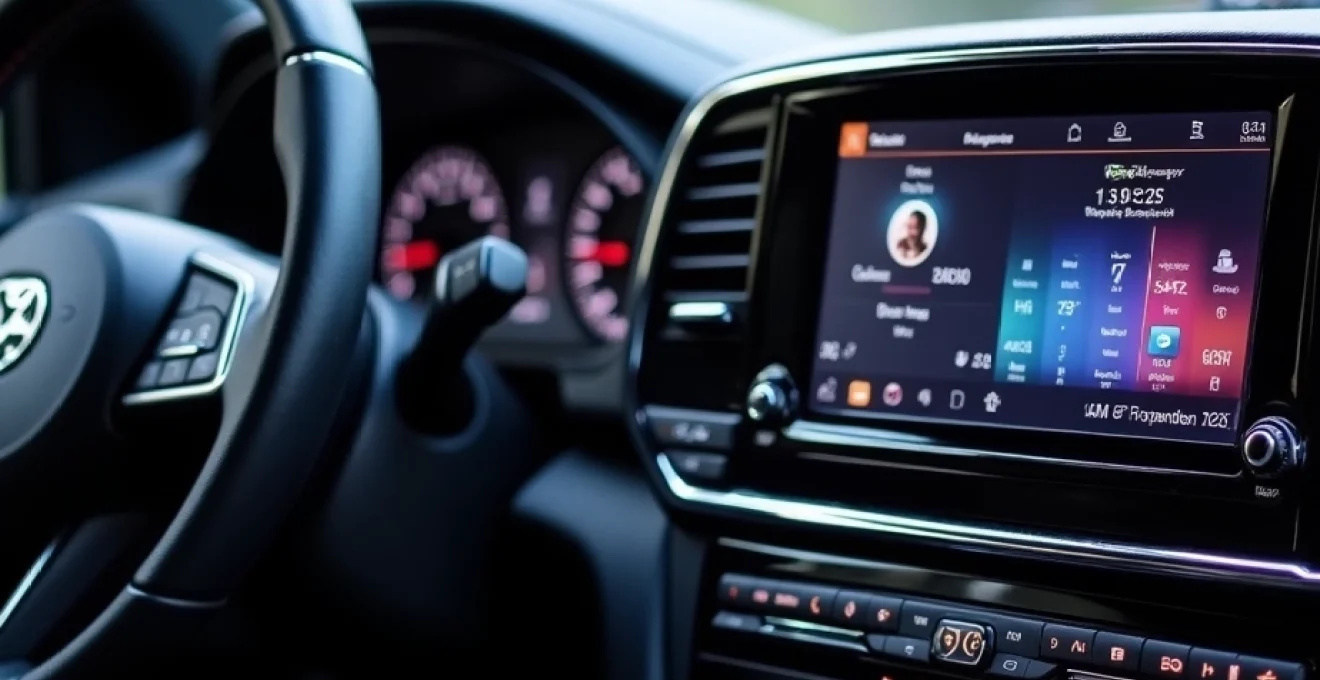
The pursuit of audiophile-grade sound quality in automotive environments presents unique challenges that distinguish car audio from home listening systems. Unlike the controlled acoustics of a dedicated listening room, vehicle cabins introduce complex variables including road noise, irregular interior surfaces, and limited speaker placement options. Modern car stereo systems have evolved far beyond simple AM/FM radios, incorporating sophisticated digital processing, high-resolution audio capabilities, and advanced amplification technologies that rival dedicated home audio components.
Selecting the optimal car stereo system requires understanding the intricate relationship between technical specifications and real-world performance. The automotive audio market, valued at $9.68 billion in 2023 and projected to reach $17.83 billion by 2032, reflects growing consumer demand for premium in-vehicle audio experiences. This substantial growth indicates that manufacturers are investing heavily in technologies that address the acoustic challenges inherent in automotive environments, from advanced digital signal processing to sophisticated noise cancellation systems.
Understanding car audio specifications and technical parameters
Technical specifications serve as the foundation for evaluating car stereo system performance, yet interpreting these measurements requires understanding how they translate to actual listening experiences. Unlike home audio specifications measured in controlled environments, car audio parameters must account for the acoustic complexities of vehicle interiors, including reflective surfaces, ambient noise levels, and varying listening positions.
RMS power output ratings vs peak power claims
Root Mean Square (RMS) power ratings provide the most accurate measure of a car stereo’s continuous power delivery capabilities. RMS measurements represent the sustained power output that an amplifier can deliver over extended periods without distortion or thermal stress. Peak power specifications , while impressive on marketing materials, indicate only brief instantaneous power bursts that rarely reflect real-world performance capabilities.
Professional-grade car stereo systems typically specify RMS power at specific impedance loads, commonly 4 ohms per channel for standard installations. High-quality head units deliver between 18-25 watts RMS per channel, sufficient for driving premium factory speakers without additional amplification. However, achieving reference-level sound pressure requires external amplification, with dedicated amplifiers providing 50-200 watts RMS per channel depending on speaker efficiency and cabin volume.
Total harmonic distortion (THD) measurement standards
Total Harmonic Distortion quantifies unwanted harmonic content introduced during audio signal processing and amplification. THD measurements below 0.1% indicate transparent audio reproduction, while figures exceeding 1% become audible as harshness or muddiness in musical presentation. Premium car stereo systems achieve THD levels between 0.01-0.05% at rated power output, ensuring clean signal reproduction across the entire frequency spectrum.
Understanding THD+N (Total Harmonic Distortion plus Noise) provides comprehensive insight into system cleanliness, as this measurement includes both harmonic distortion and background noise floor contributions. Reference-quality car audio components maintain THD+N specifications below 0.02% from 20Hz to 20kHz, delivering audiophile-grade signal purity despite the challenging automotive environment.
Signal-to-noise ratio (SNR) performance benchmarks
Signal-to-Noise Ratio measurements indicate the difference between the desired audio signal and unwanted background noise, expressed in decibels. Car stereo systems operating in electrically noisy automotive environments must maintain exceptional SNR performance to preserve low-level musical details. Professional-grade head units achieve SNR specifications exceeding 100dB, ensuring that subtle musical nuances remain audible above road noise and electrical interference.
A-weighted SNR measurements provide more relevant performance indicators by applying frequency weighting that corresponds to human hearing sensitivity. Systems with A-weighted SNR specifications above 95dB deliver noticeably quieter operation, particularly important during quiet musical passages or spoken word content where background noise becomes more apparent.
Frequency response range and audio bandwidth analysis
Frequency response specifications indicate the range of audio frequencies that a car stereo system can reproduce accurately. The human hearing range extends from approximately 20Hz to 20kHz, though individual sensitivity varies significantly with age and exposure history. High-resolution audio systems often specify extended frequency response beyond audible limits, capturing harmonic content and spatial information that contributes to overall musical realism.
Frequency response linearity proves more critical than absolute bandwidth, as significant variations create tonal imbalances that affect musical accuracy. Premium car stereo systems maintain frequency response within ±1dB from 20Hz to 20kHz, ensuring that all musical content receives equal emphasis without artificial coloration or emphasis.
Dynamic range and bit depth capabilities
Dynamic range specifications measure the difference between the loudest and quietest sounds that a system can reproduce simultaneously without compression or distortion. Modern car stereo systems supporting 24-bit audio processing achieve theoretical dynamic ranges exceeding 144dB, far surpassing the practical requirements of most musical content and automotive listening environments.
Bit depth capabilities directly impact dynamic range performance, with 16-bit systems providing 96dB of dynamic range while 24-bit processing extends this to 144dB. High-resolution audio enthusiasts often prefer 24-bit capable systems for their improved low-level resolution and reduced quantization artifacts, particularly noticeable during quiet musical passages.
Digital audio processing technologies and DAC integration
Digital-to-Analog Converter (DAC) technology represents the critical interface between digital audio sources and analog amplification systems. The quality of DAC implementation significantly influences overall system performance, affecting everything from frequency response linearity to noise floor characteristics. Modern car stereo systems incorporate sophisticated DAC architectures that rival dedicated audiophile components, utilizing advanced oversampling algorithms and noise shaping techniques to maximize conversion accuracy.
Burr-brown DAC chipsets vs AKM semiconductor solutions
Burr-Brown DAC chipsets, particularly the PCM17xx and PCM51xx series, have established themselves as reference standards for automotive audio applications. These converters utilize advanced delta-sigma modulation architectures with sophisticated digital filtering to achieve exceptional linearity and low distortion performance. Burr-Brown implementations typically feature 24-bit resolution with 192kHz sampling rate capability, providing substantial headroom for high-resolution audio processing.
AKM Semiconductor offers alternative DAC solutions with distinct sonic characteristics, including the AK4490 and AK4497 series. These converters employ proprietary VELVET SOUND technology and OSR (Over Sampling Ratio) doubler functionality to enhance detail retrieval and spatial presentation. The choice between Burr-Brown and AKM implementations often reflects manufacturer preferences for specific tonal characteristics rather than measurable performance differences.
24-bit/192khz High-Resolution audio processing
High-resolution audio processing capabilities enable car stereo systems to handle studio-quality recordings with exceptional fidelity. 24-bit/192kHz specification support ensures compatibility with the highest quality digital sources, including SACD, DVD-Audio, and high-resolution streaming services. Professional recording standards increasingly utilize these high-resolution formats to preserve maximum audio quality throughout the production chain.
Upsampling and oversampling technologies further enhance audio quality by reducing aliasing artifacts and improving digital filter performance. Advanced car stereo systems employ 8x or higher oversampling ratios, effectively increasing the digital processing frequency to minimize temporal artifacts and improve overall transparency.
Digital signal processing (DSP) engine configurations
Digital Signal Processing engines provide the computational power necessary for advanced audio enhancement and room correction algorithms. Modern DSP implementations utilize 32-bit floating-point arithmetic to maintain precision throughout complex processing chains, preventing cumulative errors that could degrade audio quality. Sophisticated DSP systems offer parametric equalization, crossover filtering, time alignment, and dynamic range processing capabilities.
Multi-core DSP architectures enable real-time processing of multiple audio channels simultaneously, supporting advanced features like individual passenger zone control and adaptive noise cancellation. These systems process audio streams with latencies below 5 milliseconds, ensuring that processed audio remains synchronized with visual content and maintains natural feel during interactive use.
Time alignment and phase correction algorithms
Time alignment processing compensates for the asymmetrical speaker placement inherent in automotive installations. Digital delay algorithms adjust the timing of each speaker’s output to create a coherent soundstage centered on the primary listening position. Precision time alignment requires adjustments accurate to fractions of milliseconds, achievable only through sophisticated digital processing capabilities.
Phase correction algorithms address the acoustic challenges created by speaker placement at varying distances from the listener. Advanced systems employ all-pass filtering and minimum-phase reconstruction to maintain proper phase relationships across the frequency spectrum, ensuring that stereo imaging and soundstage depth remain convincing despite the compromised acoustic environment.
Amplifier architecture and power distribution systems
Amplifier architecture fundamentally determines a car stereo system’s ability to drive speakers effectively while maintaining audio quality under varying load conditions. The transition from analog to digital amplification technologies has revolutionized automotive audio design, offering improved efficiency, reduced heat generation, and enhanced control flexibility. Understanding amplifier topologies and their respective strengths enables informed selection decisions that optimize performance for specific installation requirements and listening preferences.
Class D amplification efficiency vs class AB linearity
Class D amplification technology achieves efficiency ratings exceeding 90%, significantly reducing power consumption and heat generation compared to traditional Class AB designs. This efficiency advantage proves particularly valuable in automotive applications where electrical power remains limited and thermal management presents ongoing challenges. Modern Class D amplifiers utilize sophisticated switching frequencies above 400kHz to minimize audible artifacts while maintaining exceptional power efficiency.
Class AB amplification continues to offer advantages in linearity and low-distortion performance, particularly at low to moderate power levels. Premium car audio manufacturers often implement Class AB designs for critical midrange and tweeter applications where ultimate fidelity takes precedence over efficiency considerations. The choice between amplification classes frequently depends on specific installation requirements, available electrical capacity, and performance priorities.
Multi-channel amplifier topology design
Multi-channel amplifier architectures enable comprehensive system integration while minimizing installation complexity and space requirements. Four-channel amplifiers typically power front and rear speakers, while six-channel designs add dedicated subwoofer outputs for complete system integration. Advanced multi-channel designs incorporate independent power supplies for each channel pair, preventing cross-channel interaction and maintaining optimal performance under varying load conditions.
Bridging capabilities allow flexible power distribution by combining channel pairs for increased output into lower impedance loads. This functionality proves essential when driving high-performance speakers that require substantial power delivery while maintaining compatibility with existing system architectures. Professional installations often utilize bridging to optimize amplifier capabilities for specific speaker requirements.
Bridging capabilities and impedance matching
Impedance matching considerations become critical when connecting amplifiers to speaker systems with varying load characteristics. Most car speakers present 4-ohm nominal impedances, though actual impedance varies significantly across the frequency spectrum. Sophisticated amplifier designs maintain stable operation into impedance loads as low as 2 ohms, providing flexibility for parallel speaker connections and complex crossover networks.
Load stability testing ensures reliable operation under the dynamic impedance variations encountered during musical reproduction. Premium amplifiers demonstrate consistent power delivery and low distortion performance across impedance variations from 2 to 8 ohms, preventing performance degradation when speakers present challenging reactive loads at specific frequencies.
Thermal management and protection circuitry
Thermal management systems ensure reliable operation under the extreme temperature conditions encountered in automotive environments. Advanced amplifiers incorporate multiple temperature sensors and adaptive thermal management algorithms that adjust performance parameters to maintain operation within safe limits. Intelligent protection systems gradually reduce power output as temperatures approach critical thresholds, preventing shutdown while preserving performance under normal listening conditions.
Protection circuitry encompasses short circuit protection, DC offset detection, and speaker protection systems that prevent damage to both amplifier and speaker components. These systems operate independently of main amplifier circuits, providing failsafe protection even under extreme fault conditions that could otherwise result in component damage or safety hazards.
Premium car audio brand comparisons and model analysis
The premium car audio market encompasses several manufacturers with distinct approaches to achieving reference-quality performance in automotive environments. Pioneer, Kenwood, Sony, and JVC represent established leaders with comprehensive product portfolios spanning entry-level upgrades to flagship systems. Each manufacturer brings unique technologies and design philosophies that influence overall system character and performance capabilities. Understanding these differences enables selection of components that align with specific performance goals and installation requirements.
Pioneer’s reputation rests on their innovative DEH and MVH series head units, which consistently deliver reliable performance and intuitive user interfaces. Their flagship models incorporate advanced DAC implementations and sophisticated DSP processing capabilities that rival dedicated audiophile components. Pioneer’s engineering approach emphasizes long-term reliability and consistent performance under varying environmental conditions, making their products particularly suitable for demanding automotive applications.
Kenwood distinguishes itself through comprehensive feature integration and advanced connectivity options. Their DPX and DDX series systems incorporate cutting-edge infotainment capabilities alongside high-performance audio processing, creating unified solutions that address both entertainment and audiophile requirements. Kenwood’s emphasis on user interface design and smartphone integration reflects growing consumer demand for seamless technology integration in automotive environments.
Sony’s automotive audio division leverages the company’s extensive consumer electronics expertise to deliver systems with exceptional build quality and innovative features. Their CDX and MEX series head units incorporate proprietary audio processing algorithms and high-quality component selection that delivers impressive performance across diverse musical genres. Sony’s research capabilities in digital audio processing translate directly to automotive applications, resulting in systems that handle high-resolution content with exceptional fidelity.
Premium car audio brands increasingly focus on comprehensive system integration rather than individual component performance, recognizing that automotive audio requires holistic approaches to achieve reference-quality results.
JVC’s approach emphasizes value-oriented performance without compromising essential audiophile capabilities. Their KD and KW series systems provide exceptional price-to-performance ratios while incorporating advanced features typically associated with higher-priced competitors. This positioning makes JVC particularly attractive for enthusiasts seeking significant performance improvements over factory systems without premium brand pricing.
The competitive landscape continues evolving as manufacturers invest in emerging technologies including artificial intelligence-enhanced audio processing and adaptive acoustic correction systems. These developments suggest that future premium car audio systems will incorporate increasingly sophisticated algorithms that automatically optimize performance for specific vehicle acoustics and listening preferences, reducing the expertise required for achieving reference-quality results.
Advanced connectivity protocols and streaming technologies
Modern car stereo systems function as comprehensive multimedia platforms that integrate seamlessly with contemporary digital ecosystems. The evolution from simple auxiliary inputs to sophisticated wireless protocols has transformed automotive audio into a connected experience that rivals dedicated home entertainment systems. Apple CarPlay and Android Auto represent the current connectivity standards, providing intuitive interfaces that mirror smartphone functionality while maintaining focus on driving safety and ease of use.
Bluetooth audio streaming has matured significantly, with aptX and LDAC codecs delivering near-CD quality wireless transmission. These advanced compression algorithms maintain audio fidelity while providing the convenience of wireless connectivity, addressing the historical compromise between convenience and audio quality. High-resolution Bluetooth implementations now support streaming rates up to 990 kbps, sufficient for transparent reproduction of most musical content without the limitations of traditional SBC compression.
USB connectivity remains the preferred method for high-resolution audio playback, offering direct digital connections that bypass potentially lossy wireless transmission. Modern car stereo systems support USB Audio Class 2.0 specifications, enabling native playback of 24-bit/192kHz audio files without requiring proprietary software or drivers. This capability proves essential for audiophiles who maintain high-resolution music libraries and demand uncompromised playback quality.
Network streaming capabilities enable integration with home audio systems and cloud-based music services. WiFi-enabled car stereo systems can access network-attached storage devices and streaming services directly, providing access to virtually unlimited musical content without smartphone dependence. Advanced streaming implementations cache frequently played content locally, ensuring consistent playback quality even when cellular or WiFi connectivity becomes unreliable during travel.
The convergence of automotive and consumer electronics technologies has created opportunities for unprecedented integration between personal devices and car audio systems, fundamentally changing how we interact with in-vehicle entertainment.
Voice control integration through Amazon Alexa, Google Assistant, and Siri provides hands-free operation that enhances safety while maintaining full system functionality. These implementations utilize sophisticated natural language processing to understand commands in noisy automotive environments, adapting to individual speech patterns and preferences over time. The integration extends beyond basic playback control to include navigation, communication, and smart home integration capabilities.
Emerging technologies including 5G cellular connectivity and Wi-Fi 6 standards promise to further enhance streaming capabilities, providing bandwidth sufficient for uncompressed audio streaming and low-latency interactive features. These developments will enable new applications including real-time collaborative playlists, location-aware content recommendations,
and location-based audio enhancement features that adapt to environmental conditions automatically.
Installation considerations and system integration requirements
Professional car stereo installation requires careful consideration of vehicle-specific factors that significantly impact system performance and long-term reliability. Modern vehicles incorporate sophisticated electronic systems with complex wiring harnesses, CAN bus networks, and integrated control modules that must be preserved during audio system upgrades. Understanding these integration challenges prevents compatibility issues while ensuring that new audio components function seamlessly with existing vehicle systems.
Dashboard modification requirements vary significantly between single-DIN and double-DIN installations, with some vehicles requiring custom mounting solutions to accommodate aftermarket head units. Precision cutting and mounting ensure proper fit and finish while maintaining structural integrity of dashboard components. Professional installers utilize vehicle-specific mounting kits and wiring harnesses that preserve factory connections and enable system removal without permanent modifications to the vehicle.
Electrical system compatibility becomes critical when installing high-power amplification systems that exceed factory electrical capacity. Most vehicles provide adequate power for head unit replacement, but external amplifiers may require dedicated power wiring, upgraded alternators, or auxiliary battery systems. Load calculations must account for amplifier current draw at maximum output levels, ensuring that vehicle charging systems can maintain stable voltage under demanding operating conditions.
Speaker installation locations require acoustic analysis to optimize soundstage positioning and frequency response characteristics. Factory speaker locations represent compromises between space constraints and acoustic principles, often resulting in suboptimal positioning for serious listening applications. Custom installation approaches may involve relocating speakers, modifying enclosures, or implementing component speaker systems that separate frequency ranges for optimal acoustic performance.
The acoustic environment within a vehicle cabin presents unique challenges that require specialized installation techniques and acoustic treatments to achieve reference-quality sound reproduction comparable to dedicated listening rooms.
Noise control measures become essential when pursuing audiophile-grade performance in automotive environments. Road noise, wind noise, and mechanical vibrations create an acoustic baseline that masks low-level musical details and compromises dynamic range. Professional installations incorporate sound dampening materials, vibration isolation systems, and strategic acoustic treatments that reduce background noise levels and improve overall signal-to-noise performance.
Integration with factory infotainment systems requires understanding of manufacturer-specific communication protocols and control interfaces. Many modern vehicles utilize integrated systems where audio functions connect to climate control, navigation, and vehicle status displays through proprietary data buses. Maintaining these connections often requires specialized interface modules that translate between aftermarket audio components and factory control systems, preserving functionality while enabling performance upgrades.
Cable routing and signal management prevent interference and maintain system reliability over extended operational periods. Automotive environments subject wiring to temperature extremes, vibration, and potential mechanical damage that can degrade connections and introduce noise artifacts. Professional installation practices utilize automotive-grade wiring with appropriate gauge selection, proper shielding techniques, and secure routing paths that prevent damage while minimizing electromagnetic interference from ignition systems and other vehicle electronics.
System tuning and calibration represent the final steps in achieving optimal performance from premium car audio installations. Digital signal processing capabilities enable precise adjustment of frequency response, time alignment, and dynamic processing parameters to compensate for acoustic limitations inherent in vehicle cabin environments. This optimization process requires sophisticated measurement equipment and acoustic expertise to achieve results that approach reference-quality performance standards despite the challenging installation environment.