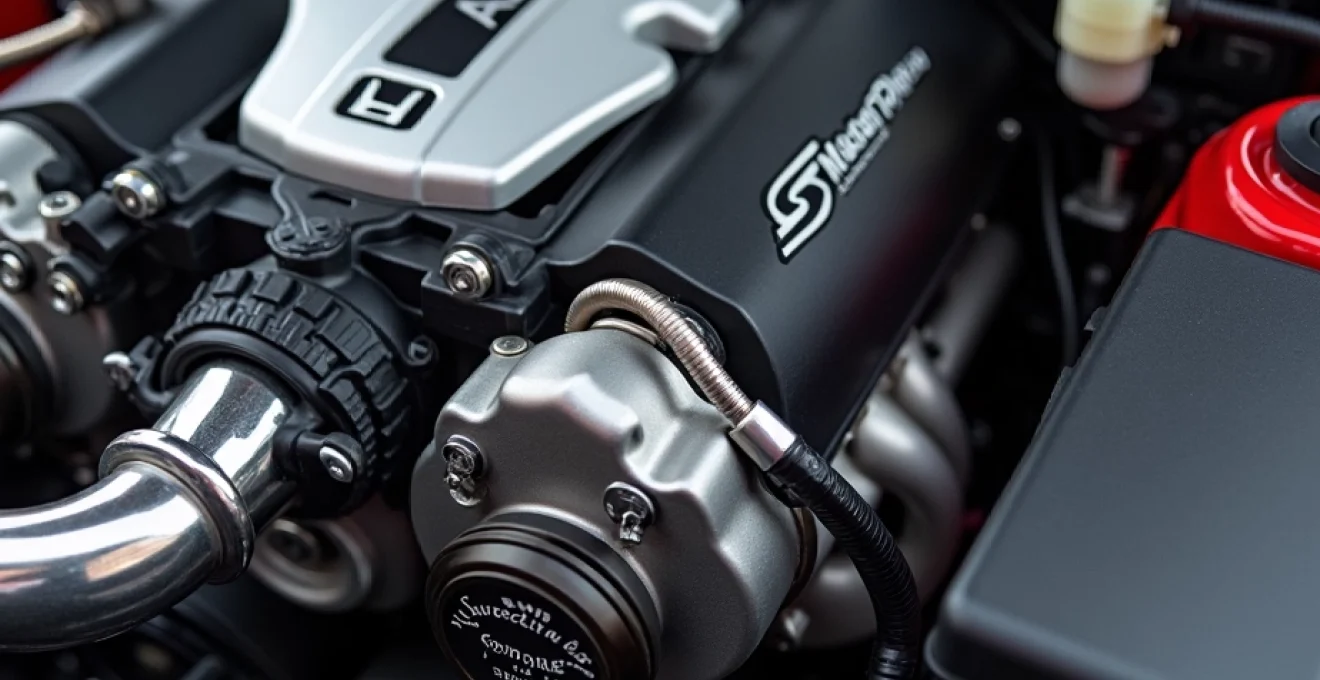
Modern automotive engineering has reached unprecedented levels of sophistication, yet enthusiasts consistently seek ways to extract additional performance from their engines. The pursuit of enhanced engine efficiency encompasses more than simply increasing horsepower figures—it involves optimising every component within the engine’s ecosystem to work in perfect harmony. Today’s performance aftermarket offers an extensive array of sophisticated components, from precision-engineered intake systems to advanced engine management solutions that can transform your vehicle’s capabilities.
Engine efficiency improvements require a systematic approach that considers airflow dynamics, fuel delivery optimisation, and thermal management strategies. Professional-grade performance modifications can yield substantial gains in both power output and fuel economy when properly selected and installed. The key lies in understanding how each component interacts within the broader engine system and selecting parts that complement your specific performance objectives.
Performance air intake systems and cold air induction technologies
The foundation of any performance enhancement begins with optimising your engine’s ability to breathe efficiently. Cold air intake systems represent one of the most cost-effective modifications for improving engine performance, with properly designed systems capable of delivering measurable gains in both horsepower and throttle response. These systems work by relocating the air filter away from the engine’s heat sources, allowing the intake to draw cooler, denser air that contains more oxygen molecules per cubic inch.
Factory intake systems typically prioritise noise reduction and cost considerations over optimal airflow characteristics. OEM airboxes often feature restrictive ducting, sharp bends, and undersized filter elements that create significant pressure drops across the intake system. Performance intake systems address these limitations through larger diameter tubing, smooth radius bends, and high-flow filter elements that can increase volumetric efficiency by 3-8% depending on the specific application.
K&N High-Flow air filter elements vs OEM restrictive paper filters
The choice between high-flow aftermarket filters and OEM paper elements significantly impacts engine breathing capabilities. K&N Engineering’s cotton gauze filter elements, for example, utilise multiple layers of oiled cotton sandwiched between aluminium mesh to create a filtering medium that flows approximately 25-30% more air than comparable paper filters whilst maintaining excellent filtration efficiency. These reusable filters feature a three-dimensional structure that provides greater surface area and deeper filter media compared to flat paper designs.
OEM paper filters, whilst effective at filtration, create substantial restriction as they load with contaminants. Performance filter elements maintain more consistent airflow throughout their service intervals due to their depth-loading characteristics and cleanable construction. However, proper maintenance becomes crucial—oiled filters require periodic cleaning and re-oiling to maintain optimal performance and protection levels.
Short ram intake vs cold air intake configuration analysis
Understanding the fundamental differences between short ram and cold air intake configurations helps determine the optimal setup for your specific application. Short ram intakes position the filter element within the engine bay, typically replacing only the airbox and intake tube whilst maintaining the factory air inlet location. This design offers excellent throttle response characteristics due to reduced intake tract length but sacrifices the thermal benefits of drawing air from outside the engine compartment.
Cold air intake systems relocate the entire air inlet to areas with access to ambient temperature air, such as behind the front bumper or within the fender wells. These systems typically show superior power gains on dynamometer testing, particularly in warm weather conditions where underhood temperatures can exceed 150°F. The trade-off involves increased complexity in installation and potential vulnerability to water ingestion in extreme driving conditions.
Mass airflow sensor calibration for aftermarket intake systems
Modern engines rely heavily on mass airflow sensor data to determine appropriate fuel delivery rates and ignition timing parameters. Aftermarket intake modifications can alter the airflow characteristics around the MAF sensor, potentially causing lean or rich running conditions that compromise performance and reliability. Proper MAF sensor calibration becomes essential when installing performance intake systems to maintain optimal air-fuel ratios across the entire operating range.
Some intake manufacturers provide recalibrated MAF sensors or housing adapters designed to compensate for altered airflow patterns. Alternatively, ECU tuning can adjust the MAF transfer function to account for the modified intake characteristics. Professional tuning typically yields the best results, as dynamometer testing can verify that air-fuel ratios remain within safe parameters throughout the rev range.
Velocity stack design and intake manifold runner length optimisation
Advanced intake system designs incorporate velocity stacks and optimised runner lengths to maximise volumetric efficiency across specific RPM ranges. Velocity stacks create a smooth transition for incoming air, reducing turbulence and pressure losses at the throttle body inlet. The trumpet-shaped design helps maintain laminar airflow even at high flow rates, contributing to improved cylinder filling efficiency.
Intake manifold runner length directly influences the engine’s torque characteristics through inertial supercharging effects. Longer runners favour low-to-mid RPM torque production, whilst shorter runners optimise high-RPM power output. Variable-length intake manifolds attempt to capture the benefits of both configurations through butterfly valves or sliding mechanisms that alter effective runner length based on engine speed and load conditions.
Exhaust system modifications for enhanced engine breathing
Exhaust system optimisation plays an equally critical role in engine efficiency improvements, as restrictions in the exhaust path create backpressure that impedes cylinder evacuation and reduces volumetric efficiency. Performance exhaust systems address these limitations through increased pipe diameters, improved bend radii, and high-flow muffler designs that minimise restriction whilst maintaining acceptable sound levels. The goal involves creating sufficient flow capacity to handle increased exhaust gas volumes without generating excessive backpressure.
Factory exhaust systems typically prioritise cost reduction, noise suppression, and packaging constraints over optimal flow characteristics. OEM systems often feature crushed bends, restrictive catalytic converters, and heavily baffled mufflers that create significant pressure drops. Performance exhaust modifications can reduce backpressure by 40-60% compared to stock systems, translating to measurable power gains particularly at higher RPM levels where exhaust flow rates peak.
Cat-back exhaust systems: borla ATAK vs magnaflow stainless steel configurations
Cat-back exhaust systems replace everything from the catalytic converter outlet to the tailpipe, offering the most comprehensive approach to exhaust system optimisation without affecting emissions equipment. Borla’s ATAK (Acoustically-Tuned Applied Kinetics) technology utilises computer-modeled acoustic chambers to create specific sound characteristics whilst maintaining excellent flow properties. These systems typically feature mandrel-bent tubing and straight-through muffler designs that minimise restriction.
Magnaflow’s approach emphasises straight-through perforated core designs wrapped in sound-absorbing materials to achieve a balance between performance and sound control. Their stainless steel construction provides excellent corrosion resistance and longevity compared to aluminised steel alternatives. Both manufacturers offer systems engineered for specific vehicle applications, ensuring proper fitment and optimal performance characteristics.
High-flow catalytic converter selection and emissions compliance
High-flow catalytic converters represent a crucial upgrade for maintaining emissions compliance whilst improving exhaust flow characteristics. These units typically feature larger substrate cores, increased cell density, and optimised catalyst formulations that reduce restriction whilst maintaining conversion efficiency. Quality high-flow cats can reduce backpressure by 15-25% compared to restrictive OEM units without compromising emissions performance when properly sized for the application.
Substrate material selection significantly impacts both flow and durability characteristics. Metallic substrates offer superior flow properties and thermal shock resistance compared to ceramic alternatives but typically cost significantly more. Cell density represents another critical consideration—200-cell per square inch substrates provide excellent flow but may struggle with emissions compliance in some applications, whilst 300-400 cell designs offer better conversion efficiency with modest flow restrictions.
Header primary tube diameter calculations for engine displacement
Primary tube diameter calculations require careful consideration of engine displacement, RPM range, and intended application to optimise exhaust scavenging effects. The general rule suggests primary tube diameters of approximately 1.5-1.7 inches for naturally aspirated engines producing 100-150 horsepower per cylinder, with larger diameters required for higher output applications. Oversized primaries can reduce exhaust gas velocity, compromising scavenging efficiency and low-RPM torque production.
Tube length also plays a critical role in exhaust tuning, with longer primaries typically favouring lower RPM power production through enhanced scavenging pulse effects. Four-into-one collector designs work well for high-RPM applications, whilst tri-Y configurations often provide better mid-range torque characteristics. Professional header manufacturers utilise sophisticated modeling software to optimise both primary and collector dimensions for specific engine configurations.
Exhaust gas velocity tuning through resonator and muffler selection
Maintaining optimal exhaust gas velocity throughout the system requires careful selection of resonator and muffler designs that balance flow capacity with sound control requirements. Straight-through designs maximise flow potential but offer minimal sound attenuation, making them suitable primarily for track applications. Chamber-style mufflers provide excellent sound control but create higher restriction levels that can compromise performance in high-output applications.
Resonator placement and sizing significantly influence both sound characteristics and flow properties. X-pipes and H-pipes create beneficial exhaust pulse interactions that can improve both power output and sound quality compared to traditional Y-pipe collectors. The optimal location typically falls approximately 18-24 inches downstream from the collector to maximise pulse scavenging effects.
Engine management system tuning and ECU programming
Modern engine management systems control hundreds of parameters that directly influence performance, efficiency, and reliability characteristics. Professional ECU tuning represents the most effective method for optimising these parameters to extract maximum performance from engine modifications whilst maintaining safe operation. Factory calibrations prioritise emissions compliance, fuel economy, and component longevity over maximum power output, leaving substantial performance potential unrealised in most applications.
Advanced engine management systems utilise complex algorithms that continuously adjust fuel delivery, ignition timing, boost levels, and valve timing based on inputs from dozens of sensors throughout the engine. Professional tuning involves modifying these base maps and correction factors to optimise performance whilst maintaining adequate safety margins. The process typically requires dynamometer testing or extensive road tuning to verify proper operation across all operating conditions.
Hondata FlashPro vs COBB accessport ECU tuning platforms
Honda and Acura owners benefit from Hondata’s FlashPro system, which provides comprehensive ECU modification capabilities including real-time data logging, custom map switching, and advanced tuning features. The system supports both naturally aspirated and forced induction applications with specific calibrations for popular engine swaps and modifications. FlashPro’s strength lies in its deep integration with Honda’s ECU architecture and extensive feature set for advanced users.
COBB Accessport offers broader vehicle coverage across multiple manufacturers including Subaru, Ford, BMW, and others. The platform emphasises user-friendly operation with pre-loaded maps for common modification combinations and extensive data logging capabilities. Both systems support custom tuning by qualified professionals and provide the flexibility needed for comprehensive engine management optimisation.
Air-fuel ratio optimisation using wideband O2 sensor data
Precise air-fuel ratio control forms the foundation of any successful tuning effort, requiring accurate feedback from wideband oxygen sensors capable of measuring mixtures across the entire operating range. Factory narrowband sensors only indicate rich or lean conditions around stoichiometric ratios, providing insufficient data for performance tuning applications. Wideband O2 sensors deliver precise lambda measurements from approximately 0.65 to 1.3, enabling tuners to optimise mixtures for maximum power, economy, or emissions performance.
Peak power typically occurs at air-fuel ratios between 12.5:1 and 13.2:1 depending on the specific engine and fuel used, whilst best economy usually happens around 14.7:1 to 15.5:1 ratios. Forced induction applications require richer mixtures for cooling and detonation resistance, often operating between 11.5:1 and 12.5:1 under full boost conditions. Continuous wideband monitoring during tuning sessions ensures safe operation and optimal calibration across all operating conditions.
Ignition timing advance maps for premium fuel applications
Ignition timing optimisation represents one of the most critical aspects of performance tuning, as timing directly influences power output, efficiency, and engine durability. Premium fuels with higher octane ratings allow more aggressive timing advance without encountering detonation, typically yielding 2-5% power increases compared to regular fuel calibrations. However, excessive timing advance can cause catastrophic engine damage, making careful calibration essential.
Modern knock sensors provide real-time feedback about combustion quality, allowing ECUs to automatically retard timing when detonation occurs. Professional tuning involves establishing base timing maps that approach the knock threshold without exceeding it, then relying on knock correction systems to provide additional safety margins. This approach maximises performance whilst maintaining engine protection under varying fuel quality and environmental conditions.
Variable valve timing control programming for VTEC and VVT-i systems
Variable valve timing systems like Honda’s VTEC and Toyota’s VVT-i require specific calibration to optimise their operation with performance modifications. These systems alter valve timing, duration, or lift characteristics based on engine speed, load, and other parameters to optimise performance across the operating range. Proper VVT calibration becomes crucial when installing performance camshafts or other valvetrain modifications that alter the engine’s breathing characteristics.
VTEC engagement points can be adjusted to occur at different RPM levels depending on the specific camshaft profiles and intended application. Earlier engagement typically improves mid-range performance but may compromise low-speed drivability, whilst later engagement preserves low-RPM characteristics at the expense of some mid-range power. Professional tuning can optimise these transition points for specific performance objectives whilst maintaining smooth operation.
Forced induction components: turbocharging and supercharging solutions
Forced induction systems represent the most effective method for dramatically increasing engine power output whilst maintaining reasonable fuel economy during light-load operation. Turbocharging and supercharging technologies each offer distinct advantages and characteristics that suit different applications and performance objectives. Turbochargers utilise exhaust gas energy to drive a centrifugal compressor, providing excellent efficiency and packaging advantages but with some throttle response compromises due to turbo lag.
Superchargers provide immediate throttle response through direct mechanical drive from the crankshaft but consume engine power to operate the compressor. Modern turbocharger technology has largely addressed historical lag concerns through advanced bearing systems, variable geometry housings, and sophisticated wastegate control systems. Twin-scroll designs and ball bearing cartridges enable rapid spool-up characteristics that rival supercharger response in many applications.
Boost pressure control requires sophisticated management systems that monitor multiple parameters including manifold pressure, exhaust gas temperature, air-fuel ratios, and knock sensor feedback. Electronic boost controllers provide precise pressure regulation across the RPM range whilst maintaining safety margins to prevent engine damage. Wastegate sizing and control strategy significantly influence both performance characteristics and system reliability.
Intercooler efficiency becomes critical in forced induction applications, as compressed air temperatures can exceed 200°F without proper heat exchange. Air-to-air intercoolers offer excellent cooling efficiency and reliability but require adequate airflow and packaging space. Liquid-to-air systems provide more compact packaging and consistent performance but add complexity through additional cooling circuits and heat exchangers.
Professional forced induction installations require careful attention to fuel system capacity, engine internals strength, and cooling system adequacy to ensure reliable operation under increased power levels.
Internal engine components for increased power output
Engine internal modifications become necessary when pursuing significant power increases that exceed the capabilities of factory components. Forged pistons and connecting rods provide the strength required to handle increased cylinder pressures and temperatures associated with performance modifications. These components typically weigh less than factory cast parts whilst offering superior durability under extreme operating conditions.
Piston selection involves considerations including compression ratio, dome configuration, ring package design, and coating options that influence both performance and longevity. Lower compression ratios typically work better with forced induction applications to prevent detonation, whilst naturally aspirated engines benefit from higher compression ratios that improve thermal efficiency. Advanced piston coatings can reduce friction losses and improve heat transfer characteristics.
Connecting rod specifications must account for anticipated power levels, engine speeds, and intended duty cycles. H-beam designs offer excellent strength-to-weight ratios for most applications, whilst I-beam configurations provide superior big-end stability in extreme applications. Rod length affects stroke characteristics and can influence both performance and packaging considerations in engine builds.
Crankshaft upgrades become necessary in high-power applications that exceed factory component capabilities. Forged an
d billet crankshafts provide the ultimate strength and precision required for extreme applications. Proper balancing becomes essential when upgrading internal components to ensure smooth operation and minimise vibration-related issues that can compromise reliability and performance.
Camshaft selection significantly influences engine character and performance delivery across the RPM range. Performance camshafts typically feature increased duration and lift specifications that improve high-RPM breathing capabilities but may sacrifice low-speed torque and idle quality. Split-duration designs allow independent optimisation of intake and exhaust timing events to maximise volumetric efficiency whilst maintaining acceptable emissions characteristics.
Valvetrain upgrades become necessary when installing aggressive camshaft profiles that exceed factory component capabilities. Performance valve springs must provide sufficient pressure to control valve motion at high RPM whilst avoiding excessive friction losses that rob power. Titanium retainers and lightweight valves reduce reciprocating mass, enabling higher safe operating speeds and improved throttle response characteristics.
Cooling system upgrades and thermal management strategies
Effective thermal management becomes increasingly critical as power levels rise, with cooling system upgrades often determining the difference between reliable performance and catastrophic failure. High-performance cooling systems must address both increased heat generation from enhanced combustion processes and the additional thermal loads imposed by forced induction components. Factory cooling systems typically provide adequate capacity for stock power levels but quickly become overwhelmed when substantial modifications increase heat rejection requirements.
Radiator upgrades represent the foundation of improved cooling capacity, with aluminium units offering superior heat transfer characteristics compared to brass and plastic OEM designs. Multi-row configurations increase surface area for enhanced heat dissipation, whilst improved fin density and tube design optimise airflow characteristics. Performance radiators typically feature 25-40% greater cooling capacity than stock units whilst often weighing less due to advanced construction materials and techniques.
Water pump flow rates directly influence cooling system effectiveness, particularly at high RPM where factory pumps may cavitate or fail to maintain adequate circulation. High-flow water pumps feature improved impeller designs and larger housing volumes that increase coolant flow by 15-30% compared to stock units. However, excessive flow rates can actually reduce cooling efficiency by preventing adequate heat transfer time in the radiator, making proper sizing crucial for optimal performance.
Thermostat selection affects both warm-up characteristics and maximum operating temperatures under load conditions. Lower-temperature thermostats open earlier to begin circulation sooner but may prevent the engine from reaching optimal operating temperature during light-load conditions. Racing thermostats typically open at 160-180°F compared to factory units that engage around 195-210°F, providing additional thermal safety margins during high-performance operation.
Electric fan upgrades offer superior airflow control and reduced parasitic power consumption compared to mechanical fan systems. High-performance electric fans can move 3000-5000 CFM whilst consuming only 15-25 horsepower compared to mechanical fans that may require 35-50 horsepower at high RPM. Variable speed controllers enable precise airflow management based on coolant temperature, reducing unnecessary power consumption during moderate operating conditions.
Advanced cooling system designs incorporate multiple temperature sensors and sophisticated control algorithms that optimise fan operation, coolant flow rates, and thermostat behaviour to maintain ideal operating temperatures across all driving conditions.
Coolant selection significantly impacts both heat transfer efficiency and system longevity, with modern formulations offering superior performance compared to traditional ethylene glycol mixtures. Propylene glycol-based coolants provide excellent heat transfer characteristics whilst offering reduced toxicity and improved environmental compatibility. Performance coolant additives can further enhance heat transfer properties and provide additional corrosion protection for modified engines operating under extreme conditions.
Oil cooling systems become essential for high-performance applications that generate substantial heat loads beyond the capacity of the standard lubrication system. Engine oil temperatures exceeding 250°F can cause rapid lubricant breakdown and accelerated wear, making supplemental cooling crucial for track use or sustained high-load operation. Oil coolers must be properly sized and positioned to provide adequate cooling without creating excessive pressure drops that compromise lubrication system performance.
Heat exchanger placement requires careful consideration of airflow patterns and packaging constraints to maximise cooling efficiency. Front-mounted intercoolers and oil coolers compete for available airflow, necessitating strategic positioning and ducting to ensure adequate cooling for all systems. Computational fluid dynamics modelling helps optimise heat exchanger placement and sizing for specific vehicle applications and performance requirements.
Thermal barrier coatings represent an advanced approach to heat management that reflects thermal energy rather than absorbing it into engine components. Ceramic coatings on exhaust manifolds, turbocharger housings, and piston crowns can reduce heat transfer to surrounding components by 30-50%, lowering overall underhood temperatures and reducing cooling system loads. These coatings also improve component durability by reducing thermal cycling stresses that can lead to cracking and failure.