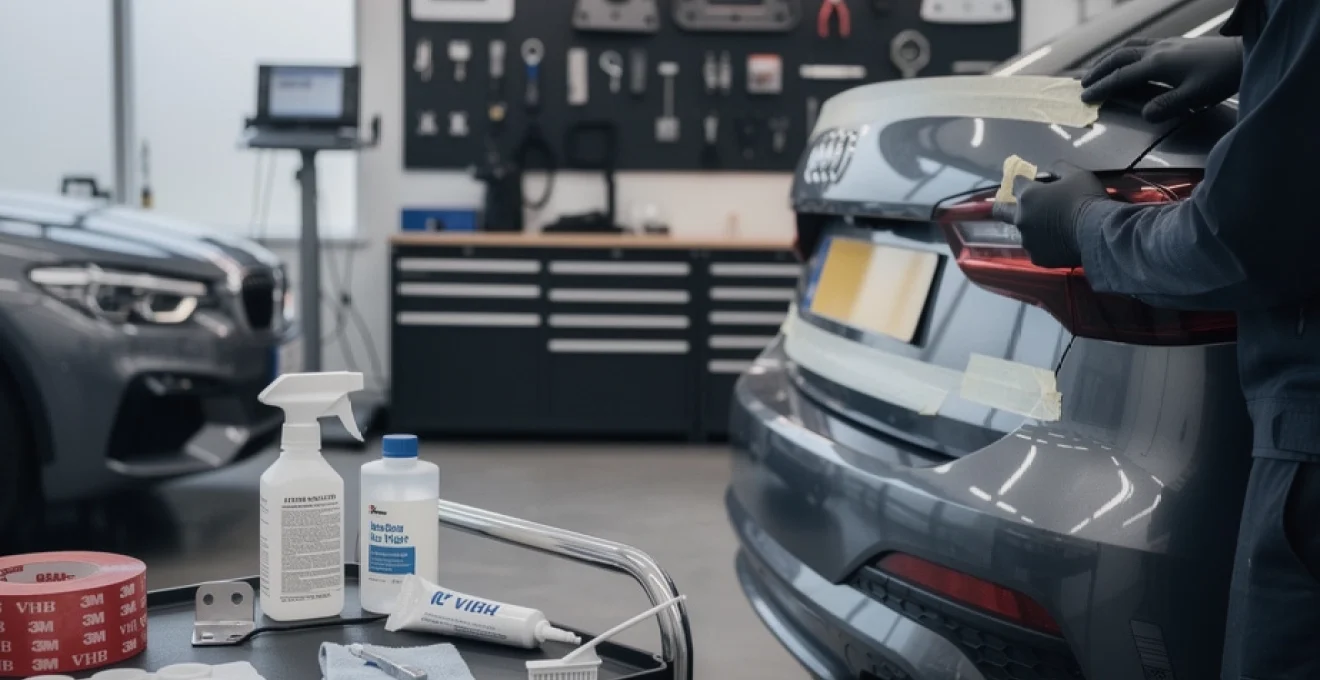
Fitting number plates without screws has become a popular choice for drivers who want a clean, modern look without drilled holes or rusty fixings. With high-strength automotive adhesives now used widely in bodyshops and even at OEM level, you no longer need to rely on visible screws to keep a plate secure at motorway speeds. If you choose the right system and fit it properly, an adhesive-mounted plate can be just as strong as a screwed plate while being easier to align, quieter and often more theft-resistant. The key is understanding which products work, how to prepare the surface, and what the law expects in terms of visibility and durability.
Key methods for fitting number plates without screws on UK vehicles
Using 3M VHB automotive tape for screwless number plate mounting
For a long-lasting, screwless number plate installation, 3M VHB automotive tape is often the benchmark. The acronym stands for Very High Bond, and the technology is similar to what manufacturers use to attach exterior trims and badges from the factory. When applied correctly, VHB tape creates a structural bond between the back of your acrylic plate and the bumper, effectively replacing screws.
To maximise bond strength, you need clean, dry surfaces and good pressure during application. Long-tail searches like “how to fit number plates without screws using 3M VHB tape” usually reflect concerns about plates falling off at speed. In practice, VHB tape has a shear strength that comfortably handles motorway air pressure on flat plates, provided the tape covers enough area and is not interrupted by raised 3D or 4D characters.
Recent tests from adhesive manufacturers show that quality acrylic foam tapes maintain over 90% of their rated strength between -30°C and +80°C, which comfortably covers UK weather extremes. That makes VHB-style tape one of the most reliable screwless methods for daily-driven vehicles.
Fitting number plates with foam adhesive pads from halfords and euro car parts
Foam adhesive pads from retailers such as Halfords and Euro Car Parts remain a popular DIY choice for number plate fitting without screws. These pre-cut pads are designed specifically for number plates, usually supplied in packs of 6–10 pieces. They are thicker than VHB tape and can help to accommodate minor imperfections or slight curvature in the mounting surface.
Many drivers choose this route because it is quick, clean and requires no cutting. For flat bumpers or dedicated number plate plinths, using 6–8 good-quality pads can provide more than enough grip. One industry survey of independent garages in 2023 reported that around 60% still rely on foam pads for quick plate replacement jobs, mainly because they are predictable and easy for less experienced staff to use.
If you use cheaper household foam pads instead of automotive-grade ones, you risk poor adhesion in cold or wet weather. Low-quality pads tend to lose up to 40% of their bond strength after repeated water exposure, so sticking to pads designed for exterior automotive use is essential.
Applying automotive-grade silicone adhesive (e.g. tigerseal) for permanent fixing
Automotive polyurethane or silicone-based sealants, such as Tigerseal or similar bonding agents, offer a more permanent way to fix number plates without screws. These adhesives behave more like a flexible glue than a simple tape. Once cured, they form a tough elastomeric bond, which is highly resistant to vibration, moisture and temperature changes.
For many bodyshops, this approach is attractive because it is similar to bonding exterior trims or body kits. If you apply two thin beads along the top and bottom of the plate, you gain a strong, weatherproof bond with some flexibility. Removal later on is more difficult but still possible by carefully cutting behind the plate with a thin blade and using a silicone remover to clear residue.
One practical tip is to use masking tape to hold the plate in perfect alignment while the sealant cures overnight. A properly cured polyurethane adhesive can reach full strength within 24 hours, and tests from adhesive manufacturers show these products retaining performance after thousands of thermal cycles, which reflects real-world driving conditions over several years.
Magnetic number plate mounting systems for track-day and removable plates
Magnetic plate mounts are aimed primarily at drivers who need removable or temporary plates, such as track-day cars that run without plates on circuit and refit them on the road. Strong neodymium magnets can be bonded behind the bumper and on the rear of the plate, allowing you to click the plate into position when needed.
While this approach looks clever, it comes with caveats. For everyday use, a purely magnetic system can be risky, especially if the bumper is curved or if there is any play between the magnets and the plate. Crosswinds at motorway speeds can exert surprising leverage on a flat plate. Measured airflow tests indicate that a front plate at 70 mph can be subject to uplift forces of over 10–15 N; if magnet alignment is not perfect, that can be enough to dislodge a poorly designed system.
For that reason, many specialists suggest combining magnets with a light adhesive or a mechanical clip for road use, keeping magnetic-only setups for show plates or controlled environments where losing a plate is less serious.
Hybrid methods combining clips and adhesive for high-speed stability
A hybrid fitting method blends the neat finish of adhesive with the extra reassurance of hidden clips or surrounds. For example, some imported cars arrive with a plastic number plate frame screwed to the body, while the plate itself simply slides or clips into the frame. You can then use thin strips of VHB tape or pads inside the frame to prevent rattling and add extra strength.
This combination works well for performance cars and motorway commuters who want zero movement at high speeds. A hybrid system reduces reliance on a single type of bonding and provides redundancy if one element fails. It also offers a semi-removable solution: you can unclip or slide the plate out for detailing, polishing or replacing a damaged plate without disturbing the base frame or the vehicle’s paintwork.
Legal and regulatory requirements for screwless number plates in the UK
DVLA rules on number plate visibility, spacing and reflectivity (BS AU 145e)
Fitting number plates without screws does not change the legal requirements for how the registration must appear. In the UK, plates must comply with BS AU 145e, which sets standards for reflectivity, character size, spacing and durability. Regardless of whether you use adhesive tape, pads or clips, the plate must be clearly legible from 20 metres in good daylight.
That includes maintaining the correct font, character spacing and margins around the registration. Screwless fitting can actually make compliance easier, because there are no screw caps to interfere with letters or numbers. If your adhesive choice causes the plate to warp, bow or peel away so that characters are distorted or the plate becomes partially detached, enforcement officers may consider the plate non-compliant.
In 2021 and 2022 there was an increased focus on ANPR readability, and some police forces now run regular operations using cameras to identify illegal plates. A secure, flat and properly reflective plate is more likely to be read accurately by automatic systems and less likely to attract attention for the wrong reasons.
MOT test considerations when using adhesive-mounted or clip-on plates
During an MOT test, examiners do not check how a plate is fixed, only whether it is securely attached and legible. That means adhesive-mounted, magnetic-assisted or clip-on plates are all acceptable as long as they are firmly fixed. If you can easily move the plate with a finger, or if a corner is lifting away from the bumper, the tester may consider it insecure.
MOT guidance states that a registration plate must not be likely to fall off. In practice, that means your screwless system must withstand the kind of light pulling or tapping that an inspector might reasonably apply. If you are using Velcro or reclosable fasteners, ensure the adhesive backing is strong enough and the hook-and-loop parts fully engaged. Any sign of imminent detachment could lead to an advisory or even a failure.
For adhesive systems, a common sense test is useful: if you would be nervous about driving through a car wash or at 70 mph because of how the plate is fixed, the MOT tester is likely to share that concern. Proper surface preparation and curing time before the test will help avoid issues.
Placement regulations for front and rear plates on cars, vans and motorbikes
UK regulations specify where plates must be fitted on the vehicle, regardless of whether screws are used. The front plate must be fixed as close as possible to the front of the vehicle in a vertical or near-vertical position, and the rear plate must be at the back, again broadly vertical and facing rearwards. Number plates must not be obscured by brackets, winches, bike racks or styling accessories.
Adhesive fitting can tempt some owners to place plates in unconventional positions, especially on cars with large central grilles. While “floating” plates mounted on the grille frame or lower splitter might look cleaner, if the plate is too low, angled excessively, or partially obscured, it could breach the regulations. Commercial vehicles and vans with split rear doors or step bumpers need particular care to ensure the plate is fully visible when doors are shut.
Motorbikes must display a rear plate that is large enough and at the correct angle. Front plates are no longer required in most cases, but any plate used must still comply with spacing and reflectivity regulations.
Compliance issues with gel plates, 4D plates and tinted covers when using no-screw fittings
3D gel plates, 4D acrylic plates and tinted plate covers have been heavily scrutinised by DVLA and police in recent years. When used with screwless fitting methods, there are two main concerns: weight and legality. Heavier 4D plates with raised characters can put more load on adhesive pads or tape, particularly on curved bumpers where only part of the plate sits flush.
From a legal perspective, BS AU 145e specifically restricts certain decorative effects, and many tinted covers or coloured backing plates do not comply. If you combine a non-compliant plate style with a poor fitting method, the chance of being stopped increases sharply. Some police forces have reported that up to 15–20% of modified cars at roadside checks display plate offences, ranging from incorrect fonts to illegal tinted covers.
If you want the visual impact of a 3D or 4D plate but intend to use adhesive only, aim for a high-quality, fully compliant plate from a reputable supplier and a strong tape such as VHB. Check that the supplier marking and British Standard code remain visible once fitted and that no frame or trim obscures them.
Choosing suitable adhesive systems for screwless plate installation
Comparing 3M VHB, generic double-sided tape and foam adhesive pads
Not all double-sided tapes are created equal. For screwless number plate fitting, the choice between 3M VHB tape, generic tape and foam pads has a direct impact on durability and safety. VHB is an acrylic foam designed for structural bonding, with excellent resistance to temperature, moisture and UV. Generic double-sided tapes, often sold for indoor use, usually rely on rubber-based adhesives that can soften in heat and lose grip when wet.
The table below compares common options used to fit number plates without screws:
| Adhesive type | Typical shear strength | Temperature range | Best use case |
|---|---|---|---|
| 3M VHB acrylic foam tape | High (up to 100+ N/cm²) | -30°C to +90°C | Long-term, all-weather daily use |
| Automotive foam pads | Medium | -20°C to +70°C | Flat surfaces, quick fitting |
| Generic double-sided tape | Low–medium | 0°C to +40°C (varies) | Indoor or temporary use only |
For a motorway car that covers high annual mileage, an acrylic foam product is highly recommended. Foam pads are ideal for everyday hatchbacks and city cars, especially where speed rarely exceeds legal limits for extended periods. Generic tape is best avoided for exterior plates unless clearly labelled as automotive-grade.
Surface compatibility for plastics, aluminium, painted steel and glass tailgates
Your chosen adhesive must work with the surface material of both the plate and the bodywork. Most UK number plates are made of acrylic, which bonds well with acrylic foam tapes and polyurethane sealants. The vehicle side can be painted steel, unpainted plastic, painted plastic, aluminium or even glass on some tailgates.
On painted steel and painted plastic bumpers, any of the major adhesive types will work if the paint is sound and fully cured. On textured plastics, such as some SUV bumpers, a slightly thicker foam pad or a bead of sealant can conform better to the surface, filling micro-voids that might defeat a thinner tape. Glass tailgates, often found on modern hatchbacks and electric vehicles, require careful cleaning with isopropyl alcohol and a high-quality tape to avoid bond failure due to condensation.
If you are unsure about compatibility, a small test patch behind the plate area can help. Apply a short strip of tape, press it firmly, and check after 24 hours that it has bonded without lifting or leaving oily residue.
UV resistance, temperature range and weatherproofing of plate adhesives
UK vehicles experience a wide range of conditions: winter salt, summer heat, heavy rain and UV exposure. A screwless number plate installation must cope with all of these. Acrylic foam tapes are designed to resist UV indirectly because the adhesive layer is shielded under the plate and against the bumper, but the adhesive chemistry itself is also more stable under heat and light than many rubber-based alternatives.
Temperature is an important factor. A plate fitted in a cold garage with a tape rated for indoor use might detach during a hot spell, as the adhesive softens and the plate sags. Laboratory data show that low-grade tapes can lose up to 50% of their holding power at temperatures above 35°C, which are reachable on a dark bumper in strong sun. In contrast, VHB tapes are tested over an extended temperature range and retain performance across seasonal extremes.
Water resistance is also critical. Foam pads and tapes designed for automotive exterior use typically maintain their seal and bond in constant rain, while generic products may absorb water and degrade. For vehicles frequently subjected to jet washers or coastal environments, prioritising weatherproof adhesives becomes essential.
Shear strength, peel strength and load rating for high-speed motorway use
When choosing tape or pads, it helps to understand the difference between shear strength and peel strength. Shear strength measures how much load an adhesive can withstand when forces are applied parallel to the bond (such as wind pushing the plate backwards). Peel strength measures resistance when an edge is lifted away from the surface.
Number plates on the move experience mainly shear loads, so a tape with high shear strength is more important than one with very high peel strength. However, poor peel resistance at the corners can allow water and dirt to creep in, gradually weakening the overall bond. That is why full-length strips or multiple evenly spaced pads perform better than a couple of small pieces at the centre.
Independent testing on vehicle trim tapes suggests that a full-coverage VHB bond can safely withstand several kilograms of force before any movement occurs. Given that the aerodynamic forces on a properly mounted plate are significantly lower, a well-fitted adhesive system provides a generous safety margin for high-speed motorway driving.
Step-by-step procedure for fitting number plates without screws
Preparing the mounting surface: degreasing, decontamination and drying
Successful screwless plate fitting depends heavily on preparation. Any wax, polish, traffic film or silicone on the bumper will stop adhesive tape from bonding. Start by washing the area with a mild, car-safe shampoo and drying it thoroughly with a microfibre towel. This removes loose dirt and road grime.
Next, use isopropyl alcohol or a specialist panel wipe on a lint-free cloth to degrease the exact area where the plate will sit. Pay particular attention to the edges and corners, where contamination often remains. If you are removing an old plate first, gently heat any remaining adhesive with a hairdryer or heat gun on low, then use dental floss or a plastic trim tool to separate it without scratching the paint.
Finally, allow the surface to dry completely. Most adhesive manufacturers recommend a minimum temperature of 15°C for best results, so if conditions are cold or damp, working in a garage and gently warming the surface can make a real difference.
Positioning and levelling the plate using masking tape and alignment tools
Once the surface is clean, dry-fit the new plate and decide on its exact position. Screwless fitting gives you more freedom, but the plate still needs to be central and level. Uneven plates are immediately noticeable and can make even a high-end car look poorly finished.
A simple technique is to hold the plate in place and run a strip of masking tape along the top edge, creating a straight “shelf” line on the bumper. When you later apply adhesive to the back of the plate, you can rest it against that tape edge to keep it level. Some enthusiasts also measure equal distances from body reference points (for example, the grille edges or badge) to ensure perfect centring.
If you have access to a small spirit level or a smartphone level app, you can use it during the dry fit to refine the alignment. Taking an extra minute here reduces the chance of having to remove and re-bond a misaligned plate.
Applying adhesive pads or VHB tape with correct coverage and pressure
With the alignment set, apply your chosen adhesive to the back of the plate. For VHB tape, use several vertical strips spaced evenly across the plate, staying 10–15 mm in from the edges. This layout resists bending and ensures good shear strength. For foam pads, 6–8 pads arranged in two or three rows usually gives adequate coverage for standard-size plates.
Avoid bridging over any raised 3D or 4D letters; the adhesive must sit on flat acrylic for maximum contact. Once applied, peel the protective liners from the tape or pads, then carefully bring the plate to the bumper, using the masking tape guide to keep it level. Touch the plate lightly at first so minor adjustments are still possible.
When satisfied with the position, press the plate firmly from the centre outward, applying sustained pressure for at least 30–60 seconds. This helps the adhesive flow into microscopic surface imperfections and greatly improves bond strength.
Curing times and environmental conditions for optimal bond strength
Even high-tack adhesives do not reach full strength instantly. Most automotive tapes and sealants quote a 24-hour period to reach their rated performance, with a significant portion of the bond forming in the first hour. During this time, try to avoid disturbing the plate or exposing it to pressure washers.
Temperature and humidity affect curing. In cool or damp conditions, a longer cure time may be needed before subjecting the plate to motorway speeds or aggressive washing. Some manufacturers provide specific curves showing bond development over time; as a rough guide, expect around 50–70% of final strength after 1 hour and close to 100% after 24 hours in normal UK conditions.
If using a sealant such as Tigerseal, consider supporting the plate with masking tape crosses while the adhesive skins over and cures beneath. Removing these supports too early can allow the plate to sag slightly, creating a permanent misalignment.
Final safety checks to prevent detachment while driving
Before driving, carry out a final check. Gently attempt to lift each corner of the plate; there should be no significant movement and no gaps where you can easily slide a fingernail. If any area feels loose, it is preferable to remove the plate and start again rather than risk losing it on the road.
Ask yourself a simple question: would you confidently drive through a high-pressure car wash with the plate as it is? If the answer is no, more preparation or adhesive coverage is needed. A good screwless fitting should feel as secure as a screwed plate, with no rattles when you tap it and a firm, even bond across its entire surface.
For extra peace of mind on long trips soon after fitting, inspect the plate at fuel stops, especially if heavy rain or temperature changes are involved. Early identification of lifting corners can prevent a minor issue turning into a lost plate.
Vehicle-specific considerations for screwless number plate fitting
Fitting plates to curved bumpers on BMW, audi and mercedes models
Many modern BMW, Audi and Mercedes models have subtly curved or sculpted bumpers, which create challenges for fitting number plates without screws. A flat plate bridged across a curved surface will naturally try to return to its original shape, putting constant stress on the adhesive.
One approach is to use multiple narrower strips of VHB tape or several foam pads, allowing the adhesives to flex slightly with the curve rather than forcing a rigid connection. Another method involves using a dedicated number plate plinth that matches the bumper contour; the plate is then bonded to the flat plinth, reducing stress on the adhesive itself.
If your plate appears to “bow” away from the bumper in the middle or at the ends, the adhesive is under tension and more likely to fail over time. A few extra minutes spent shaping the layout of your pads or selecting a suitable plinth can pay off in long-term reliability.
Mounting plates on plastic tailgates and split doors (range rover, VW transporter)
Vehicles with plastic or composite tailgates, such as some Range Rover models, and vans like the VW Transporter, present distinct conditions for screwless plate fitting. The plastic may expand and contract more with temperature changes than metal panels, which stresses rigid bonds.
Choosing a slightly more flexible adhesive, such as foam pads or polyurethane sealant, allows for that movement. Split rear doors or barn doors add an extra complication: the plate must remain clearly visible when the doors are closed, and seams or shut lines must not cause the plate to twist or sit unevenly.
On some vans, bonding the plate to an existing recess or prepared plinth area gives far better results than trying to span a door gap. Regular checks are especially important on commercial vehicles that endure more frequent loading, slamming doors and rough roads.
Attaching plates to number plate plinths versus direct-to-bumper installation
Many cars include a dedicated number plate plinth, either as part of the grille assembly or as a separate panel fixed to the bumper. Attaching plates to a plinth rather than directly to the bumper offers a flatter, more predictable surface and often makes screwless fitting easier.
If your vehicle has an existing screwed plinth, you can leave it in place and bond the new plate to it using VHB tape or pads, hiding the old fixings without drilling additional holes. This hybrid approach retains the mechanical security of the plinth while achieving the clean look of an adhesive-mounted plate.
Direct-to-bumper installation is still perfectly viable, but demands more attention to curvature, surface cleanliness and long-term exposure. Once bonded to a plinth, a plate is also easier to replace in the future without risking damage to the underlying paint.
Special approaches for motorbikes, trailers and show plates
Motorbike number plates experience more vibration than car plates, especially on single-cylinder or older machines. For bikes, screws or bolts remain common, but strong adhesives can still be useful for show plates or secondary mountings. If you choose a screwless method on a bike, use high-strength tape and ensure the plate is fully supported, avoiding large overhangs.
Trailers and caravans often use imitation plates that match the towing vehicle, and adhesive pads are routinely used here to allow quick changes between tow cars. Because trailer plates sit on relatively flat surfaces and typically see lower speeds, foam pads are usually adequate, provided the surface is cleaned well.
Show plates, track-day plates and display plates benefit from removable systems such as reclosable fasteners or magnets, but for any road use, the same legal and security expectations apply as for permanent plates. Treat even a “temporary” road plate as a critical safety and identification component rather than a decorative accessory.
Troubleshooting and maintenance for adhesive-mounted number plates
Safe removal of glued-on plates without damaging paintwork
At some point you might need to remove an adhesive-mounted plate, whether to sell the car, replace a cracked plate or correct a previous poor fitting. The safest method is to gently warm the plate and adhesive with a hairdryer or low-heat gun, softening the bond. Then slide dental floss, fishing line or a plastic trim tool between the plate and the bodywork, working slowly from one side to the other.
Avoid prising the plate off with a screwdriver or metal scraper, which can chip paint. Once the plate is removed, roll off any remaining foam or tape with your thumb or a plastic tool. Stubborn residue can be treated with a dedicated adhesive remover safe for automotive paint, followed by a wash and polish to restore the finish.
Silicone or polyurethane sealants take more effort to remove but respond to specialist silicone cleaners and patient, careful cutting. Rushing this stage risks turning a simple plate swap into an unnecessary paint repair.
Rebonding loose corners and dealing with warped acrylic plates
Over time, especially on older plates or where cheap adhesives were used, corners can start to lift. If the plate itself is still flat and in good condition, you can often salvage the installation by cutting away the loose adhesive, cleaning the area, and adding fresh tape or a foam pad just to that corner.
If the acrylic has warped or bowed significantly, rebonding may only be a temporary fix. Warping indicates prolonged heat stress or chemical attack on the plastic, and such plates are more likely to crack or detach again. In that case, replacing the plate with a new, BS AU 145e-compliant item and refitting with a better adhesive system is a more reliable solution.
Checking your plates a few times a year, perhaps when washing the car or before an MOT, allows you to spot these early signs of failure. Addressing a small lift promptly prevents water ingress that can weaken the rest of the bond.
Preventing plate theft with anti-theft bonding and discreet security features
Number plate theft for cloning and fuel drive-offs has increased in recent years, with some police regions reporting year-on-year rises of more than 10%. Screwless mounting can either help or hinder here, depending on how it is done. Weak Velcro or cheap pads make it easy for thieves to remove plates quickly, whereas high-strength tape or sealant can act as a deterrent.
For added security, some owners use a combination of adhesive and hidden mechanical fixings, such as one or two screws concealed behind a plastic trim, making removal much more difficult without tools. Others choose tamper-evident stickers or microdot systems linked to police databases. The goal is not to make plate theft impossible, but to make your vehicle less attractive than an easier target parked nearby.
If you rely solely on adhesive, opting for a strong, full-coverage bond and avoiding simple pull-off solutions is one of the most practical anti-theft measures available without altering the visible appearance of the car.
Cleaning products that will not degrade 3M VHB tape or foam pads
Everyday cleaning and detailing should not shorten the life of your screwless installation, but certain products can attack adhesives if used excessively. Strong solvent-based tar removers, aggressive wheel cleaners used on bodywork, or neat isopropyl alcohol sprayed repeatedly behind plate edges may gradually weaken foam pads.
For routine washing, a pH-neutral car shampoo and gentle rinse pose no threat to VHB tape or quality foam pads. If you need to remove tar or insect remains around the plate, apply the cleaner to a cloth rather than spraying directly into the gap between the plate and the bumper. Avoid directing the lance of a pressure washer at the plate edges at close range, as the concentrated jet can work its way into any small gaps and lift adhesive over time.
By combining sensible cleaning habits with a well-chosen adhesive system, you give your screwless number plates the best chance of remaining secure, straight and presentable for many years of UK driving.