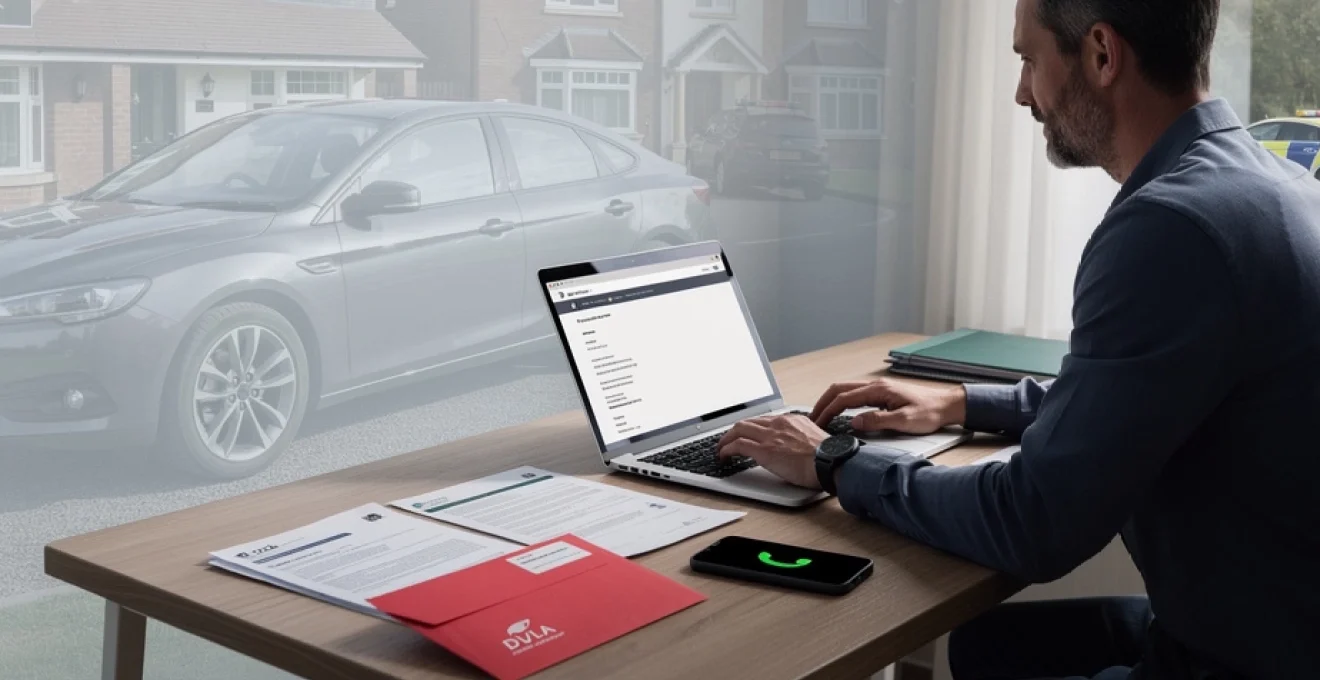
If you need to take a vehicle off the road but the V5C logbook has been lost, shredded or left in a scrapped car, the situation can feel stressful very quickly. Continuous insurance enforcement, automatic DVLA tax checks and ANPR cameras mean that letting an untaxed, unused vehicle just “sit there” is no longer a safe option. You either tax and insure it, or you tell the DVLA that it is officially off the road with a Statutory Off Road Notification (SORN). Understanding how SORN works, and what to do when you do not have the V5C to hand, helps you avoid fines, wheel‑clamping and months of wasted road tax.
The good news is that you can SORN a car without the original logbook in some situations, and even when you cannot, there are clear routes to get back in control. Think of the DVLA record as the digital “truth” about your car; as long as you can prove who you are and which vehicle you are talking about, you usually have options. The key is acting before tax or insurance problems trigger enforcement rather than trying to fix things after the first penalty letter lands on the doormat.
Understanding SORN in the UK: DVLA rules, statutory off road notification and legal scope
How SORN works under the vehicle excise and registration act 1994 and DVLA enforcement
A SORN is a formal declaration under the Vehicle Excise and Registration Act 1994 that a vehicle is “off the road” and will not be used or kept on a public road. Once you declare SORN, the DVLA records the status in its central database, and automatic enforcement switches from “must be taxed and insured” to “must not be used or kept on a public road”. Tax liability stops from the date SORN starts, and any remaining full months of tax are refunded to the registered keeper.
DVLA enforcement is increasingly data‑driven. Around 98% of vehicles are now taxed via automated systems, and DVLA issues over 1 million penalties a year related to tax and SORN status. ANPR cameras, police databases and DVSA roadside checks all query the same DVLA record in real time. That is why having the right status recorded – taxed, SORN, scrapped or exported – matters more than any bit of paper you physically hold.
From a practical point of view, SORN is free, can be done online, by phone or by post, and for most keepers it is live immediately. You only need to make a new SORN if keeper details change or the vehicle returns to the road and is then taken off again at a later date. A modern SORN is now “open‑ended”, not something that expires automatically every 12 months as it did under older rules.
When a SORN is mandatory: untaxed vehicles, no insurance, and off‑road storage scenarios
A SORN becomes mandatory when a vehicle is not taxed or not insured and will not be used. Continuous Insurance Enforcement regulations mean that if a car is kept but not insured, it must either be officially scrapped, exported, or recorded as SORN. The same applies if you cancel tax and do not plan to drive the car.
Common scenarios where you must declare SORN include project cars in long‑term restoration, vehicles in storage in a garage or barn, cars parked on a private driveway without insurance, or vehicles awaiting repair after an accident but not currently roadworthy. If you are taking a car off the road before scrapping or dismantling it for parts, SORN is also expected unless an Authorised Treatment Facility (ATF) has already issued a Certificate of Destruction.
Short periods off the road can trigger the need for SORN too. If you cancel your insurance tomorrow and your car sits for a month in a private yard while you shop around for cover, the DVLA system will still flag the gap. A formal SORN keeps the record clean and greatly reduces the risk of an automatic warning or penalty notice.
Consequences of failing to SORN: DVLA penalties, late licensing penalties (LLP) and wheel‑clamping
Failing to SORN an untaxed or uninsured car is not a harmless oversight. DVLA uses automatic checks to compare tax, MOT and insurance records, and when the system detects a gap with no valid SORN, enforcement starts. Initial fixed penalties can be around £80 for an untaxed vehicle, reduced if paid early, but can rise to £1,000 if a case proceeds to court. Separate Late Licensing Penalties (LLP) can apply when tax is not renewed on time.
If an untaxed, non‑SORN vehicle is found on a public road, clamping or impounding becomes a real possibility. The DVLA contracts clampers who target high‑risk postcodes and car parks, and thousands of vehicles are clamped or seized annually. Release fees, storage charges and immediate road tax payments soon dwarf the original tax bill. In the most serious cases, fines of up to £2,500 are possible.
Allowing an unused car to “sit there” untaxed and uninsured without a SORN is essentially inviting the DVLA’s automated enforcement system to treat it as an offence.
From a risk management point of view, declaring SORN is the simplest way to align what you are actually doing with what the law and DVLA databases expect. It turns a potential enforcement target into a compliant, known off‑road vehicle.
Key differences between SORN, vehicle tax cancellation and motor insurance cancellation
It helps to think of SORN, tax and insurance as three separate switches rather than one big on/off button. Cancelling vehicle tax by itself does not automatically create a SORN. Cancelling insurance without SORN can breach continuous insurance rules. And declaring SORN does not automatically cancel an existing insurance policy or direct debit – that is a separate decision for you and your insurer.
When you successfully make a SORN, any continuous tax direct debit is cancelled automatically by the DVLA for future months, and you receive a refund for complete unused months. However, monthly payments are collected in arrears, so you might still see one more instalment taken after the SORN date. Insurance is different: you decide if you want to maintain a “laid‑up” or fire‑and‑theft policy while the vehicle is stored, or end cover entirely.
Understanding these distinctions becomes especially important if you are trying to juggle timing: for example, when you SORN a car just after selling it, while waiting for a write‑off settlement, or when planning a project car that will be off the road for many months.
Can you SORN a car without a V5C logbook? legal constraints and DVLA data requirements
DVLA identification data required to declare SORN: registration number, keeper details and address
To record a SORN, the DVLA must be confident about two things: the precise vehicle and the identity of the person making the declaration. In practice this means the system needs the registration number, the make/model cross‑check from the DVLA database, and a reference that proves you are either the current registered keeper or the person becoming the keeper.
For online and phone SORN applications, the standard identifiers are the 11‑digit number on the front of the V5C and the 16‑digit reference on the V11 tax reminder. These codes tie the registration to a specific DVLA record and address. For postal SORN using form V890, the DVLA relies on the details you write and any supporting documents such as a V5C, V5C/2 new keeper slip or evidence of disposal.
If your address has changed, or if DVLA records still show a previous keeper, mismatches can cause SORN attempts to fail. In that sense, the V5C logbook is more than a piece of paper: it is the visible confirmation of the underlying DVLA record that everything matches.
Why the V5C logbook or V11 reminder is usually requested for SORN authentication
From a security perspective, the DVLA has to guard against unauthorised people altering the status of vehicles they do not own or control. The V5C document reference number and V11 16‑digit code act as one‑time “passwords” that are only sent to the registered keeper’s address. If you can quote one of these, the system assumes you are the correct person or have legitimate access.
That is why official GOV.UK guidance states that you usually need either the V5C logbook or the V11 tax reminder to SORN a car online or by phone. Without one of these references, the DVLA encourages keepers to apply for a replacement logbook or to use the postal route, where applications can be checked more manually and supporting letters can be read by a human caseworker.
In effect, the references are a way to prove both “something you know” (the code) and “something you have” (the physical document at the registered address). That dual check is particularly important for high‑risk changes such as scrapping, export, or changes of keeper.
Scenarios where you can SORN without a V5C: V11 reminder, new keeper slip V5C/2 and DVLA records
Not having the full V5C does not always mean you are stuck. Several common scenarios allow you to SORN a car without the original logbook:
- If you have the V11 tax reminder and the 16‑digit reference is still valid, you can SORN online or by phone using that code.
- If you have just bought the car and only have the green
V5C/2new keeper slip, you can use its reference to SORN as the new keeper at the same time as updating DVLA records. - If you are the registered keeper and all your details match but the V5C is damaged, DVLA call handlers can sometimes verify your identity using security questions and allow SORN by phone.
The crucial factor is whether the DVLA system recognises you as the keeper, or legitimate incoming keeper, and can tie your application to an existing record. If that is the case, the absence of the physical logbook is less of an obstacle than many fear.
Cases where you cannot SORN without keeper status: trade vehicles, scrap cars and third‑party vehicles
There are also clear limits. If you are not the registered keeper, DVLA staff cannot simply accept your word and apply SORN to someone else’s vehicle. This crops up with trade vehicles held by garages, cars left at repairers, and cars already taken to scrap yards where the keeper failed to notify DVLA properly.
In these edge cases, only the current registered keeper can officially declare SORN. If the V5C has been handed to a scrap dealer without retaining the yellow trade slip or recording the ATF details, the original keeper may have to apply for a replacement logbook, then either SORN and scrap, or record the vehicle as transferred to trade. The same applies if a relative tries to SORN a deceased person’s car without probate documentation or DVLA approval.
The DVLA SORN process is deliberately biased towards the person recorded as keeper; if that record is wrong or incomplete, fixing the keeper data becomes the first step, even before SORN itself.
Step‑by‑step: how to SORN online without the original V5C using GOV.UK and DVLA systems
Using the V11 tax reminder reference number for online SORN on GOV.UK
If the V5C is missing but you still have a recent V11, online SORN is usually the fastest route. The 16‑digit V11 code is typically valid for the month before tax expiry and one month after. Within that window, you can:
- Go to the official GOV.UK vehicle tax and SORN service.
- Choose the option to “SORN your vehicle” and select that you are using a V11 reminder.
- Enter the registration number and the 16‑digit reference exactly as printed.
- Confirm your keeper details, storage location and start date for SORN (immediately or from next month).
As soon as the system accepts your entry, SORN status is recorded on the DVLA database. For most online applications using valid references, the change is visible on the public vehicle enquiry service almost instantly. You should then receive written or email confirmation within days, and a tax refund in due course for any complete months left on the licence.
Declaring SORN as a new keeper using the green V5C/2 new keeper slip reference
If you have just bought a car and only have the green V5C/2 slip, you can still protect yourself by declaring SORN as the new keeper while waiting for the full V5C. The online service offers a combined flow where you enter the new keeper reference, confirm your name and address, and simultaneously request SORN.
In this situation, SORN will usually start immediately using your new keeper date, and the previous keeper’s tax will be closed. Since road tax is not transferable between keepers, this protects you from accidentally assuming that “tax came with the car”. It also ensures you are not dragged into any enforcement against the previous keeper if the vehicle is later spotted untaxed on the road.
This route is especially useful if you buy a non‑runner or a project car that you plan to store off‑road from day one. Rather than taxing a vehicle that will not move for months, you declare SORN from the start and only tax once it is roadworthy again.
Completing SORN with a change of keeper at the same time: timing and online workflow
Timing matters if the car is part way through a sale. The general principle is simple: the person who is the keeper at the time of the SORN declaration is the one responsible for making it. If you are selling a car that will go straight into storage with the buyer, you can either SORN it yourself before transfer, or let the buyer SORN as soon as they become the keeper.
Using online flows, many people now complete change of keeper, tax updates and SORN in a single sequence. For example, a seller can notify sale to trade online, triggering automatic tax refund, and the trader can then SORN the vehicle using the trade systems if it will sit off‑road. Similarly, a private buyer can use the V5C/2 slip to record keeper change and immediately SORN if the car will not be used.
Thinking of these as “transactions on a record” rather than as separate piles of forms can help you plan the order. The DVLA system timestamps each change, so the important thing is that at every moment there is either valid tax and insurance, or a valid SORN, associated with whoever is recorded as keeper.
Tracking SORN confirmation emails and PDF receipts from the DVLA online service
Whenever you SORN online, you should see an on‑screen confirmation screen and have the option to enter an email address for an electronic receipt. Many owners ignore this, but if you are making a SORN without the original V5C, that digital paper trail becomes especially valuable.
Save or print any PDF confirmation as evidence of the date and time the SORN was made. In the small minority of cases where the DVLA system fails to update correctly, or where later enforcement letters contradict your records, having that confirmation tends to resolve matters quickly. It also gives you exact dates if you later need to demonstrate that tax and SORN overlapped appropriately around a sale or scrappage event.
Common online SORN errors without V5C and how to resolve them with DVLA support
Trying to SORN without a physical logbook often exposes underlying data problems rather than being the true cause of failure. Common error messages include references not recognised, registration not matching keeper details, or attempts to backdate SORN too far into the past.
If you see repeated failures online, the next step is usually to call the DVLA vehicle services line. Staff can check whether the car is recorded in your name, confirm whether the V11 reference is still valid, and explain whether a replacement V5C is required. In some cases where the V5C is known to be lost or destroyed but keeper data is correct, a phone SORN can be processed alongside an instruction to apply for a new logbook.
Statistics from DVLA service reports suggest that the vast majority of online SORN attempts succeed first time when reference numbers are entered correctly, but when they do not, switching channel to phone or post is more effective than trying the same code repeatedly.
How to SORN by phone or post when you do not have the full V5C logbook
Calling DVLA vehicle services to request SORN: required security questions and identity checks
For many keepers, the simplest alternative to online SORN is a phone call. The DVLA vehicle service operates as a 24‑hour automated and assisted line on 0300 123 4321. To SORN by phone without the full V5C, you must still pass identity checks that prove you are entitled to act for that vehicle.
Expect to be asked for the registration mark, the make and model, your full name and address, and ideally either the V11 reminder code or partial details that match DVLA records. If the system can link your answers to a unique vehicle record with you as keeper, the operator can usually complete SORN while you are on the call. If not, they may advise a postal application with forms and covering letter.
Phone lines tend to be busiest mid‑morning on weekdays, and service statistics published in 2023 show wait times of under 5 minutes for most calls outside peak periods. Having all relevant information in front of you before dialling makes the process smoother, especially if you are also trying to resolve missing V5C issues at the same time.
Submitting a V890 SORN form by post without V5C and attaching explanatory covering letters
If both online and phone channels fail because the DVLA records cannot reliably identify you as keeper, the fall‑back route is a postal SORN using form V890. This form can be downloaded as a PDF or obtained from larger Post Office branches. When you do not have a V5C, it is important to fill in every detail carefully and attach a short covering letter.
Your covering letter should state the registration, make and model, your full name and address, how and when you acquired the vehicle, where it is now being stored off‑road, and why the V5C is not available (lost, destroyed, left in scrapped car, etc.). For scrap or write‑off situations, including the name and VAT number of the yard or insurer helps DVLA cross‑check records.
While this route is slower and more manual, it also gives DVLA staff more context and flexibility than a rigid online form. In professional experience, clear, factual letters attached to correctly completed V890 forms are usually processed without problems, especially when sent promptly after tax or ownership changes.
Addressing SORN applications to DVLA swansea SA99: postal options and proof of posting
Completed V890 forms and any covering letters should be posted to the standard DVLA address:
DVLA Swansea SA99 1AR
Using at least free proof of posting, and ideally a signed‑for service, is strongly recommended. Historic issues with lost paperwork at DVLA are well known, and while scanning systems have improved, the legal responsibility to prove you have notified DVLA still sits with you as the keeper.
Retain copies or scans of everything you send. If a Late Licensing Penalty or enforcement notice arrives later, you will then be able to show that you acted reasonably and on time. In many reported cases, once DVLA sees evidence of a properly addressed, dated application, penalties are reduced or cancelled.
Timescales for processing postal SORN requests and how to verify status via DVLA
Processing times for postal SORN applications vary. DVLA performance updates indicate that straightforward paper transactions are usually completed within 10 working days, but seasonal peaks and backlogs can extend this. If you have not heard anything within four weeks, checking status becomes important.
You can verify whether SORN has been applied by using the public vehicle enquiry tool on GOV.UK. Enter your registration and make; the service will display whether the car is currently taxed, SORN, or untaxed without SORN. If status has not updated after a reasonable time, contacting DVLA with your proof of posting and copies of the V890 often prompts a manual review.
During the waiting period, you should still treat the vehicle as if SORN has been made: keep it strictly off public roads, ensure it is safely stored, and consider fire and theft insurance. Even if the database update is slow, your obligations to avoid using the car on the road start from the date you decided to declare it SORN.
Replacing a lost V5C logbook to make future SORN and tax changes easier
Applying for a replacement V5C using form V62 and the £25 DVLA fee
While it is possible in some situations to SORN a car without the V5C, relying on workarounds long‑term is unwise. Applying for a replacement logbook using form V62 restores the normal, straightforward ability to tax, sell, SORN or scrap a vehicle quickly online.
The V62 can be downloaded as a PDF or collected from a Post Office that deals with vehicle tax. If you are the registered keeper and nothing has changed, you simply complete the form, tick the box for “logbook lost, stolen, destroyed or not received”, and enclose the current £25 fee. If details such as name or address need updating, those changes can be combined with the same application, though keeping the explanation clear helps avoid delays.
Recent DVLA statistics suggest that replacement V5Cs are now issued within around 5–10 working days for most online‑initiated applications, and within a similar timeframe for correctly completed paper forms, though busy periods can extend this slightly.
How delays in receiving a new V5C affect SORN timing, vehicle tax and enforcement risk
A common question is whether to wait for the new V5C before sorting SORN, or to push ahead using V890 and covering letters. From a compliance perspective, delaying SORN just because the logbook is missing carries more risk than acting immediately by whatever channel is available.
If the car is already untaxed and uninsured, every day without a recorded SORN increases the chance of an automated warning or penalty. In that situation, submitting a V890 SORN form and a V62 replacement logbook application at the same time is usually the best balance. SORN protects you in the short term, and the replacement V5C restores easy digital control for the future.
If the car is still taxed and insured but will soon go off the road, you can choose whether to wait a few days for the new V5C and SORN online, or act immediately by phone or post. The key principle is not to let the vehicle slide into an untaxed, non‑SORN state while paperwork is in limbo.
Updating keeper details and address on the new V5C to avoid SORN correspondence issues
When a replacement V5C arrives, checking every detail against reality is worth the few minutes it takes. An outdated address, an old name, or incorrect keeper start date can all contribute to SORN notices, tax reminders or enforcement letters going astray. With the number of people moving house rising by around 10% in some regions since 2020, misdirected DVLA mail is an increasing source of disputes.
If you have moved, updating address online is faster than posting the V5C back again. Once your details match across V5C, driving licence and insurance policy, SORN confirmations and tax refund cheques are far more likely to reach you reliably. For anyone who has already experienced letters “going missing”, this small administrative tidy‑up often prevents much larger headaches later.
Edge cases: SORN without V5C for written‑off, exported, scrapped or seized vehicles
SORN and category S/N insurance write‑offs: notifying DVLA and insurers without V5C
Insurance write‑offs create confusion because they mix three different processes: insurer categories (Cat S, N, B, A), DVLA keeper records, and the physical fate of the car. For Category S and N write‑offs, the vehicle can often be repaired and returned to the road, while Category B and A typically lead to breaking or destruction. If the V5C has been left in the car at the recovery yard, you may feel locked out of the system.
In practice, you still remain the registered keeper until DVLA is told otherwise. That means you are still responsible for tax or SORN. If the insurer has taken ownership, it should notify DVLA using the trade section of the V5C or via its own digital channels. Where paperwork has gone missing, contacting both the insurer and DVLA with the claim reference, date of loss and yard details is crucial.
If the written‑off car is kept off the road while the claim is settled and still appears taxed in your name on the DVLA checker, declaring SORN (or confirming that the insurer has done so) reduces the risk of wasted tax and future liability. A short, factual letter explaining that the vehicle was written off on a given date, and is stored off‑road at an insurer’s or repairer’s facility, often helps DVLA align its record with reality even when the physical V5C is gone.
Declaring SORN when a car is at a repairer, auction house or dealership forecourt
Cars left with garages, bodyshops or auction houses are a frequent grey area. The law is clear that SORN depends on whether the vehicle is used or kept on a public road, not who physically holds the keys. If your car is sitting off‑road in a repairer’s compound awaiting parts for months, and you cancel tax and insurance, a SORN declaration is still your responsibility as keeper.
Repairers and traders cannot normally make SORN declarations on your behalf unless they have become the registered keeper. That is why many professional traders strongly advise customers to keep hold of the V5C “yellow trade” slip and to notify keeper changes themselves using GOV.UK, rather than handing the entire logbook to a third party. In the absence of a V5C, a phone or postal SORN made promptly after the car is parked at the repairer is usually the safest choice.
For vehicles going through auction, timing is again important. Auction houses usually require cars to be taxed, insured and MOT’d for road delivery or collection, but they may store them off‑road between sales. Once the winning bidder becomes keeper, the outgoing keeper’s SORN responsibility ends. Making sure DVLA records the change of keeper and any SORN dates properly is more important here than the physical V5C, which is often scanned and digitised early in the process.
Interaction between SORN and permanent export, certificate of destruction and ATF yards
Permanent export and scrappage have their own DVLA processes, but SORN often plays an interim role. If you sell a car for export and it remains in the UK for some weeks in a compound before shipment, SORN protects you from UK tax and insurance obligations during that off‑road period. Once exported, the correct route is to inform DVLA using the appropriate export section of the V5C, or via a letter if the document is not available.
For vehicles scrapped at an Authorised Treatment Facility, the ATF issues a Certificate of Destruction and should notify DVLA electronically. When that happens correctly, the vehicle record is closed, tax liability ends, and SORN becomes irrelevant. Problems arise when a car is “sent to the scrappy” informally, the V5C is left in the car, and no ATF certificate is issued. In that scenario, the DVLA still sees you as keeper, and the car may continue to appear taxed and MOT’d for months.
If you are in this position, writing to DVLA with the car details, date of scrappage, ATF or yard name and VAT number, and a clear statement that the car has been dismantled or destroyed, is essential. Some keepers also choose to apply for SORN simultaneously to close down any risk of enforcement during the period while DVLA confirms scrappage. Treat it like sending a recorded‑delivery “end of contract” letter: the paperwork proves you have done what is reasonably possible even when third parties have mis‑handled documents.
What happens to SORN status when a vehicle is seized by the police or DVLA clampers
When a vehicle is clamped or seized, its existing tax and SORN status at that moment becomes part of the enforcement evidence. If the car was untaxed and not SORN, that fact supports DVLA penalties. If it was taxed but uninsured, police action may focus on insurance offences instead. Declaring SORN after seizure does not erase the original breach, but it can prevent further continuous licensing penalties from accruing.
If the car remains in a pound, off the road, and you do not intend to release it, SORN can be an appropriate step. However, the practical priority is usually either paying fees and becoming compliant again, or formally relinquishing the vehicle so that DVLA can close the record after disposal. In some published enforcement statistics, seized vehicles that are never reclaimed are later recorded as disposed of by DVLA without needing a separate SORN, but during the period before that administrative closure, you may still receive letters about tax or SORN unless the situation is clearly explained.
For anyone who has had a car clamped outside home and then removed, a balanced approach is to resolve the immediate enforcement case, then write to DVLA setting out the history, the date of seizure, and the current location or disposal route of the car. Including a SORN declaration for any remaining off‑road period shows that you understand the legal framework and reduces the chance of future automated penalties triggered by partial or delayed database updates.