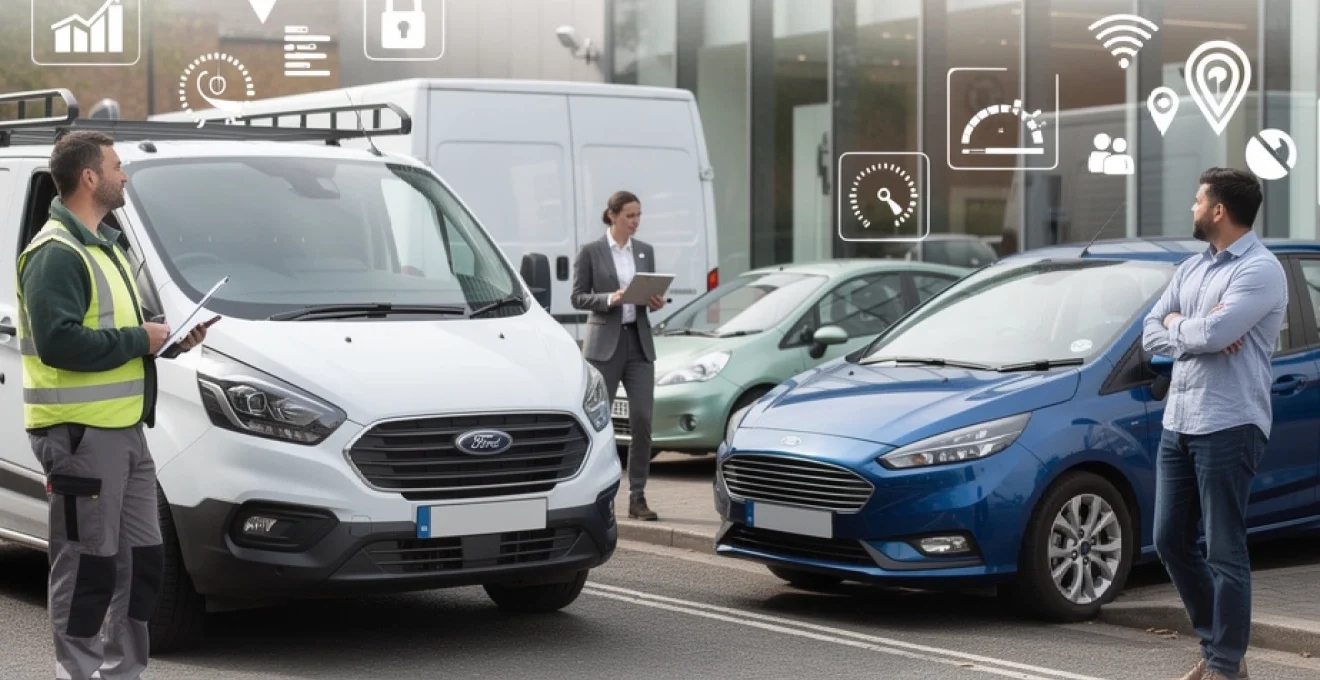
Ask ten drivers whether van insurance is cheaper than car insurance and you will probably hear ten different stories. A delivery driver in London, a sole trader in a rural village and a family using a VW Transporter as a people carrier can all see wildly different premiums. Yet the same core question sits behind every quote: how much risk does the insurer think you represent on the road and on the balance sheet?
Understanding how UK insurers really price vans and cars gives you far more control. Once you know why a Ford Transit Custom can cost triple a Ford Focus for one person and less for another, you can shape your usage, security and policy choices to your advantage. That can mean bringing commercial van insurance premiums close to, or even below, what you pay to insure a personal car.
How UK insurers calculate risk for vans vs cars: underwriting criteria explained
Underwriters look at vans and cars through the same lens of risk, but with different assumptions. A van is usually treated as a working asset, expected to cover more miles, carry valuable tools or stock and operate in busy urban areas. A car is usually modelled as a personal, social, domestic & pleasure vehicle with more varied driving patterns. That difference in starting point is one of the main reasons van insurance is often more expensive than car insurance.
Vehicle usage classification: social, domestic & pleasure vs carriage of goods for hire and reward
One of the most important inputs in a van or car quote is the declared class of use. For a private car, many drivers simply select social, domestic and pleasure (SD&P), sometimes adding commuting. For vans, insurers pay much closer attention to whether the vehicle is used for:
- Pure SD&P: leisure trips, shopping, visiting family, hobbies
- Carriage of own goods: tools, materials or stock used in your business
- Carriage of goods for hire and reward: courier, delivery or taxi work
SD&P van insurance is sometimes comparable in price to car insurance, especially on smaller models like a Citroën Berlingo or Ford Transit Connect with low annual mileage. The moment you move to carriage of goods for hire and reward, the risk model changes. Delivery vans spend more hours per day on the road, in traffic-dense areas, stopping and starting. Claims statistics show much higher frequency of low-speed collisions, plus greater exposure to theft of goods in transit.
Underwriting differences between private car policies and commercial van policies
Private car policies are built for individuals and households. The rating tables are based on decades of data about personal commuting and leisure journeys. For vans, insurers often write on a more specialist commercial wording, even for sole traders. These policies must allow for business interruption, higher liability exposures and, in some cases, multiple named drivers operating the same vehicle.
Commercial van insurance also needs to consider business continuity. A van being off the road can stop income, which tends to push up claims costs through replacement vehicle hire and faster repair expectations. That is one reason a like‑for‑like van repair can sometimes be more expensive from an insurer’s perspective than a similar repair to a private car.
Impact of payload, gross vehicle weight (GVW) and body type (panel van, luton, crew cab) on premiums
Insurers rating vans do not just look at engine size and list price. They also consider gross vehicle weight (GVW), payload capacity and body type. A 3.5‑tonne Luton with tail lift, for example, carries far more weight than a small panel van and typically operates in different environments. Higher GVW often correlates with more severe losses when accidents occur, especially at motorway speeds.
Body type is a key differentiator. Panel vans and crew cabs used in the building trades see different claim patterns from car‑derived vans or small city vans. Tall, boxy Lutons and long-wheelbase vans are more prone to low‑speed damage in tight urban streets and car parks. Underwriters price in that risk based on historic loss ratios for each body style.
Claims frequency and loss ratio data for models like ford transit, VW transporter and vauxhall vivaro
Insurers constantly review claims frequency (how often vehicles are involved in incidents) and loss ratio (claims paid out versus premium collected) by model. In the UK, popular vans such as the Ford Transit Custom, VW Transporter and Vauxhall Vivaro appear heavily in commercial portfolios. Where these models show above‑average collision or theft rates, premiums move accordingly.
Recent market data has indicated that some Transit and Sprinter derivatives have become top targets for tool theft and “peel and steal” door attacks. Claims for stolen contents can easily run into thousands of pounds per incident. By contrast, a typical family hatchback might only be covering school runs and supermarket trips with low‑value personal items on board, which keeps average claim severity lower.
Commercial vans are often priced not just as vehicles, but as mobile workplaces with higher exposure to theft, collision and business interruption.
Policy types compared: private car insurance vs commercial, private and fleet van insurance
Whether van insurance is cheaper than car insurance also depends on the type of policy chosen. A private car on a standard SD&P comprehensive policy is a very different proposition from a van insured for multi‑driver courier work or arranged as part of a mini‑fleet. Policy structure can add or reduce cost, sometimes by hundreds of pounds per year.
Private van insurance vs commercial van insurance for sole traders and limited companies
Private van insurance is aimed at drivers who use a van purely for leisure and personal errands. Typical examples include camper conversions not yet registered as motor caravans, surf or mountain bike vans, and families using a Transporter as an MPV. These policies are often more straightforward and may be priced similarly to car insurance, especially when mileage is limited.
Commercial van insurance, in contrast, is built for sole traders, partnerships and limited companies. A tradesperson carrying tools, a florist delivering arrangements or an electrician covering multiple jobs per day all need business use cover. Commercial policies usually allow for higher annual mileage, carriage of own goods and, if required, goods‑in‑transit add‑ons. That broader protection and higher assumed risk push premiums above purely private van cover in most cases.
Courier, haulage and tradesperson van cover compared with standard SD&P car cover
Courier and haulage insurance sits at the high‑risk end of the commercial van spectrum. Vans used for multi‑drop delivery work in city centres or long‑distance palletised haulage operate for many hours each day, often to tight time pressures. Industry figures regularly show that delivery vehicles account for a disproportionate share of low‑impact collisions and parking knocks, which lifts claims frequency.
A standard SD&P car policy simply does not model this level of exposure. Most personal car policies explicitly exclude hire and reward activities. That is why attempts to cover courier work under a normal SD&P policy are usually rejected at quote or lead to claims being declined. If you earn from transporting goods, a specialist commercial or courier policy is almost always required and usually costs significantly more than a basic private car policy.
Named driver policies, any driver policies and fleet insurance structures for vans
Car insurance in the private market typically uses one main driver and a small number of named drivers. Van policies can also follow this structure, but business use often pushes companies towards any driver or open driving cover, especially on fleets. An any‑driver van policy lets multiple employees operate the same vehicle without adding each one individually, which is convenient but considered higher risk.
For small businesses, mini‑fleet policies that cover several vans and cars together can sometimes improve pricing compared with insuring each van individually. Insurers assess the combined risk across the portfolio, looking at overall claims performance rather than rating each vehicle in isolation. For companies with a good claims record, this structure can help reduce average van premiums relative to standalone car cover for each employee.
Comprehensive, third party fire and theft, and third party only levels on vans vs cars
Both vans and cars can be insured on a third party only (TPO), third party, fire and theft (TPFT) or comprehensive basis. Many drivers assume that dropping to TPO or TPFT will automatically make van insurance cheaper than car insurance. In practice, the saving is sometimes marginal, and comprehensive cover can even be cheaper for some van drivers.
Insurers often attract low‑risk drivers with competitively priced comprehensive policies and load higher‑risk profiles onto TPO and TPFT, which they perceive as more likely to claim. For a tradesperson with a relatively new Ford Transit Custom or VW Transporter, paying slightly more for comprehensive cover usually makes sense because it protects both the vehicle and third parties in a single policy.
Choosing a weaker level of cover rarely solves the underlying rating factors that make van insurance expensive; managing risk and usage is almost always more effective.
Cost drivers that make van insurance cheaper or more expensive than car insurance
Several key cost drivers determine whether your van premium ends up higher or lower than an equivalent car. Some are within your control, such as annual mileage and security; others, like postcode risk, are more fixed but can still be managed with smart choices.
Annual mileage, daily journey profile and telematics data in cost modelling
Annual mileage is one of the clearest indicators of exposure. A van used for courier work at 35,000 miles per year will naturally attract a higher premium than a city car covering 5,000 miles of school runs. However, a privately used van driven only 4,000 miles for weekend trips might be cheaper to insure than an executive car commuting 20,000 miles annually.
Telematics and black box van insurance products add another layer. By measuring real‑world driving behaviour—speed, harsh braking, cornering and time of day—insurers can rate more accurately. A careful driver in a small van with a telematics device can sometimes beat the cost of car insurance, especially for younger drivers who struggle with high private car premiums.
Postcode risk rating, garaging, and overnight parking for vans compared to cars
Where a van sleeps at night matters just as much as where a car is kept, sometimes more. Postcodes with high theft, vandalism or accident rates push up premiums. For vans, insurers also care about whether the vehicle is left on the street outside a property, on a driveway, behind locked gates or in a locked unit or garage.
Vans loaded with tools parked overnight on the street in an inner‑city area face a very different risk profile to empty vans stored in a secure compound. Moving from on‑street parking to a gated yard or garage can, in some cases, shave a substantial amount off commercial van insurance, bringing it closer to typical car insurance costs for the same driver.
Driver occupation, age bands and claims history in van vs car rating tables
Insurers rate both vans and cars heavily based on driver age, occupation and previous claims. Younger drivers under 25 in charge of powerful vans or large pickups can face particularly high premiums because their profile combines two high‑risk factors: age and commercial use. Statistics consistently show that young drivers have a higher collision frequency, and vans add extra weight and size into the equation.
Occupation also matters. A self‑employed electrician or carpenter might see more favourable van quotes than a multi‑drop courier, even with a similar vehicle. Clean licence history, no claims and demonstrating a pattern of low‑risk use over several years are among the most effective ways to narrow the price gap between van and car insurance.
Modifications, signage, roof racks and security upgrades affecting van premiums
Vans are often modified for work: racking, shelving, roof racks, tow bars and sometimes performance changes. Underwriters differentiate between practical modifications and cosmetic or performance upgrades. Heavy‑duty racking and shelving, when professionally installed, can even be viewed positively because they help secure equipment and reduce the chance of loose items causing damage in an accident.
Security‑focused modifications—such as deadlocks, slam locks, alarms, immobilisers and approved trackers—can reduce theft risk and, in some cases, unlock small discounts. Signwriting and strong business branding on a van can deter thieves, as a stolen, highly recognisable vehicle is harder to move on. Conversely, loud cosmetic modifications or performance enhancements may increase the chance of theft or risky driving behaviour, pushing premiums above equivalent car insurance.
Think of a van as a toolkit on wheels: anything that makes that toolkit harder to steal and easier to control usually helps bring costs down.
Business use vs personal use: how commercial risk changes van insurance pricing
Business use is often the tipping point that makes van insurance more expensive than car insurance. When a van becomes central to earning a living, exposure increases in several ways. The vehicle generally spends more hours per day on the road, often in congested or high‑risk urban environments. It may visit building sites, loading bays and tight back streets where low‑speed impacts and scrapes are common.
Commercial van insurance must also contemplate the value of goods carried. Tools for trades like plumbing, roofing or electrical work can easily exceed £5,000 in value, and claims for stolen tools are among the most frequent in the UK van market. Insurers price these risks into commercial policies, especially where drivers leave kits in the vehicle overnight. A purely personal‑use van, emptied at home and used for leisure only, simply presents a very different risk picture.
There is also the question of liability. A business‑use van may be involved in incidents that trigger disputes with customers or the public. While public liability itself sits on a separate policy, insurers know that serious claims can arise from business‑related accidents, so they factor this into overall risk appetites. This is why declaring work use accurately is essential; under‑declaring to chase a cheaper, SD&P‑style premium can leave you uninsured when you need cover most.
Named examples: premium comparisons for popular UK vans and cars
Putting theory into real‑world context helps make sense of pricing differences. While exact premiums always depend on individual details, certain patterns regularly appear in quotes for popular UK vans and cars. These comparisons assume similar drivers, postcodes and usage, showing how risk class, mileage and vehicle type shape price.
Ford transit custom vs ford focus: typical premium scenarios for a tradesperson
Consider a 40‑year‑old tradesperson with a clean licence, living in a mid‑risk UK postcode and driving 12,000 miles a year. A Ford Focus insured for SD&P plus commuting, with no business carriage of goods, might attract a mid‑range comprehensive premium. The same driver insuring a Ford Transit Custom as a commercial vehicle, carrying tools and visiting multiple sites per day, will typically see a higher price.
The Transit Custom is not simply a bigger Focus; it is a vehicle with a different loss history. Larger blind spots, higher gross weight and regular loading and unloading activity all contribute to accident frequency. On top of that, tool theft from Transits is a known problem. All of this feeds into rating engines, usually resulting in the Transit costing more than twice the Focus for a working tradesperson, though strong no‑claims discounts and secure overnight parking can significantly narrow that gap.
VW transporter T6 vs VW golf: risk appetite across different UK insurers
A VW Transporter T6 used as a family vehicle with SD&P only can sometimes come surprisingly close in price to a VW Golf. Some insurers view Transporters as lifestyle vehicles, not just work vans, and may place them in more favourable groups when they are not signwritten or registered to a limited company. If annual mileage is moderate and the vehicle is kept on a driveway, the risk starts to look similar to a large MPV.
For Transporters used for surf trips or camping with modest mileage, especially conversions treated as campervans, specialist insurers with a strong appetite for leisure vans can even undercut mainstream car insurers quoting for a Golf GTD or GTI. However, once the same T6 is registered to a business and used for high‑mileage trade work, its rating quickly shifts towards the commercial spectrum and premiums rise accordingly.
Mercedes‑benz sprinter vs small city cars like the toyota aygo and kia picanto
At the opposite end of the scale, a long‑wheelbase Mercedes‑Benz Sprinter covering nationwide deliveries will almost always cost more to insure than a small city car such as a Toyota Aygo or Kia Picanto. Sprinters typically operate at higher weights, on motorways and A‑roads, and may cover upward of 30,000 miles per year in courier or haulage roles. Claims from a collision at that mass and speed are naturally more expensive.
By contrast, a city car designed primarily for urban commuting and low‑speed use has low repair costs, low market value and usually carries minimal high‑value equipment. Insurers see these vehicles as low‑severity risks, especially in the hands of experienced drivers with good histories. Even high‑spec versions of these cars often fall into the lower insurance groups, helping keep premiums very competitive compared with large commercial vans.
Electric vans (e‑transit, vauxhall vivaro‑e) vs EV cars (nissan leaf, tesla model 3)
The growth of electric vans and cars adds another comparison layer. Electric commercial vehicles like the Ford e‑Transit or Vauxhall Vivaro‑e have higher upfront purchase prices but lower running emissions, often qualifying for use in Clean Air Zones without extra fees. Insurance pricing for these vans is still evolving. Battery costs, specialist repair networks and long repair times can increase claim severity, but quieter, smoother power delivery and advanced safety systems can help reduce accident frequency.
Electric cars such as the Nissan Leaf or Tesla Model 3 already have more mature claims data. Some insurers offer competitive premiums for EVs because telematics and over‑the‑air data give clearer insight into driving behaviour. For now, an e‑Transit used commercially will usually remain more expensive to insure than a Leaf used privately, but as fleets adopt safety programmes and driver coaching, the difference may reduce over time.
How to reduce van insurance costs to match or beat car insurance premiums
Although vans often start from a higher risk baseline, there are many practical ways to bring costs down. With deliberate choices around usage, security, technology and policy structure, it is entirely possible for some drivers to pay van premiums similar to, or even lower than, what they pay on a comparable car.
Using telematics, dashcams and risk management programmes for van drivers
Telematics policies, often called black box van insurance, record how you drive rather than relying only on age and postcode. Smooth acceleration, sensible speeds and low night‑time mileage can all feed into renewal discounts. For younger van drivers or those switching from high‑performance cars, telematics can be one of the most effective ways to prove low risk and earn cheaper premiums.
Dashcams add another layer of risk control. By providing clear evidence after an incident, they help resolve liability quickly and reduce fraudulent or exaggerated claims. Some insurers now apply small discounts for approved dashcam use, especially on commercial vans. Combine these technologies with basic driver training or toolbox talks for employees, and claim frequency can drop sharply, improving your long‑term insurance costs.
No‑claims discount (NCD) portability between car and van policies
If you have built up a strong no‑claims bonus on a car policy, some insurers allow this no‑claims discount portability onto a van policy. This can dramatically reduce first‑year commercial van premiums, especially for drivers with five or more years of claim‑free motoring. Not every insurer supports transferring car NCD to vans, so it is worth asking specifically during quotes.
Building a separate van NCD from scratch also pays off over time. Many commercial drivers see their premiums drop by 50–70% after five claim‑free years. Choosing to self‑fund small, non‑faultless repairs rather than claiming can help protect the discount. For businesses with several vehicles, a carefully managed claims strategy—only using the policy for significant losses—can improve pricing for the whole fleet at renewal.
Choosing the right class of use and voluntary excess to control van premiums
Selecting the correct class of use is essential. If you only use a van for SD&P and occasional commuting, there is no need to pay for full commercial cover including hire and reward. Equally, if you do any form of delivery work, accurate declaration protects you if something goes wrong. Aligning your class of use with reality avoids both unnecessary cost and dangerous gaps in cover.
Adjusting your voluntary excess is another powerful lever. A higher voluntary excess signals that you are willing to self‑insure part of smaller losses, which can bring the premium down. The key is to choose an excess level you could genuinely afford after a claim. Some drivers opt for excess protection add‑ons, which reimburse the excess after a covered claim and can soften the impact of choosing a higher figure.
Multi‑vehicle and mini‑fleet policies for small businesses with cars and vans
For small businesses running a mix of cars and vans, a multi‑vehicle or mini‑fleet policy can often be more economical than insuring each vehicle separately. Insurers look at the collective risk, balancing higher‑risk commercial vans against lower‑risk company cars. Good overall claims performance can then deliver better terms for every vehicle, sometimes making van insurance cheaper than equivalent standalone car insurance for some drivers.
These policies also simplify administration. One renewal date, one set of documents and a single point of contact make changes easier. You can add or remove vehicles mid‑term and, in some cases, benefit from any‑driver extensions for staff over a certain age. For growing trades and small logistics firms, moving to a mini‑fleet structure is often the point at which van premiums begin to stabilise and better reflect the business’s real, rather than assumed, risk.