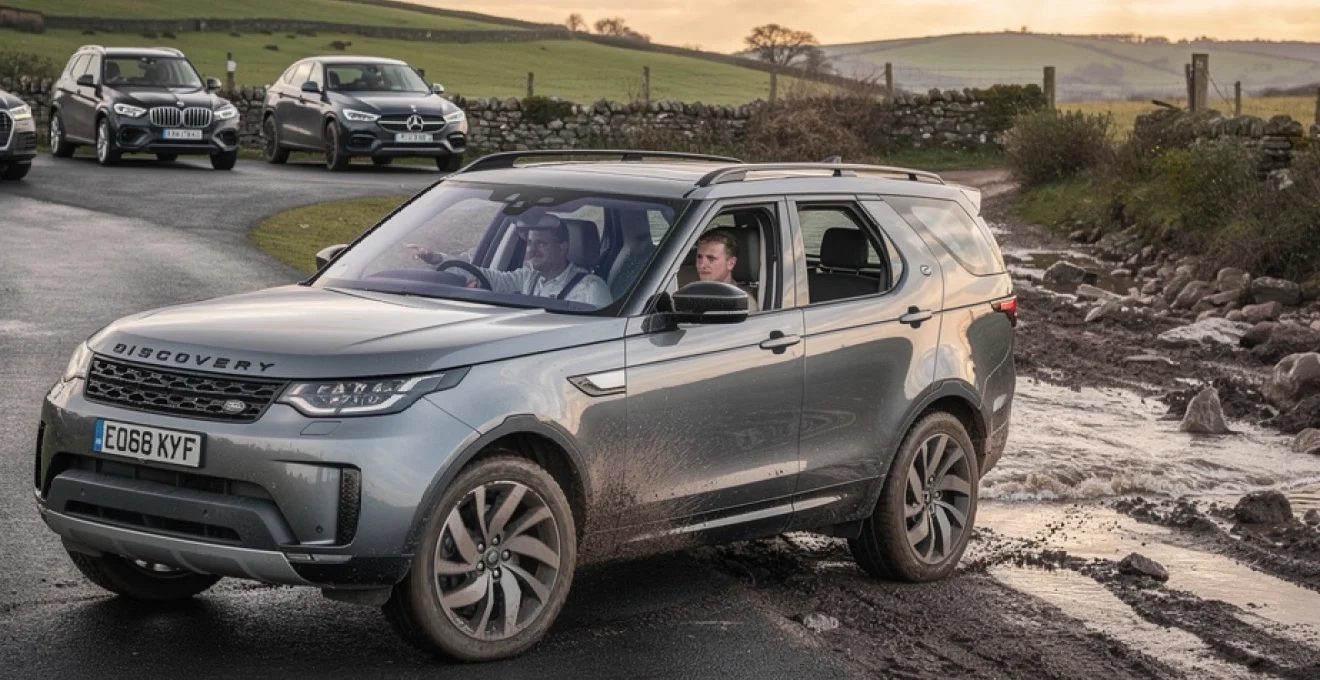
The next-generation Land Rover Discovery 6 arrives at a time when large SUVs face more scrutiny than ever. Tougher emissions rules, the rise of electric SUVs and the continuing popularity of rugged 4x4s make this a critical model for Land Rover. For anyone who needs a genuine seven-seat family workhorse that can tow, commute, cross a continent and still tackle a muddy field, what happens with the new Discovery matters a great deal. Rather than chasing coupe-SUV fashion, the Discovery 6 focuses on breadth of ability, combining modern electrified powertrains with serious off-road engineering and a more upmarket interior than before.
The core recipe remains familiar: a boxy, practical body, serious towing capacity and a cabin designed around real families, not just showroom glamour. What changes is the way this SUV integrates electrification, digital technology and driver assistance into that formula. For you as a buyer, the question is simple: does the Discovery 6 still justify its place between the utilitarian Defender and the more opulent Range Rover, especially when rivals from Audi, BMW, Mercedes and Volvo keep pushing standards higher?
Land rover discovery 6 overview: platform, market positioning and rivals like audi Q7, BMW X5 and Mercedes‑Benz GLE
The Land Rover Discovery 6 slots into the heart of the large luxury SUV segment, targeting buyers who want true seven-seat capacity and proper off-road capability in one package. In the Land Rover hierarchy it sits above the Discovery Sport and below the Range Rover and Range Rover Sport, while overlapping in use case with the Defender 110 and 130. That makes positioning crucial: the Discovery 6 is pitched as the Swiss Army knife of the premium SUV world, more practical than the Range Rover and more refined than the Defender, while undercutting both on price in UK lists that are expected to start in the mid-£60,000s for base diesel and mild-hybrid petrol models.
Key rivals remain the Audi Q7, BMW X5 and X7, Mercedes‑Benz GLE and GLS, Volvo XC90 and newer electric alternatives such as the Kia EV9. The Discovery 5 already compared well on cabin space and towing capacity, even if the German SUVs were a touch sharper to drive on road. The Discovery 6 aims to close that dynamic gap while preserving the brand’s trademark off-road dominance. That strategy reflects wider industry trends: premium brands now need to deliver plug-in powertrains, sophisticated driver aids and a high-quality digital cockpit while still meeting traditional expectations around comfort, refinement and resale value for UK buyers.
The Land Rover Discovery 6 is engineered to be a true all-rounder: a comfortable long‑distance cruiser, a family hauler and a serious off‑roader, rather than a fashion-led SUV.
From a market perspective, demand for large seven-seat SUVs in the UK has remained resilient, with registrations in the segment holding steady even as smaller crossovers and EVs grow. That stability gives the Discovery 6 a solid customer base: multi-car families, rural professionals, caravanners and business users who value a commanding driving position and strong towing ability paired with a premium badge. For you, the Discovery 6 will likely sit on the same shortlist as a high-spec XC90 or Q7; the choice comes down to whether ultimate off-road depth and a more classless image matter more than marginal gains in on-road agility.
Powertrains and performance: ingenium petrol, mild‑hybrid diesel and plug‑in hybrid (PHEV) systems in the discovery 6
Engine line‑up: 3.0‑litre ingenium straight‑six, four‑cylinder P300 and expected p460e plug‑in hybrid specifications
The Discovery 6 continues to rely on the modular Ingenium engine family, spanning four‑cylinder and straight‑six units with varying levels of electrification. Expect the core diesel to be a 3.0‑litre six‑cylinder mild‑hybrid, evolving from the Discovery 5’s D350 (345bhp) tune. That outgoing engine already pushed the hefty SUV from 0–60mph in 5.9 seconds and produced over 650Nm of torque, so a modest efficiency-focused update rather than a power hike is plausible for the Discovery 6. For many UK drivers this will remain the default choice, thanks to strong low‑down pulling power and proven long‑range economy.
On the petrol side, a four‑cylinder P300 turbo with around 296bhp is likely to serve as the entry powertrain in some markets, prioritising smoothness and refinement over outright efficiency. Above that, an inline‑six mild‑hybrid petrol may return in something close to the previous P360’s 356bhp, though demand in Europe will now heavily favour electrified options. The headline addition is expected to be a PHEV, probably badged something like P460e, combining a 2.0‑litre turbo petrol with a powerful electric motor and sizeable battery. Anticipate system outputs around 450bhp and 600Nm, plus an electric‑only range in the 35–45 mile WLTP band, enough for many UK commuters to complete daily journeys with zero tailpipe emissions.
Performance metrics: 0–62 mph times, torque curves, towing capacity and off‑road torque delivery
Performance figures for the Discovery 6 should build on a strong foundation. The current D350 diesel already offers acceleration on par with an Audi Q7 50 TDI and BMW X7 xDrive40d, and there is little incentive for Land Rover to move backwards. Realistically, you can expect 0–62mph in the high‑5 to low‑6‑second bracket for the six‑cylinder diesel and PHEV, with the P300 four‑cylinder petrol sitting near 7.3 seconds. More important than headline numbers is how these engines deliver their torque: broad plateaus from 1,500rpm upwards allow the Discovery to surge up motorway slip roads or drag a horsebox up a steep incline without fuss.
Towing capacity remains a core selling point. The Discovery 5 can already pull a braked trailer weighing up to 3,500kg, and the Discovery 6 is expected to maintain that benchmark across diesel and, crucially, some PHEV variants. Combined with sophisticated trailer stability systems, that makes the Discovery 6 especially appealing if you tow a large caravan or boat. Off‑road, the integration of electric torque from the PHEV’s motor should enhance low‑speed control, providing instant response when crawling over rocks or through ruts where a traditional turbo engine may hesitate.
Transmission and driveline: 8‑speed ZF automatic, permanent all‑wheel drive and active rear differential calibration
Power in the Discovery 6 flows through the familiar 8‑speed ZF automatic gearbox, widely regarded as one of the smoothest and most responsive torque‑converter transmissions available. This setup already suits the Discovery’s relaxed character, slurring gears unobtrusively in comfort driving while still responding crisply if you need a quick kickdown. Software tuning for the new generation focuses on integrating electric assistance smoothly, especially in the PHEV, where coordination between engine, motor and gearbox can make or break perceived refinement.
Permanent all‑wheel drive remains standard, with an electronically controlled centre coupling and an optional active rear differential. Off‑road torque distribution is managed via Land Rover’s Terrain Response 2 system, tailoring throttle maps, diff locking strategies and gearbox behaviour to surfaces ranging from mud and ruts to sand and rock. On road, that rear diff helps control understeer and traction out of tight junctions, giving the Discovery 6 a more planted, confident feel. For you as a driver, the net effect should be an SUV that feels secure and predictable in wet British weather yet still able to surprise with its grip when leaving tarmac behind.
Fuel economy and CO₂: WLTP consumption, BiK implications for UK company car drivers and ULEZ‑compliant variants
Fuel economy and emissions will define the Discovery 6’s success in Europe. The outgoing diesel Discovery returned an official WLTP figure of around 33.8–34.8mpg, with road tests often seeing closer to 30–31mpg. Incremental engine refinements, improved aerodynamics and smarter mild‑hybrid systems should nudge the Discovery 6’s diesels into the mid‑30s in the real world, while PHEV variants will post official WLTP figures above 100mpg when driven on fully charged batteries. As always, those PHEV numbers depend heavily on regular charging; long uncharged motorway runs will still lean heavily on the petrol engine.
For UK company car drivers, Benefit‑in‑Kind (BiK) is a decisive factor. Conventional diesel SUVs of this size sit in the top 37% BiK band due to CO₂ emissions well over 200g/km. By contrast, a Discovery 6 plug‑in hybrid with CO₂ below 50g/km and an electric range over 40 miles could fall into a band close to 12–14%, dramatically cutting monthly tax bills. ULEZ compliance also matters for urban owners: PHEV and Euro 6d‑final diesel variants will access London’s Ultra Low Emission Zone without penalty, providing the correct NOx and CO₂ thresholds are met, giving the Discovery 6 real-world usability far beyond rural postcodes.
Comparison with discovery 5 and defender 110 engine and performance characteristics
Against the existing Discovery 5 D350, the Discovery 6’s primary gains lie in efficiency, refinement and electrification options rather than raw performance. Expect slightly better WLTP numbers, quieter operation and smoother stop‑start transitions, especially with 48‑volt systems. Compared with the Defender 110, which shares much of the Ingenium powertrain family, the Discovery 6 skews its calibration toward quieter cruising and gentler throttle response, whereas the Defender feels a touch more eager and rugged in its character. If you spend more time on the motorway than on green lanes, that Discovery bias is likely to suit you better.
Where the Discovery 6 differentiates itself most strongly is in the upcoming PHEV’s integration. While the Defender already offers plug‑in options, the Discovery’s more aerodynamic shape and on‑road orientation allow that drivetrain to deliver superior electrical range and lower consumption. The result is an SUV that, on paper, moves the Discovery closer to plug‑in rivals such as the Volvo XC90 Recharge, while still retaining far more off‑road depth than those alternatives when battery charge is low or traction is poor.
Chassis, suspension and off‑road systems: discovery 6 dynamics on‑road and on challenging terrain
Mla‑flex platform, body‑in‑white rigidity and weight reduction versus discovery 5 (D300)
The Discovery 6 is expected to migrate to Jaguar Land Rover’s MLA‑Flex platform, already used in models such as the latest Range Rover. This architecture supports internal combustion, mild‑hybrid and plug‑in hybrid layouts, delivering substantially improved body‑in‑white rigidity without a corresponding weight penalty. A stiffer shell allows engineers to soften the suspension slightly for comfort without introducing wallow, while also improving crash performance and reducing squeaks and rattles over time. Even a 50–80kg reduction compared with the Discovery 5 D300 would be valuable in such a large SUV, improving fuel consumption and braking distances.
MLA‑Flex’s electrical backbone also enables higher‑bandwidth data between chassis systems, making features like adaptive dampers, air suspension and torque vectoring more responsive. For you, that should translate to a Discovery 6 that feels more “tied down” on undulating B‑roads while still gliding over broken surfaces that might unsettle stiffer German competitors. The platform’s multi‑material construction, blending aluminium and high‑strength steel, further helps to align comfort, safety and longevity in a way the older architecture could not fully achieve.
Adaptive air suspension, terrain response 2 and configurable off‑road driving modes
Air suspension remains standard across the Discovery 6 range, with ride height adjustable for off‑road, normal and access modes. Compared with the Discovery 5’s setup, expect recalibrated adaptive dampers to counter the slight “stumbling” over sharp-edged bumps that reviewers noted, especially on 21‑ and 22‑inch wheels. New algorithms can distinguish between body movements caused by road undulations and those triggered by driver inputs, allowing the suspension to stay supple in a straight line yet firm up in corners.
Terrain Response 2 remains the heart of the Discovery’s off‑road intelligence. You can choose from pre‑set modes such as Grass/Gravel/Snow, Mud and Ruts, Sand and Rock Crawl, or leave the system in Auto, where it analyses wheel slip, steering angle and yaw to decide for itself. Configurable modes are expected to expand, letting keen off‑roaders fine‑tune throttle response, diff lock thresholds and traction control intervention. That level of granularity is unusual in this class and gives you genuine control if you enjoy exploring challenging tracks or towing heavy loads across fields.
All‑terrain progress control, hill descent control and low‑range gearing for rock crawling and steep descents
Land Rover’s All‑Terrain Progress Control (ATPC) acts as a low‑speed cruise control for off‑road situations. Set a target speed (often between 1–19mph) and the Discovery 6 modulates throttle and brakes, leaving you to concentrate solely on steering. It is particularly helpful on loose, slippery climbs, where maintaining a constant pace can otherwise be tricky. Combined with low‑range gearing in models so equipped, the Discovery 6 is able to inch its way up and down obstacles with impressive precision.
Hill descent control has been refined over several generations and now offers fine, user‑adjustable speed increments so you can tailor the rate of descent to your confidence and the terrain. On steep, rocky declines, that means the Discovery 6 can almost “walk” down slopes in a controlled, drama‑free manner, avoiding the weight transfer lurches that less sophisticated systems can produce. For drivers moving from a traditional ladder‑frame 4×4, this electronic assistance can feel like magic, but it quickly becomes second nature in regular use.
Wading depth, approach, departure and breakover angles benchmarked against defender 130 and toyota land cruiser
The Discovery’s reputation has always rested partly on its ability to go places that rival premium SUVs will not. The outgoing car can already wade through up to 900mm of water, a figure expected to be carried over or even marginally improved in the Discovery 6. Approach, departure and breakover angles inevitably fall slightly behind a Defender 130 but are competitive with or better than a Toyota Land Cruiser, especially when the air suspension is raised to Off‑Road height.
For real‑world UK use, that means you can drive through flooded lanes or across shallow fords with more confidence than in nearly any rival seven‑seat SUV. Wade mode and optional Wade Sensing use sensors to estimate water depth and display it on the infotainment screen, giving you a clear view of how close you are to the limit. That level of information significantly reduces guesswork when conditions are marginal and helps protect the vehicle from water ingress that could damage electronics or interior trim.
Wheel and tyre packages: 20‑ to 22‑inch alloys, all‑season vs all‑terrain tyres and impact on ride and NVH
Wheel choice is more than a cosmetic decision on a large SUV. As with the Discovery 5, the Discovery 6 range is likely to start on 20‑inch alloys in S trim, moving to 21‑ and 22‑inch designs on SE, HSE and top‑tier variants. Road tests consistently show that the smaller wheels deliver the best blend of comfort and control, with the larger rims introducing a little more thump over potholes and sharper inputs at low speeds. If you value ride comfort above stance, the 20‑inch option remains the smart pick.
Tyre choice also shapes the Discovery’s behaviour. Most UK owners stick with premium all‑season tyres that balance wet‑grip, refinement and longevity. However, if you regularly use muddy tracks or tow across fields, specifying a more aggressive all‑terrain tyre can transform capability at the cost of a slight increase in noise, vibration and harshness (NVH). The Discovery 6’s well‑insulated cabin helps mask some of that additional roar, but you will still notice a difference compared with a Q7 or XC90 running on low‑rolling‑resistance rubber.
Interior architecture, seating and cargo practicality in the seven‑seat discovery 6
Cabin layout, material quality and ambient lighting in S, SE, HSE and autobiography trims
The Discovery 6 interior moves closer than ever to the design language of the latest Range Rover, without copying it wholesale. The familiar upright dashboard remains, but surfaces are cleaner, vents slimmer and the centre console flows around a larger touchscreen. In S trim, expect robust but smart materials: leather upholstery, soft‑touch plastics on major touchpoints and tasteful metal‑effect inlays. Moving up to SE and HSE brings higher‑grade hides, extended leather on the dashboard and door tops, plus more intricate ambient lighting with multiple configurable colour zones.
A probable range‑topping Autobiography trim introduces contrasting piping, open‑pore wood veneers and more dramatic cabin lighting signatures, nudging the Discovery closer to luxury limo territory. Compared with the outgoing car, there is a noticeable reduction in visible hard plastics, addressing one of the few criticisms aimed at the Discovery 5 by owners who cross‑shopped it against BMW and Audi rivals. If you spend long hours behind the wheel, these touches add up to a space that feels genuinely premium yet still utilitarian enough that you will not worry about a muddy dog brushing against the door card.
Seven‑seat configuration: third‑row packaging, ISOFIX locations and electric seat folding functions
Seven full‑size seats remain a Discovery hallmark. Unlike some rivals where the third row is an afterthought, the Discovery 6 continues to offer adult‑usable accommodation in all three rows. The wide body and clever roofline mean that even tall passengers have acceptable knee and headroom in the rear-most seats for typical journeys. Access is helped by a sliding and tilting second row, although, as in the Discovery 5, the electric folding mechanism can be slower than manual levers when reconfiguring the cabin in a hurry.
Family‑friendly touches abound. ISOFIX points are expected on the front passenger seat, outer positions of the second row and both third‑row seats, for a total of five. That makes fitting multiple child seats considerably easier than in many competitors and gives you flexibility as children grow. Higher‑end trims offer an updated Intelligent Seat Fold system controlled from the boot or via the infotainment screen, allowing you to drop or raise individual seats remotely. In a crowded car park or when your hands are full, this ability to orchestrate the cabin layout with minimal effort quickly proves valuable.
Boot space, load length and under‑floor storage compared with volvo XC90 and kia EV9
Boot space is one of the Discovery’s strongest cards. The current model offers 258 litres behind all seven seats, 1,137 litres in five‑seat configuration and a vast 2,406 litres with all rear seats folded. The Discovery 6 is expected to match or slightly exceed these figures, maintaining its lead over the Volvo XC90 (up to 2,005 litres) and Mercedes GLE (around 2,055 litres). Interestingly, newer electric competitors such as the Kia EV9 are closing the gap, but the Discovery’s square aperture and flat floor still make it especially easy to load bulky furniture or bikes.
Practical touches include a powered tailgate and a fold‑out inner tailgate section that doubles as a bench for changing muddy boots and eliminates any meaningful load lip. Under‑floor storage compartments help keep valuables and charging cables (for PHEV models) out of sight. If you frequently carry long items such as skis or flat‑pack furniture, the ability to fold individual seat backs rather than a simple 60/40 split gives much greater flexibility. When planning a family holiday or house move, that sheer cargo volume and versatility can save time and reduce the need for a separate van hire.
Ergonomics and visibility: command driving position, glazing, mirrors and camera‑based digital rear‑view
The Discovery 6 retains the commanding driving position that has long endeared the model to UK buyers. The seat is set higher than in many rivals, creating an almost balcony‑like view of the road that inspires confidence in town and on narrow country lanes. Generous glass areas and relatively thin pillars, by modern standards, give an airy feel and excellent outward visibility, aided by large door mirrors. Forward visibility is particularly strong, making it surprisingly easy to place the bulky body in tight spaces.
A camera‑based digital rear‑view mirror is expected to be offered on mid‑ and high‑spec models. This system uses a roof‑mounted camera to feed a live image to the mirror, bypassing obstructions such as tall passengers or stacked luggage. Once accustomed to it, you may find regular mirrors in other cars feel restrictive. Coupled with standard front and rear parking sensors and a 360‑degree camera system, the Discovery 6 becomes far less intimidating to manoeuvre in multi‑storey car parks than its sheer footprint might suggest.
Acoustic refinement: laminated glass, active noise cancellation and powertrain isolation strategies
Refinement was already a strong point for the Discovery 5, and the Discovery 6 builds on this with more extensive use of laminated glass, improved door seals and additional sound‑deadening in the bulkheads and floorpan. Diesel clatter is impressively suppressed, with the engine often fading into the background even under brisk acceleration. At a steady motorway cruise, wind and road noise are more noticeable than in an Audi Q7 or BMW X7 but still low enough that conversation between all three rows remains easy.
Advanced models may offer active noise cancellation, using microphones in the cabin and speakers in the headrests to counter low‑frequency droning from tyres and the drivetrain. Powertrain mounts are also tuned to isolate vibrations more effectively, particularly important in mild‑hybrid and PHEV models where frequent engine start‑stop events can otherwise intrude. For you as an owner, the result is a calmer, more relaxing environment for long journeys, helping to justify the Discovery 6’s premium positioning even when German rivals boast slightly higher headline refinement scores in independent tests.
Infotainment, digital cockpit and driver assistance technology in the discovery 6
Pivi pro infotainment: 13.1‑inch touchscreen, over‑the‑air updates and apple CarPlay/Android auto integration
The Discovery 6 adopts the latest generation of Land Rover’s Pivi Pro infotainment system, accessed via a curved 13.1‑inch touchscreen mounted prominently in the centre of the dashboard. Compared with earlier versions, response times are quicker, graphics crisper and menu structures simpler, reducing the need to dig through sub‑menus while driving. Wireless Apple CarPlay and Android Auto are standard, allowing you to mirror your smartphone navigation and media seamlessly, while the system’s own built‑in navigation can receive live traffic updates via an integrated data connection.
Over‑the‑air (OTA) software updates mean that both the infotainment and certain vehicle control modules can be improved or patched remotely, reducing dealer visits and keeping features current for longer. That capability reflects a wider industry move towards software‑defined vehicles, where ongoing updates can add features or tweak characteristics after purchase. For example, Land Rover could plausibly roll out enhanced off‑road camera views or additional driver‑assist functionalities over time, giving your Discovery 6 a longer technological shelf life than previous generations.
Digital instrument cluster, head‑up display and customisable driving information layouts
A fully digital instrument cluster sits ahead of the driver, replacing traditional analogue dials. This configurable panel can show classic twin gauges, full‑screen maps or hybrid layouts combining trip data, media information and driver assistance status. While not quite as endlessly customisable as some German equivalents, the interface is clear and legible, with sensible defaults that work well without extended setup. A colour head‑up display (HUD) is available on higher trims, projecting key information onto the windscreen so you can keep eyes on the road.
These digital elements are not just for show. When towing, for example, the cluster can highlight trailer stability control status or display dedicated towing guidance. Off‑road, the system can prioritise information such as wheel articulation, diff lock status and vehicle pitch and roll, turning the cockpit into an informative hub for demanding conditions. If you enjoy tailoring a car to your preferences, the Discovery 6 offers enough layout options to feel personal without overwhelming you with complexity.
Advanced driver assistance systems: adaptive cruise, lane centring and blind‑spot monitoring in UK spec
Driver assistance has become a major differentiator in this segment. The Discovery 6 offers a comprehensive suite including adaptive cruise control with stop‑and‑go, lane keep assist and, on some models, lane centring functionality that gently helps keep the vehicle in the middle of the lane on motorways. Blind‑spot monitoring and rear cross‑traffic alert are standard from mid‑level trims, warning you of vehicles in hard‑to‑see areas when changing lanes or reversing out of parking spaces.
Automatic emergency braking (AEB) can detect vehicles, pedestrians and, in some cases, cyclists, intervening if the driver does not react to an imminent collision. Traffic sign recognition, driver drowsiness alerts and speed‑limiter functions round out the core package. While not marketed as an autonomous driving system, the Discovery 6’s driver aids meaningfully reduce fatigue on long journeys and add a valuable layer of safety for families, especially in busy urban environments with complex traffic patterns and distractions.
360‑degree cameras, ClearSight ground view and off‑road mapping with what3words integration
Camera technology is an area where Land Rover has invested heavily. The Discovery 6’s 360‑degree camera suite produces a high‑resolution, bird’s‑eye view on the central display, making tight car parks and narrow tracks alike easier to negotiate. ClearSight Ground View effectively lets you “see through” the bonnet by stitching images from forward‑facing cameras to show the area directly under the front of the vehicle. When negotiating rocks, ruts or kerbs, this feature dramatically reduces guesswork and helps protect the front bumper and wheels.
Off‑road mapping makes further use of connectivity, with the potential for what3words integration to specify precise destinations far from conventional addresses. That can be especially handy when meeting friends at a remote campsite or navigating large rural estates. Combined with breadcrumb‑style track logging, these systems turn the Discovery 6 into a capable expedition tool as well as an everyday family SUV, letting you retrace routes or share exact locations with others confidently.
Connectivity and charging: USB‑C distribution, Wi‑Fi hotspot and rear‑seat entertainment options
Modern families depend on power and data as much as cupholders. The Discovery 6 reflects this reality with a generous spread of USB‑C ports throughout all three rows, ensuring passengers can keep smartphones, tablets and laptops charged. Some configurations may also offer a 230V socket for powering small appliances or charging camera batteries on the go. An integrated Wi‑Fi hotspot, using an embedded SIM, allows multiple devices to connect to the internet simultaneously, reducing reliance on individual data plans during long journeys.
Rear‑seat entertainment options, likely including twin screens on the back of the front headrests, give passengers independent control over media. Combined with high‑quality audio systems from Meridian – scaling from solid entry‑level units to 700‑watt premium setups – this transforms the Discovery 6 into a rolling living room. For parents, the ability to keep children occupied quietly during long trips can be as valuable as any off‑road package or performance upgrade.
Trim levels, options and UK pricing strategy for the land rover discovery 6
The Discovery 6 trim walk is expected to mirror the outgoing model while introducing more distinct visual and equipment steps. Entry‑level S models deliver the essentials: leather upholstery, 20‑inch alloys, dual‑zone climate control, LED headlights, Pivi Pro infotainment and a full suite of core safety kit. For many private buyers, this spec already covers daily needs, especially when paired with the six‑cylinder diesel. SE trim typically adds larger 21‑inch wheels, upgraded Meridian audio, more advanced lighting and extended interior colour and trim options.
HSE models raise the bar with 22‑inch alloys, matrix LED headlights, 20‑way electrically adjustable and possibly cooled front seats, four‑zone climate control and enhanced driver assistance such as blind‑spot monitoring and traffic sign recognition. A possible Autobiography variant crowns the range, blending distinctive styling details, additional leather coverage, head‑up display and perhaps electrically operated third‑row seats with heating. UK list prices are likely to start around £65,000 for a diesel S and climb beyond £85,000 for a fully loaded PHEV Autobiography, though transaction prices will depend heavily on finance offers and dealer incentives.
Option packs simplify ordering, bundling popular features such as the Advanced Off‑Road Pack (with ATPC, additional underbody protection and a locking rear differential) or a Convenience Pack adding keyless entry, gesture‑controlled tailgate and upgraded ambient lighting. When configuring a Discovery 6, it makes sense to consider which features will add real-world value and which simply look good on a spec sheet. Typically, investment in seating comfort, driver aids and camera systems pays back every day, whereas oversized wheels and ultra‑premium sound systems are more about personal taste and occasional enjoyment.
Ownership experience: reliability expectations, servicing, warranty and residual values in the UK market
Land Rover’s reliability reputation has long been a talking point, and the Discovery line has not been immune to issues. Recent owner surveys have placed the outgoing Discovery toward the lower half of rankings for big seven‑seat SUVs, with common complaints including minor electrical glitches and diesel particulate filter (DPF) regeneration behaviour necessitating more frequent oil changes. The Discovery 6 aims to improve this picture through the use of newer electrical architectures, OTA updates that can resolve some software bugs without a workshop visit and more robust component choices validated on the MLA‑Flex platform.
In the UK, a three‑year, unlimited‑mileage warranty remains standard, matching premium rivals on duration while beating several on mileage caps. Roadside assistance across the UK and Europe is typically included for the warranty term, providing extra reassurance if you travel frequently. Fixed‑price servicing plans, often spanning three to five years, can help control running costs and may enhance resale appeal by demonstrating a clear maintenance history. Regular use of high‑quality fuel, proper warm‑up routines and, for diesels, ensuring periodic longer drives to allow full DPF regeneration are practical steps you can take to improve long‑term reliability.
Residual values for Discovery models have historically trailed slightly behind the most desirable German SUVs but remain solid, particularly for well‑specced diesels with sensible wheel choices and mainstream colours. Electrified variants of the Discovery 6, especially the PHEV, are likely to hold value better in coming years as emissions regulations tighten and demand for ULEZ‑compliant large SUVs grows. If you intend to keep the vehicle for many years, prioritising durability‑oriented options – such as smaller wheels with taller tyres, protective interior mats and regular corrosion inspections in harsh climates – will help preserve both usability and value for subsequent owners.