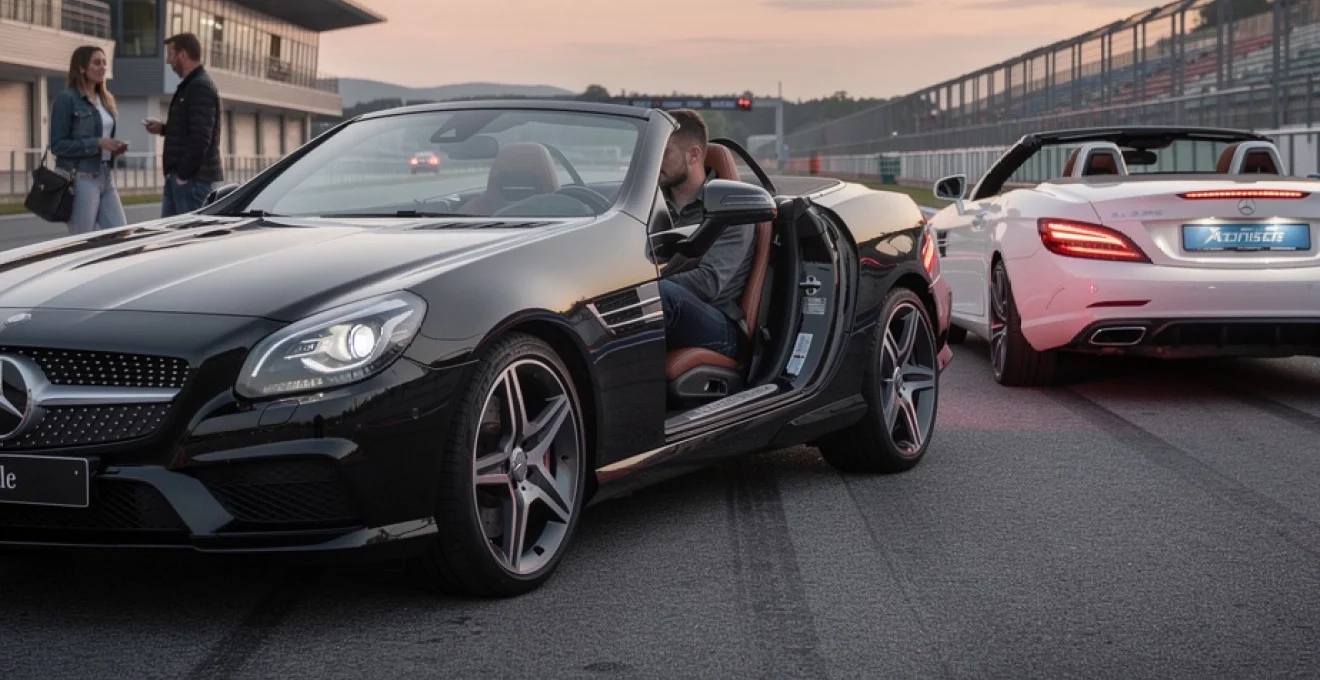
The 2015 Mercedes SLK sits in an interesting place in the sports car world. It is a compact roadster with a folding metal roof, yet it behaves more like a refined grand tourer than a hardcore track special. If you want a two-seat convertible that can cope with a wet weekday commute, a long motorway run and a sunny Sunday blast, the facelifted SLK makes a persuasive case. The update brought cleaner engines, more advanced driver assistance and subtle styling tweaks, all just before the model morphed into the SLC in 2016. Understanding what changed, and how it affects you as a driver or used buyer, helps to judge whether this is the right premium roadster to live with every day.
Design evolution of the 2015 mercedes SLK facelift: exterior aero, LED lighting and AMG line styling
Redesigned front bumper, air intakes and diamond grille: aerodynamic and cooling upgrades on the SLK 200, SLK 250 and SLK 350
The 2015 facelift for the Mercedes SLK is deliberately subtle. This roadster had already adopted the upright nose and SL-style grille in 2011, so the later changes focus on detail: reshaped bumper elements, tweaked air intakes and discreet aero work around the lower front section. The goal is not just aesthetics. Reprofiled intakes help direct more air towards the intercoolers and brakes on the SLK 200 BlueEFFICIENCY, SLK 250 and SLK 350, important when you drive briskly on hot days or push the car on a mountain pass.
Drag coefficients remain competitive for a folding hard-top roadster, sitting around the low-0.30s depending on wheel and tyre package. That might not sound dramatic, but at motorway speeds even a small reduction in drag translates into a tangible gain in fuel economy and cabin refinement. The wider stance and 30mm stretch in body dimensions compared with earlier generations also give the facelift SLK a more planted visual presence, especially in AMG Line guise.
Headlamp and rear-light revisions: LED daytime running lights, bi-xenon options and night-time visibility performance
Lighting is one of the most visible areas of the 2015 SLK update. Standard models gain integrated LED daytime running lights in redesigned lamp clusters, while higher trims and option packs add bi-xenon or full-LED elements with automatic range control. If you often drive at night on unlit country roads, the difference in beam spread and colour temperature is immediately noticeable. The whiter light makes road markings and signage easier to read and reduces eye strain on long journeys.
At the rear, the facelift brings new internal graphics and LED technology for the tail-lights, improving brake-light response times and overall visibility for traffic behind you. It is a small safety gain, but in wet or misty conditions the faster illumination speed of LEDs can shave crucial milliseconds off the reaction time of following drivers. From an ownership perspective, LED units also tend to last longer than conventional bulbs, which reduces hassle over the life of the car.
AMG line exterior package: sport bodykit, 18-inch alloy wheel designs and ride-height changes compared with standard SE
The AMG Line pack transforms the vibe of the 2015 SLK from relaxed cruiser to mini-supercar. You get a deeper front apron, more sculpted side skirts and a rear bumper with diffuser-style detailing, all visually lowering the car and emphasising the long-bonnet, short-deck proportions. AMG-specific 18-inch alloys fill the arches with a more aggressive stance, though they bring handling and ride implications covered later.
Compared with a standard SE on 17-inch wheels, AMG Line suspension typically sits around 10mm lower, with firmer springs and thicker anti-roll bars. That reduction in ride height reduces pitch and body roll, but on broken UK B-roads you will feel more vertical movement and sharper impacts through the seat base. If you mainly drive on smooth A-roads or motorways, the combination of tauter body control and aesthetic appeal is attractive. If your daily route is full of potholes, a standard chassis may be the more comfortable choice.
Paint finishes and trim combinations: obsidian black, tenorite grey, polar white and designo options in the facelift range
Paint and trim choices matter more on a compact roadster than almost any other car type. The 2015 Mercedes SLK facelift range offers a familiar portfolio: Obsidian Black for a classic, understated look; Tenorite Grey for a modern, technical feel; and polar white for maximum contrast with the roof and interior. Designo special finishes, such as deep metallic reds and pearl-effect whites, appeal if you want a more bespoke appearance and plan to keep the car for several years.
Colour combinations also influence perceived cabin space. Dark exterior colours with dark interiors create a cocooning, almost coupe-like environment when the roof is up, whereas lighter paints paired with beige or light grey leather make the SLK feel airier. On the used market, neutral shades such as grey, black and white tend to hold value better and are easier to match if you need minor paint repairs from stone chips, which the SLK’s low nose is somewhat prone to.
Cabin, materials and COMAND updates in the 2015 mercedes SLK interior refresh
Instrument cluster and multifunction steering wheel update: new dials, TFT display and control layout ergonomics
Inside the 2015 SLK, the layout retains its aircraft-inspired theme but benefits from gently updated instruments and revised controls. The twin-hooded dials gain clearer typography and a central TFT display with crisper graphics, improving legibility for speed, navigation prompts and trip-computer data. The flat-bottomed multifunction steering wheel integrates more intuitive buttons, making it easier to scroll through menus or adjust audio volume without taking your eyes off the road.
Ergonomically, the driving position suits a wide range of body types, though very tall drivers may find legroom marginal with the seat fully back. Reach and rake adjustment on the steering wheel help fine-tune the posture, and pedal alignment is generally good. It is a cockpit that feels purpose-built for the driver, not retrofitted from a hatchback, and that shows in the angle of the centre stack and the way key controls fall easily to hand in everyday use.
COMAND online and infotainment upgrades: 7-inch display, navigation, bluetooth audio and smartphone integration
The facelifted SLK benefits from an updated COMAND Online system with a 7-inch colour display set high in the centre console. While the interface does not match the very latest MBUX systems introduced on newer Mercedes models, it still offers robust navigation, Bluetooth audio streaming and hands-free calling. Smartphone integration covers basic needs; there is no full-screen mirroring as on newer cars, but you can pair your phone to handle calls, media and contacts reliably.
Map updates and online services depend on specification and market, so if you are assessing a used 2015 SLK, checking the COMAND software version and navigation data age is worthwhile. An up-to-date system improves routing efficiency and traffic guidance, which matters on long cross-country drives. The physical rotary controller, rather than a touch-only interface, allows accurate operation on the move even on bumpy roads, which many drivers still prefer to pure touchscreens.
Material quality and upholstery changes: nappa leather, contrast stitching and brushed aluminium vs wood trim packages
Material quality is one of the SLK’s strongest cards. The 2015 update maintains dense plastics and solid switchgear, while higher trims introduce Nappa leather with distinctive contrast stitching on seats, dashboard and door cards. Real brushed aluminium inserts give the cabin a modern, technical character, especially when combined with darker leathers. For buyers who prefer a more classic ambience, wood trim packages remain available, softening the otherwise sporty design.
The SLK’s seats are generally supportive on long journeys, though some drivers with broader shoulders may find the one-piece backrest a little narrow. The upholstery wears well if maintained with appropriate cleaning products, especially in darker colours. Bright interiors look superb when new, yet can show dye transfer and scuffs more readily, so a careful inspection of the bolsters and seat bases is recommended if you are looking at higher-mileage examples.
Comfort and usability enhancements: seat adjustment, airscarf neck-level heating and roof operation refinement
Comfort features define how often you will actually use a convertible roof. The SLK excels here. Airscarf neck-level heating, available on many 2015 cars, directs warm air around your neck and shoulders through vents in the seatbacks. Combined with heated seats and effective climate control, you can drive roof-down on days far colder than you might expect. Many owners report open-top journeys at single-digit temperatures without discomfort, provided wind speed is moderate.
The folding Vario roof remains fully electric and takes around 20 seconds to open or close. It still requires the car to be almost stationary, a limitation when rivals such as the BMW 2 Series Convertible allow operation at low speeds. However, the ability to operate the roof from the key fob is convenient in real life: you can start closing it from a short distance as you walk back to the car, or pre-open it on hot days before you climb in. A wind-blocker system and optional transparent Airguides help reduce buffeting for you and your passenger at motorway speeds.
Engine line-up and performance review: SLK 200, SLK 250 CDI, SLK 250 and SLK 350 facelifted models
SLK 200 BlueEFFICIENCY 1.8-litre turbo: power output, torque curve and 0–62 mph performance analysis
The pre-facelift SLK 200 used the M271 1.8-litre turbocharged four-cylinder engine, delivering 181 bhp. For 2015, Mercedes began phasing in the newer 2.0-litre M274 unit, maintaining the same peak power but increasing torque by around 30 Nm to roughly 300 Nm (221 lb ft). Official 0–62 mph times fall to about 6.9 seconds with the 6-speed manual, with the automatic versions only a fraction behind.
On the road, the SLK 200’s performance suits brisk everyday use rather than aggressive driving. Mid-range torque provides strong in-gear acceleration from 40–70 mph, useful for overtakes on single carriageways. The engine note is slightly gruff at higher revs, but the broader torque plateau of the newer M274 means you do not need to explore the red line often. Driven moderately, real-world fuel economy in mixed use typically lands in the high-30s mpg, below the official NEDC figure of 49.6 mpg but acceptable for a premium petrol roadster.
SLK 250 CDI diesel roadster: real-world fuel economy, torque delivery and long-distance cruising characteristics
The SLK 250 CDI (later SLK 250d) adds a distinctive proposition: a compact diesel roadster with serious torque. The 2.2-litre four-cylinder diesel produces about 201 bhp and a muscular 500 Nm (369 lb ft) of torque, paired exclusively to automatic transmission in the 2015 line-up. Official combined consumption hovers around 56–64 mpg under NEDC, though most drivers report real-world averages in the mid-40s mpg.
On a long motorway journey, the diesel SLK settles into a very low-rev cruise thanks to its tall gearing and, from 2015, the adoption of the 9-speed automatic in some markets. That means quiet running and excellent range from a single tank, making the car surprisingly suitable for cross-continent touring. The trade-off is a more agricultural sound at idle and under hard acceleration compared with the petrol engines, but once warmed up and at steady speeds, the noise fades into the background.
SLK 250 vs SLK 350 V6 petrol: acceleration metrics, in-gear performance and overtaking capability
The petrol performance hierarchy in the facelift era runs from SLK 200 through SLK 250 (later SLK 300) to SLK 350, before jumping to the SLK 55 AMG. The SLK 250’s 2.0-litre turbo four produces around 204–242 bhp depending on state of tune, achieving 0–62 mph in roughly 6.3–5.8 seconds. That places it comfortably into hot-hatch territory, with strong mid-range pull for quick overtakes even with two occupants and luggage.
The SLK 350, by contrast, uses a naturally aspirated 3.5-litre V6 with around 302 bhp and 273 lb ft. It reaches 62 mph from rest in about 5.6 seconds and feels more urgent at the top end, with a linear surge towards its red line. In real-world overtaking situations – such as going from 50–80 mph – in-gear acceleration is where the V6 shines. You will feel a more immediate response when you press the throttle, backed by a richer, more cultured sound, making it the more emotional choice if budget and running costs allow.
Transmission options: 6-speed manual vs 7G-TRONIC PLUS automatic shift logic, paddle operation and reliability trends
Manual SLKs are rare in the UK, but the 6-speed unit is pleasantly slick by Mercedes standards, giving keen drivers more control over engine response. Most 2015 cars use the 7G-TRONIC PLUS automatic, and from 2015 some engines, notably the updated SLK 300 and SLK 250d, adopt a 9-speed gearbox. In everyday use, the autos shift smoothly and keep revs low in ECO mode to prioritise fuel efficiency.
Using Sport mode and the steering-wheel paddles sharpens response and holds gears longer, making the car feel livelier on twisty roads. Some drivers find the gearbox a little eager to upshift in default settings, especially in the earlier calibration on the 7G-TRONIC; selecting the sportier mapping or manual mode remedies this. Reliability data suggests that with correct fluid changes at recommended intervals, both gearboxes are durable, though neglected transmission servicing can lead to expensive issues, so checking service history is vital.
Exhaust note and NVH refinement: sound character of 4-cylinder turbo vs naturally aspirated V6 under load
Noise, vibration and harshness (NVH) engineering is central to the SLK’s character. Four-cylinder petrol and diesel engines transmit more vibration at idle than the V6, but Mercedes’ sound insulation and engine mounts keep most of it out of the cabin. Under load, the 4-cylinder turbo units produce a slightly coarse growl, particularly near the red line, which some drivers actually enjoy as a reminder that the engine is working.
The V6 in the SLK 350, however, offers a different experience. The exhaust note builds from a cultured hum at low revs to a richer, more sophisticated snarl as the tachometer sweeps beyond 4,000 rpm. For many enthusiasts, that naturally aspirated soundtrack is part of the appeal and arguably the last of its kind before widespread turbocharging and particulate filters muted exhausts across the segment. With the roof up, road and wind noise remain impressively subdued for a roadster, aided by the hard-top construction and effective underbody sound-deadening.
Chassis, handling and ride: suspension, steering and braking characteristics of the 2015 SLK
Standard vs AMG line suspension: spring and damper tuning, body roll control and UK b-road compliance
The 2015 SLK offers several suspension tunes, but the main distinction for UK buyers is between the standard setup and the lowered AMG Line system. Standard suspension prioritises comfort, soaking up most surface imperfections and making the car feel more like a compact GT than a razor-edged sports car. There is some body roll if you push hard into a series of bends, yet grip levels remain reassuringly high, and the chassis stays predictable.
AMG Line suspension uses firmer springs and dampers with a lower ride height. On smooth tarmac, the benefit is clear: tighter body control, more immediate responses and less pitch under braking or acceleration. On typical British B-roads, broken surfaces and potholes can produce a fidgety ride, and sharp edges sometimes send a jolt through the cabin. If your driving mainly involves town use and secondary roads, a standard chassis on 17-inch wheels often proves the more rounded compromise.
Electromechanical steering calibration: weighting, feedback and comparison with BMW Z4 and audi TT roadster
The SLK’s electromechanical steering aims for a balance between ease of use and driver feedback. Steering weight is light at parking speeds, making tight manoeuvres effortless, and builds naturally as speed rises. Road feel is not as granular as hydraulic systems of old, but there is enough information through the rim to judge grip levels accurately in most conditions.
Compared with rivals, the BMW Z4 feels sharper and more communicative to enthusiastic drivers, while the Audi TT Roadster offers a similarly accurate but slightly more detached sensation. The SLK’s advantage lies in long-distance comfort and stability rather than ultimate precision. For daily commuting and occasional spirited drives, the steering calibration hits a sensible sweet spot that will suit you if you prioritise refinement over lap times.
Braking system performance: disc sizes, fade resistance and ESP intervention thresholds
Disc sizes on the 2015 SLK vary slightly by engine and package, but all models use ventilated front discs and solid or ventilated rears. Under normal driving, pedal feel is firm and progressive, with strong initial bite followed by linear response. Repeated heavy stops from motorway speeds show good resistance to fade, particularly on the V6 and diesel models, which use larger front discs to handle their higher weights and performance potential.
Electronic stability control (ESP) and the Adaptive Brake system monitor traction closely. Intervention thresholds are conservative in ECO or Comfort modes, stepping in early on slippery roads to prevent wheelspin or yaw. In Sport mode, the system allows a little more slip before correcting, giving you some leeway to feel the chassis move without sacrificing safety. For most drivers, the blend of electronic safety net and mechanical stopping power feels secure and confidence-inspiring.
Wheel and tyre configurations: impact of 17-inch vs 18-inch alloys and run-flat tyre fitment on ride comfort
Wheel choice has a marked effect on how the SLK drives. Standard 17-inch wheels with relatively higher-profile tyres offer the best ride comfort, absorbing smaller imperfections and reducing noise intrusion into the cabin. They also tend to be cheaper to replace and provide better protection for the rims against kerbing. For regular use on imperfect roads, this configuration makes the SLK feel more like a polished tourer.
AMG Line 18-inch wheels with lower-profile tyres enhance steering response and give the car a more purposeful appearance. The trade-off is more road roar on coarse surfaces and a harsher response to potholes. Some cars are equipped with run-flat tyres, which add peace of mind but can further stiffen the ride. If you test-drive a 2015 SLK, trying both wheel sizes, if possible, will help decide which setup aligns better with your expectations and driving environment.
Safety, assistance systems and structural integrity in the facelifted mercedes SLK
Active safety systems: attention assist, adaptive brake, ESP and tyre pressure monitoring integration
As emissions regulations and safety standards tightened in the mid-2010s, Mercedes updated the SLK’s assistance systems accordingly. Attention Assist monitors steering inputs and other parameters to detect signs of driver drowsiness, suggesting a break if it senses erratic behaviour. Adaptive Brake adds features like hill-start assist and priming the brake pads when you quickly lift off the accelerator, shortening stopping distances in emergency situations.
Electronic Stability Programme (ESP) works with traction control to keep the car stable during sudden manoeuvres or low-grip conditions. Tyre-pressure monitoring alerts you to slow punctures or underspecified tyres, which is particularly valuable on a car with relatively wide rubber and sensitive handling. Together, these systems reduce the likelihood of accidents and align the SLK with contemporary safety expectations for compact premium convertibles.
Optional driver assistance tech: parktronic, reversing camera and collision warning availability in 2015
Optional driver aids on the 2015 SLK include Parktronic with visual and audible proximity warnings, a reversing camera and various collision-warning technologies inherited from larger Mercedes models. For a two-seat roadster with limited rear visibility with the roof up, these options add genuine usability instead of mere gadget appeal. Parallel parking in tight urban streets becomes significantly less stressful when sensors clearly indicate how close you are to kerbs or other vehicles.
Some higher-spec cars or those ordered with driver assistance packs gain features such as Distronic Plus adaptive cruise control and Blind Spot Assist. These systems, common on contemporary C-Class models, enhance long-distance comfort and situational awareness, particularly on busy motorways. If you spend considerable time on dual carriageways or in congested traffic, prioritising an SLK with these options brings the car closer to modern comfort and safety standards.
Rollover protection, airbag configuration and structural rigidity of the R172 roadster body
Structural integrity is crucial in a convertible. The R172-generation SLK (2011–2016) uses a reinforced body shell with high-strength steels in critical areas and fixed roll-over hoops behind the seats. In the event of a severe impact, pyrotechnic mechanisms can raise additional roll-over protection to create a survival cell, working with the windscreen frame to maintain space around occupants.
Airbag configuration typically includes front airbags, head/thorax side airbags and knee airbags in some markets, all coordinated by fast-acting sensors. Torsional rigidity is significantly higher than the first-generation SLK, helping both safety and handling. Reduced scuttle shake – the vibration often felt in older convertibles – improves steering precision and ride comfort, making the car feel more solid, especially on patchy surfaces or when negotiating speed humps.
Euro NCAP considerations and Mercedes-Benz safety engineering philosophy for compact roadsters
While the 2015 SLK was not re-tested independently by Euro NCAP in facelift form, Mercedes’ broader safety engineering philosophy carries across the range. The brand tends to engineer structures and restraint systems to exceed minimum legal standards, applying lessons learned from crash tests of larger models. That approach benefits you even if explicit star ratings are not available for every niche variant.
Passive safety features such as an active bonnet to mitigate pedestrian injuries and multiple load paths for frontal impacts show the depth of engineering attention. For a compact roadster where occupants sit closer to the extremities of the bodywork than in a saloon, this focus on crash energy management provides genuine peace of mind, especially if you intend to use the car frequently on fast-moving roads.
Running costs, reliability and used-buying guide for the 2015 mercedes SLK facelift in the UK
WLTP/NEDC fuel consumption, CO₂ emissions and UK road tax bands for petrol and diesel variants
Official fuel figures for the 2015 SLK are based on the older NEDC cycle, not WLTP, so expect real-world economy to sit 15–25% lower. As a guide, the SLK 200 manual is rated at around 49.6 mpg combined with CO₂ of about 151 g/km, slotting into a mid-range UK VED band for cars registered before April 2017. Automatic versions and the more powerful SLK 250 or SLK 350 models emit more CO₂, often in the 160–180 g/km region, with corresponding increases in annual road tax.
The SLK 250 CDI/250d diesel claims around 56–64 mpg and CO₂ in the low-130s g/km, which made it attractive for company-car users and high-mileage private drivers before taxation structures changed. In daily use, you can expect mid-40s mpg from the diesel and mid-30s from the petrols if driven sensibly. The V8-powered SLK 55 AMG, while outside the main facelift focus, can easily drop into the low-20s mpg when used enthusiastically, something to bear in mind if tempted by its performance.
Common reliability talking points: timing chain wear, 7G-TRONIC service requirements and roof mechanism issues
Overall reliability for the R172 SLK is strong, but several talking points recur in owner reports. Earlier four-cylinder petrol engines (M271) had occasional issues with timing chain wear and tensioner problems; later M274 units are generally more robust but still benefit from regular oil changes with quality lubricants. Listening for rattles on cold start and checking service records for prompt oil changes helps mitigate risk.
The 7G-TRONIC and 9G-TRONIC gearboxes require fluid and filter changes at manufacturer-recommended intervals, typically around 40–60,000 miles. Skipped services can shorten gearbox life and lead to expensive repairs. The folding roof mechanism is more robust than earlier generations but still demands careful inspection. Ensure the boot-divider operates correctly, the roof cycles smoothly without hesitation and no warning lights appear during operation. Any signs of jamming or misalignment suggest walking away unless there is clear evidence of recent professional repair.
Service intervals, Mercedes-Benz ServiceCare plans and independent specialist maintenance options
Mercedes typically operates flexible service intervals on the SLK, with the car indicating when an ASSYST A or B service is due, often around every 12,500–15,500 miles or annually. Main-dealer ServiceCare plans can spread the cost and guarantee official parts and software updates, which is particularly valuable if the car is still under warranty or covered by an extended scheme. Labour rates are high, but residual values benefit from a full dealer history in the early years.
As the car moves further into used territory, reputable independent Mercedes specialists become an attractive option. They can offer lower labour rates while still using OEM or high-quality parts and having familiarity with common SLK issues. When choosing an independent, checking for membership of recognised trade bodies and asking about diagnostic equipment capabilities ensures that software updates and electronic diagnostics can still be carried out correctly.
Depreciation trends, residual values and price comparison with BMW Z4 E89 and audi TT 8S roadster on the used market
Depreciation has already done much of its work on the 2015 SLK, which makes the car an appealing used buy. In the UK, early R172 cars from 2011–2012 often start from around £9,000, while tidy 2014–2015 facelift models generally sit in the £13,000–£16,000 range depending on mileage, specification and condition. The final 2016 cars rebranded as SLC tend to command a modest premium, but mechanical similarity means the 2015 SLK offers strong value.
Compared with the BMW Z4 E89, SLK values are broadly similar, though particularly desirable Z4 six-cylinder models sometimes command higher prices. The Audi TT 8S Roadster, being newer in many cases, often costs more like-for-like but brings a more modern interior and infotainment tech. The SLK counters with its folding metal roof, grand-touring comfort and strong perceived quality. For buyers who value refinement and daily usability in a compact roadster, that balance of attributes keeps the 2015 Mercedes SLK facelift highly relevant on today’s used market.