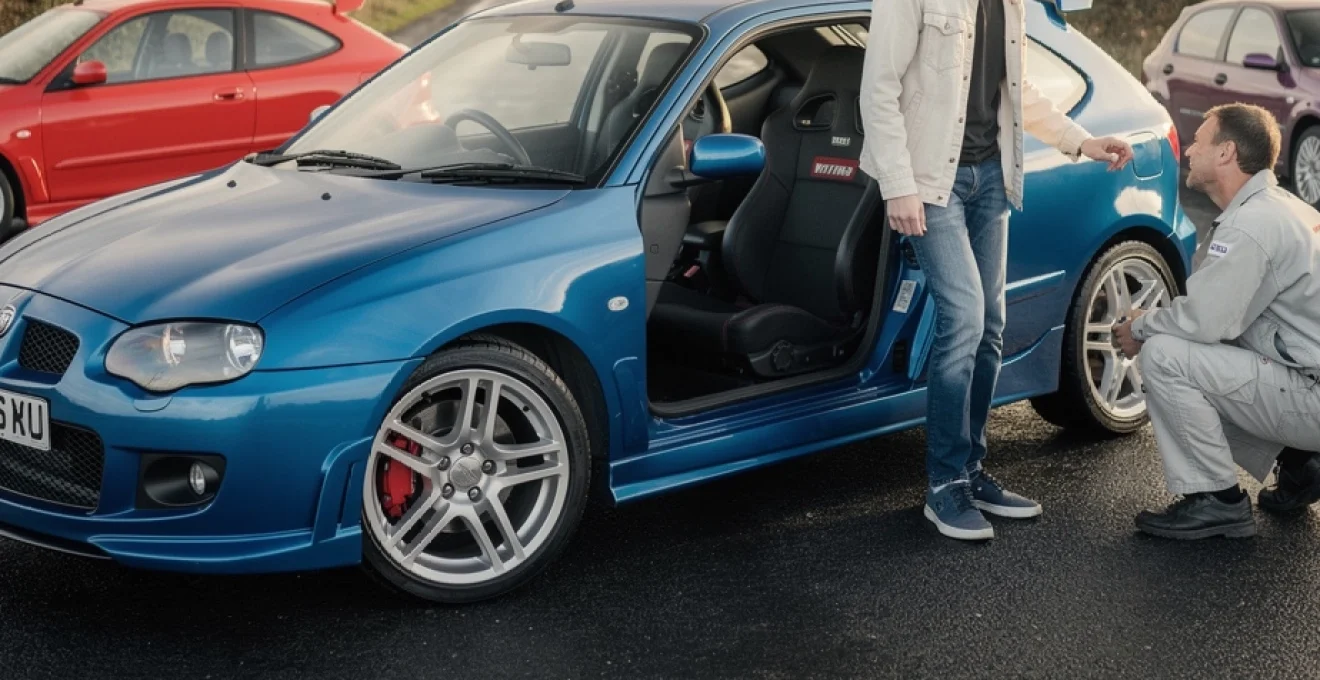
The MG ZR Trophy SE distils everything enthusiasts tend to love about early‑2000s hot hatches: compact dimensions, lively engines, unapologetically loud styling and a surprisingly serious chassis. Born out of MG Rover’s most turbulent years, it became an unlikely hero of the UK performance hatchback scene and still offers an engaging, analogue driving experience for sensible money today. If you are looking at a small hot hatch that feels raw, mechanical and a bit rebellious compared with today’s heavier, technology‑laden alternatives, the MG ZR Trophy SE deserves close attention.
MG ZR trophy SE heritage and positioning in the hot hatch market
From rover 200 to MG ZR: platform origins and engineering lineage
The MG ZR Trophy SE traces its roots back to the mid‑1990s Rover 200, internally known as the R3. That car already mixed a compact footprint with relatively advanced suspension tuning for its time, but was hampered by conservative Rover branding. Underneath, the architecture combined the front half of the previous R8 Rover 200/400 platform (itself related to the Honda Concerto) with a heavily revised rear using a torsion‑beam axle derived from the Austin Maestro. This hybrid layout prioritised low cost and acceptable space, yet provided a surprisingly capable base for later MG development.
Rebranded as the Rover 25 in 1999, the platform gained a sharper look but remained firmly in the “sensible” corner of the showroom. MG engineers then seized the chance to create a genuinely sporting derivative. The result, launched in 2001, was the MG ZR: a lowered, stiffened and visually aggressive version of the 25 that finally exploited the nimbleness baked into the chassis. The Trophy SE, appearing in 2005, represented the final evolution of this journey, bundling the best styling cues and equipment into a value‑focused, run‑out special.
Where the MG ZR trophy SE sits versus peugeot 206 GTi, ford fiesta zetec S and renault clio 172
To understand where the MG ZR Trophy SE fits, it helps to compare it with period rivals. The Peugeot 206 GTi and Ford Fiesta Zetec S were its natural competitors on price and performance, while the Renault Clio 172/182 sat a rung higher as a more serious hot hatch benchmark. On paper, the ZR160 version’s 0–60 mph time of 7.4 seconds undercut many similarly priced rivals of the era, and even encroached on the territory of the Audi A3 1.8T Sport.
Where the Peugeot 206 GTi favoured compliance and the Fiesta Zetec S aimed for playful balance, the ZR adopted an older‑school GTI persona: firmer, noisier, but brimming with feedback. Against a Clio 172 the MG lacked outright finesse and ultimate grip, yet offered comparable thrills at a significantly lower purchase and insurance cost. The Trophy SE in particular delivered much of the 160’s visual drama and equipment in more accessible engine configurations, making it a compelling “warm to hot” hatch proposition.
UK market context in the early‑2000s hot hatch segment
The early‑2000s UK hot hatch market was fiercely competitive and rapidly evolving. Larger, heavier models such as the VW Golf GTI were moving towards refinement and comfort, while smaller cars like the Clio 172 and Honda Civic Type‑R doubled down on raw performance. Against this backdrop, MG Rover needed a halo product that could generate showroom traffic and reinvigorate the MG badge. The ZR quickly became that car.
Sales figures underline its impact. Between 2001 and 2005, around 74,000 ZRs were built, making it MG Rover’s best‑selling performance model and, by 2004, its best‑selling model overall. At its peak, the ZR topped the UK hot hatch sales charts, accounting for roughly 37–45% of combined Rover 25/ZR production in some years. For buyers, the attraction lay in the car’s blend of keen pricing, strong performance and bold styling at a time when many mainstream rivals were softening their edges.
MG rover’s trophy SE trim strategy and limited‑run specifications
The Trophy and Trophy SE versions arrived at the start of 2005 as MG Rover searched for ways to add value and desirability without heavy development spending. Rather than introduce new mechanical components, MG focused on packaging existing upgrades more cleverly. Trophy SE models borrowed key styling elements from the flagship ZR160—such as sculpted sill finishers, deeper front and rear bumpers, large rear spoiler and 17‑inch alloys—then combined them with generous equipment and more modestly powered engines.
This trim strategy did two things. First, it effectively rendered many existing mid‑range specifications redundant by offering more kit for less money. Second, it created an attractive run‑out proposition just as the MG Rover brand was nearing its end, giving buyers a chance to secure a “fully loaded” ZR with distinctive looks and improved perceived value. In a market increasingly driven by special editions and finance offers, the Trophy SE aligned well with consumer expectations, especially for younger enthusiasts seeking maximum visual impact per pound.
Engine, transmission and performance characteristics of the MG ZR trophy SE
K‑series 1.4 and 1.8 VVC engines: output figures, rev range and torque delivery
Under the bonnet, the MG ZR Trophy SE typically featured either the 1.4‑litre K‑Series (ZR105) or the 1.8‑litre 120 bhp unit (ZR120), with the full‑fat 160 bhp 1.8 VVC engine reserved for the ZR160. The 1.4 delivered around 103 bhp and revved eagerly, making it ideal if you value low insurance and a light front end. The 1.8 ZR120 offered 117–118 bhp, striking a sweet spot between usable mid‑range torque and relatively modest running costs.
The 1.8 VVC engine in the ZR160 is worth highlighting because many Trophy SE body and trim parts mirror this range‑topper. With 158–160 bhp and variable valve control, it pulls strongly from around 3,000 rpm and really comes alive beyond 4,500 rpm, spinning happily to the red line. Peak power arrives near 7,000 rpm, providing that classic “cammy” surge that characterises many period hot hatches. Torque figures are modest compared with modern turbo engines, but the linear delivery and crisp throttle response make the car feel faster than the numbers suggest.
5‑speed getrag gearbox ratios, shift quality and motorway cruising RPM
Most MG ZR Trophy SE models were paired with five‑speed manual gearboxes. Lower‑powered cars originally used the R65 transmission, later replaced by a Ford‑derived IB5, while 1.8‑litre versions used the Honda‑designed PG1. Gear ratios are closely stacked in the 160, with a model‑specific, closer‑ratio PG1 helping the engine stay in its sweet spot when driven hard. In real‑world driving, you can keep the car on the boil using second, third and fourth without constantly bouncing off the limiter.
Shift quality is a notable strength. The reworked gearchange feels short and positive, and the aluminium‑topped lever in Trophy SE models adds a tactile, mechanical character missing from many rivals. On the motorway, the fifth‑gear ratio and moderate final drive mean the engine sits in the 3,500–3,800 rpm range at typical UK cruising speeds in a 1.8, which is a little busy by modern standards but acceptable for a compact hot hatch of this era. Noise levels are higher than in a contemporary Golf or Focus, though that is part of the car’s raw charm.
0–60 mph times, in‑gear acceleration and real‑world overtaking performance
Performance figures vary across the engine range. The ZR160’s factory 0–60 mph claim of 7.4 seconds puts it ahead of many similarly priced early‑2000s hot hatches. The ZR120 typically records around 8.5–8.6 seconds to 60 mph, while the 1.4‑litre ZR105 sits in the low‑to‑mid‑10‑second bracket. In everyday use, the key metric is in‑gear acceleration rather than headline sprints. Here, the 1.8 engines shine, especially above 3,000 rpm.
Fourth‑gear pull from 40–70 mph is respectably brisk, making B‑road overtakes straightforward if you plan ahead and use the rev range. The diesel L‑Series ZR105TD and ZR115TD—occasionally found in Trophy bodywork—offer strong torque for their size, with 0–60 mph around 9.7 seconds in the hotter version and real‑world averages of over 50 mpg. However, their agricultural character means they suit long‑distance or budget‑focused drivers more than those chasing classic hot hatch theatre.
Fuel economy, CO₂ emissions and tuning potential for remaps and bolt‑on upgrades
For a small hot hatch, running costs are generally reasonable. Period road test data and owner reports suggest that 1.4‑litre ZRs can return close to 40 mpg in mixed use if driven sensibly, with the ZR120 hovering in the high‑30s and the ZR160 delivering low‑to‑mid‑30s. The diesel models can achieve 50–54 mpg, making them genuinely economical daily drivers. CO₂ emissions figures sit roughly in the 165–190 g/km range for petrol models, reflecting their naturally aspirated nature and relatively light kerb weights.
In tuning terms, the K‑Series responds well to traditional bolt‑on upgrades rather than dramatic remap gains. A freer‑flowing exhaust, quality performance air filter and well‑set‑up suspension can transform how the car feels without compromising reliability. Gains of 8–12 bhp from breathing modifications on the 1.8 are realistic, while the VVC engine already operates at a fairly high specific output. Diesel L‑Series cars can be mildly tuned with improved intercooling and fuelling, but careful monitoring of exhaust gas temperatures and clutch condition is important to avoid expensive failures.
Chassis dynamics, suspension setup and braking performance
Front MacPherson struts, rear torsion beam and MG‑specific spring and damper rates
The MG ZR Trophy SE chassis is a fine example of careful tuning on a modest budget. Up front, the car uses conventional MacPherson struts; at the rear, a simple torsion‑beam axle. MG engineers lowered the ride height by around 20 mm compared with the Rover 25, stiffened the springs and fitted firmer dampers. Polyurethane suspension bushes replaced many of the original rubber items, sharpening response and improving steering precision.
All ZRs share broadly the same setup, but spring and damper rates vary to account for engine weight. Petrol K‑Series cars use lighter front springs than the heavier diesel L‑Series models, which carry roughly 80 kg more over the front axle. The result is a planted feel, especially in 1.4 and 1.8 petrol versions, with minimal body roll and a willingness to change direction quickly. The trade‑off is a busy low‑speed ride and audible thumps over sharp ridges, but for many enthusiasts that is a price worth paying for the level of agility on offer.
Steering rack calibration, feedback levels and turn‑in behaviour on b‑roads
Steering is one of the MG ZR’s defining characteristics. A quicker rack than the Rover 25 gives a more immediate response off‑centre, and the combination of firm bushes and reduced body roll generates strong feedback. On a typical British B‑road, the car feels eager, almost egging you on to carry more speed and commit to corners. Small steering inputs produce meaningful changes in direction, making the car feel alive in a way many modern electric‑assist setups fail to replicate.
Turn‑in is sharp, with a mild tendency towards understeer when you really lean on the front tyres. A slight mid‑corner lift of the throttle is often enough to tighten the line without drama. Compared with rivals like the Fiesta Zetec S, the ZR feels more aggressive and less polished, but in enthusiast hands that rawness can be deeply satisfying. If you enjoy reading the road through your fingertips, the ZR Trophy SE delivers exactly that, especially on grippy, properly inflated tyres.
Brake disc dimensions, caliper specification and fade resistance on fast road driving
Braking hardware varies by engine and trim. Lower‑powered ZR105 models use 260 mm front discs and rear drums, while ZR120s and higher‑output diesels upgrade to vented 260 mm fronts with 240 mm solid rear discs. The ZR160 takes things further with 282 mm vented front discs and 262 mm solid rears, clamped by larger calipers and equipped with standard ABS. Trophy SE models styled to resemble the 160 typically share the same visual components but may not always carry the full brake upgrade, so checking actual hardware before spirited use is wise.
On fast road drives, the standard ZR160‑spec brakes provide strong, confidence‑inspiring power and reasonable fade resistance, assuming fresh fluid and good‑quality pads. For track days or repeated high‑speed stops, many owners choose uprated pads and stainless lines to further improve performance. A pulsing pedal at low speeds on ABS‑equipped cars often points to a worn or cracked ABS reluctor ring rather than warped discs, and replacement rings are inexpensive, typically under £10 each plus fitting.
Tyre sizes, wheel options and recommended compounds for optimum grip
The MG ZR range offers a variety of wheel and tyre configurations. Trophy and Trophy SE models usually ride on 17‑inch alloys, often in the distinctive “Grid Spoke” design, with tyres around the 205/45 R17 size. Standard ZR105s commonly use 16‑inch wheels with 195‑profile rubber. While the 17‑inch setup looks superb and fills the arches nicely, it can exacerbate the firm ride and makes pothole damage more likely, so choosing a robust tyre with reinforced sidewalls can be beneficial.
For enthusiastic road driving, quality performance tyres from reputable brands transform the car. A modern UHP (ultra‑high‑performance) compound in 205/45 R17 offers significantly better wet‑grip and braking than the original early‑2000s fitments, allowing you to exploit the chassis with more confidence. Some owners prefer dropping to 16‑inch wheels for a better balance of ride and grip; the slightly taller sidewall introduces a touch more compliance without dulling steering response. Alignment set to factory specification, with careful attention to toe settings, keeps the car stable at speed and responsive in tight bends.
Exterior design, aero detailing and trophy SE‑specific styling cues
Body kit components, bumpers, side skirts and rear spoiler profile
The MG ZR Trophy SE is arguably one of the most visually extrovert small hatches of its time. Borrowing heavily from the ZR160, it features deep front and rear bumpers with integrated fog lamps, pronounced side skirts and a bold tailgate spoiler. The bumpers sit lower than the Rover 25 equivalents, visually hunkering the car down and giving it a more planted stance, especially in three‑door form where the body lines appear more compact and muscular.
The rear spoiler stretches outwards in a graceful arc, adding visual length to the roof and subtly influencing airflow at speed. Combined with the strong shoulder line and relatively upright tailgate, the spoiler completes a profile that shouts “old‑school GTI” rather than understated family hatchback. For drivers who prefer their cars to blend into the background, the Trophy SE’s body kit will feel a little much. For enthusiasts seeking a hot hatch that looks as lively as it drives, the package is spot on.
Iconic MG ZR colour palette: trophy blue, solar red, anthracite and XPower grey
Colour plays a huge role in the MG ZR Trophy SE’s personality. High‑impact shades such as Trophy Blue, Solar Red, bright yellows and vivid greens became part of the model’s identity, acting almost as a rolling protest against the conservative image MG Rover had carried into the late 1990s. The Monogram programme introduced complex multi‑layer paints and special finishes, some of which are rare and now highly sought after by collectors.
Standard colours like silver and dark blue still suit the shape, but the bold hues showcase the body kit and wheels far more effectively. Later in production, material quality and paint durability declined marginally as MG Rover’s finances worsened, so careful inspection for lacquer peel, stone‑chip corrosion and mismatched resprays is essential. In particular, front wings where they meet the bumper, the leading edge of the bonnet and the panel around the boot release button are common rust hot‑spots if paint protection has been compromised.
17‑inch alloy wheel designs, offset specifications and visual stance
One of the most recognisable features of the Trophy SE is its 17‑inch alloy wheel package. Designs such as the “Grid Spoke” wheel not only echo motorsport styling but also visually enlarge the car, making it look far more substantial than a standard Rover 25. Correct offset ensures the wheels sit close to the edge of the arches without rubbing in standard form, delivering an assertive stance without the excessive poke sometimes seen with aftermarket fitments.
If you are considering wheel changes, sticking close to factory widths and offsets maintains steering geometry and minimises tram‑lining. Upgrading to lighter wheels can subtly improve ride and turn‑in, as unsprung mass reductions always pay dividends. However, the original 17‑inch MG designs strike a good compromise between aesthetics and practicality, and for many owners they are part of what makes a Trophy SE visually special.
Lighting units, grille treatment and motorsport‑inspired detailing
The 2004 facelift brought a major visual update to the MG ZR, and the Trophy SE benefits from these changes. Twin‑pod headlights gave way to single, sculpted, clear‑lens units with integrated projectors, lending the front end a more modern and purposeful look. The grille adopted a slatted design with a bold central MG badge, while the number plate moved from the tailgate to the rear bumper, allowing a cleaner, more muscular bootlid with central badging.
Smaller Motorsport‑inspired details complete the picture. Mesh inserts in the grille and lower intakes, colour‑coded rubbing strips and contrasting fog‑lamp surrounds all contribute to an impression of a car designed for spirited use rather than domestic chores. Some enthusiasts compare the ZR’s face to a scaled‑down touring‑car, and the resemblance is not accidental; MG’s parallel activity in British Touring Car Championship programmes at the time heavily influenced the visual language applied to its road cars.
Cabin ergonomics, equipment levels and trophy SE interior upgrades
Inside, the MG ZR Trophy SE reveals both its age and its charm. The basic dashboard architecture dates back to the mid‑1990s, and even with the 2004 interior refresh—involving a “Technical Grey” dash finish and circular air vents—the design cannot hide its roots. Hard plastics dominate, and fit‑and‑finish quality declined late in production. Yet the cabin has a certain straightforward honesty, and Trophy SE models add enough visual interest to lift the atmosphere.
Equipment in the Trophy SE typically includes electric front windows, remote central locking, often a tilt‑and‑slide sunroof, upgraded seats with colour‑coded detailing, and a multi‑CD audio system. Air‑conditioning is more common on higher‑spec engines and can be considered a bonus on any surviving car, given the cost of repairing tired systems. Compared with modern small cars, safety kit is sparse—ABS and dual front airbags are usually the limit, with side airbags and traction control largely absent—so if maximum passive safety is a priority, the ZR is not the strongest proposition.
Ergonomically, the car divides opinion. The steering wheel and pedals feel well placed, and the gearchange falls easily to hand, but a high, slightly perched driving position stems from a structural cross‑member beneath the seat, which limits how low you can sit. For taller drivers this can feel odd at first, as the steering wheel may brush thighs at some settings. Most owners adapt quickly, but if you are sensitive to seating position, a thorough test drive is crucial. On the positive side, there is decent space for two adults in the rear and a usefully sized boot, making the ZR a viable daily driver or small family car if you accept the firm ride and modest refinement.
Reliability, common faults and long‑term ownership costs
Long‑term, the MG ZR Trophy SE is capable of being a robust, affordable hot hatch, but only if key issues are understood and proactively managed. The headline topic is the K‑Series head gasket. Early engines developed a reputation for gasket failure, often triggered by coolant loss, poor maintenance or aging radiators. Symptoms include mayonnaise‑like contamination under the oil filler cap, coolant disappearing without visible leaks, and bubbling in the expansion tank after a sustained run. Modern multi‑layer gasket kits and improved oil rail designs have largely solved the underlying weakness, but confirmation of an uprated gasket and recent cooling‑system work is a strong buying signal.
Timing belts are another crucial maintenance item. On the ZR160 VVC engine, belts should be changed every 60,000 miles or four years; on other K‑Series engines, intervals extend to 90,000 miles or six years. The L‑Series diesel requires a belt at 84,000 miles or seven years. Combining belt, tensioner, water pump and gasket refresh in one job often costs in the £400–£600 region at independent specialists—a substantial sum, but proportionate to the value of a sound example. Budgeting for a new radiator after 60,000–70,000 miles is wise, as tired radiators can contribute to overheating and subsequent gasket stress.
Underneath, suspension bushes, ball joints and dampers are wear items, especially on cars that have endured British roads and enthusiastic driving. Rattles over bumps often trace back to tired bushes or broken coil springs; neither is prohibitively expensive, but ignoring them undermines the precise handling that defines the car. Brakes are straightforward and relatively cheap to refurbish, with front pads typically around the £50–£60 mark and rear discs and pads not much more. Replacement parts in general—clutches, alternators, radiators and even complete exhaust systems—remain affordable thanks to a healthy aftermarket and an active MG owners’ community.
Electrical gremlins can be more frustrating than catastrophic. Pre‑facelift cars use a relatively simple architecture, but later models adopt the Pektron SCU security control unit, which centralises many functions. Water ingress through the bulkhead or windscreen seal can travel down wiring looms into this module, causing faults with items like electric windows, intermittent wipers or horn operation. Specialist repair of the SCU is usually cheaper than full replacement, but catching leaks early and rerouting loom runs to prevent water tracking makes long‑term ownership more relaxing. Alarm and immobiliser quirks are also common, so obtaining two working keys and fobs should be high on any buyer’s checklist.
Interior wear—particularly on seat bolsters and rattly trim—is mainly cosmetic but can affect perceived value. Fortunately, the simplicity of the cabin means that many fixes are DIY‑friendly: lubricating seat rails, adding felt pads to contact points or replacing worn clips can quieten things substantially. From a financial perspective, entry‑level ZR105s in usable condition can still be found around the £500–£1,000 mark, while clean ZR120s and ZR160s, especially in Trophy SE trim or rare colours, often command £1,500–£3,500 depending on mileage and history. Exceptional, low‑mileage or Monogram‑paint cars may climb towards £5,000. For that outlay, you gain access to a characterful, engaging hot hatch that rewards mechanical sympathy with years of entertaining service, provided you remain attentive to cooling, timing and corrosion control.