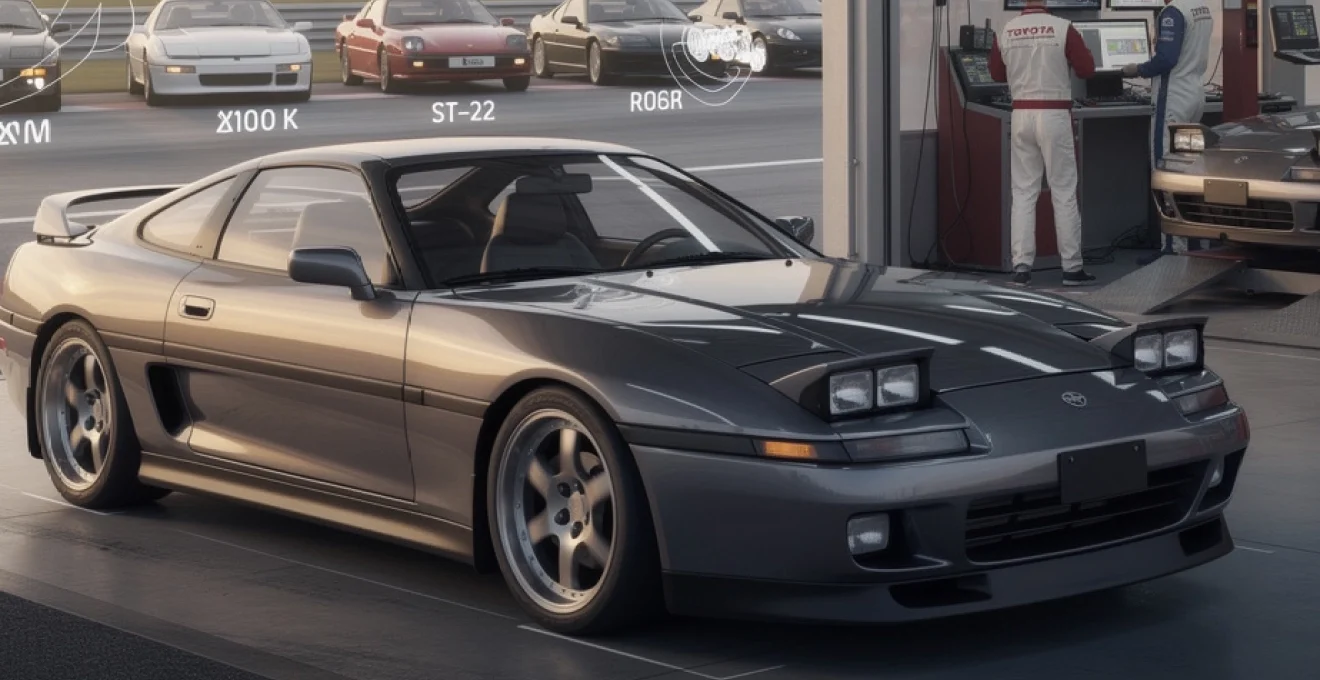
The MK III Toyota Supra, internal code A70, sits at a fascinating crossroads between old-school grand tourer and modern performance coupé. It bridged the gap from the Celica-derived Celica Supra era to the standalone halo sports car that enthusiasts now associate with the 2JZ and the A80. Yet for many enthusiasts today, the A70 Supra remains an underrated gem: more affordable than later generations, rich in engineering detail, and packed with character. If you are looking for a classic Japanese sports car that combines long-distance comfort with genuine tuning potential, the MK III Supra deserves far more attention than it usually receives.
Origins of the MK III toyota supra (A70): from celica-derived GT to standalone grand tourer
Separation from the celica platform: transition to the A70 chassis and rear‑wheel‑drive GT identity
The history of the MK III Toyota Supra begins with its separation from the Celica line. Earlier generations, sold as Celica Supra outside Japan and Celica XX domestically, were effectively stretched Celicas with six‑cylinder engines. When Toyota ended production of the A60 Celica Supra in late 1985, the fourth‑generation Celica moved to a front‑wheel‑drive, transverse-engine platform. The Supra went the opposite way, cementing its role as a rear‑wheel‑drive grand tourer with a bespoke chassis.
The A70 Supra launched in February 1986 as a clean-sheet design. Wheelbase was slightly shorter than the outgoing Celica Supra, but the body was wider and more purposeful, with a long bonnet and a concise tail to house the inline‑six engines. This change gave Supra an unambiguous identity in Toyota’s line-up: the Celica became a lighter, front‑drive sports coupé, while the A70 Supra targeted higher-speed comfort and long-legged performance in the GT tradition.
Development timeline 1982–1986: toyota engineering decisions behind the first turbocharged supra
Development of the A70 began in the early 1980s, when Datsun/Nissan’s Z-cars firmly dominated the grand tourer space. Toyota’s goal was to create a car that could run with the best grand touring coupés in Japan, North America and Europe, but still maintain Toyota‑typical reliability and refinement. Engineers knew the platform had to be rear‑wheel drive and robust enough to handle turbocharged power, which shaped almost every key choice from suspension layout to cooling package.
By the time production started in 1986, the Supra platform was ready not only for the naturally aspirated 7M‑GE but also the turbocharged 7M‑GTE, Toyota’s first mass‑market turbo Supra engine. Boosted models were offered from launch in Japan and North America, and eventually in the UK from 1989 after the mid‑life facelift. This cautious, engineering‑led timeline meant the A70 arrived slightly later than some rivals, but with a level of powertrain durability that tuners still exploit today.
Positioning in the global market: rivaling nissan 300ZX Z31, mazda RX‑7 FC and porsche 944
Where did the MK III Supra sit in the late‑1980s performance hierarchy? On paper, it went head‑to‑head with the Nissan 300ZX Z31, Mazda RX‑7 FC and even the Porsche 944. Each of those cars used a front‑engine, rear‑drive layout and offered a mix of turbocharged and naturally aspirated options. The Supra distinguished itself by leaning slightly more towards grand touring comfort, with a plush interior, generous equipment levels and strong NVH suppression.
Pricing strategy was aggressive. In the UK, Toyota deliberately positioned the Supra close to its main rivals despite higher import costs, limiting supply to around 100 cars per month to maintain some exclusivity. In the US and Japan, turbo models undercut many European competitors while offering comparable performance. For you as a modern buyer, this pedigree means the A70 sits in a sweet spot: it has genuine period credibility but often costs significantly less than equivalent classic Porsches and some rotary Mazdas.
Design and aerodynamics by isao tsuzuki’s team: pop‑up headlights, drag coefficient and lift control
Chief engineer Isao Tsuzuki, who also worked on the 2000GT and MR2, gave the A70 a distinct wedge profile with pop‑up headlights and broad shoulders. The look is pure late‑1980s: crisp lines, integrated bumpers and a glassy greenhouse. Underneath the styling lies a serious focus on aerodynamics, with a drag coefficient around the mid‑0.3 range depending on market and spoiler configuration, competitive with contemporaries like the 300ZX and RX‑7 FC.
Front and rear spoilers, underbody panels and carefully shaped side mouldings were designed to control lift at high speed and improve straight‑line stability. Period road tests commented on the Supra’s calm, planted behaviour well beyond legal cruising speeds, especially notable on the Autobahn and US interstates. That stability, more than outright downforce, defines the A70’s aero philosophy and is one of the reasons it still feels secure on modern motorways.
Chassis, suspension and braking engineering of the A70 supra
MA70 vs GA70 vs JZA70 platforms: frame rigidity, wheelbase and weight distribution analysis
The A70 family included several key variants: MA70 models carrying the 3.0‑litre 7M engines, GA70 models with smaller 2.0‑litre six‑cylinders for the Japanese market, and later JZA70 versions with the 1JZ‑GTE twin‑turbo engine. All shared the same basic wheelbase (around 2,595 mm) and overall dimensions, but equipment levels and bracing differed. Targa‑roof “Sport Roof” or Aerotop cars gained extra underbody reinforcements to counteract the open‑roof flex, but also carried a weight penalty of several tens of kilograms.
In naturally aspirated form, a typical MA70 weighed roughly 1,500–1,550 kg; turbo models and targa cars nudged closer to 1,600–1,700 kg. Weight distribution sat close to 53:47 front‑to‑rear depending on specification. For a GT‑oriented coupe of the era, that balance is respectable and, when combined with wide tracks and a rigid shell, gives the Supra its characteristic secure, slightly nose‑led feel. If you are considering hard track use, a fixed‑roof car still offers the best rigidity‑to‑weight ratio.
Double wishbone suspension geometry: camber gain, anti‑dive and anti‑squat characteristics
One of the A70’s technological highlights is its fully independent double wishbone suspension at all four corners. Many rivals used struts up front and semi‑trailing arms at the rear; Toyota went further, targeting both ride quality and handling precision. Upper control arms were made from forged aluminium to reduce unsprung mass, while the geometry was tuned to deliver progressive camber gain as the body rolled in a corner.
Built‑in anti‑dive at the front and anti‑squat at the rear helped the Supra stay composed under heavy braking and acceleration. In practical terms, you feel this as a car that resists pitching, keeping its nose relatively level under hard stops compared to many peers. On rough B‑roads or broken city surfaces, the double wishbone layout also allows each wheel to follow the road more independently, improving both grip and comfort if the dampers are in good condition.
TEMS (toyota electronic modulated suspension): damping maps, sensor inputs and control logic
Many A70 Supras, especially Sport and higher trims, were equipped with TEMS – Toyota Electronic Modulated Suspension. TEMS used electronically controlled dampers with several discrete settings, typically “Normal” and “Sport”, sometimes with an “Auto” mode that switched between maps based on driving inputs. Sensors monitored vehicle speed, throttle position and braking force, enabling the ECU to stiffen the dampers under aggressive driving.
The logic is simple but effective. At low speeds and gentle throttle, the car stays in its softer map, soaking up bumps and making the Supra feel like a refined GT. Push harder, or exceed certain speed thresholds, and TEMS progressively tightens the damping to reduce body roll and improve response. Think of it as an early analogue to modern adaptive suspension: not as seamless or infinitely variable as current systems, but still impressive for the late 1980s and early 1990s.
Braking systems: ventilated discs, 4‑pot callipers and ABS evolution across pre‑facelift and facelift models
Braking hardware on the MK III Supra was competitive for the era. Ventilated discs were fitted front and rear, with larger rotors on turbo models. Early Japanese and some European turbo cars used more substantial multi‑piston front calipers, while naturally aspirated cars typically had sliding two‑piston designs. As power increased and tyre technology improved, Toyota gradually uprated pad compounds and rotor sizes during the model’s lifecycle.
Anti‑lock braking systems appeared on higher‑spec models and became more common after the facelift around 1989. Early ABS was three‑channel and relatively intrusive; later calibrations were smoother and more confidence inspiring in wet conditions. For you as a buyer today, ABS function and brake condition are important checks, particularly on cars that have spent years in storage or seen frequent track use.
Handling dynamics in period road tests: data from best motoring, CAR magazine and road & track
Period tests from outlets like Best Motoring, CAR Magazine and Road & Track consistently described the A70 Supra as a stable, composed car rather than a razor‑sharp track weapon. Lateral grip figures around 0.80–0.84 g on contemporary tyres were common, putting it in the same ballpark as a 944 Turbo or RX‑7 FC. Slalom times showed a slight agility deficit to lighter rivals, but reviewers praised the Supra’s predictability at the limit.
Several tests highlighted the Supra’s refinement as its standout feature. Noise levels at 70 mph cruise were among the lowest in class, and high‑speed crosswind stability was compared favourably with much more expensive European GTs. If you prioritise relaxed motorway work with occasional spirited driving, the A70’s chassis tuning still feels surprisingly modern, especially with fresh bushings and contemporary performance tyres.
Engine line-up and technical specifications: 7M‑GE, 7M‑GTE and 1JZ‑GTE
7M‑GE naturally aspirated inline‑six: compression ratio, fuel injection and powerband characteristics
The naturally aspirated 7M‑GE was the entry point to MK III Supra ownership in many markets. This 3.0‑litre inline‑six used a DOHC 24‑valve head designed with input from Yamaha, electronic multi‑point fuel injection and a relatively high compression ratio (around 9.2:1 in many markets). Output typically sat around 200 hp and ~196 lb ft of torque, placing it close to contemporary 3.0‑litre V6 competitors.
On the road, the 7M‑GE is all about smoothness and mid‑range torque. A variable‑length intake manifold alters runner length around 3,500 rpm, giving a distinctive change in induction sound and a mild torque swell. You will not win many modern drag races – 0–60 mph times of 7–8 seconds are typical – but for daily driving and long journeys, the naturally aspirated engine feels flexible, refined and surprisingly characterful for a late‑1980s powerplant.
7M‑GTE turbo engine: CT26 turbocharger, intercooler layout and boost control strategy
The 7M‑GTE turbocharged engine transformed the A70 into a serious performance car. Still displacing 3.0 litres, it added a single Toyota CT26 turbocharger, front‑mounted intercooler and reduced compression (around 8.4:1). Factory output was typically 230 hp and 250+ lb ft in many markets, with some Japanese variants rated slightly lower on paper due to the period 280 PS gentleman’s agreement.
Boost control was handled electronically via a wastegate and pressure‑based control solenoid, targeting around 6–7 psi of boost in stock form. The combination of low‑rpm torque and mid‑range boost delivered strong in‑gear acceleration; independent tests recorded 0–60 mph as low as 6.4 seconds and top speeds over 150 mph. For tuners, the CT26 and fuel system offer easy gains up to 300–350 bhp with supporting mods, though heat management and fuelling safety become crucial beyond that point.
JZA70 1JZ‑GTE twin‑turbo upgrade: parallel turbo configuration, ceramic turbines and rev ceiling
Late in the A70’s life, Toyota introduced the JZA70 Supra in Japan with the 2.5‑litre 1JZ‑GTE twin‑turbo engine. This high‑revving straight‑six, featuring a parallel twin‑turbo setup with ceramic turbines, revved happily towards 7,500 rpm and produced around 280 PS and 268 lb ft in stock form. While displacement dropped versus the 7M, the 1JZ offered sharper throttle response and a more urgent top‑end character.
Parallel twin turbos meant each turbo fed three cylinders, reducing lag and allowing smaller, lighter turbines. Ceramic wheels helped spool but require care at higher boost pressures; many tuners replace them with steel units for reliability when chasing 400+ bhp. If you are hunting for the most advanced factory A70, the JZA70 1JZ‑GTE is the enthusiast choice, blending classic A70 looks with an engine architecture that previews the legendary 2JZ.
Head gasket and torque issues on 7M engines: factory torque specs, failure modes and common fixes
No serious discussion of MK III Supra performance can ignore the 7M head gasket issue. From the factory, head bolts on both 7M‑GE and 7M‑GTE engines were torqued to a relatively low value (commonly quoted around 58–65 lb ft). Combined with a long cast‑iron block, aluminium head and high thermal loads, this often led to gradual head gasket failure, especially on turbo cars or those driven hard without meticulous cooling system maintenance.
The 7M’s reputation for unreliability is largely the result of under‑torqued factory head bolts rather than a fundamental design flaw in the block or head.
The common modern fix involves replacing the OEM head gasket with a quality multi‑layer steel item, using ARP head studs and torquing them to higher, proven values (often in the 75–85 lb ft range, depending on the builder). A properly rebuilt and torqued 7M, with a clean block deck and healthy cooling system, is capable of many reliable miles and moderate power increases. If you are buying, documented evidence of this work is a major plus.
ECU mapping and ignition systems: differences between JDM, USDM and european calibrations
Across markets, the A70 Supra used different ECU calibrations and ignition systems to meet local emissions and fuel‑quality standards. Japanese domestic market cars often ran slightly more aggressive timing and, in some cases, different fuel cut strategies due to the 180 km/h speed limiter rules. USDM models generally adopted more conservative ignition maps and catalytic converter setups to satisfy federal regulations.
Ignition used a distributor‑based system on early 7M engines, moving towards more refined electronic control as the production run continued. The 7M‑GTE in the US is often cited as Toyota’s first distributor‑less engine there, with individual coil packs improving spark accuracy at high rpm. When modifying, you benefit from decades of ECU tuning knowledge; modern standalone systems or re‑mapped factory ECUs can safely unlock extra power while coping with ethanol‑blended fuels and upgraded boost levels.
Transmission, driveline and differential technology in the MK III supra
R154 vs W58 manual gearboxes: gear ratios, torque limits and shift feel characteristics
Two main manual gearboxes appeared in the MK III Supra: the W58 and the tougher R154. Naturally aspirated cars typically used the W58, a light, slick‑shifting unit with a reputation for decent reliability up to around 250–280 lb ft of torque. Turbo models received the R154, built with stronger gears and bearings to handle the 7M‑GTE’s torque and offering more headroom for power upgrades.
Ratios differ slightly, but both aim to keep the engine in its torque band with a reasonably tall fifth gear for relaxed cruising. Enthusiasts often praise the R154’s notchy, mechanical feel, though worn synchros can make high‑rpm shifts into second and third difficult. If you intend to run significantly more than 350–400 bhp, budget for a refresh or an uprated clutch and gearset to protect the transmission.
A340E automatic transmission: lock‑up converter, overdrive behaviour and reliability record
The four‑speed A340E automatic, with a lock‑up torque converter and overdrive fourth, is sometimes dismissed by purists but suits the A70’s GT character surprisingly well. In stock form it shifts smoothly and holds gears logically, with the ability to manually select lower ranges for more control. Leaving the selector in “2”, for example, effectively gives you access to first through third while preventing unwanted upshifts in twisty sections.
Reliability of the A340E is generally good if fluid changes are done on schedule and the transmission is not subjected to repeated high‑power clutch‑dump launches. Heat is the main enemy; an external transmission cooler is a wise investment if you plan spirited driving in hot climates. For daily use and motorway work, the lock‑up converter and tall overdrive allow relaxed engine speeds and better fuel consumption than the gearing might suggest.
Limited‑slip differential options: clutch‑type LSD vs open diff and final drive ratio choices
Not every MK III Supra left the factory with a limited‑slip differential. Turbo models, especially those with the Sport package, often gained a viscous or clutch‑type LSD, sometimes paired with shorter final drive ratios (around 4.1:1) to sharpen acceleration. Base cars, particularly naturally aspirated models with manual gearboxes, were more likely to feature open differentials and longer gearing tuned for fuel economy and refinement.
If you enjoy spirited driving or plan to drift or track the car, confirming the presence and health of the LSD is essential. A worn viscous unit can feel almost indistinguishable from an open diff, so many owners retrofit clutch‑type aftermarket units, which dramatically improve traction and controllability in low‑grip conditions.
Prop shaft, half‑shafts and driveline durability under increased torque loads
The A70’s driveline, including the two‑piece prop shaft and chunky half‑shafts, was designed with turbo torque in mind. In stock or lightly tuned form (up to around 350 bhp), the OEM hardware generally copes without complaint. Issues tend to emerge when hard launches, sticky tyres and much higher power levels are introduced, particularly in drag‑focused builds.
Common upgrades include stronger universal joints, rebuilt prop shafts with fresh centre bearings, and uprated CV joints at the rear hubs. For most road‑oriented builds, ensuring that all joints are free of play and that the prop shaft is correctly balanced will keep driveline vibrations and premature wear at bay.
Factory performance figures and real‑world testing data
0–60 mph, 0–100 km/h and quarter‑mile times: stock MA70 vs JZA70 benchmarks
Contemporary independent tests give a good picture of the MK III Supra’s real‑world pace. A typical 7M‑GE manual car recorded 0–60 mph in around 7.5–8.0 seconds and a quarter‑mile time in the mid‑15‑second range. The 7M‑GTE turbo manual dropped those numbers to approximately 6.4 seconds to 60 mph and quarter‑miles in the low to mid‑14s on period tyres.
JZA70 1JZ‑GTE models, benefiting from more power and a more rev‑happy engine, could dip below 6 seconds to 60 mph and into the high‑13‑second quarter‑mile bracket in favourable conditions. For context, those figures placed the Supra firmly among serious performance cars of the early 1990s, rivaling some Corvettes and undercutting many European GTs on price.
Top speed, gearing and revs at motorway cruise: UK‑spec vs japanese domestic market models
Top speed of turbo A70 Supras typically sat between 145 and 155 mph, often limited more by factory speed limiters and tyre ratings than outright power. Japanese domestic market cars were usually restricted to 180 km/h (112 mph) by law, while UK and European models ran to their aerodynamic and gearing limits. Naturally aspirated versions usually topped out around 135–140 mph.
At a 70 mph motorway cruise, a turbo manual car turns roughly 2,500–2,800 rpm in fifth, depending on final drive. The combination of tall gearing, smooth inline‑six and good sound insulation results in relaxed touring manners. For you as a long‑distance driver, this makes the A70 feel more like a junior GT than a frantic sports car, one of its enduring strengths versus more frenetic rivals.
Brake fade resistance and stopping distances in repeated high‑speed tests
Repeated high‑speed stopping tests in period magazines showed the Supra’s ventilated discs to be competent but not infallible. Initial 60–0 mph stopping distances in the 120–130 ft range were common on stock pads, broadly competitive with its peers. However, heavy cars plus modest cooling mean fade can set in during repeated emergency stops or track sessions.
For serious performance driving, modern performance pads, fresh fluid and, where possible, upgraded cooling are essential to unlock the chassis’ full braking potential.
If you plan track days, budget for uprated pads, stainless brake lines and high‑boiling‑point fluid as a minimum. These changes significantly improve pedal consistency and fade resistance without sacrificing day‑to‑day usability.
Lateral G, skidpad results and slalom performance compared with R32 skyline GTS‑t and Z32 300ZX
In handling tests alongside later rivals like the R32 Skyline GTS‑t and Z32 300ZX, the A70 Supra often delivered slightly lower peak skidpad numbers but similar or better stability. Where a lightly tuned R32 might edge into the high 0.8‑something g range, the Supra usually hovered just below that on equivalent tyres, held back partly by weight and partly by softer suspension tuning.
Slalom times reflected the same story: the Supra felt secure and predictable but not razor sharp. Modern owners often transform this balance with stiffer anti‑roll bars, fresh bushings and quality coilovers, bringing the A70’s dynamic performance much closer to more focused contemporaries while respecting its GT roots.
Motorsport and tuning culture surrounding the MK III supra
Group A touring car and JGTC entries: TOM’S, SARD and other toyota‑backed A70 race cars
The MK III Supra enjoyed a modest but significant motorsport career. In Group A touring car racing and the early days of the All‑Japan GT Championship (JGTC), teams backed by familiar Toyota tuners such as TOM’S and SARD campaigned heavily modified A70s. These cars used strengthened versions of the 7M‑GTE and later, in some cases, early iterations of the JZ family, paired with stripped shells and racing aero.
Successes included class wins in national championships and respectable showings at endurance events, although the rise of lighter turbo hatchbacks and, later, more advanced chassis limited the Supra’s outright dominance. Nevertheless, the motorsport pedigree feeds directly into the A70’s credibility among enthusiasts who value track‑proven heritage.
Drag racing and dyno builds: 600+ bhp 7M‑GTE and 1JZ‑GTE street and strip examples
In the tuning world, the A70 quickly became a favourite for high‑power street and drag builds. Properly built 7M‑GTE engines with forged internals, upgraded turbos and modern engine management can reliably produce 500–600 bhp, provided fuelling and cooling systems are thoroughly upgraded. The long, strong iron block is a good foundation once the head gasket issues are addressed.
1JZ‑GTE swaps – or factory JZA70s – push that envelope even further. With stronger factory internals and better head design, 1JZ engines frequently exceed 600 bhp on single‑turbo conversions while retaining a relatively broad powerband. For you as a potential tuner, the question is not whether the A70 can make big power, but how far the budget and intended use justify going.
Aftermarket support: HKS, blitz, greddy and UK specialists such as whifbitz and fensport
Aftermarket support for the MK III Supra is rich despite its age. Japanese giants such as HKS, Blitz and Greddy have long produced turbos, intercoolers and exhausts for the platform, and many parts remain available new or as re‑issued “heritage” lines. In the UK, specialists like Whifbitz and Fensport have extensive experience building and maintaining both 7M and JZ‑powered Supras, offering everything from OEM‑style servicing to full track builds.
Bodywork and interior parts are also reasonably supported. Widebody kits, aero bumpers and classic period‑correct wheels help you create a car that looks like it rolled out of a late‑1980s Option magazine. If you prefer originality, Toyota’s heritage parts support and an active global owner community make sourcing OEM components manageable, though some trim pieces are becoming increasingly scarce.
Drifting and grassroots motorsport: A70 supra in D1GP, british drift championship and track days
With a long wheelbase, torquey engines and rear‑wheel drive, it is no surprise that the A70 Supra has found a niche in drifting and grassroots motorsport. While newer chassis like the S‑chassis Nissans and AE86s are more common in top‑tier series, A70s have appeared in events such as D1GP and the British Drift Championship, often running 1JZ or 2JZ swaps for reliability and power.
In grassroots track days and local drift events, an A70 Supra offers a distinctive alternative to the usual compact coupes, trading knife‑edge agility for smoky, controllable slides and huge presence.
For occasional track use, simple upgrades – decent coilovers, a clutch‑type LSD, high‑temp brake pads and fresh fluids – turn the MK III into a capable, entertaining machine. The heavier chassis rewards a smooth, flowing driving style rather than frantic direction changes, which many drivers find both satisfying and confidence‑inspiring.
Buying guide, reliability and restoration considerations for the MK III supra today
Common rust locations: rear arches, sills, boot floor and windscreen scuttle on UK cars
Rust is a primary concern on any MK III Supra, especially UK and northern European cars exposed to salted roads. Key areas to inspect closely include the rear wheel arches (particularly around the lip and inner arch), the sills near jacking points, the boot floor around the spare wheel well, and the windscreen scuttle. Targa‑roof cars can also suffer from water ingress leading to corrosion in the A‑pillars and roof channels.
For a potential owner, a thorough inspection on a lift is indispensable. Surface rust on bolt‑on panels is manageable; structural corrosion around suspension pick‑up points or chassis rails is far more serious and expensive to rectify. Given rising values, high‑quality rust repairs are increasingly worthwhile, but you will want documentation and photographic evidence before paying a premium.
Mechanical weak points: 7M head gaskets, TEMS struts, R154 synchros and A/C electronics
Beyond bodywork, several mechanical weak points deserve attention. As discussed, 7M head gaskets are the headline issue; seek proof of a proper rebuild with upgraded studs and MLS gasket. TEMS dampers, if original, are often tired by now, leading many owners to retrofit conventional or aftermarket coilovers. Dead TEMS can leave you with a floaty, uncontrolled ride that misrepresents the car’s potential.
R154 gearboxes are strong but not invincible; worn synchros, particularly into second and third, are common on hard‑driven cars. Automatic A340E units need evidence of fluid changes and healthy shift quality. Electrical gremlins, especially in air‑conditioning controls and ageing dashboards, are not unusual due to heat and time. Approaching the car with the mindset of a 30‑plus‑year‑old GT rather than a cheap runabout will help you plan an appropriate maintenance and restoration budget.
OEM vs aftermarket parts availability: trim pieces, interior plastics and performance upgrades
Parts availability for the MK III Supra is a mix of abundance and increasing rarity. Mechanical components – engine gaskets, suspension arms, braking hardware – remain widely available from both OEM and aftermarket sources. Performance upgrades, particularly for 7M and JZ engines, are plentiful, allowing you to tailor the car to fast road, drift or track use with relative ease.
Interior plastics, specific trim pieces and some body seals, however, are becoming harder to source new. Scrapyard and breaker‑sourced parts, along with enthusiast forums and specialist suppliers, are now the main channels for mint interior components. Treat intact dashboards, door cards and targa seals as valuable assets when assessing any potential purchase, because replacing them to a high standard can be time‑consuming and costly.
Valuation trends and collectability: turbo A, aerotop and low‑mileage UK‑spec examples
Values for MK III Supras have risen steadily over the last decade, driven by the explosion in classic JDM interest and the stratospheric prices now commanded by MK IV cars. Clean turbo manuals, particularly with original paint and interior, now regularly exceed the £15,000–£20,000 mark in the UK, with exceptional examples demanding more. Naturally aspirated automatics remain more affordable but are also climbing as entry‑level options.
Special editions and rare configurations carry notable premiums. The limited‑production 3.0GT Turbo A – built to homologate Group A racing participation and reputedly the fastest Japanese car of its time – is highly sought‑after among collectors. Targa‑roof Aerotop/Sport Roof cars attract buyers who value open‑air cruising, while low‑mileage, UK‑supplied cars with full history and factory turbo power are increasingly seen as investment‑grade assets. If you intend to buy, enjoy and eventually sell, choosing a well‑specced, rust‑free example with documented maintenance is the most reliable way to balance driving pleasure with long‑term value.