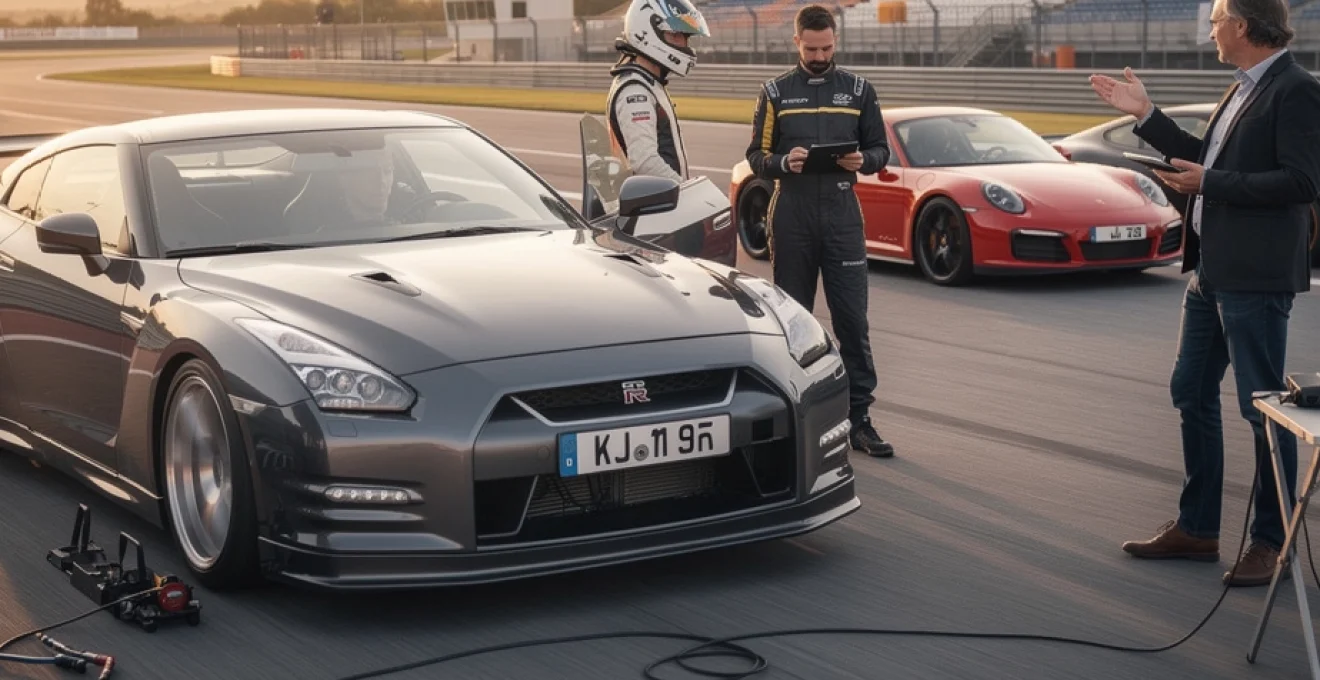
The 2014 Nissan R35 GT‑R sits at a fascinating point in the car’s history. Early “Godzilla” models had already shocked supercar royalty with brutal acceleration, yet the 2014 GT‑R refined that raw pace into something more rounded and usable. For drivers who want a car that can demolish a drag strip, lap a circuit at hypercar pace and still handle a wet commute, the 2014 GT‑R remains a uniquely compelling proposition. It blends videogame‑style data, race‑car hardware and just enough everyday comfort to make 562bhp feel strangely accessible. If you are weighing a used 2014 GT‑R against a contemporary Porsche 911 Turbo or Audi R8, understanding exactly what changed for this model year is essential.
Overview of the 2014 nissan R35 GT‑R: model year changes, trim levels and UK‑spec distinctions
2014 facelift vs 2013 GT‑R: suspension revisions, NVH tuning and lighting updates
Between 2009 and 2014 the R35 evolved almost every year, and the 2014 Nissan GT‑R is one of the more meaningful updates. Power stayed broadly the same as the 2013 UK car at around 542bhp, but the chassis and refinement were notably reworked. Nissan retuned the Bilstein DampTronic adaptive dampers, softened certain bushing rates and paid more attention to NVH (noise, vibration and harshness). On a typical UK B‑road you feel a little more compliance than in the early, famously stiff 2009–2011 cars, especially in Comfort mode.
Externally, the 2014 GT‑R gained revised LED front and rear lights and detail aero tweaks. The goal was twofold: modernise the look for year six of production and improve cooling for the engine, gearbox and brakes. Brake‑cooling ducts were added or reshaped on performance‑focused versions, while small revisions to the undertray and front bumper helped stability at very high speed. Compared with the 2013 model, the difference is subtle to look at but clearer to drive; body control feels more precise and there is less crashiness over sharp ridges, particularly on 20‑inch Dunlop SP Sport Maxx GT tyres.
UK and EU specifications: black edition, track pack and nismo influences on standard models
In UK and wider European markets, the 2014 R35 GT‑R range typically centred on three flavours: the standard “Premium” or “Recaro” style car, the Black Edition and the Track Pack. The Black Edition added Recaro seats, a different wheel design and a darker, more focused cabin ambience. It was the sweet spot if you wanted a road‑biased GT‑R that still felt special without sacrificing rear seats or comfort. The Track Pack, by contrast, borrowed heavily from Nismo thinking: stiffer springs, unique RAYS forged wheels, more aggressive cooling and, crucially, deletion of the tiny rear bench in favour of quilted luggage shelves.
Although the full GT‑R Nismo arrived as a separate halo model, its presence influenced the mainstream 2014 cars. The base chassis tuning benefited from lessons learnt at the Nürburgring, and certain calibration strategies for stability control and torque distribution filtered down. If you drive a 2014 GT‑R back‑to‑back with an early car, the way it rotates into a corner and then hooks up on exit feels closer to the later Nismo recipe, even if ultimate grip is lower on road‑biased rubber.
Official performance figures vs real‑world data: 0–60 mph, 0–100 mph and quarter‑mile times
On paper, the 2014 Nissan R35 GT‑R claimed 0–62mph in roughly 2.7–2.8 seconds and a top speed just under 200mph. Independent tests often confirmed or even improved on those claims. Car and Driver recorded a 0–60mph sprint in 2.9 seconds and a quarter‑mile of about 11.0 seconds at 125mph for a 2014 Track Edition, while UK outlets regularly saw sub‑3.0‑second 0–60mph times on sticky surfaces. Measured 0–100mph times hovered around 7.0–7.5 seconds, putting the GT‑R alongside or ahead of more powerful, rear‑drive exotics from Ferrari, Lamborghini and Mercedes‑AMG.
The gap between brochure claims and reality is small because the GT‑R’s all‑wheel‑drive system and dual‑clutch transmission turn theoretical power into repeatable traction. Launch control manages the exact clutch slip and torque output needed to avoid wheelspin, so you get the feeling of being fired from a catapult every time conditions are ideal. On a damp or dirty surface you might see high‑3‑second runs to 60mph, but even then the 2014 GT‑R is savagely quick where many rivals are struggling for grip.
R35 GT‑R 2014 pricing, options and how it positioned against porsche 911 turbo (991) and audi R8 V10
When new in the UK, the 2014 Nissan GT‑R started in the mid‑£70,000s, with Black Edition and Track Pack cars closer to or just above £80,000. That placed the car dramatically below a 991 Porsche 911 Turbo, which typically sat well into six‑figure territory once specced, and beneath many Audi R8 V10 quattro models. Yet in terms of straight‑line speed, a well‑launched GT‑R would often out‑drag the 911 Turbo and match or beat an R8 V10 to 100mph and beyond. The “half‑price supercar” positioning still largely held true, even as the GT‑R’s price crept upwards from its 2009 launch figure of around £56,000.
Options were relatively straightforward: different interior trims, premium audio, and cosmetic add‑ons like carbon rear spoilers or engine‑bay dress‑up kits. Compared with German rivals swimming in configuration complexity, the GT‑R felt refreshingly simple. From a value perspective, buyers effectively paid for one drivetrain and chassis package tuned very close to maximum effort, rather than starting with a base 911 and spending tens of thousands on performance options. For someone prioritising raw pace per pound, the 2014 R35 GT‑R was difficult to ignore.
VR38DETT 3.8‑litre twin‑turbo V6: powertrain architecture and tuning headroom
Hand‑built engine construction at yokohama: takumi signatures, tolerances and quality control
At the heart of every 2014 GT‑R is the VR38DETT 3.8‑litre twin‑turbo V6, a hand‑built engine assembled in a clean‑room environment at Nissan’s Yokohama plant. Each unit is put together by a small group of master technicians known as takumi, whose signatures appear on a plaque atop the engine. Assembly tolerances are far tighter than on mainstream Nissan engines, with particular focus on bearing clearances, piston ring gaps and turbocharger balance. This attention to detail underpins not only factory reliability but also the huge tuning headroom that has made the GT‑R a legend among tuners.
Rather than chasing ultra‑high revs, the VR38DETT uses relatively modest stroke and large‑capacity turbochargers to produce vast mid‑range torque. Peak output for 2014 European cars was around 542bhp and 466lb ft, but many dyno runs show slightly higher real‑world numbers. The block is a closed‑deck design with plasma‑sprayed bores, forged internals and a ladder‑frame lower block, all aimed at withstanding boost levels far beyond stock. If you intend to modify a 2014 GT‑R, this engine architecture is one of the main reasons the car can reliably see 600–800bhp with the right supporting parts.
Twin IHI turbochargers, intercooler design and boost control calibration in the 2014 update
The 2014 update did not radically change turbo hardware, but small improvements in boost control and intake efficiency helped drivability. The GT‑R uses twin IHI turbochargers, one per cylinder bank, feeding a large front‑mounted intercooler. Pipework routing is relatively short by turbo standards, reducing lag. For 2014, Nissan tweaked boost control maps and wastegate strategies to deliver a fatter torque curve between roughly 3000 and 5000rpm, especially in higher gears where you feel that swell most.
Cooling efficiency is crucial for repeatable performance. Larger or more effective intercoolers are a common aftermarket upgrade precisely because intake temperatures can spike during repeated launches or track sessions. However, in stock form the 2014 GT‑R copes well with sustained fast road driving, especially in cooler European climates. If you plan to run higher boost on track, an uprated intercooler and careful heat management become important to keep charge temperatures and knock resistance under control.
Fuel injection, ignition timing maps and ECU logic: torque curve shaping and knock resistance
The 2014 VR38DETT runs direct fuel injection with sophisticated ignition timing maps and ECU logic that constantly juggle power, emissions and reliability. Timing, boost and fuel delivery are adjusted based on intake temperature, coolant temperature, knock sensor feedback and gear selection. This multi‑dimensional strategy is what shapes the GT‑R’s broad torque plateau; you feel strong pull from around 2500rpm all the way to beyond 6500rpm, rather than a peaky rush.
Knock resistance is helped by conservative timing in high‑load cells on hot days, which is why one 2014 GT‑R can feel slightly different from another depending on ambient temperature and fuel quality. On high‑octane UK super unleaded the ECU allows more aggressive advance than on lower‑grade fuels. For drivers, that means two practical tips: always use the best fuel available and keep the cooling system in top condition. Doing so helps the car deliver nearer its full factory potential more of the time.
Aftermarket tuning pathways: cobb accessport, EcuTek, litchfield stage 1–4 and typical dyno gains
If you are looking at a used 2014 GT‑R, chances are you will encounter tuned examples. Popular tuning pathways rely on reflash tools such as Cobb Accessport or EcuTek, with UK specialists like Litchfield offering staged packages. A typical Stage 1 (exhaust and remap) on a healthy 2014 car often yields around 580–600bhp and a noticeable jump in mid‑range torque. Stage 2 and Stage 3 kits with upgraded intakes, downpipes and intercoolers can push output into the 620–650bhp range while retaining stock turbos.
Beyond that, larger turbos and strengthened supporting hardware take the VR38DETT into 700–800bhp territory and beyond. At this level, clutch pack and fuel system upgrades become essential, and drivetrain longevity depends heavily on sympathetic mapping. For road use, many specialists recommend stopping around the 600–650bhp mark on a 2014 engine; you get explosive straight‑line speed while maintaining the long‑term reliability that makes the GT‑R such an appealing daily‑drivable supercar alternative.
GR6 dual‑clutch transaxle and ATTESA E‑TS all‑wheel drive: drivetrain behaviour under load
Six‑speed dual‑clutch gearbox ratios, launch control (R‑Mode start) and shift‑time analysis
The GT‑R’s GR6 six‑speed dual‑clutch gearbox is mounted at the rear in a transaxle configuration, helping weight distribution. Its ratios are closely stacked to keep the engine in the meat of the torque band, with a relatively short second and third that contribute to the car’s famed 0–60mph and 0–100mph ferocity. Launch control, often referred to as “R‑Mode Start”, primes the clutches and holds the engine at a pre‑set rpm; when you release the brake, the system dumps power through all four wheels in a carefully managed arc rather than an uncontrolled spike.
Shift times are around 0.2 seconds in the most aggressive mode, fast enough to keep boost pressure high between gears. On the road you notice a slight clunk at low speeds, especially when parking or manoeuvring, but above town pace the transmission feels purposeful and quick. Later software revisions for 2014 made low‑speed behaviour a little smoother than early cars, although it is still less silk‑gloved than the very latest Porsche PDK or Audi S tronic units. If you are coming from a conventional automatic, the GR6 may initially feel abrupt, but familiarity quickly turns that trait into part of the GT‑R’s character.
Rear transaxle layout, prop‑shaft configuration and weight distribution for the 2014 GT‑R
Unlike traditional front‑engine, front‑gearbox layouts, the R35 GT‑R sends power from the engine to a rear transaxle via a carbon‑composite prop shaft. From there, a second shaft runs forward to the front differential when needed. This unusual configuration, combined with the shortened engine placement, helps achieve an almost 50:50 weight distribution in the 2014 GT‑R, impressive given its all‑wheel‑drive hardware and sizeable kerb weight of around 1740kg–1775kg depending on trim.
On the road, that layout translates to a car that initially feels nose‑heavy but reveals surprising balance as you lean on it harder. Under braking, the GT‑R feels very stable, and once turned in, the rear transaxle helps load the back axle under power, giving traction that can embarrass lighter, rear‑drive supercars in poor conditions. The only downside is packaging: the bulky rear unit contributes to a relatively small fuel tank and some heat‑soak issues if the car is repeatedly launched or tracked without adequate cooling upgrades.
ATTESA E‑TS torque vectoring: front–rear torque split logic in dry, wet and low‑μ conditions
Nissan’s ATTESA E‑TS all‑wheel‑drive system is one of the key reasons the 2014 GT‑R feels so confidence‑inspiring. In normal driving, up to 97% of torque goes to the rear wheels, helping the car feel rear‑biased and agile. Within a tenth of a second, though, the system can send as much as 30–50% of torque forward (depending on conditions and calibration) if slip is detected. Sensors monitor steering angle, yaw rate, throttle position and wheel speed to decide the ideal split.
On a dry road you mainly sense ATTESA trimming your line, gently tightening the nose towards the apex as you feed in throttle. In the wet, the system becomes more active, shuffling power to the front to prevent understeer on corner exit. On low‑μ surfaces such as cold, damp tarmac or light snow, it can feel almost like a rally car, pulling itself out of bends with all four tyres working. For everyday use, that means you can deploy far more of the 2014 GT‑R’s performance more often, especially in a country with as many wet days as the UK.
Common GR6 reliability concerns: clutch packs, solenoids, fluids and recommended upgrades
Despite dealing with huge torque loads, the GR6 gearbox has proven more robust than early internet rumours suggested, provided servicing is kept on schedule. Known issues on earlier cars included solenoid contamination and “bellhousing rattle”, where a bearing in the flywheel shaft casting wears and causes vibration. Many 2014 cars had these problems addressed under warranty, and specialists now offer upgraded bellhousings for around £800–£1000.
Clutch pack wear is closely tied to how often launch control is used and how much extra torque a tuned engine delivers. For a stock or mildly tuned 2014 GT‑R, regular fluid changes (often annually or every 9000–12,000 miles) using high‑quality transmission oils go a long way towards reliability. If you plan on running 600bhp+ with frequent track use, upgraded clutch packs and improved cooling become wise investments. As a rule of thumb, if you feel slip, harsh engagement or erratic shifting, a prompt inspection by a GT‑R specialist saves bigger bills later.
Chassis, suspension and braking performance of the 2014 nissan GT‑R R35
Premium midship platform rigidity, subframe design and impact on lateral grip
The R35 GT‑R is built on what Nissan calls the Premium Midship platform, a mix of steel, aluminium and carbonfibre components engineered for very high torsional rigidity. The body‑in‑white is significantly stiffer than a typical coupé of similar size, allowing the suspension to do the fine work of controlling wheel movement. Front and rear subframes carry multi‑link suspension, with the rear in particular designed to handle enormous traction loads without flex.
This stiffness is a big reason the 2014 GT‑R can generate over 1.0g of lateral grip on standard road tyres in independent skidpad tests (numbers around 0.97–1.02g are typical). The feeling from behind the wheel is of a car that resists roll, pitch and yaw more like a race car than a grand tourer. When you lean hard into a long corner, the chassis takes a firm set, giving you the confidence to carry speed that would feel reckless in many other cars of similar weight.
Bilstein DampTronic adaptive dampers: comfort vs R modes and 2014 damping revisions
The 2014 damping revisions are some of the most noticeable year‑to‑year changes in the GT‑R timeline. The Bilstein DampTronic adaptive dampers offer three modes: Comfort, Normal and R. Comfort softens low‑speed compression to take the edge off sharp bumps, particularly useful on scarred urban roads and slower country lanes. Normal is the default compromise, while R stiffens things considerably for track work or very smooth high‑speed roads.
In earlier cars, many owners ran Comfort almost permanently on UK tarmac, as the stiffer settings could feel too brittle. For 2014, tweaks to spring rates (around 20% stiffer on Track Edition) and damper calibration improved body control without such extreme harshness. You still feel expansion joints and potholes more than in a softer sports coupé, but the trade‑off is precision: when you turn into a corner in R mode, body roll is minimal and the car responds instantly, making it easier to place on a narrow B‑road despite its size.
Suspension geometry, alignment settings and tyre choices (dunlop SP sport maxx GT vs alternatives)
Factory suspension geometry on the 2014 GT‑R aims for a safe, slightly understeer‑biased balance at the limit. Camber and toe settings are conservative to preserve tyre life and stability, which suits daily drivers but can frustrate keen track‑day users. Many owners opt for a mild “fast road” alignment with a little more negative camber at the front and reduced toe‑in, sharpening turn‑in and helping the car rotate more naturally mid‑corner.
Tyre choice is critical. Nissan homologated the GT‑R with Dunlop SP Sport Maxx GT or Bridgestone Potenza run‑flat tyres in staggered 255/40R20 front and 285/35R20 rear sizes. The Dunlops generally offer more outright grip and quicker warm‑up, making them the preferred option for spirited driving. Some owners move to non‑runflat Michelin Pilot Sport 4S or Cup 2 tyres, trading puncture resistance for improved ride and even more grip. On a 2014 car, that combination plus a good alignment can transform both comfort and handling response, as long as you accept the need for a spare solution or repair kit.
Brembo braking system, rotor sizing, fade resistance and track‑day pad/fluid setups
The 2014 Nissan GT‑R uses massive Brembo brakes: typically 390mm front and 380mm rear two‑piece rotors, clamped by six‑piston front and four‑piston rear calipers. In instrumented tests, stopping distances from 70mph hover around 40–41 metres, putting the car squarely in supercar territory. On the road, pedal feel is strong and reassuring, making the GT‑R feel friendly even to drivers not used to such performance. You can left‑foot brake with good modulation without instantly triggering ABS.
On track, heat builds quickly in a car weighing around 1.7 tonnes, so fade resistance depends on condition and setup. Nissan added extra cooling ducts on Track Pack and Nismo‑inspired variants, but regular 2014 cars can still exhibit some fade on very long sessions. Many track‑day owners fit high‑temperature fluid, braided lines and more aggressive pads, which dramatically improve consistency. Budget around £1000 for new front discs and pads and £1500 for a full set of premium tyres if you plan heavy circuit use; these are true supercar‑level consumable costs.
Measured handling metrics: skidpad g‑forces, braking distances and nürburgring lap comparisons
Quantitatively, the 2014 GT‑R continues the R35 tradition of “cheating physics”. Skidpad tests typically show around 1.0–1.02g on standard tyres, rising with more aggressive rubber. Braking from 60mph to zero can be achieved in as little as 94ft (about 29 metres) in ideal conditions. These figures compare very favourably with a 991 911 Turbo or Audi R8 V10 from the same era, often beating them for outright stopping power and matching lateral grip on road tyres.
At the Nürburgring Nordschleife, official times for contemporary GT‑Rs hovered in the low‑7‑minute‑20s, with certain updates pushing into the teens, and the later Nismo dipping below 7:10. While manufacturers’ lap times are always contentious, the 2014 car’s balance of aero, grip and power makes those numbers believable. From the driver’s seat, what stands out is how approachable the performance feels; instead of demanding racing‑driver reflexes, the GT‑R works with you, letting you nibble closer to its limits in stages rather than punishing small mistakes.
Acceleration, top speed and real‑world performance metrics for the 2014 R35 GT‑R
Instrumented tests from evo, autocar and car and driver: verified 0–60 mph and 100–200 km/h times
Independent media testing consistently confirms the 2014 GT‑R as one of the fastest real‑world cars of its era. Several outlets have recorded 0–60mph in the 2.7–3.0‑second range, depending on test conditions, with quarter‑mile times around 11.0–11.2 seconds at 124–126mph. 100–200km/h (62–124mph) runs often fall in the 7.5–8.0‑second window, embarrassingly quick for many supercars costing twice as much.
These numbers are not just headline bragging rights; they illustrate how the GT‑R accelerates out of real UK junctions, slip roads and overtakes. If you accelerate from 40mph to 80mph to join a motorway, the shove feels more akin to a powerful superbike than a conventional performance car. That means you must treat its performance with respect, but it also means you can complete decisive, safe overtakes in small windows of opportunity that would leave slower cars dawdling beside lorries.
Launch control consistency, surface dependence and tyre temperature sensitivity
Launch control in the 2014 R35 GT‑R is remarkably consistent when used correctly. On warm tyres and a clean, dry surface, repeated sub‑3.0‑second runs to 60mph are achievable. However, the system is not magic; surface quality and tyre temperature still matter. On a cold day, the run‑flat tyres can take several miles to reach optimum temperature, and on a dusty or uneven surface, the car will protect itself by slightly reducing torque to prevent excessive wheelspin and driveline shock.
If you intend to use launch control regularly, a few habits help: warm the car thoroughly, including gearbox and diff oils; choose a straight, flat surface; and avoid multiple back‑to‑back launches without a cool‑down drive. Think of the GT‑R like a sprinter: it can explode off the line again and again, but only if given time to recover. Treated with mechanical sympathy, the drivetrain remains impressively robust despite the violence of R‑Mode starts.
In‑gear acceleration (30–70 mph, 60–130 mph) vs porsche 911 turbo S and nissan GT‑R nismo
In‑gear acceleration is where the 2014 GT‑R feels devastating. Typical 30–70mph through the gears times drop well under 4.0 seconds, while 60–130mph can be achieved in around 9–10 seconds in a lightly modified car and not much slower in stock form. Against a 991 911 Turbo S, results often depend on the start; the Porsche may edge ahead at higher speeds thanks to slightly lower drag and more power, but from typical road speeds the GT‑R can stay stubbornly alongside, especially in damp conditions where ATTESA shines.
Compared with the GT‑R Nismo, the standard 2014 car is a fraction slower everywhere but far more forgiving. The Nismo’s stiffer suspension and semi‑slick tyres make it a track animal but harder work on bumpy roads. For everyday UK use, many drivers actually prefer the slightly softer 2014 GT‑R, enjoying 95% of the performance with more bandwidth for poor surfaces, passengers and long journeys.
Aerodynamic drag, downforce figures and their influence on vmax and high‑speed stability
The R35 GT‑R’s drag coefficient of around 0.27 is surprisingly low for such a bluff, muscular shape, matching that of some eco‑cars. Clever underbody aero, a relatively small frontal area and smooth surfacing all help the car punch cleanly through the air. At the same time, subtle spoilers, diffusers and undertray work generate useful downforce without huge wings on standard 2014 models, enough to keep the car planted at an indicated 190–200mph without nervousness.
On a de‑restricted autobahn or closed track, high‑speed stability is one of the GT‑R’s great strengths. You feel a reassuring weight in the steering and minimal lift, even as the scenery blurs. The later Nismo adds more aggressive aero, generating roughly 100kg of extra downforce at about 186mph, but the standard 2014 car already feels secure enough at the sort of speeds you might realistically see on the Continent. From a practical perspective, that means less fatigue on long motorway drives, because the car is not constantly wandering in crosswinds or tramlining on poor surfaces.
Daily drivability, reliability data and ownership experience of the 2014 GT‑R
Ride quality, cabin refinement and usability on UK b‑roads and motorways
Living with a 2014 Nissan GT‑R day‑to‑day is less intimidating than the raw numbers suggest, but it is not a cushy grand tourer. Ride quality in Comfort mode is acceptable on the motorway and tolerable on B‑roads, although you will always be aware of the car’s firm damping and low‑profile tyres. Road roar from the 20‑inch run‑flats and mechanical noise from the transaxle mean a 911 or BMW M6 feels quieter on long journeys, yet many owners find the GT‑R’s background thrum part of its appeal.
The cabin itself is a mix of leather, Alcantara (on certain trims) and metal‑look plastics. Seating position is slightly higher than some sports cars, but visibility is decent and the 315‑litre boot is surprisingly useful. Rear seats are best kept for children or luggage, though the presence of ISOFIX mounts means you can carry youngsters when needed. Infotainment, by 2014 standards, already felt dated: an 8‑inch screen with no Apple CarPlay or Android Auto, but with an entertaining suite of performance gauges showing everything from boost pressure to g‑forces.
Long‑term reliability reports: engine, gearbox, diff and common 2014‑specific issues
Over more than a decade in service, the R35 has built a reputation as a durable supercar when correctly maintained. The 2014 engine and gearbox benefit from incremental improvements over early cars, and catastrophic failures are rare on stock or mildly tuned examples with good history. Issues such as bellhousing rattle, ABS pump faults and minor oil leaks are known but widely understood by specialists, with established fixes.
As with any high‑performance car, usage pattern matters. A 2014 GT‑R that has seen regular track days without proper cooling and servicing can be more of a risk than a higher‑mileage car used mainly on the road. When shopping, service records from recognised GT‑R experts are worth paying for. A pre‑purchase inspection that includes compression checks, gearbox diagnostic scans and a close look at brakes, tyres and suspension bushes is strongly advised, particularly on modified cars.
Scheduled maintenance, service intervals and typical running costs at nissan high performance centres
Officially, the GT‑R requires servicing every 12 months or roughly 9000 miles, whichever comes first. Interim services can be around £200 at a specialist, with major services between £450 and £800 depending on what is due (spark plugs, fluids, filters and so forth). Transmission and differential oils are more expensive than typical cars but critical to longevity, especially if you use the performance regularly.
Consumables cost supercar money: expect around £354 per front tyre and £429 per rear for OEM‑spec Potenza or similar, with a full set often in the £1500 region for premium alternatives. Brakes, as mentioned, can run to £1000+ for front discs and pads. Factoring fuel (high‑teens mpg in mixed use, dropping to low‑20s l/100km on spirited drives), insurance and tax, annual running costs are not trivial. Yet compared with servicing a Ferrari or McLaren of similar performance, the 2014 GT‑R remains relatively attainable, especially if you budget carefully and choose a car that has been sensibly maintained.
Resale values, depreciation curves and collectability vs other R35 model years
Used prices for 2014 GT‑Rs in the UK currently sit in the £40,000–£50,000 range for well‑kept cars, with Track Pack and low‑mileage examples commanding more. Earlier 2009–2010 models can dip towards the low‑£30,000s, while late‑facelift and Nismo cars can exceed £80,000–£100,000. The 2014 model year occupies an appealing middle ground: newer than the earliest, more temperamental cars, yet considerably cheaper than the last and rarest iterations.
From a collectability standpoint, enthusiasts often gravitate towards bookend versions (early launch cars and final editions) or the hardcore Nismo. However, the 2014 GT‑R’s blend of performance, refinement and upgrade potential makes it attractive for drivers who actually want to use the car. As production of the R35 ended in 2025 after more than 40,000 units, interest in well‑specced, unmolested examples is likely to grow. Choosing a 2014 car with sensible mileage, full history and minimal questionable modifications gives you both a thrilling daily driver and a credible long‑term hold in the world of Japanese performance icons.
2014 nissan GT‑R R35 vs key rivals: porsche 911 turbo (991), audi R8 and BMW M6
Against a 991 Porsche 911 Turbo, the 2014 GT‑R delivers very similar straight‑line performance for substantially less money. The Porsche counters with a more luxurious cabin, lighter feel and stronger brand cachet, aspects that matter if you prioritise subtlety and interior quality. On a wet day, though, the GT‑R’s ATTESA system and brutal launch capability can make the 911 feel almost tame, particularly if you enjoy the sensation of a car shouldering its way out of a corner with relentless traction.
Comparisons with the Audi R8 and BMW M6 highlight the GT‑R’s distinctive flavour. The R8 V10 offers a glorious naturally aspirated soundtrack and mid‑engine balance, but in everyday weather the Nissan’s all‑weather ability and four‑seat practicality give it an edge for many owners. The BMW M6, by contrast, feels more like a fast grand tourer; it is more comfortable, better equipped for long autobahn slogs and easier to live with in town, yet cannot match the GT‑R’s raw acceleration, Nürburgring‑honed chassis or sense of theatre when you really lean on it. For a driver who values brutal effectiveness, deep tunability and the unique appeal of a Japanese “Godzilla”, the 2014 Nissan R35 GT‑R remains an extraordinarily compelling choice.