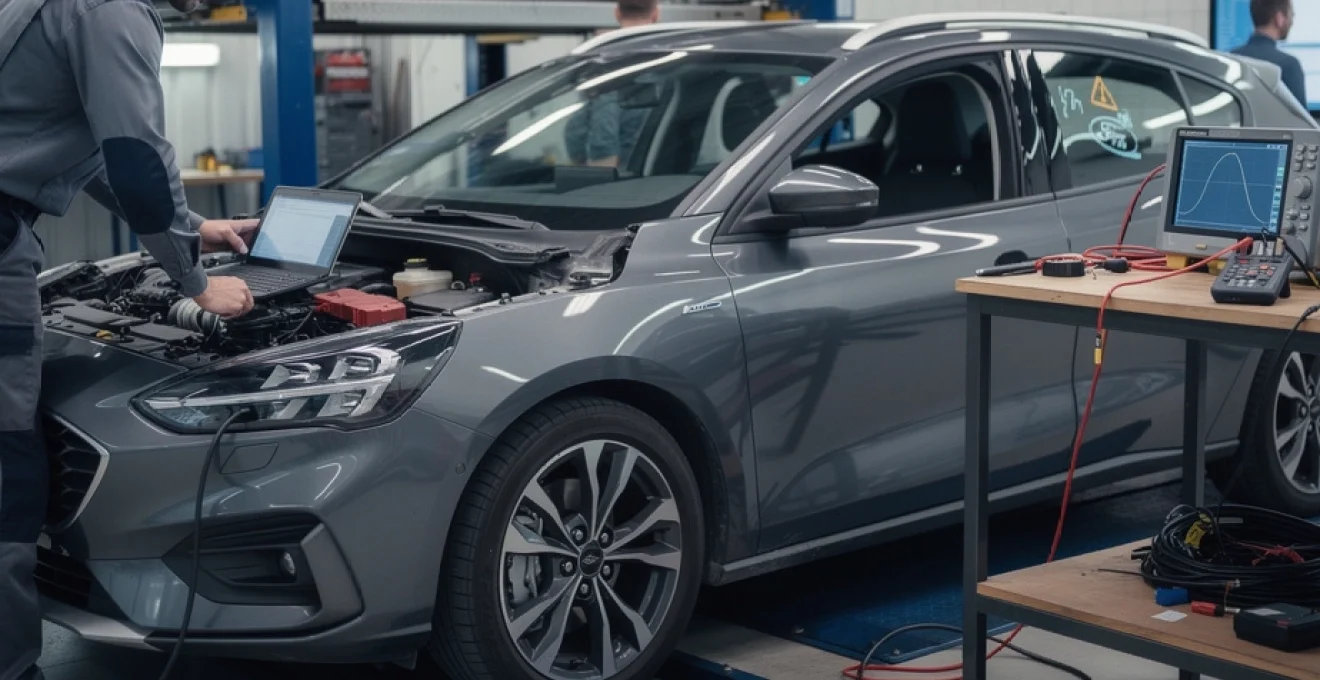
Steering assist malfunction on a Ford Focus is one of those warnings that instantly grabs attention. Modern electric and hydraulic power steering systems make the wheel light, accurate and predictable. When the assistance vanishes, the car can suddenly feel heavy, vague or even unsafe, especially at low speeds or in tight city streets. Understanding what actually happens when steering assist fails, why the dashboard lights up and how to diagnose the root cause helps you stay in control and avoid guesswork or unnecessary parts swapping. Whether you own a Mk2, Mk3 or Mk4 Focus, a clear methodical approach can turn a worrying warning message into a solvable problem.
Steering assist malfunction on ford focus: key symptoms, dashboard warnings and fail-safe behaviour
When a steering assist malfunction occurs on a Ford Focus, the most obvious symptom is a sudden increase in steering effort. The wheel feels heavy, particularly at parking speeds, as if the old manual steering days have returned. On Mk3 and Mk4 Focus models with EPAS (Electric Power Assisted Steering), the instrument cluster typically shows a yellow or red steering wheel warning symbol, often accompanied by a message such as “Steering assist malfunction – Service required”. In some cases, the car may also display general powertrain or stability control alerts because these systems share data with the steering control module.
Fail-safe behaviour is built into the EPAS and hydraulic systems to keep you able to steer. If the control unit detects a serious internal fault or incorrect sensor feedback, it disables active assistance but leaves a direct mechanical link between the wheel and the rack. The steering ratio remains the same, but you must provide all the effort yourself. This can be a shock if you are mid-corner or manoeuvring in a car park. On later Focus generations, the assistance may cut in and out depending on temperature, voltage or intermittent wiring issues, which can feel like “pulsing” heaviness at the wheel.
Some drivers also notice subtle symptoms before a full steering assist malfunction appears. The steering may feel notchy, with slight dead spots around the straight-ahead position, or there may be a faint whine, click or electric hum from the steering column area. Occasionally, the steering wheel might not re-centre as crisply as normal. Treat these as early warning signs. Just as a changing engine note often hints at misfires, evolving steering feel can be the first clue that the power steering system is under stress and about to trigger a warning.
Common root causes of steering assist malfunction on ford focus mk2, mk3 and mk4
Electric power assisted steering (EPAS) motor and torque sensor failures on ford focus mk3 (2011–2018)
The Ford Focus Mk3 uses a column-mounted EPAS unit that combines an electric motor, reduction gear and torque sensor. One of the most common root causes of steering assist malfunction on these cars is degradation of the torque sensor, which measures how hard you are turning the wheel. When its readings drift or become inconsistent, the module may apply too much or too little assist, or shut down entirely. In practical terms, you might feel “notchy” steering, inconsistent weighting or a complete loss of electric assist after a few minutes of driving.
Internal wear of the EPAS motor itself is less frequent but not rare, especially on high-mileage or ex-fleet Focus models that have seen intense city use. Brushes, bearings and solder joints within the motor and control unit can suffer from heat cycling and vibration. Ford technical bulletins over the past decade have highlighted EPAS failures as a known issue, with some regions recording thousands of warranty claims per year. When the motor draws too much current or fails internal self-tests, the system logs a fault and disables assistance, often storing U3000 or related EPAS DTCs.
Steering angle sensor drift, miscalibration and CAN bus communication faults
The steering angle sensor is another critical component that can trigger a steering assist malfunction on a Ford Focus. Mounted within the steering column or integrated into the clock spring, it tells the EPAS and stability control systems exactly where the wheel is pointing. Over time, battery disconnections, minor impacts or incorrect alignment procedures can cause the sensor to drift out of calibration. The result is a mismatch between the car’s actual direction and the data seen by the EPAS module, which may compromise assistance and stability functions.
Drift or miscalibration sometimes manifests as a slight pull, uneven steering weight on left versus right turns or a steering wheel that sits off-centre after straightening the wheels. Worse, if the CAN bus network has communication issues, the EPAS may lose steering angle data entirely. Fault codes such as U0131 (Lost Communication With Power Steering Control Module) can appear alongside steering assist malfunction warnings. CAN bus problems might stem from corroded connectors, damaged wiring or incorrect accessories tapping into the network, such as poorly installed aftermarket alarms or telematics units.
Low system voltage, weak battery and alternator output issues affecting EPAS control unit
Electric power steering systems are extremely sensitive to voltage stability. A Ford Focus Mk3 or Mk4 with a tired battery, poor alternator output or excessive electrical load can easily throw a steering assist malfunction warning even if the EPAS hardware itself is perfectly healthy. During cold starts, short trips or heavy accessory use, system voltage can dip below the threshold that the EPAS module expects. To protect the motor and maintain safe steering feel, the control unit may briefly disable assistance or limit current draw.
Modern Focus models feature smart charging strategies and start-stop functionality, which means the battery routinely operates in a partial state of charge. Industry studies suggest that up to 40% of urban-driven vehicles run with batteries below optimal health. As a result, even a three-year-old battery can struggle to maintain the 12.6–12.8 V resting and 14.2–14.8 V charging levels usually recommended for stable EPAS operation. If you see steering warnings alongside dim headlights or slow cranking, treating the voltage supply as a prime suspect is a professional, data-driven approach.
Corroded ground straps, loose connectors and wiring loom damage in the steering column area
Electrical faults around the steering column and chassis grounds can mimic major component failure. The EPAS module relies on solid earth connections to the vehicle body and battery. Corroded ground straps, loose bolts or paint between a ring terminal and the chassis can introduce resistance, causing fluctuating voltages under load. This can lead to intermittent steering assist loss, particularly when you hit bumps or turn the wheel sharply. Some technicians report finding ground points hidden behind plastic trim with significant white or green corrosion deposits, especially on older Mk3 models used in coastal areas.
Wiring loom damage is another frequent culprit. The area beneath the steering wheel is crowded with harnesses for airbags, audio controls, cruise control and steering sensors. A previous repair, aftermarket stereo installation or even an incorrectly routed dashcam cable can chafe the loom and break individual conductors. Rodents occasionally chew insulation, leading to unexpected shorts or open circuits. From a diagnostic standpoint, any visual sign of crushed insulation, non-factory joins or tape around the steering column wiring deserves immediate attention before condemning expensive components like the EPAS rack or control unit.
Hydraulic power steering pump, belt and fluid problems on early ford focus mk2 models
Earlier Ford Focus Mk2 models used a conventional hydraulic power steering system rather than fully electric assist. In these cars, a steering assist malfunction often comes down to fluid, pump or belt issues rather than electronics. Low or aerated fluid due to leaks, a clogged reservoir filter or degraded ATF-based fluid can make the steering heavy, noisy or inconsistent. If you hear a whine that rises with engine speed or see frothy fluid in the reservoir, the pump is likely starving or cavitating.
The auxiliary drive belt that powers the hydraulic pump is another simple but crucial factor. A slipping, cracked or contaminated belt reduces pump output, especially at idle or during sharp manoeuvres. Data from independent workshops suggests that more than 30% of hydraulic steering complaints on older Focus models relate to basic belt or fluid neglect rather than pump failure. For owners of Mk2 cars, checking belt tension and fluid condition regularly can prevent the system from reaching the stage where full steering assist is lost.
Diagnostic workflow for ford focus steering assist malfunction using OBD-II and FORScan
Reading steering and chassis DTCs (e.g. U3000, C200B, U0131) with FORScan and an ELM327 interface
A structured diagnostic workflow saves time and money when dealing with steering assist malfunction on a Ford Focus. The starting point is almost always a scan of the vehicle’s modules using an OBD-II interface such as an ELM327 adapter and software like FORScan. Unlike many generic scan tools, FORScan can communicate with Ford-specific modules, including the Power Steering Control Module (PSCM), ABS and Steering Angle Sensor module. Once connected, read all Diagnostic Trouble Codes (DTCs), not just those within the engine ECU.
Common codes include U3000 (Control Module), C200B (Steering Torque Sensor) and network-related codes like U0131. Each code provides a clue about whether the issue is internal to the EPAS unit, sensor-related or due to communication and power problems. Clear the codes, then perform a short road test to see which ones return immediately. This step helps you separate historic, one-off glitches from present faults. A disciplined approach to fault code analysis prevents replacing parts based on guesswork.
Interpreting live data: torque sensor readings, steering angle, EPAS current draw and battery voltage
The next stage involves looking at live data streams related to steering assist. FORScan allows you to monitor parameters such as steering torque, steering angle, EPAS motor current and battery voltage in real time. Ideally, torque sensor readings should show a smooth, proportional change as you turn the wheel left and right, without sudden jumps or dead zones. Similarly, steering angle should match the physical position of the wheel and return to near-zero when driving straight on a level road.
EPAS motor current draw is a valuable indicator of mechanical and electrical health. Excessively high current at low steering effort can suggest internal friction, rack binding or failing bearings. Conversely, low or zero current when substantial input is applied may point towards a failing motor or control unit. Monitoring battery voltage during slow parking manoeuvres is also insightful. If voltage dips significantly below 12 V while steering, the alternator, battery or main power cabling may be compromising EPAS performance.
Performing EPAS self-tests, steering angle sensor calibration and module reset procedures
Many Ford Focus models allow guided EPAS and steering-related tests through professional software. Static self-tests can command the EPAS motor through specific routines while monitoring responses. If the system fails these tests, the software usually reports whether the error relates to internal electronics, torque sensing or mechanical resistance. For angle-related issues, steering angle sensor calibration is often a key step. This procedure typically involves centring the wheel, confirming the position in software and performing a short drive to let the system learn straight-ahead.
Module resets and configuration checks are equally important, especially after battery changes or steering repairs. A corrupted configuration file or interrupted learning process can cause persistent steering assist malfunction warnings even after the physical fault is corrected. Performing a full PSCM reset followed by a drive cycle allows the module to reinitialise its parameters. When combined with a clean DTC slate, this approach can resolve many intermittent, software-related steering complaints without replacing hardware.
Verifying CAN bus integrity, termination resistances and network voltage with a multimeter or oscilloscope
When diagnostic codes suggest communication issues, verifying CAN bus integrity becomes essential. The Ford Focus uses a high-speed CAN network to link the EPAS, ABS, engine ECM and other modules. A technician can check the network’s base health by measuring resistance between CAN High and CAN Low at the OBD connector with the battery disconnected. A typical value around 60 ohms indicates both termination resistors are present and functional. Significant deviation can signal missing termination or parallel paths caused by wiring faults.
Measuring network voltage with the ignition on and, if available, observing the CAN waveform with an oscilloscope gives further insight. Clean, square signals with correct voltage levels confirm that modules are communicating reliably. Any distortion, excessive noise or unexpected voltage levels points to wiring damage, poor grounds or a module pulling down the network. Verifying CAN bus health before condemning high-value components like the EPAS rack prevents unnecessary expense and delivers a more professional repair outcome.
Step-by-step fixes for steering assist malfunction on ford focus: DIY repairs and workshop procedures
Battery load testing, alternator charging checks and power supply stabilisation for the EPAS system
Addressing steering assist malfunction on a Ford Focus often starts with stabilising the power supply. A proper battery load test checks whether voltage stays above 9.6 V under a high-current draw, simulating starter demand. If the battery fails, replacing it with a correct specification AGM or EFB unit is critical, especially on start-stop equipped Focus models. Research from battery manufacturers indicates that around 25–30% of steering-related warning messages on modern cars are linked to low state-of-charge or internal battery faults.
The alternator and charging circuit must also be verified. Measure charging voltage at the battery with the engine running, lights on and steering turned lock-to-lock. Readings significantly below 14 V or above 15 V suggest alternator, regulator or wiring issues. Stabilising voltage ensures the EPAS module consistently receives the energy it needs to operate. For owners doing DIY work, paying attention to clean battery terminals, tight clamps and intact main fuses brings a quick, cost-effective reduction in electrical gremlins across the vehicle.
Cleaning and securing EPAS grounds, earth points and steering column electrical connectors
Ground integrity is a frequently overlooked but crucial factor in Ford Focus steering reliability. Locating the main EPAS ground points, usually near the chassis leg or behind kick panels, allows you to remove each connection, clean it back to shiny metal and refit with proper torque. Using a small amount of dielectric grease helps prevent future corrosion without impeding conductivity. Workshops that adopt this procedure report significant improvements in intermittent fault rates, not only for steering but also for ABS and body control systems.
Steering column connectors and intermediate plugs in the wiring loom deserve similar attention. Gently disconnect each plug, inspect for bent pins, moisture ingress or green corrosion, then reconnect firmly. If your Focus has seen water leaks from the windscreen or heater, pay extra attention to connectors low in the dashboard. Solid, low-resistance connections reduce voltage drops and jitter on signal wires, helping the EPAS module interpret torque and angle data accurately.
Replacing the EPAS steering rack assembly on ford focus mk3, including coding and calibration
When diagnostics point clearly to internal EPAS failure, replacement of the rack or column unit becomes the definitive repair. On a Ford Focus Mk3, this is a substantial job that typically requires subframe support, careful disconnection of the battery and airbag-safe procedures. Labour times in professional workshops often range from 4 to 7 hours depending on equipment and corrosion levels. Using quality replacement parts, ideally OEM or reputable remanufactured units, is essential to maintain steering feel and long-term reliability.
After installation, coding and calibration are not optional. The new EPAS assembly must be matched to the car’s VIN and configuration so that steering effort curves, assistance levels and safety features operate as intended. Software such as Ford IDS or equivalent dealer-grade tools can perform these tasks, including steering angle sensor initialisation and EPAS learn procedures. Skipping this step can leave you with persistent warnings or odd steering weight, even if the mechanical work is flawless.
Hydraulic power steering fluid flush, leak detection and pump belt replacement on mk2 models
On hydraulic-equipped Mk2 Focus models, a thorough fluid service often transforms heavy or noisy steering. A complete flush removes old, oxidised fluid and any microscopic debris that can damage the pump and rack seals. Many specialists recommend fluid replacement intervals of 60,000–80,000 miles, although real-world practice often stretches far beyond that. If the steering assist malfunction coincides with visible leaks, searching around the rack boots, high-pressure hose unions and pump body usually reveals tell-tale wet patches or staining.
Replacing a worn or contaminated pump belt is relatively simple by comparison and should be done if there is any sign of cracking, glazing or squeal. Tensioners and idlers also deserve inspection, since misalignment or bearing wear can cause the belt to slip under load. A clean, correctly tensioned belt driving a pump filled with fresh fluid provides a solid mechanical baseline before considering more expensive steering rack or pump replacements.
Software updates and EPAS control module reprogramming with ford IDS or FDRS
Software plays a growing role in how steering systems behave. Over the last decade, manufacturers have released multiple firmware updates to refine EPAS response, fix rare glitches and improve fault detection strategies. A Ford Focus experiencing intermittent steering assist malfunction with no clear hardware defect may benefit from an EPAS control module software update. Dealer tools such as Ford IDS or FDRS can check the current software level and apply the latest calibration files recommended for the vehicle’s VIN and market.
Industry data indicates that control-unit updates can solve anywhere from 5–15% of steering complaints on late-model cars, especially for issues such as random steering weight changes or false-positive fault codes. From an owner’s perspective, keeping software current is a form of preventive maintenance, just like updating a smartphone to patch bugs and improve performance. In some cases, updated EPAS software also refines steering feel, offering smoother transition between urban and motorway assistance levels.
Model-specific steering assist issues on ford focus: ST, RS and EcoBoost variants
High-load EPAS stress on ford focus ST and RS during track driving and fast-road use
Performance variants such as the Ford Focus ST and RS subject the steering system to far higher loads than standard models. Wider tyres, aggressive alignment settings and repeated high-g cornering on track days push the EPAS motor and rack hard. Under these conditions, even a minor torque sensor tolerance issue or slight voltage drop can trigger a steering assist malfunction warning. Drivers sometimes notice assistance fading towards the end of a session, with the wheel feeling heavier as components heat up.
From a practical standpoint, enthusiasts should treat steering as a consumable element of performance driving, much like brakes or tyres. Allowing cool-down laps, checking power steering-related fault codes after events and ensuring the battery and charging system are in peak condition all help prevent unexpected loss of assist. For heavily modified cars, considering uprated cooling or more conservative alignment settings can reduce long-term EPAS stress.
Thermal shutdown and overheating of EPAS units in ford focus 1.0 EcoBoost city driving scenarios
At the other end of the performance spectrum, the compact 1.0 EcoBoost Focus faces its own steering challenges. City driving with constant low-speed manoeuvring, parking and tight turns keeps the EPAS motor working almost continuously. Combined with high ambient temperatures and stop-start engine cycles, this can raise internal EPAS temperatures to the point where protective thermal shutdown strategies kick in. The driver experiences sudden heavy steering, often after a long search for a parking spot or in dense, slow-moving traffic.
Thermal-related steering assist malfunction on EcoBoost models often clears after a brief rest with the engine off, as the EPAS module cools. Nevertheless, repeated episodes justify a deeper look at battery health, charging performance and any stored temperature or current-related fault codes. Ensuring correct tyre pressures and avoiding constant full-lock turns when stationary also reduces unnecessary EPAS load during tight urban usage.
Oversized alloy wheels, low-profile tyres and alignment settings affecting steering load
Visual modifications have a direct mechanical impact on steering assistance. Oversized alloy wheels, ultra-low-profile tyres and extreme offset changes increase unsprung mass and steering effort. The EPAS system on a Ford Focus was tuned around specific wheel and tyre combinations; deviating far from these parameters can push the motor closer to its current and thermal limits during everyday driving. Heavier wheels also amplify road shocks feeding back into the steering rack, accelerating wear on internal components.
Alignment settings are just as influential. Excessive negative camber or toe-out may look purposeful and sharpen turn-in on track, but they also raise rolling resistance and steering torque requirements. Industry alignment data suggests that cars with aggressive custom geometry can see steering loads 10–20% higher than factory baselines at similar speeds. For long-term reliability, balancing aesthetics and performance with realistic steering system capacity is a wise strategy.
Aftermarket suspension mods (coilovers, lowering springs) and their impact on steering geometry
Suspension modifications such as coilovers, lowering springs and uprated anti-roll bars are popular among Focus owners seeking sharper handling. However, these changes alter suspension geometry, roll centres and in some cases steering arm angles. If the new setup is not carefully aligned, bump steer and uneven steering effort can appear. The EPAS may interpret the extra resistance or odd self-centring characteristics as abnormal, especially when combined with altered wheel and tyre packages.
When fitting aftermarket suspension, a high-quality four-wheel alignment with attention to steering angle sensor calibration is essential. Some professional tuners also recommend verifying EPAS live data and performing a short, instrumented test drive to ensure current draw and temperature remain within normal ranges. Treating steering as part of the suspension system, rather than an isolated component, leads to a more cohesive and reliable modified Focus, whether used for daily driving or occasional spirited runs.
Preventive maintenance and long-term reliability strategies for ford focus steering assist systems
Preventive maintenance is the most effective way to minimise the risk of steering assist malfunction on a Ford Focus over the long term. Regular battery testing, especially once the battery passes three years of age, keeps the EPAS supplied with stable voltage. Checking and cleaning key ground points every few years, or after any significant electrical work, helps avoid the gradual buildup of resistance that often underlies intermittent steering and ABS faults. For hydraulic systems, scheduled fluid changes based on mileage and usage patterns dramatically extend pump and rack life.
Driving style also plays a role in steering reliability. Avoiding prolonged full-lock manoeuvres when stationary, allowing cooling time after heavy parking efforts and keeping tyre pressures at the recommended levels all lighten the load on EPAS or hydraulic components. Industry figures suggest that drivers who combine regular maintenance with sympathetic steering habits see far fewer steering-related warning messages over a vehicle’s lifespan, even in demanding city environments or on performance-focused models.
Finally, adopting a data-driven mindset whenever you notice changes in steering feel or see a dashboard warning pays real dividends. Rather than ignoring subtle heaviness or occasional warning lights, an early diagnostic session using proper tools and live data analysis can catch minor issues before they cascade into major failures. For any Ford Focus owner, from Mk2 to Mk4, treating the steering assist system as a sophisticated, electronically managed safety component rather than a mysterious black box leads to more confident, predictable and enjoyable driving over hundreds of thousands of kilometres.