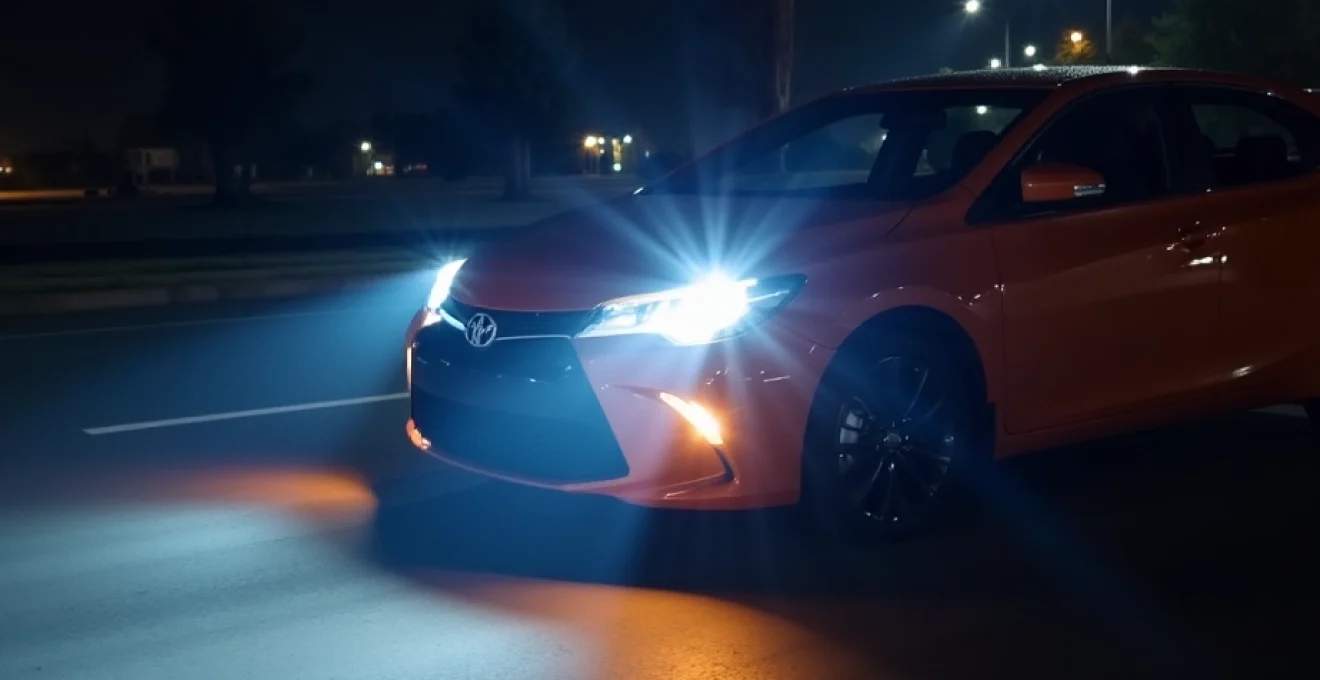
Modern automotive lighting has undergone a revolutionary transformation over the past decade. LED headlights have emerged as the superior choice for drivers seeking enhanced visibility, improved energy efficiency, and reduced maintenance costs. Unlike traditional halogen bulbs that waste 80% of their energy as heat, LED technology converts nearly all electrical power into usable light, delivering brightness levels that can exceed 10,000 lumens whilst consuming significantly less power than conventional alternatives.
The transition from halogen to LED represents more than just a technological upgrade—it fundamentally changes how you experience nighttime driving. Studies indicate that 67% of fatal traffic accidents occur during low-light conditions, making effective headlight illumination a critical safety factor. LED headlights produce a crisp, white light that closely mimics natural daylight, enhancing depth perception and colour recognition in challenging driving conditions.
LED headlight technology fundamentals and luminous efficacy specifications
Understanding the core technology behind LED headlights reveals why they consistently outperform traditional lighting solutions. The fundamental principles governing LED operation create measurable advantages in brightness, efficiency, and longevity that translate directly into improved driving experiences.
Semiconductor diode architecture and Light-Emitting mechanisms
LED headlights operate through electroluminescence, where electrical current passes through a semiconductor junction composed of different materials. When electrons move from the negative side to the positive side of this junction, they release energy in the form of photons. This process generates light without requiring a filament, eliminating the primary failure point found in halogen bulbs.
The semiconductor materials used in automotive LEDs typically include gallium nitride compounds that produce blue light. This blue light then passes through a phosphor coating that converts it to white light with specific colour temperature characteristics. The absence of moving parts or delicate filaments makes LED headlights exceptionally resistant to vibration and shock damage.
Colour temperature variations from 3000K to 6500K performance analysis
Colour temperature significantly impacts both visibility and aesthetic appeal. Lower colour temperatures around 3000K produce warm, yellowish light that performs well in foggy conditions but provides limited clarity. Standard halogen bulbs typically operate at 3200K, which explains their characteristic golden appearance.
LED headlights commonly operate between 5000K and 6500K, producing cool white light that enhances contrast and definition. Research demonstrates that 6000K colour temperature provides optimal balance between penetration through atmospheric conditions and visual acuity. Higher temperatures above 8000K, whilst appearing more modern, can actually reduce visibility in adverse weather conditions.
Lumens output comparison between halogen and LED systems
Luminous output measurements reveal the substantial performance gap between halogen and LED technologies. Standard halogen headlights produce approximately 1300-1500 lumens per bulb, whilst quality LED replacements can generate 3000-5000 lumens with significantly lower power consumption . Premium LED systems achieve even higher outputs, with some units exceeding 8000 lumens per bulb.
This dramatic increase in light output translates to improved road illumination extending 30-40% further than halogen alternatives. The focused beam pattern of LED headlights also concentrates more light where you need it most, reducing wasted illumination scattered outside the useful driving area.
Heat dissipation engineering and thermal management solutions
Effective thermal management represents a crucial aspect of LED headlight design. Whilst LEDs generate significantly less heat than halogen bulbs, the heat they do produce must be efficiently removed to maintain optimal performance and longevity. Modern LED headlight assemblies incorporate sophisticated heat sinks, often featuring copper cores with aluminium fins to maximize surface area for heat dissipation.
Many premium LED systems include active cooling fans that maintain optimal operating temperatures. These fans typically operate silently and consume minimal power whilst extending LED lifespan from 30,000 to over 50,000 hours. Proper thermal management ensures consistent light output throughout the LED’s operational life, preventing the gradual dimming experienced with aging halogen bulbs.
Installation compatibility assessment for popular vehicle models
Successful LED headlight conversion requires careful consideration of your vehicle’s specific electrical and mechanical requirements. Modern vehicles present unique challenges related to error detection systems, beam pattern optimization, and regulatory compliance that must be addressed during installation.
H7 and H4 bulb socket adaptations for ford focus and volkswagen golf
Ford Focus models typically utilize H7 bulbs for low beam applications, requiring LED conversions that maintain precise filament positioning to preserve factory beam patterns. The compact design of quality LED H7 bulbs ensures proper fit within the restricted space behind Focus headlight assemblies. Installation usually requires minimal modification, though accessing the driver’s side bulb may necessitate battery removal in some model years.
Volkswagen Golf vehicles commonly employ H4 dual-beam configurations, where both high and low beam functions operate from a single bulb socket. LED H4 replacements must accurately replicate the dual-filament positioning to maintain proper beam switching and cutoff characteristics. The Golf’s sophisticated headlight design benefits significantly from LED conversion, with improved illumination particularly noticeable during motorway driving.
CANBUS error elimination techniques for BMW and audi electrical systems
German premium vehicles incorporate advanced CANBUS monitoring systems that detect changes in electrical load characteristics. When LED headlights draw significantly less power than factory halogen bulbs, the system may interpret this as a bulb failure and trigger warning messages. Professional-grade LED conversion kits include CANBUS decoders or resistor modules that simulate the original electrical load signature.
BMW vehicles often require additional programming steps through diagnostic software to fully accept LED headlight modifications. Audi’s matrix headlight systems present particular complexity, as individual LED elements may need specific calibration to maintain proper beam shaping and adaptive lighting functions. These installations typically require specialized tools and technical expertise to ensure optimal performance.
Projector lens modifications for Mercedes-Benz and toyota camry
Projector headlight assemblies found in Mercedes-Benz vehicles create focused beam patterns through precision-engineered lens systems. LED conversions in projector housings often yield superior results compared to reflector-based designs, as the focused nature of LED light sources complements the projector’s optical characteristics. However, proper LED positioning within the projector assembly becomes critical for maintaining sharp cutoff lines.
Toyota Camry projector systems respond exceptionally well to LED conversion, with many owners reporting dramatically improved low-beam performance. The key lies in selecting LED bulbs with compact heat sink designs that don’t interfere with the projector assembly’s dust cap closure. Professional installation ensures proper beam aim adjustment following LED conversion.
Reflector housing adjustments for nissan qashqai and honda civic
Reflector-based headlight systems require careful consideration of LED chip positioning to maintain proper beam patterns. Nissan Qashqai headlights feature multi-surface reflectors designed around halogen bulb specifications. LED conversions may require slight aim adjustments to optimize beam patterns and prevent excessive glare for oncoming traffic.
Honda Civic reflector assemblies typically accommodate LED conversions with minimal modification. However, the varying beam patterns produced by different LED designs necessitate careful selection of bulbs with appropriate light distribution characteristics . Testing beam patterns after installation ensures compliance with safety standards and optimal road illumination.
Road safety enhancement through advanced beam pattern distribution
The safety implications of upgrading to LED headlights extend far beyond simple brightness improvements. Advanced beam pattern engineering creates more effective illumination that reduces driver fatigue and enhances hazard detection capabilities during nighttime driving conditions.
LED headlights produce more uniform light distribution compared to halogen alternatives, eliminating the hotspots and dark areas that characterize traditional bulb performance. This uniform distribution proves particularly beneficial when navigating curved roads or hilly terrain, where consistent illumination helps drivers better judge distances and identify potential obstacles. The crisp white light produced by quality LED systems also improves sign retroreflectivity, making road markings and signage more visible at greater distances.
Modern LED headlight designs incorporate sophisticated optics that create wider beam patterns without increasing glare for oncoming traffic. This broader illumination pattern helps drivers detect pedestrians, cyclists, and animals approaching from roadside areas—scenarios that account for numerous nighttime accidents. The enhanced peripheral vision provided by well-designed LED systems can reduce accident risk by up to 19% according to recent automotive safety studies.
Adaptive LED systems take safety benefits even further by automatically adjusting beam patterns based on driving conditions. These intelligent systems can modify light distribution for city driving, motorway cruising, or adverse weather conditions. During rainfall, for instance, adaptive systems may lower the beam slightly to reduce reflected glare from wet pavement whilst maintaining optimal road illumination ahead.
Research conducted by the Insurance Institute for Highway Safety demonstrates that vehicles equipped with LED headlights experience 13% fewer insurance claims related to nighttime driving incidents compared to those using standard halogen lighting.
Energy consumption reduction and battery life extension analysis
The energy efficiency advantages of LED headlights create measurable benefits for vehicle electrical systems and overall operating costs. Traditional halogen headlights consume 55-65 watts per bulb, whilst equivalent LED systems operate efficiently on 20-25 watts whilst producing superior light output. This 60% reduction in power consumption translates to reduced alternator load and improved fuel economy, particularly during extended nighttime driving.
For electric vehicle owners, LED headlight efficiency becomes even more significant. The power savings from LED conversion can extend driving range by 2-3 miles per charge cycle, depending on usage patterns and vehicle efficiency. Hybrid vehicles also benefit from reduced electrical load during engine-off periods, allowing the electric motor to operate more efficiently and extending battery life.
The reduced electrical load also benefits older vehicles where charging systems may struggle to maintain battery voltage during high-demand situations. Vehicles with aging alternators often experience improved electrical stability after LED headlight conversion, reducing the likelihood of battery discharge during stop-and-go driving with lights activated. This proves particularly valuable for delivery vehicles, taxis, and other commercial applications where headlights operate for extended periods.
Long-term analysis reveals additional cost savings through reduced maintenance requirements. LED headlights typically operate for 25,000-50,000 hours compared to 1,000-2,000 hours for halogen bulbs. This extended operational life eliminates frequent bulb replacements and associated labour costs, making LED conversion a sound financial investment for fleet operators and individual drivers alike.
Regulatory compliance with ECE R112 and DOT FMVSS 108 standards
Understanding regulatory requirements becomes essential when considering LED headlight upgrades. International standards govern headlight performance, beam patterns, and electromagnetic compatibility to ensure safe operation across diverse driving conditions and vehicle types.
ECE marking requirements for european market LED headlights
European ECE R112 regulations establish comprehensive testing protocols for LED headlights, covering photometric performance, durability, and electromagnetic interference characteristics. LED headlights sold in European markets must display ECE approval markings indicating compliance with these stringent standards. The approval process includes extensive testing under various temperature conditions, vibration scenarios, and electrical load variations.
ECE regulations also specify precise beam pattern requirements, including cutoff sharpness, light distribution zones, and maximum illumination levels in specific areas. These requirements prevent LED headlights from creating excessive glare whilst ensuring adequate road illumination. Professional-grade LED conversion systems undergo this testing process to guarantee regulatory compliance and safe operation.
SAE J1383 photometric testing procedures and certification
North American markets require LED headlights to meet SAE J1383 photometric standards, which differ from European requirements in several key areas. SAE testing procedures evaluate light output at specific measurement points, beam pattern characteristics, and colour temperature specifications. The certification process includes environmental testing to ensure reliable operation in extreme weather conditions common across North American climates.
SAE standards also address electromagnetic compatibility requirements to prevent interference with vehicle electronic systems or nearby radio communications. LED headlights must demonstrate stable operation without generating excessive electromagnetic emissions that could affect GPS navigation, mobile phone reception, or other electronic devices within the vehicle.
Road traffic act compliance for UK MOT testing standards
UK MOT testing procedures specifically address LED headlight conversions, with updated guidelines requiring proper beam patterns and absence of excessive glare. Vehicles originally equipped with halogen headlights may face MOT failure if converted to LED systems that don’t maintain proper beam characteristics. The testing focuses on cutoff definition, beam pattern symmetry, and overall light output levels.
Professional LED conversion systems designed for UK compliance include features such as self-leveling mechanisms and beam pattern optimization to meet MOT requirements. These systems undergo specific testing to ensure they pass standard MOT inspection procedures whilst providing the performance benefits that drivers seek from LED technology.
Long-term durability testing and maintenance cost implications
Comprehensive durability analysis reveals the substantial long-term advantages of LED headlight technology over traditional alternatives. Independent testing laboratories subject LED headlights to accelerated aging protocols that simulate years of real-world operation, including thermal cycling, vibration exposure, and moisture ingress scenarios.
Thermal cycling tests expose LED headlights to temperature extremes ranging from -40°C to +85°C, simulating conditions encountered from arctic winter driving to desert summer operation. Quality LED systems maintain consistent light output and colour temperature throughout these extreme conditions, whilst halogen bulbs often experience filament degradation and eventual failure. Vibration testing protocols simulate rough road conditions and demonstrate LED superiority in withstanding mechanical stress without performance degradation.
Real-world cost analysis comparing LED and halogen headlights over a 10-year ownership period reveals significant financial advantages for LED technology. Whilst LED headlights cost 3-4 times more initially, their extended operational life eliminates multiple halogen bulb replacement cycles. Factor in reduced labour costs for fewer replacement procedures, and LED headlights typically provide 40-60% lower total cost of ownership over the vehicle’s operational life.
Commercial fleet operators report even greater cost savings due to reduced maintenance scheduling requirements and decreased vehicle downtime for headlight repairs. The reliability of LED technology proves particularly valuable for emergency vehicles, commercial trucks, and other applications where lighting failure creates significant operational or safety concerns. Professional-grade LED systems often include extended warranty coverage that provides additional protection against premature failure, further enhancing their value proposition for demanding applications.
Fleet management studies indicate that commercial vehicles equipped with LED headlights experience 73% fewer lighting-related maintenance incidents compared to halogen-equipped counterparts, resulting in substantial operational cost savings and improved vehicle availability rates.