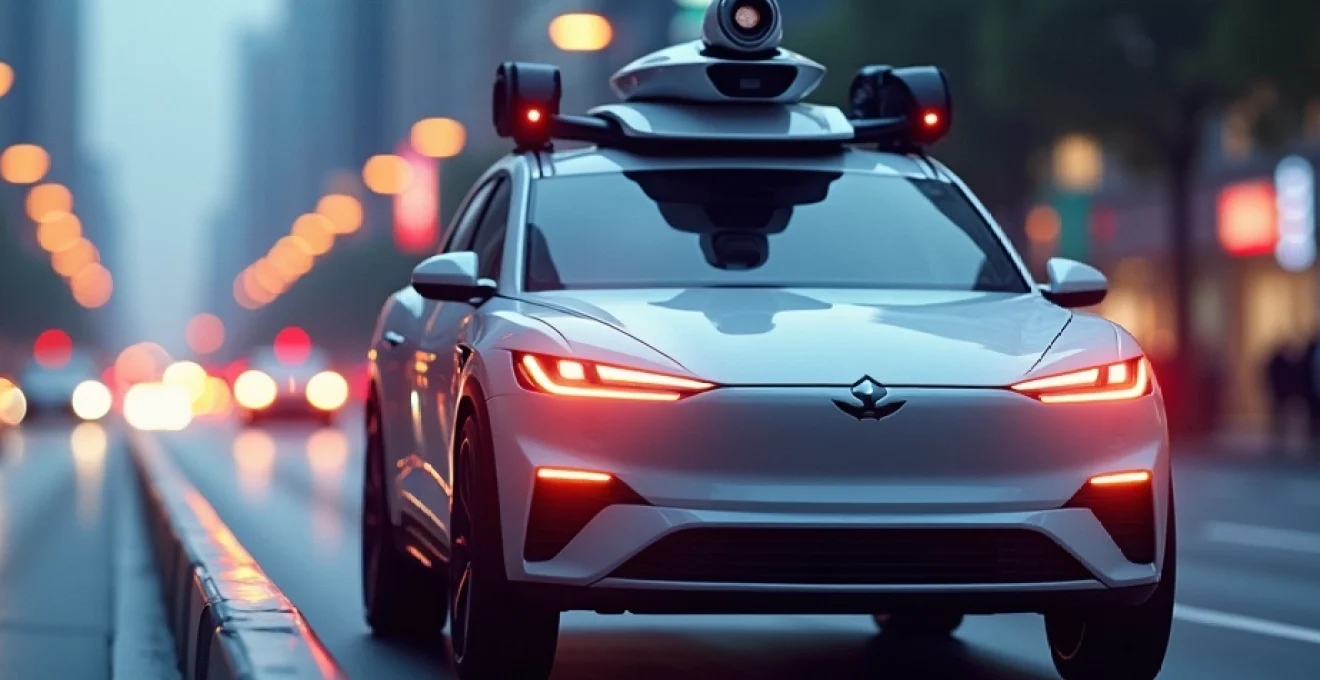
The autonomous vehicle industry stands at a fascinating crossroads in 2025, with global market valuations surpassing $41 billion in 2024 and projections reaching nearly $115 billion by 2029. This remarkable growth reflects not just financial investment, but a fundamental shift in how we conceive transportation itself. Advanced artificial intelligence, sophisticated sensor arrays, and breakthrough machine learning algorithms are converging to create vehicles that can navigate complex traffic scenarios with unprecedented precision. While early predictions promised fully autonomous cars would dominate roads by now, the reality has proven more nuanced and arguably more exciting than initially anticipated.
Current developments reveal a multi-tiered approach to autonomous vehicle deployment, with different manufacturers pursuing distinct strategies based on their technological capabilities and market positioning. The landscape encompasses everything from Tesla’s neural network-driven approach to Waymo’s meticulously mapped geofenced operations . Each methodology offers unique insights into the challenges and opportunities that define this transformative industry, setting the stage for revolutionary changes in personal mobility and transportation infrastructure.
Current state of autonomous vehicle technology and SAE level classifications
The Society of Automotive Engineers (SAE) has established six levels of driving automation that serve as the industry standard for categorising autonomous vehicle capabilities. These levels range from Level 0, representing no automation, to Level 5, which signifies complete autonomy requiring no human intervention. Currently, most commercially available vehicles operate at Level 2 or Level 2+, where the system can control steering, acceleration, and braking simultaneously whilst requiring constant human supervision.
Level 2 semi-autonomous vehicles dominated the market in 2023, capturing a 40.29% revenue share according to industry research. This prevalence reflects both technological maturity and consumer acceptance of partial automation features. However, the transition to Level 3 conditional automation represents a significant paradigm shift, as responsibility begins to transfer from human drivers to autonomous systems under specific conditions. This transition fundamentally alters liability frameworks and insurance requirements , creating complex regulatory challenges that manufacturers must navigate carefully.
The progression toward higher automation levels reveals distinct technological and business model approaches. While Level 4 and Level 5 systems promise transformative capabilities, achieving these milestones requires overcoming substantial technical hurdles related to edge case handling, sensor reliability, and computational processing power. Current autonomous vehicle statistics show approximately 26,560 units operating globally in 2024, with projections reaching 125,660 units by 2030, indicating steady but measured growth in deployment.
Tesla autopilot and full Self-Driving beta performance metrics
Tesla’s approach to autonomous driving centres on a neural network-driven system that relies heavily on camera-based perception rather than expensive LiDAR sensors. The company’s Full Self-Driving (FSD) Beta program has accumulated millions of miles of real-world testing data, providing valuable insights into neural network performance across diverse driving scenarios. Tesla’s strategy emphasises scalable deployment through over-the-air updates, allowing continuous improvement of autonomous capabilities across their entire fleet.
Performance metrics for Tesla’s Autopilot system demonstrate both achievements and limitations in current autonomous technology. The system excels in highway driving scenarios with clear lane markings and predictable traffic patterns , but encounters challenges in complex urban environments with construction zones, emergency vehicles, and unusual road configurations. Tesla’s approach to data collection through shadow mode testing allows the system to observe human driving decisions while learning from edge cases that traditional testing scenarios might miss.
Waymo’s geofenced operations in phoenix and san francisco
Waymo’s methodology represents a contrasting approach to autonomous vehicle deployment, focusing on highly detailed mapping and geofenced operations within carefully selected geographic areas. The company’s all-electric Jaguar I-PACE fleet operates in Phoenix and San Francisco, areas chosen for their favourable weather conditions and well-mapped road infrastructure. This approach prioritises safety and reliability over rapid scaling, allowing Waymo to achieve impressive safety metrics within controlled environments.
The geofenced operational model enables Waymo to maintain detailed three-dimensional maps of road infrastructure, traffic patterns, and environmental conditions. This comprehensive mapping approach, combined with advanced sensor fusion techniques, allows Waymo’s vehicles to navigate complex urban scenarios with high confidence levels.
Recent expansion plans include Miami operations by 2025, with public autonomous ride-hailing services launching by 2026 as part of a major transformation effort.
Cruise’s robotaxi fleet deployment and recent regulatory challenges
Cruise, General Motors’ autonomous vehicle subsidiary, has pursued an aggressive robotaxi deployment strategy in urban environments, particularly in San Francisco. The company’s approach involves operating Level 4 autonomous vehicles in dense city traffic, presenting significant technical challenges related to pedestrian detection, cyclist behaviour prediction, and complex intersection navigation. However, recent regulatory scrutiny has highlighted the importance of transparent safety reporting and public trust in autonomous vehicle operations.
The regulatory challenges faced by Cruise underscore broader industry concerns about autonomous vehicle safety verification and public acceptance. These challenges have prompted more stringent testing requirements and enhanced safety protocols across the industry . The experience demonstrates how regulatory frameworks continue evolving alongside technological advancement, requiring manufacturers to balance innovation with comprehensive safety validation.
Mercedes-benz drive pilot level 3 conditional automation
Mercedes-Benz’s Drive Pilot system represents the first commercially available Level 3 autonomous driving technology authorised for public road use in the United States. Operating on specific freeway segments at speeds up to 40 miles per hour, Drive Pilot allows drivers to engage in secondary activities while the system maintains complete control of vehicle operation. This milestone achievement demonstrates the feasibility of transferring driving responsibility to autonomous systems under controlled conditions.
The Drive Pilot system incorporates advanced LiDAR sensing, high-definition mapping, and sophisticated environmental monitoring to ensure safe operation during “eyes off” driving scenarios. Mercedes-Benz assumes legal liability when the system operates within its designated operational design domain, representing a significant shift in manufacturer responsibility. This approach provides a template for future Level 3 deployments while establishing important precedents for insurance and regulatory frameworks.
Advanced sensor technologies and perception systems in modern AVs
Modern autonomous vehicles rely on sophisticated sensor fusion architectures that combine multiple perception modalities to create comprehensive environmental understanding. These systems integrate cameras, radar, LiDAR, and ultrasonic sensors to detect and classify objects, measure distances, and predict movement patterns with remarkable accuracy. The challenge lies not just in collecting sensor data, but in processing and interpreting this information in real-time to make safe driving decisions.
Sensor technology advancement has accelerated dramatically, with costs decreasing while performance improves across all modalities. Camera resolution has increased to 8 megapixels and beyond, while frame rates exceed 120 fps for critical applications . Radar systems now operate across multiple frequency bands to enhance object detection capabilities, while LiDAR sensors have evolved from bulky mechanical units to compact solid-state devices suitable for mass production vehicles.
The integration of these diverse sensor technologies requires sophisticated algorithms that can handle conflicting information, sensor failures, and environmental challenges such as adverse weather conditions. Redundancy becomes crucial, as autonomous vehicles must maintain operational safety even when individual sensors become compromised. This redundancy extends beyond hardware to include multiple algorithmic approaches for critical functions like object detection and path planning.
Lidar evolution: velodyne vs luminar vs Solid-State solutions
LiDAR technology has undergone significant transformation since its early adoption in autonomous vehicle prototypes. Velodyne pioneered the spinning mechanical LiDAR approach, providing 360-degree environmental scanning with exceptional accuracy and range. However, the mechanical complexity, high cost, and reliability concerns associated with moving parts have driven innovation toward solid-state alternatives that promise greater durability and manufacturability.
Luminar represents the next generation of LiDAR technology, utilising 1550nm wavelength lasers to achieve superior range and resolution compared to traditional 905nm systems. This wavelength selection enables detection ranges exceeding 250 metres while maintaining eye safety standards . Luminar’s approach focuses on automotive-grade reliability and cost reduction through volume manufacturing, making LiDAR technology viable for production vehicles rather than just research prototypes.
Solid-state LiDAR solutions eliminate mechanical scanning mechanisms entirely, using electronic beam steering or micro-electro-mechanical systems (MEMS) to direct laser pulses. These systems offer significant advantages in terms of size, weight, power consumption, and manufacturing cost. Companies like Innoviz and Ouster have developed solid-state LiDAR systems specifically designed for automotive integration, enabling seamless installation within vehicle body panels without compromising aerodynamics or aesthetics.
Computer vision integration with NVIDIA drive AGX platform
NVIDIA’s Drive AGX platform represents a comprehensive computing solution for autonomous vehicle perception and decision-making processes. The platform integrates high-performance GPU computing with specialised AI acceleration hardware, enabling real-time processing of multiple high-resolution camera feeds, radar data, and LiDAR point clouds. This computational power allows autonomous vehicles to run complex neural networks for object detection, classification, and behaviour prediction simultaneously.
Computer vision algorithms running on the Drive AGX platform utilise deep learning techniques to extract meaningful information from visual sensor data. These algorithms can identify and track hundreds of objects simultaneously, predicting their trajectories and intentions with remarkable accuracy . The platform’s modular architecture allows manufacturers to scale computational resources based on their specific autonomous driving requirements, from Level 2 driver assistance to Level 5 full automation.
The integration of computer vision with other sensor modalities creates a robust perception system capable of handling challenging scenarios such as night driving, adverse weather, and complex urban environments. NVIDIA’s approach emphasises continuous learning and improvement through fleet data collection and centralised model training, enabling autonomous vehicles to benefit from collective experiences across entire fleets.
Radar-camera fusion and Multi-Modal sensor architectures
Multi-modal sensor fusion represents one of the most critical technologies in autonomous vehicle development, combining the strengths of different sensor types while compensating for individual limitations. Radar excels in adverse weather conditions and provides accurate velocity measurements, while cameras offer high-resolution visual information and colour detection capabilities. The fusion of these technologies creates a more robust and reliable perception system than either sensor type could achieve independently.
Advanced fusion algorithms utilise Kalman filtering, particle filtering, and machine learning techniques to integrate sensor data at multiple levels. Early fusion combines raw sensor data before processing, while late fusion integrates processed information from individual sensors. Modern approaches often employ hybrid fusion strategies that leverage the advantages of both methodologies . These algorithms must account for sensor synchronisation, calibration variations, and temporal alignment to ensure accurate environmental representation.
The development of automotive-grade radar sensors has enabled new capabilities in autonomous driving applications. Modern radar systems operate at 77-81 GHz frequencies, providing improved resolution and reduced interference compared to earlier 24 GHz systems. These sensors can detect objects at ranges exceeding 300 metres while measuring velocities with centimetre-per-second accuracy, making them essential for highway driving and emergency braking scenarios.
Edge AI processing with qualcomm snapdragon ride platform
Qualcomm’s Snapdragon Ride platform represents a significant advancement in edge AI processing for autonomous vehicles, offering automotive-grade reliability with high-performance computing capabilities. The platform integrates CPU, GPU, and dedicated AI accelerators to handle the computational demands of real-time autonomous driving applications. This approach reduces latency compared to cloud-based processing while ensuring consistent performance regardless of connectivity conditions.
Edge AI processing enables autonomous vehicles to make critical decisions without relying on external infrastructure or internet connectivity. The Snapdragon Ride platform can process over 700 trillion operations per second while maintaining automotive safety standards . This computational capability supports multiple concurrent applications including perception, planning, and control systems that must operate with millisecond-level response times.
The platform’s heterogeneous computing architecture allows different types of AI workloads to run on optimised processors, maximising efficiency and performance. Computer vision tasks utilise GPU resources, while sensor fusion and decision-making algorithms leverage CPU and dedicated AI accelerators. This specialisation enables autonomous vehicles to run complex AI models efficiently while maintaining the thermal and power constraints required for automotive applications.
Machine learning algorithms and neural network architectures
Machine learning algorithms form the intelligent foundation of autonomous vehicle systems, enabling these sophisticated machines to perceive, understand, and respond to complex traffic environments. The evolution from rule-based systems to deep learning approaches has fundamentally transformed how autonomous vehicles process sensory information and make driving decisions. Modern autonomous vehicles employ multiple types of neural networks simultaneously, each optimised for specific tasks such as object detection, path planning, and behavioural prediction.
The complexity of autonomous driving requires machine learning systems that can handle enormous amounts of data while making accurate predictions in real-time. These systems must process thousands of sensor measurements per second while considering countless variables that influence safe driving decisions . The challenge extends beyond simple pattern recognition to include understanding context, predicting human behaviour, and planning optimal trajectories in dynamic environments where conditions change rapidly.
Training these sophisticated systems requires massive datasets containing millions of driving scenarios, edge cases, and environmental conditions. The quality and diversity of training data directly impacts the performance and safety of autonomous driving systems. Companies invest heavily in data collection, annotation, and synthetic data generation to create comprehensive training datasets that prepare autonomous vehicles for real-world deployment.
Convolutional neural networks for object detection and classification
Convolutional Neural Networks (CNNs) serve as the backbone for visual perception in autonomous vehicles, excelling at detecting and classifying objects within camera imagery. These networks utilise hierarchical feature extraction to identify patterns ranging from simple edges and textures to complex objects like vehicles, pedestrians, and traffic signs. Modern CNN architectures for autonomous driving can simultaneously detect hundreds of objects while classifying their types, sizes, and relative positions with remarkable accuracy.
State-of-the-art object detection systems employ architectures like YOLO (You Only Look Once) and R-CNN variants that balance accuracy with computational efficiency. These systems must operate with latencies under 100 milliseconds to enable safe real-time decision making . The networks incorporate attention mechanisms and feature pyramid structures to detect objects across multiple scales, ensuring small pedestrians are detected as reliably as large trucks.
Training CNN models for autonomous driving requires carefully curated datasets with precise object annotations and diverse environmental conditions. Data augmentation techniques simulate various lighting conditions, weather scenarios, and camera perspectives to improve model robustness. Transfer learning approaches leverage pre-trained models to accelerate development while domain adaptation techniques help models generalise across different geographic regions and traffic patterns.
Reinforcement learning applications in path planning
Reinforcement learning (RL) represents a powerful approach for developing intelligent path planning algorithms that can adapt to complex traffic scenarios through trial-and-error learning. Unlike supervised learning approaches that require labelled training data, RL algorithms learn optimal driving behaviours by receiving rewards for safe and efficient actions while being penalised for dangerous or inefficient decisions. This approach enables autonomous vehicles to discover sophisticated driving strategies that might not be apparent from human demonstration alone.
Modern RL algorithms for autonomous driving utilise deep Q-networks (DQN) and policy gradient methods to handle the continuous action spaces required for vehicle control. These algorithms can learn complex behaviours such as lane changing in heavy traffic, merging onto highways, and navigating through construction zones . The challenge lies in ensuring that learned behaviours remain safe and predictable while optimising for efficiency and comfort.
Simulation environments play a crucial role in RL training for autonomous driving, allowing algorithms to explore millions of scenarios without real-world safety risks. Platforms like CARLA and AirSim provide realistic physics simulations and diverse traffic scenarios for training RL agents. However, transferring learned behaviours from simulation to real-world deployment requires careful consideration of domain gaps and safety validation procedures.
Transformer models for predictive motion planning
Transformer neural network architectures, originally developed for natural language processing, have shown remarkable promise in autonomous driving applications, particularly for predictive motion planning and trajectory forecasting. These models excel at capturing long-range dependencies and temporal relationships in sequential data, making them ideal for predicting the future movements of vehicles, pedestrians, and cyclists in complex traffic scenarios.
Motion prediction transformers process sequences of historical position data, velocity vectors, and contextual information to generate probabilistic forecasts of future trajectories. These models can predict the likely paths of multiple agents simultaneously while considering their interactions and environmental constraints . The attention mechanisms inherent in transformer architectures enable the models to focus on the most relevant information when making predictions, improving accuracy in dynamic scenarios.
The integration of transformer models into autonomous vehicle planning systems enables more sophisticated decision-making capabilities. By predicting the likely actions of other road users, autonomous vehicles can plan trajectories that anticipate potential conflicts and optimise for safety and efficiency. These models also support interactive planning scenarios where the autonomous vehicle’s actions influence the behaviour of other agents, creating more natural and cooperative driving behaviours.
Synthetic data generation using NVIDIA omniverse and CARLA simulator
Synthetic data generation has become essential for training robust autonomous driving systems, addressing the challenges of collecting comprehensive real-world datasets while ensuring safety during development.
NVIDIA Omniverse and CARLA simulator provide sophisticated platforms for generating high-quality synthetic training data that closely mimics real-world driving scenarios. These platforms enable autonomous vehicle developers to create photorealistic virtual environments with accurate physics simulations, weather conditions, and traffic patterns. Synthetic data generation allows training on scenarios that would be dangerous or impractical to collect in the real world, such as adverse weather conditions, emergency situations, and rare edge cases that might occur infrequently during normal operations.NVIDIA Omniverse leverages advanced ray tracing and AI-powered content generation to create highly detailed virtual worlds that include accurate lighting, shadows, and material properties. The platform supports collaborative development workflows where multiple teams can contribute to scenario creation and validation. Real-world locations can be digitally reconstructed using satellite imagery and LiDAR data, creating virtual twins of existing road networks for testing autonomous vehicle algorithms.CARLA simulator offers an open-source alternative that provides detailed urban environments with dynamic weather systems, day-night cycles, and customisable traffic scenarios. The simulator includes realistic sensor models that accurately reproduce the characteristics of cameras, LiDAR, and radar systems used in autonomous vehicles. This approach enables developers to validate sensor fusion algorithms and test edge cases that might occur only rarely in real-world conditions. The combination of synthetic and real-world data creates more robust training datasets that improve autonomous vehicle performance across diverse operating conditions.
Regulatory framework evolution and safety standards development
The regulatory landscape for autonomous vehicles continues evolving rapidly as governments worldwide grapple with the challenge of ensuring public safety while fostering innovation. Traditional automotive safety standards were designed for human-operated vehicles, requiring significant adaptation to address the unique challenges posed by autonomous systems. Regulatory bodies must now consider questions of algorithmic transparency, cybersecurity, data privacy, and liability frameworks that didn’t exist in conventional automotive regulations.The United States has taken a relatively permissive approach to autonomous vehicle testing, with individual states developing their own regulations for autonomous vehicle deployment. California’s Department of Motor Vehicles requires extensive safety reporting and testing documentation, while states like Arizona have adopted more flexible frameworks to encourage innovation. The National Highway Traffic Safety Administration has recently adjusted rules to facilitate robotaxi deployments, granting exemptions that streamline the approval process for vehicles without traditional controls. This regulatory momentum signals growing confidence in autonomous vehicle technology while maintaining focus on safety validation.European regulatory frameworks emphasise harmonisation across member states, with the European Union developing comprehensive legislation for autonomous vehicle deployment. The EU’s mandate for Intelligent Speed Assistance represents a step toward creating infrastructure that supports autonomous vehicle operations. Germany’s 2021 Autonomous Driving Act enables Level 4 vehicle testing in real traffic scenarios, positioning the country as a leader in autonomous vehicle regulation. These frameworks establish important precedents for liability assignment, insurance requirements, and safety validation procedures that other regions are likely to adopt.International standards organisations play crucial roles in developing technical requirements for autonomous vehicle safety. ISO 26262 provides functional safety standards for automotive systems, while ISO 21448 addresses safety of the intended functionality for autonomous vehicles. These standards define requirements for hazard analysis, risk assessment, and verification procedures that autonomous vehicle manufacturers must follow. The development of standardised testing protocols ensures consistent safety evaluation across different manufacturers and deployment regions.
Infrastructure requirements for Vehicle-to-Everything communication
Vehicle-to-Everything (V2X) communication represents a fundamental shift toward connected transportation ecosystems where autonomous vehicles interact seamlessly with infrastructure, other vehicles, and pedestrian devices. This communication framework enables autonomous vehicles to receive information beyond their sensor range, including traffic signal timing, road construction updates, and hazard warnings from other vehicles. The implementation of V2X technology requires substantial infrastructure investment and coordination between multiple stakeholders including governments, telecommunications providers, and automotive manufacturers.Cellular V2X (C-V2X) technology utilises existing cellular networks to enable communication between vehicles and infrastructure elements. This approach leverages 4G LTE networks for immediate deployment while providing a clear upgrade path to 5G networks that offer lower latency and higher bandwidth capabilities. 5G networks can support latencies under 1 millisecond, enabling real-time coordination between autonomous vehicles and traffic management systems. The infrastructure requirements include upgrading cellular towers, installing roadside communication units, and developing traffic management centres capable of processing massive amounts of real-time data.Dedicated Short Range Communications (DSRC) provides an alternative approach using dedicated spectrum allocated specifically for transportation applications. DSRC systems operate in the 5.9 GHz band and offer direct vehicle-to-vehicle communication without relying on cellular infrastructure. However, the deployment of DSRC requires installing dedicated roadside units and ensuring vehicles are equipped with compatible communication systems. The choice between C-V2X and DSRC remains contentious, with different regions adopting different standards based on their existing infrastructure and regulatory preferences.Smart infrastructure deployment extends beyond communication systems to include intelligent traffic signals, dynamic road signs, and environmental monitoring systems. These infrastructure elements can provide autonomous vehicles with real-time information about road conditions, traffic patterns, and optimal routing strategies. Connected traffic signals can communicate timing information to approaching autonomous vehicles, enabling smooth traffic flow and reduced energy consumption. The integration of these systems requires standardised communication protocols and robust cybersecurity measures to prevent malicious interference.The economic implications of V2X infrastructure deployment are substantial, with estimates suggesting billions of dollars in investment required for comprehensive coverage. However, the benefits include improved traffic efficiency, reduced accidents, and enhanced capabilities for autonomous vehicle operations. Public-private partnerships are emerging as viable models for sharing the costs and benefits of V2X infrastructure deployment. These collaborations enable governments to leverage private sector expertise while ensuring public interests are maintained in infrastructure development.
Future technological breakthroughs and industry roadmap to 2030
The autonomous vehicle industry roadmap to 2030 reveals several critical technological breakthroughs that will determine the pace and scope of widespread deployment. Quantum computing applications in autonomous vehicles represent one of the most promising long-term developments, offering exponential improvements in computational capabilities for complex optimisation problems. Quantum algorithms could revolutionise route planning, traffic flow optimisation, and real-time decision-making processes that currently strain classical computing resources. While practical quantum computing for automotive applications remains years away, research investments today are laying the groundwork for transformative capabilities in the next decade.Advanced materials and manufacturing techniques will enable new sensor configurations and vehicle designs optimised for autonomous operation. Metamaterials with engineered electromagnetic properties could improve radar and communication system performance while reducing size and weight. Flexible electronics and conformal sensors will enable seamless integration of sensing capabilities throughout vehicle exteriors without compromising aerodynamics or aesthetics. These technological advances will make autonomous vehicles more efficient, reliable, and cost-effective for mass market deployment.Brain-computer interfaces and biometric monitoring systems represent emerging frontiers in human-machine interaction for autonomous vehicles. These technologies could enable more intuitive control interfaces and enhanced safety monitoring during the transition period when human oversight remains necessary. Advanced biometric systems could monitor driver alertness, stress levels, and physical condition to determine when human intervention might be required. The integration of these technologies raises important questions about privacy and data security that the industry must address proactively.Swarm intelligence and collective behaviour algorithms will enable fleets of autonomous vehicles to coordinate their movements more effectively than individual vehicles operating independently. This approach draws inspiration from biological systems where simple agents following basic rules create complex emergent behaviours. Autonomous vehicle swarms could optimise traffic flow, reduce energy consumption, and provide more efficient transportation services in urban environments. The development of these capabilities requires advances in communication protocols, distributed computing, and consensus algorithms that can operate reliably in dynamic environments.The convergence of autonomous vehicles with other emerging technologies will create new possibilities for transportation and mobility services. Integration with renewable energy systems and smart grids could enable autonomous vehicles to serve as mobile energy storage units that support electrical grid stability. Autonomous vehicles equipped with vehicle-to-grid capabilities could provide energy storage services while parked, generating revenue for owners and supporting renewable energy integration. The combination of autonomous vehicles with drone delivery systems and robotic logistics platforms will create comprehensive autonomous transportation networks that extend beyond passenger mobility.Industry projections suggest that by 2030, autonomous vehicles will transition from niche applications to mainstream adoption in specific use cases and geographic regions. Commercial transportation and logistics represent the most likely early adopters due to controlled operating environments and clear economic incentives. Urban robotaxi services will expand from current geofenced operations to city-wide coverage in select markets with favourable regulatory environments and infrastructure investment. Personal autonomous vehicle ownership will remain limited to premium market segments, but autonomous features will become standard across all vehicle categories.The timeline for achieving true Level 5 autonomy remains uncertain, with most experts predicting gradual progress rather than sudden breakthroughs. The path forward requires continued advancement across multiple technological domains including artificial intelligence, sensor technology, communication systems, and regulatory frameworks. Success will depend not only on technical capabilities but also on public acceptance, economic viability, and the development of supporting infrastructure and business models that make autonomous vehicles practical for widespread deployment.