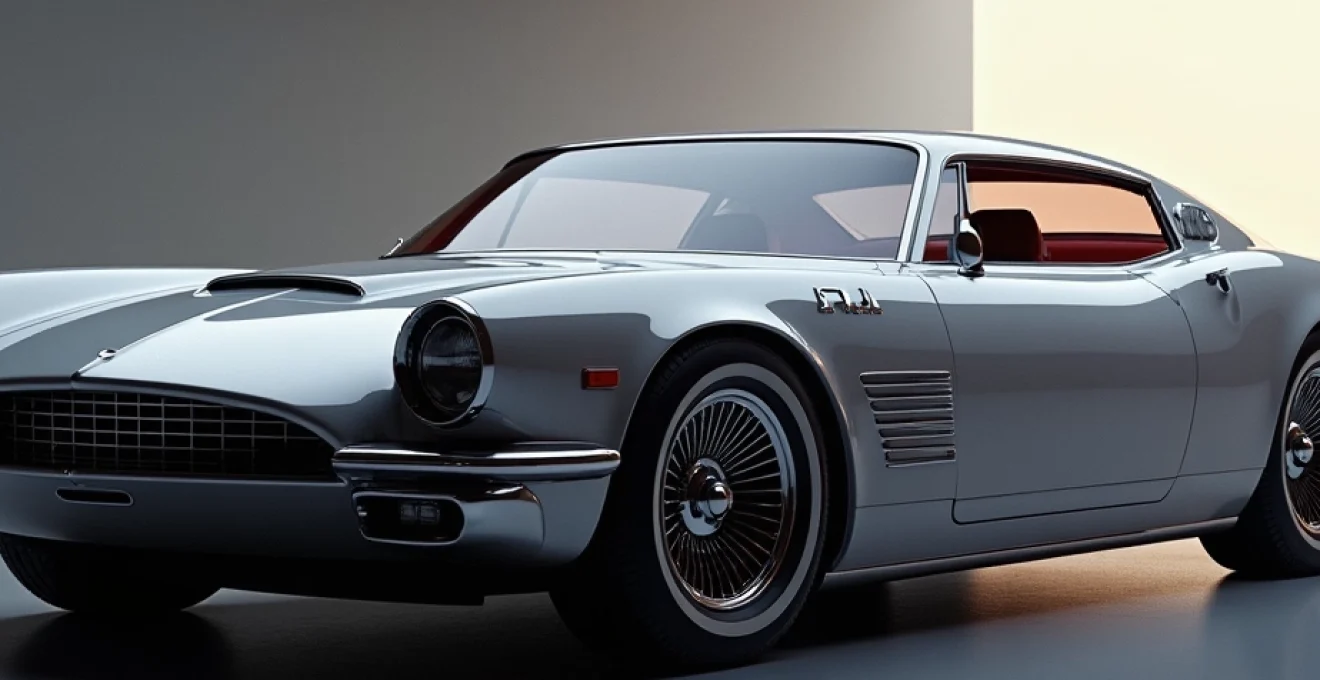
The automotive industry’s design journey spans over a century of remarkable transformation, evolving from the horse-drawn carriage aesthetics of the early 1900s to today’s sophisticated electric vehicles that seamlessly blend cutting-edge technology with environmental consciousness. This evolution reflects not merely changing tastes, but fundamental shifts in manufacturing capabilities, societal values, and technological possibilities that have shaped how we perceive and interact with automobiles. From the handcrafted elegance of pre-war classics to the computer-designed precision of modern vehicles, automotive design has consistently pushed boundaries while responding to economic pressures, environmental concerns, and consumer expectations.
Pre-war automotive design foundations: art deco influence and streamline moderne aesthetics
The pre-war era established foundational design principles that continue to influence automotive aesthetics today. During the 1920s and 1930s, automotive designers drew heavily from the Art Deco movement, incorporating geometric patterns , luxurious materials, and bold decorative elements that transformed vehicles from mere transportation into symbols of sophistication. This period marked the transition from purely functional designs to vehicles that expressed cultural aspirations and technological optimism.
Streamline Moderne aesthetics emerged as engineers and designers began to understand the relationship between form and aerodynamic efficiency. The philosophy emphasised clean lines, smooth surfaces, and the elimination of unnecessary ornamentation that could impede airflow. This approach represented a significant departure from earlier automotive designs that often featured elaborate external components and exposed mechanical elements.
Chrysler airflow aerodynamic engineering and wind tunnel development
The 1934 Chrysler Airflow revolutionised automotive design by becoming one of the first production vehicles developed using systematic wind tunnel testing. Chrysler invested heavily in aerodynamic research, constructing dedicated facilities to study airflow patterns around vehicle bodies. The Airflow’s distinctive teardrop silhouette achieved a drag coefficient significantly lower than contemporary vehicles, demonstrating the practical benefits of scientifically-informed design .
Despite its technical innovations, the Airflow faced market resistance due to its radical departure from established automotive aesthetics. The vehicle’s advanced unibody construction and integrated design elements, including headlights flush with the body panels and a streamlined grille, challenged consumer expectations about what automobiles should look like. This experience taught the industry valuable lessons about balancing innovation with market acceptance.
Bugatti type 57 atlantic coachbuilding techniques and riveted bodywork
The Bugatti Type 57 Atlantic represented the pinnacle of pre-war coachbuilding artistry, featuring hand-formed aluminium bodywork that showcased both technical mastery and aesthetic refinement. Jean Bugatti’s design incorporated a distinctive dorsal seam running the length of the vehicle, necessitated by the inability to weld electron metal panels of the era. This engineering constraint became a defining visual element that enhanced the car’s dramatic proportions.
The Atlantic’s construction process required hundreds of hours of skilled craftsmanship, with each panel carefully shaped over wooden forms and fitted to achieve perfect alignment. The riveted construction technique, while labour-intensive, created a distinctive visual texture that became synonymous with high-end automotive construction. Only four examples were ever produced, making it one of the rarest and most valuable automobiles in history.
Cord 810/812 wraparound grille integration and hidden headlamp mechanisms
The Cord 810/812 series introduced several design innovations that would influence automotive styling for decades. The vehicle’s wraparound grille created a unified front-end appearance that eliminated the traditional separation between radiator and surrounding bodywork. This integration required careful consideration of cooling airflow while maintaining aesthetic coherence.
The Cord’s hidden headlamp mechanisms represented a significant engineering achievement, using hand-cranked systems to retract the lights into the front fenders when not in use. This feature enhanced the vehicle’s streamlined appearance while presenting complex manufacturing challenges. The innovative approach to headlight integration prefigured modern pop-up headlight systems that would become popular in sports cars decades later.
Harley earl’s clay modelling revolution at general motors
Harley Earl’s introduction of full-scale clay modelling at General Motors fundamentally changed how automotive designers developed new vehicles. Prior to Earl’s innovations, designers relied primarily on two-dimensional drawings and small-scale models, making it difficult to evaluate proportions and surface relationships accurately. Clay modelling enabled designers to work three-dimensionally, refining shapes and details through direct manipulation.
Earl’s design philosophy emphasised emotional appeal alongside functional requirements, recognising that consumers form strong psychological connections with their vehicles. His teams developed sophisticated techniques for creating smooth surface transitions and dynamic character lines that would become hallmarks of American automotive design. The clay modelling process also facilitated collaboration between designers and engineers, enabling rapid iteration and refinement of design concepts.
Post-war design revolution: tailfins, chrome, and american automotive excess
The post-war period witnessed an explosion of automotive creativity as manufacturers responded to pent-up consumer demand and unprecedented economic prosperity. American designers, liberated from wartime material restrictions, embraced flamboyant styling elements that reflected the era’s technological optimism and cultural exuberance. The period from 1945 to 1965 produced some of the most distinctive and recognisable automotive designs in history, characterised by bold proportions, extensive chrome ornamentation, and space-age inspiration.
This design revolution coincided with significant advances in manufacturing technology, enabling the production of complex curved surfaces and intricate details that had previously been impossible or prohibitively expensive. The development of new synthetic materials, improved electroplating processes, and sophisticated press-forming techniques allowed designers unprecedented freedom in creating visually striking vehicles that captured the public imagination.
Cadillac eldorado tailfin evolution and jet age design language
The Cadillac Eldorado’s tailfin evolution exemplified how automotive designers translated aerospace aesthetics into production vehicles. Beginning with subtle fin-like extensions in the early 1950s, Cadillac progressively enlarged and refined these elements until they became dominant visual features by the late 1950s. The fins served both aesthetic and practical purposes, improving high-speed stability while creating a distinctive brand identity.
The development of Cadillac’s jet-age design language involved careful study of contemporary aircraft, particularly military jets that captured public fascination during the Cold War era. Designers incorporated elements such as missile-inspired taillights, aircraft-style instrumentation, and cockpit-inspired interior layouts. This forward-looking aesthetic positioned Cadillac as a technologically advanced brand that appealed to consumers’ aspirations for modernity and progress.
Raymond loewy’s studebaker starlight coupe wraparound glass innovation
Raymond Loewy’s design for the Studebaker Starlight Coupe introduced wraparound rear glass that fundamentally altered automotive interior space perception. The curved rear window created an unprecedented sense of openness and visibility, challenging traditional notions of automotive architecture. This innovation required significant advances in glass manufacturing technology and structural engineering to maintain safety standards while achieving the desired aesthetic effect.
The Starlight Coupe’s design philosophy emphasised the integration of exterior and interior spaces, creating a seamless visual flow that enhanced the driving experience. Loewy’s team carefully considered how natural light would interact with interior surfaces, selecting materials and colours that complemented the enhanced visibility. The wraparound glass concept influenced numerous subsequent designs and demonstrated how thoughtful innovation could differentiate products in an increasingly competitive market.
Ford thunderbird personal luxury vehicle segment creation
The original Ford Thunderbird established an entirely new automotive category by combining sports car performance with luxury car comfort and convenience. Ford’s designers recognised an opportunity to serve customers who desired exciting styling and responsive handling without the compromises associated with traditional sports cars. The Thunderbird’s design balanced aggressive proportions with refined details, creating broad market appeal.
The vehicle’s success demonstrated the importance of market segmentation in automotive design, showing how carefully targeted products could create new consumer categories. The Thunderbird’s influence extended far beyond Ford, inspiring competitors to develop their own personal luxury vehicles and establishing design principles that continue to influence modern automotive marketing and product development strategies.
Virgil exner’s forward look philosophy and chrysler corporation styling
Virgil Exner’s Forward Look philosophy revolutionised Chrysler Corporation’s design approach by emphasising dynamic proportions and futuristic styling elements. Exner believed that automobiles should express motion even when stationary, leading to designs characterised by dramatic fin treatments, bold chrome accents, and aggressive stance geometry. His philosophy influenced an entire generation of American automotive designers and established Chrysler as a styling leader during the late 1950s.
The Forward Look approach required close collaboration between styling and engineering teams to ensure that dramatic designs remained structurally sound and manufacturable. Exner’s designs pushed the boundaries of contemporary production capabilities, often requiring innovative solutions to achieve desired aesthetic effects. This ambitious design philosophy demonstrated how strong creative vision could differentiate automotive brands in an increasingly crowded marketplace.
European minimalism meets functionality: bauhaus principles in automotive design
European automotive design philosophy during the post-war period diverged significantly from American approaches, embracing principles derived from the Bauhaus movement that prioritised functional clarity and material honesty over decorative excess. European manufacturers, constrained by different economic conditions and cultural values, developed design languages that emphasised efficiency, practicality, and understated elegance. This approach produced vehicles that achieved aesthetic sophistication through careful proportion and refined detailing rather than bold styling elements.
The Bauhaus influence manifested in several key design principles that became hallmarks of European automotive design. These included the elimination of superfluous ornamentation, the honest expression of structural elements, and the integration of form and function in ways that enhanced rather than compromised practical performance. European designers demonstrated that restrained elegance could be just as compelling as flamboyant styling when executed with sufficient skill and attention to detail.
Volkswagen’s Beetle exemplified this philosophy through its honest expression of engineering constraints and functional requirements. The vehicle’s distinctive shape resulted directly from its rear-engine layout and air-cooling requirements, yet achieved iconic status through the skillful resolution of practical considerations. Similarly, Citroën’s DS series demonstrated how advanced engineering solutions could create entirely new aesthetic possibilities when designers embraced rather than disguised technical innovation.
The influence of European minimalism extended beyond styling to encompass approaches to interior design, materials selection, and manufacturing processes. European manufacturers developed sophisticated techniques for creating premium experiences through careful attention to detail rather than obvious luxury elements. This approach proved particularly influential in the development of modern automotive design philosophy, demonstrating that consumer appeal could result from thoughtful design execution rather than superficial styling flourishes.
Japanese manufacturing precision: kaizen philosophy and geometric design language
Japanese automotive design emerged as a distinct force during the 1970s and 1980s, bringing manufacturing precision and continuous improvement philosophies that fundamentally altered global automotive standards. The kaizen approach to design emphasised iterative refinement, rigorous quality control, and systematic elimination of inefficiency in both products and processes. This philosophy produced vehicles that achieved excellence through accumulated marginal improvements rather than revolutionary changes.
Japanese manufacturers developed distinctive geometric design languages that reflected their cultural values and manufacturing capabilities. These designs typically featured clean lines, precise surface relationships, and carefully considered proportions that avoided unnecessary complexity. The disciplined approach to design resulted in vehicles that aged gracefully and maintained visual coherence across entire product ranges, establishing strong brand identities through consistent application of design principles.
Toyota’s development of the Lexus brand exemplified how Japanese manufacturers could apply their precision-focused approach to luxury vehicle design. The original LS400 achieved remarkable refinement through exhaustive attention to detail, sophisticated noise dampening, and precise manufacturing tolerances that surpassed established luxury brands. This success demonstrated that design excellence could result from systematic application of engineering discipline rather than traditional luxury design approaches.
The Japanese emphasis on geometric precision influenced global automotive design standards, particularly in areas such as panel fit accuracy, interior ergonomics, and long-term durability. Manufacturers worldwide adopted Japanese quality control methods and design validation processes, recognising that consumer satisfaction increasingly depended on consistent execution rather than striking initial impressions. This shift toward precision-focused design continues to influence contemporary automotive development practices across all market segments.
Computer-aided design integration: digital modelling and parametric surface development
The introduction of computer-aided design systems during the 1980s and 1990s revolutionised automotive development processes, enabling unprecedented precision in surface definition and geometric relationships. Early CAD systems required significant investment in both hardware and training, but offered capabilities that were impossible to achieve through traditional clay modelling and manual drafting methods. The transition to digital design tools fundamentally changed how automotive designers conceptualised and developed new vehicles.
Digital modelling enabled designers to explore complex surface relationships and mathematical curves that would have been prohibitively difficult to achieve manually. The ability to precisely define and modify three-dimensional surfaces accelerated the design iteration process while ensuring geometric accuracy throughout development. This technological advancement also facilitated improved communication between design and engineering teams, as digital models could be shared and modified collaboratively across different disciplines and geographic locations.
CATIA software implementation in automotive surface modelling
CATIA (Computer Aided Three-dimensional Interactive Application) became the industry standard for automotive surface modelling due to its sophisticated capabilities for creating complex curved surfaces and managing large assemblies. Originally developed for aerospace applications, CATIA provided automotive designers with tools capable of handling the mathematical complexity required for modern vehicle development. The software’s parametric modelling capabilities enabled designers to create surfaces that could be easily modified while maintaining geometric relationships with adjacent elements.
The implementation of CATIA required significant changes to traditional design workflows, as designers had to learn new ways of conceptualising and manipulating three-dimensional forms. The software’s mathematical foundation enabled precise control over surface continuity and curvature distribution, resulting in higher quality final products and reduced development time. Major manufacturers invested heavily in CATIA training and infrastructure, recognising that competitive advantage increasingly depended on sophisticated design tools.
Rapid prototyping through 3D printing and CNC machining validation
Rapid prototyping technologies transformed automotive design validation by enabling quick production of physical models directly from digital data. 3D printing and CNC machining allowed designers to evaluate aesthetic and functional characteristics of new concepts without the time and expense associated with traditional tooling methods. This capability accelerated design iteration cycles and enabled more thorough exploration of alternative concepts during development.
The integration of rapid prototyping into design workflows required new approaches to model preparation and validation testing. Designers had to consider the capabilities and limitations of different manufacturing processes when creating prototypes, ensuring that physical models accurately represented intended production characteristics. The technology also enabled the creation of functional prototypes for testing specific design features, providing valuable feedback during early development phases.
Virtual reality design reviews and immersive stakeholder collaboration
Virtual reality systems enabled automotive designers to evaluate full-scale vehicle designs in immersive environments without physical prototypes. VR design reviews allowed stakeholders to experience proportions, sightlines, and interior ergonomics with remarkable accuracy, facilitating better decision-making during development. The technology proved particularly valuable for evaluating interior designs, where spatial relationships and user interactions are critical to success.
The implementation of VR design reviews required careful consideration of display technology, interaction methods, and review protocols to ensure productive collaboration sessions. Designers developed new techniques for presenting and manipulating virtual models, enabling stakeholders to evaluate designs from multiple perspectives and make informed decisions about design directions. This immersive approach to design validation reduced the number of physical prototypes required and improved communication between design teams and management.
Computational fluid dynamics impact on aerodynamic efficiency optimisation
Computational Fluid Dynamics (CFD) analysis revolutionised automotive aerodynamic development by enabling detailed study of airflow patterns around vehicle bodies without expensive wind tunnel testing. CFD simulation provided designers with immediate feedback on the aerodynamic consequences of design changes, facilitating rapid optimisation of vehicle shapes for efficiency and performance. The technology enabled exploration of design alternatives that would have been prohibitively expensive to evaluate using traditional methods.
The integration of CFD into design workflows required new collaboration methods between aerodynamicists and stylists, as aerodynamic optimisation often conflicted with aesthetic objectives. Successful projects required careful balance between performance requirements and visual appeal, with designers learning to incorporate aerodynamic considerations into their creative process. Modern automotive development increasingly relies on CFD analysis to achieve fuel efficiency targets while maintaining attractive styling.
Sustainable design paradigms: lifecycle assessment and material innovation
Contemporary automotive design increasingly emphasises environmental responsibility through comprehensive lifecycle assessment and innovative material selection strategies. The shift toward sustainability requires fundamental reconsideration of traditional automotive design and manufacturing practices, as designers must now account for environmental impact throughout the entire product lifecycle. This approach encompasses material sourcing, manufacturing processes, vehicle operation, and end-of-life disposal or recycling considerations.
Lifecycle assessment methodologies enable designers to
quantify the environmental impact of design decisions with unprecedented accuracy. These tools consider factors such as raw material extraction, energy consumption during manufacturing, operational efficiency, and recyclability potential at the vehicle’s end of life. Modern automotive designers must balance aesthetic objectives with measurable environmental performance metrics, creating vehicles that satisfy consumer expectations while minimising ecological footprint.The integration of sustainable design paradigms requires collaboration between multiple disciplines, including materials scientists, environmental engineers, and traditional automotive designers. This collaborative approach has led to breakthrough innovations in lightweight materials, renewable energy integration, and closed-loop manufacturing processes. The holistic sustainability approach represents a fundamental shift from the previous century’s focus on performance and style to a more comprehensive consideration of environmental stewardship and social responsibility.
BMW i3 carbon fibre reinforced plastic body construction
The BMW i3 revolutionised automotive construction through its pioneering use of carbon fibre reinforced plastic (CFRP) for the entire passenger cell structure. This innovative approach eliminated traditional steel construction in favour of lightweight materials that reduced vehicle weight by approximately 50% compared to conventional designs. The CFRP body construction required entirely new manufacturing processes and supply chain relationships, demonstrating the automotive industry’s commitment to sustainable innovation.
BMW’s development of the i3 involved creating a completely new production facility powered entirely by renewable energy sources, showcasing how sustainable design principles could extend to manufacturing processes. The carbon fibre components were produced using hydroelectric power, while the vehicle assembly facility utilised wind and solar energy. This comprehensive approach to sustainability encompassed every aspect of the vehicle’s creation, from material sourcing through final assembly. The i3’s modular construction also enabled efficient recycling at the end of its operational life, with CFRP components designed for reprocessing into new automotive applications.
Tesla model S minimalist interface design and over-the-air update architecture
Tesla’s Model S introduced a revolutionary approach to automotive interface design through its 17-inch touchscreen display that consolidated traditional automotive controls into a single digital interface. This minimalist design philosophy eliminated hundreds of physical buttons, switches, and gauges, reducing manufacturing complexity while enabling unprecedented customisation and functionality. The touchscreen interface demonstrated how digital technology could simplify vehicle interaction while providing enhanced capabilities.
The over-the-air update architecture fundamentally changed how consumers interact with their vehicles, enabling continuous improvement and feature additions throughout the ownership experience. Tesla’s approach treated the vehicle as a software platform rather than a static product, allowing for performance enhancements, new features, and bug fixes to be delivered remotely. This software-centric design philosophy influenced the entire automotive industry, demonstrating how connectivity could extend product lifecycles and enhance customer satisfaction. The system also enabled Tesla to gather unprecedented amounts of usage data, informing future design decisions and product development strategies.
Cradle-to-cradle design philosophy in automotive material selection
The cradle-to-cradle design philosophy emphasises the creation of products whose materials can be continuously recycled without degradation, eliminating the concept of waste in automotive manufacturing. This approach requires careful selection of materials that can be safely returned to biological or technical cycles at the end of their useful life. Automotive designers implementing cradle-to-cradle principles must consider the entire material lifecycle, ensuring that every component contributes to a regenerative system rather than a linear consumption model.
Implementation of cradle-to-cradle principles in automotive design requires extensive collaboration with suppliers to develop new material formulations and manufacturing processes. Manufacturers have invested heavily in research to identify bio-based materials that can replace traditional petroleum-derived components without compromising performance or safety. This approach has led to innovations such as natural fibre composites, bio-based plastics, and renewable interior materials that maintain high quality standards while supporting environmental objectives. The philosophy also influences design for disassembly, ensuring that vehicles can be efficiently separated into constituent materials for recycling or reuse.
Recyclable thermoplastic composite integration in modern vehicle structures
Recyclable thermoplastic composites represent a significant advancement in sustainable automotive construction, offering the strength and lightweight benefits of traditional composites while enabling complete recycling at the end of the vehicle’s life. Unlike thermoset composites that undergo irreversible chemical changes during manufacturing, thermoplastic composites can be repeatedly melted and reformed without degradation of their fundamental properties. This characteristic makes them ideal for automotive applications where environmental responsibility is increasingly important.
The integration of thermoplastic composites requires new approaches to automotive design and manufacturing, as these materials behave differently from traditional steel and aluminum components. Designers must consider factors such as thermal expansion, joining methods, and repair procedures when incorporating thermoplastic composites into vehicle structures. Modern automotive manufacturers have developed sophisticated welding and bonding techniques specifically for thermoplastic materials, enabling the creation of strong, lightweight structures that can be efficiently recycled. The technology has proven particularly valuable in electric vehicle applications, where weight reduction directly improves range and performance while supporting sustainability objectives through complete material recyclability.