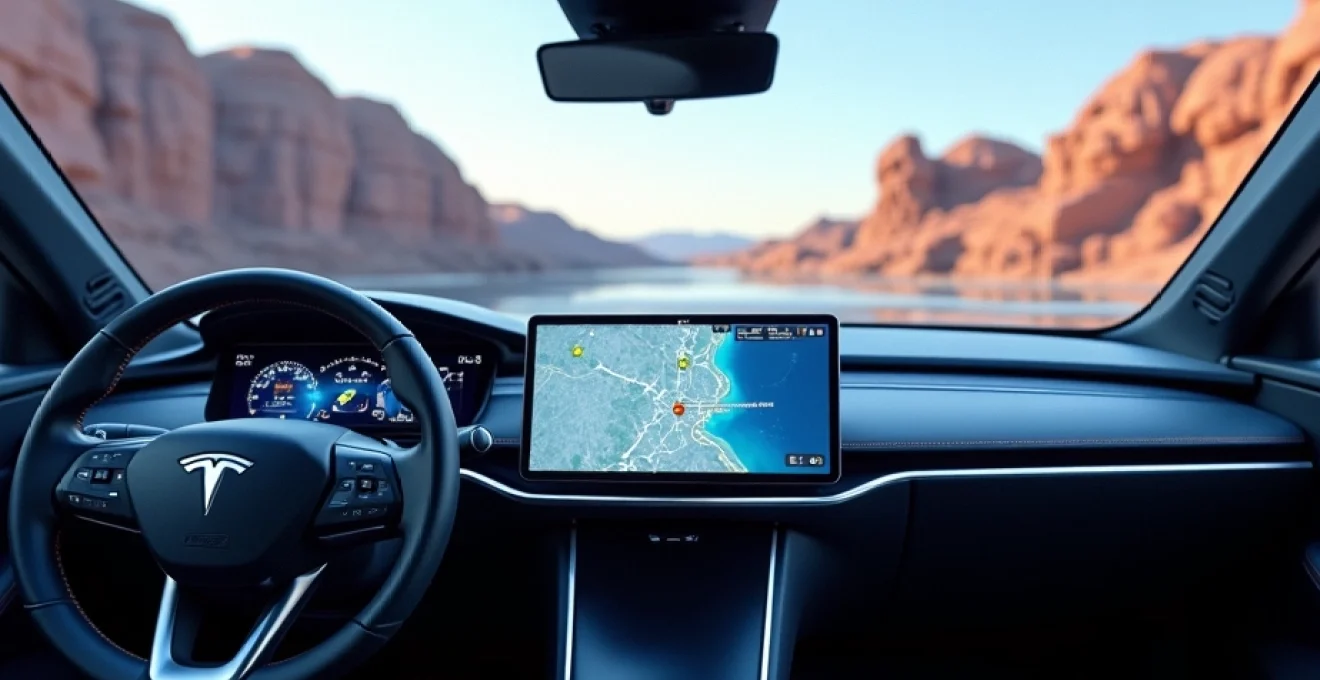
The automotive industry stands at the precipice of a revolutionary transformation in entertainment technology. Modern vehicles have evolved far beyond simple transportation, becoming sophisticated mobile entertainment hubs that rival premium home theatre systems. This evolution represents a convergence of cutting-edge display technologies, artificial intelligence, spatial audio engineering, and high-speed connectivity solutions that promise to redefine the passenger experience entirely.
Today’s automotive entertainment systems generate billions in revenue annually, with the market projected to reach $21.5 billion by 2026. This explosive growth reflects not only consumer demand for seamless digital experiences but also the automotive industry’s recognition that entertainment technology has become a crucial differentiator in vehicle purchasing decisions. The transformation from basic radio systems to immersive digital ecosystems represents one of the most significant technological leaps in automotive history.
Immersive display technologies transforming vehicle cockpits
Revolutionary display technologies are fundamentally reshaping how passengers interact with vehicle entertainment systems. Modern automotive cockpits now feature expansive digital canvases that seamlessly blend entertainment, navigation, and vehicle control functions into intuitive interfaces. These advanced display systems utilise cutting-edge materials and manufacturing processes to deliver unprecedented visual clarity and responsiveness in challenging automotive environments.
The integration of flexible display substrates enables manufacturers to create curved, wraparound screens that follow the natural contours of vehicle interiors. This design approach maximises screen real estate whilst maintaining ergonomic accessibility for both drivers and passengers. Advanced display controllers now support multiple simultaneous content streams, allowing different zones within the vehicle to display personalised entertainment options without interference.
OLED and MicroLED integration in tesla model S plaid dashboard systems
Tesla’s Model S Plaid demonstrates the pinnacle of OLED integration in automotive applications, featuring a 17-inch touchscreen that delivers exceptional contrast ratios and colour accuracy. The OLED technology provides perfect black levels and instantaneous pixel response times, essential for high-refresh-rate gaming and video content. This implementation showcases how premium display technologies can enhance both entertainment value and user interface functionality simultaneously.
Augmented reality Head-Up displays in Mercedes-Benz EQS architecture
Mercedes-Benz’s EQS incorporates sophisticated augmented reality head-up display technology that overlays entertainment and navigation information directly onto the windshield. This system utilises advanced optical engines and precision tracking algorithms to maintain perfect image registration regardless of driving conditions. The AR display creates an immersive entertainment layer that complements rather than distracts from essential driving information, representing a breakthrough in contextual content delivery.
Curved AMOLED screens and samsung’s automotive display partnership
Samsung’s automotive AMOLED technology enables the creation of dramatically curved displays that wrap around dashboard surfaces, providing panoramic entertainment experiences. These flexible displays maintain consistent brightness and colour performance across their entire surface area, ensuring optimal viewing angles for all passengers. The curved design philosophy maximises immersion whilst reducing the physical footprint required for large-format entertainment displays.
Holographic projection technology in BMW inext concept vehicles
BMW’s iNext concept vehicles incorporate experimental holographic projection systems that create three-dimensional entertainment content floating within the cabin space. This technology utilises advanced laser projection and optical manipulation to generate volumetric displays visible from multiple angles without special glasses. The holographic approach represents the next frontier in spatial entertainment, transforming the entire vehicle interior into an interactive display environment.
5G connectivity and edge computing infrastructure for Real-Time entertainment
The deployment of 5G cellular networks creates unprecedented opportunities for real-time entertainment delivery in mobile environments. Ultra-low latency connectivity enables cloud-based gaming, live streaming, and interactive applications that were previously impossible due to bandwidth limitations. Modern vehicles equipped with 5G modems can access gigabit-class data speeds, supporting multiple simultaneous high-definition video streams and computationally intensive entertainment applications.
Edge computing infrastructure complements 5G connectivity by processing entertainment content closer to vehicles, reducing latency and improving responsiveness. This distributed approach enables real-time personalisation algorithms and adaptive streaming technologies that optimise content delivery based on current network conditions and passenger preferences. The combination of 5G and edge computing creates a foundation for entirely new categories of location-aware and context-sensitive entertainment experiences.
Qualcomm snapdragon automotive platforms and Ultra-Low latency streaming
Qualcomm’s Snapdragon Automotive platforms integrate dedicated 5G modems with powerful graphics processing units optimised for streaming applications. These systems achieve sub-20 millisecond latency for cloud gaming applications, enabling console-quality gaming experiences within vehicles. The integrated approach reduces power consumption whilst maximising performance, essential considerations for battery-powered electric vehicles where entertainment systems must operate efficiently.
Vehicle-to-cloud integration with amazon web services automotive solutions
Amazon Web Services provides comprehensive cloud infrastructure specifically designed for automotive entertainment applications. The AWS automotive platform enables real-time content synchronisation, personalised recommendation engines, and seamless device handoff between vehicles and other connected devices. This integration ensures that entertainment preferences and viewing history remain consistent across all platforms, creating truly unified entertainment ecosystems.
Edge AI processing units for localised content delivery
Dedicated edge AI processing units within vehicles enable sophisticated content analysis and recommendation algorithms that operate independently of cloud connectivity. These systems learn passenger preferences and viewing patterns, providing intelligent content suggestions even in areas with limited network coverage. The local processing approach ensures privacy protection whilst maintaining responsive entertainment experiences regardless of connectivity conditions.
Starlink satellite connectivity integration in tesla vehicles
Tesla’s integration of Starlink satellite connectivity provides global high-speed internet access, enabling consistent entertainment experiences regardless of geographical location. The satellite-based approach eliminates dead zones common with terrestrial cellular networks, particularly important for long-distance travel and rural areas. This technology ensures that passengers can access streaming services and online gaming platforms with minimal interruption during extended journeys.
Artificial Intelligence-Driven personalisation algorithms
Artificial intelligence transforms automotive entertainment from passive consumption to intelligent, personalised experiences that adapt to individual preferences and contextual factors. Machine learning algorithms analyse passenger behaviour patterns, journey characteristics, and environmental conditions to curate optimal entertainment selections automatically. These sophisticated systems consider factors such as time of day, destination type, passenger age profiles, and historical content preferences to generate highly targeted recommendations.
Advanced AI systems also optimise content delivery based on predicted network conditions and journey duration. For instance, generative AI algorithms can dynamically adjust podcast lengths to match remaining travel time, ensuring seamless content consumption without abrupt interruptions. This predictive approach extends to pre-loading anticipated content during periods of strong connectivity, maintaining entertainment availability even when entering areas with poor network coverage.
The integration of voice cloning and natural language generation enables AI systems to create personalised audio content on-demand. These technologies can generate custom news summaries, educational content, or entertainment programming tailored to specific passenger interests and comprehension levels.
AI-driven personalisation represents a fundamental shift from one-size-fits-all entertainment to individually optimised experiences that evolve continuously based on user feedback and behaviour analysis.
Emotional recognition algorithms utilise facial analysis, voice pattern recognition, and physiological sensors to assess passenger mood and energy levels, automatically adjusting entertainment selections accordingly. These systems can detect stress, fatigue, or excitement levels, modifying content tone, volume, and pacing to enhance passenger comfort and engagement. The sophisticated understanding of passenger emotional states enables truly empathetic entertainment systems that respond appropriately to human needs.
Spatial audio technologies and acoustic engineering advances
Revolutionary spatial audio technologies create immersive soundscapes that transform vehicle cabins into premium acoustic environments. Advanced digital signal processing algorithms manipulate audio signals to create precise three-dimensional sound placement, enabling passengers to experience cinematic audio quality regardless of seating position. These systems utilise sophisticated speaker arrays and acoustic modelling to generate virtual sound sources that appear to originate from specific locations within and around the vehicle.
Modern automotive audio systems incorporate multiple processing zones that enable individualised audio experiences for each passenger. This technology allows different occupants to enjoy distinct audio content without interference, using advanced acoustic focusing techniques and selective noise cancellation. The precision of modern acoustic engineering enables whisper-quiet audio delivery to specific seating positions whilst maintaining crystal-clear sound quality for intended listeners.
Dolby atmos implementation in volvo XC90 premium sound systems
Volvo’s XC90 incorporates a comprehensive Dolby Atmos audio system featuring strategically positioned speakers throughout the cabin, including overhead drivers for authentic three-dimensional sound reproduction. This implementation creates convincing height channels that enable sound effects to move seamlessly above and around passengers, providing cinema-quality audio experiences during movie playback. The system’s sophisticated calibration algorithms automatically adjust audio characteristics based on passenger seating configurations and cabin acoustics.
Bang & olufsen 3D sound mapping technology
Bang & Olufsen’s automotive audio systems utilise advanced acoustic mapping to create precise three-dimensional soundstages tailored to each vehicle’s unique interior geometry. The technology employs sophisticated room correction algorithms that compensate for acoustic anomalies caused by interior materials, seating configurations, and architectural features. This approach ensures consistent audio quality regardless of seating position whilst maintaining the emotional impact of high-fidelity music reproduction.
Adaptive noise cancellation using harman kardon HALOsonic systems
Harman Kardon’s HALOsonic technology represents a breakthrough in adaptive noise cancellation, utilising microphone arrays and predictive algorithms to eliminate unwanted environmental noise whilst preserving desired audio content. The system continuously monitors cabin acoustics and road noise patterns, generating precisely calibrated anti-phase signals that cancel specific frequency ranges. This technology enables clear audio reproduction even at highway speeds without requiring excessive volume levels that could cause listening fatigue.
Binaural audio processing for individual passenger zones
Advanced binaural audio processing creates personalised listening environments for individual passengers using psychoacoustic principles and precise speaker positioning. This technology generates convincing stereo imaging using only two speakers per passenger zone, reducing system complexity whilst maintaining high-quality audio reproduction. The binaural approach enables private audio experiences without traditional headphones, particularly valuable for passengers who prefer ambient awareness during travel.
Voice recognition and natural language processing integration
Sophisticated voice recognition systems enable intuitive, conversational interaction with automotive entertainment platforms, eliminating the need for complex menu navigation whilst driving. Modern natural language processing algorithms understand context, intent, and conversational nuance, allowing passengers to make complex entertainment requests using natural speech patterns. These systems support multiple languages and regional dialects, ensuring accessibility for diverse user populations whilst maintaining high accuracy rates even in challenging acoustic environments.
The integration of large language models enables entertainment systems to engage in contextual conversations about content, providing detailed information, reviews, and recommendations through natural dialogue. Advanced voice interfaces can understand implicit requests, such as “play something relaxing” or “find a comedy for the kids,” translating vague preferences into specific content selections. This conversational approach reduces cognitive load for drivers whilst providing passengers with intuitive access to vast entertainment libraries.
Voice-controlled entertainment systems incorporate sophisticated noise suppression and echo cancellation technologies that maintain recognition accuracy even in challenging automotive environments. These systems utilise beamforming microphone arrays and adaptive filtering algorithms to isolate voice commands from road noise, music playback, and multiple simultaneous speakers.
The reliability of voice recognition in automotive applications has reached the point where spoken commands often prove more efficient and safer than traditional touch interfaces, particularly for drivers who must maintain visual attention on the road.
Emotional recognition capabilities enable voice interfaces to detect passenger mood and stress levels through speech pattern analysis, automatically adjusting system responses and content recommendations accordingly. These systems can identify frustration, excitement, fatigue, or relaxation in vocal characteristics, modifying interaction style and entertainment selections to match emotional states. The empathetic response capability creates more human-like interactions that enhance passenger comfort and system acceptance.
Extended reality platforms and metaverse integration
Extended reality technologies encompass virtual reality, augmented reality, and mixed reality applications that create immersive entertainment experiences within vehicle environments. Modern XR platforms utilise powerful graphics processing units and low-latency display systems to generate convincing virtual environments that respond to vehicle motion and passenger movement. These technologies enable entirely new categories of location-based entertainment that incorporate real-world geographical features and landmarks into virtual experiences.
The integration of metaverse platforms allows passengers to participate in shared virtual experiences with other vehicle occupants or remote participants, creating social entertainment opportunities during travel. Advanced XR systems synchronise virtual environments with vehicle motion, preventing motion sickness whilst maintaining immersion through sophisticated motion compensation algorithms. The convergence of XR and automotive technology promises to transform long-distance travel into engaging, productive, and entertaining experiences that rival traditional entertainment venues.
Mixed reality applications overlay digital entertainment content onto real-world environments visible through vehicle windows, creating contextual experiences that respond to geographical location and travel route. These systems utilise GPS data, mapping information, and computer vision algorithms to identify real-world landmarks and overlay relevant entertainment content, historical information, or interactive experiences. The location-aware approach transforms routine journeys into educational and entertaining adventures that enhance passenger engagement with their surroundings.
Virtual reality gaming platforms optimised for automotive environments provide console-quality gaming experiences that adapt to vehicle motion and space constraints. These systems utilise predictive motion compensation and adaptive frame rate algorithms to maintain visual stability during acceleration, braking, and cornering manoeuvres. The gaming platforms support both single-player experiences and multiplayer interactions with other vehicle occupants, creating shared entertainment opportunities that strengthen social connections during travel. Advanced XR entertainment systems represent the ultimate evolution of mobile entertainment, transforming vehicles into versatile platforms for education, gaming, social interaction, and immersive storytelling that rival dedicated entertainment venues.