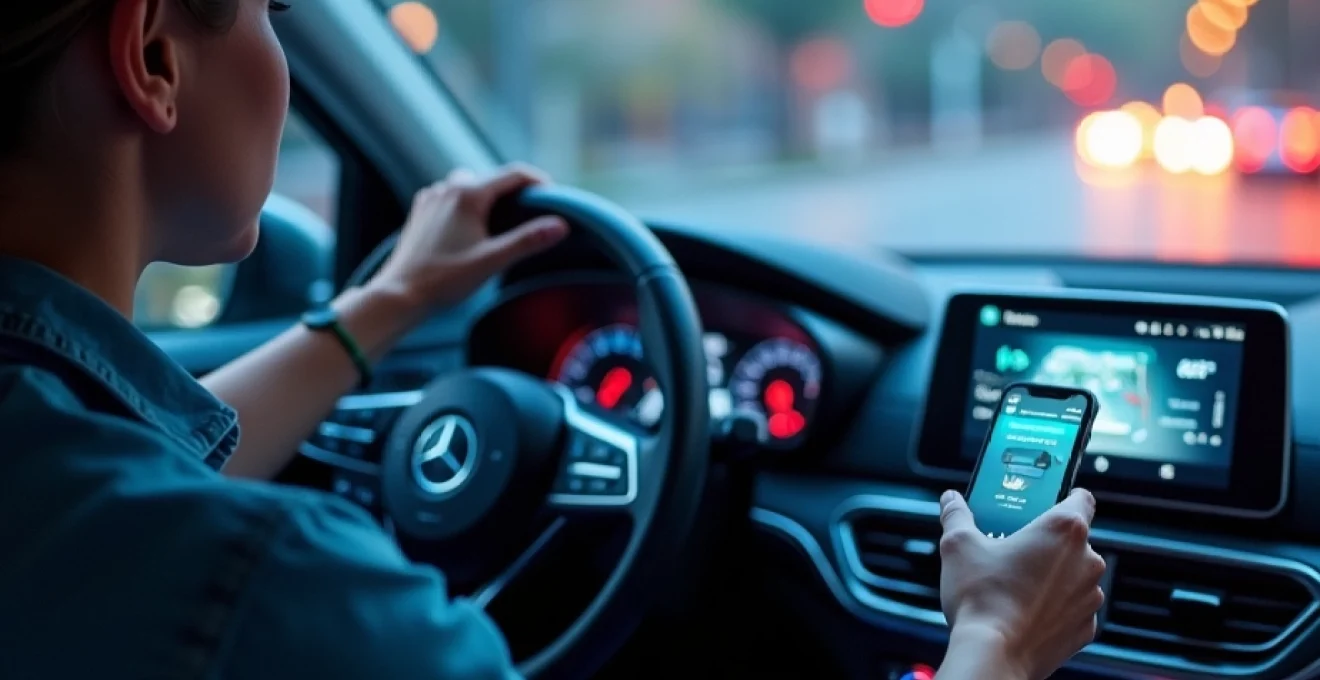
The automotive industry stands at the precipice of a revolutionary transformation, where voice assistants are evolving from simple convenience features into sophisticated command centres that redefine how drivers interact with their vehicles. Modern in-car voice technology represents a paradigm shift from basic audio commands to intelligent, conversational interfaces capable of understanding context, emotion, and complex multi-step requests. This evolution reflects broader technological advancement in artificial intelligence, where large language models and advanced natural language processing have matured to deliver genuinely useful automotive applications.
Today’s vehicles are becoming intelligent companions rather than mere transportation devices, with voice assistants serving as the primary interface between human intent and vehicular capability. The integration of these systems extends far beyond traditional entertainment and navigation, encompassing comprehensive vehicle control, predictive maintenance, personalised recommendations, and seamless connectivity with broader digital ecosystems. As the automotive voice assistant market approaches an estimated value of £5.49 billion by 2029, representing a compound annual growth rate of 13.9%, the technology’s impact on driving experiences becomes increasingly profound and commercially significant.
Current voice assistant technologies in automotive applications
The contemporary automotive landscape features a diverse ecosystem of voice assistant technologies, each offering unique approaches to in-vehicle interaction. Major technology companies and automotive manufacturers have invested heavily in developing sophisticated platforms that address the specific challenges of vehicular environments, including ambient noise, varying acoustic conditions, and the critical need for hands-free operation. These systems must balance functionality with safety, ensuring that voice interactions enhance rather than distract from the primary task of driving.
Amazon alexa auto platform integration and capabilities
Amazon’s Alexa Auto platform represents one of the most comprehensive attempts to bring smart home intelligence into vehicular environments. The system leverages Amazon’s extensive cloud infrastructure and natural language processing capabilities to deliver familiar voice interactions within automotive contexts. Alexa Auto integrates seamlessly with existing Amazon ecosystems, allowing drivers to access their personal preferences, shopping lists, and smart home controls whilst maintaining focus on road safety.
The platform’s automotive-specific features include location-aware services that can automatically adjust responses based on the vehicle’s current position and destination. For instance, the system can proactively suggest nearby petrol stations when fuel levels are low or recommend restaurants along planned routes. Alexa Auto also supports advanced multi-step commands, enabling drivers to say “Navigate to the nearest charging station and notify my family of my arrival time” with the system intelligently parsing and executing both requests simultaneously.
Google assistant driving mode architecture and implementation
Google’s approach to automotive voice assistance focuses heavily on contextual intelligence and seamless integration with Android automotive platforms. The Google Assistant driving mode utilises sophisticated machine learning algorithms to understand driver intent within the specific context of automotive use cases. This system excels at understanding complex queries that combine navigation, communication, and entertainment requests in natural, conversational language.
The architecture employs edge computing capabilities to reduce latency and ensure responsive interactions even in areas with limited connectivity. Google’s extensive mapping data and real-time traffic intelligence enable the assistant to provide highly accurate navigation guidance whilst simultaneously managing other vehicle functions. The system’s ability to learn from driver behaviour patterns allows for increasingly personalised responses and proactive suggestions tailored to individual preferences and routines.
Apple CarPlay siri voice command processing systems
Apple’s Siri integration within CarPlay represents a privacy-focused approach to automotive voice assistance, emphasising on-device processing and minimal data transmission. The system leverages Apple’s neural engine to perform speech recognition and natural language processing locally, reducing dependency on cloud connectivity and enhancing user privacy. Siri’s automotive implementation includes specialised voice models trained specifically for in-vehicle acoustic environments and driving-related vocabulary.
The platform’s strength lies in its seamless integration with iOS devices and Apple’s broader ecosystem of services. Drivers can access their Messages, Calendar, and Apple Music libraries through natural voice commands whilst maintaining hands-free operation. Siri’s contextual awareness extends to understanding driver schedules and preferences, enabling proactive suggestions such as departure reminders based on calendar appointments and typical traffic patterns.
Mercedes-benz MBUX natural language understanding engine
Mercedes-Benz’s MBUX (Mercedes-Benz User Experience) system represents a manufacturer-led approach to voice assistance, combining proprietary natural language processing with deep vehicle integration capabilities. The system’s “Hey Mercedes” activation phrase has become synonymous with luxury automotive voice control, offering conversational interactions that feel natural and intuitive. MBUX demonstrates how automotive manufacturers can develop sophisticated voice interfaces that reflect brand personality whilst delivering advanced functionality.
The platform’s natural language understanding engine processes complex, multi-part requests and maintains conversation context across multiple interactions. MBUX can understand indirect commands such as “I’m cold” and respond appropriately by adjusting climate settings, demonstrating sophisticated intent recognition. The system’s integration with vehicle systems extends to advanced features like predictive maintenance alerts delivered through conversational interfaces and personalised comfort adjustments based on driver preferences and external conditions.
Advanced natural language processing and machine learning integration
The evolution of in-car voice assistants relies heavily on breakthrough advances in natural language processing and machine learning technologies. These foundational technologies enable voice systems to move beyond simple command recognition toward genuine conversational intelligence that can understand context, emotion, and complex intent. Modern automotive voice assistants employ sophisticated neural network architectures that process speech in real-time whilst maintaining the low-latency requirements essential for safe driving experiences.
Contextual awareness through Transformer-Based neural networks
Transformer-based neural networks have revolutionised the capability of automotive voice assistants to understand context and maintain coherent conversations across multiple interactions. These advanced architectures enable systems to remember previous conversations, understand pronouns and references, and maintain awareness of ongoing vehicle states and environmental conditions. The technology allows voice assistants to process complex, multi-layered requests that would have been impossible with earlier rule-based systems.
In practical applications, transformer models enable voice assistants to understand statements like “Take me to the restaurant we visited last month near the shopping centre” by connecting multiple pieces of contextual information including location history, temporal references, and geographical relationships. The attention mechanisms within transformer architectures allow the system to focus on relevant portions of complex requests whilst maintaining awareness of broader conversational context. This capability proves particularly valuable in automotive environments where drivers often speak naturally rather than using precise, structured commands.
Edge computing implementation for Real-Time speech recognition
Edge computing represents a critical technological advancement that enables automotive voice assistants to process speech recognition and natural language understanding locally within the vehicle, reducing latency and improving privacy. Modern vehicles increasingly incorporate dedicated AI processing chips capable of running sophisticated neural networks without requiring constant connectivity to cloud services. This local processing capability ensures responsive voice interactions even in areas with poor cellular coverage or when privacy concerns make cloud processing undesirable.
The implementation of edge computing in automotive voice systems typically involves hybrid architectures that balance local processing capabilities with cloud-based resources for complex queries. Basic commands such as climate control, entertainment selection, and simple navigation requests can be processed entirely on-device, whilst more complex queries requiring real-time data access leverage cloud connectivity when available. This approach ensures consistent functionality whilst optimising response times and data usage. Advanced neural network quantisation techniques enable sophisticated language models to operate efficiently within the power and processing constraints of automotive hardware platforms.
Multimodal fusion technology combining voice and visual input
Contemporary automotive voice assistants increasingly incorporate multimodal fusion technology that combines voice commands with visual information from cameras, gesture recognition systems, and touchscreen interactions. This integration creates more natural and intuitive interaction paradigms where drivers can point at objects whilst speaking, use gestures to supplement voice commands, or seamlessly transition between voice and touch inputs. Multimodal systems prove particularly effective for complex navigation tasks where visual confirmation enhances voice-initiated actions.
The fusion of voice and visual inputs requires sophisticated sensor integration and processing algorithms that can correlate information from multiple input streams in real-time. For example, a driver might say “Navigate to that building” whilst pointing through the windscreen, with the system using computer vision to identify the indicated structure and initiate appropriate navigation. These systems employ sensor fusion algorithms that weight different input modalities based on confidence levels and environmental conditions, ensuring robust operation across varying lighting and acoustic conditions. The technology represents a significant step toward more natural human-machine interaction paradigms that mirror how people naturally communicate through multiple sensory channels.
Personalisation algorithms using driver behaviour analytics
Advanced personalisation algorithms analyse driver behaviour patterns, preferences, and routines to create increasingly tailored voice assistant experiences. These systems process vast amounts of data including preferred routes, frequent destinations, music preferences, climate settings, and communication patterns to build comprehensive driver profiles. Machine learning algorithms identify patterns and preferences that enable proactive suggestions and customised responses that feel genuinely helpful rather than intrusive.
The implementation of driver behaviour analytics involves continuous learning systems that adapt to changing preferences and circumstances. For instance, the system might learn that a particular driver prefers different music genres depending on the time of day, traffic conditions, or passenger presence, automatically adjusting recommendations accordingly. Federated learning approaches enable personalisation whilst maintaining privacy by processing sensitive behavioural data locally rather than transmitting it to external servers. These algorithms become increasingly sophisticated at predicting driver needs, enabling voice assistants to transition from reactive command processors to proactive digital companions that anticipate and address driver requirements before they are explicitly requested.
Vehicle system integration and IoT connectivity frameworks
The transformation of voice assistants from isolated entertainment features to comprehensive vehicle control interfaces requires sophisticated integration with automotive systems and broader Internet of Things ecosystems. Modern vehicles incorporate dozens of interconnected systems ranging from powertrain management to safety systems, each requiring careful integration to enable safe and effective voice control. This integration challenge extends beyond the vehicle itself to encompass smart home systems, mobile devices, and cloud-based services that collectively create seamless digital experiences.
CAN bus protocol integration for Voice-Controlled vehicle functions
Controller Area Network (CAN) bus integration represents the foundation for enabling voice assistants to control core vehicle functions beyond entertainment and navigation systems. The CAN protocol serves as the primary communication backbone in modern vehicles, connecting electronic control units throughout the vehicle architecture. Voice assistant integration with CAN systems requires sophisticated middleware that translates natural language commands into appropriate control signals whilst maintaining safety and security protocols.
Implementation of voice-controlled vehicle functions through CAN integration involves careful consideration of safety-critical systems and fail-safe mechanisms. Voice assistants can control climate systems, lighting, window operations, and seat adjustments through direct CAN communication, but critical safety systems such as braking and steering require additional validation layers. Advanced implementations include semantic validation algorithms that verify voice commands against current vehicle state and operating conditions before executing potentially unsafe operations. For example, the system might prevent voice-activated window opening at highway speeds or refuse climate adjustments that could impair visibility during adverse weather conditions.
5G network infrastructure enabling Cloud-Based voice processing
The deployment of 5G networks creates unprecedented opportunities for cloud-based voice processing in automotive applications, enabling access to powerful AI models and real-time data services that exceed the processing capabilities of in-vehicle hardware. Ultra-low latency 5G connectivity makes cloud-based natural language processing viable for interactive voice applications, whilst high bandwidth capabilities enable rich multimedia responses and real-time streaming of AI-generated content. This connectivity transforms vehicles into mobile computing platforms capable of accessing sophisticated AI services comparable to high-end data centres.
5G infrastructure enables automotive voice assistants to leverage continuously updated language models and access real-time information from diverse sources including traffic management systems, weather services, and business directories. The technology supports dynamic model loading where voice assistants can download specialised language processing models based on current context or user requirements. For instance, approaching an airport might trigger the loading of aviation-specific vocabulary and flight information capabilities, whilst entering a foreign country could activate local language processing and cultural awareness features. Edge computing nodes within 5G networks provide intermediate processing capabilities that balance local responsiveness with cloud-based intelligence, creating hybrid architectures optimised for automotive use cases.
Smart home ecosystem synchronisation via vehicle telematics
Vehicle telematics systems increasingly serve as bridges between automotive voice assistants and smart home ecosystems, creating seamless digital experiences that span multiple environments. This integration enables drivers to control home systems whilst approaching their destination, such as adjusting thermostats, activating security systems, or starting appliances through voice commands issued from the vehicle. The synchronisation extends beyond simple remote control to include intelligent automation based on vehicle location, estimated arrival times, and driver preferences.
Advanced smart home integration leverages predictive algorithms that analyse commuting patterns and vehicle sensor data to automate home systems proactively. For example, the system might automatically adjust home lighting and temperature based on typical arrival times, or activate security cameras when unusual travel patterns are detected. Geofencing technologies create location-based triggers that enable contextual voice commands such as “I’m almost home” which can simultaneously disarm security systems, adjust climate controls, and prepare personalised entertainment preferences. These integrations require robust security protocols to protect against unauthorised access whilst maintaining convenient voice-controlled functionality across multiple connected devices and services.
OTA software updates for voice assistant feature enhancement
Over-the-air (OTA) software update capabilities enable continuous enhancement of voice assistant functionality throughout vehicle ownership, transforming automotive software from static installations to dynamic, evolving platforms. OTA updates deliver new language models, expanded vocabulary, enhanced natural language processing capabilities, and entirely new features without requiring physical service visits. This capability proves particularly valuable for voice assistants, where rapid advancement in AI technologies can significantly improve system capabilities within relatively short timeframes.
The implementation of OTA updates for voice systems requires sophisticated deployment strategies that ensure system stability whilst introducing new capabilities. Updates typically employ staged rollout mechanisms that deploy new features to limited user groups before broader distribution, enabling identification and resolution of potential issues before they affect the entire user base. Advanced systems include rollback capabilities that can automatically revert problematic updates and maintain fallback voice processing capabilities during update installations. The OTA framework also enables personalisation data synchronisation across multiple vehicles and user accounts, ensuring consistent voice assistant behaviour and preferences regardless of which vehicle a driver uses.
Privacy and data security protocols in connected vehicles
The integration of sophisticated voice assistants in vehicles raises significant privacy and data security considerations that automotive manufacturers and technology providers must address through comprehensive protection protocols. Voice interactions generate continuous streams of personal data including conversation content, behavioral patterns, location information, and usage preferences that require careful handling to maintain user trust and regulatory compliance. The challenge intensifies as voice assistants become more capable and process increasingly sensitive information ranging from personal communications to financial transactions.
Modern automotive voice systems employ multi-layered security architectures that combine encryption, access controls, and data minimisation principles to protect user privacy. End-to-end encryption ensures that voice data remains protected during transmission between vehicles and cloud processing centres, whilst local processing capabilities reduce the volume of sensitive information that must be transmitted externally. Advanced systems implement differential privacy techniques that enable learning from user data whilst preventing identification of individual usage patterns, allowing continuous improvement of voice recognition accuracy without compromising personal privacy.
Regulatory frameworks such as the General Data Protection Regulation (GDPR) in Europe and evolving automotive cybersecurity standards require voice assistant implementations to include comprehensive data governance capabilities. These systems must provide users with granular control over data collection, processing, and retention whilst maintaining transparency about how voice data is used to improve system functionality. Privacy-preserving machine learning techniques enable voice assistants to benefit from collective user data whilst ensuring that individual conversations and preferences remain confidential and cannot be reconstructed from processed datasets.
The implementation of robust privacy protocols represents a fundamental requirement for building user trust in automotive voice technologies, as drivers must feel confident that their personal conversations and sensitive information remain secure within increasingly connected vehicle environments.
Emerging applications beyond traditional navigation and entertainment
The evolution of automotive voice assistants extends far beyond conventional navigation and entertainment applications, encompassing sophisticated capabilities that transform vehicles into comprehensive digital assistants and productivity platforms. These emerging applications leverage the unique advantages of automotive environments, including extended interaction time, integrated sensor networks, and continuous connectivity to deliver services that would be impractical or impossible in other contexts. The development of these advanced capabilities reflects the maturation of voice technology and its increasing integration with automotive systems and external digital ecosystems.
Predictive maintenance represents one of the most valuable emerging applications, where voice assistants analyse vehicle sensor data and maintenance history to provide proactive alerts and guidance. These systems can explain complex diagnostic information in conversational language, guide drivers through basic troubleshooting procedures, and schedule service appointments automatically. Advanced implementations include natural language explanation capabilities that translate technical diagnostic codes into understandable descriptions, enabling drivers to make informed decisions about vehicle maintenance without requiring extensive automotive knowledge.
Financial services integration enables voice-controlled transactions and account management from within the vehicle, transforming cars into mobile banking and payment platforms. Drivers can check account balances, transfer funds, pay bills, and complete merchant transactions through secure voice commands that leverage biometric authentication and fraud detection systems. The automotive context provides unique opportunities for location-based financial services, such as automatic toll payments, parking fee settlements, and fuel purchase completions that integrate seamlessly with vehicle operations and navigation systems.
Health and wellness monitoring applications utilise automotive sensors and voice analysis to assess driver wellness and provide personalised health insights during commuting time. These systems can monitor vital signs through steering
wheel contact points, voice pattern analysis, and environmental sensors to detect signs of fatigue, stress, or medical emergencies. Advanced systems can initiate emergency protocols, suggest rest stops, or provide guided breathing exercises through voice-directed wellness programs. The automotive environment offers unique opportunities for continuous health monitoring that complements traditional healthcare approaches whilst ensuring driver and passenger safety.
Professional productivity applications transform vehicles into mobile offices where voice assistants manage calendars, conduct conference calls, and handle email correspondence through sophisticated natural language processing. These systems understand business contexts and can prioritise communications based on urgency, sender importance, and current driving conditions. Voice-to-text transcription capabilities enable hands-free document creation and editing, allowing productive use of commuting time whilst maintaining focus on road safety. Advanced implementations include meeting preparation features that brief drivers on upcoming appointments and key discussion points during their journey.
Industry challenges and future development roadmap
Despite significant technological advancement, the automotive voice assistant industry faces substantial challenges that must be addressed to realise the full potential of these systems. Technical limitations including ambient noise interference, accent recognition accuracy, and processing latency continue to impact user experience quality. The challenge becomes particularly acute in diverse markets where voice assistants must function effectively across multiple languages, dialects, and cultural communication patterns whilst maintaining consistent performance standards.
Standardisation represents a critical industry challenge as multiple competing platforms and protocols create fragmented user experiences and increased development complexity for automotive manufacturers. The lack of universal standards for voice assistant integration complicates multi-vehicle households and rental car scenarios where drivers encounter unfamiliar interface paradigms. Interoperability frameworks are gradually emerging through industry collaboration, but comprehensive standardisation remains an ongoing challenge that requires coordination between technology providers, automotive manufacturers, and regulatory bodies.
The future development roadmap for automotive voice assistants emphasises emotional intelligence and empathetic interaction capabilities that can recognise and respond appropriately to driver emotional states. Advanced systems will incorporate psychological understanding to adapt communication styles based on detected stress levels, fatigue, or frustration. This emotional awareness extends to passenger interactions, enabling voice assistants to facilitate family communications, mediate conflicts, and create appropriate entertainment environments based on group dynamics and individual preferences.
Autonomous vehicle integration presents both opportunities and challenges for voice assistant development, as fully autonomous systems will transform voice interfaces from driver assistance tools to comprehensive passenger service platforms. Future voice assistants must evolve to handle complex group interactions, entertainment coordination, and productivity facilitation for multiple passengers simultaneously. The transition period during mixed autonomy adoption will require sophisticated systems capable of seamlessly adapting between driver-focused and passenger-centric interaction models based on current vehicle automation levels.
The convergence of artificial intelligence, 5G connectivity, and automotive systems engineering creates unprecedented opportunities for voice assistants that can truly understand and anticipate human needs within the complex, dynamic environment of modern vehicles.
Long-term industry projections indicate that voice assistants will become the primary human-machine interface for automotive systems, eventually replacing traditional controls for most vehicle functions. This transformation requires comprehensive rethinking of automotive interior design, user experience principles, and safety protocols. Advanced voice systems will incorporate predictive capabilities that anticipate driver needs based on historical patterns, current context, and environmental conditions, creating truly proactive digital companions that enhance rather than merely respond to driver requirements.
The integration challenges extend to cybersecurity concerns as increasingly sophisticated voice systems become attractive targets for malicious actors seeking to access personal data or compromise vehicle operations. Future development must prioritise security-by-design principles that embed protection mechanisms throughout voice assistant architectures whilst maintaining usability and functionality. Zero-trust security models will become essential for protecting voice interactions and ensuring that automotive AI systems remain trustworthy platforms for handling sensitive personal and professional information.