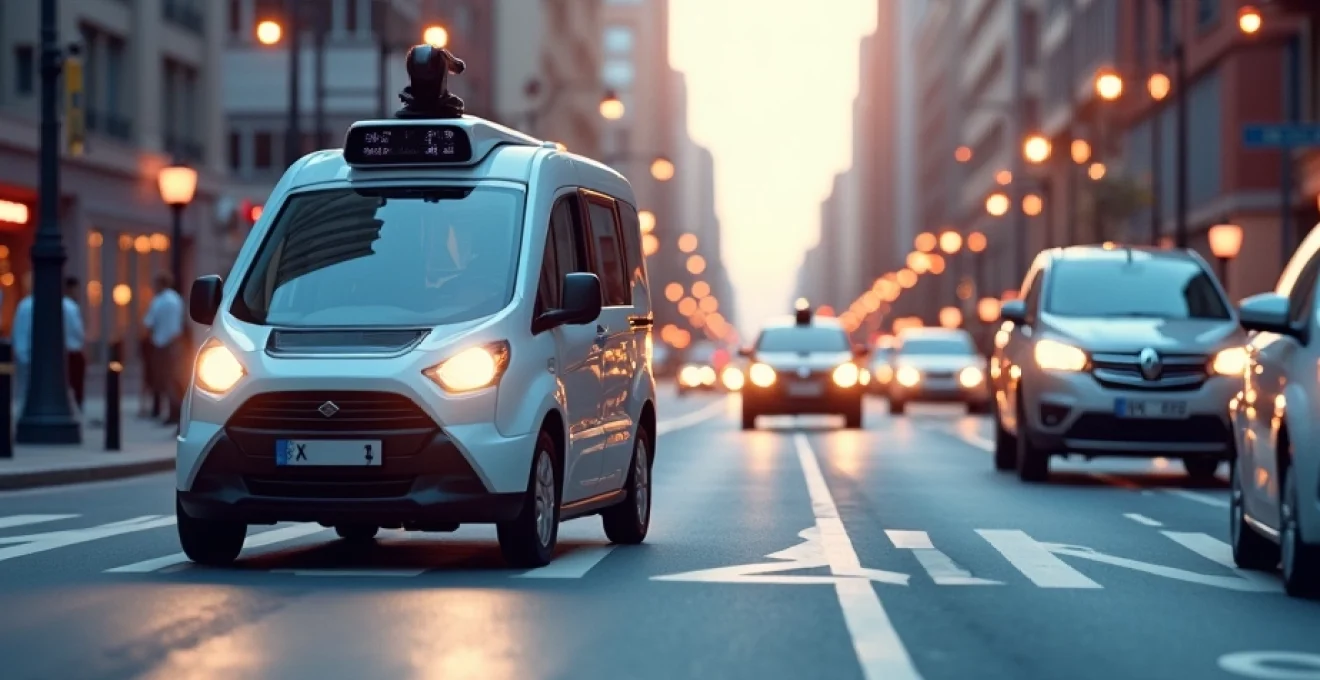
Urban centres worldwide are experiencing unprecedented growth, with over two-thirds of the global population expected to reside in cities by 2050. This demographic shift places immense pressure on existing transport infrastructure, creating challenges that traditional approaches struggle to address. Congestion costs metropolitan areas billions annually in lost productivity, whilst emissions from transport contribute significantly to urban air pollution. The integration of autonomous vehicles into city systems represents a transformative solution to these pressing challenges, offering the potential to revolutionise how people and goods move through urban environments.
The convergence of artificial intelligence, advanced sensor technology, and high-speed connectivity has reached a tipping point where autonomous vehicle deployment in urban settings is becoming technically feasible and economically viable. Cities like Singapore, Helsinki, and Phoenix have already begun implementing pilot programmes that demonstrate the practical benefits of autonomous systems in real-world conditions. These early implementations reveal how intelligent vehicle networks can reduce traffic congestion by up to 35% whilst simultaneously improving safety outcomes and reducing environmental impact.
Autonomous vehicle technologies enabling urban integration
The successful deployment of autonomous vehicles in urban environments depends on a sophisticated ecosystem of interconnected technologies that work together to create safe, efficient, and reliable transportation systems. These technological foundations enable vehicles to navigate complex city scenarios whilst maintaining the high safety standards required for public acceptance and regulatory approval.
Lidar and computer vision systems for navigation in dense traffic environments
LiDAR (Light Detection and Ranging) technology serves as the primary sensory foundation for autonomous vehicles operating in dense urban environments. Modern LiDAR systems generate over 2.8 million data points per second, creating detailed three-dimensional maps of the vehicle’s surroundings with centimetre-level accuracy. This technology proves particularly valuable in complex urban scenarios where traditional GPS signals may be compromised by tall buildings or underground tunnels.
Computer vision systems complement LiDAR by providing contextual understanding of the urban environment through advanced image processing algorithms. These systems can identify traffic lights, pedestrian crossings, road signs, and unexpected obstacles with 99.7% accuracy in optimal conditions. The integration of thermal imaging capabilities enhances performance during adverse weather conditions, ensuring consistent operation throughout varying urban scenarios.
The combination of multiple sensor modalities creates redundant safety systems that significantly exceed human perception capabilities. Whilst human drivers can process approximately 11 million bits of sensory information per second, autonomous vehicles equipped with advanced sensor arrays can handle over 1 billion bits of data simultaneously, enabling split-second decisions that dramatically improve safety outcomes in busy urban corridors.
Vehicle-to-everything (V2X) communication protocols and 5G infrastructure requirements
Vehicle-to-Everything communication protocols represent the nervous system of integrated autonomous vehicle networks, enabling real-time information exchange between vehicles, infrastructure, pedestrians, and traffic management systems. V2X technology operates across multiple frequency bands, with dedicated short-range communications (DSRC) and cellular V2X (C-V2X) providing complementary capabilities for different urban scenarios.
The implementation of 5G infrastructure dramatically enhances V2X capabilities by reducing latency to under 1 millisecond whilst supporting up to 1 million connected devices per square kilometre. This ultra-low latency proves critical for safety-critical applications where autonomous vehicles must coordinate complex manoeuvres in real-time, such as merging into high-speed traffic or navigating around emergency vehicles.
Edge computing nodes strategically positioned throughout urban areas process V2X data locally, reducing the burden on central systems whilst ensuring rapid response times. These distributed processing capabilities enable autonomous vehicle networks to maintain operation even during peak traffic periods when communication networks experience heavy loads.
Machine learning algorithms for predictive traffic flow management
Advanced machine learning algorithms analyse vast quantities of traffic data to predict and optimise urban mobility patterns with remarkable precision. These systems process information from thousands of sensors, cameras, and connected vehicles to create dynamic traffic models that update continuously throughout the day. Predictive algorithms can forecast traffic conditions up to 30 minutes in advance with 85% accuracy, enabling proactive rather than reactive traffic management.
Neural networks trained on historical traffic patterns, weather data, and special event schedules identify optimal routing strategies that minimise congestion and reduce travel times across the entire urban network. These algorithms consider multiple variables simultaneously, including vehicle density, pedestrian activity, public transport schedules, and delivery vehicle movements to create holistic traffic management solutions.
The integration of reinforcement learning techniques enables traffic management systems to continuously improve their performance through experience. As these systems process more data over time, they develop increasingly sophisticated understanding of urban mobility patterns, leading to measurable improvements in traffic flow efficiency and reduced environmental impact.
Edge computing solutions for Real-Time decision making in urban scenarios
Edge computing infrastructure positioned strategically throughout urban environments enables autonomous vehicles to make critical decisions without relying on distant cloud servers. These localised processing nodes reduce decision-making latency from hundreds of milliseconds to under 10 milliseconds, proving essential for safety-critical scenarios such as emergency braking or collision avoidance in dense traffic conditions.
Modern edge computing solutions utilise specialised processors optimised for artificial intelligence workloads, enabling complex decision trees to be processed locally in real-time. These systems can evaluate thousands of potential scenarios simultaneously, selecting optimal actions based on current traffic conditions, pedestrian behaviour, and infrastructure constraints.
The distributed nature of edge computing networks provides inherent redundancy and resilience against system failures. If one processing node experiences technical difficulties, neighbouring nodes can seamlessly assume additional processing loads, ensuring continuous operation of autonomous vehicle networks even during infrastructure maintenance or unexpected outages.
Smart infrastructure adaptations for autonomous vehicle deployment
The transition to autonomous vehicle integration requires substantial modifications to existing urban infrastructure, transforming static roadways into dynamic, intelligent networks capable of real-time communication and adaptation. These infrastructure enhancements create the foundation upon which autonomous vehicle systems can operate safely and efficiently whilst maximising the benefits of coordinated mobility networks.
Intelligent traffic signal systems and dynamic lane management technologies
Intelligent traffic signal systems represent a fundamental shift from fixed-timing signals to adaptive systems that respond to real-time traffic conditions and autonomous vehicle communications. These advanced signals utilise machine learning algorithms to optimise timing patterns continuously, reducing average intersection delays by up to 25% whilst improving fuel efficiency and reducing emissions.
Dynamic lane management technologies enable roadways to adapt their configuration throughout the day based on traffic demand and autonomous vehicle coordination requirements. Variable lane assignments can redirect traffic flow during peak hours, create dedicated autonomous vehicle corridors, or establish temporary lanes for emergency vehicles. LED-embedded roadway surfaces provide clear visual guidance whilst transmitting digital information directly to vehicle navigation systems.
The integration of predictive analytics enables infrastructure systems to anticipate traffic patterns and adjust configurations proactively rather than reactively. During major events or emergencies, these systems can rapidly reconfigure lane assignments and signal timing to accommodate unusual traffic patterns whilst maintaining optimal flow for both autonomous and conventional vehicles.
Connected road surface sensors and embedded communication networks
Modern roadway surfaces incorporate sophisticated sensor networks that monitor traffic conditions, weather patterns, and infrastructure health in real-time. These embedded systems detect vehicle weight, speed, and positioning with remarkable accuracy, providing valuable data for traffic optimisation algorithms whilst identifying potential maintenance requirements before they become critical safety issues.
Piezoelectric sensors embedded within road surfaces generate electrical energy from vehicle movement, creating self-powered monitoring systems that require minimal maintenance whilst providing continuous data streams. These sensors can detect vehicle types, estimate passenger loads, and monitor compliance with speed limits and traffic regulations across entire urban networks.
Communication networks integrated into roadway infrastructure enable direct data transmission between vehicles and traffic management systems without relying on external cellular networks. This embedded connectivity provides redundant communication pathways that enhance system reliability whilst reducing dependence on commercial telecommunications providers.
Multi-modal transport hub integration with autonomous fleet management
The integration of autonomous vehicles with existing public transport networks requires sophisticated coordination systems that seamlessly connect different mobility modes. Modern transport hubs utilise advanced scheduling algorithms to coordinate autonomous shuttle services with bus, rail, and metro systems, creating smooth transitions that encourage multi-modal journey planning.
Dedicated autonomous vehicle zones within transport hubs provide secure boarding and alighting areas whilst minimising conflicts with pedestrian traffic and conventional vehicles. These zones incorporate charging infrastructure, vehicle maintenance facilities, and passenger amenities that support efficient fleet operations whilst enhancing user experience.
Dynamic routing algorithms enable autonomous vehicles to adjust their schedules and routes based on public transport delays or disruptions, providing alternative mobility options that maintain service reliability even during unexpected events. These adaptive systems demonstrate how autonomous vehicle networks can enhance overall urban mobility resilience.
Charging infrastructure networks for electric autonomous vehicle fleets
The deployment of electric autonomous vehicle fleets requires extensive charging infrastructure that can support high-frequency operations whilst minimising service disruptions. Strategic placement of charging stations along major routes and at fleet depots ensures continuous vehicle availability whilst optimising energy costs through dynamic pricing algorithms and grid load management.
Wireless charging technologies embedded in roadway surfaces and parking areas enable autonomous vehicles to charge opportunistically during normal operations, reducing the need for dedicated charging time and maximising fleet utilisation rates. These systems utilise inductive charging principles to transfer energy efficiently whilst vehicles remain in motion or during brief stops at traffic signals.
Smart grid integration enables charging infrastructure to balance energy demands with renewable energy availability, reducing operational costs whilst minimising environmental impact. Advanced energy management systems can shift charging schedules to periods of high renewable energy generation or low grid demand, creating sustainable operations that align with broader urban sustainability goals.
Regulatory frameworks and safety standards for urban autonomous systems
The development of comprehensive regulatory frameworks for autonomous vehicle deployment in urban environments represents one of the most complex challenges facing cities worldwide. These frameworks must balance innovation with safety, public acceptance with technological advancement, and local needs with international standards. The regulatory landscape continues evolving as governments gain experience with pilot programmes and real-world deployments.
Current safety standards for autonomous vehicles build upon existing automotive regulations whilst incorporating new requirements specific to artificial intelligence systems and networked vehicle operations. The Society of Automotive Engineers (SAE) Level 4 autonomy standards provide the foundation for urban deployment, requiring vehicles to operate safely without human intervention in defined operational domains. These standards mandate extensive testing protocols, including millions of kilometres of real-world validation and countless simulation scenarios.
Data privacy and cybersecurity regulations create additional complexity for autonomous vehicle systems that collect and process vast quantities of personal and location data. European Union regulations under GDPR require explicit consent for data collection whilst mandating secure storage and processing protocols. These requirements influence system architecture decisions and operational procedures throughout autonomous vehicle networks.
The regulatory challenge lies not just in ensuring safety, but in creating frameworks flexible enough to accommodate rapid technological advancement whilst maintaining public trust in autonomous systems.
Liability frameworks for autonomous vehicle accidents represent perhaps the most contentious aspect of regulatory development. Traditional insurance models designed around human drivers require fundamental restructuring to accommodate scenarios where artificial intelligence systems make driving decisions. Progressive insurance models are emerging that shift liability from individual owners to vehicle manufacturers or fleet operators, creating new risk assessment methodologies.
International harmonisation of autonomous vehicle standards becomes increasingly important as manufacturers seek to deploy systems across multiple markets. The Vienna Convention on Road Traffic requires updates to accommodate autonomous vehicles, whilst regional standards bodies work to align testing protocols and safety requirements. These efforts aim to create consistent global standards that facilitate technology transfer whilst respecting local regulatory preferences.
Pilot programme regulations provide controlled environments for testing autonomous vehicle systems whilst gathering real-world performance data to inform broader deployment policies. Cities like Helsinki have established regulatory sandboxes that allow controlled testing of autonomous systems whilst protecting public safety and gathering valuable operational experience that informs future policy development.
Economic models and business cases for autonomous urban mobility
The economic transformation accompanying autonomous vehicle integration extends far beyond simple cost savings, creating new business models and revenue streams whilst disrupting established transportation industries. Understanding these economic implications proves essential for cities planning autonomous vehicle deployment and companies developing autonomous mobility services.
Mobility-as-a-service (MaaS) platform development and revenue structures
Mobility-as-a-Service platforms fundamentally restructure how consumers access and pay for transportation services, moving from ownership-based models to usage-based subscriptions. These platforms integrate autonomous vehicles with public transport, micro-mobility options, and traditional taxi services, creating seamless journey planning and payment systems that optimise cost and convenience for users.
Revenue structures for MaaS platforms typically combine subscription fees, per-trip charges, and premium service options that provide flexibility for different user profiles. Business models may include flat-rate monthly subscriptions for unlimited local travel, pay-per-use options for occasional users, or tiered service levels that provide priority access during peak demand periods.
Platform operators generate additional revenue through data analytics services that provide valuable insights into urban mobility patterns for city planners, retailers, and property developers. This data monetisation creates sustainable revenue streams that support platform development whilst providing valuable urban intelligence for planning and development decisions.
The integration of autonomous vehicles into MaaS platforms reduces operational costs significantly compared to human-driven alternatives. Labour costs typically represent 60-70% of traditional taxi service expenses, whilst autonomous systems eliminate these costs entirely whilst providing consistent service availability throughout day and night operations.
Fleet ownership models: Public-Private partnerships vs corporate deployment
Public-private partnerships for autonomous vehicle deployment enable cities to access advanced transportation technologies whilst sharing financial risks and operational responsibilities with experienced technology providers. These partnerships typically involve municipalities providing regulatory support and infrastructure whilst private companies supply vehicles, technology, and operational expertise.
Corporate deployment models offer greater operational control and potentially higher profit margins for technology companies, but require substantial upfront investment and acceptance of full operational risks. Companies like Waymo and Cruise have invested billions in developing autonomous vehicle fleets for direct deployment in urban markets, demonstrating confidence in the long-term viability of these business models.
Hybrid ownership models are emerging that combine public oversight with private innovation, creating shared risk and reward structures that align public interest with commercial viability. These models may include revenue-sharing agreements, performance-based contracts, or graduated ownership transfers that provide flexibility for both public and private stakeholders.
Fleet financing mechanisms continue evolving to accommodate the unique characteristics of autonomous vehicle assets, including rapid technological evolution and uncertain depreciation patterns. Leasing arrangements, technology upgrade clauses, and performance guarantees create financial structures that manage technological obsolescence risks whilst enabling fleet expansion and service improvement.
Cost-benefit analysis of autonomous vehicle implementation in metropolitan areas
Comprehensive cost-benefit analyses for autonomous vehicle implementation must consider both direct operational impacts and broader societal benefits that may not appear immediately in financial statements. Direct cost savings include reduced labour expenses, improved fuel efficiency through optimised routing, and decreased accident rates that lower insurance and maintenance costs.
Infrastructure cost implications vary significantly depending on existing technology levels and deployment strategies. Cities with modern traffic management systems may require minimal additional infrastructure investment, whilst older urban areas may need substantial upgrades to support autonomous vehicle integration. Initial infrastructure costs typically range from £2-5 million per square kilometre for comprehensive smart city upgrades.
Societal benefits include reduced healthcare costs from fewer traffic accidents, improved air quality from optimised traffic flow and electric vehicle adoption, and increased productivity from reduced commuting time and stress. Conservative estimates suggest that comprehensive autonomous vehicle deployment could generate £15-25 billion annually in societal benefits across major metropolitan areas.
| Cost Category | Traditional Systems | Autonomous Systems | Savings Potential |
| Labour Costs | £45,000-65,000/driver/year | £0 | 100% |
| Accident Costs | £3,500/vehicle/year | £800/vehicle/year | 77% |
| Fuel Efficiency | Baseline | 15-25% improvement | 15-25% |
| Maintenance | £4,200/vehicle/year | £3,100/vehicle/year | 26% |
Insurance and liability frameworks for autonomous fleet operations
Insurance frameworks for autonomous vehicle operations require fundamental restructuring of traditional risk assessment and liability allocation models. Product liability insurance becomes more prominent as manufacturers assume greater responsibility for vehicle behaviour, whilst operational insurance covers fleet management and service delivery aspects.
Risk assessment methodologies for autonomous vehicles focus on software reliability, sensor accuracy, and system redundancy rather than human behaviour patterns. Insurance companies are developing new actuarial models that consider factors such as software update frequency, testing kilometres completed, and real-world performance data to determine appropriate premium levels.
Liability allocation during autonomous vehicle accidents involves complex interactions between vehicle manufacturers, software developers, fleet operators, and infrastructure providers. Clear contractual frameworks defining responsibility boundaries become essential for managing legal and financial risks throughout the autonomous vehicle ecosystem.
Insurance pooling arrangements may emerge where multiple stakeholders
contribute to risk pools that spread potential liability costs across multiple autonomous vehicle deployments, creating more predictable cost structures for operators whilst ensuring adequate coverage for potential claims.
Data-driven insurance models utilise real-time vehicle performance data to adjust premiums dynamically based on actual operational safety records. This approach rewards operators who maintain high safety standards whilst providing incentives for continuous improvement in autonomous vehicle system reliability and maintenance protocols.
Case studies: successful autonomous vehicle pilot programmes in global cities
Real-world implementations of autonomous vehicle systems in urban environments provide valuable insights into the practical challenges and opportunities associated with this transformative technology. These pilot programmes demonstrate how different approaches to autonomous vehicle integration can address specific urban mobility challenges whilst revealing important lessons for broader deployment strategies.
Singapore’s autonomous vehicle initiative represents one of the most comprehensive urban deployments globally, with autonomous shuttles operating in the Jurong Innovation District since 2019. The programme utilises dedicated bus lanes and sophisticated traffic management systems to ensure safe operation alongside conventional vehicles. Early results demonstrate 23% reduction in travel times and 99.5% on-time performance, whilst passenger satisfaction surveys indicate 87% approval ratings for the service.
The Singapore deployment emphasises the importance of controlled operational environments for initial autonomous vehicle introduction. By limiting operations to specific routes with dedicated infrastructure, the programme has achieved impressive safety records with zero accidents involving autonomous vehicles over 18 months of operation. This controlled approach provides valuable data for expanding operations to more complex urban environments.
Helsinki’s Sohjoa Baltic project showcases how autonomous vehicles can integrate with existing public transport networks in challenging weather conditions. The programme operates autonomous minibuses along a 2.5-kilometre route connecting residential areas with metro stations, demonstrating year-round reliability despite harsh Nordic weather conditions. Advanced sensor systems and predictive maintenance protocols ensure consistent operation even during snow and ice conditions that challenge traditional vehicle systems.
The Helsinki initiative highlights the importance of weather resilience for autonomous vehicle deployment in diverse climatic conditions. Specialised heating systems for sensors, enhanced traction control algorithms, and real-time weather monitoring enable reliable operation throughout seasonal variations that would significantly impact conventional autonomous vehicle systems.
Phoenix, Arizona’s Waymo deployment represents the largest commercial autonomous vehicle service currently operating, with over 300 vehicles serving paying customers across a 100-square-mile service area. The programme demonstrates how autonomous vehicles can scale from pilot projects to commercial services whilst maintaining safety standards and user acceptance. Operational data indicates 47% of users rate autonomous vehicles as safer than human-driven alternatives, whilst 73% express willingness to use autonomous services regularly.
The Phoenix deployment reveals important insights about user behaviour and acceptance patterns for autonomous vehicle services. Initial hesitation among users typically diminishes after 3-4 rides, suggesting that direct experience significantly improves public acceptance of autonomous technology. The service has completed over 20 million autonomous miles without any life-threatening accidents, demonstrating the safety potential of mature autonomous vehicle systems.
Stockholm’s autonomous vehicle pilot programme focuses on integration with smart city infrastructure, utilising connected traffic signals and dynamic routing algorithms to optimise traffic flow across the entire urban network. The programme demonstrates how autonomous vehicles can serve as mobile sensors that provide real-time traffic data whilst simultaneously benefiting from infrastructure-based optimisation systems.
The Swedish approach emphasises the importance of bidirectional communication between vehicles and infrastructure, creating symbiotic relationships that benefit both autonomous vehicle performance and broader traffic management objectives. This integrated approach has achieved 18% improvement in citywide traffic flow whilst reducing autonomous vehicle energy consumption by 12% through optimised routing and traffic signal coordination.
Barcelona’s smart city autonomous vehicle integration focuses on reducing urban air pollution through coordinated electric autonomous vehicle deployment. The programme combines autonomous shuttles with dynamic low-emission zones that adjust boundaries based on real-time air quality measurements. This approach demonstrates how autonomous vehicles can serve broader environmental objectives whilst providing practical mobility solutions.
Air quality monitoring throughout the Barcelona pilot area shows measurable improvements in nitrogen dioxide and particulate matter concentrations, directly correlating with autonomous vehicle deployment density. The programme illustrates how autonomous vehicles can contribute to immediate environmental benefits whilst supporting long-term sustainability objectives through reduced emissions and optimised traffic flow patterns.
These diverse pilot programmes reveal common success factors including comprehensive stakeholder engagement, gradual service expansion, robust safety monitoring protocols, and integration with existing transport networks. Successful deployments consistently emphasise public communication about safety measures and service benefits, whilst maintaining transparent reporting about operational challenges and system limitations.
The lessons learned from these pioneering implementations provide roadmaps for other cities considering autonomous vehicle deployment. Key insights include the importance of starting with controlled environments, investing in supporting infrastructure, engaging with regulatory authorities early in planning processes, and maintaining realistic timelines that allow for iterative improvements based on operational experience.
As autonomous vehicle technology continues advancing and these pilot programmes expand their scope, the foundation for widespread urban deployment becomes increasingly solid. The combination of proven safety records, demonstrated operational benefits, and growing public acceptance creates favourable conditions for the next phase of autonomous vehicle integration into urban mobility systems worldwide.