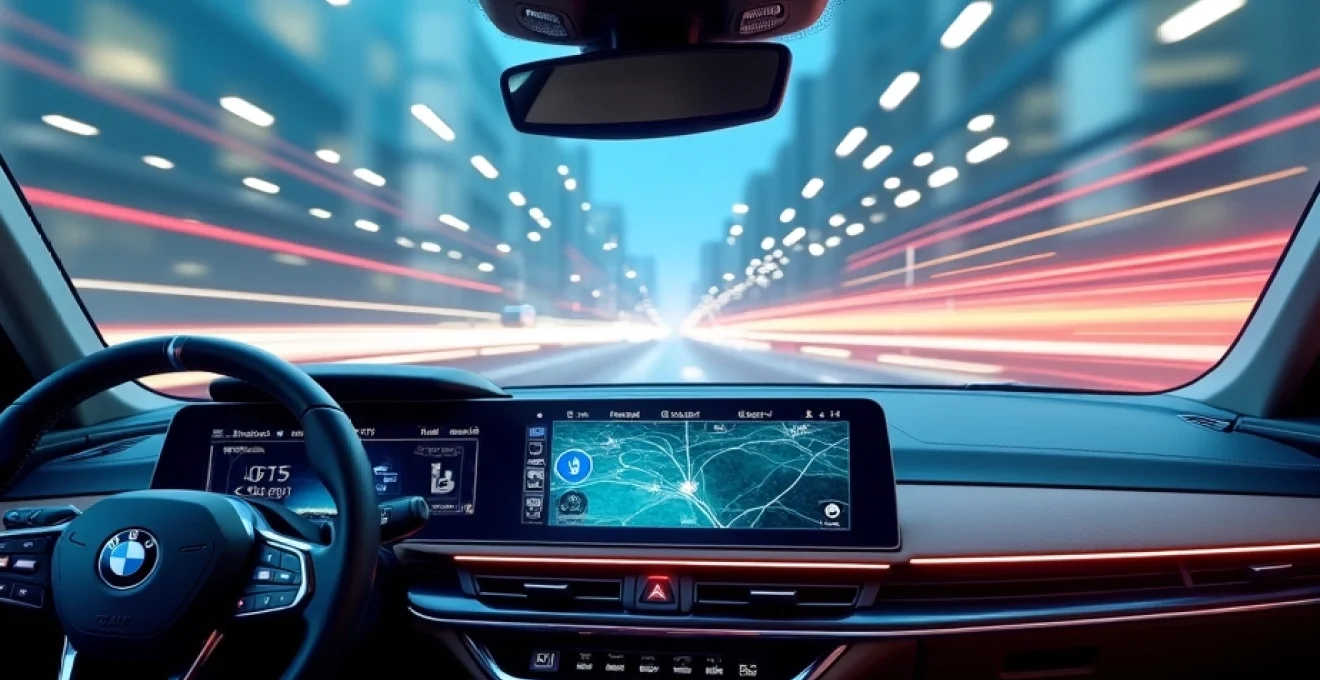
The automotive industry stands at the precipice of a technological revolution that fundamentally alters how drivers interact with their vehicles. Augmented reality dashboards represent far more than incremental improvements to traditional interfaces—they embody a complete paradigm shift towards immersive, contextually-aware vehicular environments. Modern automotive manufacturers are increasingly recognising that the integration of AR technology into dashboard design isn’t merely about adding flashy visual elements; it’s about creating intelligent systems that enhance safety, reduce cognitive load, and provide seamless information delivery directly within the driver’s natural field of view.
This transformation is reshaping vehicle design from the ground up, influencing everything from interior architecture to manufacturing processes. As spatial computing capabilities mature and processing power increases, the boundaries between physical and digital interfaces are dissolving, creating opportunities for entirely new approaches to automotive human-machine interaction. The implications extend far beyond aesthetics, touching upon fundamental questions of user experience, safety protocols, and the very nature of what constitutes a modern vehicle cockpit.
Evolution of traditional automotive Human-Machine interface to AR-Integrated cockpit systems
The journey from mechanical gauges to augmented reality interfaces represents one of the most significant evolutionary leaps in automotive design history. Traditional automotive human-machine interfaces relied heavily on physical controls, analogue displays, and discrete information presentation methods that required drivers to constantly shift their attention between the road and various dashboard elements. This fragmented approach to information delivery created inherent safety risks and cognitive overhead that modern AR systems are specifically designed to eliminate.
Contemporary AR-integrated cockpit systems fundamentally reimagine the relationship between driver and vehicle by creating a unified information layer that seamlessly blends digital content with the physical driving environment. Rather than forcing drivers to interpret separate data streams from multiple sources, these systems present contextually relevant information directly within the driver’s primary visual field, reducing the time and cognitive effort required to process critical driving data.
Physical gauge cluster obsolescence in BMW idrive and Mercedes-Benz MBUX platforms
The transition away from traditional physical gauge clusters represents a watershed moment in automotive interface design. BMW’s iDrive system and Mercedes-Benz MBUX platforms exemplify this shift by replacing conventional speedometers, fuel gauges, and warning lights with dynamic, customisable digital displays that can adapt their presentation based on driving conditions, user preferences, and contextual requirements.
These platforms demonstrate how digital gauge clusters can provide significantly more information density than their physical counterparts whilst maintaining clarity and usability. The ability to reconfigure display layouts, highlight critical information during different driving scenarios, and integrate seamlessly with navigation and vehicle systems creates a more cohesive and intelligent interface experience. The obsolescence of physical gauges isn’t merely about modernisation—it’s about creating more responsive, adaptive, and safety-focused information delivery systems .
Head-up display technology integration from windscreen projection to spatial computing
Head-up display technology has evolved dramatically from simple windscreen projections displaying basic speed and navigation information to sophisticated spatial computing systems that can overlay complex three-dimensional data directly onto the driver’s view of the road. Modern HUD systems utilise advanced optical technologies and real-time environmental mapping to create the illusion that digital information exists as part of the physical world outside the vehicle.
This progression towards spatial computing represents a fundamental shift in how drivers process information whilst maintaining situational awareness. Rather than requiring mental translation between displayed data and real-world context, spatial HUD systems place information exactly where it’s most relevant—directly on road features, other vehicles, or environmental elements that require the driver’s attention.
Tactile control replacement through gesture recognition and Eye-Tracking systems
The movement away from traditional tactile controls towards gesture recognition and eye-tracking systems reflects a broader trend towards more intuitive, natural interaction methods. These technologies eliminate the need for drivers to physically reach for controls, reducing the risk of distraction and allowing for more ergonomically optimal driving positions.
Gesture recognition systems can interpret hand movements, allowing drivers to control various vehicle functions through simple gestures whilst maintaining their grip on the steering wheel. Similarly, eye-tracking technology enables hands-free menu navigation and function selection, creating a more seamless and safer interaction paradigm. These systems represent a move towards interfaces that adapt to human behaviour rather than requiring humans to adapt to technology .
Real-time data visualisation frameworks for vehicular augmented reality applications
Effective AR dashboard implementation requires sophisticated real-time data visualisation frameworks capable of processing multiple information streams simultaneously whilst maintaining visual clarity and system responsiveness. These frameworks must handle everything from vehicle telemetry and navigation data to external sensor inputs and connectivity information, presenting it all in a coherent, prioritised manner.
The challenge lies in creating visualisation systems that can dynamically adjust their presentation based on driving conditions, user preferences, and information priority levels. Critical safety information must always take precedence, whilst less essential data can be presented more subtly or temporarily hidden during high-concentration driving scenarios. This requires intelligent algorithms that can assess context and adjust the interface accordingly.
Technical architecture of AR dashboard implementation in modern vehicle platforms
The technical foundation underlying AR dashboard systems represents a complex integration of multiple advanced technologies working in harmony to create seamless user experiences. Modern implementations require substantial computational power, sophisticated rendering engines, and robust sensor fusion capabilities to deliver the real-time performance necessary for safe automotive applications. The architecture must account for the unique constraints of the automotive environment, including temperature variations, vibration, electromagnetic interference, and the critical safety requirements that distinguish automotive applications from consumer electronics.
Successfully implementing AR dashboards requires careful consideration of hardware limitations, software optimisation, and system reliability. Unlike smartphone or gaming applications, automotive AR systems must operate continuously for extended periods under challenging environmental conditions whilst maintaining consistent performance and safety standards. This necessitates purpose-built architectures designed specifically for vehicular applications rather than adaptations of consumer-focused AR platforms.
Unity3d and unreal engine integration for automotive AR content development
The adoption of professional game engines like Unity3D and Unreal Engine for automotive AR development reflects the complexity and visual fidelity requirements of modern dashboard interfaces. These engines provide the sophisticated rendering capabilities, asset management systems, and development tools necessary to create compelling AR experiences whilst maintaining the performance standards required for real-time automotive applications.
Unity3D’s automotive solutions offer specialised tools for vehicle interface development, including optimised rendering pipelines for automotive displays and integration frameworks for vehicle data systems. Similarly, Unreal Engine’s real-time ray tracing and advanced lighting systems enable photorealistic AR visualisations that can seamlessly blend with the vehicle’s physical environment. The use of these professional engines represents a maturation of automotive interface development, bringing film and gaming industry visual quality standards to vehicle dashboards .
LIDAR and computer vision sensor fusion for environmental mapping
Accurate environmental mapping forms the foundation of effective AR dashboard systems, requiring sophisticated sensor fusion techniques that combine LIDAR, camera, and radar data to create comprehensive three-dimensional models of the vehicle’s surroundings. This environmental awareness enables AR systems to place digital information accurately within the real world, ensuring that overlay elements appear correctly positioned relative to road features, other vehicles, and environmental objects.
The integration of multiple sensor types provides redundancy and improves accuracy across various environmental conditions. LIDAR excels in distance measurement and object detection, cameras provide visual context and texture information, whilst radar offers reliable performance in adverse weather conditions. Combining these inputs through advanced algorithmic processing creates a robust environmental understanding that enables precise AR overlay positioning.
Opengl ES and vulkan API performance optimisation for Real-Time rendering
Real-time rendering performance represents a critical challenge in automotive AR implementation, requiring careful optimisation of graphics pipelines to maintain consistent frame rates whilst processing complex three-dimensional scenes. OpenGL ES and Vulkan APIs provide the low-level graphics access necessary to achieve the performance targets required for smooth, responsive AR interfaces.
Vulkan’s multi-threaded architecture and reduced driver overhead make it particularly well-suited for automotive applications where consistent performance is paramount. The API’s explicit control over GPU resources allows developers to optimise rendering pipelines specifically for automotive display hardware and performance requirements. Performance optimisation in automotive AR isn’t merely about visual quality—it’s about ensuring system responsiveness that directly impacts driver safety .
Vehicle CAN bus integration with AR display controllers and processing units
Seamless integration with vehicle systems requires sophisticated interfaces between AR processing units and the vehicle’s CAN bus network. This integration enables AR systems to access real-time vehicle data, including speed, engine parameters, navigation information, and sensor inputs, whilst maintaining the security and reliability standards required for automotive applications.
The challenge lies in creating interfaces that can handle the diverse data formats and communication protocols used across different vehicle systems whilst maintaining real-time performance. Modern AR dashboard implementations utilise dedicated automotive-grade processors with built-in CAN bus interfaces and security features designed specifically for vehicular applications.
Stereoscopic display technology and depth perception calibration systems
Creating convincing AR overlays requires sophisticated stereoscopic display technology and precise depth perception calibration to ensure that digital elements appear naturally integrated with the physical environment. This involves complex optical calculations and individual user calibration to account for variations in eye position, interpupillary distance, and personal depth perception characteristics.
Modern automotive AR systems employ advanced calibration algorithms that can automatically adjust display parameters based on driver position and anthropometric measurements. Some implementations utilise eye-tracking technology to continuously monitor driver gaze and adjust the AR overlay positioning accordingly, ensuring consistent visual alignment regardless of slight changes in head position or posture.
Spatial design methodologies for Three-Dimensional automotive interface elements
Designing effective three-dimensional interfaces for automotive applications requires fundamentally different approaches compared to traditional flat-screen interface design. Spatial design methodologies must account for the unique characteristics of AR environments, including depth perception, visual hierarchy in three-dimensional space, and the need to integrate digital elements seamlessly with the physical driving environment. The challenge extends beyond simply placing two-dimensional elements in three-dimensional space—it requires creating interfaces that feel natural and intuitive within the driver’s spatial context.
Successful spatial interface design considers the ergonomics of visual attention, ensuring that critical information is positioned within optimal viewing zones whilst less important elements are placed in peripheral areas. This requires understanding how drivers naturally scan their environment and designing interface layouts that complement these behaviours rather than competing with them. The goal is to create interfaces that enhance rather than distract from the primary task of driving.
Three-dimensional interface elements must also account for the dynamic nature of the driving environment. Unlike static screen-based interfaces, automotive AR elements exist within a constantly changing visual context that includes varying lighting conditions, weather effects, and moving objects. Interface elements must remain visible and legible across this wide range of conditions whilst avoiding visual conflicts with real-world elements.
Effective spatial design also considers the psychological aspects of three-dimensional information presentation. Research indicates that users process spatial information differently than flat displays, with depth cues playing important roles in information hierarchy and priority assessment. Designers must leverage these natural cognitive processes to create interfaces that feel intuitive and reduce mental workload . This involves careful consideration of element positioning, visual weight, and the use of depth cues to guide attention and convey information priority.
The implementation of spatial design principles requires sophisticated testing methodologies that go beyond traditional usability testing. Designers must evaluate how interface elements perform across different viewing angles, lighting conditions, and user anthropometric variations. This often involves creating detailed three-dimensional models of the vehicle interior and using advanced simulation tools to predict how interface elements will appear to drivers of different heights and seating positions.
Modern automotive spatial design represents a convergence of industrial design, human factors engineering, and advanced computer graphics, creating interfaces that seamlessly blend the digital and physical worlds in ways that enhance rather than complicate the driving experience.
Manufacturing process adaptations for AR-Compatible vehicle interior design
The integration of AR dashboard technology necessitates significant adaptations to traditional automotive manufacturing processes, particularly in interior design and production workflows. These changes extend far beyond simply installing new display hardware—they require fundamental reconsideration of how vehicle interiors are conceptualised, prototyped, and manufactured. The precision requirements for AR system installation, combined with the need for seamless integration with existing vehicle systems, demand new approaches to quality control and assembly processes.
Traditional automotive interior manufacturing relied heavily on physical prototyping and iterative design processes that could accommodate relatively loose tolerances for non-critical components. AR dashboard integration requires much tighter tolerances and more precise positioning to ensure optimal visual alignment and user experience. This precision requirement influences everything from seat positioning and steering wheel design to dashboard geometry and mirror placement.
Manufacturing facilities must adapt their assembly lines to accommodate the complex calibration and testing procedures required for AR systems. Each vehicle requires individual calibration to account for manufacturing tolerances and component variations, necessitating new testing stations and quality assurance procedures. The shift towards AR-compatible manufacturing represents a move towards more precise, technology-focused production processes that prioritise system integration over traditional component assembly .
Supply chain management also requires adaptation to support the specialised components and materials needed for AR dashboard implementation. This includes sourcing advanced display technologies, precision optical components, and specialised processing hardware that may have different lead times and quality requirements compared to traditional automotive components. Manufacturers must develop new supplier relationships and quality assurance processes to ensure consistent AR system performance across production volumes.
The complexity of AR system integration also impacts after-sales service and maintenance procedures. Service technicians require new training and equipment to properly maintain and calibrate AR systems, whilst parts inventory management must account for the specialised components and software updates required for ongoing system support. This represents a significant shift towards more technology-focused service operations that require different skill sets and equipment compared to traditional automotive maintenance.
Quality control processes must evolve to include comprehensive AR system testing that goes beyond traditional functional testing. This includes visual alignment verification, performance testing under various environmental conditions, and long-term reliability assessment of complex electronic systems operating in challenging automotive environments. The integration of AR technology thus drives broader changes in manufacturing philosophy and operational procedures throughout the automotive production ecosystem.
Human factors engineering and cognitive load assessment in AR-Enhanced driving environments
The introduction of AR dashboard technology fundamentally alters the cognitive demands placed on drivers, requiring comprehensive human factors engineering assessment to ensure these systems enhance rather than impair driving performance. Understanding cognitive load becomes critical when designing AR interfaces, as the primary goal must always be to reduce mental workload whilst providing enhanced situational awareness and improved access to relevant information.
Traditional dashboard interfaces required drivers to divide their attention between the road ahead and various instrument clusters, creating discrete cognitive switching tasks that could impact reaction times and situational awareness. AR systems aim to eliminate this attention switching by presenting information directly within the driver’s primary visual field. However, this integration creates new challenges related to visual clutter, information prioritisation, and the cognitive processing of overlaid digital content.
Cognitive load assessment in AR environments requires sophisticated testing methodologies that can measure both mental workload and driving performance across various scenarios. This involves evaluating how different information presentation methods affect driver attention, reaction times, and decision-making capabilities. Research indicates that poorly designed AR interfaces can actually increase cognitive load by presenting too much information or placing elements in visually distracting locations. Effective AR dashboard design requires finding the optimal balance between information richness and cognitive simplicity .
The temporal aspects of information presentation become particularly important in AR environments. Unlike static dashboard displays, AR systems can dynamically show and hide information based on driving conditions and relevance. This capability requires careful consideration of information timing, transition effects, and the cognitive impact of appearing and disappearing interface elements. Sudden changes in the visual environment can be particularly distracting and must be managed through smooth transitions and predictable behaviour patterns.
Individual differences in cognitive processing capabilities also play a significant role in AR dashboard effectiveness. Factors such as age, driving experience, visual acuity, and spatial reasoning abilities all influence how effectively drivers can utilise AR interfaces. Design methodologies must account for these variations through adaptive interface systems that can adjust their presentation based on user capabilities and preferences. This personalisation requirement adds complexity to system design but is essential for broad user acceptance and safety.
The success of AR dashboard technology ultimately depends on its ability to reduce rather than increase the cognitive burden on drivers, requiring careful balance between information richness and mental workload optimisation.
Long-term adaptation effects also require consideration, as drivers may initially struggle with AR interfaces before developing proficiency. Training programmes and gradual feature introduction may be necessary to ensure safe adoption of AR dashboard technology. Understanding these adaptation processes helps inform both interface design decisions and implementation strategies for new vehicle technologies.
Regulatory compliance and safety standards for augmented reality automotive applications
The regulatory landscape surrounding AR dashboard technology presents complex challenges that automotive manufacturers must navigate whilst bringing innovative interfaces to market. Unlike consumer AR applications, automotive implementations must comply with stringent safety standards and regulatory requirements that vary significantly across different jurisdictions. The challenge lies in developing AR systems that meet these diverse regulatory requirements whilst maintaining the innovative capabilities that make the technology valuable.
Current automotive safety regulations were developed primarily for traditional dashboard interfaces and may not adequately address the unique characteristics and potential risks associated with AR systems. This regulatory gap creates uncertainty for manufacturers and may require the development of new testing protocols and safety standards specifically designed for AR automotive applications. The process of establishing these new standards requires collaboration between manufacturers, regulatory bodies, and safety
organisations to establish comprehensive frameworks that address the unique safety implications of AR automotive systems.
The European Union’s New Car Assessment Programme (Euro NCAP) and similar organisations worldwide are beginning to develop testing protocols for AR dashboard systems, focusing on distraction potential, information clarity, and system reliability. These emerging standards require manufacturers to demonstrate that AR interfaces do not impair driving performance and actually contribute to improved safety outcomes. The testing methodologies must account for various driving conditions, user demographics, and potential failure modes that could compromise system functionality.
Compliance requirements also extend to data privacy and cybersecurity considerations, as AR dashboard systems often collect and process sensitive user information including location data, driving patterns, and biometric information for personalisation purposes. Regulatory frameworks must balance innovation with privacy protection, ensuring that AR systems enhance the driving experience without compromising user data security. This requires implementation of robust encryption, secure data transmission protocols, and transparent data usage policies that comply with regional privacy legislation.
International harmonisation of AR automotive standards presents additional challenges, as manufacturers must design systems that can meet diverse regulatory requirements across global markets. The lack of standardised testing procedures and safety criteria creates complexity for manufacturers seeking to deploy AR dashboard technology internationally. Industry consortiums and standards organisations are working to establish common frameworks that can facilitate global deployment whilst maintaining appropriate safety standards.
Certification processes for AR automotive systems require extensive validation testing that goes beyond traditional automotive component testing. This includes long-term reliability assessment, environmental durability testing, and comprehensive human factors evaluation to ensure systems perform safely across their intended operational lifetime. The certification process must also account for software updates and system modifications that may occur after initial deployment, requiring ongoing compliance monitoring and validation procedures.
Regulatory compliance for AR automotive applications represents a dynamic challenge that requires proactive engagement between manufacturers, regulators, and safety organisations to establish frameworks that promote innovation whilst ensuring public safety.
Liability considerations also play a crucial role in regulatory compliance, as manufacturers must clearly define responsibility boundaries between driver actions and system-provided information. This includes establishing clear protocols for system limitations, failure modes, and appropriate user training to ensure drivers understand both the capabilities and constraints of AR dashboard technology. Legal frameworks must evolve to address questions of accountability when AR systems contribute to or fail to prevent traffic incidents.
The path forward requires continued collaboration between industry stakeholders and regulatory bodies to develop comprehensive standards that address the unique characteristics of AR automotive applications. These standards must be flexible enough to accommodate rapid technological advancement whilst providing sufficient structure to ensure consistent safety performance across different implementations and manufacturers. Success in this regulatory landscape will ultimately determine the speed and scope of AR dashboard technology adoption across the global automotive market.