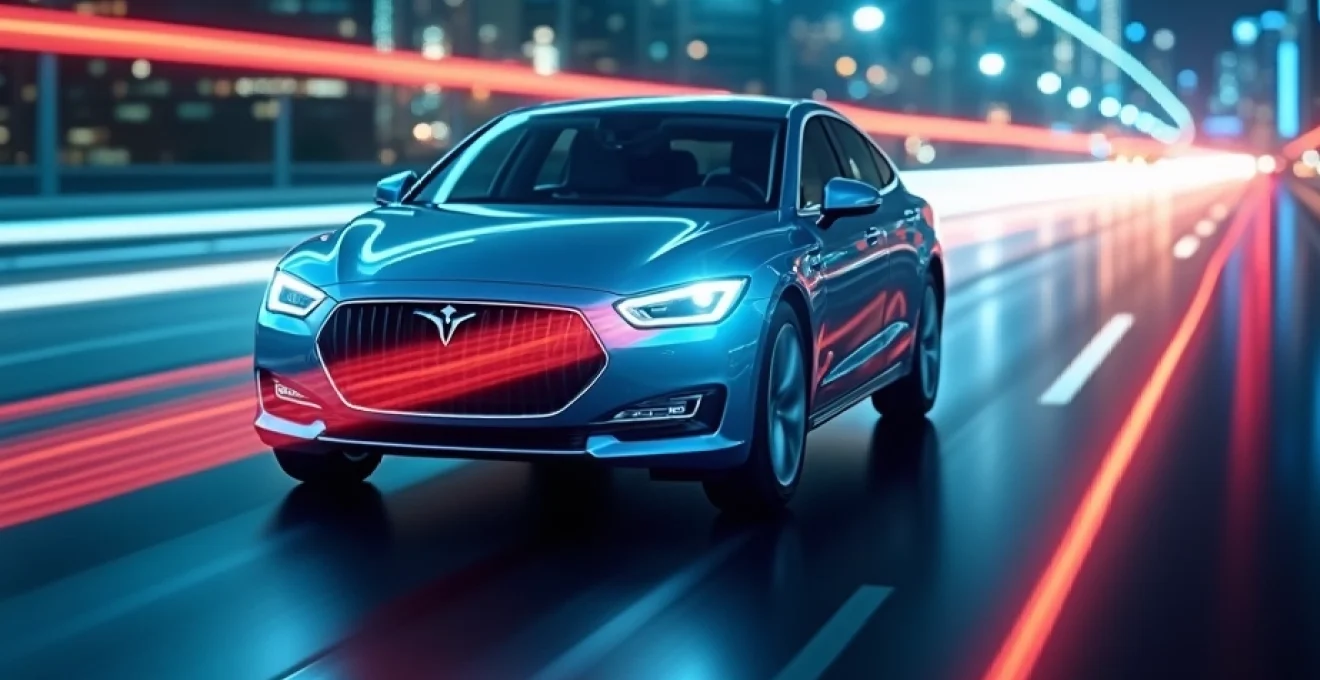
The automotive industry stands at the precipice of a revolutionary transformation where artificial intelligence is fundamentally reshaping how vehicles protect their occupants and other road users. Modern vehicles are evolving from mechanical transportation devices into intelligent safety companions capable of predicting, preventing, and mitigating potential hazards in real-time. This technological evolution represents more than incremental improvements; it signifies a paradigm shift towards proactive safety systems that can think, learn, and adapt faster than human reflexes allow.
As road traffic accidents continue to claim over 1.35 million lives globally each year according to World Health Organisation data, the integration of AI-powered safety technologies becomes not just beneficial but essential. These systems promise to address the sobering reality that human error accounts for approximately 94% of serious road traffic crashes, offering hope for dramatically reducing fatalities and injuries through intelligent intervention and assistance.
Advanced driver assistance systems (ADAS) and machine learning integration
Advanced Driver Assistance Systems represent the current frontline of automotive safety technology, where machine learning algorithms continuously analyse vast amounts of sensor data to assist drivers in making safer decisions. These systems have evolved from simple warning mechanisms to sophisticated interventions capable of taking immediate action when dangerous situations emerge. The integration of machine learning enables these systems to become increasingly effective over time, learning from millions of driving scenarios to improve their predictive capabilities and response accuracy.
Modern ADAS implementations utilise ensemble learning techniques that combine multiple AI models to achieve superior performance compared to any single algorithm. This approach ensures redundancy and reliability, critical factors when dealing with life-threatening situations. The systems process information from cameras, radar, lidar, and ultrasonic sensors simultaneously, creating a comprehensive understanding of the vehicle’s environment that surpasses human sensory capabilities.
Tesla autopilot neural network architecture and Real-Time processing
Tesla’s Autopilot system exemplifies the cutting-edge application of deep neural networks in automotive safety, utilising a sophisticated architecture that processes visual information from eight cameras to create a complete 360-degree view of the vehicle’s surroundings. The system employs convolutional neural networks specifically designed for computer vision tasks, enabling real-time object detection, classification, and trajectory prediction with remarkable accuracy.
The neural network architecture incorporates multiple parallel processing paths, each specialised for different aspects of scene understanding such as lane detection, vehicle recognition, and pedestrian identification. This parallel processing approach allows the system to maintain real-time performance while handling the computational complexity required for safe autonomous operation. The architecture continuously updates through over-the-air software deployments, incorporating learnings from the entire Tesla fleet to improve safety performance across all vehicles.
Mobileye EyeQ chip technology for computer vision applications
Mobileye’s EyeQ family of system-on-chip processors represents a specialised approach to automotive computer vision, designed specifically to handle the demanding requirements of real-time image processing for safety applications. These chips integrate multiple processing units optimised for different types of computational tasks, including traditional CPU cores, vector processors, and dedicated neural network accelerators.
The EyeQ chips achieve remarkable efficiency by implementing heterogeneous computing architectures that allocate specific tasks to the most appropriate processing units. This design philosophy enables the system to process high-resolution video streams from multiple cameras while consuming minimal power, crucial for maintaining system reliability and vehicle efficiency. The chips also incorporate hardware-level safety features that ensure continued operation even when individual processing units encounter errors.
Waymo’s LiDAR-Camera fusion algorithms for object detection
Waymo’s approach to autonomous vehicle perception centres on sophisticated sensor fusion algorithms that combine high-resolution camera imagery with precise LiDAR point cloud data to achieve exceptional object detection accuracy. This fusion methodology addresses the individual limitations of each sensor type: cameras provide detailed visual information but struggle with distance measurement, while LiDAR offers precise 3D positioning but limited texture information.
The fusion algorithms employ multi-modal deep learning techniques that process both sensor inputs simultaneously, creating enriched representations that capture both spatial and visual characteristics of detected objects. This approach proves particularly effective in challenging conditions such as low light or adverse weather, where individual sensors might struggle but combined inputs provide sufficient information for safe operation. The system continuously validates detections across multiple sensor modalities, significantly reducing false positives and missed detections.
NVIDIA DRIVE platform deep learning models for autonomous navigation
NVIDIA’s DRIVE platform provides a comprehensive AI computing solution for autonomous vehicles, featuring powerful GPU architectures specifically optimised for deep learning inference in automotive applications. The platform supports multiple AI models running simultaneously, enabling vehicles to perform complex tasks such as path planning, obstacle avoidance, and traffic sign recognition in real-time.
The deep learning models implemented on the DRIVE platform utilise transformer architectures that excel at understanding sequential data and long-range dependencies in driving scenarios. These models can predict the behaviour of other road users, anticipate potential conflicts, and plan optimal trajectories that maintain safety margins while ensuring smooth traffic flow. The platform’s redundant computing capabilities ensure that critical safety functions continue operating even if individual processing units experience failures.
Predictive analytics and Vehicle-to-Everything (V2X) communication systems
Vehicle-to-Everything communication represents a revolutionary approach to automotive safety that extends beyond individual vehicle sensors to create a connected ecosystem where vehicles, infrastructure, and even pedestrians can share critical safety information. This technology enables vehicles to “see around corners” by receiving information about hazards, traffic conditions, and road events that lie beyond their direct sensor range. Predictive analytics algorithms process this distributed information to anticipate potential safety threats and take preventive action before dangerous situations fully develop.
The integration of V2X communication with AI-powered predictive analytics creates opportunities for coordinated safety responses across multiple vehicles simultaneously. When one vehicle detects a hazardous condition, it can immediately alert nearby vehicles through V2X networks, enabling collective responses that improve safety for all road users. This collaborative approach to safety represents a significant evolution from traditional individual vehicle-centric safety systems.
5G network infrastructure requirements for Low-Latency safety applications
The implementation of effective V2X safety applications requires network infrastructure capable of supporting ultra-low latency communication with guaranteed quality of service parameters. 5G networks provide the necessary foundation through features such as network slicing, edge computing capabilities, and millimetre-wave frequencies that enable near-instantaneous data transmission between vehicles and infrastructure components.
For critical safety applications, communication latency must remain below 10 milliseconds to ensure that vehicles can respond effectively to rapidly developing situations. This requirement necessitates sophisticated network architecture that positions computing resources at the network edge, minimising the distance data must travel and reducing processing delays. The implementation also requires redundant communication paths to ensure continued operation even when primary network connections experience interruptions.
Continental’s ehorizon predictive services for hazard detection
Continental’s eHorizon system leverages cloud-based predictive analytics to provide vehicles with advance information about upcoming road conditions, potential hazards, and optimal driving strategies. The system processes real-time data from multiple sources, including weather services, traffic management systems, and anonymised vehicle sensor data, to create comprehensive predictive models of road conditions ahead of the vehicle’s current position.
The predictive services utilise machine learning algorithms that continuously improve their accuracy by correlating predicted conditions with actual observations from vehicles that subsequently traverse predicted routes. This feedback loop enables the system to refine its models and provide increasingly accurate predictions about road surface conditions, visibility limitations, and potential safety hazards that drivers may encounter.
Qualcomm C-V2X chipsets for Vehicle-to-Infrastructure communication
Qualcomm’s Cellular Vehicle-to-Everything chipsets provide the hardware foundation for reliable, low-latency communication between vehicles and road infrastructure components such as traffic lights, emergency services, and road work zones. These chipsets implement both direct device-to-device communication for immediate hazard warnings and cellular network-based communication for broader coordination with traffic management systems.
The chipsets incorporate advanced interference mitigation techniques that ensure reliable communication even in congested radio frequency environments typical of urban areas. Beamforming technologies enable directed communication that improves signal strength and reduces interference with other wireless systems, while adaptive power control optimises battery consumption in vehicle-mounted systems.
HERE HD live map integration with Real-Time traffic analytics
HERE’s high-definition live mapping service combines centimetre-accurate road geometry data with real-time traffic analytics to provide vehicles with detailed information about current and predicted traffic conditions. The system processes anonymised location and speed data from millions of connected devices to identify traffic patterns, incidents, and optimal routing strategies that enhance both safety and efficiency.
The integration of HD mapping with real-time analytics enables precise localisation of safety events and hazards, allowing vehicles to receive location-specific warnings and recommendations. This capability proves particularly valuable in complex traffic scenarios where precise positioning information helps vehicles navigate safely around incidents, construction zones, and other temporary hazards that may not appear on traditional navigation systems.
Collision avoidance technologies through computer vision and sensor fusion
Modern collision avoidance systems represent sophisticated implementations of artificial intelligence that combine multiple sensing technologies with advanced algorithms to detect, predict, and prevent potential crashes before they occur. These systems operate continuously, monitoring the vehicle’s environment for potential threats while calculating optimal response strategies that can range from gentle warnings to immediate emergency interventions. The effectiveness of these systems relies heavily on sensor fusion techniques that integrate data from cameras, radar, lidar, and ultrasonic sensors to create a comprehensive understanding of the vehicle’s surroundings that exceeds the capabilities of any individual sensor type.
Computer vision algorithms form the backbone of many collision avoidance systems, processing high-resolution imagery to identify and classify objects in the vehicle’s path while predicting their future movements. These algorithms must operate in real-time while maintaining exceptional accuracy, as false positives can create dangerous situations through unnecessary emergency braking, while false negatives can result in missed collision opportunities. Advanced implementations utilise deep learning architectures that have been trained on millions of driving scenarios to recognise subtle patterns and indicators that precede potential collisions.
The integration of multiple sensor types addresses the individual limitations inherent in each technology while providing redundancy that ensures continued operation even when individual sensors experience degraded performance. Cameras excel at providing detailed visual information and colour detection but struggle in low-light conditions, while radar penetrates adverse weather conditions effectively but provides limited resolution for small objects. Lidar offers exceptional precision for distance measurement and 3D mapping but can be affected by heavy precipitation or dust.
Sensor fusion algorithms process these diverse data streams simultaneously, creating unified representations that capture the strengths of each sensor type while compensating for their individual weaknesses. Modern implementations employ Kalman filtering techniques and probabilistic methods that account for sensor uncertainty and measurement noise, ensuring that the final output provides reliable information for safety-critical decisions. These algorithms continuously validate detections across multiple sensor modalities, significantly improving the reliability of object detection and classification compared to single-sensor approaches.
Ai-powered emergency response and crash mitigation systems
Artificial intelligence has revolutionised emergency response capabilities in modern vehicles through systems that can detect crash events instantaneously, assess injury severity, and automatically initiate appropriate response protocols without human intervention. These systems utilise sophisticated algorithms that analyse sensor data from accelerometers, gyroscopes, and impact detection systems to determine the nature and severity of crash events with remarkable precision. Advanced implementations can distinguish between minor impacts that require no emergency response and severe collisions that demand immediate medical attention, ensuring that emergency resources are deployed appropriately.
Crash mitigation technologies employ AI algorithms that activate in the moments preceding inevitable collisions, implementing strategies designed to minimise injury severity through optimal positioning of safety systems and vehicle dynamics control. Pre-crash systems can adjust seat positions, tension seatbelts, and deploy external airbags based on the predicted impact characteristics, while also applying targeted braking and steering inputs to influence crash dynamics favourably. These systems operate within extremely tight timeframes, typically having only hundreds of milliseconds to analyse the situation and implement protective measures.
Post-crash AI systems automatically assess vehicle occupant status using interior cameras and sensor arrays that monitor vital signs and movement patterns to estimate injury severity and consciousness levels. This information enables emergency response systems to provide detailed medical information to emergency services, potentially reducing response times and improving treatment outcomes. Machine learning algorithms continuously refine these assessment capabilities by incorporating data from actual emergency responses, improving their accuracy in predicting medical needs and prioritising emergency resource allocation.
The integration of AI-powered emergency response systems with vehicle telematics enables automatic crash notification that provides emergency services with precise location data, vehicle identification, and preliminary injury assessments. These systems can operate even when occupants are unable to communicate, ensuring that help is dispatched quickly in all crash scenarios. Advanced implementations also coordinate with nearby vehicles through V2X communication to warn approaching traffic about crash scenes, reducing the risk of secondary collisions and improving overall emergency response effectiveness.
Regulatory frameworks and ISO 26262 functional safety standards for AI implementation
The implementation of artificial intelligence in automotive safety systems operates within a complex regulatory landscape governed by international standards such as ISO 26262, which establishes functional safety requirements for electrical and electronic systems in road vehicles. This standard provides a comprehensive framework for managing safety risks throughout the entire vehicle lifecycle, from initial concept development through production and eventual decommissioning. For AI systems, compliance with ISO 26262 presents unique challenges due to the inherent complexity and often opaque nature of machine learning algorithms, requiring new approaches to safety validation and verification.
ISO 26262 establishes Automotive Safety Integrity Levels (ASIL) that classify safety requirements based on potential injury severity, exposure probability, and controllability factors. AI systems intended for critical safety functions typically require ASIL-D classification, the highest safety level, which demands extensive validation, redundancy, and fault tolerance capabilities. This classification necessitates rigorous testing protocols that demonstrate AI system behaviour across millions of potential scenarios, including edge cases and failure modes that may be difficult to predict or simulate comprehensively.
The challenge of validating AI systems under ISO 26262 stems from the difficulty of providing complete mathematical proof of correctness for machine learning algorithms, particularly deep neural networks that make decisions based on complex, high-dimensional data representations. Traditional safety validation approaches rely on deterministic system behaviour that can be analysed mathematically, while AI systems exhibit probabilistic behaviour that requires statistical validation methods. This fundamental difference has prompted the development of new safety standards and validation methodologies specifically designed for AI applications in safety-critical systems.
Regulatory frameworks are evolving to address the unique aspects of AI implementation in automotive applications, with organisations such as the Society of Automotive Engineers developing supplementary standards that provide specific guidance for AI system validation. These emerging standards emphasise the importance of training data quality, algorithm transparency, and continuous monitoring capabilities that enable AI systems to detect and respond to situations that exceed their validated operating domains. The regulatory evolution also addresses concerns about algorithm bias, ensuring that AI safety systems provide equitable protection across diverse populations and driving scenarios.
The automotive industry must balance innovation with safety assurance, ensuring that AI-powered systems meet rigorous functional safety requirements while delivering the advanced capabilities that consumers expect from modern vehicles.
Future developments in quantum computing applications for automotive safety AI
Quantum computing represents an emerging frontier that could revolutionise automotive safety AI by providing computational capabilities that exceed the limitations of classical computer architectures. Quantum systems excel at solving optimisation problems and processing complex data relationships that are computationally intensive for traditional processors, potentially enabling new approaches to real-time safety analysis and prediction that are currently impractical. The unique properties of quantum computation, including superposition and entanglement, offer theoretical advantages for certain types of machine learning algorithms that could enhance pattern recognition and predictive capabilities in automotive safety applications.
The application of quantum computing to automotive safety AI could enable more sophisticated sensor fusion algorithms that process multiple data streams simultaneously while accounting for complex interdependencies between different types of sensor information. Quantum machine learning algorithms could potentially identify subtle patterns in sensor data that indicate developing safety hazards, providing earlier warnings and more accurate predictions of potential collision scenarios. These capabilities could prove particularly valuable for autonomous vehicles operating in complex urban environments where traditional algorithms struggle with the computational demands of real-time decision making.
Near-term applications of quantum computing in automotive safety are likely to focus on hybrid approaches that combine quantum processors with classical computing systems to address specific computational bottlenecks. Quantum annealing techniques could optimise vehicle routing and coordination algorithms for connected vehicle fleets, reducing overall traffic conflicts and improving safety outcomes through better traffic flow management. These applications leverage quantum computing’s strength in optimisation problems while avoiding the current limitations of quantum systems in terms of error rates and operational stability.
Quantum computing could unlock new possibilities for automotive AI that are simply impossible with today’s classical computing limitations, potentially enabling safety capabilities that we can barely imagine with current technology.
The long-term potential of quantum computing extends to revolutionary approaches such as quantum-enhanced simulation capabilities that could enable exhaustive testing of AI safety systems across virtually unlimited scenario variations. This capability could address one of the fundamental challenges in AI safety validation by providing mathematical certainty about system behaviour across entire operational domains rather than statistical confidence based on limited testing scenarios. However, the practical implementation of quantum computing in automotive applications faces significant technical challenges, including the need for extremely low operating temperatures and sensitivity to environmental
interference, which currently limit their deployment in mobile automotive applications.
Research into quantum error correction and fault-tolerant quantum computing systems continues to advance, with potential breakthroughs that could make quantum processors viable for automotive applications within the next decade. The development of room-temperature quantum systems and improved quantum algorithms specifically designed for safety-critical applications could fundamentally transform how vehicles process information and make safety decisions. Early experimental implementations are already exploring quantum sensors that could provide unprecedented precision in detecting environmental conditions and vehicle dynamics parameters.
The integration of quantum computing with automotive safety AI will likely require new approaches to system architecture that can seamlessly transition between quantum and classical processing based on computational requirements. Hybrid quantum-classical algorithms are emerging as a practical pathway for near-term implementation, where quantum processors handle specific optimisation tasks while classical systems manage real-time control and user interface functions. This approach could enable automotive manufacturers to gradually integrate quantum capabilities without requiring complete system redesigns.
As quantum computing technology matures, we can anticipate revolutionary advances in vehicle safety capabilities that are currently limited by classical computing constraints. The ability to process vast amounts of sensor data simultaneously while exploring multiple solution spaces in parallel could enable vehicles to identify optimal safety responses in complex scenarios that currently overwhelm traditional AI systems. However, the timeline for practical deployment remains uncertain, with significant engineering challenges still requiring resolution before quantum computing becomes viable for mainstream automotive applications.
The convergence of artificial intelligence and automotive safety represents one of the most significant technological advances in transportation history, promising to save countless lives while fundamentally transforming how we interact with vehicles and road infrastructure.
The evolution of AI-powered automotive safety systems continues to accelerate, driven by advances in computational capabilities, sensor technologies, and machine learning algorithms that enable increasingly sophisticated safety interventions. From current implementations of advanced driver assistance systems to future possibilities enabled by quantum computing, artificial intelligence is reshaping every aspect of vehicle safety design and implementation. These technologies promise not only to reduce the devastating toll of road traffic accidents but also to create new paradigms for mobility that prioritise safety while enhancing the driving experience.
As we look toward the future of automotive safety, the integration of AI technologies will continue to evolve, requiring ongoing collaboration between technology developers, automotive manufacturers, regulatory bodies, and safety researchers. The successful implementation of these systems depends not only on technological advancement but also on addressing the complex challenges of validation, standardisation, and public acceptance that accompany such transformative innovations. The ultimate goal remains clear: creating a transportation system where intelligent technology works seamlessly with human drivers to protect all road users and minimise the human cost of mobility.