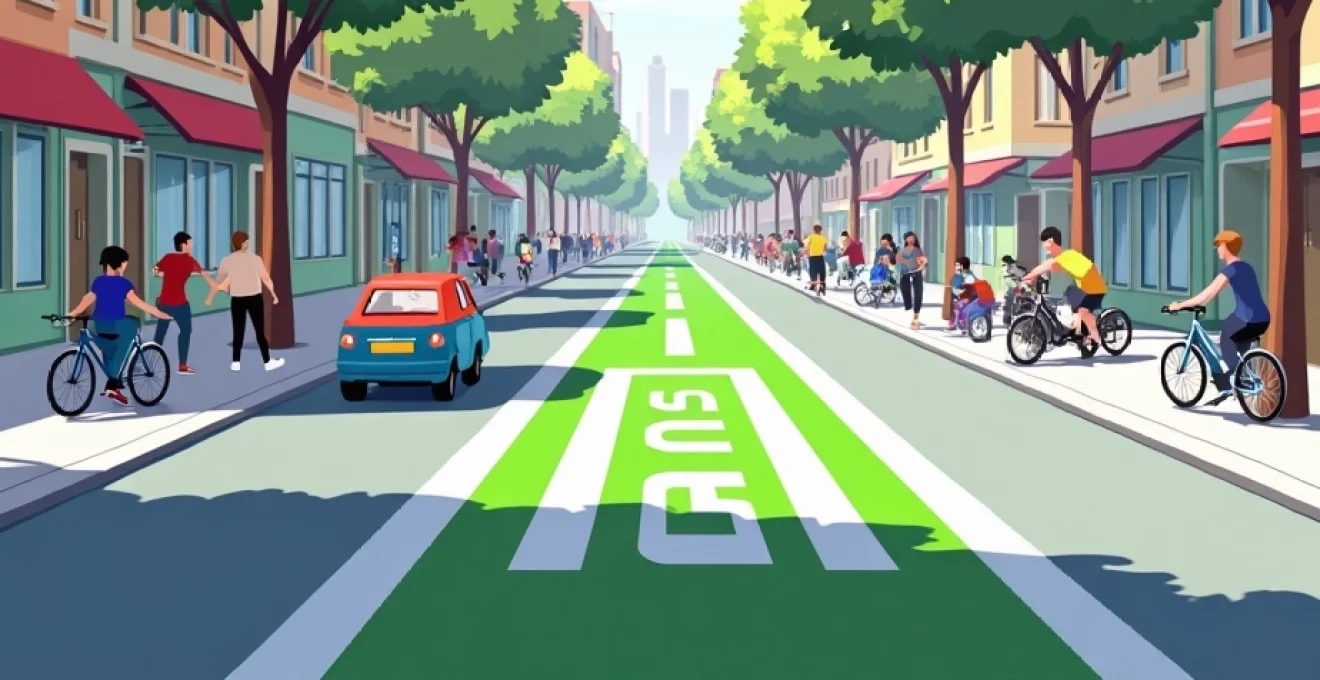
Urban areas across the globe are experiencing an unprecedented transformation as cities grapple with climate change, air pollution, and the need for more liveable environments. Car-free zones have emerged as a powerful tool in sustainable city planning, fundamentally reshaping how urban spaces function and how residents interact with their environment. These initiatives represent more than just traffic restrictions; they embody a holistic approach to creating healthier, more equitable, and environmentally responsible urban communities.
The evidence supporting car-free urban planning is compelling. Research demonstrates that transport emissions in urban areas can be reduced by up to 72% when comprehensive car reduction strategies are implemented, whilst simultaneously improving air quality, enhancing public health outcomes, and creating more vibrant community spaces. As cities worldwide commit to carbon neutrality targets, car-free zones have become essential infrastructure for achieving these ambitious climate goals.
Defining Car-Free zones: urban planning typologies and implementation models
Car-free zones encompass a diverse range of urban interventions, each designed to reduce vehicular dependency whilst enhancing alternative mobility options. Understanding these typologies is crucial for planners seeking to implement effective sustainable transport strategies. The most successful implementations recognise that car-free does not necessarily mean car-absent, but rather car-subordinated to pedestrian and cyclist needs.
Pedestrian-only districts: barcelona’s superblocks and copenhagen’s strøget
Barcelona’s revolutionary superblocks represent perhaps the most ambitious pedestrian-focused urban intervention of the 21st century. These 400-metre by 400-metre zones prioritise walking, cycling, and public space over private vehicle access. The design allows limited vehicle access for residents and deliveries whilst creating expansive areas for community activities, children’s play, and urban greenery. Initial evaluations indicate that superblocks reduce air pollution by up to 32% whilst increasing commercial activity in affected areas.
Copenhagen’s Strøget, one of Europe’s longest pedestrian streets, demonstrates the long-term viability of car-free commercial districts. Established in 1962, this 1.1-kilometre pedestrian zone has evolved into a thriving economic and cultural hub. The success of Strøget illustrates how pedestrian-only zones can maintain commercial vitality whilst dramatically improving air quality and creating attractive urban environments that encourage social interaction.
Low emission zones (LEZ) and ultra low emission zones (ULEZ) frameworks
Low emission zones represent a graduated approach to car restriction, targeting the most polluting vehicles whilst maintaining access for cleaner alternatives. London’s ULEZ system, expanded in 2023, charges vehicles that don’t meet stringent emission standards £12.50 per day to enter designated areas. This framework has proven remarkably effective, reducing nitrogen dioxide concentrations by up to 46% in central London whilst generating revenue for public transport improvements.
The ULEZ model demonstrates how technology can support car-free initiatives through automated number plate recognition systems and dynamic charging mechanisms. These zones create powerful economic incentives for vehicle owners to transition to electric or hybrid alternatives, effectively accelerating the urban transport transition without outright prohibition.
Temporary Car-Free initiatives: ciclovía programs and open streets movement
Temporary car-free initiatives provide cities with valuable opportunities to test public response and measure impacts before implementing permanent changes. Bogotá’s Ciclovía program, which closes over 120 kilometres of streets to cars every Sunday, attracts more than two million participants weekly. These events demonstrate the latent demand for car-free spaces and help build public support for permanent interventions.
The open streets movement has gained momentum during the COVID-19 pandemic, with cities rapidly implementing temporary measures to support physical distancing and active transport. Many of these tactical urbanism interventions have proven so successful that they’ve been made permanent, highlighting the effectiveness of iterative, community-responsive planning approaches.
Mixed-use Car-Restricted areas: woonerf design principles from the netherlands
The Dutch woonerf concept, literally meaning “living street,” creates shared spaces where pedestrians, cyclists, and vehicles coexist within carefully designed environments that prioritise human-scale activities. These areas typically feature speed restrictions of 15 km/h, raised surfaces that blur the distinction between roadway and pavement, and strategic placement of street furniture to naturally calm traffic.
Woonerf principles have been successfully adapted in cities worldwide, from London’s Exhibition Road to New York’s shared street initiatives. The approach recognises that complete car exclusion may not be feasible in all contexts, but that thoughtful design can dramatically alter the balance of power between different transport modes whilst maintaining essential access.
Transit-oriented development integration within Car-Free urban corridors
The success of car-free zones depends fundamentally on the availability of high-quality alternatives to private vehicle ownership. Transit-oriented development creates dense, mixed-use environments around public transport nodes, reducing the need for car travel whilst supporting vibrant urban communities. Research indicates that residents living within 500 metres of high-frequency public transport are three times more likely to choose sustainable transport modes for their daily journeys.
Bus rapid transit (BRT) systems and dedicated lane infrastructure
Bus Rapid Transit systems provide the backbone for many successful car-free initiatives, offering subway-level service quality at a fraction of the infrastructure cost. Curitiba’s pioneering BRT system demonstrates how dedicated bus lanes, level boarding, and integrated urban planning can create highly effective alternatives to private car ownership. The city’s integrated approach has resulted in public transport carrying 70% of all passenger trips, despite high car ownership rates.
Modern BRT systems increasingly incorporate advanced technologies including real-time passenger information, contactless payment systems, and GPS-based fleet management. These features enhance the user experience and demonstrate that public transport can match or exceed the convenience traditionally associated with private vehicles. The key lies in creating systems that are frequent, reliable, and seamlessly integrated with other transport modes.
Light rail transit integration: portland’s MAX system case study
Portland’s Metropolitan Area Express (MAX) light rail system exemplifies successful integration between rail transit and car-free urban development. The system has catalysed over $12 billion in transit-oriented development since its inception, creating dense, walkable neighbourhoods that support car-free lifestyles. The Pearl District, developed around MAX stations, has evolved from an industrial area into a thriving residential and commercial district with one of the lowest car ownership rates in the United States.
The MAX system’s success demonstrates the importance of coordinated planning between transport infrastructure and land use regulation. Zoning modifications around stations encourage higher density development whilst parking maximums rather than minimums prevent car-oriented development patterns. This integrated approach ensures that transit investment generates genuine alternatives to car dependency rather than simply adding capacity to existing travel patterns.
Micro-mobility networks: E-Scooter and Bike-Share station placement
Micro-mobility services have emerged as crucial first-and-last-mile solutions that extend the effective catchment of public transport systems. Strategic placement of bike-share and e-scooter docking stations creates seamless connections between residential areas, transit stops, and employment centres. Data from Paris indicates that bike-share users are four times more likely to use public transport for longer journeys, demonstrating the complementary relationship between different sustainable transport modes.
Successful micro-mobility networks require careful consideration of topography, destination density, and integration with existing transport infrastructure. Copenhagen’s city bike program incorporates GPS tracking and electric assistance, making cycling accessible to a broader demographic whilst generating valuable data for transport planning. The integration of payment systems across different transport modes creates a seamless user experience that rivals the convenience of private car ownership.
Park-and-ride facilities at Car-Free zone peripheries
Park-and-ride facilities provide essential transitional infrastructure that allows car-dependent residents to access car-free zones whilst gradually shifting towards more sustainable transport patterns. Strategic placement of these facilities at the intersection of suburban areas and high-quality public transport creates opportunities for multimodal journeys. Vienna’s comprehensive park-and-ride network includes over 20,000 spaces integrated with the city’s U-Bahn, S-Bahn, and tram systems.
Modern park-and-ride facilities increasingly incorporate additional services including electric vehicle charging, bike-share integration, and retail amenities. These multipurpose hubs create destinations in their own right whilst supporting the transition away from car-dependent urban development patterns. The key is ensuring that park-and-ride facilities enhance rather than undermine public transport usage by creating convenient, secure, and well-connected interchange points.
Economic impact assessment methodologies for Car-Free zone implementation
Economic assessment of car-free zones requires sophisticated methodologies that capture both direct and indirect impacts across multiple timeframes and stakeholder groups. Traditional economic analyses often underestimate the benefits of car-free initiatives by focusing primarily on immediate commercial impacts whilst overlooking broader economic benefits including health improvements, property value increases, and tourism revenue. Comprehensive economic assessments must incorporate these wider impacts to provide accurate cost-benefit analyses for decision-makers.
Commercial impact studies from pedestrianised areas consistently demonstrate positive economic outcomes for local businesses. Research from New York’s Times Square pedestrianisation shows retail rents increased by 71% following implementation, whilst pedestrian volumes increased by 11%. Similar patterns emerge across diverse contexts, from Copenhagen’s Latin Quarter to Melbourne’s Bourke Street Mall. The key mechanism appears to be increased dwell time and foot traffic, which more than compensates for any reduction in drive-by customers.
Property value impacts represent another crucial economic consideration, with studies indicating that proximity to car-free areas typically increases residential property values by 10-25%. This premium reflects the desirability of quieter, cleaner, and more walkable neighbourhoods. However, planners must carefully consider gentrification risks and implement appropriate affordable housing policies to ensure that car-free initiatives don’t displace existing communities.
The economic benefits of car-free zones extend far beyond immediate commercial impacts, encompassing health savings, productivity gains, and enhanced quality of life that generate long-term economic value for entire urban regions.
Health economic assessments reveal substantial savings from reduced air pollution, increased physical activity, and fewer traffic accidents. The European Environment Agency estimates that air pollution costs European economies €166 billion annually in health impacts alone. Car-free zones that reduce local air pollution concentrations by 30-50% therefore generate significant health economic benefits that often exceed implementation costs within 5-10 years.
| Economic Impact Category | Typical Magnitude | Timeframe for Realisation | Measurement Methodology |
|---|---|---|---|
| Retail Revenue | +15% to +40% | 1-2 years | Before/after sales data analysis |
| Property Values | +10% to +25% | 2-5 years | Hedonic pricing models |
| Health Savings | €50-200 per resident annually | 3-10 years | Avoided healthcare cost analysis |
| Tourism Revenue | +20% to +60% | 1-3 years | Visitor survey and expenditure tracking |
Air quality monitoring and carbon footprint reduction metrics
Robust monitoring systems form the foundation of successful car-free zone implementation, providing the data necessary to demonstrate environmental benefits and guide adaptive management strategies. Modern air quality monitoring networks combine fixed monitoring stations with mobile sensors and satellite data to create comprehensive pictures of pollution patterns before, during, and after car-free zone implementation. These systems must measure multiple pollutants including nitrogen dioxide, particulate matter (PM2.5 and PM10), and ground-level ozone to capture the full environmental impact of traffic reduction.
Nitrogen dioxide concentrations serve as particularly useful indicators of traffic-related pollution, with studies showing reductions of 30-60% in car-free zones compared to adjacent areas. London’s ULEZ implementation demonstrated a 44% reduction in roadside nitrogen dioxide concentrations within the first year, providing compelling evidence of the immediate air quality benefits achievable through car restriction policies. These improvements translate directly into public health benefits, with estimated reductions in asthma exacerbations, cardiovascular disease, and premature mortality.
Carbon footprint assessment requires sophisticated modelling that accounts for both direct emission reductions from reduced vehicle kilometres travelled and indirect impacts from modal shift to lower-carbon alternatives. Life-cycle assessment methodologies must consider the full carbon impact of alternative transport infrastructure, including the embodied carbon in electric buses, cycling infrastructure, and pedestrian facilities. Research indicates that well-designed car-free zones typically achieve net carbon reductions of 40-70% compared to business-as-usual scenarios when accounting for induced demand effects and infrastructure lifecycle impacts.
Real-time monitoring capabilities enable dynamic management of car-free zones, allowing cities to respond rapidly to changing conditions and optimise environmental outcomes. Barcelona’s sensor network provides minute-by-minute air quality data that informs decisions about temporary traffic restrictions during pollution episodes. This adaptive approach maximises environmental benefits whilst maintaining public support through responsive management that demonstrates clear connections between policy interventions and environmental improvements.
Comprehensive environmental monitoring systems provide the evidence base necessary to build public support for car-free initiatives whilst enabling continuous improvement through data-driven management approaches.
Noise pollution monitoring represents another crucial metric, with car-free zones typically reducing ambient noise levels by 3-8 decibels. While this may seem modest, the logarithmic nature of the decibel scale means these reductions represent substantial improvements in acoustic quality. Studies from Vienna’s car-free zones indicate that noise reductions of this magnitude correlate with improved sleep quality, reduced stress levels, and enhanced cognitive performance among residents and workers.
Social equity considerations in Car-Free zone policy development
Social equity must be central to car-free zone planning to ensure that sustainable transport initiatives benefit all community members rather than exacerbating existing inequalities. Low-income households, disabled people, elderly residents, and other potentially vulnerable groups face distinct challenges in accessing car-free areas and may require targeted support to realise the benefits of sustainable transport policies. Inclusive design principles ensure that car-free zones enhance rather than restrict mobility options for all urban residents.
Accessibility compliance under the equality act 2010
Legal compliance with accessibility requirements creates both challenges and opportunities for car-free zone design. The Equality Act 2010 requires that public spaces provide equal access for disabled people, necessitating careful consideration of how car restrictions might impact mobility for people with disabilities. Successful car-free zones incorporate accessible public transport, tactile paving systems, appropriate gradients, and clear sight lines that support navigation for people with visual, mobility, and cognitive impairments.
Modern accessibility standards extend beyond traditional wheelchair access to encompass a broader understanding of disability and mobility needs. Audio beacon systems, high-contrast surface materials, and intuitive wayfinding support independent navigation for people with visual impairments. Rest areas with appropriate seating at regular intervals accommodate people with mobility limitations or chronic conditions that affect stamina. These design elements enhance the experience for all users whilst ensuring compliance with legal accessibility requirements.
Low-income household mobility solutions and public transport subsidies
Car-free zones risk creating mobility barriers for low-income households if alternative transport options remain expensive or inadequate. Progressive pricing policies for public transport, including means-tested discounts and free travel for certain groups, ensure that car-free initiatives enhance rather than restrict mobility for economically disadvantaged residents. Vienna’s annual public transport pass costs less than two weeks of car ownership expenses, making sustainable transport genuinely accessible to all income groups.
Bike-share and micro-mobility services require particular attention to equity considerations, as traditional payment models often exclude households without credit cards or bank accounts. Inclusive payment options, including cash payment at retail locations and integration with existing social services, ensure that new mobility services serve diverse populations. Portland’s bike-share system reserves 20% of its fleet for an income-qualified program that provides significant discounts for low-income users.
Age-friendly design standards for pedestrian infrastructure
Age-friendly design principles ensure that car-free zones accommodate the needs of older adults who may have reduced mobility, slower walking speeds, or increased vulnerability to environmental hazards. Generous crossing times at intersections, well-maintained walking surfaces, adequate lighting, and protection from weather create environments that support independent mobility for elderly residents. Research indicates that age-friendly improvements benefit all pedestrians whilst being essential for older adults.
Intergenerational programming within car-free zones creates opportunities for social interaction and mutual support between different age groups. Community gardens, outdoor exercise equipment designed for older adults, and flexible programming spaces encourage active ageing whilst contributing to community cohesion
. Regular community programming activities, including outdoor fitness classes, farmers markets, and cultural events, transform car-free zones into vibrant community hubs that serve residents across all age groups.
Emergency services access protocols and blue light route planning
Effective emergency services access protocols are essential for maintaining public safety whilst preserving the integrity of car-free zones. Modern emergency response systems incorporate GPS tracking, real-time traffic management, and dedicated emergency corridors that allow rapid response without compromising pedestrian-friendly environments. London’s emergency services protocols for car-free areas include retractable bollards, designated emergency vehicle routes, and coordinated communication systems between different emergency service providers.
Blue light route planning requires careful coordination between urban planners, emergency services, and traffic management systems. Dynamic access control systems can automatically detect approaching emergency vehicles and adjust traffic control measures accordingly. These systems typically reduce emergency response times compared to congested conventional streets, as car-free zones eliminate the traffic delays that often impede emergency vehicle movement in urban areas.
Community safety protocols within car-free zones extend beyond emergency vehicle access to include pedestrian safety measures, crime prevention through environmental design, and robust lighting systems. Well-designed car-free zones often experience lower crime rates due to increased natural surveillance from higher pedestrian volumes and improved visibility. However, planners must ensure that emergency services can respond effectively to medical emergencies, fires, and security incidents without compromising the pedestrian-friendly character of these spaces.
Technological infrastructure supporting Car-Free urban environments
Smart city technologies play an increasingly crucial role in optimising car-free zone performance, providing the data analytics and management systems necessary to balance competing demands whilst maximising environmental and social benefits. Advanced technological infrastructure enables responsive management that adapts to changing conditions, monitors performance metrics in real-time, and provides users with the information necessary to navigate car-free environments effectively. The integration of Internet of Things (IoT) devices, artificial intelligence, and mobile applications creates seamless user experiences that rival the convenience traditionally associated with private vehicle ownership.
Smart traffic management systems and dynamic route optimisation
Intelligent traffic management systems coordinate the flow of pedestrians, cyclists, public transport, and authorised vehicles within car-free zones through adaptive signal timing, dynamic routing algorithms, and real-time capacity management. Barcelona’s smart traffic system processes data from over 3,000 sensors to optimise pedestrian crossing times, coordinate public transport services, and manage delivery vehicle access windows. These systems reduce average journey times for sustainable transport modes whilst maintaining the pedestrian-friendly character of car-free areas.
Machine learning algorithms analyse historical and real-time data to predict demand patterns and optimise infrastructure utilisation. During major events or unusual weather conditions, these systems can automatically adjust access permissions, modify public transport frequencies, and provide alternative routing suggestions to maintain optimal flow conditions. The result is a more responsive urban environment that adapts to user needs whilst maintaining policy objectives for reduced car dependency.
Dynamic route optimisation extends beyond traditional traffic management to encompass pedestrian and cycling flow management. Heat mapping technology identifies congestion points and suggests alternative routes through mobile applications, distributing demand more evenly across available infrastructure. This approach prevents overcrowding whilst encouraging exploration of different areas within car-free zones, supporting local business diversity and community cohesion.
Iot sensor networks for Real-Time air quality and noise monitoring
Comprehensive sensor networks provide continuous monitoring of environmental conditions within car-free zones, enabling data-driven management decisions and demonstrating the environmental benefits of reduced vehicle access. Modern IoT sensor arrays measure air quality parameters, noise levels, pedestrian volumes, and microclimate conditions at high temporal and spatial resolution. This data supports adaptive management strategies whilst providing compelling evidence for the environmental benefits of car-free policies.
Real-time air quality monitoring enables immediate responses to pollution episodes and provides feedback on the effectiveness of car restriction policies. Amsterdam’s sensor network triggers automatic alerts when air quality deteriorates, enabling rapid implementation of additional traffic restrictions or enhanced public transport services. Citizens can access this information through mobile applications, empowering informed decision-making about route choices and activity timing.
Noise monitoring systems demonstrate the acoustic benefits of car-free zones whilst identifying areas requiring additional soundproofing or design modifications. These systems distinguish between different noise sources, enabling targeted interventions that address specific acoustic issues without compromising the vibrancy that makes car-free zones attractive community spaces. Predictive analytics capabilities allow planners to model the acoustic impact of proposed changes before implementation, optimising design decisions to maximise acoustic quality improvements.
Digital wayfinding solutions and augmented reality navigation tools
Digital wayfinding systems replace traditional street signage with dynamic, personalised navigation tools that adapt to individual user needs, mobility capabilities, and preferences. Augmented reality applications overlay navigation information onto real-world environments through smartphone cameras, providing intuitive direction-finding that doesn’t require users to interpret traditional maps or signage. These systems are particularly valuable for visitors unfamiliar with car-free zone layouts and for people with visual impairments who benefit from audio navigation cues.
Integrated wayfinding platforms combine public transport schedules, bike-share availability, walking route optimisation, and real-time accessibility information to provide comprehensive journey planning support. Users can specify accessibility requirements, preferred travel modes, and time constraints to receive personalised routing recommendations that maximise the utility of car-free zone infrastructure. These platforms often integrate gamification elements that encourage exploration and reward sustainable transport choices.
Multilingual support and cultural adaptation ensure that digital wayfinding systems serve diverse populations effectively. Machine translation capabilities provide real-time language support whilst cultural adaptation algorithms adjust recommendations based on cultural preferences for walking distances, preferred activities, and social interaction patterns. This inclusive approach ensures that car-free zones welcome visitors from different backgrounds whilst supporting local economic development through increased tourism and cross-cultural exchange.
Electric charging infrastructure for Micro-Mobility devices
Ubiquitous charging infrastructure for electric bicycles, scooters, and other micro-mobility devices eliminates range anxiety whilst supporting the transition to sustainable transport options. Strategic placement of charging stations at transport interchanges, commercial areas, and residential zones ensures that users can maintain device charge levels throughout extended journeys. Solar-powered charging stations demonstrate renewable energy integration whilst reducing operational costs and environmental impact.
Smart charging systems optimise energy consumption by coordinating charging cycles with renewable energy availability and grid demand patterns. During periods of high solar or wind generation, charging rates increase automatically, whilst charging slows during peak electricity demand periods. This approach reduces the carbon footprint of micro-mobility services whilst supporting grid stability and renewable energy integration objectives.
Modular charging infrastructure adapts to changing technology standards and user preferences without requiring complete system replacement. Universal charging protocols ensure compatibility across different device manufacturers whilst futureproofing investments against technological obsolescence. Integration with payment systems and user applications provides seamless access to charging services whilst generating data on usage patterns that inform future infrastructure planning decisions. These comprehensive technological systems create the foundation for truly integrated, user-friendly car-free urban environments that demonstrate the potential for sustainable urban mobility solutions to enhance rather than restrict urban quality of life.