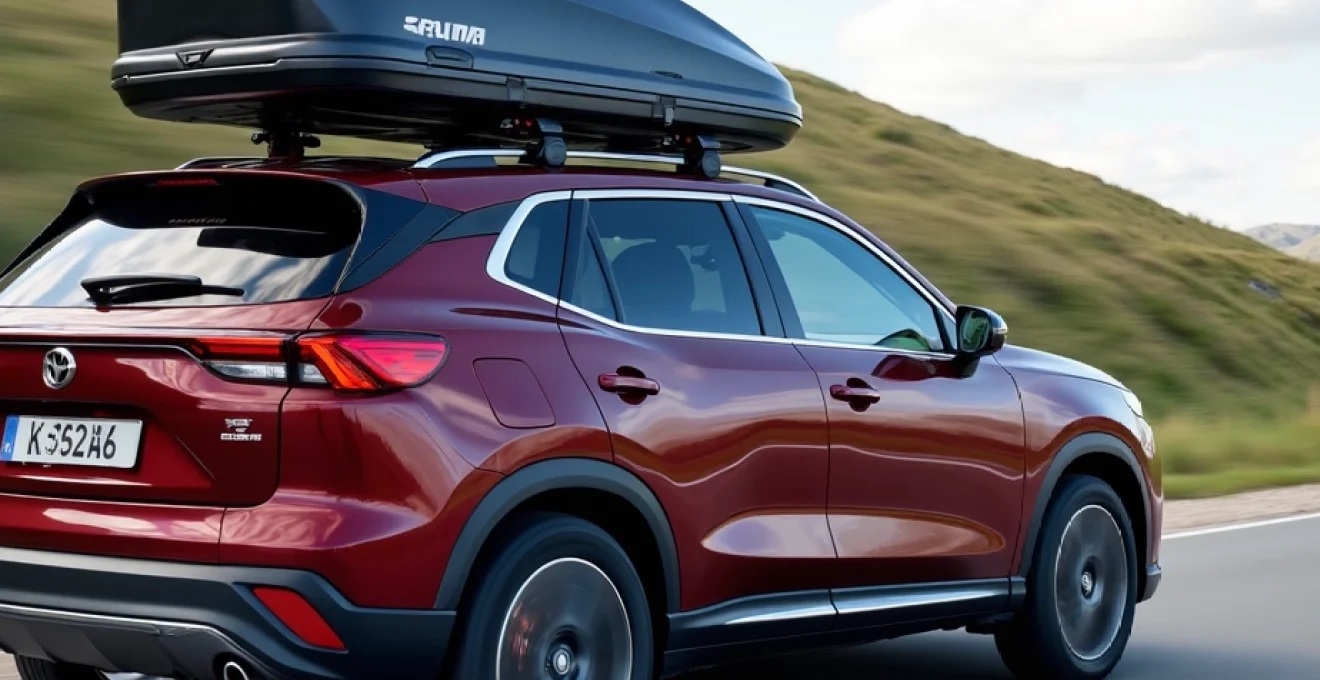
Modern vehicle owners increasingly demand versatile transportation solutions that extend beyond the confines of their car’s interior space. Whether you’re an outdoor enthusiast transporting mountain bikes to remote trails, a family planning extended camping expeditions, or a professional requiring secure equipment transport, selecting the appropriate roof rack system represents a critical investment in both functionality and safety. The complexity of today’s automotive market, featuring diverse vehicle architectures and mounting configurations, necessitates a comprehensive understanding of load dynamics, aerodynamic considerations, and compatibility requirements.
Contemporary roof rack technology has evolved dramatically from simple steel bar systems to sophisticated engineering solutions incorporating advanced materials, noise reduction technologies, and precision mounting mechanisms. This evolution addresses the growing demands for fuel efficiency optimisation , enhanced security features, and seamless integration with modern vehicle designs. Understanding these technological advances enables informed decision-making that balances performance requirements with budgetary constraints whilst ensuring long-term reliability and safety compliance.
Understanding roof rack load capacity and vehicle integration systems
The foundation of any successful roof rack installation begins with a thorough understanding of your vehicle’s load-bearing capabilities and the integration requirements specific to your car’s architecture. Modern vehicles employ diverse roof configurations, from factory-installed rails to clean roof designs requiring aftermarket mounting solutions. Each configuration presents unique challenges and opportunities for load distribution and weight management.
Vehicle manufacturers typically specify both dynamic and static load ratings, representing the maximum weight your roof can safely support during travel and when stationary. These specifications form the cornerstone of safe roof rack utilisation, yet many users overlook the critical distinction between these ratings. Dynamic loads must account for additional forces generated during acceleration, braking, and cornering, whilst static ratings apply only when the vehicle remains parked with the engine off.
Dynamic weight distribution analysis for thule and yakima base systems
Premium roof rack manufacturers like Thule and Yakima have invested heavily in developing sophisticated base systems that optimise weight distribution across vehicle roof structures. Thule’s SquareBar and AeroBar systems utilise different approaches to load distribution, with the latter incorporating aerodynamic principles that reduce both wind resistance and stress concentration points. Yakima’s CoreBar and RoundBar offerings provide alternative solutions tailored to specific vehicle types and usage patterns.
The engineering principles underlying these systems focus on distributing point loads across larger surface areas, reducing stress concentrations that could potentially damage vehicle roof structures. Advanced finite element analysis during product development ensures that load paths remain within manufacturer specifications whilst maximising carrying capacity. This scientific approach to weight distribution represents a significant advancement over traditional universal mounting systems that often create problematic stress concentration points.
Aerodynamic load testing standards and wind noise reduction technologies
Contemporary roof rack design increasingly emphasises aerodynamic efficiency, driven by consumer demands for maintained fuel economy and reduced wind noise. Independent testing facilities employ sophisticated wind tunnel methodologies to evaluate drag coefficients and noise generation across various load configurations. These standardised tests provide comparative data enabling informed product selection based on specific performance criteria.
Thule’s patented WindDiffuser technology exemplifies the industry’s commitment to aerodynamic optimisation, incorporating precisely engineered surface textures that disrupt airflow patterns responsible for noise generation. Similarly, Yakima’s StreamLine series employs computational fluid dynamics principles to minimise both drag and noise production. These innovations demonstrate how advanced engineering can significantly improve the user experience whilst maintaining structural integrity and load capacity.
Cross-bar compatibility with factory rails and aftermarket mounting points
The proliferation of vehicle-specific roof rail configurations necessitates careful consideration of cross-bar compatibility when selecting roof rack systems. Factory-installed rails vary significantly between manufacturers, incorporating different track profiles, spacing requirements, and load attachment mechanisms. Understanding these variations prevents costly compatibility issues and ensures optimal system performance.
Aftermarket mounting solutions provide alternatives for vehicles lacking factory rails, though these installations require precise vehicle-specific fitting components. Universal mounting systems, whilst initially attractive due to lower costs, often compromise both load capacity and aerodynamic performance. Vehicle-specific solutions consistently deliver superior integration, enhanced safety margins, and improved aesthetic outcomes.
Torque specifications and safety factor calculations for roof loading
Proper installation requires adherence to manufacturer-specified torque values, typically ranging from 6 to 12 Newton-metres depending on mounting hardware specifications. Under-torquing compromises system security, whilst over-torquing can damage vehicle mounting points or rack components. Professional installation tools, including calibrated torque wrenches, ensure consistent and reliable connections that maintain integrity over extended service periods.
Safety factor calculations incorporate multiple variables including dynamic load amplification, material fatigue considerations, and environmental stress factors. Industry-standard safety factors typically range from 2:1 to 4:1, providing substantial margins above anticipated operational loads. These calculations account for real-world variables that laboratory testing cannot fully replicate, ensuring reliable performance under diverse operating conditions.
Advanced cargo box selection criteria and aerodynamic performance metrics
Selecting an appropriate cargo box requires balancing multiple competing factors including capacity requirements, aerodynamic performance, security features, and vehicle compatibility. Modern cargo boxes incorporate sophisticated design elements that optimise internal volume whilst minimising external drag, representing significant technological advancement over earlier rectangular designs that prioritised capacity over aerodynamic efficiency.
Contemporary cargo box design employs advanced computational modelling to optimise external geometries for minimal drag coefficient whilst maximising internal storage volume. These optimisation processes consider multiple operating conditions including various vehicle speeds, crosswind scenarios, and different loading configurations. The resulting designs deliver measurable improvements in fuel economy compared to traditional box configurations.
Professional aerodynamic testing reveals that modern premium cargo boxes can reduce drag coefficients by up to 15% compared to equivalent-capacity rectangular designs, translating to meaningful fuel economy improvements during extended travel.
Thule motion XT vs yakima SkyBox carbonite comparative analysis
The Thule Motion XT series represents the pinnacle of cargo box engineering, incorporating dual-side opening mechanisms, advanced locking systems, and optimised aerodynamic profiles. Independent testing demonstrates drag coefficients ranging from 0.32 to 0.38 depending on specific model configurations, representing industry-leading performance in this category. The integrated PowerClick mounting system provides tool-free installation with audible confirmation of proper engagement.
Yakima’s SkyBox Carbonite series offers competitive performance with distinctive design elements including textured surface finishes and enhanced security features. Drag coefficient testing reveals values between 0.35 and 0.42, whilst the SuperLatch system provides secure mounting with visual confirmation indicators. The series incorporates UV-resistant materials specifically engineered for long-term durability under extreme environmental conditions.
| Feature | Thule Motion XT | Yakima SkyBox Carbonite |
|---|---|---|
| Drag Coefficient Range | 0.32 – 0.38 | 0.35 – 0.42 |
| Installation System | PowerClick | SuperLatch |
| Opening Configuration | Dual-side | Single-side |
| Security Rating | Premium Lock | SKS Lock System |
Coefficient of drag testing results for premium storage solutions
Independent wind tunnel testing conducted at certified automotive facilities provides objective performance data for comparative analysis between different cargo box designs. These tests employ standardised protocols including SAE J2645 automotive aerodynamic testing procedures, ensuring consistency and repeatability across different manufacturer products. Testing configurations account for various vehicle types and mounting positions to provide comprehensive performance characterisation.
Recent testing results indicate that premium cargo boxes achieve drag coefficients between 0.30 and 0.45, with significant variation based on external geometry and surface texture treatments. Aerodynamically optimised designs consistently outperform traditional rectangular configurations by margins ranging from 10% to 25%, translating to measurable fuel economy benefits during extended highway travel.
Dual-side opening mechanisms and security lock integration systems
Dual-side opening mechanisms provide enhanced accessibility, particularly beneficial for larger cargo boxes or when vehicle parking constraints limit access to specific sides. These systems require sophisticated hinge designs that maintain structural integrity whilst accommodating the additional complexity of dual access points. Premium implementations incorporate gas struts that provide controlled opening and closing action regardless of access side.
Security lock integration varies significantly between manufacturers, with premium systems offering keyed-alike functionality that enables single-key operation across multiple components. Advanced locking mechanisms incorporate anti-drill features, reinforced lock cylinders, and tamper-evident designs that deter opportunistic theft attempts. Professional-grade security systems often feature insurance-approved ratings that may qualify for reduced premiums on comprehensive coverage policies.
Weather sealing technology and UV-Resistant material specifications
Effective weather sealing requires sophisticated gasket designs that maintain integrity across wide temperature ranges whilst accommodating thermal expansion of box materials. Premium cargo boxes employ multiple sealing barriers including perimeter gaskets, overlapping joint designs, and drainage channels that prevent water infiltration under extreme conditions. These systems must perform reliably across temperature ranges from -40°C to +80°C whilst maintaining flexibility and sealing effectiveness.
UV-resistant materials prevent degradation of both structural components and aesthetic finishes during prolonged sun exposure. Advanced polymer formulations incorporate UV stabilisers that maintain material properties over extended service lives, typically warranted for 5-10 years depending on manufacturer specifications. These formulations resist colour fading, surface chalking, and mechanical property degradation that compromise both appearance and functionality over time.
Specialised bike carrier systems and wheel securing technologies
Bicycle transportation demands sophisticated mounting systems that securely hold valuable equipment whilst preventing damage to delicate frame components and precision mechanisms. Modern bike carriers employ diverse mounting approaches ranging from traditional fork-mount systems to innovative frame-clamp designs that accommodate the expanding variety of bicycle architectures including full-suspension mountain bikes, carbon fibre road bikes, and increasingly popular e-bikes with non-standard geometries.
The evolution of bicycle technology, particularly the adoption of through-axle systems and disc brakes, necessitates corresponding advances in carrier design. Traditional quick-release mounting systems require modification or replacement to accommodate modern bicycle hardware, whilst maintaining the security and convenience that users expect. This technological convergence between automotive and cycling industries drives continuous innovation in carrier design and functionality.
Thule ProRide vs yakima HighRoad Fork-Mount comparison
The Thule ProRide represents the gold standard in roof-mounted bicycle carriers, incorporating an innovative frame-mounting system that eliminates the need for front wheel removal. This design accommodates bicycles with wheel sizes from 20″ to 29″ including fat bikes with tyres up to 4.7″ wide. The automatic frame holder adjusts to accommodate frame tubes between 22mm and 80mm diameter, providing universal compatibility across diverse bicycle types.
Yakima’s HighRoad system offers competitive functionality with distinctive design elements including a ratcheting wheel tray that secures both wheels simultaneously. The system accommodates similar wheel size ranges whilst providing enhanced stability through its dual-wheel securing mechanism. Installation requires no frame contact, making it particularly suitable for carbon fibre bicycles where frame clamping raises durability concerns.
Carbon fibre frame protection and Anti-Theft locking mechanisms
Carbon fibre bicycle frames require specialised handling considerations due to their susceptibility to compression damage from traditional clamping mechanisms. Modern carriers incorporate protective padding materials and adjustable clamping pressures specifically engineered to secure carbon frames without exceeding material stress limits. These protective systems often employ soft-touch materials that distribute clamping forces across larger contact areas.
Anti-theft locking mechanisms range from basic cable lock integration to sophisticated hardened steel lock cylinders that secure both bicycles and carriers to roof rack systems. Premium locking systems often feature keyed-alike functionality that enables single-key operation across multiple carriers and accessories. Insurance considerations may require specific security ratings to maintain coverage for high-value bicycle equipment.
Multi-bike capacity solutions for family and commercial applications
Family and commercial applications often require transportation of multiple bicycles simultaneously, necessitating careful consideration of weight distribution, aerodynamic impact, and access convenience. Multi-bike systems must balance capacity maximisation with safety requirements and vehicle handling characteristics. Weight distribution becomes particularly critical when transporting multiple e-bikes that significantly exceed traditional bicycle weights.
Commercial applications may require rapid loading and unloading capabilities that prioritise operational efficiency over maximum security. These systems often incorporate quick-release mechanisms and standardised mounting protocols that enable consistent operation across diverse vehicle fleets. Durability requirements for commercial applications typically exceed consumer specifications due to increased utilisation rates and exposure to diverse operating environments.
E-bike compatible carriers with enhanced weight rating systems
The proliferation of e-bikes presents unique challenges for carrier design due to their increased weight, non-standard geometries, and valuable electronic components. Traditional carriers often lack sufficient weight capacity or secure mounting points for e-bike batteries and control systems. Specialised e-bike carriers incorporate enhanced load ratings typically ranging from 25kg to 30kg compared to 17-20kg for traditional bicycle carriers.
Battery security represents a critical consideration for e-bike transportation, with some systems incorporating lockable battery storage compartments or removable battery mounting solutions. The integration of electronic components requires protection from weather exposure and vibration damage that could compromise system functionality. Premium e-bike carriers often include weather covers and vibration dampening systems specifically designed for electronic component protection.
Industry analysis indicates that e-bike sales growth of 25% annually drives corresponding demand for specialised transportation solutions that accommodate their unique requirements whilst maintaining the security and convenience expected by premium bicycle owners.
Professional installation techniques and Vehicle-Specific mounting protocols
Professional installation techniques ensure optimal system performance whilst preventing vehicle damage and maintaining warranty compliance. Each vehicle manufacturer employs specific mounting point designs and load distribution requirements that necessitate corresponding installation protocols. Understanding these requirements prevents costly errors and ensures long-term system reliability under diverse operating conditions.
Vehicle-specific mounting protocols account for unique architectural features including roof reinforcement locations, drainage systems, and electronic component proximity. Modern vehicles increasingly incorporate advanced driver assistance systems that require careful consideration during roof rack installation to prevent interference with radar, camera, or GPS antenna systems. Professional installers maintain current knowledge of these evolving requirements across diverse vehicle platforms.
Installation verification procedures include torque specification compliance, load distribution assessment, and functional testing of security systems. These protocols ensure that installations meet manufacturer specifications whilst providing optimal performance characteristics. Professional installations typically include warranty coverage that protects both equipment and vehicle against installation-related issues, providing additional peace of mind for significant investments.
Maintenance schedules and Long-Term storage solution optimisation
Systematic maintenance scheduling extends equipment service life whilst ensuring continued safety and performance. Roof rack systems require periodic inspection of mounting hardware, lubrication of moving components, and replacement of wear items including gaskets, locks, and protective coatings. Environmental factors including salt exposure, UV radiation, and temperature cycling accelerate degradation processes that regular maintenance can mitigate.
Long-term storage optimisation involves both equipment protection and space efficiency considerations. Premium roof rack systems often incorporate modular designs that enable compact storage when not in use, whilst protective covers prevent UV degradation and contamination accumulation. Proper storage techniques preserve both functionality and aesthetic appearance over extended periods, maximising return on equipment investments.
Preventive maintenance protocols typically recommend quarterly inspections during active use periods, with more frequent checks following extreme weather exposure or extensive travel. These inspections focus on mounting hardware security, moving component operation, and structural integrity assessment. Documentation of maintenance activities supports warranty claims and enables trending analysis that identifies emerging issues before they compromise system safety.
Seasonal preparation procedures account for changing environmental conditions that affect system performance and durability. Winter preparation includes corrosion protection measures for salt-exposed systems, whilst summer protocols focus on UV protection and thermal expansion accommodation. These seasonal considerations ensure reliable operation across diverse climatic conditions whilst minimising degradation from environmental stress factors.
Legal compliance standards and insurance considerations for Roof-Mounted equipment
Legal compliance requirements for roof-mounted equipment vary significantly between jurisdictions, encompassing load projection limits, height restrictions, and equipment securing standards. Understanding these requirements prevents costly violations whilst ensuring safe operation under diverse regulatory frameworks. Recent legislation increasingly emphasises environmental considerations including fuel economy impact and noise pollution that affect equipment selection and configuration decisions.
Insurance considerations for roof-mounted equipment encompass both liability and comprehensive coverage aspects that require careful policy review and potential modification. Standard automotive policies may exclude coverage for aftermarket equipment or limit compensation for theft or damage claims. Specialised equipment insurance options provide enhanced protection for valuable roof rack systems and transported equipment, though premium costs require evaluation against potential loss exposure.
Documentation requirements vary by jurisdiction but generally mandate retention of installation records, maintenance logs, and equipment specifications for potential inspection purposes. Some commercial applications require periodic certification by qualified personnel, particularly for fleet vehicles or specialised transport operations. These compliance measures ensure ongoing safety whilst providing legal protection against liability claims related to equipment failure or improper installation.
Professional liability considerations extend beyond basic equipment coverage to encompass potential third-party damages resulting from equipment failure or improper loading practices. Comprehensive risk assessment should evaluate potential exposure scenarios including highway debris incidents, parking structure damage, and loading zone accidents that could result in significant financial liability. Professional consultation with insurance specialists familiar with automotive equipment applications provides valuable guidance for optimal coverage configuration.
Load securing regulations typically mandate specific tie-down requirements and projection limits that vary significantly between different transport categories. Commercial vehicles often face more stringent requirements than private automobiles, whilst international travel may necessitate compliance with multiple regulatory frameworks simultaneously. Understanding these varying requirements prevents costly delays and potential legal complications during extended travel or commercial operations.
Equipment certification standards increasingly emphasise third-party testing and validation procedures that provide independent verification of manufacturer claims regarding load capacity, safety factors, and durability performance. These certifications become particularly important for commercial applications where regulatory compliance audits may scrutinise equipment specifications and installation procedures. Maintaining current certification documentation supports both legal compliance and insurance coverage requirements whilst demonstrating due diligence in equipment selection and maintenance protocols.