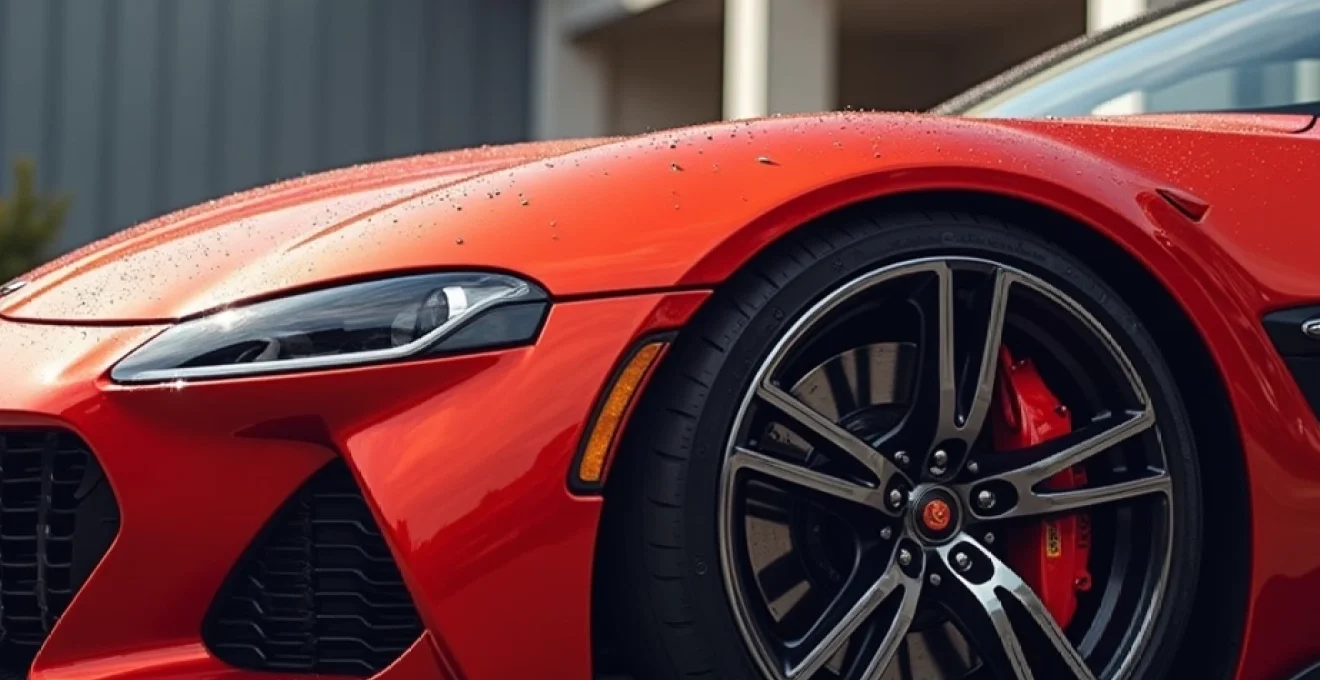
Vehicle paint protection represents one of the most critical aspects of automotive maintenance, directly impacting both aesthetic appeal and long-term value retention. Modern automotive finishes face constant bombardment from environmental contaminants, UV radiation, road debris, and chemical pollutants that can cause irreversible damage when left untreated. Professional-grade paint care extends far beyond basic washing, encompassing sophisticated decontamination processes, multi-stage correction techniques, and advanced protection systems that preserve the integrity of clear coat finishes for years to come.
The investment in proper paint maintenance pays dividends through enhanced resale value, reduced repair costs, and sustained visual appeal. Today’s automotive enthusiasts and professional detailers employ increasingly sophisticated methodologies that combine traditional craftsmanship with cutting-edge technology to achieve showroom-quality results that protect against the harsh realities of daily driving conditions.
Pre-washing assessment and paint surface preparation techniques
Effective paint correction begins with a thorough assessment of surface contamination levels and existing damage patterns. Professional detailers conduct systematic evaluations using specialised inspection lighting to identify swirl marks, scratches, oxidation, and embedded contaminants that standard washing cannot address. This preliminary assessment determines the appropriate correction strategy and prevents unnecessary aggressive treatment of pristine surfaces.
Paint contamination identification using clay bar testing methods
Clay bar testing provides the most reliable method for detecting surface-bonded contaminants that compromise paint smoothness and gloss levels. The clay bar glide test involves gently running a lubricated clay medium across paint panels to identify areas where contamination creates drag or resistance. Professional-grade clay bars come in varying degrees of aggressiveness, from fine-grade options for lightly contaminated surfaces to medium and aggressive formulations for heavily soiled vehicles.
The clay bar treatment serves as a crucial bridge between washing and polishing, removing microscopic particles that would otherwise interfere with subsequent correction processes. Proper clay bar technique requires adequate lubrication using dedicated clay lubricants or diluted quick detailer solutions to prevent marring while effectively lifting contaminants from the clear coat surface.
Iron fallout detection and decontamination protocols
Iron fallout represents one of the most insidious forms of paint contamination, particularly affecting vehicles exposed to industrial environments, construction zones, or railway proximity. Iron particles embed themselves deep within clear coat layers, causing oxidation staining that appears as brown or orange speckling across paint surfaces. Professional iron removal products utilise chelating agents that react specifically with iron particles, turning purple upon contact to indicate active decontamination.
The decontamination process requires careful timing and thorough rinsing to prevent chemical etching of sensitive paint surfaces. Temperature considerations play a crucial role, as excessive heat can accelerate chemical reactions beyond safe parameters, potentially causing permanent damage to clear coat finishes.
Tar and tree sap removal using Citrus-Based solvents
Organic contaminants such as tar, tree sap, and adhesive residues require specialised removal techniques that dissolve bonding agents without compromising paint integrity. Citrus-based solvents leverage natural d-limonene compounds that effectively break down organic substances while remaining relatively gentle on automotive finishes. The application process involves allowing sufficient dwell time for solvent penetration followed by gentle agitation using microfibre applicators.
Professional detailers often employ heat application through steam or warm air to accelerate the softening process, particularly for aged or heavily bonded contaminants. Temperature control remains critical to prevent thermal shock or accelerated chemical reactions that could damage underlying paint layers.
Water spot etching assessment and surface damage evaluation
Water spot etching represents a complex form of paint damage that occurs when mineral deposits create chemical reactions with clear coat surfaces. The assessment process requires careful examination under controlled lighting conditions to distinguish between surface-level mineral deposits and actual etching that has compromised clear coat integrity. Professional paint thickness gauges provide quantitative measurements that help determine correction feasibility and appropriate treatment protocols.
Etching severity classifications range from light surface staining that responds to mild polishing compounds to deep chemical burns requiring extensive correction or refinishing procedures. The evaluation process must account for paint system age, previous correction history, and remaining clear coat thickness to ensure safe and effective treatment approaches.
Multi-stage paint correction and defect removal systems
Professional paint correction employs systematic approaches that progressively refine surface quality through carefully calibrated abrasive processes. Modern correction methodologies balance defect removal effectiveness with clear coat preservation, utilising advancing pad technology, refined abrasive formulations, and precision machine control systems to achieve optimal results while maintaining long-term paint health.
Paint thickness gauge measurements and clear coat analysis
Accurate paint thickness measurements form the foundation of safe correction procedures, providing essential data about remaining clear coat depth and previous refinishing work. Professional-grade thickness gauges utilise electromagnetic induction or eddy current technologies to measure coating depths with micron-level precision across different substrate materials. Measurement protocols require multiple readings per panel to account for factory application variations and identify areas of previous bodywork.
Clear coat thickness typically ranges from 40 to 60 microns on modern vehicles, with luxury manufacturers often applying thicker coatings for enhanced durability and correction potential. Documentation of baseline measurements enables tracking of correction progress and ensures preservation of adequate clear coat thickness for future maintenance requirements.
Compound selection for heavy oxidation and swirl mark removal
Compound selection requires careful consideration of defect severity, paint hardness characteristics, and desired finish quality outcomes. Modern cutting compounds utilise advanced abrasive technologies including diminishing abrasives that break down during use to provide progressively finer cutting action. Professional formulations balance cutting efficiency with finish refinement, reducing the number of correction stages required to achieve desired results.
Heavy oxidation removal often requires aggressive cutting compounds with larger abrasive particles capable of penetrating through oxidised layers to reveal fresh paint beneath, while swirl mark correction typically employs finer abrasives that preserve surface integrity during defect removal processes.
The compound application process involves careful product distribution, appropriate working time management, and systematic pad pressure control to ensure uniform correction across treated surfaces. Professional detailers monitor correction progress through regular inspection intervals, adjusting technique parameters to optimise efficiency while preventing overcorrection scenarios.
Polish application techniques for hologram elimination
Hologram elimination represents a critical refinement stage that removes micro-marring left by compound application while developing optimal gloss and clarity levels. Professional polishing techniques employ specific orbital patterns, controlled pressure application, and precisely timed working intervals to achieve hologram-free finishes that maximise paint depth and reflection quality.
The polishing process requires careful monitoring of surface temperatures to prevent thermal damage while maintaining adequate working time for product effectiveness. Professional-grade polishes incorporate sophisticated abrasive technologies that provide graduated cutting action, transitioning from defect removal to finish refinement within single application cycles.
Dual action polisher settings for different paint hardness levels
Paint hardness variations between manufacturers and model years necessitate customised polisher settings to achieve optimal correction results without causing damage. Japanese paint systems typically exhibit harder characteristics requiring higher oscillation speeds and increased pressure application, while European formulations often respond better to moderate settings with extended working times. German luxury vehicles frequently feature extremely hard clear coats that challenge conventional correction approaches.
Professional dual action polishers offer variable speed controls ranging from 1,000 to 6,800 oscillations per minute, enabling precise matching of correction parameters to specific paint characteristics. The orbital throw distance, typically 8mm to 21mm, affects correction aggressiveness and finish quality outcomes, with longer throws providing increased cutting action for defect removal applications.
Microfibre pad selection and Cross-Contamination prevention
Pad selection directly influences correction effectiveness and finish quality outcomes, with different microfibre constructions optimised for specific stages of the correction process. Cutting pads feature more aggressive microfibre textures with higher pile heights that retain abrasive compounds effectively while providing consistent cutting action across paint surfaces. Finishing pads utilise finer microfibre constructions that minimise marring potential while developing optimal gloss characteristics.
Cross-contamination prevention protocols require systematic pad cleaning procedures between applications, dedicated pad assignments for different correction stages, and proper storage systems that maintain pad integrity. Professional detailers employ compressed air cleaning systems to remove embedded particles while preserving microfibre structure and effectiveness throughout extended correction sessions.
Advanced paint protection application methods
Modern paint protection technologies offer unprecedented durability and performance characteristics that far exceed traditional wax-based systems. These advanced protection methods require precise application techniques, controlled environmental conditions, and thorough surface preparation to achieve maximum effectiveness and longevity. The investment in professional-grade protection systems provides long-term value through reduced maintenance requirements and sustained aesthetic appeal.
Ceramic coating preparation and Panel-by-Panel application
Ceramic coating success depends entirely upon meticulous surface preparation that eliminates all traces of contamination, oils, and residues that could interfere with chemical bonding processes. The preparation sequence involves decontamination washing, clay bar treatment, paint correction to remove all defects, and final surface preparation using specialised panel preparation products that ensure optimal coating adhesion.
Professional ceramic coatings require controlled application environments with specific temperature and humidity parameters to ensure proper curing characteristics. The panel-by-panel application technique involves precise product distribution using specialised applicators, systematic coverage patterns that prevent overlap marks, and carefully timed removal procedures that achieve uniform coating thickness across treated surfaces.
Curing protocols vary significantly between coating formulations, with some requiring immediate removal after application while others benefit from extended flash times before buffing procedures. Professional installers monitor ambient conditions continuously and adjust technique parameters accordingly to ensure consistent results regardless of environmental variations.
Paint protection film installation on High-Impact zones
Paint protection film installation represents the ultimate defense against physical damage from road debris, stone chips, and environmental hazards. Professional-grade films utilise advanced urethane technologies that provide exceptional optical clarity while maintaining self-healing properties that eliminate minor scratches through thermal activation. The installation process requires precision cutting, careful positioning, and expert application techniques to achieve invisible protection coverage.
High-impact zones including front bumpers, hood leading edges, side mirror covers, and door handle cups receive priority protection coverage due to their exposure to debris damage and frequent contact scenarios that can compromise paint integrity over time.
Professional installation techniques employ computer-controlled cutting systems that ensure precise fit without gaps or overlaps that could compromise protection effectiveness. The application process requires specific temperature and humidity conditions, specialised adhesion promoters, and expert heat-forming techniques to accommodate complex surface contours while maintaining optimal film performance characteristics.
Carnauba wax layering techniques for enhanced depth
Traditional carnauba wax applications continue to provide unmatched depth and warmth characteristics that enhance paint appearance through natural optical properties. Professional layering techniques involve multiple thin applications with adequate curing time between coats to build protection depth while maximising gloss development. The layering process requires careful attention to environmental conditions, with moderate temperatures and controlled humidity levels providing optimal application conditions.
High-grade carnauba formulations often incorporate additional natural waxes and oils that enhance durability while maintaining the characteristic depth and warmth associated with premium carnauba products. The application technique involves systematic coverage patterns, controlled pressure application, and precise timing for removal procedures that prevent bonding difficulties or streaking issues.
Synthetic sealant bonding chemistry and durability factors
Synthetic sealants utilise advanced polymer technologies that provide superior durability compared to natural wax formulations while offering enhanced resistance to environmental contamination and chemical attack. The bonding chemistry involves molecular-level adhesion to paint surfaces that creates protective barriers capable of withstanding harsh exposure conditions for extended periods.
Durability factors include UV stability, hydrophobic properties, contamination resistance, and thermal cycling capability that enable sealants to maintain protection effectiveness throughout seasonal temperature variations. Professional-grade sealants often incorporate nanotechnology components that enhance performance characteristics while providing self-cleaning properties that reduce maintenance requirements between reapplication cycles.
Professional washing methodologies and tool selection
Professional washing techniques form the foundation of effective paint maintenance, preventing damage accumulation while removing contamination that could compromise long-term finish integrity. Modern washing methodologies employ multiple-stage processes that systematically address different contamination types while minimising mechanical damage risks through proper tool selection and technique refinement. The investment in professional-grade washing equipment and products provides measurable improvements in cleaning effectiveness while reducing time requirements and physical effort.
The two-bucket washing method represents the minimum standard for safe paint maintenance, utilising separate containers for washing solution and rinse water to prevent contamination transfer that creates swirl marks and scratching. Professional detailers often employ three or four-bucket systems that provide dedicated solutions for wheels, lower panels, and delicate upper surfaces, further reducing cross-contamination risks while optimising cleaning effectiveness for different surface types and contamination levels.
Pressure washing techniques require careful calibration of water pressure, spray patterns, and distance parameters to remove contamination effectively while preventing damage to delicate paint surfaces, trim components, and weatherstripping materials. Professional pressure washers offer variable pressure controls with quick-change nozzle systems that enable rapid adjustment between high-pressure decontamination applications and gentle rinse procedures. The proper pressure washing sequence begins with wheels and wheel wells, progresses through lower body panels, and concludes with upper surfaces to prevent recontamination of cleaned areas.
Microfibre washing media selection significantly impacts cleaning effectiveness and scratch prevention, with different pile heights and fibre constructions optimised for specific cleaning applications. Professional-grade wash mitts feature longer pile heights that lift dirt particles away from paint surfaces while providing superior cleaning solution retention for extended washing sessions. The washing technique involves straight-line motions rather than circular patterns, frequent rinsing procedures to prevent dirt accumulation, and systematic coverage patterns that ensure complete contamination removal without creating missed areas.
Environmental protection and seasonal paint maintenance protocols
Seasonal environmental changes create varying challenges for paint protection systems, requiring adaptive maintenance protocols that address specific threats while maintaining consistent protection effectiveness throughout changing weather conditions. Professional detailers develop comprehensive seasonal programmes that anticipate environmental challenges and implement preventive measures before damage occurs, significantly reducing correction requirements and extending protection system longevity.
Winter protection protocols focus primarily on salt contamination removal and prevention, utilising frequent washing schedules with specialised salt-neutralising products that prevent chemical damage to paint and protective coatings. Professional winter maintenance includes undercarriage washing systems that remove accumulated salt deposits from hidden areas where corrosion typically initiates, comprehensive drying procedures that prevent ice formation in vulnerable areas, and protective coating inspections that identify areas requiring attention before spring correction seasons.
Summer protection strategies emphasise UV damage prevention and heat management through parking habit modifications, protective film applications, and enhanced coating maintenance schedules that compensate for accelerated degradation rates under intense solar exposure. Professional summer maintenance incorporates increased washing frequencies to remove environmental fallout that bonds more aggressively to heated surfaces, regular inspection procedures that identify UV damage in early stages, and protective coating reapplication schedules that ensure consistent protection throughout peak exposure periods.
Spring and autumn transition periods require comprehensive assessment procedures that evaluate protection system integrity after extreme weather exposure while preparing paint surfaces for upcoming seasonal challenges through targeted correction and protection enhancement procedures.
Industrial contamination management requires specialised protocols for vehicles exposed to manufacturing environments, construction activities, or urban pollution that deposit aggressive contaminants capable of causing rapid paint degradation. Professional contamination management employs frequent decontamination procedures using chelating agents, solvent-based cleaners, and protective barrier applications that prevent contamination bonding while enabling easier removal during regular maintenance procedures. The contamination assessment process involves regular surface inspections, contamination identification procedures, and targeted removal techniques that address specific contamination types without compromising existing protection systems.
Quality control inspection and Long-Term paint preservation strategies
Professional quality control systems ensure consistent results while identifying potential issues before they develop into significant problems requiring extensive correction procedures. Comprehensive inspection protocols utilise controlled lighting systems, magnification equipment, and systematic evaluation procedures that assess all aspects of paint condition and protection system performance. The inspection process provides quantitative data that guides maintenance scheduling and identifies optimisation opportunities for improved long-term outcomes.
Long-term preservation strategies focus on maintaining protection system integrity through regular assessment, preventive maintenance, and timely intervention when degradation indicators appear. Professional preservation programmes incorporate annual comprehensive evaluations, quarterly condition assessments, and monthly basic inspections that track protection performance while identifying emerging issues requiring attention. The preservation approach emphasises prevention over correction, utilising proactive maintenance schedules that maintain optimal protection levels while minimising long-term costs and time requirements.
Paint thickness monitoring provides essential data for tracking correction history and remaining clear coat reserves available for future maintenance procedures. Professional monitoring systems maintain detailed records of thickness measurements, correction procedures performed, and protection applications applied to ensure safe maintenance practices
that prevent unsafe correction practices that could compromise paint integrity through excessive clear coat removal. Professional preservation records enable informed decision-making regarding correction feasibility, maintenance scheduling, and protection system selection based on actual vehicle condition rather than generic recommendations.
The documentation process includes photographic evidence of protection system performance, detailed service records showing maintenance intervals and products used, and quantitative measurements tracking degradation rates under specific environmental conditions. This comprehensive approach enables optimisation of maintenance schedules based on actual performance data rather than manufacturer recommendations that may not account for individual usage patterns and environmental exposure levels.
Digital inspection technologies including paint depth scanners, gloss meters, and colour matching systems provide objective assessment capabilities that eliminate subjective interpretation variations between different inspection personnel. Professional-grade inspection equipment enables detection of subtle changes in protection system performance that indicate optimal reapplication timing before visible degradation occurs, maintaining consistent aesthetic and protection standards throughout the vehicle’s service life.
Successful long-term paint preservation requires consistent application of proven methodologies combined with adaptive strategies that account for changing environmental conditions, usage patterns, and protection system evolution as new technologies become available in the professional detailing market.
The integration of environmental monitoring systems with maintenance scheduling software enables proactive adjustment of protection protocols based on predicted weather patterns, seasonal contamination cycles, and regional environmental factors that influence paint degradation rates. This systematic approach transforms reactive maintenance practices into predictive preservation strategies that maintain optimal paint condition while minimising time and resource requirements.
Professional paint preservation represents a comprehensive approach that combines traditional craftsmanship with modern technology to achieve sustainable protection outcomes. The investment in proper assessment, correction, and protection procedures provides measurable returns through enhanced vehicle appearance, preserved resale value, and reduced long-term maintenance requirements. The evolution of paint protection technologies continues to offer improved performance characteristics, but success still depends fundamentally on proper application techniques, appropriate product selection, and consistent maintenance practices that preserve protection system integrity over extended service periods.