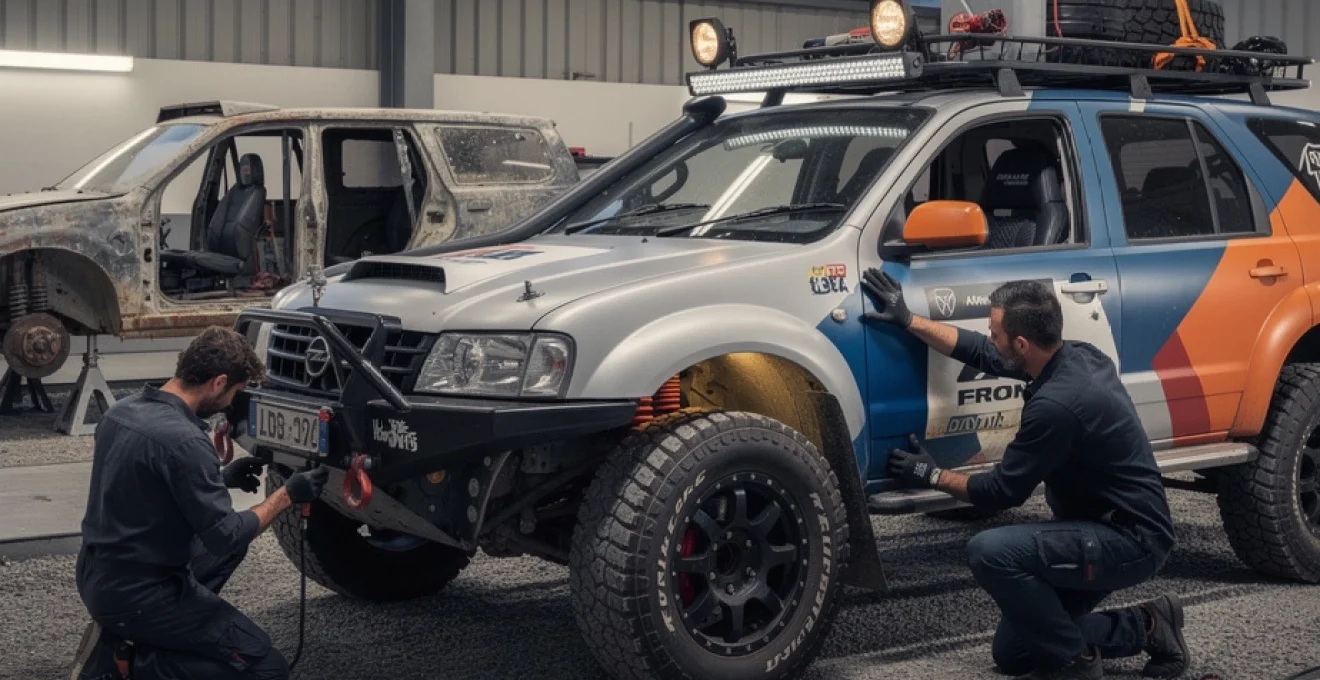
Transforming a Vauxhall Frontera into a gravel-spec show car taps directly into the current boom in off‑road style builds, overlanding rigs and rally‑inspired SUVs. The original Frontera and its Isuzu MU roots offer a solid ladder-frame chassis, proven drivetrains and an iconic profile that rewards careful modification. With the recent spotlight on the modern Frontera GRAVEL concept, interest in creating hardcore, motorsport‑flavoured versions of the classic model has surged. A successful build balances stance, durability, performance and visual drama, so that the truck looks ready for a Dakar stage yet remains usable for local lanes, gravel roads and events. Getting that balance right starts with making smart choices on base vehicle, suspension, wheels, powertrain and safety hardware long before wrapping the shell in bold livery or bolting on a roof rack.
Base vehicle selection for a vauxhall frontera gravel show car build
Choosing between vauxhall frontera SWB and LWB platforms for gravel-spec conversions
The first major decision for any Vauxhall Frontera gravel show car build is short‑wheelbase (SWB) versus long‑wheelbase (LWB). The SWB Frontera offers a tighter turning circle, shorter overhangs and reduced weight, all of which benefit loose‑surface agility and departure angles. If you want a nimble, rally‑style gravel truck that feels playful on compact stages, the SWB chassis usually delivers the more engaging package. The LWB Frontera, by contrast, provides extra cargo space, more stable high‑speed behaviour and better room for rear‑mounted gear like spare wheels, jerry cans and tool chests. For a show‑oriented overlander that still handles gravel confidently, the LWB can be the better canvas, especially if a full camping or expedition layout is planned.
Think of it as choosing between a hot hatch and a touring car on stilts. The SWB Frontera behaves like the gravel equivalent of a Group A rally car: quick to rotate, easy to place and fun on narrower tracks. The LWB platform, meanwhile, feels more like a safari rally wagon: slightly slower to turn, but composed when loaded with equipment and passengers for long‑distance trail drives. Many builders favour the SWB for pure motorsport aesthetics, yet a clean LWB shell with minimal rust can be preferable to a tired, poorly maintained shorty. Condition and provenance often matter more than wheelbase on a project that will eventually receive extensive upgrades.
Assessing 2.0i, 2.2i, 2.8 TDI and 2.5 V6 powertrains for reliability and tuning headroom
Engine choice shapes how your Frontera gravel build feels on and off the road. The older 2.0i petrol is simple and relatively robust, but lacks torque for modern expectations, especially on bigger tyres. The 2.2i petrol improves mid‑range performance and responds well to basic bolt‑ons and Stage 1 ECU mapping, making it attractive if you value smooth power delivery and the classic petrol soundtrack. The 2.8 TDI diesel is the torque champion, ideal for steep gravel climbs, controlled descents and towing, although it can be noisier and requires diligent maintenance of injectors, fuel system and cooling. The 2.5 V6 sits at the top of the range for character and power, but packaging, fuel consumption and complexity are less appealing for a hard‑used off‑road rig.
For a balance of reliability, economy and tuning potential, many enthusiasts gravitate towards the 2.2i petrol or 2.8 TDI diesel. Both engines support targeted upgrades such as intercoolers, high‑flow intakes and recalibrated engine management to unlock extra low‑end torque. When planning a gravel show car that will also see real off‑road action, torque delivery between 1,500 and 3,500rpm matters more than peak horsepower. Consistent, controllable pull out of hairpins or through loose climbs makes the truck feel confident and reduces clutch abuse. Choosing an engine with good parts support in your region also lowers long‑term running costs, which is crucial on a build that may rack up miles between events and trails.
Common rust zones and structural checks on early frontera A and frontera B shells
Even the boldest gravel styling will not compensate for a rotten shell. Early Frontera A and the later Frontera B models share a number of classic rust spots that need close inspection before committing to a donor. Critical areas include chassis rails around the front suspension mounts, rear spring hangers, the base of the A‑pillars and the inner sills. Wheel arches, especially the rear, tend to trap mud and road salt, which silently corrodes the metal beneath factory seam sealer. Tailgates and bonnet edges also suffer, although corrosion there is more cosmetic. Prioritise a structurally solid frame with manageable cosmetic rust over a shiny but weakened example.
A thorough inspection means getting under the vehicle with a bright light and a pick to probe suspicious seams. Check where body mounts meet the frame, as hidden rot here can make roll cage tie‑ins and chassis bracing more complicated. If possible, remove interior trim around the rear wheel tubs to view internal seams. Sand blasting or media blasting is often worthwhile on a serious show car, revealing areas that need plating or seam welding. Addressing rust at the start of the project makes later fabrication work, such as skid plate mounts or bumper brackets, much more straightforward and safer under heavy gravel impacts.
Evaluating donor vehicles, logbook history and MOT records for motorsport-style builds
A rugged aesthetic does not excuse sloppy foundations. When evaluating potential donor Fronteras, logbook history, service records and MOT history provide valuable clues. Evidence of regular oil changes, timing belt services and recent brake or suspension work suggests a more cherished vehicle. Conversely, repeated advisories or failures for corrosion, suspension wear or brake imbalances hint at hidden issues. A donor with fewer owners and a clear maintenance trail typically requires less remedial work before receiving performance upgrades and show‑car finishing touches.
For motorsport‑style builds, also consider previous use. Former towing vehicles may have tired clutches and stressed cooling systems, while heavily off‑roaded examples might hide cracked welds or bent suspension components. A standard, lightly used Frontera might not look exciting initially, but it offers a clean slate for you to shape into a rally‑inspired gravel machine. Taking time at this stage reduces the risk of blowing the budget later on structural repairs, freeing funds for desirable items such as coilovers, beadlock wheels and interior safety equipment.
Gravel-ready suspension and chassis upgrades for the vauxhall frontera
Installing long‑travel coilovers and uprated dampers from bilstein, KYB or OMESport
Suspension is the heart of a capable gravel build. Long‑travel dampers and thoughtfully chosen springs transform the Vauxhall Frontera from a dated SUV into a confident loose‑surface performer. Brands such as Bilstein, KYB and OMESport offer uprated shocks that cope with repeated hits, corrugations and compressions better than tired OEM units. For a show car that genuinely works off‑road, aim for a setup that prioritises control and compliance over extreme lift. A modest 40–60mm increase in ride height, combined with properly valved coilovers, often outperforms sky‑high but under‑damped lifts.
A useful analogy is comparing a trail shoe to a fashion trainer. Excessive ride height without damping control looks dramatic but behaves clumsily over ruts and washboard surfaces. By contrast, a balanced long‑travel coilover kit lets each wheel track the terrain while keeping body motions calm. If the build will attend gravel‑oriented events or off‑road festivals, owners and spectators alike quickly notice whether the truck glides over rough ground or crashes into bump stops with every dip.
Fabricating reinforced lower control arms, panhard rods and rally‑spec bushes
With increased speed and suspension travel comes higher stress on control arms, panhard rods and bushings. Reinforced lower control arms built from thicker wall tubing or boxed steel, combined with upgraded welds, help the Frontera withstand repeated gravel rally‑style hits. Many builders also fabricate stronger panhard rods and trailing arms, adding adjustment for axle centring after a lift. Bush choice is a delicate balance: rally‑spec bushes made from uprated polyurethane sharpen response, but overly hard compounds can introduce harshness and noise.
For a dual‑purpose show and trail build, a mixed bushing strategy works best. Retain slightly softer bushes at the rear to preserve ride quality over long distances while fitting firmer items at the front for steering precision. Adding greaseable bushings can extend service life in muddy, sandy environments. When fabricating custom arms, incorporate drain holes and access points to prevent mud and water from sitting inside box sections, reducing future corrosion and preserving structural integrity.
Ride height tuning, bump‑stop setup and gravel rake optimisation for loose‑surface grip
Ride height is more than a number on a spec sheet; it affects handling, traction and tyre clearance. Gravel‑oriented Fronteras benefit from a slight nose‑down “rake”, which helps the front tyres bite into loose surfaces and reduces the tendency to float or push wide. Fine‑tuning this gravel rake often involves adjusting torsion bars (on torsion‑bar front setups), spring perches or coilover collars. Target a stance that clears chosen tyres under full bump and lock while keeping the centre of gravity as low as practical.
Bump‑stop setup is equally important. Progressive bump stops act like a last line of defence and a secondary spring, smoothing out big compressions rather than delivering harsh impacts. Many builders underestimate how frequently bump stops are contacted on rough roads; properly designed units markedly improve comfort and control. Trimming or relocating bump stops without re‑engineering the suspension geometry can cause shock damage or bottoming issues, so treat bump‑stop tuning as part of an integrated suspension strategy.
Anti‑roll bar deletion versus soft‑rate ARBs for mixed show and off‑road use
Anti‑roll bars (ARBs) limit body roll on tarmac but also reduce wheel articulation off‑road. Some gravel builds remove front or rear ARBs entirely to maximise flex, yet this approach can make road manners vague and unpredictable. For a Frontera expected to travel at speed on gravel and still drive to shows on the motorway, soft‑rate ARBs or disconnectable systems often deliver a better compromise. A softer bar retains basic roll control for daily use without dramatically restricting axle movement on rutted trails.
Anti‑roll bar strategies also influence driver confidence. A complete ARB delete might work on a pure trail rig trailered to events, but a street‑driven gravel show car benefits from the steering response and predictability of at least one functioning bar. Testing different bar thicknesses and bushing materials, rather than jumping straight to deletion, helps you find a setup that suits personal driving style and typical terrain, whether that means fast gravel tracks or technical forest lanes.
Chassis bracing, seam welding and front strut tower reinforcement for gravel impacts
Gravel stages and rough fire roads subject a Frontera shell to thousands of small impacts and a handful of big ones. Over time, these loads can cause stress cracks around suspension towers, steering box mounts and body seams. Strategic chassis bracing and seam welding increase stiffness and durability, particularly on older Frontera A shells. Reinforcing front strut or shock towers with additional plates, gussets and welds pays dividends in steering accuracy and long‑term reliability.
Seam welding, once reserved for full competition cars, is increasingly common on serious show builds where panel fit and door alignment must remain tight despite hard use. Focus on joining key seams along the inner wings, chassis‑to‑body mounts and suspension pick‑ups, leaving some flexibility where the chassis naturally wants to move. Over‑bracing can introduce new stress points, so work with an experienced fabricator who understands how ladder frames flex under load rather than simply adding metal everywhere.
Wheel, tyre and brake configuration for loose‑surface vauxhall frontera builds
Selecting 15–17 inch alloy and beadlock wheels from compomotive and pro comp
Wheel choice affects not only aesthetics but also unsprung weight, tyre options and off‑road performance. For a gravel‑spec Frontera, 15–17 inch wheels strike the best balance between brake clearance and sidewall height. Brands like Compomotive and Pro Comp supply rugged alloys and beadlock designs that cope with rock strikes and low‑pressure running. Beadlocks, in particular, clamp the tyre bead mechanically, allowing lower pressures for traction without risking de‑beading, although they are heavier and require more maintenance.
A lighter wheel improves suspension response and reduces strain on hubs and bearings. For a truck that needs to look muscular yet still ride well, consider a strong but relatively simple design that references classic rally raid and Dakar machinery. Choosing a width that matches chosen tyre sizes (commonly 7–8.5 inches for all‑terrain rubber) ensures proper sidewall support and reduces the chance of pinch flats. Avoid excessive wheel width purely for visual impact, as stretched tyres perform poorly on loose surfaces.
Gravel‑spec all‑terrain and mud‑terrain tyres from BFGoodrich, toyo and general tire
Tyres form the only contact patch between your Vauxhall Frontera gravel build and the surface beneath, so careful selection is vital. All‑terrain (AT) tyres from BFGoodrich, Toyo and General Tire deliver a blend of road manners, wet grip and off‑road traction suitable for high‑speed gravel driving and daily use. Their tread patterns clear stones and mud without generating the constant drone associated with more aggressive mud‑terrain (MT) tyres. For a mixed‑use show car, modern ATs usually provide the most liveable compromise.
MT tyres come into play if the build will tackle deeper ruts, clay and technical trails more often than tarmac. They visually suit a hardcore gravel aesthetic, but bring downsides in rolling resistance, noise and braking distances on wet roads. Whichever pattern you choose, stepping up to a larger diameter (within gearing and arch‑clearance limits) improves ground clearance and helps the Frontera glide over ruts. Many owners find that a quality AT in the 31–32 inch overall diameter range offers a sweet spot in performance, fuel use and looks.
Brake upgrades: vented discs, EBC yellowstuff pads and braided stainless brake lines
Extra weight from accessories and bigger tyres places higher demands on the braking system. Upgrading to vented front discs, grippy pads such as EBC Yellowstuff and braided stainless brake lines sharpens response and resists fade when descending long gravel hills. Braided lines reduce the expansion seen in ageing rubber hoses, giving a firmer pedal and more precise modulation. For a show car that might also see spirited driving, refreshed calipers and quality fluid complete the package.
Think of braking as the safety net behind your gravel ambitions. Faster corner entries and heavier loads mean higher brake temperatures, especially during events or on mountain passes. Monitoring pad wear and disc condition regularly is vital, as dusty, sandy environments accelerate abrasion. Some builders also add simple cooling ducts or deflectors to direct air toward the front brakes, which is a subtle but effective modification that does not compromise ground clearance.
Correct offset, scrub radius and lock‑to‑lock clearance with lifted suspension
Once wheels, tyres and suspension heights change, geometry must be revisited. Incorrect offset can increase scrub radius, making the steering feel heavy and nervous on rutted gravel. Excessive poke may look dramatic but can cause tyres to contact arches or chassis at full lock and compression. Aim to keep scrub radius within a sensible range by choosing offsets that do not push the contact patch far beyond the original design, especially on lifted Fronteras.
A practical approach involves cycling the suspension through its full range with the chosen wheel and tyre combination. Jack up the chassis, compress each corner and turn the steering from lock to lock, watching for contact with inner arches, brake lines or bumper edges. Modest trimming of arch liners or lower valances is common on gravel builds, but heavy cutting usually signals overly ambitious tyre size or unsuitable offset. Prioritise functional clearance over extreme stance for a truck expected to work as hard as it looks.
Engine, drivetrain and gearing strategy for a frontera gravel show car
Stage 1 and stage 2 ECU mapping on 2.2i petrol and 2.8 TDI diesel engines
Modern engine management tuning lets you extract more usable torque from the 2.2i petrol and 2.8 TDI diesel without sacrificing reliability. A sensible Stage 1 ECU map typically optimises ignition timing, fueling and boost (where applicable) for a modest 8–20% power increase, while improving throttle response and mid‑range pull. Stage 2 mapping, combined with hardware changes like upgraded intercoolers and exhausts, can push gains further, but demands closer attention to cooling and drivetrain health.
For gravel use, focus on torque curves rather than headline numbers. Tuning houses that understand off‑road applications often offer maps biased towards low‑end and mid‑range torque, which help your Frontera drive out of tight hairpins and up loose climbs with less wheelspin. Keeping a safety margin in exhaust gas temperatures and boost pressures enhances longevity, crucial when the vehicle may run loaded at low speeds in hot conditions during events or shows.
High‑flow intake, snorkel installation and exhaust routing for gravel and water crossings
High‑flow intake systems help engines breathe more freely, but on gravel and dusty trails, filtration quality matters as much as flow. A well‑designed snorkel relocates the air intake to roof height, drawing in cleaner air above the dust cloud kicked up by the front wheels. Snorkels also offer extra security during shallow water crossings, reducing the risk of ingesting water. Pair the snorkel with a high‑quality filter element and sealed connections to maintain engine protection.
On the exhaust side, routing and exit position affect both clearance and cabin comfort. Tucking the system high against the chassis with robust hangers helps prevent damage from rocks and ruts. Some builders choose side‑exit systems behind the rear wheel to improve departure angle, though noise regulations and local laws must be considered. Heat shielding around key components, such as the fuel tank and brake lines, is essential once exhaust routing is altered from the original design.
Strengthening the manual gearbox, transfer case and front/rear differentials
Higher torque, lower gearing and aggressive tyres place additional stress on the gearbox, transfer case and differentials. Regular oil changes with quality fluids, upgraded bearings where available and thorough inspection of synchros and gear teeth form the foundation of drivetrain reliability. On heavily used gravel builds, some owners install transmission coolers or finned diff covers to manage heat build‑up during sustained high‑load running.
Reinforcing weak points before they fail saves money and time. For example, front differential mounts can be strengthened with additional bracing, while transfer case crossmembers benefit from thicker steel and improved skid plate integration. Torque reactions during wheelspin and sudden grip changes, common on mixed‑surface driving, test these components heavily. Addressing them proactively keeps the focus on enjoying the drive rather than recovering a broken truck from a remote trail.
Final drive ratios and limited‑slip differential options for rally‑style acceleration
Fitting larger‑diameter tyres effectively tallies as raising the gearing, which can blunt acceleration. Adjusting final drive ratios in the differentials restores responsive performance and helps make the most of extra torque from ECU tuning. Shorter gearing improves off‑line punch and climbing ability but raises engine revs at cruising speeds. For a show car that still needs to cover motorway miles, a moderate ratio change strikes the best balance.
Limited‑slip differentials (LSDs) further enhance traction, especially on uneven gravel surfaces where one wheel can easily unload. Mechanical LSDs, including clutch‑type or helical units, shuffle torque to the wheel with more grip, helping the Frontera drive forward rather than spinning away energy. This technology effectively turns your gravel build into a more rally‑like machine, with improved exit speed out of corners and greater confidence when conditions deteriorate.
Exterior styling and bodywork modifications for a show‑worthy gravel frontera
Wide‑arch kits, fibreglass wings and tube‑steel bumpers with integrated recovery points
Exterior modifications give the Frontera its gravel warrior identity. Wide‑arch kits and fibreglass wings allow the fitment of larger wheels and tyres while also echoing the stance of classic desert racers. Fibreglass panels save weight and resist minor knocks, though they require careful mounting to survive repeated vibrations. Tube‑steel bumpers at the front and rear add genuine protection and enable the integration of rated recovery points and winch mounts, making the truck more useful on demanding trails.
When designing bumpers and guards, always consider approach, break‑over and departure angles. A visually imposing bar with low‑hanging braces might look tough but will snag on obstacles. Properly triangulated tube designs keep vulnerabilities to a minimum while offering solid jacking and towing points. Aligning bumper lines with wheel arches, rock sliders and skid plates also creates a cohesive look that separates a thought‑through build from a bolt‑on parts collection.
Underbody armour: sump guards, transfer case plates and rock sliders
Underbody armour protects the Frontera’s most vulnerable components when gravel roads turn into rocky trails. Aluminium or steel sump guards shield the oil pan and front crossmembers from stone strikes and ledges. Transfer case plates and fuel tank guards extend this protection along the vehicle’s length. Rock sliders, usually made from thick‑wall tube or box section, defend sills and provide a strong jacking point during recoveries or wheel changes on uneven ground.
Effective armour should slide over obstacles rather than catch on them. Smooth, chamfered edges and countersunk fixings reduce the chance of snagging. While steel offers unbeatable impact resistance, aluminium can save significant weight in non‑critical areas. Combining materials intelligently helps keep the Frontera’s mass under control, supporting better acceleration, braking and suspension performance on challenging gravel drives.
Rally‑inspired livery referencing dakar frontera and isuzu MU competition trucks
Livery transforms a capable off‑road build into a recognisable showpiece. Many builders draw inspiration from historical Dakar Frontera entries and Isuzu MU competition trucks, adopting bold stripes, sponsor‑style logos and high‑contrast colour blocks. Modern vinyl wraps allow intricate designs without committing to permanent paint changes, which is advantageous if panels are frequently removed or replaced. A matte or satin finish can minimise glare from spotlights and the sun, adding a purposeful, motorsport‑grade feel.
Using a colour palette that highlights functional elements is particularly effective. For example, high‑visibility accents around jacking points, recovery hooks or door handles look dramatic and provide real‑world benefits in low‑light conditions. Clever design also draws attention to key features such as snorkels, roof racks and arch flares, guiding the viewer’s eye around the build and showcasing craftsmanship that might otherwise go unnoticed.
LED light bars, spot lamps and roof‑mounted pods for gravel night‑stage aesthetics
Lighting plays both a practical and visual role in a Vauxhall Frontera gravel show car. LED light bars and spot lamps mounted on the bumper, grille or roof deliver excellent illumination for night‑time green‑laning and add a strong rally‑raid signature. Roof pods and bonnet‑mounted auxiliary lights recall classic endurance racers, instantly signalling that the truck is ready for dusk‑to‑dawn adventures. Modern LED units offer impressive lumen output for relatively low current draw, easing the load on the electrical system.
Correct beam pattern selection matters as much as the number of lamps. A combination of wide flood beams for close‑in visibility and pencil beams for long‑range spotting provides the best coverage on gravel stages or dark forest tracks. Positioning lamps to avoid bonnet glare and windscreen reflections improves driver comfort. Proper relays, fusing and weather‑sealed connectors underpin reliability, particularly when the vehicle regularly encounters water, dust and vibration.
Roof racks, jerry‑can mounts and spare wheel carriers for overland show presence
Roof racks and external carriers contribute heavily to the overland aesthetic many enthusiasts associate with a gravel‑ready Frontera. A well‑built rack supports jerry cans, sand ladders, a spare wheel and storage cases without excessive flex. Integrating tie‑down points and light mounts into the rack design keeps the silhouette clean and avoids clutter. Modular systems, where baskets and mounts can be repositioned, let you adapt the setup for different events, from static shows to weekend expeditions.
Spare wheel placement is both functional and stylistic. A roof‑mounted spare evokes classic rally raid support trucks but raises the centre of gravity; a rear swing‑away carrier keeps weight lower while freeing interior cargo space. Whatever approach you choose, ensure mounts are properly triangulated into the chassis or reinforced body sections, not simply bolted to cosmetic panels. This attention to structure avoids rattles, flex and potential failures during long gravel runs with a full load on board.
Interior, safety and instrumentation upgrades tailored to gravel show builds
Fia‑style bolt‑in roll cages, harness bars and structural tie‑ins to the chassis
Inside the Vauxhall Frontera, safety and rigidity improvements anchor the whole gravel build. FIA‑style bolt‑in roll cages significantly enhance occupant protection in the event of a rollover and stiffen the shell, improving handling precision. A bolt‑in design keeps the project more accessible for road‑registered vehicles while still delivering much of the benefit of a weld‑in cage. Harness bars integrated into the cage or attached to strong chassis points provide correct mounting angles for multi‑point belts.
When specifying a cage, consider future plans: additional cross‑bracing, roof diagonals and door bars can be added later if the truck moves closer to competition use. Access and ergonomics should not be overlooked. Well‑positioned bars maintain door opening size and headroom, ensuring you can climb in and out comfortably even with a helmet on. Properly installed, the cage becomes a central visual feature of the interior, reinforcing the motorsport character while quietly adding crucial structural strength.
Bucket seats, 4–6 point harnesses and quick‑release steering wheels for motorsport feel
Seating and driver controls strongly influence the perceived quality of a gravel show build. Fixed‑back or reclining bucket seats with substantial lateral support keep occupants secure during fast, bumpy sections. Paired with 4–6 point harnesses, they reduce fatigue and allow more precise control over the vehicle. Choosing seats with durable upholstery and removable, washable covers suits the dusty, muddy environment such a Frontera frequently encounters.
A quick‑release steering wheel adds both practicality and a race‑car feel. It eases access in a caged cabin and doubles as a subtle theft deterrent when removed. Selecting an appropriate diameter and dish helps tailor steering effort and driving position, especially important if the build includes pedal box adjustments or repositioned seat rails. Collectively, these changes turn the cockpit into a focused command centre rather than a softened road SUV interior.
Auxiliary gauges for oil pressure, differential temperature and boost monitoring
Factory instrumentation provides only a partial view of what is happening beneath the bonnet and under the chassis. Auxiliary gauges for oil pressure, oil temperature, differential temperature and boost (on turbocharged engines) give early warning of emerging problems before they become expensive failures. On long gravel climbs or high‑speed sections, watching temperatures stabilise confirms that cooling strategies are effective. Sudden pressure drops or heat spikes, by contrast, signal the need for immediate mechanical sympathy.
Mounting gauges in easy‑to‑read positions, such as an A‑pillar pod or centre dash pod, keeps attention on the trail rather than the instrument panel. Modern digital displays can consolidate multiple sensor inputs into a single unit, reducing clutter while capturing more data. Logging functions allow post‑run analysis, helping fine‑tune driving style, cooling packages and even ECU mapping for the specific demands of gravel rally‑style driving.
Durable interior trims: rubber flooring, sound deadening and cargo management systems
Gravel use quickly punishes delicate interior trims, so durability upgrades are worthwhile. Replacing carpet with rubber flooring or heavy‑duty vinyl makes cleaning mud and dust much easier, especially after wet trail days. Strategic use of modern sound deadening materials on the bulkhead, floor and rear quarters keeps cabin noise tolerable despite aggressive tyres and less forgiving suspension. The result is a cockpit that feels solid and refined enough for long journeys while still clearly focused on utility.
Cargo management systems in the rear of the Frontera turn it into a versatile support vehicle for events. Drawer systems, tie‑down rails and modular storage boxes keep tools, recovery gear and spares organised and secure. By lowering the centre of gravity of heavy items and preventing them from shifting, these systems also enhance dynamic stability. A tidy, functional load area speaks volumes about the seriousness of the build and reduces frustration when something specific is required in a hurry at the side of a gravel road.
Electrical distribution, auxiliary fuse boxes and switch panels for lighting and winches
Gravel show cars often run multiple auxiliary systems: LED light bars, fridge/freezers, onboard air, winches and navigation equipment. Relying on the original wiring for these loads invites reliability issues. A dedicated auxiliary electrical system with its own fuse box, relays and distribution blocks offers a robust solution. Heavy‑gauge cables, properly crimped terminals and heat‑shrink insulation guard against voltage drop and corrosion in harsh environments, while neatly loomed harnesses improve serviceability.
Inside the cabin, thoughtfully placed switch panels allow intuitive control over lights, compressors and other add‑ons. Backlit rocker or toggle switches with clear labelling help at night and lend a cockpit‑like feel. Using CAN‑bus‑compatible controllers or solid‑state relay modules where appropriate can further simplify wiring and diagnostics. Treat the electrical system with the same engineering discipline as suspension or engine modifications, and the finished Vauxhall Frontera gravel show car will feel as dependable as it looks dramatic.