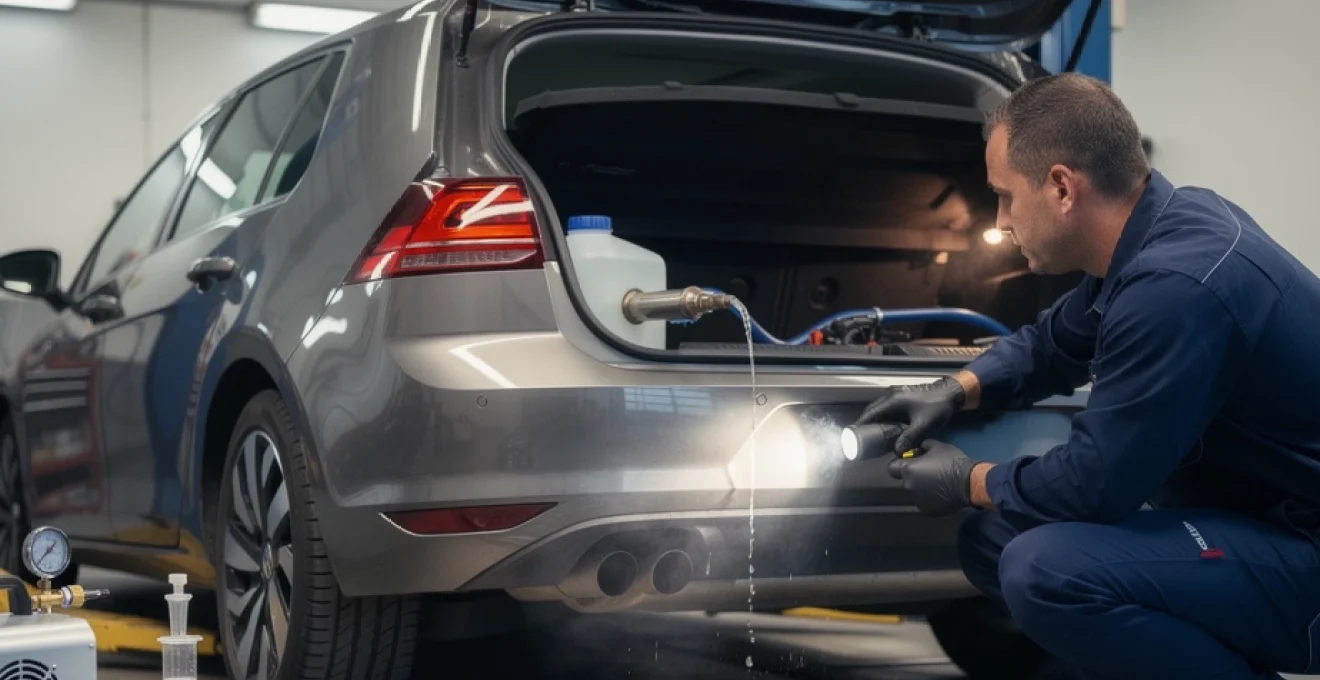
Seeing a water leak from the exhaust can be unnerving, especially if you have just bought the car or noticed a new puddle on the driveway. In many cases, that dripping water is completely harmless condensation; in others, it is an early warning of a serious engine or cooling-system failure that could lead to a four-figure repair bill if ignored. Understanding the difference between normal exhaust condensation and a genuine coolant leak helps you protect both your engine and your wallet, and gives you the confidence to decide whether to keep driving or book a diagnostic check immediately.
Common causes of water leaking from the exhaust system in petrol and diesel cars
Normal condensation in the exhaust: short trips, cold starts and ambient humidity
For most drivers, a water leak from the exhaust is simply normal condensation. When you start a cold engine, the exhaust system is much cooler than the hot gases passing through it. That temperature difference turns water vapour into tiny droplets that collect in low spots in the exhaust and backbox. On short trips, the system never gets hot enough to evaporate all of this moisture, so you often see clear water dripping from the tailpipe or small wet patches on the ground.
Humidity and outside temperature also matter. On a damp morning, you can expect much more visible vapour and dripping than on a hot, dry day. In urban settings where most journeys are under 10 km, exhaust condensation rarely has time to burn off completely. Many technicians compare this to breathing on a cold window: your breath always contains moisture, and in the right conditions it condenses instantly. The same principle applies inside your exhaust every time you start the engine.
Combustion by-product water vapour in modern euro 6 petrol and diesel engines
Water is a normal by-product of combustion in petrol and diesel engines. When fuel (a hydrocarbon) burns with oxygen, the chemical reaction forms carbon dioxide and water. Modern Euro 6-compliant engines run very clean air–fuel mixtures and use high-efficiency catalytic converters and diesel particulate filters, often increasing the visible amount of water vapour in the exhaust compared with older engines.
In some newer vehicles with stainless-steel exhausts, the system resists corrosion and allows more condensed water to collect and then drip from small drain holes in the silencer. You may notice this especially on turbocharged petrol cars after a spirited drive followed by idling at lights. As long as the fluid is clear, odourless and accompanied only by light white vapour that disappears quickly, the exhaust water leak is almost certainly normal combustion moisture being expelled.
Head gasket failure and coolant ingress into combustion chambers
When a water leak from the exhaust is continuous, accompanied by dense white smoke and a sweet smell, suspicion immediately turns to the head gasket. The head gasket sits between the engine block and the cylinder head, sealing combustion gases, engine oil and coolant in their respective passages. If this gasket fails, pressurised coolant can enter the cylinders, be burned, and exit as steam and droplets from the tailpipe.
Head gasket failure is far from rare on higher-mileage cars; industry surveys suggest that around 5–7% of engines that overheat badly will later suffer gasket damage. Once coolant reaches the exhaust, you may also notice rough running, misfires on start-up and rapid coolant loss. Ignoring these symptoms risks warping the cylinder head, contaminating the catalytic converter and turning a repair that might have cost hundreds into a multi-thousand-pound rebuild.
Cracked cylinder head, liner or engine block allowing coolant to reach the exhaust
In more severe cases, a cracked cylinder head, cylinder liner or engine block can allow coolant to leak internally into the combustion chamber and then out through the exhaust. This is more common in engines that have suffered repeated overheating, frost damage due to incorrect antifreeze concentration, or manufacturing defects. The symptoms can mimic a failing head gasket: persistent water from the exhaust, thick white steam that lingers and unexplained drops in coolant level.
Unlike a simple gasket failure, damage to the head casting or block often requires replacement parts, which can quickly exceed the value of older vehicles such as early BMW 3 Series diesels or high-mileage Ford Focus models. Professional workshops will usually perform pressure and chemical tests before condemning a head or block, because the decision to scrap or rebuild an engine hinges on getting this diagnosis right.
Aftermarket exhaust modifications, backboxes and faulty welds creating water traps
Aftermarket exhausts and custom backboxes can unintentionally create water traps. Poorly angled pipework, oversize silencers and low-quality welds allow condensation to pool rather than drain. Over time, this water collects and then pours out of the tailpipe or around joints, giving the impression of a more serious leak. Drivers of modified VW Golf and hot hatchback models often report substantial dripping after spirited driving followed by parking.
Faulty welds or pinholes around the backbox can also allow condensed water to escape before it reaches the tailpipe, leaving damp, rusty streaks on the silencer and fresh water spots under the rear of the car. While this usually indicates only exhaust corrosion rather than a coolant leak, it can accelerate rust and eventually cause exhaust failures. Addressing these issues early with improved drainage and better-quality components prevents bigger problems down the line.
How to distinguish harmless exhaust condensation from a serious water leak
Visual inspection: clear water droplets versus milky residue or emulsified oil
The first step in diagnosing a water leak from the exhaust is a simple visual inspection. Harmless exhaust condensation appears as clear, odourless water droplets. They may leave faint wet marks on the driveway but no colour, no oily sheen and no residue. In contrast, a coolant-related issue often leaves a chalky or milky deposit at the tailpipe, especially if antifreeze additives are present in the mix.
Look closely around the exhaust tip and under the car using a torch. If you notice creamy or emulsified deposits where exhaust soot has mixed with moisture and oil, there may be a deeper problem. This kind of residue is sometimes described as looking like thin mayonnaise and is a classic red flag when combined with other symptoms such as overheating and coolant loss.
Assessing exhaust smoke colour: white vapour, blue oil burn and black soot comparison
Exhaust smoke colour offers vital clues. Light white vapour on a cold morning that disappears within a few seconds is almost always normal condensation. Thick, dense white smoke that hangs in the air and continues when the engine is hot can indicate coolant burning inside the cylinders. Blue-tinged smoke suggests oil is entering the combustion chamber, typically through worn valve seals or piston rings, while black smoke generally indicates an over-rich fuel mixture.
Pay attention to how long the vapour lasts and when it appears. Does it disappear completely once the engine warms up, or does it persist even after a 20-minute drive? Persistent white steam plus a water leak from the exhaust points strongly toward a coolant issue and warrants professional investigation as soon as possible.
Coolant level monitoring in the expansion tank and radiator over several heat cycles
Coolant level is one of the most reliable indicators when you suspect a serious water leak from the exhaust. Mark the level in the expansion tank when the engine is cold, then check again after several heat cycles and normal journeys. A gradual but steady drop with no visible external leak usually means coolant is escaping internally, often into the combustion chambers or the oil system.
Many modern cars have low-coolant warning lights, but you should not rely solely on these indicators. A fall of more than 200–300 ml over a week of typical use is a strong sign that something is wrong. Industry data suggests that engines run low on coolant are up to three times more likely to suffer catastrophic failure within 12 months, so this kind of monitoring is not just a formality; it is essential protection for the engine.
Oil filler cap and dipstick checks for mayonnaise-like sludge indicating coolant contamination
Oil and coolant should never mix. If a failing head gasket or cracked head allows coolant to enter the oil system, you may see a light-brown, creamy sludge on the underside of the oil filler cap or on the dipstick. This “mayonnaise” forms when water and oil are churned together by the moving parts inside the engine. It is particularly obvious in engines that do mostly short trips, because the oil never gets hot enough to boil off moisture.
Checking the filler cap and dipstick regularly is a simple but powerful diagnostic habit. If you see a small amount of residue only during cold weather and you mainly make short journeys, it may just be normal condensation. However, heavy deposits combined with coolant loss and water dripping from the exhaust almost always indicate a serious internal leak that requires professional attention.
Using exhaust gas odour, sweetness and steam persistence to detect antifreeze in the exhaust
Coolant contains additives that give it a distinctive sweet smell. When antifreeze burns, that odour often becomes noticeable around the tailpipe. If you detect a sugary, almost syrup-like scent along with persistent white steam and a water leak from the exhaust, coolant contamination becomes highly likely. Normal exhaust condensation, by contrast, has very little smell apart from the usual exhaust fumes.
Steam persistence is just as informative. Stand a safe distance behind the car and observe the exhaust in different conditions. Does the vapour vanish quickly like breath in cold air, or does it linger and drift away slowly? Long-lasting, dense steam on a warm day is rarely normal and indicates water is being generated inside the engine, not just condensing after the fact.
Professional diagnostic methods for water leaks from the exhaust system
Cooling system pressure tests with tools like sealey VS0013 to locate internal leaks
When basic checks suggest a serious water leak from the exhaust, workshops typically start with a cooling system pressure test. A tool such as the Sealey VS0013 pressure tester attaches to the expansion tank or radiator and pressurises the system to its normal operating level. The mechanic then watches for a drop in pressure over several minutes. If the gauge falls and no external leak is visible, an internal leak into the engine or exhaust is strongly suspected.
Pressure testing can also reveal small external leaks at hose joints, radiator seams and water pump seals that only appear under load. Industry figures show that pressure tests correctly identify cooling-system leaks in over 90% of cases, making this one of the most efficient first-line diagnostic methods for garages dealing with suspected head gasket or block issues.
Chemical block tests (sniff tests) for combustion gases in coolant using BlueDevil kits
To confirm whether combustion gases are entering the coolant, many technicians use a chemical block test, sometimes called a “sniff test”. A kit such as those sold by BlueDevil uses a special fluid that changes colour when exposed to exhaust gases. The tester sits on top of the expansion tank or radiator neck while the engine runs. If the fluid turns from blue to yellow or green, it indicates that exhaust gases are present in the cooling system.
This test is particularly useful where symptoms are borderline: a small water leak from the exhaust, slight coolant loss, but no obvious overheating. While no single test is 100% definitive, a positive block test combined with low coolant and persistent steam gives a very strong case for internal engine damage and helps you decide whether a major repair is justified.
Compression and cylinder leak-down tests to identify head gasket and valve seat failures
Compression and leak-down tests measure how well each cylinder holds pressure. A compression test checks peak pressure during cranking, while a leak-down test feeds compressed air into a cylinder at top dead centre and monitors how fast it escapes. If air bubbles appear in the coolant expansion tank during a leak-down test, there is almost certainly a path between the combustion chamber and the cooling system.
These tests can also highlight valve seat issues, cracked liners and badly worn piston rings, all of which can contribute to abnormal exhaust behaviour. In professional practice, combining compression readings with other data points—coolant loss, exhaust smoke colour, oil condition—gives a robust overall picture of engine health and helps avoid unnecessary strip-downs.
Endoscopic inspection of cylinders and exhaust ports with borescopes from snap-on or bosch
Modern workshops increasingly use borescopes from brands such as Snap-on or Bosch to look inside cylinders and exhaust ports without dismantling the engine. A thin camera probe is passed through a spark plug or injector hole, allowing the technician to inspect piston crowns, valves and cylinder walls for signs of coolant washing or steam cleaning. Areas exposed to coolant often appear unusually clean compared with the surrounding carbon deposits.
An endoscopic inspection can also reveal physical cracks in the head or piston damage caused by prolonged coolant ingress. While this technique demands experience to interpret correctly, it offers invaluable visual confirmation in complex cases, particularly on high-value engines where every hour of labour is expensive.
Workshop use of smoke machines and dye tracers to pinpoint exhaust and coolant system breaches
Smoke machines are widely used to detect intake and exhaust leaks. The device pumps harmless, visible smoke into the system so any escaping vapour highlights cracks, pinholes or poorly sealed joints. When a water leak from the exhaust is suspected to come from rotten pipework or a corroded backbox rather than an internal engine problem, smoke testing can quickly locate the breach.
Coolant dye tracers work on a similar principle. A fluorescent dye is added to the coolant, and the system is then inspected with a UV lamp. Any external leak, even a tiny seep from a hose clamp, shows up immediately. While dye cannot reveal internal leaks into the cylinders, it is an excellent way to rule out external problems before considering major engine work.
Typical symptoms of a failing head gasket causing water from the exhaust
A failing head gasket produces a characteristic set of symptoms, and recognising them early can save you from complete engine failure. One of the earliest signs is a persistent water leak from the exhaust accompanied by dense white vapour, particularly when the engine is warm. Unlike normal condensation, this steam often has a sweet smell due to burning antifreeze. At the same time, the coolant level in the expansion tank begins to drop with no obvious external leak.
Other common indicators include overheating, especially at motorway speeds or under load, and poor cabin heating because air pockets form in the heater matrix. You might also notice rough idling on cold start, occasional misfires and a pressurised cooling system where hoses feel rock-hard even when the engine is cool. Some drivers find a brown, mayonnaise-like sludge under the oil filler cap, showing that oil and coolant are mixing. In more advanced cases, the engine may struggle to start, produce visible bubbles in the expansion tank or even expel coolant through the cap. Statistically, vehicles driven for more than a few weeks in this condition are highly likely to suffer warped heads or cracked blocks, turning a borderline repair into a full rebuild.
Repair solutions for exhaust water leaks: DIY fixes versus garage interventions
Choosing between a DIY fix and a professional repair depends on the source of the water leak from the exhaust, your mechanical skills and the value of the car. Harmless condensation or minor exhaust corrosion can often be addressed at home. For example, many aftermarket backboxes have small drain holes that can become clogged; carefully clearing them and ensuring the exhaust is correctly aligned can significantly reduce pooled water. DIY-friendly repairs also include replacing rusty exhaust clamps, fitting new rubber hangers and applying high-temperature sealant to small leaks at slip joints.
Internal coolant leaks, by contrast, almost always require professional intervention. Replacing a head gasket, skimming a warped cylinder head or pressure-testing a suspect block are jobs that demand specialist tools, torque procedures and experience. Labour times for head gasket replacement on common models such as a BMW 3 Series or VW Golf can range from 6 to 14 hours, so even at modest labour rates the bill quickly rises. In these cases, a trusted garage will usually present options: full repair with new gaskets and bolts, a replacement used engine, or—if the car’s value is low—retirement. From a professional standpoint, cutting corners with “bottle fixes” and sealants in engines that already show strong signs of failure is rarely worthwhile; these products may offer a short-term reprieve but can also clog radiators and heater cores, leading to further issues.
Preventive maintenance to reduce exhaust water issues in vehicles like VW golf, ford focus and BMW 3 series
Preventive maintenance is the most effective strategy to avoid serious exhaust water problems, particularly on popular models such as the VW Golf, Ford Focus and BMW 3 Series that often rack up high mileages. One of the simplest habits is to ensure the engine reaches full operating temperature regularly. If your driving pattern consists mainly of short, stop–start trips, try to include a longer run—20 to 30 minutes at steady speed—once or twice a week. This allows the exhaust system to heat up fully and evaporate internal moisture, reducing condensation build-up and the risk of internal rust.
Regular coolant changes with the correct specification antifreeze are equally important. Fresh coolant not only controls temperature but also contains corrosion inhibitors that protect the head, block and radiator from internal rust. Manufacturers generally recommend changing coolant every 3–5 years; surveys of failed engines frequently show that neglected coolant is a common factor in head gasket and block failures. Keeping the cooling system clean and properly bled of air reduces hot spots that can lead to cracking and gasket damage over time.
Routine visual inspections also pay dividends. At every service, ask the technician to check the condition of the exhaust system, including hangers, backboxes and welds, and to note any unusual moisture patterns. If you service your own car, look for rusty seams on silencers, water stains near joints and any milky residue at the tailpipe. Combining these checks with regular oil and coolant level monitoring gives you an early-warning system for water leaks from the exhaust that costs nothing and can extend the life of your engine by many years.